Winston Churchill made a speech before the City Carlton Club in which he said, “If my words could reach Herr Hitler, as indeed they may, I would say to him — pause; consider well before you take a plunge into the terrible unknown. Consider whether your life’s work — which may even now be famous in the eyes of history — in raising Germany from frustration and defeat to a point where all the world is waiting for her actions, consider whether all this may not be irretrievably cast away.”
British diplomacy felt able to give its almost undivided attention to Germany today as Prime Minister Neville Chamberlain announced Japan’s agreement to negotiate over the Tientsin dispute. The British Ministers appeared to be uneasy over the anti-British state of mind that is being developed inside Germany.
Mr. Chamberlain, answering a question in the House of Commons, said: “I have noticed particularly in the German press articles distorting and sneering at any speeches made by British statesmen which seek to show an understanding of Germany’s position. I cannot but deplore such attempts to poison the relations between our two countries, but I do not propose to make any representation to the German. Government on the subject.”
Nevertheless, the British feel so strongly over the German “encirclement” propaganda that they tried to answer it formally today in a note replying to last April’s denunciation of the naval treaties. The note was delivered in Berlin by Sir Nevile Henderson, the British Ambassador, and, although much of it dealt point by point with the German reasons for denouncing the naval treaties, the whole first part of it — a passage of about 500 words — was nothing but a retort to the “encirclement” cry.
The Women’s Auxiliary Air Force (WAAF) of the RAF was formed with Katherine Jane Trefusis-Forbes becoming its first Senior Controller. The women worked as office clerks, operation room plotters, radar operators, telephone operators allowing their male counterparts to be released for aircrew and front-line duties. In January 1944, Trefusis-Forbes was made Dame Commander of the Order of the British Empire (DBE).
The inflow of young Germans from East Prussia to Danzig is continuing. It is reported here that almost 3,000 men have been smuggled into the Free City in the last week. During the night several hundred were brought in in big vans used for transporting furniture. They are housed in barracks at Wieben and Langfuhr. Before the World War one of the biggest Prussian garrisons was stationed in Danzig and the city had many well-equipped barracks, which the authorities later rented for warehouses and other uses. All the tenants have now received a fortnight’s notice to clear out. The barracks will be used for the Free Corps, the armed force the Nazis intend to form in the Free City.
Groups of young Poles also are seen in the streets of Danzig. The Poles there will undoubtedly organize their own “voluntary” armed force if the Nazis create the Free Corps. In an effort to check the Polish preparations the Nazis have ordered the expulsion of the most active Polish elements including young engineers employed in Danzig shipyards.
It is also reported that Heinrich Himmler, chief of all German police, landed at Danzig this morning from a Berlin plane for an inspection of the Nazi party there. A purge among the Danzig Nazis is expected. Party headquarters in Berlin is reported dissatisfied with the reception accorded to Dr. Joseph Goebbels, the propaganda minister, a fortnight ago, and with the inefficiency of the Storm Troopers in the Free City.
The Free City of Danzig reinforced its police today with recruits that unconfirmed reports said were well-trained Germans — not Danzigers — who were being organized into a “Free Corps.” Tonight, while Poles declared themselves ready to defend their land “at the drop of a hat,” reports reached Warsaw that soldiers of the new Free Corps had been drilling all day. They were said to be holding exercises with machine guns away from the city where civilians were not permitted to approach, while in the barrack yards soldiers were drilling with rifles.
These reports said that the requisitioning of horses had started and that about 1,000 had been turned over today to the Free. Corps. It also was declared that Danzig authorities had begun to store meat in a refrigerating plant for possible emergency use. Express Telegraph Agency reports reaching Warsaw said that new mufti-clad recruits from East Prussia numbered 1,400, swelling the Free Corps to 2,400.
The agency said the men were quartered in police buildings, and asserted that Danzig police were placed in a state of emergency beginning today. It also stated that quantities of war materials had been smuggled into Danzig from East Prussia last night over roads that had no customs stations. Warsaw military circles said there had been numerous violations of the Polish frontier by German planes in recent weeks.
Mussolini and Hitler reportedly meet at the Italo-German border, and air war plans in the event of war are said to be complete.
The German ambassador in Moscow, Russia met with a very friendly Vyacheslav Molotov.
A Soviet prosecutor, Mikhail Pankratyev, warns investigators that too many innocent people are arrested.
An attack on an Arab brings the closing of “Jew shops.” A 48-hour closing in Jewish quarters is ordered by the British military command for abetting terrorism.
The Senate, in a session that continued into the night, considered that 1940 Relief Bill, completed Congressional action on the $1,194,488,633 Agricultural Appropriation Bill and on the Connally Hot Oil Act extension, and received the O’Mahoney bill increasing penalties for Anti-Trust Law violations.
The Foreign Relations Committee approved the treaty with Great Britain for the barter of cotton and rubber, and the Temporary Economic Committee continued its inquiry into the construction industry.
The House debated the Bloom Neutrality Bill, adopted the conference report on the Agricultural Appropriation Bill, sent the Monetary Bill to conference and adjourned at 6:20 PM until 11 AM tomorrow.
The Ways and Means Committee heard John W. Hanes, Undersecretary of the Treasury, on the bill to tax government securities.
House Democrats responded overwhelmingly to an appeal for party loyalty today and sent to a friendly Senate-House conference committee the bill to extend President Roosevelt’s emergency monetary powers and the $2,000,000,000 stabilization fund for two years beyond Friday midnight, the expiration date. President Roosevelt returned to the White House from Hyde Park ready to lead the fight for retention of his monetary powers. The capital expected him to call the Administration leaders in Congress to a conference.
The House’s action was the first major break for the Administration leadership in a legislative situation which had grown more confused since the beginning of the week. Its technical effect was to reject the Senate amendments to the monetary bill whereby the President’s remaining power to devalue the dollar would be ended, the price of domestic silver would be pegged at 77.5 cents an ounce, and the current foreign silver purchase program would be abandoned entirely. The House first voted, 216 to 164, against a Republican attempt to force the Senate amendments immediately to the floor for action. It then adopted by 209 to 161 a special resolution which sent the measure to conference. The vote was almost directly along party lines.
The feeling prevalent in Washington tonight was that the conference committee, heavily weighted in favor of the Administration, would emerge some time tomorrow with an agreement whereby the President’s powers over devaluation would be restored and some concession would be made to the silverites, possibly by administrative action outside of the legislation itself. The hope for eventual success hung, however, on the ability of the leaders to drive a wedge between the two unnatural elements of the Senate which wrote the amendments into the bill on Monday — the silver-inflation advocates from the Far West and the Republican and Democratic “hard money” proponents from the East, South, and Midwest.
The U.S. Senate was in continuous session throughout the day, and past midnight, considering the Relief Bill.
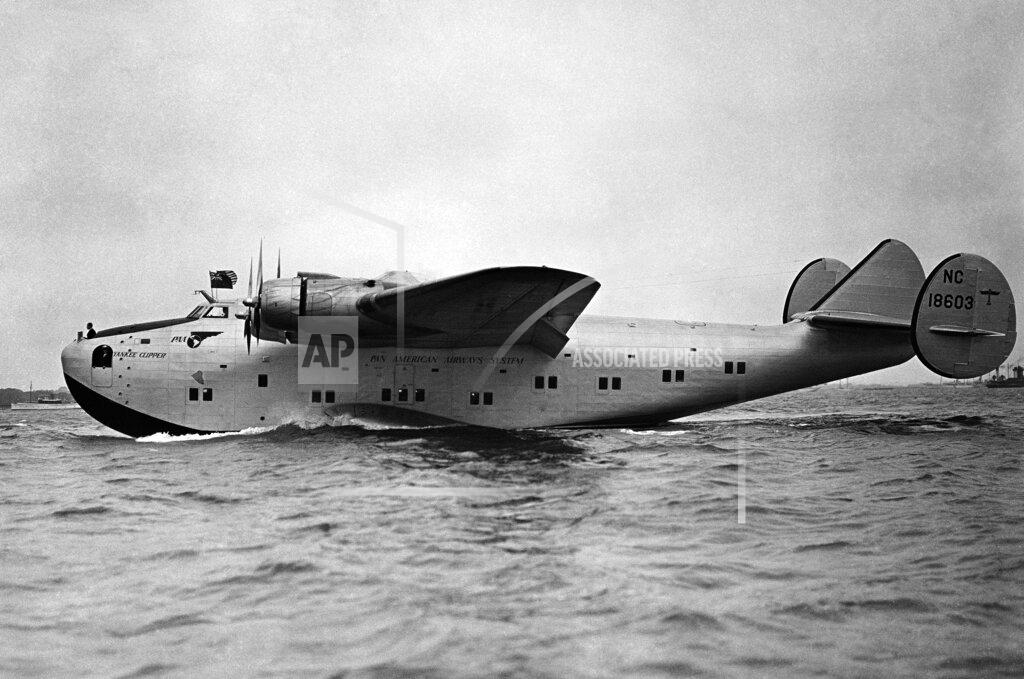
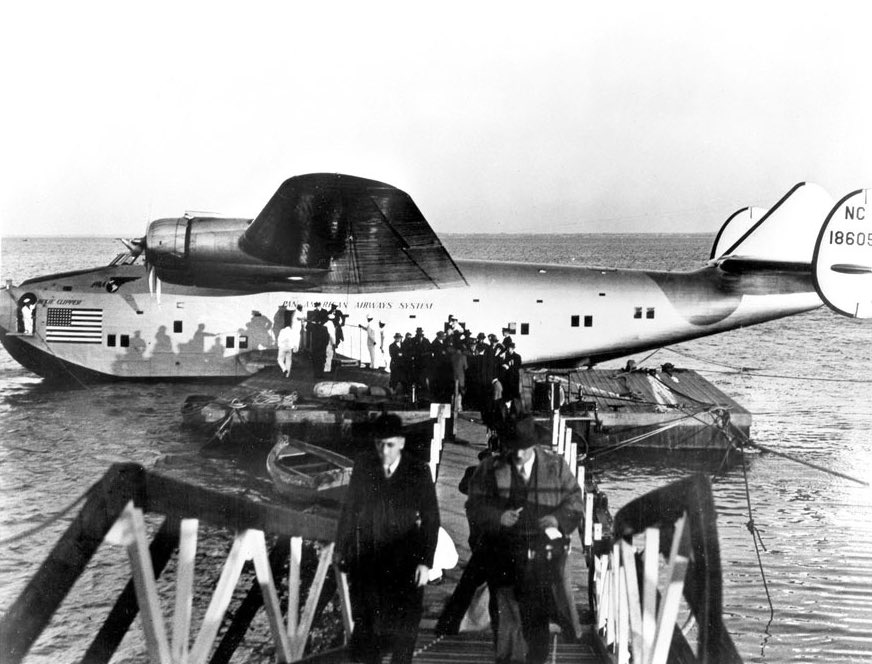
Pan American Airways began regular trans-Atlantic air service as the “Dixie Clipper” left Port Washington, New York, for Portugal. Air transport entered a new era yesterday afternoon when twenty-two men and women filed casually aboard Pan American Airways’ Dixie Clipper at Port Washington, Long Island, and settled back in their seats for a twenty-two-hour flight to Europe. At 3 PM, the scheduled time, the 412-ton craft started to move away from the floating dock, and twelve minutes later it was in the air on the first regularly scheduled commercial passenger flight by airplane over the North Atlantic.
At 1 o’clock this morning the ship was reported 1,397 miles out from Port Washington and 1,000 miles from the Azores. The fanfare and excitement that might naturally have been expected at the take-off were entirely absent. In spite of the fact that this was the first paid passenger airplane flight between this country and Europe, neither the passengers nor the crew of eleven under Captain R. O. D. Sullivan displayed any sign of excitement, nervousness or tension.
Not even among the several thousand persons who had crowded into the airport to see the plane off was there anything like the flurry that marks the sailing of an ocean liner, However, a feeling of amazement, even awe, was noticeable at the thought that one could now purchase a ticket for $375, board a plane at Port Washington and less than a day later step off in Lisbon.
Governors of the New York Stock Exchange yesterday rejected the proposal to close on Saturday in July and August. The governors, in a statement, said that the decision was dictated by the public interest on the ground that the Exchange is “a national institution, with approximately 85 per cent or more of the public business of its members originating outside of New York City.” The New York Curb and the New York Cotton Exchanges also will remain open on Saturdays. The plan to close on Saturdays caused a week of bitter debate. The governors were told that although most members favored closing, firms doing the bulk of the business did not. These large concerns contended that, with operations currently at a loss, idle Saturdays would only increase deficits, because overhead would not stop on the holidays.
[The stock market will eventually decide to close on Saturdays — in 1952.]
At Shibe Park, Lou Gehrig receives a tremendous standing ovation from the Philadelphia crowd when he brings out the lineup card to the umpires prior to the second game of a twin bill. A’s manager Connie Mack, who rarely leaves the dugout, goes to home plate to shake the hand of the terminally ill Yankee captain.
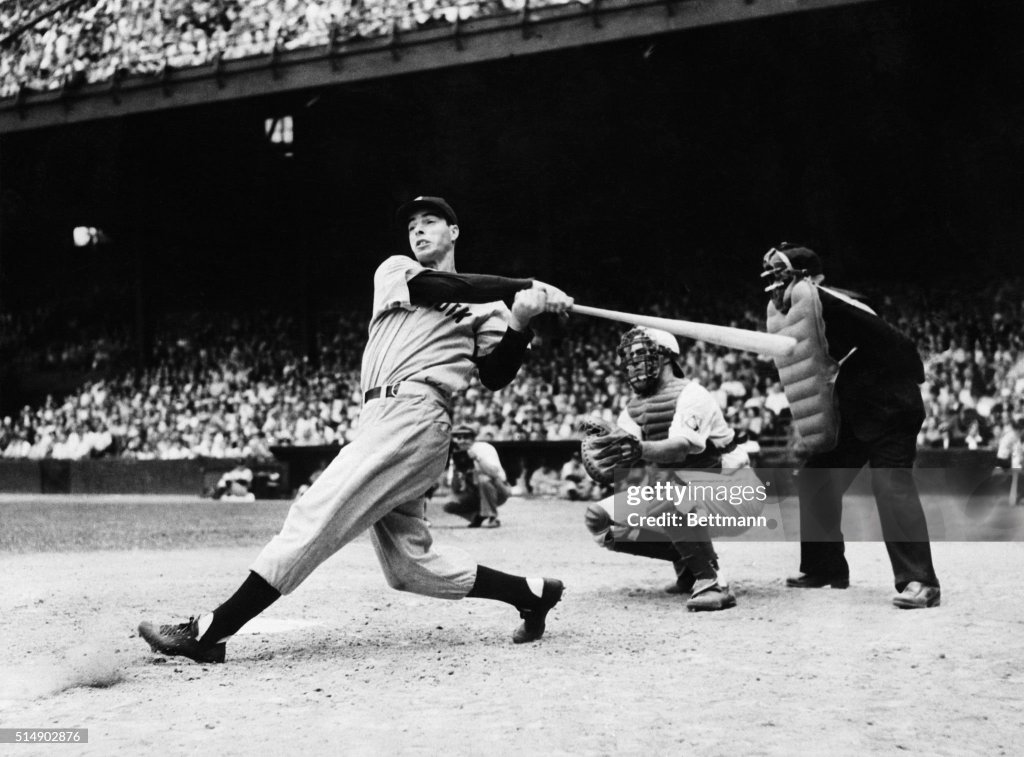
The New York Yankees set a new major league record for home runs by a team in a single game when they hit eight (Dahlgren (2), DiMaggio (2), Dickey, Gordon, Henrich, Selkirk) against the Philadelphia Athletics during a 23–2 victory in the first game of a doubleheader. This record was broken in 1987, but a different record set by the Yankees that day still stands: most home runs in a doubleheader. They hit five more in the second game during a 10–0 victory for a total of 13 in one day. Also Major League records are the 87 total bases and 98 at bats in a doubleheader. The 53 total bases in game 1 breaks the American League mark the Yankees set in 1922. The Bronx Bombers also break a record they set in 1936 (11) with 13 homers in two consecutive games. In the 7th inning, the Yanks belt 3 homers with 2 outs tying a Major League mark; they are the 3rd major league team to accomplish that feat this month. Joe DiMaggio, Babe Dahlgren, and Joe Gordon each hit 3 home runs for the afternoon as the Yankees win the opener 23–2. They are also the first Major League team to have 7 starters each have 3 or more hits. The White Sox will match them in April 1955. Monty Pearson wins the laugher. New York then bangs out 16 hits takes the nightcap 10–0 behind Lefty Gomez’s 3-hitter. Gomez contributes 2 hits himself. Facing just 5 pitchers in the twin bill, the Yankees finish off the A’s in 2 hours, 27 minutes in the opener, and take 1 hour, 40 minutes in the 2nd game. The A’s have no four-baggers on the day.
The Giants rout the Phillies, 7–1, and move into 2nd place behind the Reds. New York scores all its runs in the first three innings off Hugh Mulcahy, and Bill Lohrman rolls to his 6th triumph.
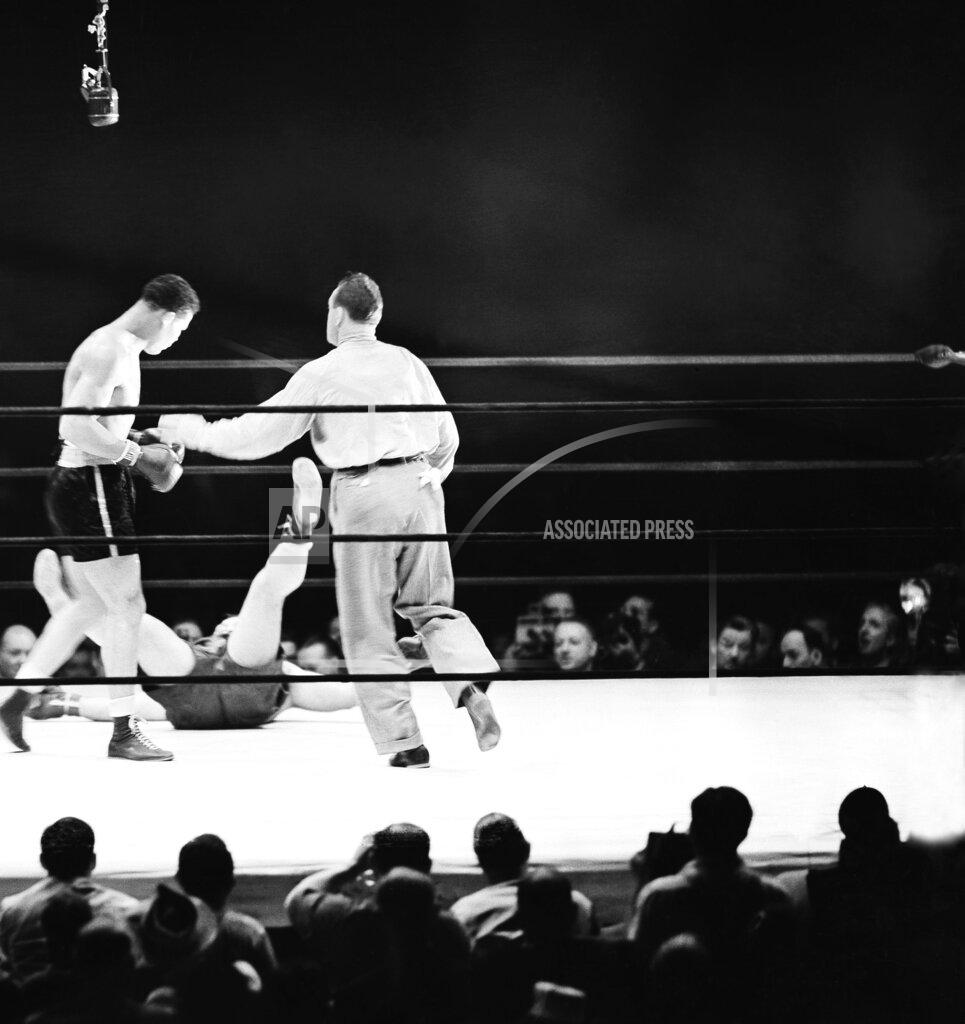
Joe Louis retained the world heavyweight boxing title by knocking out Tony Galento in the fourth round at Yankee Stadium. Louis beats Galento by TKO at 2:29 in round 4 in his 7th heavyweight boxing title defense. Galento did manage to knock Louis down briefly in the third round.
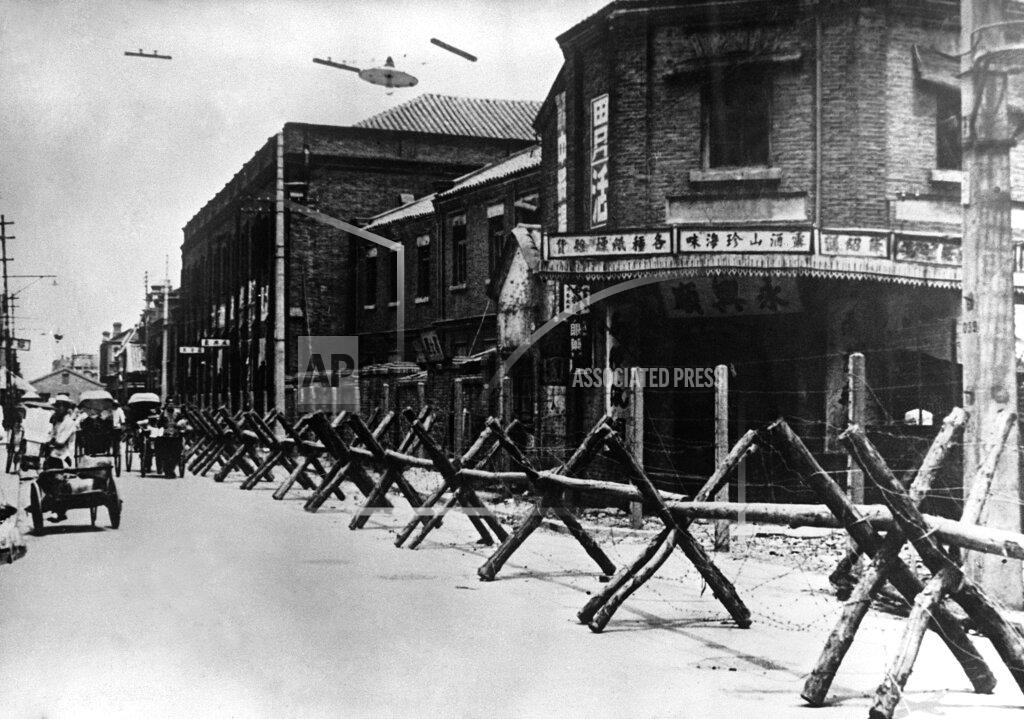
The British-Japanese dispute has been removed from the superheated atmosphere of Tientsin to the conference table at Tokyo. The official announcement read: “In response to a British proposal the Japanese Government has decided to conduct negotiations in Tokyo with the view of solving various questions relating to the present situation in Tientsin. The Japanese officials concerned in Tientsin will be summoned to Tokyo for the purpose.”
An explanatory statement in Japanese adds that the Japanese Government accepted the proposal “in appreciation of the sincerity of the British side.” It is explained that the negotiations in Tokyo will not be confined to the transfer of suspected criminals, but will include the other difficulties that have caused the Tientsin situation. Japan will seek the British Government’s earnest consideration regarding the army’s responsibility for the maintenance of peace. and order and “other military, political and economic matters necessary to the army’s security on the spot.”
Nothing was said regarding the blockade at Tientsin, but the opening of the negotiations, it is understood by both sides, will imply at least a substantial alleviation of its present severities. As officials will have to come from China, the conference cannot open before next week. Japan will raise economic, financial and security issues, but the British have succeeded in limiting these to matters necessary for the army’s security on the spot.
Japan’s demands are embodied in a five-point program, announced provisionally by the newspaper Asahi as follows:
- Immediate delivery of four suspected terrorists.
- Joint search and joint control of terrorists within the British Concession.
- Thorough control of elements opposing the provisional government.
- Economic cooperation and limitation of the causes of economic disturbance.
- Transfer of the 48,000,000 yuan silver reserve to the provisional government.
The first three points will not cause difficulty since the British authorities have in principle already conceded them. The fourth point touches the economic policies of other countries as well as Britain. In evaluation of the Japanese Government’s action, it must be remembered that British procrastination had thrown the matter into the hands of the army. A change in location was the only method that offered a chance for a rational solution. As the army works under imperial prerogative, not under the Cabinet, it was not easy to arrange, yet nothing less could have averted the risks of a serious clash.
Dow Jones Industrial Average: 132.83 (-2.59).
Born:
Klaus Schmiegel, German-American chemist (invented Prozac), in Chemnitz, Germany.
Pat Shea, AFL guard (AFL Champions, 1963; San Diego Chargers), in La Jolla, California (d. 2013).
Died:
Harry Leon Wilson, 72, American novelist.
Bobby Vernon, 42, American actor (heart attack).
Naval Construction:
The U.S. Navy minesweepers USS Raven (AM-55) and USS Osprey (AM-56), the two ships of the Raven-class, are laid down by the Norfolk Navy Yard (Portsmouth, Virginia, U.S.A.).
The Nihon Kaigun (Imperial Japanese Navy) Asashio-class destroyer HIJMS Kasumi (霞, “Haze”) is commissioned. Her first commanding officer is Commander Kiyoshi Tomura.
 History Diaries