France’s Foreign Minister Maurice Couve de Murville participated in the live TV news interview program to be transmitted across the Atlantic Ocean. Speaking from a studio in Paris to the New York moderators on the NBC show Meet the Press, Couve cautioned that United States could not win the Vietnam War if it increased its involvement. “This is not an ordinary war,” he said. “That means a war you can just settle by victory or defeat. It is not that simple…. the problem cannot be settled by military means but should be settled by political means.”
U.S. President Lyndon Johnson said today that the United States, “when necessary,” would not hesitate to “risk war” to preserve the peace. This was an alteration of a prepared text, from which Mr. Johnson was to have read, to the effect that the United States would “use the force necessary” to help maintain South Vietnamese freedom. Mr. Johnson spoke to more than 50,000 people in Minnehaha Park in Minneapolis, at the 31st annual Svenskarnas Dag (Swedes’ Day) picnic. Even with the change in his text, he appeared to be delivering another in a carefully prepared series of statements designed by the Administration to convince Communist China that the United States would go to war rather than see Southeast Asia overrun. “We must be, and we are, strong enough to protect ourselves and our allies,” the President said.
Mr. Johnson found a link between the problems of keeping the peace and civil rights controversy in Mississippi and elsewhere in the United States. That link, he said, is the nation’s “historic pledge… to abide by the law and accept its settlements.” “It is a pledge to submit to courts and to be satisfied by court decisions,” he declared. “It is a pledge to respect, uphold and obey the law of the land. For if any take grievances and disputes into their own hands, the safety and freedom of all is in peril. ‘Due process’ is the safeguard of our civilization.” Again, as he had done in a speech at a fund‐raising dinner last night, the President left no doubt of his intention to enforce the civil rights bill to the limit. once it becomes law.
“As President of the United States and as an individual citizen,” he said, “I stand totally committed to the integrity of justice and the enforcement of the law. But legal government depends upon law‐loving and law‐abiding citizens.” Just as a world rule of law is the key to international peace, Mr. Johnson said, “the key to peace in our own land is obedience to the great moral command that no man should deny to another the liberties the Constitution creates, as the law defines those liberties.” The President said the United States was committed to “restraint in the use of power.” It could not, he said, “advance the cause of freedom by calling on the full might of our military to solve every problem.”
South Vietnamese Government forces and Communist guerrillas fought a major battle today at Trà Cú, in Hậu Nghĩa Province, 25 miles northwest of Saigon, United States sources said. The fighting started about 1:30 AM, they said. Vietnamese sources said that a government post had been overrun and 15 soldiers killed, and that about 70 Việt Cộng guerrillas had died so far.
Henry Cabot Lodge left for home today with the status of an honorary citizen of Vietnam. At the close of a ceremony that involved bands, honor guards and farewell addresses, the retiring Ambassador watched in astonishment as Premier Nguyễn Khánh and leading government ministers unfolded a long ao dai, or tunic, of royal blue silk. More than 5,000 people at Saigon’s Tân Sơn Nhứt Airport laughed and cheered in delight as the traditional Vietnamese dress was draped upon the six-foot‐three‐inch Ambassador. With a small black turban covering his steel‐gray hair, and the embroidered ao dai hanging correctly to just below his knees, Mr. Lodge faced the crowd attired in the ceremonial habit signifying to old‐time Vietnamese a man of learning, a worthy man.
It was General Nguyễn Khánh’s personal and joyful final tribute to the man who for the last 10 months and five days has led the American effort in South Vietnam to counter the Việt Cộng rebellion. With the garments was a scroll signed by General Nguyễn Khánh, awarding Mr. Lodge the title of honorary citizen of the Republic of Vietnam. “This moment is unforgettable and will always be with us,” Mr. Lodge told the airport crowd. He and his wife took off for Washington in a special Military Air Transport Service jetliner.
The Laotian Premier, Prince Souvanna Phouma, said today that there was no longer any doubt that pro‐Communist Pathet Lao and Communist North Vietnamese forces were preparing to attack Muong Soui soon. Muong Soui is the last neutralist strong point on the outer edges of the Plaine des Jarres, where neutralist commander, General Kong Lee, is consolidating his scattered army in an attempt to halt any further advances by pro-Communist forces. Premier Souvanna Phouma, speaking at a news conference, said an attack was “imminent.”
Reports reaching Vientiane from the front give every indication of a large build‐up of Pathet Lao and North Vietnamese troops. Neutralists patrolling the outskirts of the Muong Soui area are encountering Pathet Lao advance units. The Premier said a meeting between the leaders of the pro-Communist rightist and neutralist factions of Laos was urgently required because of the’ “grave situation” and the “international repercussions.”
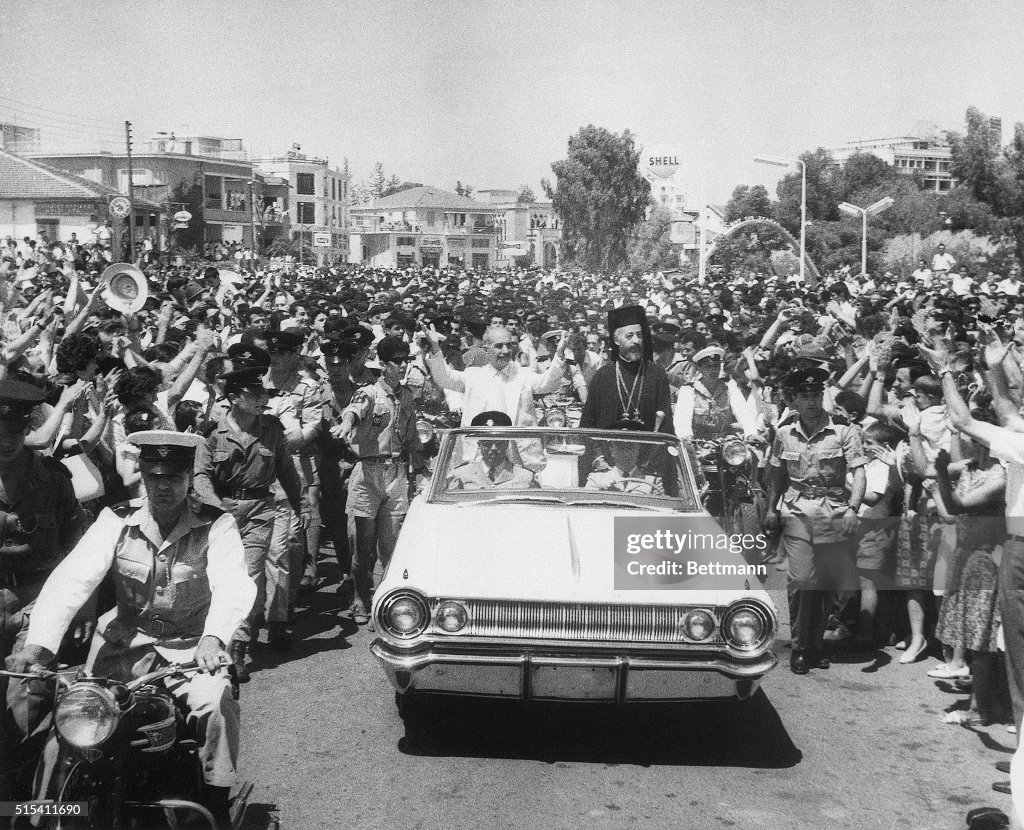
General George Grivas, in his first public appearance since his recent return to this strife‐torn island, exhorted Greek Cypriots today to “march hand in hand toward victory or glorious death” in the struggle for a “free Cyprus.” The 66‐year‐old former leader of the terrorist movement against the British addressed a crowd estimated by the police at 10,000 in Venizelos Square on the edge of the old walled city. It was the first time that Greek Cypriotes have had a chance to see in the open the almost legendary leader of the terrorist uprising, which began in 1954 and ended five years with Cypriote independence. Under a blazing sun, the small mustached general addressed the crowd for 20 minutes. President Makarios, Government ministers and Ambassador Meltiades Delivanis of Greece shared the podium with him. The general added little to what he said in his radio address last Wednesday, when he called for a referendum to settle the island’s destiny.
He rejected compromise solutions for the strife between Greek Cypriots and the island’s Turks, who make up about a fifth of the population. Opposition by Turkish Cypriots to a move by the Government last November to amend the Constitution led to the communal fighting. General Grivas offered friendship to the Turkish Cypriots and declined for the second time in a public statement to refer to the United Nations peacekeeping effort. Although there were occasional chants of his name and for enosis, or union with Greece, the crowd reacted less emotionally to the general’s speech than many observers had expected. Signs and banners, a usual feature of Greek Cypriot rallies, were all but absent.
Scorning those who were “impertinently” questioning his secret return to Cyprus 16 days ago, the general, a Greek citizen who was born in Cyprus, said he had every right to be here to concern himself with “all the matters related to the present crisis.” “I have not come here as a politician or to mix in politics,” General Grivas declared. “I have come as a national leader, I have extended a hand to everybody and I am collaborating with Archbishop Makarios, in perfect harmony.”
There has been speculation that the general, who favors self‐determination and enosis, will clash with the archbishop, who favors self‐determination and independence. General Grivas said his offer of friendship to Turkish Cypriots “will always hold good” despite its rejection last Thursday by Vice-President Fazil Kutchuk, leader of the Turkish community. The general said that Turkish Cypriots could return to their homes in safety and that even those carrying arms need not fear for their lives.
As he was speaking a battle was taking place between Greek and Turkish Cypriots near the Turkish village of Ayios Khariton, northeast of Nicosia. One Turkish Cypriot was known to have been killed and another was reported wounded. As usual there were conflicting versions of how the three‐hour battle started.
U.S. Attorney General Robert F. Kennedy swept irresistibly through Warsaw today, with masses of cheering Poles and harried officials trailing behind him. At midday Mr. Kennedy’s private sightseeing tour had the aspects of a politician’s campaign swing through a sure election district. “I am not a candidate for the Vice‐Presidency,” he told a euphoric crowd of 500 at Warsaw University, “but if you were in America and could vote for me, I would be.”
A body found in the United Kingdom, in the woods near Bracknell, led to a significant case in the history of the use of entomology to assist criminal investigations. By studying the maggots found on the body, forensic entomologist Professor Keith Simpson was able to establish the date of death at around June 16. Missing persons records for that date led the police to believe that the body was that of Peter Thomas, who had gone missing from his home in Lydney. William Brittle, a business partner of Thomas, would subsequently be convicted of the murder.
Greece and Bulgaria signed 12 agreements to settle all pending disputes between the two nations, including the payment by Bulgaria to Greece of seven million dollars of war reparations arising from World War II, when Bulgaria had been part of the Axis powers invading Greece.
Sarah Churchill, the actress and the second daughter of Sir Winston Churchill, was arrested by London airport police today as she was about to leave for Milan, Italy. She was charged with being intoxicated and acting in a disorderly manner at the airport.
Congress hopes to put a lot of work into a few days this week and then take off for a long Fourth of July holiday. At the top of the agenda is House‐Senate agreement on the civil rights bill, which backers hope to have on the President’s desk for a ceremonial signing on Saturday, the nation’s 188th birthday anniversary. In addition, final action is hoped for on a federal pay bill that contains a substantial salary increase for members of Congress, and on a bill extending certain excise taxes a year beyond their normal expiration date of midnight this Tuesday.
Both houses are hopeful of winding up their business and getting away Thursday. The Senate, at least, will return to work Monday and stay in session until Friday, July 10, when it will take a ten‐day recess for the Republican National Convention. Whether the House will follow suit is uncertain. Republican leaders in that body are protesting coming back to Washington during the week preceding their convention, when the all‐important platform committee will be in session at San Francisco. Seventeen House members serve on that committee.
The House Rules Committee, working under forced draft, is scheduled to take up the civil rights bill on Tuesday. The measure has passed both houses in different forms, and the plan is to have the House vote to accept the Senate bill as a substitute for its own. Pressure from the leadership and from Democratic members of his committee forced the chairman, Howard W. Smith of Virginia, to speed clearance of the bill to the floor for this purpose. Mr. Smith has been a consistent foe of civil rights legislation. The prospect is that the Rules Committee will hear only two witnesses on Tuesday, Representatives Emanuel Celler, Democrat of Brooklyn, and William M. McCulloch, Republican of Ohio, chairman and ranking minority members of the Judiciary Committee, which sponsored the House bill. It is expected that the Rules group will report favorably on the bill promptly, with a limitation of one hour of debate. Passage is expected by a safe margin on Wednesday or Thursday, at the latest.
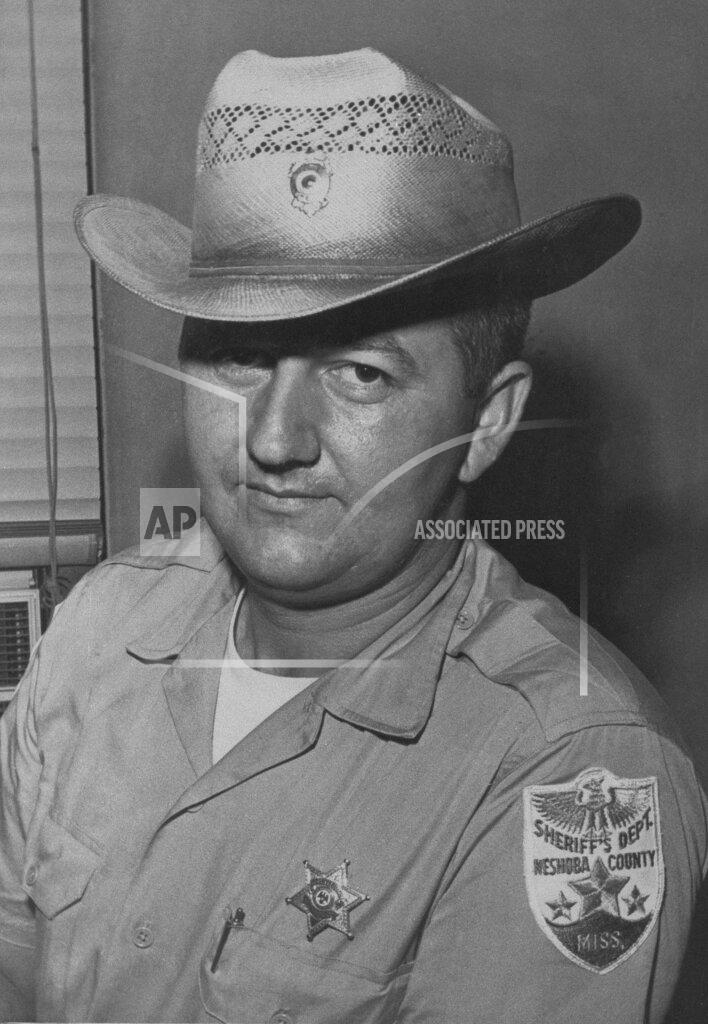
A second wave of almost 300 civil rights workers arrived in Mississippi today as the search continued here for the bodies of three earlier arrivals. The new group of volunteers, more than three‐quarters of whom are white students, brought the total number in the state for the two‐month campaign against segregation and discrimination to 475. Some 300 more are expected to join them later. For the first time since tile drive began a week ago, no major incidents were reported. There were other tentative signs of at least a temporary easing of racial tension. A spokesman for the Council of Federated Organizations, the coalition of civil rights organizations conducting the Mississippi operation, said in Jackson that state and local authorities had appeared to be protecting the arriving workers.
Three white youths walked up to a white volunteer in the Illinois Central Railroad station in Jackson early this morning and one struck him on the neck, according to the spokesman. But Jackson policemen, moved in quickly and hustled the three whites away. State and local law enforcement officers were standing by in other cities and towns when the volunteers arrived, he said, and made no attempt to interfere with them. Highway patrolmen followed some of the commercial buses on which the volunteers rode into the state. The real test is expected to come when the campaign of political action, education and cultural activities begins in southwestern Mississippi, site of sporadic anti‐Black terrorism and stronghold of various white vigilante groups. Council leaders, most of whom are members of the Student Nonviolent Coordinating Committee, have declined to say for security reasons when volunteers will begin work in that area. The students and full‐time civil rights workers from the student committee are expected to drift quietly into the area during the coming week.
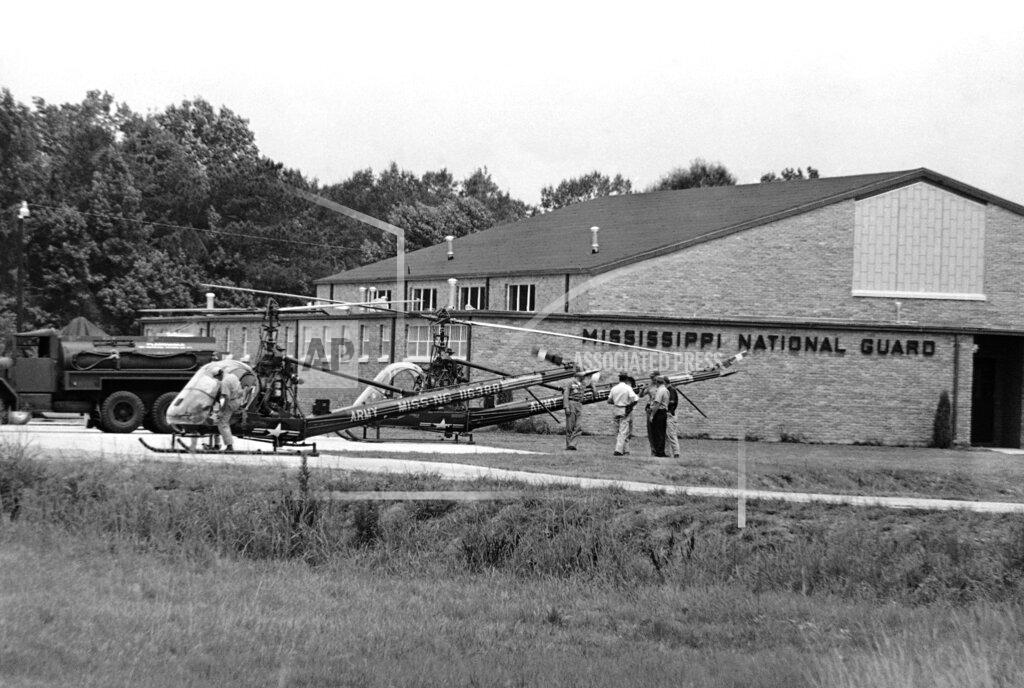
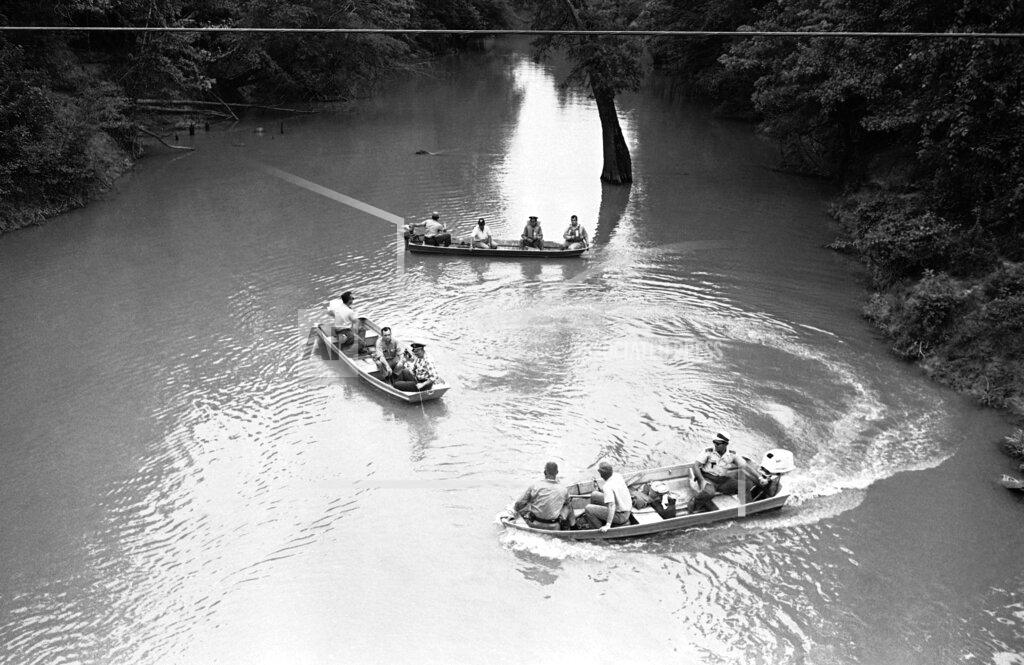
The tempo of the search for the two whites and one Negro missing in this area since last Sunday slowed considerably. One hundred sailors from the United States Auxiliary Naval Air Station at nearby Meridian suspended their hunt along roads, fields and woods north and east of Philadelphia. It will be resumed tomorrow. Five skiffs, powered by outboard motors and manned by Federal Bureau of Investigation agents, state troopers and game wardens, continued the dragging operation started late yesterday. They spread out along the Pearl River and also dragged some of the lakes in the area. While no break in the case was expected soon, it was learned that FBI agents had narrowed the field of potential suspects considerably.
White and Black leaders discussed today the formation of a four‐man biracial committee to ease the racial crisis here. There was reasonable optimism on both sides that the composition of the committee would be agreed upon within a few hours. A spokesman for the whites, who preferred to remain anonymous, said that the announcement would be made either by the special grand jury that has been investigating racial tensions here or by the Rev. Dr. Martin Luther King Jr., the integrationist leader, at a news conference tomorrow. The two white members have already been nominated by the whites, but their identities have been kept a close secret.
They are certain to be badgered by white extremists who oppose any discussions with the Blacks. J. B. Stoner of Atlanta, an attorney for the Ku Klux Klan, has already branded whites who would join a biracial committee as “n—-r‐loving scalawags.” Communications between white and Black leaders are being conducted by telephone. Governor Farris Bryant initiated the talks during his visit here Friday.
At a Black church rally this afternoon Hosea Williams, a field director of the Southern Christian Leadership Conference, told a large crowd that one Black remained to bel nominated for the committee. He warned that if the whites did not accept the Black slate of nominees, the Blacks would resume demonstrations with a wade‐in at the beach tomorrow. The biracial communication offered the first promise of peace after several days of violence that threatened to plunge this 400-year-old city into terrorism. Until today law‐enforcement officials had looked on as the racial crisis seemed to slide inexorably toward a major tragedy.
Governor William W. Scranton made a nationwide appeal tonight to Republicans to reject Senator Barry Goldwater for the sake of the party and the nation. The Pennsylvanian acknowledged that the Arizona Senator held the lead for the Presidential nomination. He declared, however, that the Senator was so dangerously impulsive in foreign affairs and so out of step with the party on domestic issues that in most states he could not win even a majority of Republican voters against President Johnson. In the process, Mr. Scranton said, Mr. Goldwater would carry candidates for other offices down to defeat with him. “He has given every evidence,” Governor Scranton said, “of being a man who is seeking not to lead the Republican party, but to start a new political party of his own.”
Senator Barry Goldwater won an important supporter today for his contention that United States policy in South Vietnam would be an issue in this year’s Presidential campaign. William E. Miller, Republican National Chairman, appearing on “Face the Nation” over the Columbia Broadcasting System television network, agreed with the Senator’s position by saying, “Of course it is an issue; I think it is time the American people were told what is going on in South Vietnam.” This puts both the Presidential frontrunner and the Republican’s party top executive at odds with the party’s leading expert on South Vietnam, Ambassador Henry Cabot Lodge, the Republican Vice‐Presidential candidate in 1960, who is due to return home tomorrow. Mr. Lodge has been quoted recently in Saigon as saying emphatically that he does not think the Vietnamese question has any place in partisan politics in the United States. He is resigning his ambassadorship in order to help Governor William W. Scranton of Pennsylvania head off a walk‐away victory by Senator Goldwater at the Republican convention. which starts July 13.
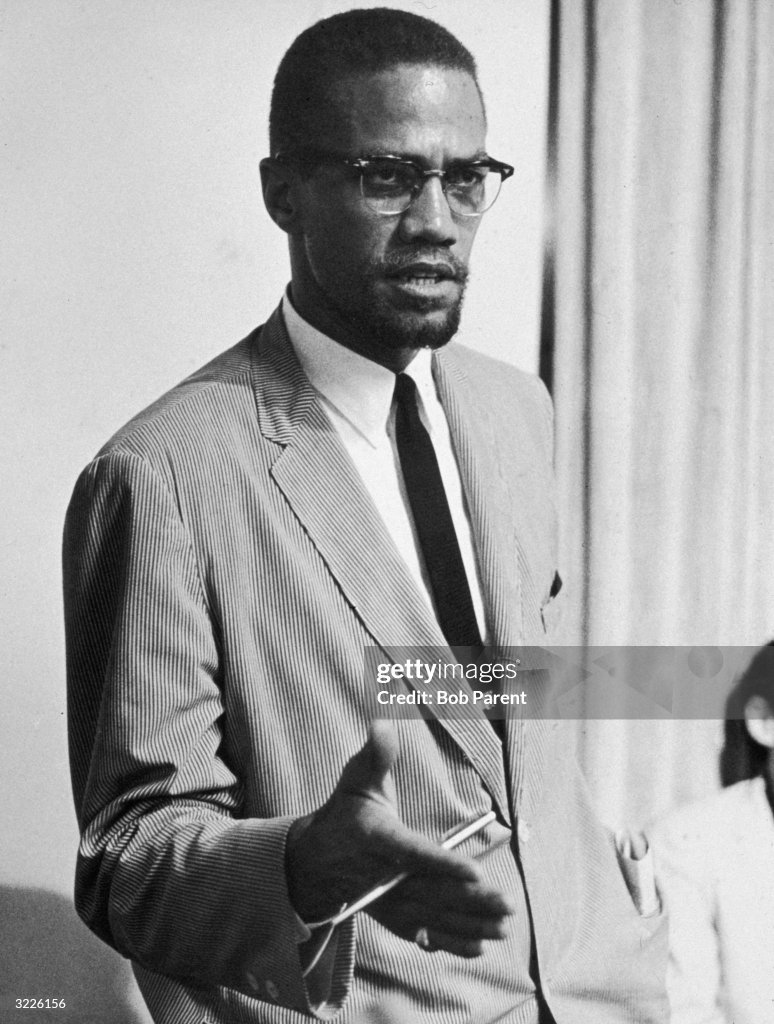
Malcolm X announced the creation of the Organization of Afro-American Unity, in a speech at the Audubon Ballroom in New York. He would be assassinated in the same ballroom less than eight months later, on February 21, 1965. Malcolm X called again tonight for unity among Blacks in their fight for civil rights. He made the plea before about 600 persons at a membership drive meeting of the Organization of Afro‐American Unity. He did not mention in his speech the presence in the city of Elijah Muhammad, the Black Muslim leader with whom he recently split. Asked to comment on Mr. Muhammad, Malcolm X replied: “We all should band together and go to Mississippi. This is my closing message to Elijah Muhammad: Lead us against our enemy. Don’t lead us against each other.”
Britt Sullivan, a 29-year-old veteran of the U.S. Navy’s WAVES program, disappeared in shark-infested waters on the third day of her attempt at a trans-Atlantic swim between New York and England. The skipper of her escort boat, the Marine Center, told the U.S. Coast Guard that she had been pulled her from the water “because a big school of sharks came within 30 yards of her” and that “a short time later she reentered the water and began swimming once again.” Sullivan, whose journey had started on Friday from Coney Island, had planned “to swim 18 hours a day and rest six” on the 3,178-mile journey The Coast Guard would abandon its search after two days after finding no trace of Ms. Sullivan.
The 1964 French Grand Prix was held at the Rouen-Les-Essarts circuit and was won by Jim Clark.
Felix Mantilla and Frank Malzone, hitting home runs in pairs, powered Boston to a sweep of a doubleheader over the Cleveland Indians 8–5 and 4–3. Dick Raditz, the monster of the Red Sox bullpen, gained his 11th and 12th saves of the season as he rescued Bill Spanswick and Bill Monbouquette. Mantilla struck the winning blow in the seventh inning of the opener with a mate aboard. He sent Lee Stange’s pitch into the screen attached to the left field foul pole. He had hit a homer with the bases empty as had Dick Stuart. Malzone crashed his homers in successive times at bat in the second and fourth innings of the second game.
Tom Tresh has 5 RBIs and belts an 8th inning grand slam as the New York Yankees come from behind to beat the visiting Detroit Tigers, 8–6, in the first of two. Don Demeter has a pair of homers for the Tigers. Detroit wins the nightcap, 6–5.
The Baltimore Orioles scored two runs in the eighth inning today to beat the Washington Senators, 6–4, and extend their winning streak to six games. It was the Senators’ sixth straight defeat. Dave Stenhouse, just off the disabled list, had turned in a strong six‐inning relief job when Norm Siebern singled to lead off the eighth. Brooks Robinson sacrificed and John Orsino reached base when John Kennedy permitted Orsino’s grounder to get away for an error. Siebern going to third. Ron Kline relieved Stenhouse and Siebern scored on Willie Kirkland’s sacrifice fly. Orsino scored all the way from first when Don Lock failed to hold Jerry Adair’s fly to center for a two‐base error.
The Cincinnati Reds swept a double‐header today from the Pittsburgh Pirates. They won the second game, 6–5, with a five‐run third inning after pounding five Pirate hurlers for 11 hits and a 6–2 victory in the opener. The Reds belted Bob Friend for five hits in the third inning of the second game. John Edwards’s bases‐filled double scored three runs, and two more went home on Leo Cardenas’s double and Steve Boros’s single. Pete Rose led Cincinnati’s attack in the opener with three singles and ran his consecutive string to seven before Elroy Face struck him out in the fifth.
Dodger catcher John Roseboro tags out Willie Mays trying to steal second base! With Duke Snider at bat with a 2–2 count in the 3rd inning, Mays tries to steal second base. But Roseboro calls for a pitchout and when Mays sees he can’t make it to second safely, he stops. Roseboro races towards him, after Mays makes a stab at trying to get back to first, and tags him out. But the Giants push across the only run of the game in the 8th off Don Drysdale to give Ron Herbel the 1–0 win.
Born:
Mark Grace, MLB first baseman (World Series Champions-Diamondbacks, 2001; All-Star, 1993, 1995, 1997; Chicago Cubs, Arizona Diamondbacks); in Winston-Salem, North Carolina.
Kevin Reimer, MLB outfielder and designated hitter (Texas Rangers, Milwaukee Brewers), in Macon, Georgia.
Dino Hackett, NFL linebacker (Pro Bowl, 1988; Kansas City Chiefs, Seattle Seahawks), in Greensboro, North Carolina.
Bryan Barker, NFL punter (Pro Bowl, 1997; Kansas City Chiefs, Philadelphia Eagles, Jacksonville Jaguars, Washington Redskins, Green Bay Packers, St. Louis Rams), in Jacksonville Beach, Florida.
Susan Mascarin, American tennis player, in Grosse Pointe Shores, Michigan.
Tommy Lynn Sells, American serial killer (convicted of only one murder, for which he received the death penalty and was eventually executed, authorities believe he committed a total of 22 murders. Sells himself claimed on various occasions to have murdered over 70 people), in Oakland, California.
Died:
King Calder, 64, American actor (Lt. Gray-“Martin Kane, Private Eye”).
Eduards Kalniņš, 87, Latvian general.

 History Diaries