French Premier Édouard Daladier fears a summer crisis. The situation is the worst in 20 years, he tells parliament. Prime Minister Daladier stunned parliament by ordering its adjournment for summer holidays several days earlier than expected. Hinting that the parliamentary vacation may be a brief one and that this summer may see a test between “those who desire the pacific collaboration of nations” and those who are seeking “domination of some of these peoples by others,” Premier Édouard Daladier read a Presidential decree this afternoon closing the parliamentary session. In these past months he has not spoken much and his final declaration was a model of brevity.
“One essential fact dominates all our thought,” he began. “For twenty years the situation in Europe has not been so delicate nor so grave as now. On the other side of our frontiers there are 3,000,000 men mobilized. In their factories the manufacture of armaments is being pushed forward feverishly. Reports keep reaching us of maneuvers and troop concentrations… Within our own borders we are being subjected to a campaign of subtle propaganda tending to weaken our energy and to break that solidarity between France and Britain without which there is no great hope for liberty in Europe and the world.” In these circumstances, the Premier continued, the government could do only one thing, and to that thing it must bend all its energies. It must keep strengthening its defenses.
“On the shoulders of every French citizen the burden is already heavy,” he said. “It has been accepted and our people prefer to make this effort. They will rather, I know, consent to even heavier sacrifices than bow before the challenge of brutality and force.” Against efforts of intrigue the government would use the full power of its decree laws, M. Daladier declared; it would break the nets of deceit, espionage and worse in which it was being sought to envelop France. “It may be this summer,” the Premier said, “that the issue between those who desire the pacific collaboration of nations and the attempt at domination of some of these peoples by others will be joined.
“France is ready to welcome any effort toward pacific collaboration if and where there is an honest desire to work at the creation of a peaceful world. She has given repeated proof of this willingness. She is ready to try again. But France also is as firmly resolved to rise with all her force against any attempt at domination. To arm, to keep the country united and to be watchful, that is the whole duty and business of the government. Everything must be subordinated to the defense of the country and only events can decide our future actions.”
A German plane flying over the Hela Peninsula, northwest of the Gulf of Danzig, was shot down by Polish artillery yesterday, it was revealed. here tonight. There is a strongly fortified Polish naval base at Hela facing Danzig across the bay. A warning round was fired by the Poles when they sighted the plane and a second round was fired when it continued its flight. This brought it down. The pilot was rescued by a German warship.
More than 1,000 young men have arrived in Danzig in the last few days from East Prussia, it was learned here. They will form the nucleus of the new Free Corps — Danzig’s coming “army.” There is also a great influx of Poles.
The news that the Free Corps — a voluntary armed force — is to be created is confirmed today in the semi-official Gazeta Polska in a dispatch from its well-informed Berlin correspondent. Arms for the corps, the Gazeta Polska maintains, were smuggled in from East Prussia and that explains why efforts were made to get rid of the Polish customs inspectors on the River Nogat, separating Danzig from East Prussia.
The Nazi press is defiant 20 years after war. “Never again Versailles” is their slogan. The double anniversary of the murder of the Austrian Archduke Franz Ferdinand and his wife at Sarajevo, which started the World War, and the signing of the Treaty of Versailles, which ended it, is made the occasion today of bitter, defiant comment in the German press. Dr. Wilhelm Frick, the Interior Minister, sounds the keynote in the Voelkischer Beobachter with the words “Never again Versailles!”
“The Versailles dictate is dead, but its spirit is still alive,” he writes. “It is haunting today the minds of those who believe they can deny the German city of Danzig the right to self-determination and ignore Germany’s righteous claims to her colonies. It is this Versailles spirit that is to blame for today’s recurrent crisis. In the knowledge of our strength and at the side of our powerful friend Italy, we cry today on this anniversary ‘Never again Versailles! And in so doing we believe that we are serving not only our interests but the cause of peace 88 well. The German people, crushed by internal foes, once submitted to their fate — they will never do so again.”
The Deutsche Allgemeine Zeitung declares: “The twenty-eighth of June no longer implies submission but defiance. Today every German knows that it is now a matter of the Reich’s life or death. There will be no more compromises at the people’s expense.”
Germany has learned in the twenty years since Versailles to place more faith in deeds than in words, comments the Frankfurter Zeitung. “At the close of these twenty years there is not a single German who believes that falling in line with Britain would bring fulfillment of our vital needs,” it declares. The conflict therefore must continue. Britain has embarked on a course that shows little promise of ending the battle for power and coming to a real friendly understanding. Our weapons are powerful — more powerful than those of any other nation. We have not used them; we do not wish to use them and we believe that we may not have to use them. The existence of our armament is sufficient.”
Italy’s ability to win a war speedily through lightning attacks by a perfected organization based on the spirit of fascism was vaunted today by the heads of her armed forces. Marshal Pietro Badoglio, chief of the combined war forces; General Alberto Pariani, Chief of Staff of the army; Admiral Domenico Cavagnari, head of the navy, and General Giuseppe Valle, head of the Air Force, extolled the country’s prowess in “Armed Forces of Fascist Italy,” a book published under government auspices.
“It is evident,” Marshal Badoglio wrote, “that the army, militia, navy and air force of imperial Italy, rich in experience gained in a succession of victorious wars, have. perfected their organization and raised themselves to a level never before reached and one that improves to meet our empire’s necessities of prestige and security.”
General Parlani said Italy’s war strategy would be a terrific lightning assault to shatter the enemy lines, and immediate and full exploitation of victory. General Valle said that by organization and training Italy had produced the “perfect airman” and that the country was in the vanguard in air equipment. The writers said a single command in the hands of Premier Benito Mussolini and the valor and audacity of Italian combatants inspired by him would be the deciding factor in a war.
[Ed: Filed under, “Everyone has a plan, until they get punched in the face.” – Mike Tyson.]
The president of Italy’s Fascist Chamber dies of a heart attack. He was at one time believed to be Mussolini’s successor.
Fresh British proposals designed to overcome the stalemate in Soviet Russian negotiations over the Baltic question, it was said by informed sources, would be on their way to Moscow within twenty-four hours. These quarters expressed the hope the new offer would overcome the last objections of Russia to entering a mutual assistance pact with Britain and France. The nature of the new proposals was not disclosed.
Prime Minister Neville Chamberlain faced a new barrage of questions on what action Britain intended to take in the Far Eastern dispute with Japan, but he told the House of Commons that he could add nothing to yesterday’s statement-that he had hopes of peaceful settlement. At one point an annoyed Laborite shouted “A new Prime Minister!” but Mr. Chamberlain took no notice and refused to answer others who pressed for “some indication of more definite action” to deal with the Japanese Army’s blockade of the British and French Concessions at Tientsin.
A Quaker denies Franco aides took food intended for refugee children, saying a few shipments were taken in confusion.
Six Arabs are hurt in a blast. One child is seriously injured. A bomb is placed in an orphanage wall in the western part of Jerusalem.
Near Haifa this morning two Jewish-operated buses were fired on while they were passing the Arab village of Baled-es-Sheikh, where five Arabs were murdered a fortnight ago. One bus was hit twice, but there were no casualties.
At a closed session of the Zionist Actions Committee for Palestine today a resolution was adopted expressing “the profoundest condemnation of the shedding of innocent blood, which is liable to sully the purity of the struggle for Jewish freedom.”
In Washington, the U.S. Senate debated the $1,735,000,000 Relief Bill, passed the 1940 District of Columbia Tax Bill, confirmed the nomination of Jesse H. Jones to be head of the new Federal lending agency, and recessed at 7:47 PM until 11 AM tomorrow. The Interstate Commerce Committee approved the renomination of Paul Walker to the Federal Communications Commission for a seven-year term, the Education and Labor Committee heard representatives of the National Automobile Manufacturers Association on amendments to the National Labor Relations Act, the Temporary National Economic Committee began an investigation of the construction industry and conferees reached an agreement on the $1,200,000 Agriculture Appropriation Bill.
The House began debate on the Bloom Neutrality Bill, adopted the conference report on the $30,700,000 Department of Labor Appropriation Bill and adjourned at 6:15 PM until 11 AM tomorrow. The Rules Committee voted a rule to permit the House to send the Monetary Bill to conference, and the Banking and Currency Committee continued questioning Nathan Straus, Housing Authority Administrator, on the bill to increase the USHA’s bonding authority.
The titular leadership of both houses of Congress was trying desperately today to shift the odds in favor of the Administration in the bitterest clash for many years between the legislative and executive branches over control of vital policies of the Federal Government. The Administration managers were striving most of all to drive the Monetary Control and Unemployment Relief Bills through a combination of partisanship, factionalism and plain legitimate opposition which are rising as a barrier to much of the remaining legislative program, and to get them to the White House in a form desired by President Roosevelt before the zero hour of Friday midnight.
Following this purpose, the House leaders mapped the strategy this afternoon by which they hoped to send the monetary bill to conference tomorrow. A Senate and House conference, they figured, was the best chance they had of restoring the President’s power to devalue the dollar, which was stricken out by the upper branch yesterday; of deleting the mandatory increase in the purchase price of domestically mined silver, and of restoring the foreign silver purchase authority.
Meeting in hastily called session late this afternoon, the House Rules Committee reported a resolution sending the bill to conference without intervening motion. This resolution will be voted upon tomorrow following an hour’s debate. The House Republicans intended to move concurrence in the Senate amendments, and thereby to end the President’s remaining power to devalue the dollar, but whether they will make the effort by voting down the resolution tomorrow, or await a conference report, had not been decided among their leaders tonight.
As the center of action on the monetary bill was transferred to the House, the Senate began consideration of the $1,735,000,000 relief bill, under pressure of its leaders to complete it by early tomorrow. The Congressional helmsmen hoped to get this measure through all the legislative stages before the WPA organization ends on Friday night, along with exhaustion of its fast-depleting funds. They realized, however, the elements of delay inherent in the proposed Senate amendments to the House draft, and so were prepared to introduce a “continuing resolution” — keeping WPA expenditures at their present rate for thirty days — should the bill get hopelessly involved in a last-minute jam.
President Roosevelt bluntly denounced today the Senate’s refusal to continue his dollar devaluation power as a blow to national defense and an attempt to return control over the currency in foreign exchange from Washington to Wall Street. He refused to consider the Senate action as final and said that for Congress to stand on the Senate’s verdict would be to play into the hands of private bankers and international speculators.
By its 47 to 31 vote to end at midnight Friday his devaluation authority, the President declared, the Senate was inviting a return to the frenzied finance of 1930-31, when, he asserted, thousands of American manufacturers, exporters, importers and farmers lost hundreds of millions of dollars because their government was powerless to protect the currency against speculative raids. In asserting that the Senate action was a blow to national defense, he explained that a nation could be weakened by damage to its foreign trade.
Making no attempt to conceal his disappointment and chagrin over the outcome of the extraordinary coalition of hard-money and high silver advocates which yesterday brought about the Administration’s stinging Senate defeat, the President staged his ungloved attack in the presence of a handful of newspaper correspondents during his regular press conference in the little office of his family home here.
There was no table thumping or gestures, but the Presidential ire was obvious as he described the Senate’s action as the most serious setback to foreign exchange stability since control over the currencies of the principal world powers passed from private hands to their governments. Once, by inference, the President condemned the larger newspapers of the country and their publishers for their part in bringing about the repeal.
Fearful that large quantities of foreign silver would be dumped in the United States as the result of yesterday’s Senate vote to stop government purchases of the metal from abroad, the Treasury today cut the price it pays for imported silver from 43 to 40 cents an ounce. Officials declined to make any formal explanation of the reduction, but it was learned that the Treasury feared an influx of shipments within the next few days unless prices in London and the United States were kept in line.
The price on the London market dropped to nearly 39 cents an ounce today. The Treasury has been paying 43 cents since March, 1938. The silver was bought under a 1934 law designed to increase the world price to $1.29 an ounce through diminishing the supply glutting the silver markets. The idea was to raise the price. of silver by somewhat the same means as to buy up several million bushels of wheat and lock them away in elevators would influence. the grain markets.
Fears of imminent war in Europe and the danger of American involvement formed the thread which ran through today’s opening debate in the House on the Administration’s plans to revise the Neutrality Act. Leaders hoped to push the issue to a final vote in the House by Friday night. Despite pleas of Representative Bloom of New York, Representative Luther A. Johnson of Texas and others for a nonpartisan consideration of the resolution before the House, several of the speakers. from the Republican side opposed the measure because they believed. President Roosevelt wants powers with which he can menace the dictatorships to the benefit of the democracies of Europe.
The general debate, which will last through tomorrow’s session as well, opened in an atmosphere of unusual interest, with the chamber and galleries crowded. The first hour, which was theoretically devoted to debate on the adoption of a special rule to bring the Bloom resolution to the floor, was utilized by speakers for and against the measure itself, as there was no opposition to the move to bring it up for consideration.
Representative Fish of New York, ranking minority member of the Foreign Affairs Committee, started the attack on the proposal, calling it an “interventionist and war-making measure… It repudiates everything Congress has done in the last five years to keep America out of war,” he said. “It does away with the arms embargo. In this bill you are taking the road to war. It is utterly impossible to sell arms, ammunition and implements of war to any nation without becoming involved in war before long.”
Senator Burton K. Wheeler of Montana, regarded as a liberal, who was a leader in the fight which defeated President Roosevelt in his efforts to enlarge the Supreme Court, is understood to have been approached by Administration leaders with the suggestion that he seek the Vice-Presidential nomination in 1940 on a ticket that would be headed by Mr. Roosevelt. According to reports in political circles, a spokesman for the Administration made the suggestion to Senator Wheeler. The spokesman is reported to have disclaimed any official status but to have assured the Montana Senator that his candidacy would be acceptable to Administration forces and perhaps agreeable to the President.
It is understood that Senator Wheeler declined to consider the proposition. He has indicated his intention to seek re-election to the Senate in 1941. Although Senator Wheeler has made no public comment on the third-term question, he is described as having told Senatorial colleagues privately that President Roosevelt is very strong and can win the nomination if he chooses to seek it. The Senator is said to share the view that the President’s weakest support is among farmers and the middle class.
The Dodgers and Bees play a 23-inning, 2–2 game at Boston, called on account of darkness after 5 hours and 15 minutes. Whit Wyatt (7–0) pitches the first 16 innings for the Dodgers; the two teams total 30 hits and 12 walks. The Bees seemingly have the game won in the 13th when manager pinch runner Otto Huber rounded third base with room to spare. But he slipped and could not recover in time. In a story that Casey Stengel repeated for years, he asked Huber after the game why he was wearing his old baseball shoes with worn spikes instead of the new pair; Huber replied that they hurt his feet. From then on Stengel made sure to look at the shoes of pinch runners before putting them into the game. Umpire Tom Dunne, borrowed from the American Association, to replace an ailing Bill Klem, officiates his first Major League game. The game draws 2,457 fans.
A night game was played at Cleveland Stadium for the first time. Indians’ pitcher Bob Feller (12–3) allows just one hit and strikes out 13 as Cleveland beats Bobo Newsom (7-5) and the Detroit Tigers, 5–0. Earl Averill’s single in the 6th is the lone safety.
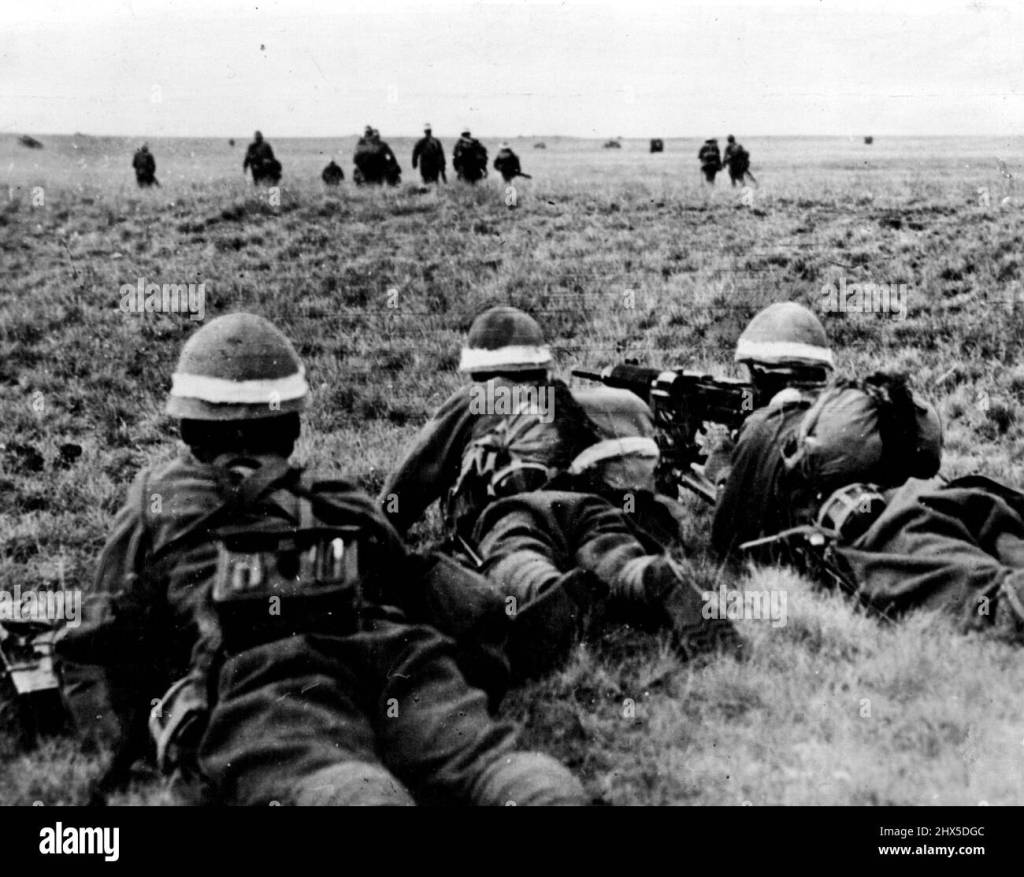
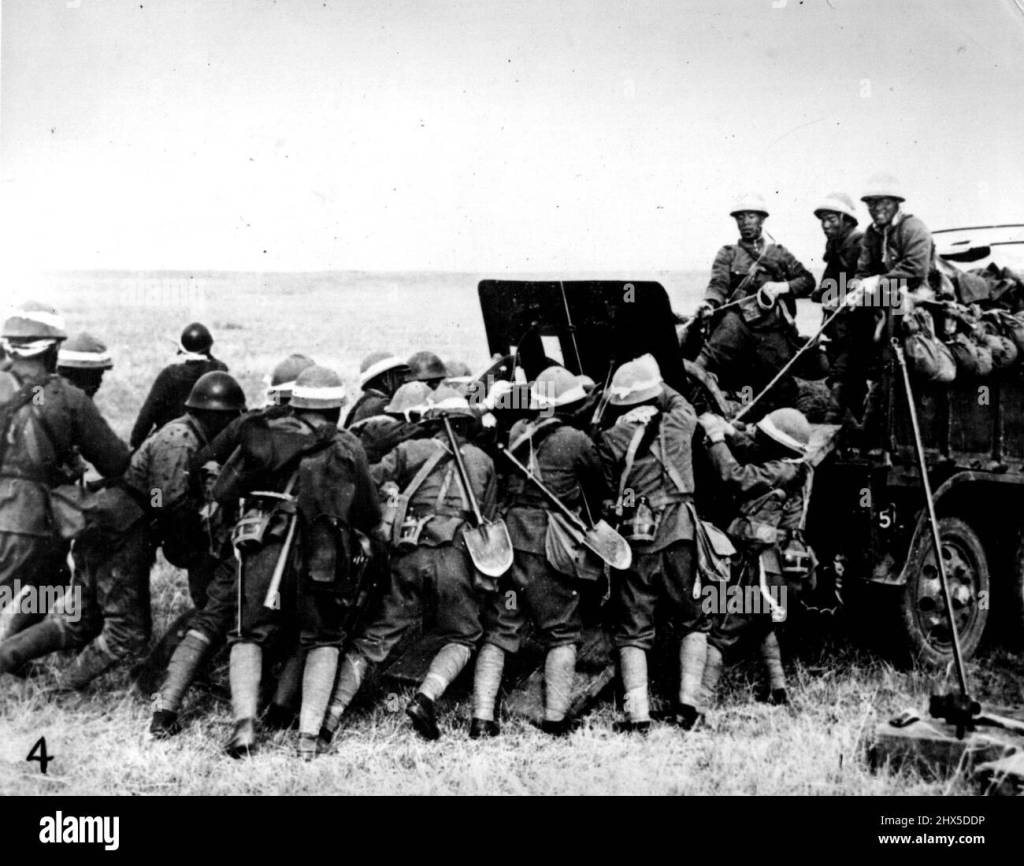
Fighting continues in the Khalkin Gol (Nomonhan Incident). Conflicting claims of air victories and battles by Tokyo and Moscow are so contradictory as to make analysis of the daily situation impossible. Clearly, however, the fighting is intense and growing more so.
As the result of delicate negotiations here and in London, accompanied by still more delicate interdepartmental negotiations in Tokyo and in Tientsin, it has been decided to open British-Japanese negotiations in Tokyo in an attempt to settle the Tientsin affair on a comprehensive basis. A government statement is to be issued this afternoon to coincide with an announcement by the British Government.
The motive for this agreement, which was not easily reached because of the excitement prevailing in Japanese Army circles in Tientsin, was the desire of both governments to avert an extremely serious trial of strength which in the long run might have involved other powers. When the blockade was called, the Tokyo Government at first decided to leave the matter to a local settlement. No other decision was possible then in view of the manner in which the affair had passed to the hands of the army as an issue. involving security in the occupied region.
As the blockade developed and tempers on both sides rose, it was seen a local solution could never be found. Sir Archibald Clark Kerr, the British Ambassador to China, whose alleged sympathies for China have aroused great opposition in the Japanese press and army. would have represented Britain. By moving the talk to Tokyo, where Britain is represented by Sir Robert Craigie, who has gained Japanese confidence to a remarkable degree, there is hope that moderate counsels may prevail. Both Britain and Japan, despite the exasperation each has caused. the other since the China war began, have strong reasons to avert. an open quarrel with all its repercussions and have therefore agreed to this course.
There is confidence that it will at least settle the Tientsin affair. If so a precedent will have been made which may provide means for a dispassionate approach to other questions. This undeclared war opens new problems of neutrality for which a solution must be found. The transfer of the discussions to the relatively calm atmosphere of Tokyo, where the negotiations take place under the eyes of the government and are handled by officials acquainted with diplomacy and law, is regarded as a triumph of common sense over war emotion.
Prime Minister Neville Chamberlain is expected to announce in the House of Commons tomorrow an agreement to negotiate the Anglo-Japanese dispute. It is possible something may come up between now and then to prevent publication of the agreement, which it is understood will also be announced in Tokyo. But tonight, it was confidently believed the two nations would attempt to find a way to lift the Japanese blockade at Tientsin and put an end to incidents such as stripping British women.
The Swatow Operation ended in Japanese victory. Part of Goto Detachment and a part of Sasebo 9th SNLF landed on the east coast on June 21 near the airfield east Swatow. Other Japanese troops in more than ten motor boats proceeded up the Han River and landed at Mei-hsi (near modern Anbu) cutting the road between Swatow north to Chao-chow. A coordinated attack by the Japanese drove the Chinese defenders, Hua Chen-chung’s brigade and local militia units, from the city of Swatow. They fell back to the Yenfu–Meihsi line on June 23.
The Japanese also had landed at Jiao Yu, the island south of Swatow, on June 22. They occupied the whole island by June 24. The Chinese fell back to Fuyang on the 24th to block the approaches to Chaochow as the Japanese landed reinforcements. Proceeding north in pursuit the Japanese also sent forces up the river and landed in the Chinese rear, part of the Chinese force then fell back into the city while the remainder moved into the mountains northwest of the city. The Japanese advancing from the west captured Chaochow by June 27 after heavy street fighting. Later the Chinese sent reinforcements of the 5th Reserve Division, and 1st Advance Column to block the Japanese from further advances and conduct guerrilla warfare on their positions and lines of communications. Control of Swatow and its harbor will provide a base to make the blockade of Guangdong province more effective.
Dow Jones Industrial Average: 135.42 (+0.33).
Born:
Brereton C. Jones, horse breeder and 58th governor of Kentucky (1991-1995), in Gallipolis, Ohio.
Lynn Hoyem, NFL guard, tackle, and center (Dallas Cowboys, Philadelphia Eagles), in Fargo, North Dakota (d. 1973 in a private plane crash).
R. D. Burman, Indian film score composer (1942: A Love Story), in Calcutta, Bengal Presidency, British India (d. 1994)
Neil Hawke, cricketer and Australian rules footballer, in Cheltenham, South Australia, Australia (d. 2000).
Died:
David Werner Amram, 73, American lawyer, legal and Talmudic scholar, Zionist, and author (“The Makers of Hebrew Books in Italy”).
 History Diaries