
ARVN Rangers in Long Hải trap a Việt Cộng battalion and inflict heavy casualties. South Vietnamese rangers crushed a Communist battalion at this village south of Saigon in heavy fighting yesterday and today after setting a trap. Two Americans were killed. It was the second major Government victory reported in two days. Yesterday South Vietnamese armored vehicles inflicted heavy losses on the Communist Việt Cộng at the village of Bàu Cốp, 60 miles northwest of Saigon, killing at least 100. The victory at Long Hải cost the lives of two American crewmen and a South Vietnamese when groundfire downed a United States‐armed helicopter supporting the operation. Two American crewmen were injured. A T‐28 propeller‐driven fighter‐bomber was also shot down but an American and South Vietnamese aboard parachuted to safety.
In the operation here the rangers killed at least 43 enemy troops at a loss of 18 government men. Late today they were still pursuing the enemy through the marsh grass with fixed bayonets. Firing could be heard several thousand yards away from the village. The Ninth Division Commander, Colonel Vĩnh Lộc, flew in today to decorate some of the rangers and two of their American advisers, Captain Raymond R. Rau of Evanston, Illinois, and Sgt. John L. McCoy of Riverside, California, for gallantry in action. The rangers lined up on a patch of dry ground littered with Việt Cộng dead while Colonel Lộc pinned on the Vietnamese Silver Star. Then the soldiers sloshed off across the flooded rice paddies to rejoin the fight.
Colonel Lộc sent a company of militiamen to set the trap. When the Việt Cộng dug in he sent several companies of rangers by helicopters to attack the enemy with machine guns, bombs and rockets. On the ground the rangers fought against the Communist entrenchments for two hours until the Việt Cộng tried to escape with their usual tactics of breaking into small groups and scattering. They were cut off in all directions and helicopters kept track from the air. Thirty‐two were dead by nightfall. Eleven more were tracked down and slain today. The Communists abandoned a rich store of weapons. Although they usually make a desperate effort to save their weapons, a 60‐millimeter mortar, an automatic rifle and 27 rifles and submachine guns were captured.
Two American fliers and their South Vietnamese observer were killed yesterday when the Communists shot down their armed helicopter, a United States military spokesman said today. Two United States soldiers manning the helicopter’ s machine guns were injured in the crash. They were flown to the United States Navy hospital here, where a spokesman said one of the soldiers was in serious condition. Their helicopter was downed by ground fire while flying a rocket and strafing mission about 65 miles south of Saigon. The copter was supporting a South Vietnamese sweep against Việt Cộng guerrillas. Two other American pilots, flying L‐19 observation planes, were killed in separate crashes earlier this week. The helicopter victims increased the United States death toll in Vietnam’s war against the Communists to 237, including 146 men killed in combat.
New Zealand has sent a token military force to South Vietnam in response to American appeals to “put out more flags” in the war against the Communists. Australia has had a small group of military advisers training Vietnamese forces for some time. This week New Zealand dispatched a unit of field engineers to repair roads and bridges. Theoretically, the New Zealanders will be in a noncombatant role, but the troops will carry arms for self‐defense. New Zealand has regularly acknowledged the importance of Vietnam to the security of Southeast Asia. A few days ago, Prime Minister Keith J. Holyoake said the fate of Vietnam would largely determine the fate of Indochina as a whole. New Zealand also has an infantry battalion in Malaysia.
Henry Cabot Lodge has looked back on his 10 months as Ambassador to South Vietnam and concluded that the formula has at last been found for success against the Communist guerrillas without likelihood of a general war in Asia. “A strong, positive, easily discernible favorable trend has not yet manifested itself,” he said, measuring his words carefully. “Yet there are a number of developments that make me think we are on the right track and that this effort is going to be successful.” Mr. Lodge, who has resigned his post here, spoke yesterday in what was the first formal news conference he has given in South Vietnam. He is leaving later today for Washington to join the campaign of Governor William W. Scranton of Pennsylvania for the Republican Presidential nomination.
U. Alexis Johnson, newly named Deputy Ambassador to Vietnam, arrived this morning with a pledge to carry on the work of Mr. Lodge. Mr. Johnson is assuming management of the American mission here pending the arrival of General Maxwell D. Taylor, the new Ambassador. “I have confidence in the strength of the gallant people of Vietnam,” Mr. Johnson said in an arrival statement, “and in their ability to save their freedom and independence from those who would seek to destroy them. “Ambassador Taylor and I will devote our total energies to cooperating with General Khanh and the Republic of Vietnam to that end. President Johnson made it clear that he expects us to pursue these efforts to success. “In this we are very conscious that we will be building on the work so ably carried out by our good friend, Ambassador Henry Cabot Lodge.”
At a formal reception yesterday, Premier Nguyễn Khánh awarded Mr. Lodge the highest civilian and military decorations of South Vietnam, the Grand Cross of the National Order and the Cross of Gallantry.
The Laotian King’s Council adopted today a resolution condemning recent attacks by pro‐Communist Pathet Lao forces and military intervention by their foreign allies. The council, obviously referring to North Vietnam, protested strongly against foreign interference in the form of troops and war material sent to the Pathet Lao. It said: “This indignation is so much greater and more profound because the Pathet Lao by their own means cannot and dare not lead such big scale operations.”
Political observers here said the Royal Council normally stayed out of politics and it was the first time it had come out so strongly on any issue. The King’s Council is the upper house of the Laotian legislative system. It consists of 12 members — six appointed by the King and six chosen by the National Assembly. The observers said the council’s resolution had apparently been approved by the King, from whom the neutralist Premier, Prince Souvanna Phouma, was understood to have been seeking support in making the Pathet Lao adhere to the 1962 Geneva agreement on Laotian neutrality.
Assistant Secretary of State Harlan Cleveland said at the United Nations today that the danger of war over Cyprus “is getting greater, not less.” He stressed the importance of getting the Greek and Turkish Cypriotes together as soon as possible and said that the island of Cyprus “could sink under the weight of armaments.” Adlai E. Stevenson, the United States chief representative; his deputy, Charles W. Yost, and Mr. Cleveland conferred on the Cyprus crisis for more than an hour with the Secretary General, U Thant, and Ralph J. Bunche, Under Secretary for Political Affairs. As they left, Mr. Stevenson means to get the interested parties together. The Premier of Greece, George Papandreou, said yesterday that it was useless to attempt direct talks in present circumstances because the views of the two sides were so far apart that talks would serve only to confirm the split and thus encourage extremists.
The United Nations mediator, Sakarl S. Tuomioja, is due to begin talks in Geneva next Saturday. He left here last night for Geneva by way of Stockholm. Mr. Thant said in reply to a question that it was up to Mr. Tuomioja to decide for himself whom he would see and when. Mr. Thant said the mediator was free to talk with any or all countries as he thought best, either together or separately. Mr. Stevenson noted that the mediator was “not responsible to anybody” for his working methods but only for his results. Mr. Tuomioja, who is Finnish Ambassador to Sweden on leave of absence for this work, was named by Mr. Thant March 25 to act as mediator in Cyprus under a Security Council resolution of March 4. He has nothing to do with current peacekeeping efforts but is instructed in Mr. Thant’s words to help “develop the basis for a long-term solution of the problem.” Premier İsmet İnönü of Turkey said Thursday here that he favored direct negotiations to end the fighting, which has gone on intermittently since December 23.
The major block to negotiations is that Mr. Papandreou insists any settlement in Cyprus must be based on the majority vote of a population that is about four‐fifths Greek while the Turks insist on safeguards for their rights. Mr. Thant told the Security Council on June 15: “The problem of arms in Cyprus is critical.” The government of Cyprus has claimed the right to import arms for reasons of national defense. Mr. Thant said the smuggling of arms clearly was illegal, but he also said: “The question is whether at the present time and in the present circumstances the import and manufacture of arms by the Government of Cyprus is within the letter and/or spirit of the Security Council resolution of 4 March.”
Congolese “King” Albert Kalonji, former ruler of the secessionist “Mining State” of South Kasai, returned here today after almost two years in exile. The 34‐year‐old Baluba chieftain, who was known as “Mulopwe” (god emperor) to his Baluba subjects, arrived this morning by jet from Brussels. He had been living in Spain. His arrival followed by less than 24 hours the return of Moise Tshombe, former president of the secessionist province of Katanga. Mr. Tshombe had also been in exile in Spain. The return of the two leaders is part of a growing move here for formation of a “government of national reconciliation.” Mr. Tshombe is being mentioned as possible premier of such a government.
Lal Bahadur Shastri, Prime Minister of India since June 9, has been ordered by his doctors to remain in bed “for a few days” because of “physical and nervous exhaustion and strain.” He is 59 years old. He has canceled all his immediate engagements, and a news conference he had scheduled for next Tuesday has been called off. Official quarters said no decision had been taken on Mr. Shastri’s trip to London for a conference of Commonwealth Prime Ministers. He had planned to leave Bombay for London early July 6. He has never been out of India except for a visit to Nepal.
On completion of a series of exhumations at the former Jasenovac concentration camp in Croatia, it was estimated that the grounds of Donja Gradina held the remains of 366,000 victims of anti-Serbian extermination practices during the Second World War. In 1989 Serbian anthropologist Srboljub Živanović would publish what he claimed were the full results of the 1964 studies, which in his words had been “suppressed by Tito’s government in the name of brotherhood and unity, in order to put less emphasis on the crimes of the Croatian Ustaše”.
Searchers for three civil rights workers, missing since Sunday, began dragging the muddy Pearl River today for their bodies. Some 100 sailors, a Navy helicopter and 25 state policemen pressed the land search for the two whites and one Black. They concentrated on the area to the east and north of the east‐central Mississippi town of Philadelphia. Agents of the Federal Bureau of Investigation, state policemen and wardens of the State Game and Fish Commission began dragging the river shortly before 5:00 PM at Yates Crossing, some two and one‐half miles northwest of here where State Highway 19 crosses the Pearl. In Minneapolis, it was announced that President Johnson had ordered additional agents of the FBI sent to Mississippi. The President appealed for understanding and obedience to the law in moving along “the path to racial justice.”
Nelson L. Phillips, the FBI agent in charge of the dragging operation, said that it was nothing more than a part of the overall search and that it was not based on any tip. “We’ll try to work the logical places, around bridges, roads and places like that,” he added. Each of the four 14‐foot aluminum skiffs carried an FBI agent, a state policeman and a game warden. They were equipped with outboard motors, walkie‐talkie radios and grappling hooks. Birtchett Brown, a game warden, launched the first boat into the river under the highway bridge at 4:40 PM. The actual dragging began 15 minutes later.
As the five‐day investigation into the disappearance continued, Mississippi braced for the coming of 250 additional volunteers in a two‐month campaign against segregation and discrimination. The group’s arrival this weekend, to join 175 student volunteers who began the drive last Sunday, is generally expected to increase racial tensions further in this troubled state.
President Johnson has already demonstrated his readiness to exert Federal authority to halt interference with the voter registration phase of the campaign. It was learned that the Administration was prepared to take drastic steps, if necessary, to prevent a racial holocaust. Governor Paul B. Johnson Jr. has indicated that the state will do what it can to avoid the necessity of Federal intervention. But doubt remained as to whether state and Federal action could prevent a serious crisis from developing. Whites have reacted angrily and sometimes violently to the efforts of the Student Nonviolent Coordinating Committee and other civil rights organizations to carry out a program of political action, education and cultural activities among the state’s Blacks.
Many whites and Blacks are armed. The Ku Klux Klan and such vigilante groups as the Americans for the Preservation of the White Race have apparently won a substantial number of recruits. Sporadic anti-Black terrorism has plagued some areas. Within the last two weeks, attempts have been made to burn three lack churches and a meeting hall. A fifth church, Mount Zion Methodist, near Philadelphia, was completely destroyed by fire. One Black home has been bombed and attempts to bomb two others have taken place. There have been numerous reports of threats, harassment and intimidation against civil rights workers, Blacks and newsmen. Some incidents have involved armed whites cruising the streets, highways and country roads after dark in automobiles from which the license plates have been removed. Actual violence has been relatively limited. But the fear created by the white reaction has made it difficult for the civil rights workers to conduct their campaign.
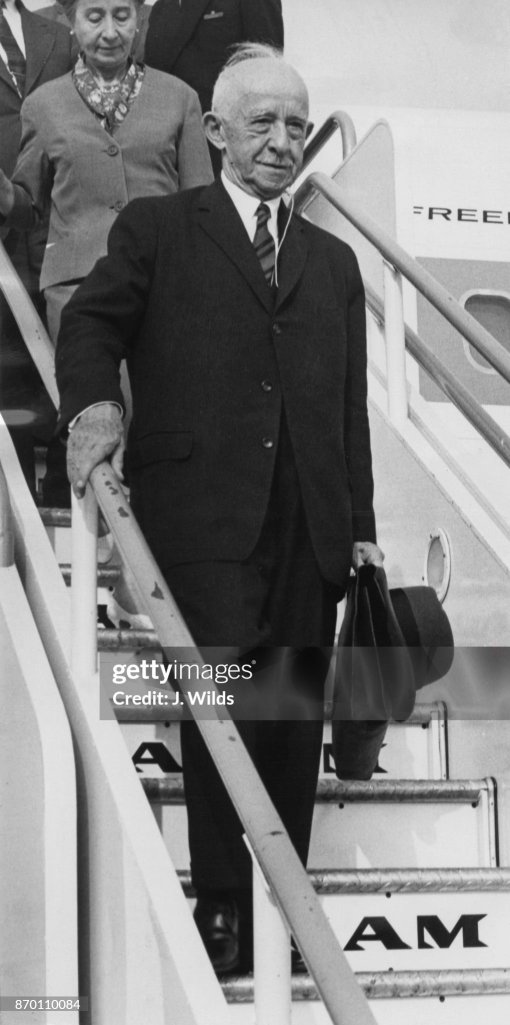
Allen W. Dulles said today that students taking part in the Mississippi civil rights drive should “stay out of danger areas.” He emphasized, however, that he was not recommending that they call off or curtail their announced efforts to encourage Blacks to register as voters. Mr. Dulles, former Director of Central Intelligence, discussed his suggestions with representatives of the National Council of Churches and a Justice Department official in a meeting at his home here this afternoon. He spent Wednesday in Mississippi as a representative of President Johnson, studying the situation that has developed there since three young civil rights workers were reported missing.
CORE Director James Farmer charged yesterday that there was complicity on the part of many local officials “in the reign of terror which grips Mississippi.” “I have reports that the three missing civil rights workers were not released, but were turned directly over to a hostile mob by the sheriff of Neshoba County,” the national director of the Congress of Racial Equality said. “I have other reports that the burned car is a ruse, and that the mob, after killing the young men, burned their bodies in the town garbage incinerator,” he said. These reports, along with other “rumors, pieces of evidence, and contradictions in the statements of law enforcement officers,” are being turned over to the Federal Bureau of Investigation for further investigation. Mr. Farmer said. He made his comments at a civil rights vigil on the steps of the New York Federal Building at Foley Square, two hours after he returned from Mississippi.
Mississippi authorities are taking the position that the disappearance of the three is a “publicity hoax,” Mr. Farmer declared. He said Sheriff L. A. Rainey of Neshoba County had told him the missing men probably were “drinking beer in some bar in New York.” The three, missing since late Sunday night near Philadelphia, Miss., are Michael Schwerner, 24 years old, of Brooklyn; Andrew Goodman, 20, of Queens, and James E. Chaney, 21, of Meridian, Mississippi. “These men were fingered by a traitor in the Black community who telephoned detailed descriptions ahead to Philadelphia,” Mr. Farmer said.
A white staff worker for the Mississippi civil rights project said today he had been beaten by three prisoners in the Hinds County Jail. Edward S. Hollander, 23 years, old, a field worker for the Congress of Racial Equality, suffered facial bruises. He had been placed in the jail by United States marshals, who had transferred him from the Madison County Jail in Canten, where he had been confined since May 29. He was released on bond and reported the incident to the Federal Bureau of Investigation.
Three white men charged with threatening two civil rights workers who were passing out voter registration literature were ordered today to stand trial. Federal Commissioner Omar Craug cleared one of the three, Lawrence Neal McGraw, 37 years old, of a charge of threatening to kill two white integrationists. He found there was probable cause for the charge against the other two, Merritt Ely Randle, 45, and James E. Hodges, 30. All of the men are from Itta Bena, Mississippi. The three were arrested yesterday at Itta Bena and brought here for the preliminary hearing. They were ordered to stand trial on charges of conspiring to injure and intimidate the voter registration workers.
The National Association for the Advancement of Colored People today called upon the delegates to the Republican National Convention to deny Senator Barry Goldwater the party’s Presidential nomination. It was the first time since it was founded 55 years ago that the civil rights organization had formally endorsed or opposed a Presidential candidate by name. The association made its appeal in a resolution adopted at its annual convention. Roy Wilkins, executive secretary of the association, said the action reflected a belief that the Arizona Senator had to be repudiated because of his stand against the civil rights bill and because of recent acts of terrorism against civil rights workers in Mississippi.
“The delegates to the N.A.A.C.P. convention,” Mr. Wilkins said, “had been so stirred by the events in Mississippi that they felt Senator Goldwater should be named in the resolution.” He continued: “They could not fail to have named him because of what is happening in Mississippi, because Mississippi sharpened the conceptions and dimensions of the tasks that lay ahead. It is very likely that had not the Mississippi crisis intervened the N.A.A.C.P. convention would have, as in the past, voted a political resolution defining the acceptable criteria for a Presidential candidate but not have named anyone.”
Governor William W. Scranton and a political team of 15 took a close look at the Pennsylvanian’s campaign for the Republican Presidential nomination today and reported all was going well. They declined, however, to pinpoint any gains. Governor Rockefeller of New York, who joined the talks, said that if Senator Barty Goldwater of Arizona did not win the nomination on the first ballot at San Francisco, “he is not going to win the nomination.” The group declined to call their campaign “a stop‐Goldwater movement.” However, the strategy plainly is to try to hold back enough votes through favorite sons to prevent Mr. Goldwater’s nomination and then to try to whittle away the Senator’s lead.
The Democratic majority of a House Banking subcommittee, after a lengthy study of the Federal Reserve System, suggested today a set of reforms in the nation’s central bank. The reforms, while controversial, represent a retreat from the original position of the committee chairman, Wright Patman, Democrat of Texas, long a severe critic of the Federal Reserve. However, the reforms were still too strong for the committee Republicans, who refused to join in a decision to publish the proposals for circulation and discussion. The heart of the criticism of the Federal Reserve from independent witnesses during extended hearings this year has been that it can and sometimes does operate independently of the general economic policy of the Government. Taken together, the reforms would significantly reduce this “independence” — an independence the Federal Reserve fiercely defends and recent Administrations have supported.
Singer Ethel Merman and TV actor Ernest Borgnine were married at his home in Beverly Hills, California, then set off on a honeymoon in Asia before Borgnine’s scheduled July 27 obligation to begin filming the new season of his TV show, McHale’s Navy. The two would be married for only 38 days before separating on August 4, and would divorce by November.
President Johnson sent his best wishes today to Miss Helen Keller on her 84th birthday. The blind and deaf humanitarian, who has lived here for many years, was described by a companion as in good health and “just as happy as she can be.” Miss Keller has limited her activities but continues as a consultant to the American Foundation for the Blind.
The New York Yankees scored a run on four walks with two out in the 10th inning to edge the Detroit Tigers, 5–4. Mickey Mantle’s homer in the 4th inning made it 4–1.
Cleveland third baseman Max Alvis is stricken with spinal meningitis. He will be disabled for six weeks but will make the All-Star team in 1965. The Texas native will rebound nicely, making the American League All-Star team next season and in 1967.
Boog Powell belted three solo home runs as the Baltimore Orioles defeated the Washington Senators, 3–1. Powell drove his first homer against the scoreboard in right field in the first inning, lined the second over the right‐field fence in the fourth and hit the third over the right‐center fence in the ninth. He grounded out in the sixth. Milt Pappas of the Orioles allowed only three hits in seven innings as he recorded his seventh triumph in 11 decisions. He left for a pinch‐hitter in the eighth.
At Milwaukee, the Braves downed the New York Mets, 9–6. The Braves knocked out Carl Willey in a seven‐run second. Trailing, 8‐2, the Mets closed to within 8‐6, but subsided quietly after Rico Carty hit a home run and Bob Tiefenauer brought his knuckle ball to the mound in the seventh.
The Pirates beat the Reds, 4–2, as Roberto Clemente’s two-run, tape-measure double finds its way out of Forbes Field at its farthest point, touching off Pittsburgh’s come-from-behind, 8th-inning, game-winning rally off Cincinnati’s Bob Purkey and Bill Henry. Dick Schofield singles, Bill Virdon doubles and both score on Clemente’s ground-rule double that bounces over the center-field wall. The game is thus deadlocked and, one out later, Clemente will score the deciding run ahead of Manny Mota’s home run off Henry.
Tom Haller belted two homers for four runs and Juan Marichal posted his 10th victory in a 9–1 rout of Los Angeles that pulled San Francisco within 7 percentage points of the National League leading Phillies. Orlando Cepeda also drove in four runs with a homer and single as the Giants went on an uprising in the fourth and fifth innings for their third straight victory over the Dodgers and seventh in nine meetings. Marichal retired the first 10 batters, yielded a fourth‐inning run on two hits and a ground ball, then gave up only three hits the rest of the way.
Born:
Chuck Person, NBA small forward and power forward (Indiana Pacers, Minnesota Timberwolves, San Antonio Spurs, Charlotte Hornets, Seattle SuperSonics), in Brantley, Alabama.
Oleg Mikulchik, Belarusian National Team and NHL defenseman (Olympics, 2002: Winnipeg Jets, Mighty Ducks of Anaheim), in Minsk, Byelorussian SSR, Soviet Union.
Glenn Derby, NFL guard and tackle (New Orleans Saints), in Oconomowoc, Wisconsin.
James Sanders, American classical, and jazz violinist, and educator, in Chicago, Illinois.
Kai Diekmann, German journalist and the chief editor of the tabloid Bild, 2001-2015; in Bielefeld, West Germany.
Died:
Mona Barrie, 54, English-born film actress (“Dawn on the Great Divide”).
Daniel Lazarus, 65, French composer.

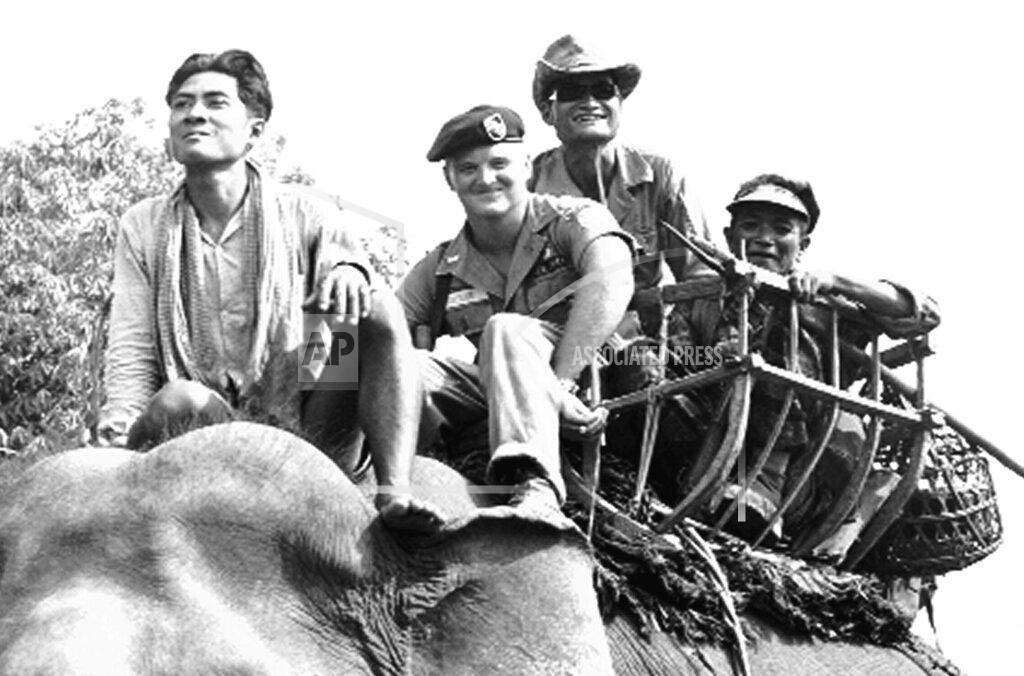
Channing Greene was born in Vermont in 1939 and grew up in Cape Cod. During World War II, he recalls seeing flotsam and jetsam, and oil wash up on shore from ships being sunk off the coast of North America. He also remembers seeing German Prisoners of War when his father was serving on active duty at Camp Edwards, Massachusetts. He attended West Point with the Class of 1961 and excelled at Spanish although he struggled with Math. When it came time to choose a branch, he selected Infantry and his first assignment was in Korea with the First Cavalry from 1962 to 1963. While there, he set up a counterinsurgency course. After Korea, he entered the Special Forces, serving with both the 5th Group and 7th Group. He deployed to Vietnam with 7th Group in January, 1964. Following Vietnam, he served on the staff and faculty of the Infantry School before returning to Vietnam in 1967, this time with A Company, 6/31 Infantry in the 9th Infantry Division. He later served on the 1st Brigade staff under Henry “Gunfighter” Emerson. After returning from Vietnam the second time, he served with 10th Group and 12th Group and was stationed in Bolivia and worked on the Cuban Refugee Task Force in 1980. In 1981, he retired from the military and attended the Dallas Theological Seminary and embarked on a career as a pastor.





 History Diaries