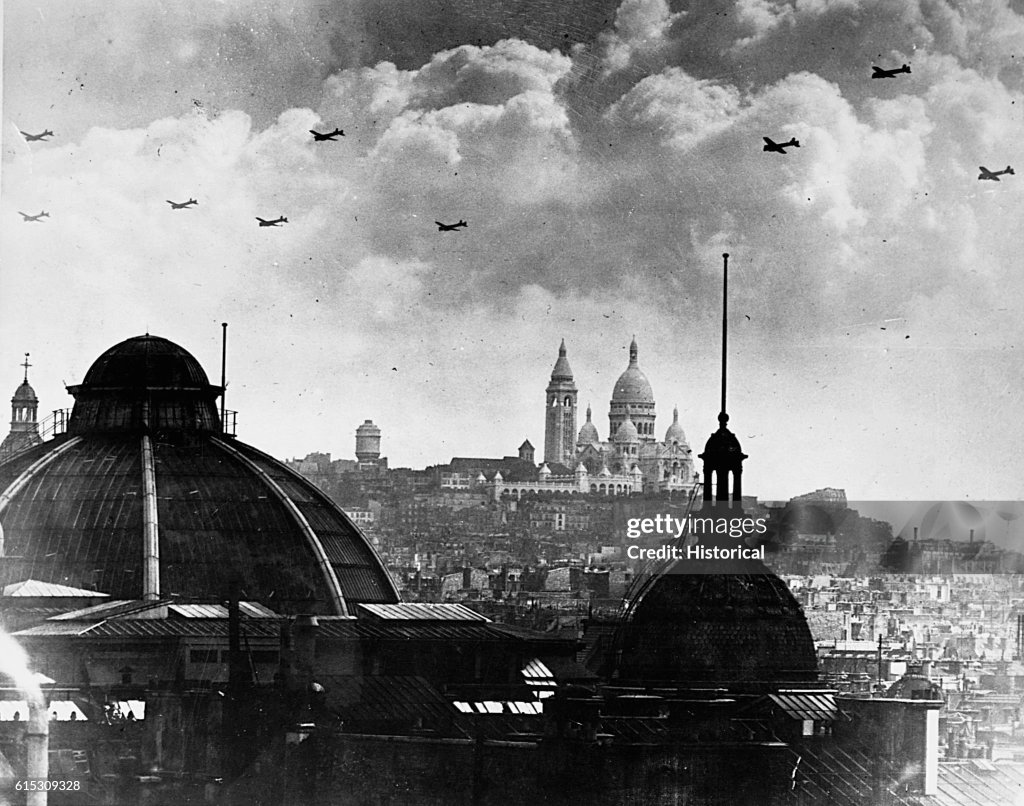
The Reich opens a drive of “rights or war,” taunting Britain. Citing Axis unity, Hitler says the future belongs to them. With the German Army at an unprecedented peacetime strength of “2,000,000 men,” and with more reservists being called to the colors for longer or shorter training periods, the National Socialist regime has also started what appears to be a physical and moral mobilization of the civilian population. In this campaign the constantly reiterated refrain is: “Germany’s rights or war.”
This refrain was sounded with particular bluntness at a week-end series of “Gau Days,” or provincial rallies, at which National Socialism’s greatest spellbinder, Propaganda Minister Joseph Goebbels, and Dr. Robert Ley, leader of the Labor Front, spoke. These rallies were symbolized in a historic military pageant at Potsdam the climax of which was a scene showing shadowy German Uhlans riding off to war in August, 1914.
The same militant note dominated a ceremonious reception that Chancellor Adolf Hitler gave at Munich today to 500 visiting Italian war veterans. At this reception both Herr Hitler and Carlo Delcroix, president of the Italian War Injured, acclaimed the union of the National Socialist and Fascist revolutions in a common aim.
Signor Delcroix denounced “the capitalistic masters of the world’s powers, which are ready to annihilate themselves rather than make room for others.” Then, after having emphasized “the steely strength of the honest German-Italian alliance,” as contrasted with “the equivocal gold pact” of the others, he declared: “A common destiny prompted Germany and Italy to unite their strength and, if necessary, their arms.”
More diplomatically, Herr Hitler, in responding, sought to put the onus of an attack on the other side. He declared that the National Socialist and Fascist revolutions faced a world “of opponents and enviers, of haters and enemies,” but the German-Italian alliance had erected a front against the common enemies.
“I am firmly convinced,” Herr Hitler said, “that every attempt of the democracies and the capitalistic plutocracies to prepare that fate that they have perhaps in store for us will fail because of the common strength of our two nations and revolutions and because of the strength of our common ideals, our courage and our determination. In the end life belongs to those nations that are ready, if necessary, to risk their last for their existence and their future. You took that risk for your nation. We Germans did the same for ours. In the future, however, we shall put up the stakes jointly for Germany and for Italy, for our Reich, which rose up under the National Socialist revolution, and for your imperium, which was created and formed by your great Duce, Benito Mussolini, by that man who against the views and prophecies of the whole world made Italy great, strong and mighty. I believe this indissoluble community of the two nations and their revolutionary idea will wreck all attacks of this other world, and the future belongs to us-fascist Italy and National Socialist Germany.”
In a speech at Essen Dr. Goebbels denounced a Britain that “cannot compete with our might,” demanded the return of colonies “stolen” from Germany and taunted the British because “the Japanese strip them naked and they can do nothing,” The Associated Press reported. Dr. Goebbels also asserted that “we know clearly what we want,” that “he who does not gamble cannot win” and that “we made the Reich by propaganda.”
It is reported | from London tonight that Prime Minister Neville Chamberlain has realized at last that Soviet Russia will not be enlisted in the “peace front” unless provision is made for the automatic working of a tripartite pact of mutual assistance in the event of a direct or indirect seizure of the Baltic States by Germany. Therefore, Sir William Seeds, the British Ambassador to Moscow, is about to be instructed to comply with the claim obstinately put forward by the Moscow Government in that respect.
No confirmation of this news is available here yet, but in competent French circles the belief is of expressed that endorsement Russian counter-proposals by Mr. Chamberlain cannot be delayed much longer now. The unfavorable reception that the speech he delivered yesterday received in Germany must have convinced him that no choice was left to him, but to come to terms with Joseph Stalin in the shortest time possible.
It remains to be seen whether in the present circumstances the conclusion of an Anglo-French-Russian pact of mutual assistance will have the effect of keeping Chancellor Adolf Hitler within bounds. It is to be feared that the influence a tripartite pact would certainly have exerted upon the German Fuehrer and his people if signed weeks ago might not now materialize.
From the difficulties and controversies that have obstructed the Anglo-Russian negotiations so long, the German ruler is likely to infer that discord among London, Paris and Moscow is sure to continue under the surface and that Russia’s contribution to the “peace front” will exist in theory more than in practice and that Berlin need not take it very seriously.
The British lay evacuation plans, including means for mass migration.
All large Polish towns have been ordered to dig trenches in public gardens and open squares immediately, to serve as air-raid shelters in the event of emergency. An official announcement today also said that persons building new houses recently had been directed to include air-raid shelters and that owners of old houses had been instructed to strengthen their cellars.
General Marie Gustave Gamelin, head of all France’s land, sea and air forces, declared bluntly on the World War battlefield of Verdun today that “respect cannot be bought with concessions.” The General, whose military authority in France is said to be greater than that of any French officer since Napoleon, also made a scarcely veiled attack on “appease dictators” groups in France and Britain. He spoke on the twenty-third anniversary of the French victory in this war-blasted area.
“With the dead of Verdun, we all think that victory cannot be achieved by hesitating before a necessary effort,” he told thousands of World War veterans and uniformed soldiers. “Facing certain ambitions, we know that respect cannot be purchased by concessions.” General Gamelin lashed out at any suggestion that France share her empire with “have-not” nations. “Our empire is a great deal more than a mere matter of raw materials to be exploited,” he said. “It is a union of peoples which we have assembled under our flag and our civilization.
Sevilla FC defeated Racing Club de Ferrol 6-2 in the 1939 Copa del Generalísimo Final.
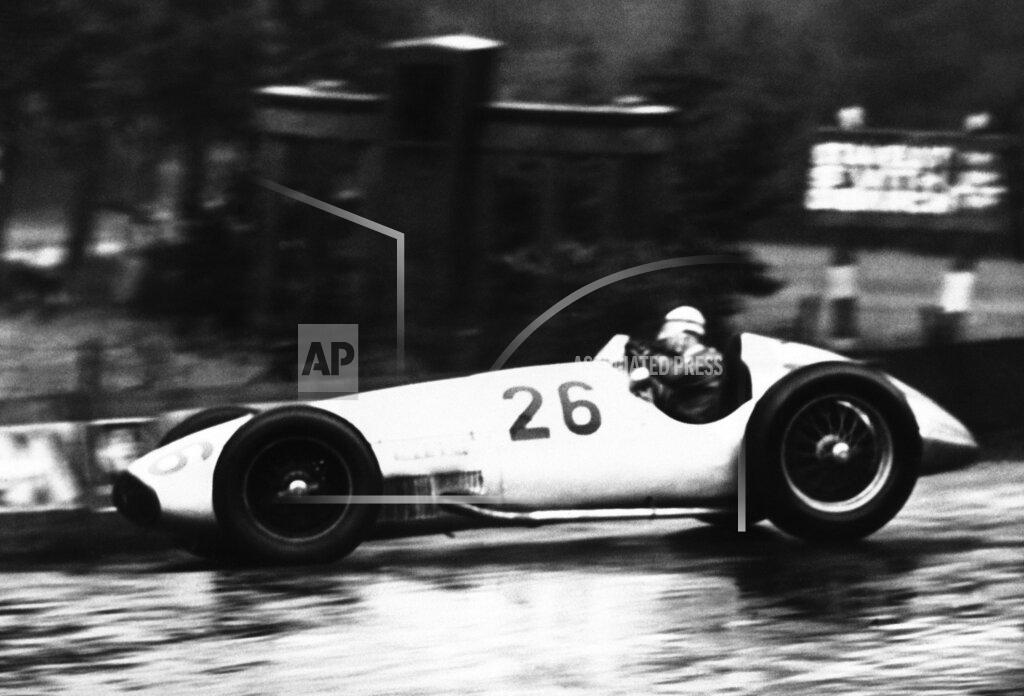
Hermann Lang of Germany won the Belgian Grand Prix.
The Finnish envoy stresses neutrality, saying the country will not become a battlefield or springboard.
The Syrian press whips the public into a fury over France signing the Hatay Republic over to Turkey.
Representative Martin of Massachusetts, House minority leader, announced today that he would introduce a bill tomorrow calling for a reduction of 10 percent in all appropriations made by Congress this session, except those for social security, relief, and fixed obligations. He said his proposal would save $500,000,000.
His statement, issued through the Republican National Committee, asserted that Congress will have appropriated about $13,000,000,000 by the time it adjourns, or 20 percent of the entire estimated income of the American people this year. It condemned President Roosevelt’s new plan to authorize the issuance of Treasury-guaranteed bonds for $3,860,000,000.
The Republican leader in the House said that although the savings that would be gained by the measure which he intended to introduce would be relatively small, it would have a reassuring effect since, he said, if the spending tendency is not checked, “there will be destructive consequences for the country.”
“Despite much talk about economy,” Mr. Martin said, “there has been no action to that end because the Administration and its spokesmen in Congress have refused to cooperate with the earnest efforts of Republicans and a small group of patriotic Democrats in the House to curb unnecessary spending.”
He said his bill would contain flexible provisions in order to avoid undue hardships, and that it specifically exempted from its provisions appropriations for relief, old-age pensions, war veterans’ pensions and benefits, interest on the public debt and other fixed charges. But, even excluding such items, he stated, it would result in economies totaling at least $500,000,000. “Small though the amount saved might seem compared with the funds appropriated this year,” Mr. Martin declared, “the action would be interpreted by the country as a step in the right direction, and would give new hope to millions in business, in industry, and on the farms that at last their federal government was turning to a sound financial policy.”
Congress, particularly the Senate, will be working feverishly this week to beat a deadline. Unless two important measures, the relief bill for 1940 and the bill to continue the stabilization fund and the President’s power further to devalue the dollar, are passed by midnight Friday, June 30, the administration of public relief will be in a snarl and a situation might arise wherein the government would be seriously handicapped in carrying out its part in the tripartite agreement designed to protect the dollar, the pound and the franc from adverse influences in the field of international monetary exchange.
Meanwhile, whatever hopes the leaders entertained for adjournment by July 15, or soon thereafter, appeared to have flown out the window. No basis now exists for predicting with any degree of certainty when the first session of the Seventy-sixth Congress will end.
The Neutrality Bill had been regarded until last week as the chief barrier to adjournment at the time tentatively fixed by the leaders. President Roosevelt piled another huge timber on the log jam, however, when he sent to Congress his plans for a $3,860,000,000 lending program intended to stimulate lagging business recovery. Silverites did nothing to simplify the situation when they started a filibuster designed to force the Senate to adopt certain amendments to the pending Monetary Bill.
Senator Barkley plans to bring up the Relief Bill in the Senate on Tuesday. He may have to negotiate an agreement with the silver filibusterers before he can carry out that program. Although the Relief Bill, carrying total appropriations of $1,737,000,000, passed the House by a decided majority, its pathway through the Senate may be somewhat rough. The House placed restrictions upon the spending of the money and voted to abolish some of the projects now carried on by the Works Progress Administration. Administration forces are opposed to several provisions of the bill as passed by the House, and various organizations which want the relief program expanded rather than curtailed have been active since passage of the bill by the lower chamber in an effort to get a liberalized measure approved by the Senate.
Richard W. Leche resigned as Governor of Louisiana amid a corruption scandal. He was replaced by Lieutenant Governor Earl Long.
A U.S. Army enlisting drive sets a goal of 112,500.
Many on relief in the U.S. are not employable. One-third of households have no one who can work.
Lou Gehrig’s case spurs medical research into his baffling disease. The hardening of his spinal cord is not really a form of infantile paralysis, as originally diagnosed.
Coca-Cola sues Nehi, Inc., asking them to stop calling Royal Crown a “cola.”
Cleveland batters Ben Chapman, Hal Trosky, and Jeff Heath homer with two out in the 7th inning to tie an American League record while beating Philadelphia, 8–4.
The New York Giants beat the Cincinnati Reds, 3–2, and are now just ½ game out of first place n the National League pennant race.
Russia reports a big Mongol battle in which 120 planes are said to clash on the border. Artillery warfare, with tanks and planes also participating, has been raging for six weeks between Manchukuoan-Japanese troops and Mongols on the frontier of Outer Mongolia, the Moscow radio told the Russian public tonight. The announcement was the first specific news that Soviet citizens had heard of the fighting. Foreign Commissar Vyacheslav Molotov on May 31 proclaimed the Mongolian border would be defended by the Soviet “with the same determination as our own.” The communiqué, describing a long series of battles beginning May 11, and continuing up to Saturday, said a total of eighty-two planes had been shot down-fifty-nine Japanese and twenty-three Soviet-Mongolian.
Soviet-Mongolian troops were described as being concentrated on the border southeast of Lake Bor, ready for large-scale action if the Manchukuoans and Japanese should attack again. In a surprise attack May 11, the communiqué said, Mongol outposts were driven back over the Khalkhin Gol [River], but succeeded in hurling back the foe in succeeding days and in “dispersing” the enemy when they attacked a few days later with large reinforcements of Japanese troops, planes, tanks, armored cars and artillery.
Describing yesterday’s battle, Tass, the official Soviet news agency, said twenty-five Japanese-Manchukuoan planes were shot down, while the Soviet-Mongolian forces lost only two. Sixty planes were reported engaged on each side.
Tokyo announced that thirteen Mongol and four Japanese planes were shot down. Japanese dispatches have told of intermittent fighting along Manchukuo’s western border since May 7, each dispatch emphasizing heavy Mongol-Soviet losses of planes and men, and minimizing Japanese-Manchukuoan casualties.
An official announcement that a British subject and his wife had been undressed and searched before being allowed to cross the Japanese barrier shocked the British community today as the British and French concessions ended the twelfth day under blockade. Major G. A. Herbert, British Consul, who protested last week against other incidents in which British men were stripped and searched, announced the woman was permitted to retain only one garment — a hip girdle — while subjected to an examination by a Chinese policewoman in full view of a Japanese sentry. The two involved were Mr. and Mrs. D. Finlay, who are employed in the International Country Club. Japanese-controlled territory. Major Herbert said the incident occurred late yesterday.
United States Consul General John K. Caldwell announced he had lodged representations with the Japanese, charging them with mistreatment of Robert S. Casey, an American seaman from Seattle, Washington, in detaining him for four days. The incident was regarded as closed when Japanese consular officials expressed their regret.
The Japanese Consul General, Shigenori Tashiro, sent a strongly worded protest to the British Consul General, E. G. Jamieson, charging the British police with attacking a Chinese constable on Japanese-occupied territory. The incident, precipitated when a British soldier allegedly assaulted a Chinese shopkeeper, occurred late yesterday.
The Japanese tightened their blockade by allowing only one Chinese to enter the British and French concessions each half hour and declared martial law near the railway station, beyond the International Bridge, sweeping back a crowd of Chinese waiting to enter the French zone. G. A. Smith, British exporter, was released after being held for eight days by the Japanese on charges of hitting a Chinese policeman outside the British concession.
Supplies of fresh milk to both concessions were cut off and British official circles alleged the Japanese had threatened Chinese outside the barricaded zones with imprisonment or death if they were caught supplying fresh foodstuffs to the British. Residents of the concessions meanwhile encountered another inconvenience in a shortage of ice. Only one-third of the normal demand could be met by concession plants.
Born:
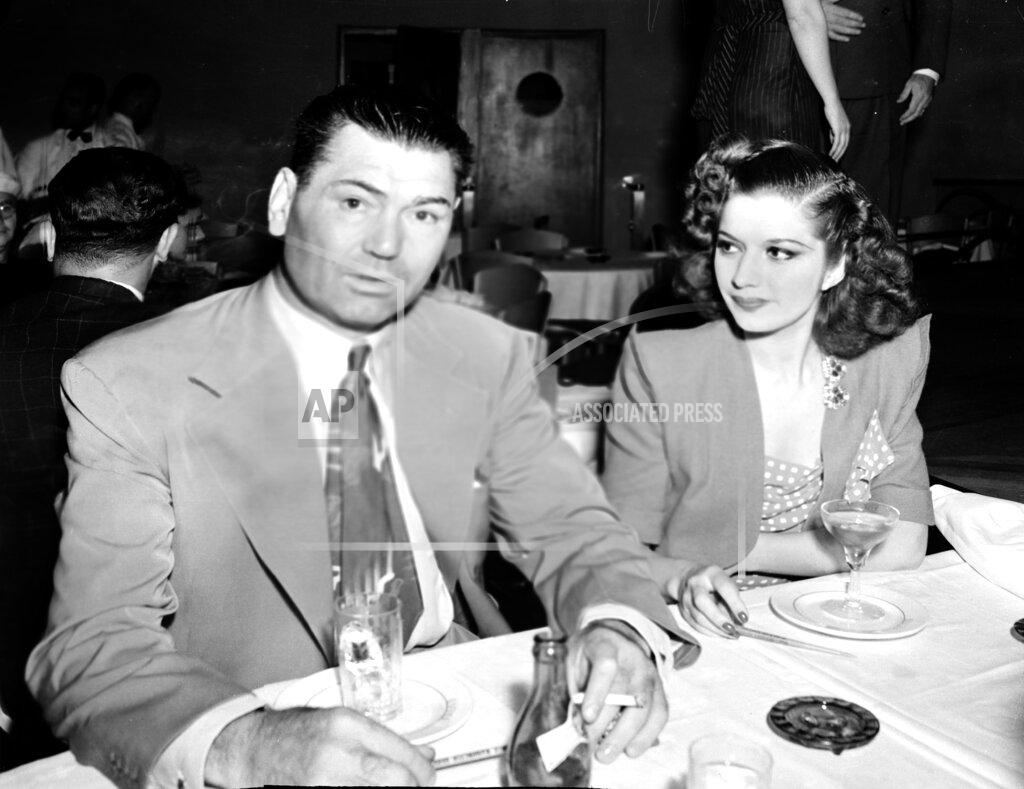
Harold Melvin, American soul and R&B singer (The Blue Notes – “If You Don’t Know Me By Now”), in Philadelphia, Pennsylvania (d. 1997).
Curtis McClinton, AFL fullback, halfback, and tight end (AFL Champions, 1962-Dallas, 1969-KC; Super Bowl IV Champions-KC, 1969; All-AFL, 1962, 1966, 1967; Dallas Texans-Kansas City Chiefs), in Muskogee, Oklahoma.
Allen Fox, American tennis player, in Los Angeles, California.
Died:
Richard Seaman, alias Dick Seaman, 26, British motor racing driver (German Grand Prix, 1938), of injuries received in an accident during the Belgian Grand Prix.
Naval Construction:
The Royal Navy “J”-class destroyer HMS Jupiter (F 85) is commissioned. Her first commander was Lieutenant Commander Derek Bathurst Wyburd, RN.

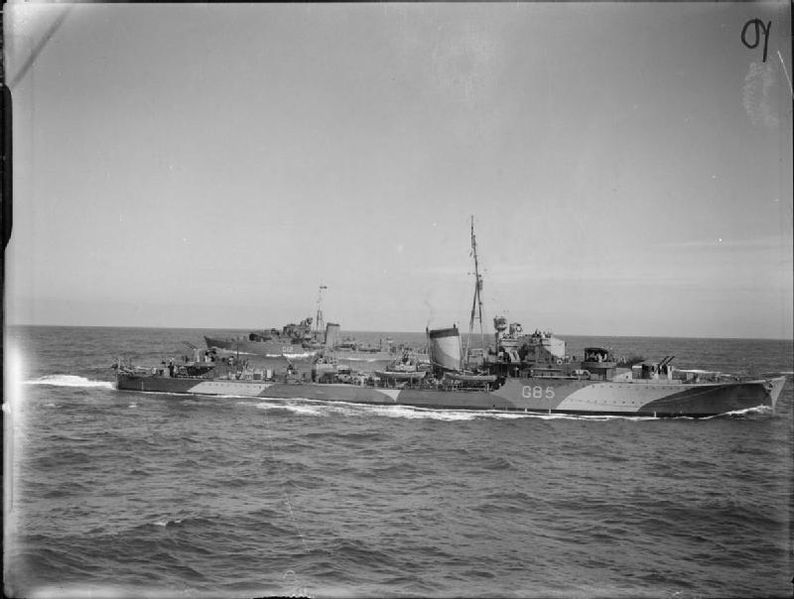
After commissioning, Jupiter underwent sea trials and worked up at Portland, with these activities being delayed by problems with the ship’s turbines that required repair at Devonport Dockyard. Jupiter completed trials on 1 September 1939, and joined the 7th Destroyer Flotilla of the Home Fleet, based on the Humber, in time for the British declaration of war on 3 September 1939.
On 29 November 1941, Jupiter and the destroyer Encounter detached from the Mediterranean Fleet, joined up with Force G at Colombo, and the five ships sailed later that day. They rendezvoused with the battlecruiser Repulse at sea, and set course for Singapore, where they arrived on 2 December. They spent a few days there with shore leave and refit, while waiting for orders. On 1 December, it was announced that Sir Tom Phillips had been promoted to full Admiral, and appointed Commander-in-Chief of the Eastern Fleet. A few days later, Repulse started on a trip to Australia with the destroyers Vampire and Tenedos, but the force was recalled. It was not until nine days later that Tenedos and Repulse would join Phillips’ Force Z in attacking the Japanese invasion force, and he himself would perish when both Repulse and the battleship Prince of Wales were bombed and sunk by Japanese land-based bombers. During her campaign in the Pacific, Jupiter was commanded by Lieutenant Commander Norman V. J. T. Thew.
Jupiter sank the Japanese submarine HIJMS I-60 with gunfire and a depth charge in a close quarters surface action on 17 January 1942.
Lost 27 February 1942.
On 27 February 1942 she struck a mine laid earlier in the day by the Dutch minelayer HNLMS Gouden Leeuw as she steamed with the American-British-Dutch-Australian Command (ABDA) cruiser force during the Battle of the Java Sea. The destroyer sank off the north Java coast in the Java Sea at 21:16 hours. Initially, the explosion was thought to have been caused by a Japanese torpedo. Most of her crew, totaling 97, was made prisoner by Japanese forces, while 83 were rescued from the shore by submarine USS S-38. There were 84 dead or missing.
Battle Honours: MEDITERRANEAN 1941 – MALAYA 1942
 History Diaries