North Vietnamese Foreign Minister Xuan Thuy writes to Communist China and other signers of the Geneva Accords and urges them ‘to demand that the U.S. government give up its design of… provocation and sabotage against North Vietnam.’
Việt Cộng capture a civil guard platoon without firing a shot. The guerrilla attack on the government platoon took place early yesterday in a strategic hamlet in Quảng Trị Province, 400 miles north of Saigon. The garrison, whose exact strength was not disclosed, was believed to have been between 24 and 33 men.
Government troops inflicted heavy losses on the Việt Cộng in a three‐day sweep in another area. Twenty‐eight Communists were killed and 6 captured in the operation, which ended yesterday. Another Government drive apparently cleared out a major Việt Cộng base in a swampy area 25 miles south of Saigon. Vietnamese marines surprised the guerrillas and chased them from two arms workshops and weapons caches. Among the captured weapons was a Chinese‐made 75‐mm. recoilless cannon, the largest weapon used by the guerrillas and one issued only to topflight Việt Cộng units.
Recent United States reconnaissance missions have confirmed earlier reports that Communist forces have been improving their road network in southern Laos and have considerably stepped up the pace of their supply convoys there. Officials here report that the Communists now have stretched their road network south from Tchepone (Xépôn), previously the terminal point for truck traffic on the supply network known as the Hồ Chí Minh Trail. Other links of the network are reported to have been improved. The Hồ Chí Minh Trail, a complex of dirt roads tapering off into scores of jungle trails, has long been one of the principal supply routes from North Vietnam to Communist guerrillas in South Vietnam.
Officials declined to give precise figures on the number of trucks recently seen operating in the Tchepone region, but intelligence estimates indicate that roughly 3,000 North Vietnamese troops are on more or less permanent duty in southeastern Laos near the South Vietnamese border. This concentration and the increases in supply convoys during the recent dry season are reported to have raised fears among United States officials, including Ambassador Henry Cabot Lodge, about North Vietnamese intentions.
Officials have been worried for fear the Communists might try to infiltrate large forces across the Laotian border into the central Vietnamese highlands while South Vietnamese Government forces were largely concentrating on fighting guerrillas south of Saigon. Other officials suspect that the activity in southern Laos may be a prelude to future offensives against Saravane (Salavan) and Attapeu, two right‐wing strongholds in southern Laos. Hostile forces nearly surround both towns now. Since neither town is in the Mekong Valley, some analysts here are concerned lest the Pathet Lao assume they can be attacked without fear of American intervention. The United States has often warned that its mantle of protection extends over the Mekong Valley bordering Thailand.
Communist China has issued what is thought here to be its strongest warning to the United States about the situation in Southeast Asia. Marshal Chen Yi, the Foreign Minister, made the statement yesterday, responding to equally strong United States statements of recent days. President Johnson said at a news conference Tuesday that he believed the expressions of United States policies and attitudes had “gotten through” to the Chinese Communists. A Hong Kong dispatch to The New York Times, printed today, suggested that Peking was softening its stand in the face of United States firmness and referred to Marshal Chen’s statement as evidence of new restraint.
Marshal Chen said that “nobody should have any misunderstanding” that the Chinese “absolutely will not sit idly by” while the “flames of war spread to their side.” He said Peking still favored an international conference to seek peaceful solutions, but added: “Should any people mistake this for a sign of weakness and think they can do whatever they please in Indochina, they would repent too late.” Analysts alerted Administration leaders to Marshal Chen’s guarded, two‐paragraph statement. They interpreted it as an effort to keep in step with equally guarded, but increasingly tough, United States comments. By implication, Marshal Chen’s warning was primarily aimed not against the bombing attacks on Communist‐led forces in Laos but against any move by the United States to expand or extend the war in South Vietnam. The warning did not go so far as some of Peking’s statements preceding Chinese intervention in the Korean war in 1950, but it did begin to suggest that Communist China’s security was at stake in Indochina.
The Cyprus crisis was handed back to the United Nations tonight as President Johnson completed four days of discussions with Turkish and Greek leaders without any visible progress toward breaking the deadlock. Shortly after Mr. Johnson met for 45 minutes late today at the White House in a farewell conference with Premier George Papandreou of Greece, it was announced here that Under Secretary of State George W. Ball would fly to New York tomorrow. Mr. Ball will hold urgent talks with the United Nations Secretary General, U Thant, and the United Nations mediator for Cyprus, Sakari S. Tuomioja of Finland. Mr. Ball has been the chief United States negotiator on the Cyprus crisis and acted as Mr. Johnson’s principal adviser in the discussions here this week with Premier Ismet Inonu of Turkey and then with Mr. Papandreou. Premier Papandreou, who also leaves for New York tomorrow, is to meet Mr. Thant and Mr. Tuomioja separately.
That the Washington talks produced no tangible results was made clear tonight by Mr. Papandreou at a news conference within minutes of his meeting with the President. The Premier said that Greece opposed direct negotiations with Turkey on Cyprus at any level at this time because he believed that neither side was ready for them and also because of what he described as the continued persecutions of Greek citizens in Istanbul. The Greek Premier said that no one is more competent than the United Nations mediator” to carry on the negotiations.
Britain has agreed to keep her troops in Cyprus for another three months but will reduce her contingent in the peace‐keeping force from about 1,800 men to between 1,100 and 1.200 out of the total of 7,000. A United Nations spokesman who made the announcement here said the Secretary General had received the news today and would fill the gap left by the British cutback with troops from other countries. No details on replacements were available yet. Canada notified Mr. Thant today that she would continue her contingent of 1,122 men at its present strength through September 26. Britain’s notification was in reply to a request from Mr. Thant last Saturday to the nine countries with troops or policemen in the Cyprus force to keep their contingents at their present strength for three more months. Their present commitment expires the day after tomorrow. Except for the British reduction, all countries concerned are expected to comply with the request.
Anastas I. Mikoyan, a First Deputy Premier of the Soviet Union, said today that his country was supplying Indonesia with “very modern” weapons to aid the Indonesian fight to crush Malaysia. He added that Russian experts Would be sent to train troops in the use of the arms. Mr. Mikoyan said at a rally here that the new weapons were “far better than the weapons possessed by the British in this area.” He did not specify what types of weapons the Russians were sending to Indonesia, but there was speculation that they might be missiles. At the same rally, President Sukarno said that Indonesia would not withdraw her guerrillas from Malaysian territory until political issues between Indonesia and Malaysia had been settled.
Shilu Ao, the Chief Minister of the new state government of Nagaland, said today that orders were being issued to the Indian Army to suspend operations against the Naga rebel guerrillas. The Chief Minister said the insurgents were now expected to halt their operations and thus bring to an end, at least temporarily, fighting that has been going on in the hills and jungles of Nagaland for more than a decade. The terrain and the guerrilla skill of the Nagas are such that the Indian Army has been unable to pacify the region. The ceasefire is a prelude to talks looking toward a political settlement. The Naga insurgents have apparently eased their demand for independence for the 400,000 tribal people who inhabit the 6,000 square miles of wild country surrounded by the state of Assam in northeastern India.
Eduardo Mondlane, leader of FRELIMO (Frente de Libertação de Moçambique), the Mozambique Liberation Front, announced the beginning of a guerrilla war against the colonial leaders of Portuguese East Africa. Mondlane would be assassinated by Portuguese agents in 1969, but FRELIMO would ultimately sign the Lusaka Accord on September 7, 1974, after ten years of war. Mozambique would be granted independence by Portugal on June 25, 1975.
In parliamentary elections for Swaziland, still a British protectorate surrounded by South Africa, the Imbokodvo National Movement won all eight of the “open” seats reserved for black Africans. The United Swaziland Association won the four reserved and four European seats for white candidates, and another eight seats went to traditional chiefs.
A lunar eclipse was visible from South America and Africa, seen as rising over North America, and setting over Europe and Western Asia.
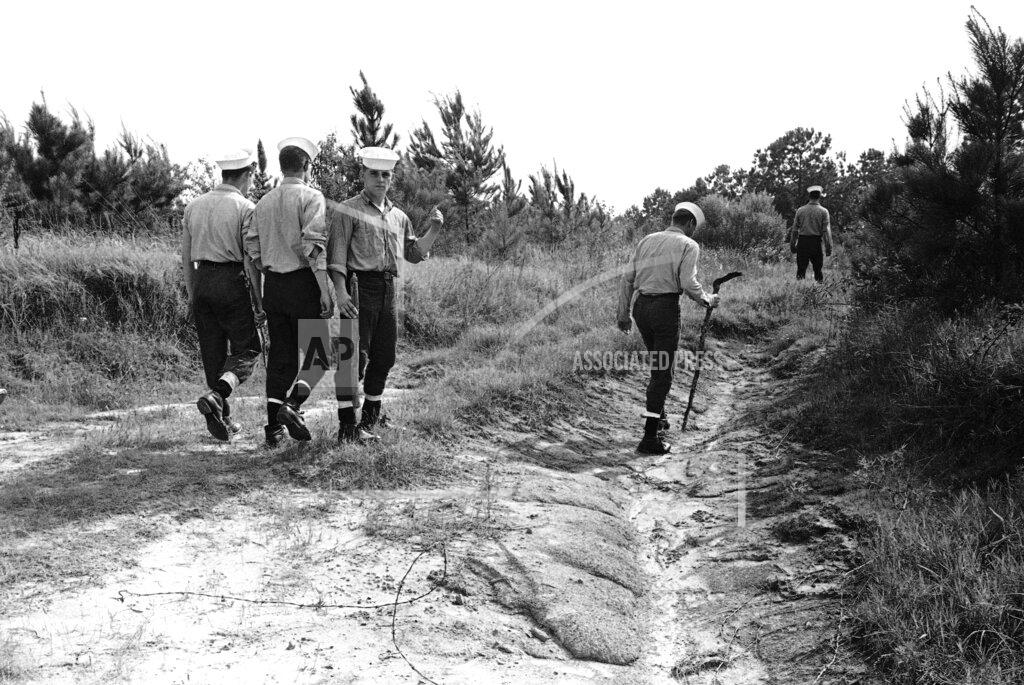
President Johnson authorized today the use of 200 unarmed naval personnel to help in the search for three civil rights workers missing in Mississippi. George E. Reedy, the White House press secretary, said the action had been taken in cooperation with local officials in Mississippi. Later, he said, the acquiescence of Governor Paul B. Johnson Jr. of Mississippi also was obtained. Mr. Reedy emphasized that the sailors were to be used in searching parties, not for law enforcement. The first naval units arrived at Philadelphia, Mississippi, near where the burned automobile of the three youths was found, in three buses at 4:41 PM, Eastern daylight time. They had been sent from the naval auxiliary air station at Meridian, Mississippi. Eight naval helicopters also are being provided to assist in the search.
Mr. Reedy described as an “inadvertence” an earlier White House announcement that had said marines were being sent to Philadelphia to aid in the search. A Department of Defense spokesman said there were no plans to send marines to the search area. Mr. Reedy also said a mixup had led to Governor Johnson’s statement in Jackson, Mississippi, that he was surprised that marines were being sent to Philadelphia. The Governor was misled as to the identity of the forces by news reports developing from the erroneous White House statement, Mr. Reedy said. He said also that the naval units had been sent at the request of agents of the Federal Bureau of Investigation on the scene, These agents had acted in cooperation with what Mr. Reedy called “local officials.” He did not identify them further. Governor Johnson was not consulted at that point. After the Governor’s statement of surprise, J. Edgar Hoover, the director of the F.B.I., called him from Washington and explained the situation, Mr. Reedy said. The news secretary said he knew “of no instance in which the governor has protested any of this.”
President Johnson’s decision to use federal military personnel, even in limited fashion, was a delicate one, nevertheless. Representative John Bell Williams, Democrat of Mississippi, rose on the House floor to denounce the action, in one of the few instances in which the President has received fierce criticism from a Southern source. The President, Mr. Williams said, had “surrendered” to the demands of “every left‐wing agitator” in the country.
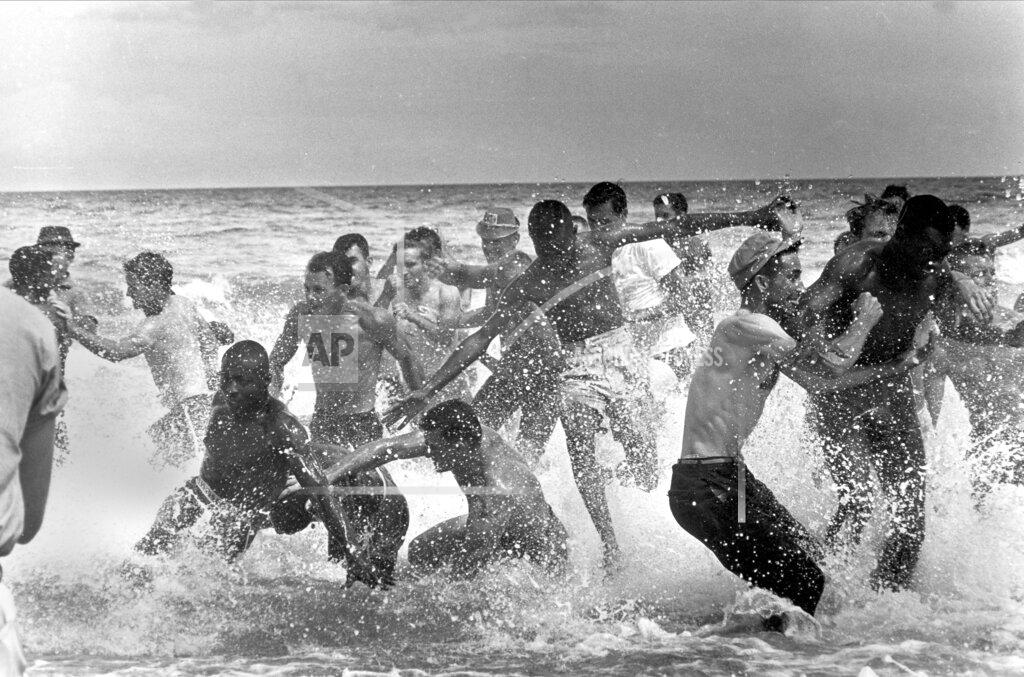
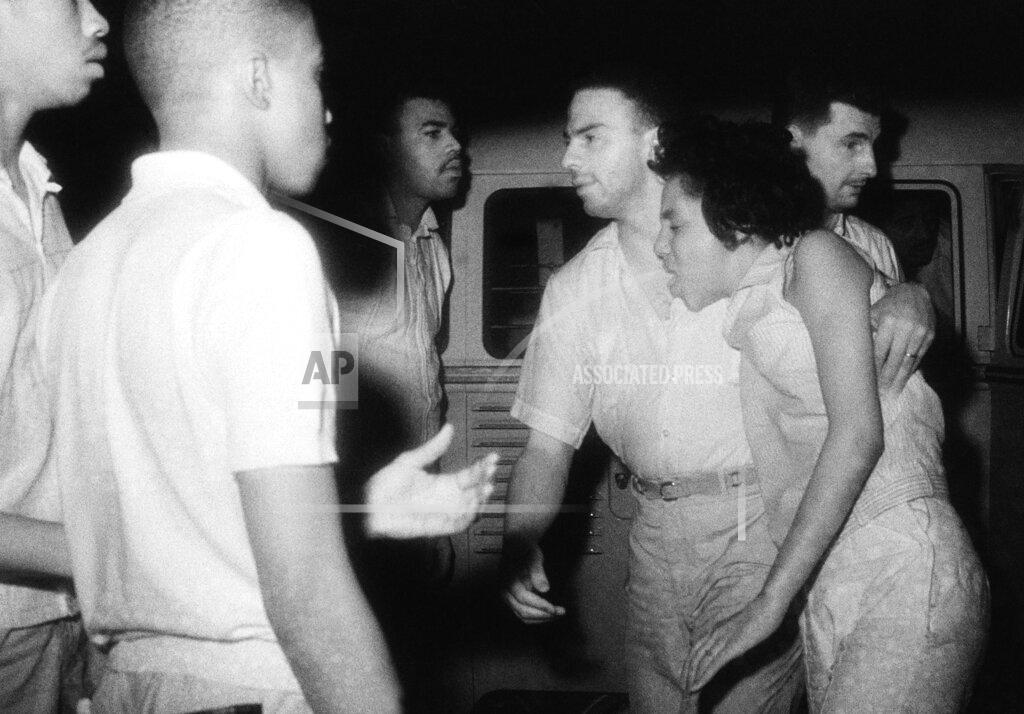
A white mob of about 800 ran wild in St. Augustine, Florida tonight and smashed a Black demonstration. Nineteen Blacks were hospitalized and many others suffered minor injuries. At first, the local police made efforts to check violence against Black demonstrators, but then stood aside. After seizing five white hoodlums who had been attacking Blacks with clubs, the police responded to shouts of “Turn them loose!” from the hundreds of onlookers and did so.
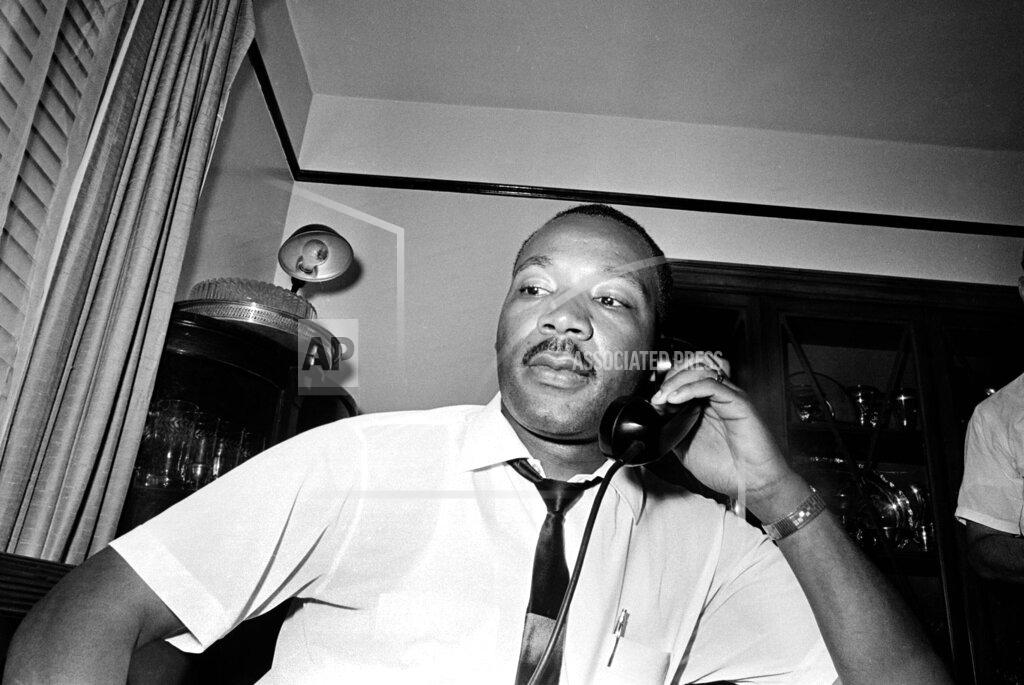
Most of the mob came from a rally conducted by the Rev. Connie Lynch, a Californian who has been agitating every night for the local white community to turn on Blacks and integrationists. The club‐wielding whites attacked the vanguard of an integrationist parade of several hundred Blacks with flailing clubs and pounding fists. The marchers, in turn, fought back and injured three whites, who were taken away in an ambulance. Earlier, the Rev. Dr. Martin Luther King Jr. spoke to a gathering in a local Baptist Church. “We are at the most difficult moment,” he said, “we must remain calm and not let them provoke us into violence.” Speaking in his temporary quarters here, Dr. King said, “This is a reign of terror that can’t he stopped short of intervention by the federal government.” He said he felt duty‐bound to call President Johnson and ask for Federal marshals. “I think federal marshals can do it [restore order], but if that doesn’t solve the problem then the federal government will be compelled to consider the drastic step of sending federal troops,” Dr. King declared.
After the melee, Dr. King said he had spoken by telephone with Burke Marshall, Assistant Attorney General in charge of the Civil Rights Division, in Washington. Dr. King said he had requested that the Justice Department send federal marshals to St. Augustine and had received a “noncommittal answer.”
A number of Black women had their clothes torn off while they were being clawed and beaten by screaming terrorists. In one instance, a representative of a national news magazine attempted to protect a 13-year‐old girl who was trembling and seeking shelter in a row of bushes. Her dress had been ripped away and blood was running from a wound on her shoulder. “Let that gorilla go!” shouted three white rioters who tried to seize the girl from the correspondent. “Run!” the newsman shouted at the girl. She darted away as he blocked the path of her pursuers and was kicked in the stomach and trampled. He asked that his name be withheld.
The agitation by the California evangelist had whipped the crowd of white isolationists into a fury before the first group of Black demonstrators marched along King Street near the old Slave Market. Several bitter comments were thrown in the already tense atmosphere during a news conference held in the Monson Motel by two segregationist leaders after the demonstration. J. B. Stoner, an Atlanta lawyer, said in answer to a question that “there is no danger of the White House sending federal troops because President Johnson would become more hated and unpopular than John F. Kennedy.” Another speaker, Hoisted Manucy, a local white‐supremacy leader, said: “Violence will continue as long as Negroes continue to invade the public beach which has been used only by whites for hundreds of years. The violence won’t stop until all Negroes and white outsiders, leave St. Augustine.”
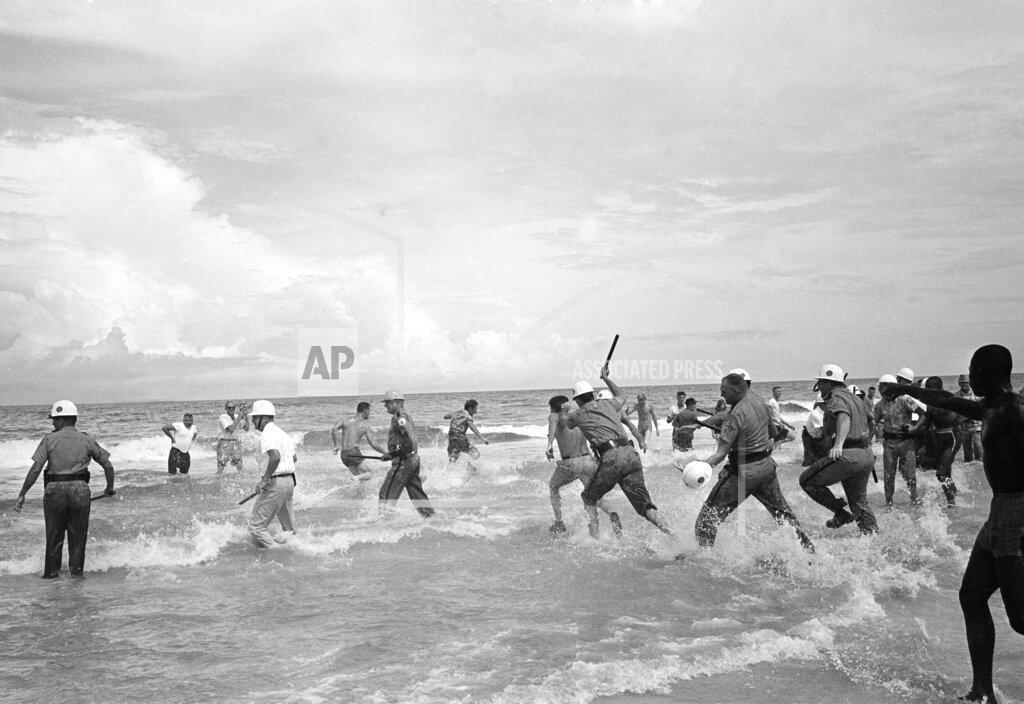
Earlier in the day, Florida state troopers clashed with segregationists in a wild melee on the beach. The troopers waded into the surf and arrested about a dozen whites who had tried to break up a swim‐in by civil rights demonstrators. For the first time, the troopers were under orders to arrest any whites who attempted to bar Blacks form the public beach. A big crowd of segregationists listened with apparent disbelief and anger as a police captain called through a bull horn: “Let ’em go swimming. Stand back and let ’em in the water.” There was a growl of disapproval when the captain continued: “Anyone blocking ’em will be arrested.”
Down the ramp marched some 70 Blacks and two white men. The tide was out. Someone had planted two Confederate flags at the base of the ramp. The beach was broad enough for the police to line up a dozen squad cars on either side. As the Blacks walked slowly toward the water, 100 police closed in to seal them from the white crowd. But the racists — the same crowd of whites that had successfully blocked the Blacks yesterday and again this morning, were already knee‐deep in the water. “Come on in, you black bastards,” yelled one of the mob. The Blacks tried to outflank their white adversaries. They walked a little way up the beach and then entered the water. About 30 were knee deep in the surf when the white mob, led by a tall blond woman in a white bathing suit, charged into the water. The Rev. F. L. Shuttlesworth, a Black clergyman, of Birmingham, Alabama, was knocked off his feet.
Then the police waded in. They wrestled the white racists away from the Blacks, using clubs on whites who resisted. The Blacks had made no attempt to defend themselves. A white youth, blood streaming from his head, was led to a squad car. The mob, reportedly infiltrated by members of the Ku Klux Klan, now turned its ire against the state police. A deputy sheriff was heard protesting that the state police should have arrested the Blacks. “Those finks!” cried a woman in disgust, “They didn’t beat the n—-rs at all!” The arrested whites, as well as four or five young Blacks who were also detained, were taken to a National Guard armory at the edge of the city. “Get those niggers out of here,” screamed one of the arrested whites when he saw that the armory was not segregated. Two women, including the blonde leader of the charge, were among those held for disorderly conduct.
This morning, the police watched tolerantly while white segregationists successfully intimidated about 50 Black integrationists, turning them back in a confrontation at the water’s edge. They acted only after the Rev. C. T. Vivian, a Black minister from Atlanta, was slugged at least twice by a white man. The assailant was arrested. Mr. Vivian also was led away by the police. “But I’m the man who was assaulted,” he was heard telling an officer. “I don’t care, come on,” the officer replied, Mr. Vivian was not charged, however, and was released after he had identified his assailant.
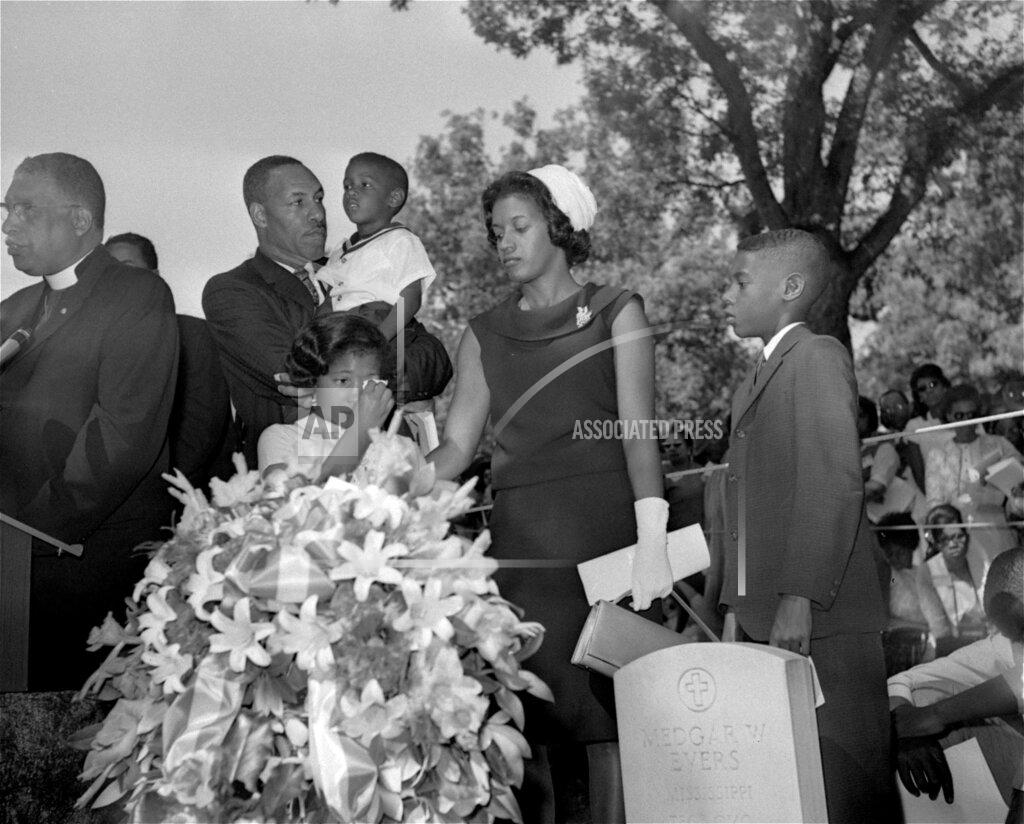
Twenty-six hundred civil rights workers held a memorial service at the grave of their slain hero, Medgar W. Evers, in Arlington National Cemetery after paying silent tribute at the grave of slain President John F. Kennedy.
Amid charges it was being foolish and frolicsome, the Senate went on a tax-cutting spree that had little chance of surviving a House-Senate conference.
The tobacco industry threatened to go to court if necessary to keep the Federal Trade Commission from branding cigarettes a health hazard.
The House passed a bill for $375 million federal aid to cities struggling with the problem of obsolescent and inadequate mass transit systems.
Senator Barry Goldwater (R-Arizona) urged former Ambassador to South Vietnam Henry Cabot Lodge to tell the American people the truth about the war in Vietnam.
Governor William W. Scranton pushed his GOP Presidential campaign into friendly Michigan after a day in Ohio that brought cheers but few delegates.
Prince Albert Taylor, Jr. became the first African-American bishop of the Methodist Church to be assigned to a primarily white American congregation, and became the bishop for New Jersey. He was followed two weeks later, on July 10, by the appointment James Samuel Thomas as the bishop for Iowa.
WMCA (NYC) plays Beatles’ Hard Days Night Album (10 days prior to its scheduled release date); they decide to release it June 26th.
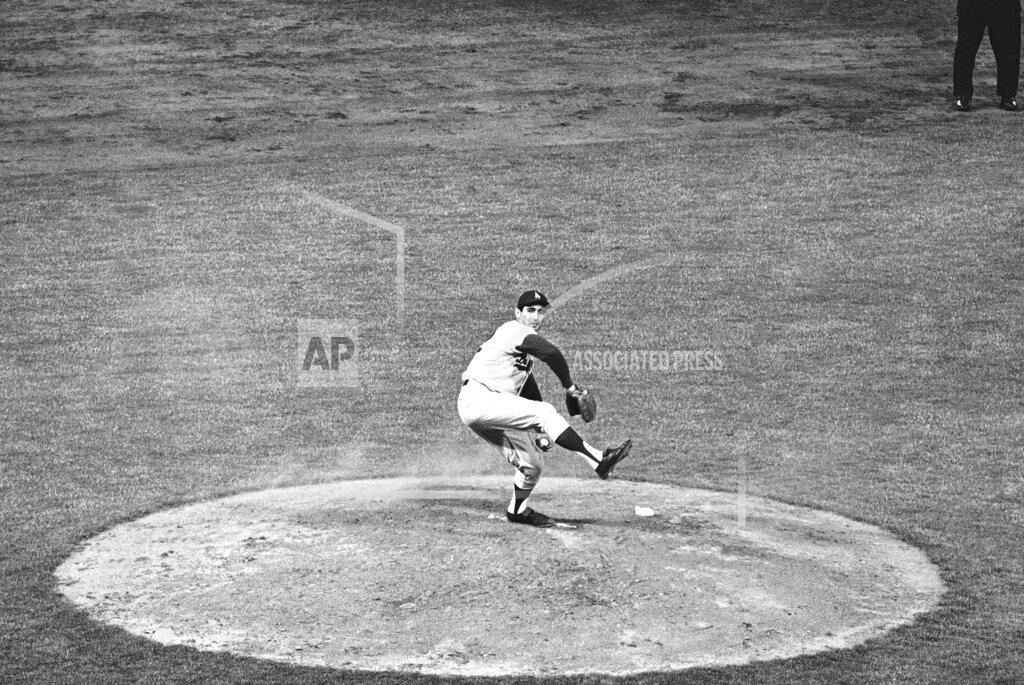
Steve Barber’s 3-hit 3–1 win gives the Orioles a 3-game sweep of the Yankees and first place in the American League.
At Minnesota, Max Alvis has a 2-run homer and scores 3 times as the Indians pound the Twins, 8–1. Following the game, the Indians board a flight to Boston where Alvis complains about a headache and calls the team trainer Wally Bach in the middle of the night. Alvis is rushed to a hospital where is diagnosed with spinal meningitis. “They diagnosed it pretty quickly,” he recalled. “They gave me a combination of three really powerful drugs intravenously. That was it. Back then, I probably came back and shouldn’t have,” Alvis said. “But, I wanted to bounce back and be able to play. I probably would have been better off laying off about a year and getting my strength back in my system. I didn’t feel like I was quite as strong as I was after I came back. I don’t know if I would have been a better ballplayer after that. It’s hard to judge that kind of thing.” Alvis will make the All-star team next year.
Ken Boyer doubled home two runs in the eighth inning today to give the St. Louis Cardinals a 4–2 victory over the Houston Colts. Bob Bruce, the losing pitcher, walked Curt Flood with one out and Bill White singled with two out, setting the stage for Boyer’s smash to right centerfield.
Dow Jones Industrial Average: 827.48 (+0.47).
Born:
Dell Curry, NBA shooting guard (NBA Sixth Man of The Year 1994; Charlotte Hornets all-time points leader [9,839]; Utah Jazz, Cleveland Cavaliers, Charlotte Hornets, Milwaukee Bucks, Toronto Raptors) and broadcaster, in Harrisonburg, Virginia.
Johnny Herbert, English racing driver (24 Hours of Le Mans, 1991). in Brentwood, Essex, England, United Kingdom.
Michael Reid, NFL linebacker (Atlanta Falcons), in Albany, Georgia.
Mike Ruth, NFL nose tackle (New England Patriots), in Norristown, Pennsylvania.
John McCrea, American singer and musician (Cake), in Sacramento, California.
Died:
Gerrit Rietveld, 76, Dutch architect and furniture designer.
Raymond G. McCarthy, 63, American expert on alcoholism and Yale University professor who pioneered the treatment of alcoholism as a disease. In 1953, his study concluded that at least 3,000,000 Americans were alcoholic, out of 68 million who consumed alcohol.
Princess Auguste of Bavaria, 89, wife of Archduke Joseph August of Austria. On the outbreak of war with Italy in 1915, Auguste, though in her 40s and the mother of a son serving as an officer, went to the front with the cavalry regiment of which her husband, the Archduke Josef August, a corps commander, was honorary colonel, and served a common soldier, wearing a saber and riding astride, until the end of the war.
 History Diaries