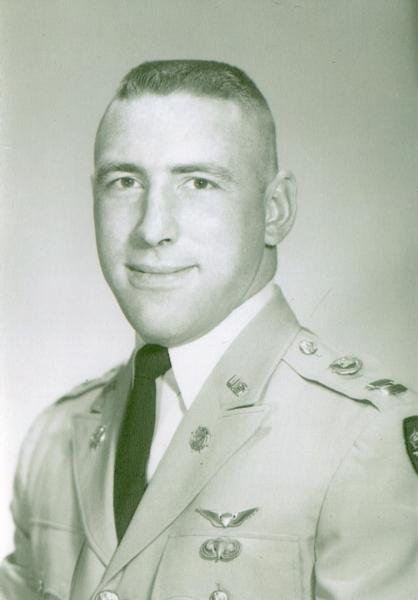
Seventeen Việt Cộng are killed and 11 captured during a search for two missing U.S. soldiers (who are reported dead).
American and South Vietnamese officials appeared gratified today at President Johnson’s choices to replace Ambassador Henry Cabot Lodge. General Maxwell. D. Taylor will be the Ambassador; U. Alexis Johnson will be Deputy Ambassador, a new post. Premier Nguyễn Khánh said: “Things are going to happen fast and hard in the fight for freedom in the South and the liberation in the North. The crucial hour has come. The free world will tackle the problem of Communism in Asia right at its roots.” Premier Khánh spoke before a crowd in Kiên Giang Province, at the end of a provincial tour. An official statement issued in Premier Khánh’s name amplified the theme. “The Vietnamese people understand,” it said, that the appointment demonstrates that the United States is more determined than ever to resist firmly all threats which may arise, especially those from the Communists led by Peking.
A dispute among Republicans is already surfacing, with some supporting Lodge’s claim that Vietnam should not become an issue in the campaign while others try to link his resignation to a disagreement with the Johnson administration’s policies.
A United States Army officer piloting a light spotting plane today in the Mekong River delta, 70 miles southwest of Saigon, died after the plane crashed into trees, the United States authorities reported today. The plane, an L19, was the second to crash with fatal results in 24 hours. On Tuesday, another L‐19 crashed in mountains 300 miles northeast of here, killing its United States Army Pilot.
General Paul D. Harkins, the retiring commander of the American forces in South Vietnam, said today that for the last nine months it had been “almost impossible” to wage an effective guerrilla war against Communism there. General Harkins, who received the Distinguished Service Medal from President Johnson in a White House ceremony, said that “up to just recently” there had been no “effective government” in South Vietnam. “I think now that General Khánh and his Government, which has been in power for four months, is beginning to take hold,” the general continued. “The programs that we have helped them devise are beginning to show little lights here and there.” He is “very, very encouraged,” General Harkins said, because Premier Nguyễn Khánh’s government “is on the initiative, and I think they have the determination and the will, and all we need is time and patience.”
The four‐star general, who is retiring from the Army on Aug. 1, in using the term “nine months,” was being sharply critical of the military junta headed by Major General Dương Văn Minh, which took over the South Vietnamese Government from Ngô Đình Diệm after a coup d’état last fall. He was also criticizing most of the period of tenure of General Khánh, who took over from General Minh at the end of January. The criticism also seemed to extend back to the last weeks of the Diệm regime, which ended with the overthrow and death of President Diệm and his brother, Ngô Đình Nhu, in the first couple of days of November, 1963. General Harkins had been regarded as a proponent of the Diệms. By implication, criticism of Ambassador Henry Cabot Lodge could also be read into these remarks. Mr. Lodge was considered to have been sympathetic to the overthrow of the Diệm regime.
Rocket‐carrying Laotian T‐28 fighter‐bombers attacked four North Vietnamese battalions in southern Laos near the Cambodian border, rightwing military sources said today. They added that the North Vietnamese, who were spotted by Laotian reconnaissance planes, apparently had come from South Vietnam.
United States strikes against Pathet Lao territory in Laos are “directly threatening the security” of neighboring North Vietnam, the Hanoi radio said today. The broadcast quoted a statement by the Vietnamese Foreign Ministry as having said: “The United States air forces have made more than 60 sorties, bombed and strafed dozens of villages and cities, and areas such as Khang Khay and Lat Bua.”
Communist China appeared today to be backing away from a confrontation with the United States over Laos. Analysts here believe that Peking decided to lessen the risks of war with the United States after an assessment of the determined stand of the Johnson Administration and the of its own relations with the Soviet Union. The Chinese Communist leaders may spur the pro‐Communist Pathet Lao in Laos and the Việt Cộng in South Vietnam to more militant action, but they are no longer dwelling on the danger of a direct collision with the United States. Peking propagandists have abruptly shifted the focus of their attention from Laos. Psychological preparation of the population for a possible clash with the United States has been eased.
The first indication of a change in the treatment of the Laotian question was contained in the Peking press Sunday. For 12 preceding days Peking had employed increasingly threatening language in warning that the war in Indochina would spread unless the United States hatted its air operations in Laos. Since Sunday, news of the developments in Laos has been subordinated and usually published in the form of statements by the Pathet Lao leaders. Today’s official review of the Peking press mentions Laos as the last item, following reports such as that on a reception given by Premier Chou En‐lai to leading members of the Peking Opera.
The chances of progress in the attempts to settle the Cyprus crisis appeared slim as President Johnson conferred today with Premier George Papandreou of Greece in the second phase of his effort to avert a possible war. The President’s hour‐long White House conference with the 76‐year‐old Greek leader followed two days of conferences here with Premier İsmet İnönü of Turkey. Mr. Johnson invited the two Premiers to visit him separately in Washington after he intervened last June 6 to prevent a Turkish invasion of Cyprus. Mr. Johnson’s foremost objective was to impress upon his visitors that a war between Greece and Turkey over Cyprus would be “unthinkable,” and to lead their governments to negotiate directly. But today indications were that neither side had budged from its position.
Turkey firmly rejects enosis. Turkish leaders made clear to President Johnson that direct negotiations with the Greeks would be possible only if the validity of the 1959 treaties that set the basis for Cyprus’s independence was recognized by Greece and Cyprus. They also said the United States must come forth with concrete proposals upon which discussions could be based. The impression was beginning to develop in diplomatic quarters here that Mr. Johnson’s intervention in the Cyprus dispute might cost the United States a large measure, of friendship among both the Turks and the Greeks, without providing a solution to the controversy.
It is known, for example, that Premier Papandreou reacted with bitterness when he was apprised last night that the joint communiqué signed by Mr. Johnson and Mr. İnönü had reaffirmed “the present binding effects of existing treaties.” This was a reference to the 1959 Zurich and London agreements. The violence that broke in Cyprus last December grew out of the action of Archbishop Makarios, President of Cyprus and leader of the Greek Cypriot community in rescinding several constitutional provisions that followed from the 1959 agreements. One such provision gave the minority Turkish Cypriots a legislative veto power.
Greek and Turkish Cypriot fighters battled with automatic weapons and hand grenades today for controI of the key village of Ambelikou west of Nicosia. A United Nations spokesman said that Greek Cypriots drove the Turks from a ridge overlooking the Turkish Cypriot village, and then opened fire on the village. But, he said, the Turkish Cypriots regained the ridge in a counterattack. There were no reports of casualties, the spokesman said.
The Congolese Government has been engaging for months in discussions with Moise Tshombe, former President of Katanga Province, about his possible participation in a new government in Leopoldville. The discussions, conducted through journalists and businessmen, have been stepped up during the last few weeks. However, most observers here expressed doubt tonight that the government was ready to offer Mr. Tshombe a post now. Mr. Tshombe was deposed as head of Katanga Province when his secessionist movement there was suppressed early in 1963. The former President, who has been in exile in Europe, left Madrid today for Brussels, from where he will fly to Leopoldville tomorrow.
The pressure to give Mr. Tshombe some part in a new government stems largely from the growing security problem in the Congo. Full‐scale rebellions are under way in Kwilu Province, in the west, and Kivu Province, on the Congo’s eastern border. The rebels have seized Albertville, the capital of North Katanga, and are threatening Baudoinville to the south. Violence also broke out in Stanleyville this week. The Congolese Army has been unable to deal effectively with these revolts and there is a growing feeling that the only way to handle the situation is to form a government of “national reconciliation” that would unite all political factions. Mr. Tshombe, as former President of Katanga, is the only man who has any real political power in that vast and rich section of the country. If such a government is formed, he would almost certainly be included.
Communist China predicted today that an insurrection in Kivu Province in the Congo would develop along the lines of the guerrilla war being waged by the Vietcong in South Vietnam. Hailing the “excellent revolutionary situation” emerging in the Congo, a long editorial in Jenmin Jih Pao, the Chinese Communist party organ, said the rebels would “win still greater victories like the people’s armed forces of South Vietnam.” Declaring that “American-piloted aircraft” had bombed the rebels in Kivu Province, the editorial said: “Obviously the United States imperialists have chosen the Congo as their first theater of special warfare against the African people.” The United States, it added, will face in the Congo the “same doom it is now facing in South Vietnam.”
In South Africa, the 90-Days Act commences, providing for any person to be detained, without trial, for 90 days; further, the person could be re-arrested under the same law for another 90 days.
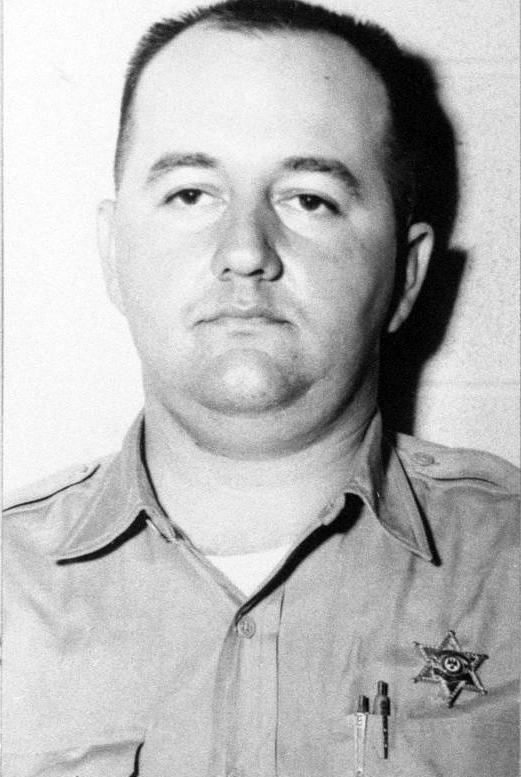
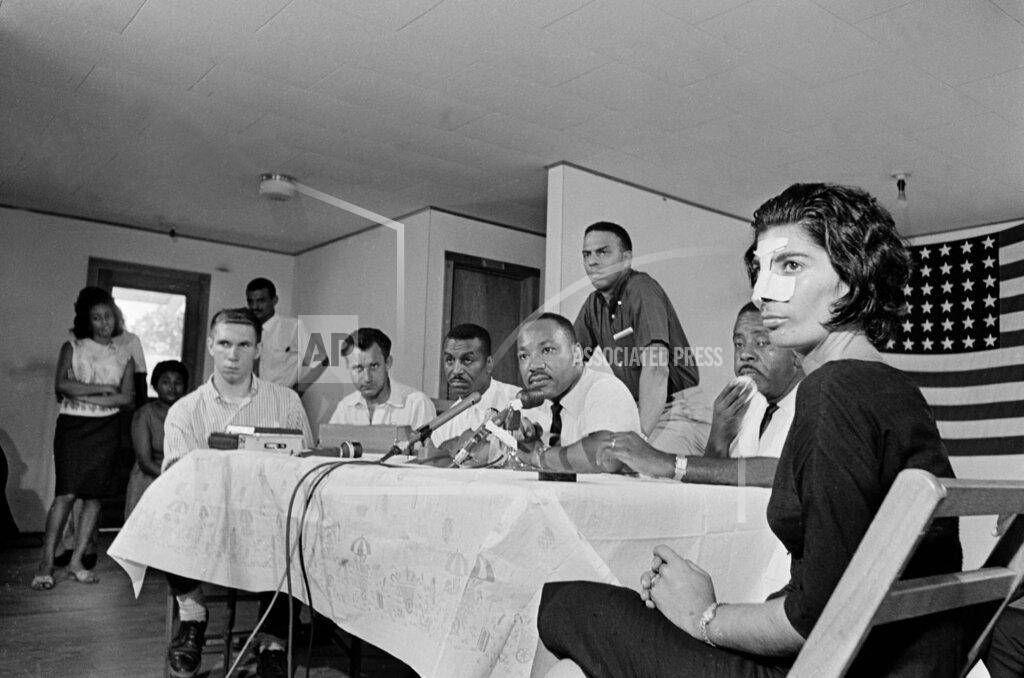
Virtually all hope faded today for the lives of three civil rights workers missing since Sunday night in the red hills of east‐central Mississippi. Sixty law enforcement officers — agents of the Federal Bureau of Investigation, state troopers and sheriff’s deputies — stepped up their hunt for the two whites and one Black. The law officers, working in pairs, made a house‐to‐house canvass of the rural area north and east of Philadelphia in a search for clues.
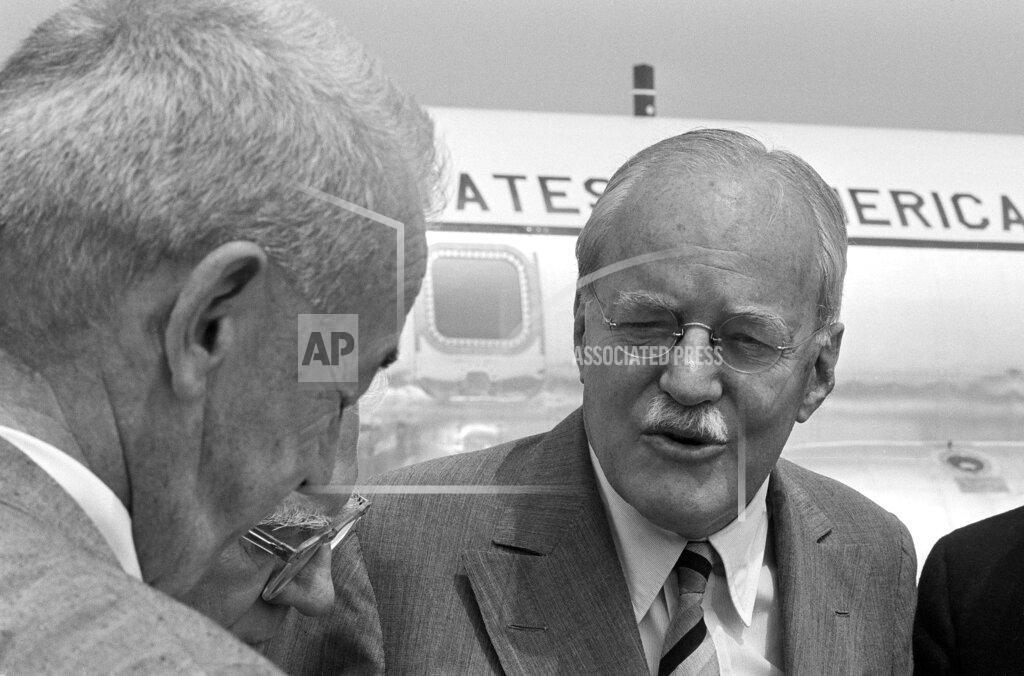
Meanwhile, Allen W. Dulles, former Director of Central Intelligence, arrived in Jackson, the state capital, under instructions from President Johnson and went into conference with Gov. Paul B. Johnson Jr. and other officials at the Governor’s Mansion. After a meeting of one and one‐half hours, Mr. Johnson, speaking to reporters in Jackson, praised Mr. Dulles and said he was in Mississippi “for the purpose of doing good and not destroying the state.”
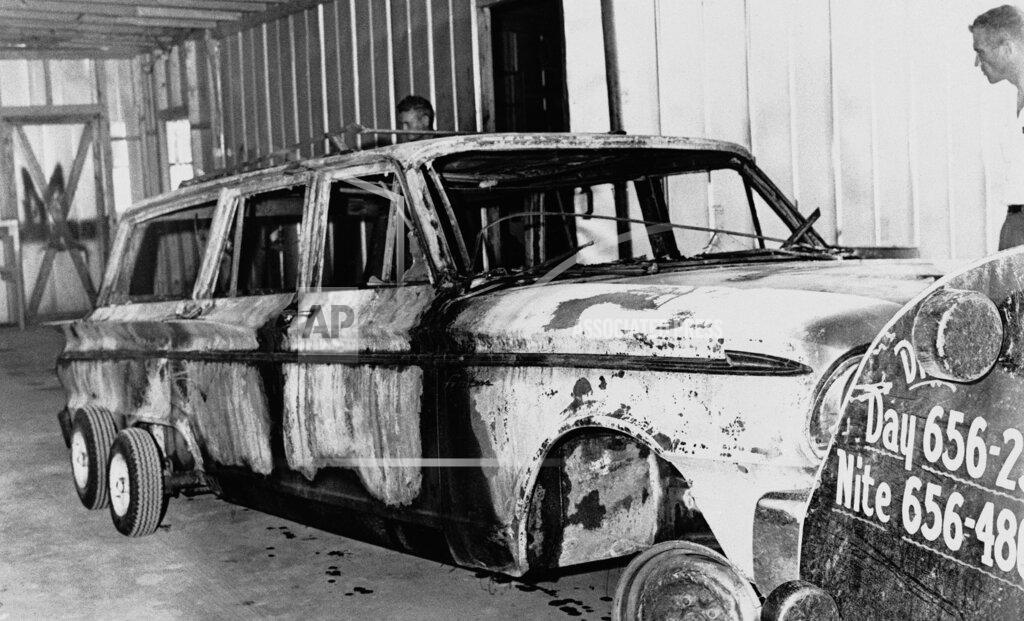
FBI crime‐laboratory experts studied the burned wreckage of the Ford station wagon in which the men were riding and sifted through the ashes where the vehicle was found yesterday, 15 miles northeast of here off State Highway 21 in Bogue Chitto Swamp. The comments of civil rights leaders and private remarks by investigators indicated all felt that the three men were dead.
One source quoted an FBI man in Philadelphia as having said, “We’re now looking for bodies.” Concern shifted to the possibility that popular reaction among Blacks might lead to demonstrations in the already explosive atmosphere created by the beginning on Sunday of a two‐month civil rights campaign throughout Mississippi. Disappearance of the three campaign participants and reports of violence, intimidation and harassment directed at Blacks and other participants in other sections of the state have aroused growing alarm.
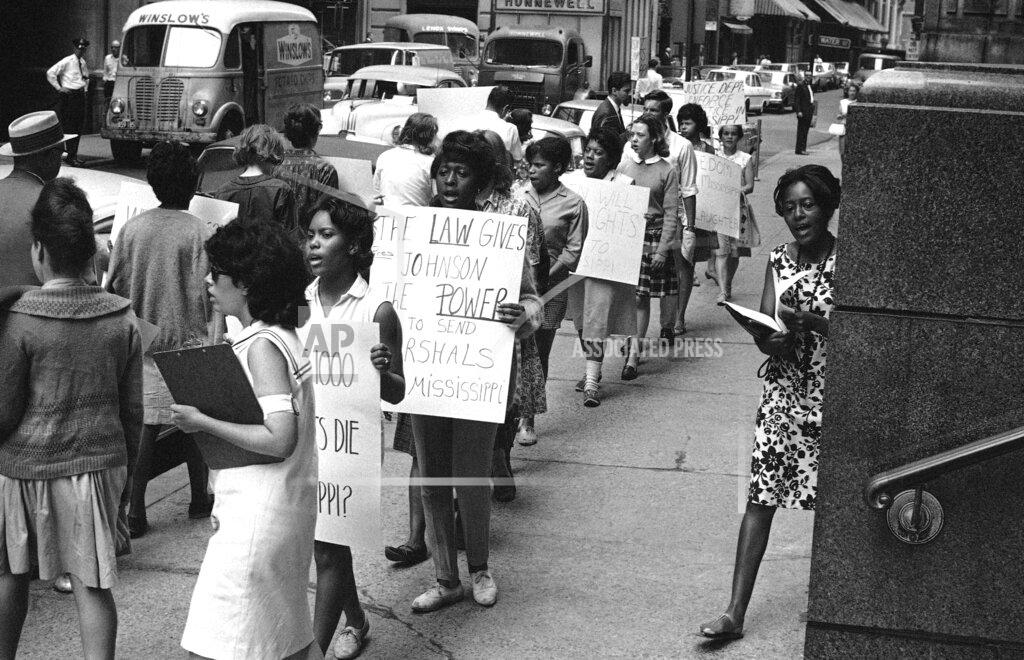
Attorney General Robert F. Kennedy told a delegation from the National Association for the Advancement of Colored People today that the Government could not take preventive police action in racially troubled Mississippi. He told the delegation, headed by Roy Wilkins, the executive secretary of the N.A.A.C.P., that he had considerably augmented the force of Federal Bureau of Investigation agents in Mississippi. But, he added, police action cannot be taken under the federal‐state relationship. Developments in Mississippi pushed all other considerations aside at the association’s 55th annual convention. A leadership delegation headed by Mr. Wilkins conferred for more than an hour with the Attorney General and then a group of about 1,800 delegates walked to the Justice Department.
There they marched past the Attorney General, who appeared with Mrs. Medgar W. Evers and the leadership delegation. Mrs. Evers is the widow of the N.A.A.C.P. Mississippi state secretary who was assassinated last year. Mr. Wilkins and his associates informed Mr. Kennedy that, according to their report, the situation in Mississippi had reached a high level of lawlessness with the disappearance of three civil rights workers. They said that only the employment of Federal police powers could guarantee a measure of protection for the Black population and for college students participating in the voter-registration drive.
Mr. Wilkins said afterward that he and his colleagues had urged the Attorney General to take “preventive” police action. The Attorney General, Mr. Wilkins added, replied that he had augmented the force of Federal Bureau of Investigation agents in Mississippi but that the federal government could not take “preventive” police action.
Robert F. Kennedy said last night that the Mississippi situation was “a local matter for local law enforcement” and Federal authority there “is very, very limited.” He made the remark before boarding a jetliner for West Germany, where he will attend a tribute to his brother, the late President, on the first anniversary of the “Ich bin ein Berliner” (I am a Berliner) speech in West Berlin one year ago Friday.
The disappearance of three civil rights workers in Mississippi has not changed the setup of an integration training school in Oxford, Ohio. The student volunteers say they are determined to go through with the project. None of the 400 collegians has dropped out of the school — the second one being sponsored, here by the National Council of Churches — since the disappearance of the three, whose burned car was found yesterday.
There was one change in the program, however. Bayard Rustin, Washington civil rights leader, who was to have spoken, had to delay his trip until tomorrow. Mr. Rustin, who organized the civil rights march on Washington last summer, is scheduled to address several of the classes tomorrow afternoon. The students are to leave Oxford this weekend for Mississippi, where they are scheduled to help this summer in Black voter registration drives and the setting up of community centers and freedom schools. About 200 students left here last weekend.
Enactment of the civil rights bill by July 4 was assured today when Representative Howard W. Smith announced a meeting of the House Rules Committee for next Tuesday. Mr. Smith, the Virginia Democrat who is chairman of the committee, made his announcement only 24 hours before a majority could have taken control of the committee away from him and called a meeting to clear the civil rights bill for final floor action. Last Friday the Senate approved, 73 to 27, a substitute for the bill passed by the House on February 10. This substitute went back to the House Monday for concurrence in the Senate changes.
Southerners refused unanimous consent to take up the substitute immediately. It was thereupon sent to the Rules Committee to obtain clearance in the regular way for House consideration. To prevent Mr. Smith, an inveterate foe of civil rights legislation, from delaying a rule by refusing to call the committee into session, three Democratic members immediately wrote him requesting a meeting. Under the rules of the House, if Mr. Smith did not announce a meeting within three days of receipt of the request, a majority of the 15‐member committee could immediately summon a meeting. If Mr. Smith did respond to the request, he had to call the meeting not more than seven days after the three members sent their letter. Next Tuesday would be the seventh day.
The House Ways and Means Committee set aside the Administration’s health‐care bill today and approved a complete substitute calling for a general increase in Social Security benefits. All cash benefits under the Old Age, Disability and Survivors Insurance Program would be raised 5 percent. Social Security taxes would be increased to finance the additional benefits. The bill would also bring self‐employed physicians under the insurance system and permit working widows retiring at the age of 60 to draw old-age benefits at a reduced rate. The committee’s action followed more than three months of off‐and‐on deliberations in closed session on the Administration’s program of health care for the aged under Social Security.
The Administration bill called for hospitalization, nursing care and clinical service to persons over 65 with the costs to be financed by higher Social Security taxes. Proponents finally concluded, however, that they could not muster a sufficient number of votes for committee approval of the measure or for any variation of it. They consequently decided not to put the issue to a test. This does not mean that the Administration has abandoned efforts for health‐care legislation this year. The apparent strategy now is to add some sort of health‐care plan to the Ways and Means Committee bill when it reaches the Senate, with the aim of ultimately winning House approval of the Senate version.
President Johnson reached over the heads of all the Army’s four‐star generals and deep into the three‐star list today to pick two comparatively young lieutenant generals to head the uniformed Army. As Chief of Staff of the Army, the President selected Lieutenant General Harold K. Johnson, 52‐year‐old Deputy Chief of Staff for Operations. He succeeds General Earle G. Wheeler, who becomes chairman of the Joint Chiefs of Staff. General Johnson, who was a prisoner of the Japanese in World War II and was in the Bataan death march, was 32nd in rank on the Army’s list of lieutenant generals. They are preceded by 12 full generals.
As Vice Chief of Staff, the President chose 49‐year‐old Lieutenant General Creighton W. Abrams, who is now commander of the Army’s V corps in Germany. A World War II tank officer and a corps staff officer in Korea, General Abrams was only two places behind the new chief in the list of Army lieutenant generals. Between them on the list was Lieutenant General William C. Westmoreland, the new 50-year-old commander of United States forces in South Vietnam.
The Senate authorized a $5.2 billion space budget today after defeating by a 42‐to‐38 vote a move to cut 10 percent from funds for the manned lunar expedition. The surprisingly close vote is a political setback to a space program that is already running into budgetary difficulties. The vote indicated that the expedition did not have the overwhelming Congressional endorsement claimed for it by the National Aeronautics and Space Administration. It also portended difficulties for the space program, and the lunar expedition, in particular, when Congress gets around to appropriating the actual funds. Today’s bill only authorizes the budget and, in effect, sets a ceiling on the amount that can be appropriated.
The move to cut the budget for the coming fiscal year was led by Senator J. W. Fulbright, Democrat of Arkansas, who sponsored an amendment calling for a $267,750,000 reduction for the lunar expedition. This amounted to a 10 percent cut in funds earmarked for the Apollo project. Mr. Fulbright said that the purpose of his amendment was to force Congressional re‐evaluation of the goal, first laid down by President Kennedy three years ago, to land an expedition on the moon by 1969. Describing the present pace as, one of “haste and waste,” he contended that the time had come to put the $20 billion project on a “more deliberate, thoughtful and careful basis.” He also argued that, as a matter of national priorities, some of the money going into the expedition could be spent more profitably on “more pressing” problems, such as education, public works, and urban transportation.
[Ed: In other words, use that money for pork to buy votes. No matter how much you despise Congress, you will never despise them enough.]
The U.S. Federal Trade Commission issued a ruling requiring that all cigarette package labels should, by January 1, include a warning, displayed “clearly and prominently”, that cigarette smoking could cause death from cancer and other diseases. The FTC added that cigarette advertising would be required to include the warning by July 1, 1965. The original warning, as required by Congress in 1965, was “Cigarette Smoking May be Hazardous to Your Health.”
Max Alvis has two homers, including a grand slam, to pace the Indians to a 12–3 scalping of the Twins in game 1. The Twins rebound to win game 2 by a 3–2 score. Dick Stigman strikes out 12.
Willie Smith delivered his third game‐winning hit in three nights, a three‐run homer, and drove in five runs as the Los Angeles Angels ran their string of victories to eight tonight by defeating the Washington Senators, 9–5.
University of Wisconsin star slugger Rick Reichardt signs with the Angels. He receives the biggest bonus ever, an estimated $200,000.
Richie Allen hit a three‐run homer in the first inning to lead the Philadelphia Phillies to a 9–8 victory over the Chicago Cubs tonight. Although off to a 5‐1 lead, the Phillies had a hard time in holding back the Cubs. Johnny Herrnstein’s fourth homer of the year in the seventh inning proved to be the margin of victory. Art Mahaffey, the Phillies starter, left after giving the Cubs’ second run in the second. He was followed by a succession of relievers, with Dallas Green getting credit for the triumph. The Cubs pecked away with a three‐run homer by Billy Williams, his 18th, and a solo smash by Ernie Banks, his eighth.
Orlando Cepeda, who has been having his troubles with Cincinnati pitching, drove in two runs with a first‐inning homer tonight, giving the San Francisco Giants a 2–1 victory over the Reds. Willie Mays got his first hit of the four‐game series with two out in the opening inning before Cepeda knocked the ball against the center‐field wall extension for his 11th homer. Cincinnati scored in the second inning when Jim O’Toole, the starting pitcher, bounced out with the bases filled. The Reds had filled the bases on two walks and Leo Cardenas’s single. Ron Herbel and O’Toole then settled down to a pitchers’ duel. Herbel struck out 14 batters and yielded seven hits.
Dow Jones Industrial Average: 827.01 (+4.31).
Born:
Christopher Steele, British intelligence officer and investigator; to British parents in Aden, Federation of South Arabia.
Gary Suter, Team USA and NHL defenseman (Olympics, 1998, 2002-silver medal; NHL Champions, Stanley Cup-Calgary, 1989; NHL All-Star, 1986, 1988, 1989, 1991, 1996; Calgary Flames, Chicago Blackhawks, San Jose Sharks), in Madison, Wisconsin.
Pat Miller, NFL linebacker (San Diego Chargers), in Panama City, Florida.
Pete Noga, Samoan-American NFL linebacker (St. Louis Cardinals), in Fagasa, American Samoa.
David Adams, NFL running back (Dallas Cowboys), in Tucson, Arizona.
Died:
Stuart Davis, 71, American painter.


 History Diaries