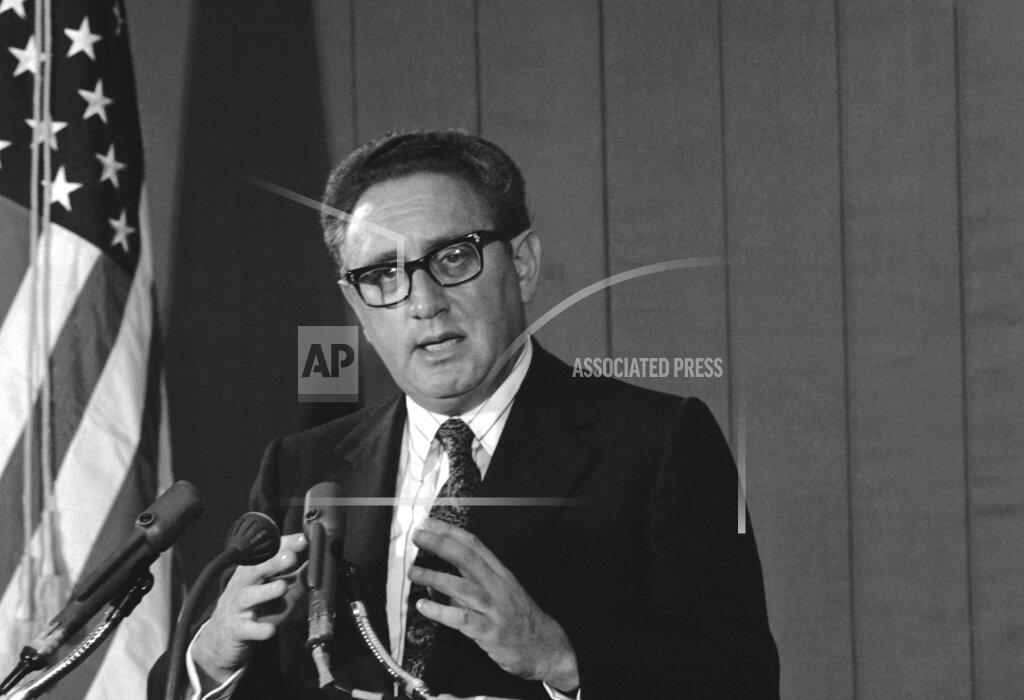
Secretary of State Kissinger, at a news conference on the eve of President Nixon’s departure for the Soviet Union, said that the United States and the Soviet Union were hoping to announce an agreement in principle for a limitation on underground nuclear tests at the meetings to be held by President Nixon and Leonid Brezhnev, the Soviet Communist party leader. But he said that he was uncertain how much headway would be made toward another accord limiting strategic arms.
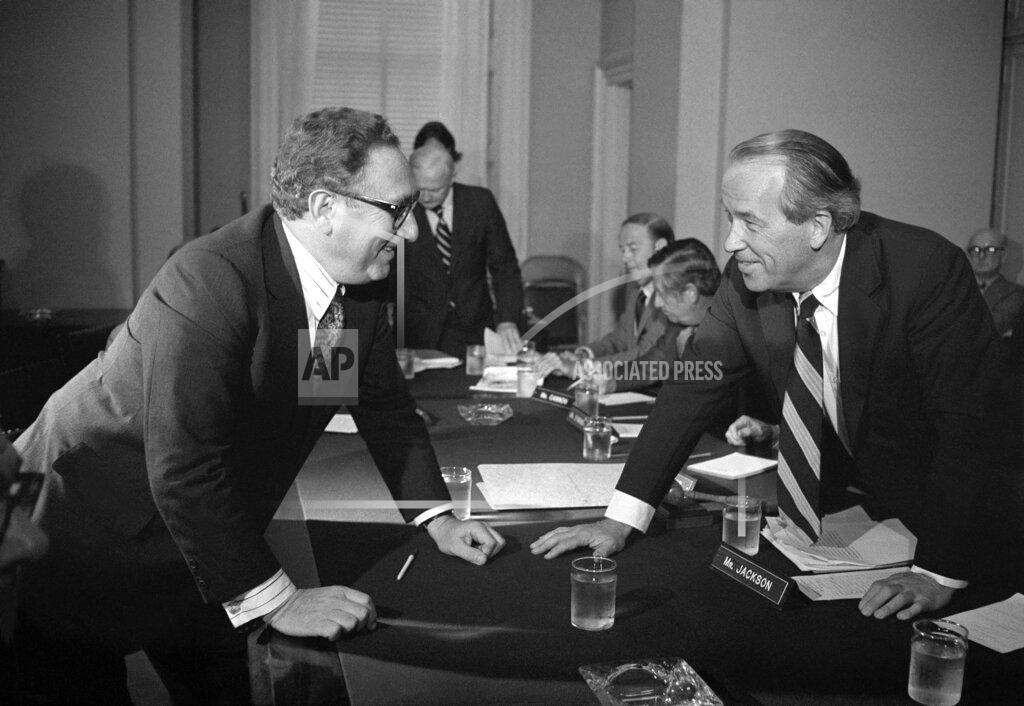
Mr. Kissinger also said at the press meeting that assertions that he negotiated secret arrangements in the missile limitation agreement of 1972 between the United States and the Soviet Union were “totally false in every detail.” However, Senator Henry Jackson, Democrat of Washington, continued to take issue with the Secretary’s interpretation of the agreement.
The $92.0 billion U.S. defense budget for next year is “on the thin side,” Secretary of Defense James R. Schlesinger told a Senate appropriations subcommittee. A recommended $14.9 billion cut in the budget urged by Paul C. Warnke, former assistant defense secretary — would curtail modernization programs and endanger a strategic balance of power, Schlesinger said.
Prime Minister Wilson announced that Britain’s first nuclear bomb test in nine years was carried out “a few weeks ago” in Nevada. His announcement caused dismay and anger in the left wing of his Labor party, which was also not satisfied with Mr. Wilson’s explanation that arrangements for the test had been made by the former Conservative government.
Two teen-age members of the Irish Republican Army were killed when a bomb they were planting exploded prematurely in the entrance of Londonderry’s biggest supermarket. A man, a woman and a child in a baby carriage were injured in the blast in the predominantly Roman Catholic area of the Northern Ireland city. A few minutes after the supermarket blast, another bomb exploded in a Londonderry carpet warehouse but caused no casualties.
Yugoslav President Tito arrived in West Germany on a five-day state visit devoted to strengthening economic ties between his Communist state and the prosperous capitalist nation. Yugoslav officials said the talks would include the trade balance between the two nations, the situation of Yugoslav workers in Germany and regulations governing German investments in Yugoslavia.
The Shtyki Memorial, near Zelenograd in the Soviet Union, part of a memorial complex created in honor of those who defended the country in the Battle of Moscow during World War II, was completed.
In his first extended interview since his expulsion from the Soviet Union in February, Aleksandr I. Solzhenitsyn said he would return to live in Russia if his work could be freely published there. “The system should change sufficiently to allow ‘The Gulag Archipelago’ to be published freely and widely in Russia, not the kind of deceptive publication that we have,” the 56‐year‐old novelist said. “Those are the conditions in which I could be useful in Russia.” Mr. Solzhenitsyn was interviewed at his home in Zurich, Switzerland, last week by Walter Cronkite of the Columbia Broadcasting System. The interview, with an English translation by David Floyd of The Daily Telegraph of London, was broadcast last night.
After a Sudanese court earlier in the day had sentenced the eight Palestinian guerrillas who killed two American diplomats and a Belgian in a siege of the Saudi Arabian Embassy in Khartoum 15 months ago to life imprisonment, President Gaafar al-Nimeiry of the Sudan decided to hand them over to the Palestine Liberation Organization. General Nimeiry’s decision meant that the guerrillas would be freed promptly.
Palestinian terrorists infiltrated Israel by sea for the first time. Three members of the Fatah military group took to the Mediterranean Sea from Lebanon on an inflatable boat, powered by an outboard motor, then landed on the beach in Israel at the coastal city of Nahariya at 11:00 p.m. local time. Ten minutes later, they were spotted by a teenager who alerted the police before an attack could be carried out at a local cinema. Instead, they broke into a nearby apartment building, killing a woman and two children with a grenade. After being surrounded, the three men killed an Israeli soldier and wounded seven others. All three terrorists were killed in battle with Israeli security forces, who rescued 17 other civilians.
Lebanon has asked the Arab nations for assistance in strengthening her air defenses against Israel, Premier Takieddin Solh announced today. “We have submitted specific requests for aid to the Arab states, especially where air defenses are concerned,” he told reporters, adding that he would visit Egypt and Libya before the middle of July. The new request for Arab help comes in the wake of the Israeli air strikes last week against four Palestinian refugee camps in southern Lebanon. Lebanese sources say that the toll of those raids was 80 killed — about 50 more than the toll reported by the Palestinians — and some 150 wounded. The Palestinians’ figures, according to the press in Beirut, covered only civilian casualties, not guerrillas killed in the raids. And it was reported that the Lebanese request for Arab air assistance might have included surface‐to‐air missiles.
The capsizing of a ferry boat in Pakistan killed 42 of the 65 people on board as the vessel was approaching Mirpur, Azad Kashmir during a storm, and overturned in the Poonch River.
Cambodian government fighter-bombers and 105-mm. artillery batteries struck Communist troop positions along the Mekong River on the outskirts of Phnom Penh. Navy boats, meanwhile, ferried fresh troops to Khach Kandal Island, 5 miles north of the capital, in an effort to gain control of the island before monsoon rains flood the area in the next few weeks. Insurgent forces Sunday night fired rockets into Phnom Penh, killing five persons and wounding nine.
A Muslim rebel force of about 600 men launched coordinated attacks against government positions in the southern Philippines but was driven off by combined air and ground assaults that killed between 150 and 200 of the insurgents, military sources reported. The fighting, in the rice bowl province of North Cotabato, 500 miles south of Manila, coincided with the Islamic ministers’ conference now under way in Malaysia.
A procedural wrangle over rules and voting majorities continued to tie up the U.N. conference on sea law as it entered its first full week in Caracas, Venezuela. Delegates to the 10-week meeting were still debating the issues, but British sources said some progress had been made and predicted the conference would get down to serious business within a few days.
An apparently coordinated campaign of bombings aimed at foreign business shook downtown Buenos Aires tonight. The explosions, within half an hour, shattered the fronts of buildings housing at least eight companies, the police reported. There were no injuries. The police said that the bombs damaged three branch offices of the Bank of London, a Coca‐Cola warehouse a Ford showroom, a Philips Electric shop, the Bank of Boston and an importing firm. A campaign of anti-foreign bombings began at the end of last month when the Marxist People’s Revolutionary Army set explosive devices that damaged more than a dozen automobile showrooms in a single night. Some of the bombs tonight were thrown from speeding cars, witnesses said.
Canadian broadcaster Richard Bornstein, 29, has been ordered to leave Rhodesia after being in the country for only three days. No reason for the order was given by government officials. The order banning Bornstein was signed last week, two days before he entered the country, by P. K. Van der Byl, minister of information, immigration and tourism. Bornstein works for the Canadian Broadcasting Corp.
Dr. Christiaan Barnard said he is worried about the future of heart transplant surgery at Groote Schuur Hospital in Cape Town, South Africa, where the first such operation took place in 1967. Transplants “virtually came to a standstill” over the past two years, said Barnard, because the cardiac surgery department was being denied recipients and cases that were referred to it were unsuitable due to extensive disease.
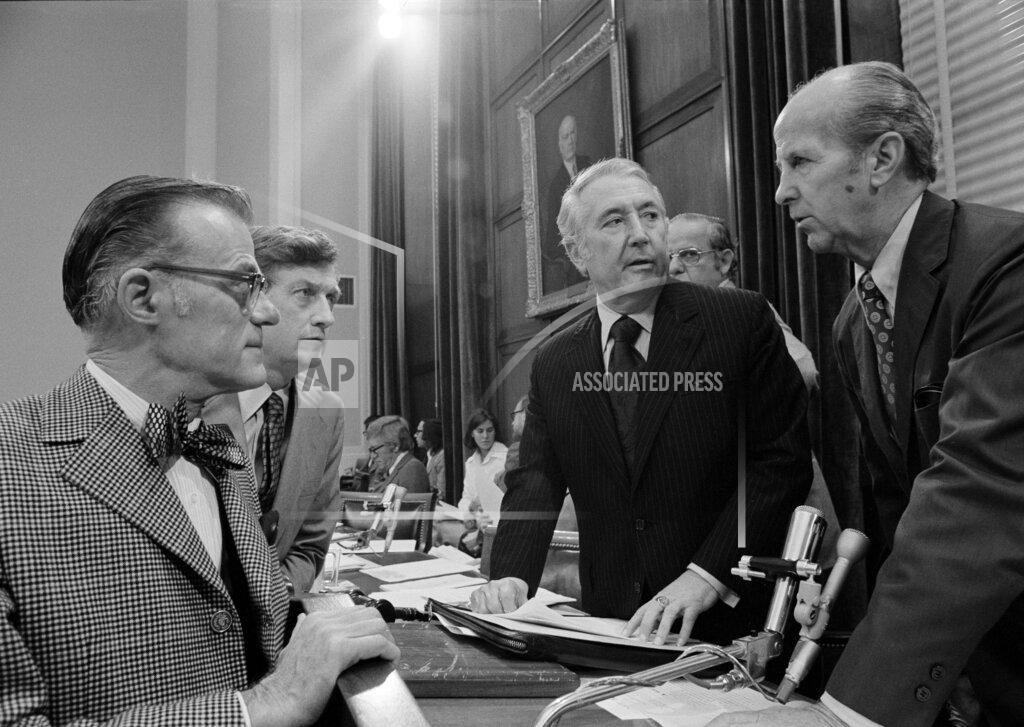
In an attempt to accelerate the impeachment inquiry, the House Judiciary Committee issued four — and what were described as its final — subpoenas for 49 more White House tape recordings and authorized President Nixon’s defense counsel to begin presenting rebuttal evidence Thursday. A committee resolution permitting James St. Clair, Mr. Nixon’s chief defense lawyer, to offer rebuttal evidence orally and in writing stipulated that it must be factual, not argumentative or interpretive.
The White House disclosed that President Nixon had recently suffered from phlebitis, an inflammation in a leg vein, but said that it had presumably abated. A spokesman quoted Dr. Walter Tkach, the President’s physician, as having said: “The President is in good health and is looking forward to his trip to Brussels and the Soviet Union.” President Nixon will start on his trip tomorrow.
President Nixon held a meeting with his economic advisers and said afterward that the government would try to limit spending in the new fiscal year, which begins Monday, and that he was adopting a more stringent budgetary policy as a means of coping with inflation. He said that he planned to cut the budget estimate for the new fiscal year by $5 billion, and he also announced his intention of bringing the budget for fiscal year 1976 into balance.
The Senate, overwhelmingly defeated, today a tax package that would have cut income taxes and ended several business tax breaks, including the oil depletion allowance. Liberals served notice that they would offer each portion of their package separately in the hope of salvaging some of the legislation that had been offered as amendments to a bill to raise the national debt ceiling. The attempt to attach the whole package to the debt bill failed, however, by a vote of 65 to 33, and it appeared unlikely that any part of the plan would pass. Even if the liberals managed to pass the measure in the Senate, they would still face a conference with the House-passed debt bill and a threatened veto by President Nixon.
The Senate gave quick approval today to legislation authorizing an open‐ended emergency loan program to aid livestock producers facing bankruptcy as a result of declining meat prices. The bill, which was approved by a vote of 82 to 9, was sent to the House of Representatives where similar legislation is under consideration. Senators made one major change in the bill — unanimously passing an amendment to remove a $3‐billion ceiling on the loan program and to limit the individual livestock producer to a $350,000 maximum loan. The emergency loan legislation, which covers cattle, pork and poultry producers, is considered the quickest and most effective relief from a financial crisis created by steady drops in prices for animals sold for slaughter.
The weakened economic situation was reflected in developments on both sides of the Atlantic. Interest rates in the United States continued upward, contributing to the weakening of both the pound and stock prices in London. A large Chicago bank and five California banks raised their lending rate to corporate borrowers.
In London, the pound dropped sharply — more than 2 cents against the dollar — and the already weak stock market sank to another 15-year low. Italy’s Treasury predicted the nation’s balance-of-payment deficit would be $10 billion this year.
The Treasury Department announced that in the new fiscal year that starts Monday, New York State will get a $22 million increase in federal revenue-sharing funds, bringing the state’s annual share up to $690 million, the largest amount received by any of the states. The $22 million was part of a total of $32 million more in the funds announced by the Treasury for New York, New Jersey and Connecticut.
The FBI is taking steps to curtail the distribution of arrest records to financial institutions and state and local governments, Director Clarence M. Kelley announced. Beginning Monday, it will not supply such records if the arrest happened more than a year ago and the FBI had no follow-up information showing whether the person was convicted, acquitted or never brought to trial. The policy does not apply to the distribution of arrest records to state and local agencies for law enforcement purposes, Kelley said, but only for non-law-enforcement uses, such as job applications. The FBI has been widely criticized for distributing arrest records for non-law-enforcement purposes without also providing the disposition of charges.
President Nixon signed legislation aimed at improving the quality of water that flows down the Colorado River into Mexico. The bill is the result of a 1972 promise Mr. Nixon made to Mexican President Luis Echeverria Alvarez to reduce the salt content of the river, Major items in the Colorado River Basin Salinity Control Act provide for construction of a $121.5 million desalting plant capable of treating 129 million gallons of water daily, rehabilitation of the Coachella Canal in Southern California, funds for a diversion canal in Mexico and the construction of two salinity control plants in Colorado, one in Utah and one in Nevada.
Peter M. Flanigan, a White House aide since President Nixon took office in 1969, announced his resignation as assistant to the President and as executive director of the Council on International Economic Policy. He has been responsible for advising Mr. Nixon in the area of international economics and trade and in tariff negotiations. Flanigan, a New York investment executive, said he would return to private business but did not announce specific plans.
The nation’s traffic deaths for May dropped 23% below a year ago, the Transportation Department reported. James B. Gregory, chief of the Highway Traffic Safety Administration, said the data were “contrary to our expectations.” He had reasoned that with good weather and increased gasoline supplies fatalities would increase. May’s traffic deaths were estimated at 3,712, down from last year’s 4,813. In the first five months of 1974, total deaths have been about 6,000 below the same period in 1973.
A diver who said he had tossed $150,000 worth of sunken treasure back into the sea returned most of the loot and pleaded guilty in a Ft. Pierce, Florida, court to conspiring to commit grand larceny, authorities said. The state attorney’s office said that in exchange for a negotiated plea, Tom Gurr of Merritt Island returned artifacts valued at more than $100,000 and gave a list of persons and companies to whom he had sold treasure from the Spanish galleon San Jose. Gurr was arrested last January 4 after a television program showed him shoveling what he claimed was treasure back into the Atlantic Ocean because the state wouldn’t give him his share.
Many law enforcement authorities believe that New York state’s stringent new anti-drug laws have not measurably slowed the overall flow of drugs or driven major narcotics dealers out of business. But they said that since last September 1, when the laws became effective, there have been increasingly long sentences for addicts and small-scale pushers.
Patricia Hearst’s parents left for a vacation at an undisclosed location to help ease the ordeal of waiting for word on their fugitive daughter, a family spokesman said. “They left during the weekend for an extended rest for Mrs. Hearst,” the spokesman, who asked to remain unidentified, said. “I imagine they will be back before her (Mrs. Hearst’s) birthday on July 4.” Patricia Hearst, 20, was kidnapped February 4 from her Berkeley apartment by the terrorist Symbionese Liberation Army. She later renounced her family and said she had joined her captors. Miss Hearst and two surviving SLA members are being sought on a variety of criminal charges.
An unidentified woman leaped to her death from San Francisco’s Golden Gate Bridge, becoming the 516th known suicide from the span. The woman’s body was recovered from below the south tower of the bridge by the Coast Guard. No information about the woman or details of the jump were immediately available.
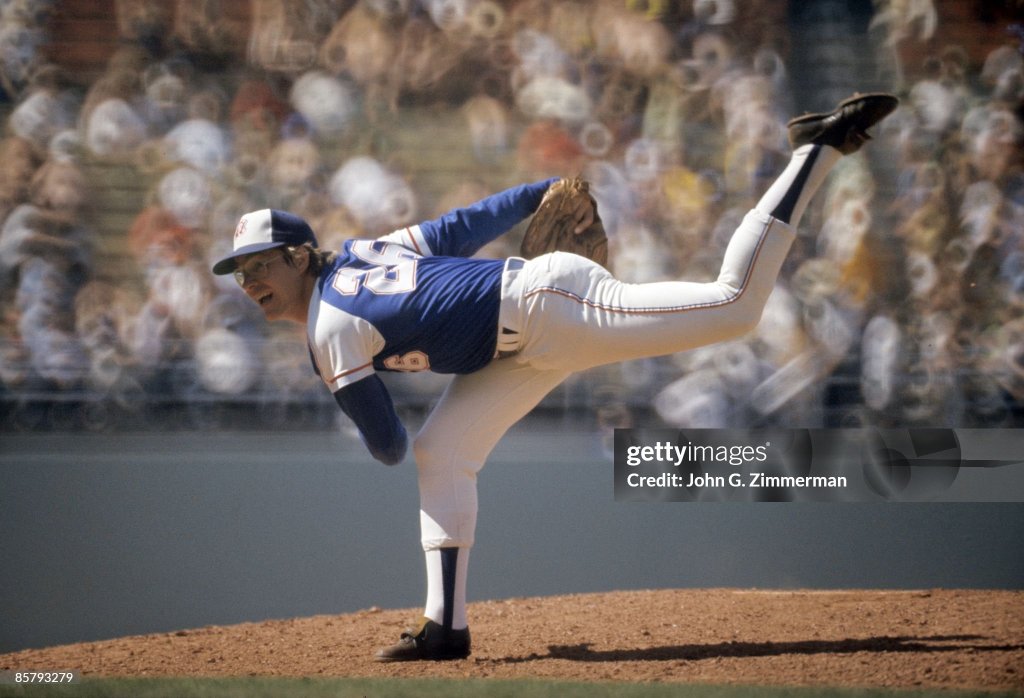
Steve Busby retires the first 9 White Sox to set an American League record with 33 consecutive batsmen retired. The Royals lose, however, 3–1, as Ron Santo hits a 2-run homer off Busby. It is Santo’s 342nd and final Major League homer.
Rico Petrocelli, who had a pair of homers yesterday’s 8–0 shutout, connects for a grand slam as the Red Sox beat Milwaukee, 9–0. Luis Tiant wins his 10th.
At Yankee Stadium, John Lowenstein has 3 hits, including a grand slam, and drives in 5 runs as the Indians beat the Yankees, 10–3.
Sal Bando belts a grand slam in Oakland’s 6-run 8th as they beat the visiting Angels, 11–3. Vida Blue worked eight innings to get credit for his seventh victory.
At Parc Jarry, pitcher Jim Lonberg clubs his first homer in the National League, a grand slam, as he wins his 10th, an 8–2 Phillies win over the Expos. Lonberg had two homers in the American League. The Phils now lead the National League East by a game. The Phils play without slugger Dick Allen, who arrives in the middle of the game. Allen and five other players were given permission to fly a commercial flight instead of taking the team plane. The other five players took a morning flight while Allen went on an afternoon flight that got delayed.
Dow Jones Industrial Average: 816.33 (+0.94, +0.12%).
Born:
Adam Treu, center and long snapper (Oakland Raiders), in Lincoln, Nebraska.


 History Diaries