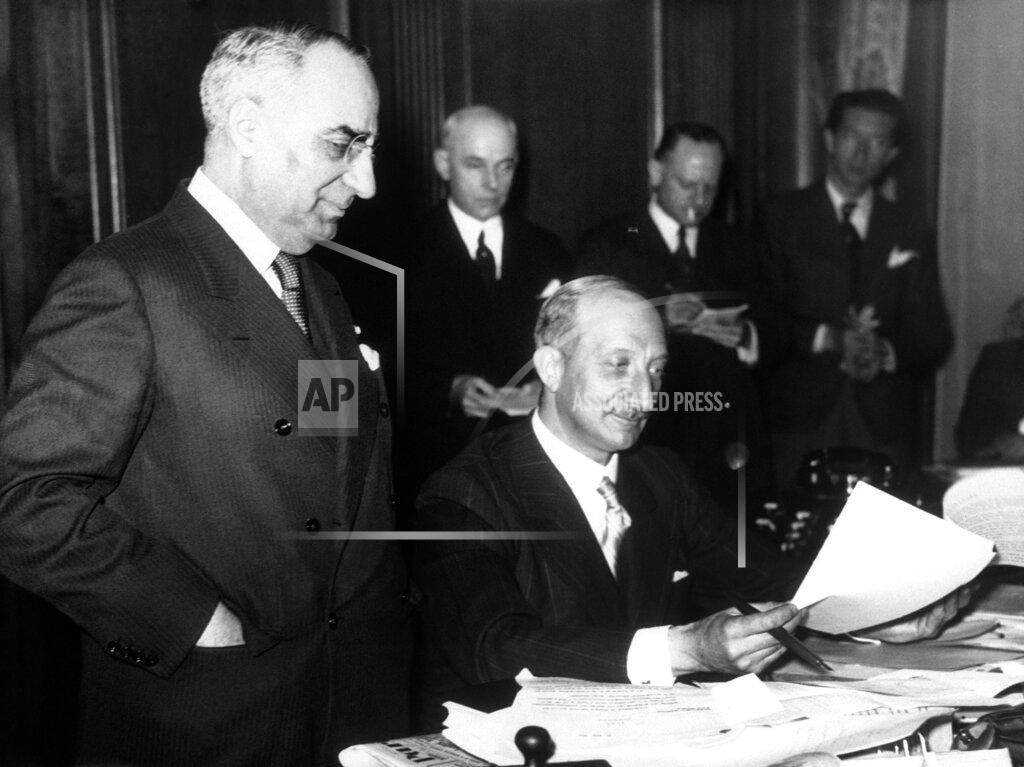
France and Turkey signed a mutual assistance pact. The French and Turkish governments concluded a mutual assistance treaty, based on the earlier Anglo-Turkish Treaty. Under the Franco-Turkish pact, the French gave up all claims to the Republic of Hatay, which became a part of Turkey. In return, the Turkish government promised to extend mutual aid to France in the case of aggression. With the acquisition of Hatay, the Turkish government stood squarely behind the Western powers.
Reichsmarschall Hermann W. Goering convened a meeting of the Reich Defense Council to coordinate the total mobilization of German manpower and resources for the coming war. 35 civil and military officials were present including Colonel General Wilhelm Keitel, Grand Admiral Erich Raeder, Colonel General Franz Halder and SS Leader Heinrich Himmler. Hitler, it was announced, had decided to draft seven million men into the armed services. The resulting severe labor shortage was to be made up by forced labor, utilizing prisoners of war, along with inmates from concentration camps and prisons. Himmler stated that “greater use would be made of concentration camps in wartime.” Goering said that “hundreds of thousands” of Czech workers would be taken into Germany as forced laborers in agriculture.
Martin Bormann issued a secret order to the German Minister of Education to suppress Divinity Schools.
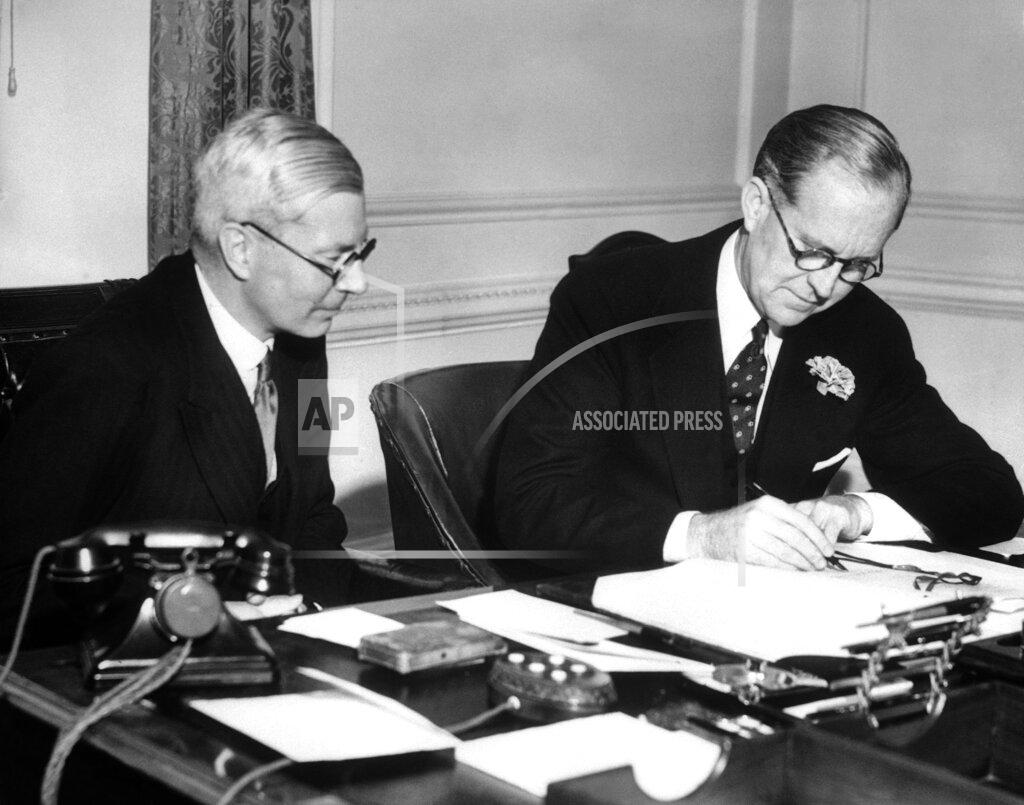
The British Foreign Minister Lord Halifax says if Germany wants war, they can have war. “If you want war, you can have war.” This message for Foreign Minister Joachim von Ribbentrop was given by Viscount Halifax, Foreign Secretary, to a British gentleman who was going to Berlin on private business and expected to meet the German Minister of Foreign Affairs. For the traveler had been friendly with the present favorite of Chancellor Hitler since the time when Herr von Ribbentrop was a modest sales agent for a champagne firm.
In saying, “If you want war you, can have war,” the deeply religious Foreign Secretary no doubt had in mind the Evangelical reference to the fate of those who raise their sword against their fellow-men. Anyhow those words express the present frame of mind of the British people better than official statements. This country is determined to have armaments able to crush any enemy anywhere. That is why shipyards are full of hammering, the air full of the roar of motors and the tramp of marching men. If need be, anywhere in the world Britain wants to be able to put her foot down and there shall be a heavy boot on that foot, too. I say “shall” meaning a boot not yet heavy enough to allow the British Government to stamp its foot wherever national interest demands. In the Far East, for example, the British must content themselves. with writing “intolerable insults” into the Japanese account for payment later.
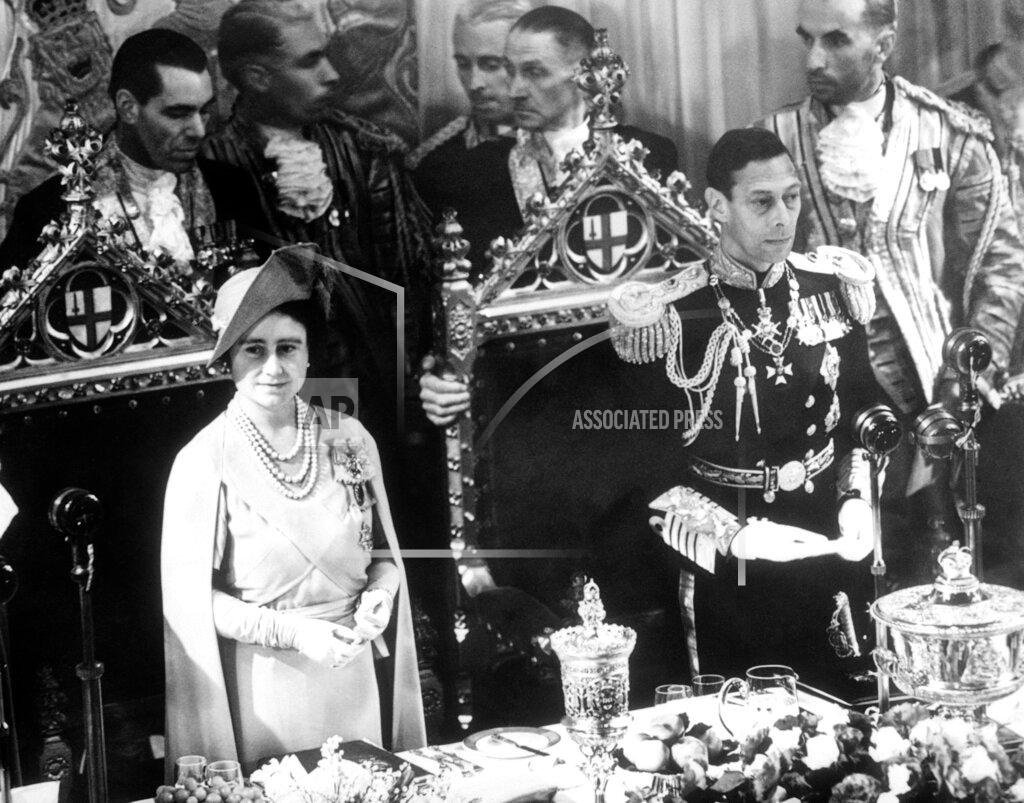
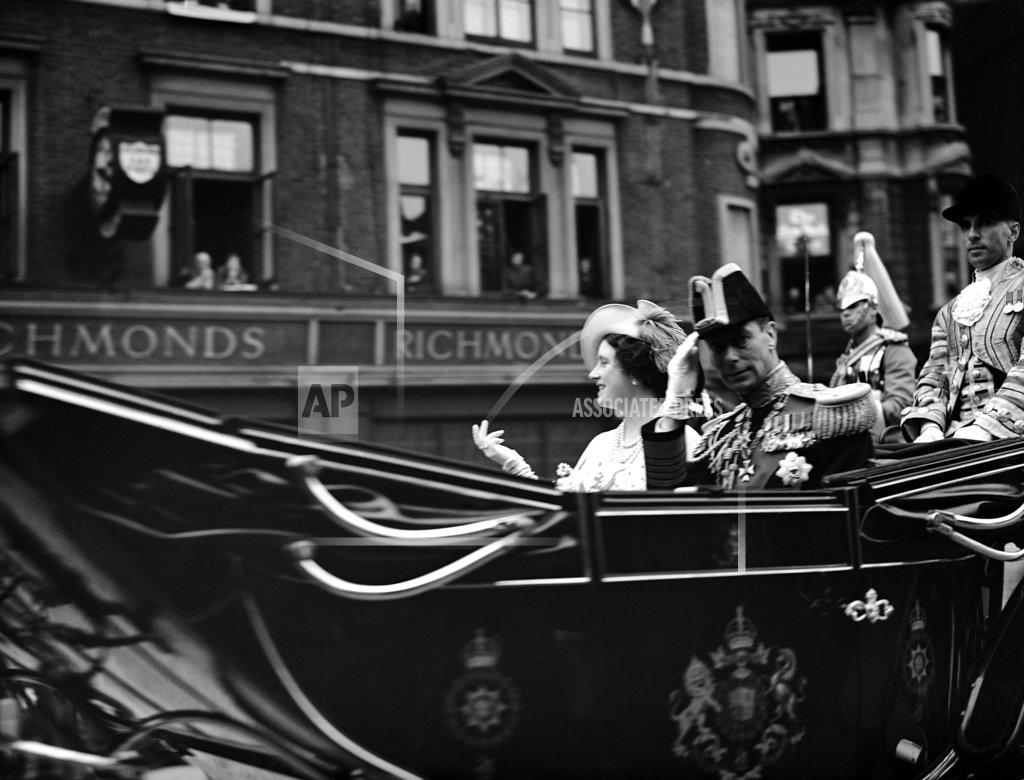
Today, on the occasion of the luncheon tendered by the City of London to the King and Queen to celebrate their return from their American tour, those present were able to notice a significant circumstance. Before the arrival of the King and Queen the guests assembled in the Guildhall and witnessed the successive arrivals of prominent statesmen who, as is customary, were greeted with applause.
Among those entering was one who was little noticed. Limping, he approached the platform quickly, sitting down because he was made infirm by a painful illness. Greeted by a polite ripple of applause Earl Baldwin watched the arrival of more popular politicians. The man who, as a member of the Cabinet and then as Prime Minister, dominated British politics was able to sample the disastrous diminution of his erstwhile immense prestige, symptomatic of the deep change that has occurred in public opinion.
It is as if people want to hold him responsible for having persisted in a policy of disarmament that imposed such humiliations on: the British and still forces them to swallow affronts outside Europe. The fact that Lord Baldwin, following Ramsay MacDonald, only did their bidding cannot relieve him in the eyes of the British public of responsibility for the legacy of weakness left to Prime Minister Neville Chamberlain to battle against.
Foreign Secretary Viscount Halifax saw Ivan Maisky, the Russian Ambassador, tonight about what is now openly admitted to be the disappointing lack of progress in the Moscow talks. The British say that they have conceded the Russian demand for automatic action in the event of attack or threatened attack against a third power. The Russians, however, who, as seen here, are not imbued with the same sense of urgency as the British, are holding out for a hard and fast guarantee of the Baltic States.
Viscount Halifax, the Foreign Secretary, sought this evening to speed negotiations on the proposed British-French-Soviet Russian mutual assistance pact by talks with Soviet Ambassador Ivan Maisky and French Ambassador Charles Corbin. Official circles said that the talks were intended to “clear the air” and open the way for further negotiations in Moscow, where British and French diplomats have been conferring with Premier and Foreign Commissar Vyacheslav Molotov. It was understood that tonight’s talks were concerned primarily with the question of guaranteeing the Baltic States. Soviet circles in London said that they were “not pessimistic” regarding the outcome of the negotiations. Both Russia and Britain were said in informed quarters to regard the international situation as so difficult that they fully appreciated the necessity for reaching an agreement.
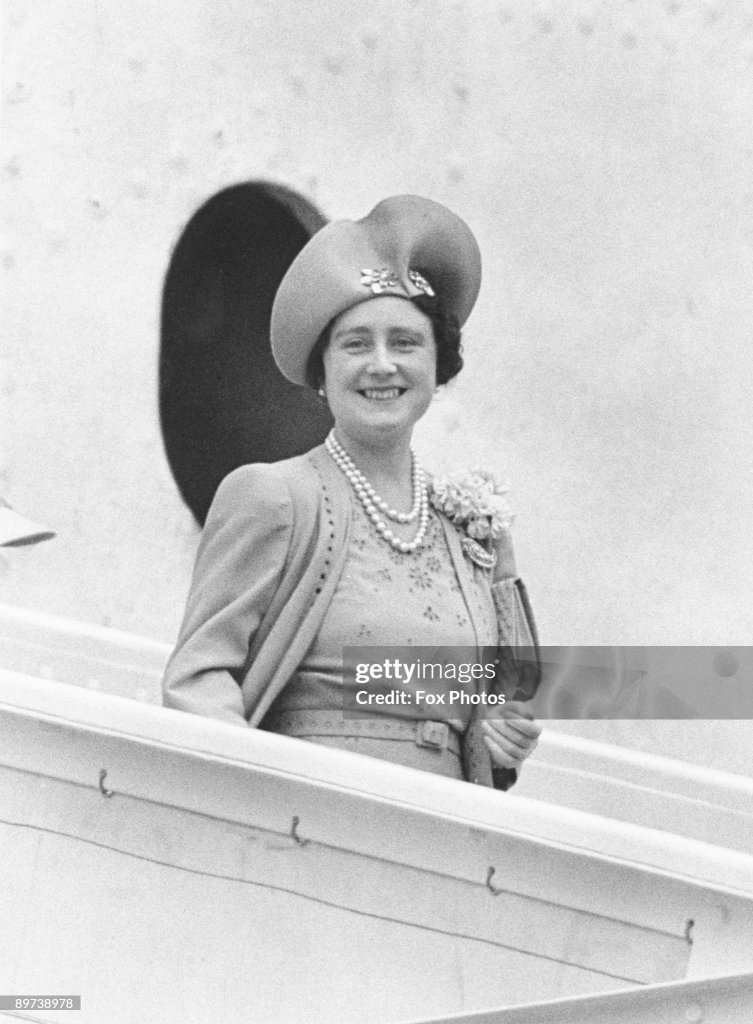
The British King lauds the people of the North American continent upon his return home. King George today gave a personal report of his transatlantic tour in a speech to a brilliant welcoming assembly at London’s Guildhall and to uncounted thousands of his people who listened in by radio. He spoke easily and fluently, like a returning traveler telling his story to friends. Old hesitations of diction and manner were gone, and those who heard the King today were astonished to find him more self-assured than anyone could have imagined when he came to the throne. The King said that one of his outstanding impressions was “the strength of human feeling” throughout a continent inhabited by “men of almost every race, of many creeds and of diverse political faiths.” He said he found inspiration, too, in the strength of British political tradition across the Atlantic.
In this connection he said he was “deeply impressed to find our great political testament, Magna Carta, an object of keen public interest at the World’s Fair in New York.” He expressed pride in having been able to preside in person over the Canadian Parliament, to receive the credentials of the new United States Minister to Canada and to sign the trade treaty between the two friendly North American neighbors.
First flight of the Dewoitine D-550, D.550-01. French low wing single seat single engine prototype aircraft for speed records, developed from the D-520 fighter. In 1939 Emile Dewoitine had built the D.550 to make an attempt on the air speed record. It had been developed from the D.520 fighter, but with modifications to increase its speed that included a reduced wing span and limited fuel capacity. On 23 October the D.550 reached 420 mph at 19,680 feet, an increase of 90 mph over the D.520. Its military potential was quickly recognized, and work began on the D.551. The D.551 used the Hispano-Suiza 12Y51 engine, giving 1,300 hp. It was to be armed with five 7.5mm machine guns, one in the engine and four in the wings. It was designed to be easy to produce, and it was hoped that it would only need 4,000 man-hours per aircraft. Work advanced quickly at the SNCAM plant at Bagneres-de-Bigorre. Sixteen prototype aircraft were ordered by the French Air Force, and two more built privately by Dewoitine, but none were complete when work was stopped by the armistice (although five were close). The D.551 had an estimated speed of 411 mph at 19,680 feet.
[Ed: One of those sad might-have-beens. If the D.551 had been ready in numbers then, 1940 might have played out quite differently in the skies over France.]
France claims it exceeds its plans for planes, now six months ahead of schedule. In fact, air production is a mess, hampered by labor strife.
The U.S. envoy says Greece is quietly building defenses.
Ireland outlaws the Republican Army. The ban names the group for the first time.
Italy decrees the death sentence for money smugglers in an attempt to halt the currency flow abroad.
Madrid officials list 33 executed and say only 118 are sentenced to death.
In Washington today, the President signed the new Food and Drugs Act, named Jesse H Jones to be Administrator of the new Federal Loan Agency and John M. Carmody to head the new Federal Works Agency, and left tonight for Hyde Park.
The Senate debated the Monetary Bill with the silver-inflation filibuster continuing, and recessed at 5:07 PM until 11 AM tomorrow. The Military Affairs Committee heard War Department officers testify on a bill revising army contract regulations; an Appropriations subcommittee continued study of the House Relief Bill, and Chairman Wheeler of the Interstate Commerce Committee appointed a subcommittee to investigate the telegraph industry.
The House completed Congressional action on the $1,644,300,000 Tax Bill, passed a $2,249,377 Deficiency Bill, adopted a conference report on the State, Justice and Commerce Appropriation Bill, and adjourned at 4:01 PM until noon Monday. The Judiciary Committee continued hearings on a bill to divorce the production, refining and marketing processes of the oil industry, and the Banking and Currency Committee reported a bill broadening the powers of the Federal Home Loan Bank Board.
Congress sent the Tax Revision Bill removing “business irritants” to the White House after swift disposal of the measure, which was reported to the House a week ago today. It was passed by the House Monday and was approved by the Senate yesterday with a few amendments. Today the House concurred in the Senate amendments to send the bill to President Roosevelt in less than a month from the date the proposal was formally presented to the House Ways and Means Committee. The President is expected to sign it early next week
An omnibus enabling bill embodying the Congressional authority required to put President Roosevelt’s new $3,680,000,000 lending program in force will be introduced in the Senate and House, probably next week, when it will be added to a list of “preferred” legislation which already threatens to hold Congress long after the adjournment goal of July 15. The bill will include provisions for the creation of some new Federal agencies, and for expanding the loan power of various units now in existence, and may or may not include the specification of a 2.75 percent interest rate on new securities proposed to be issued. Such a rate has virtually been set by the authors of the plan. The bill will be introduced simultaneously in both houses by Senator Barkley and Representative Rayburn, majority leaders, respectively, of the Senate and House.
This course of action was decided upon today by President Roosevelt and a group of fourteen Congressional leaders and administrative authorities whom he summoned to the White House to discuss the program. The conference was called just as formal opposition developed in both Houses to the plan, led in the Senate by Senator Byrd, Democrat, of Virginia, and in the House by Representative Taber, Republican, of New York. Senator Byrd not only condemned the program in strong terms, calling it an “evasive plan for public spending,” but introduced in the Senate a resolution calling for full information on the liabilities, assets, bookkeeping methods and other details of thirty Federal lending agencies already in existence.
U.S. Democrats are split on the Neutrality Bill. Leaders expect defections to be offset by Republican support. A series of informal conferences, inspired by Administration leaders for discussion of Neutrality Act revision by groups of Democratic members of the House, has shown that solid support by the majority party cannot be expected when the Bloom resolution comes to the floor Tuesday. Democratic leaders, however, still believe that the defections from their own ranks will be balanced by help from the Republican side.”
The Democratic members of the Foreign Affairs Committee met today with Representative Bloom, acting chairman of the committee and sponsor of the Administration proposal, to take up last-minute changes which will be drafted in the form of amendments against the time when the bill reaches its second reading. Some of the majority members believe that there is a contradiction between Section 3, which would empower the President to proclaim areas of combat operations, and Section 9, which would forbid American vessels to transport arms, ammunition and implements of war to belligerents.
Section 9 was added to the original resolution at the instance of Representative Tinkham of Massachusetts and was the only important Republican amendment accepted by the committee. Some of the majority members, upon reflection, fear that the term “implements of war” might be so broadly interpreted as, in effect, to forbid American merchant vessels to transport anything to belligerents.
It is likely that a move, possibly sponsored by the majority members of the committee, will be made to strike out Section 9 when the resolution reaches the floor. Likewise, the committee majority, in an attempt to offset expected attacks from both Republicans and Democrats, may propose amendments to Section 3 tending to limit the wide open discretion the present language would confer on the President in delimiting areas of combat operations.
In the informal conferences among Democrats there has been objection to the provisions concerning areas of combat operation and to the repeal of the automatic arms embargo, which is the Administration’s principal objective. Indications are that most of the debate will revolve about this repeal proposal, unless the committee majority tones down the language.
The U.S. Supreme Court backs the ill teacher rule. School boards keep the right to refuse a license based on a teacher’s health.
The Attorney General Frank Murphy endorses converting Alcatraz to a park. The rock is suitable for almost anything except a jail, he says.
June 23, 1939, was a key date in New York City subway transit history. New York Mayor Fiorello LaGuardia announced a final agreement between City Hall and the two private subway owners was reached after several years of negotiations. New York offered $151 million to purchase all assets of the Interborough and Manhattan Railway and $175 million for the Brooklyn-Manhattan Rapid Transit system.
Today’s generation of New York Transit subway riders and elected officials, for the most part, have no idea that original IRT (Interboro Rapid Transit – 1, 2, 3, 4, 5, 6, 7, Franklin Ave and Times Square shuttles) and BMT (Brooklyn Manhattan Rapid Transit – today’s B, D, J, M, N, Q, R, and Z lines) subway systems were constructed and managed by the private sector with no government operating subsidies.
Financial viability was 100 percent dependent upon farebox revenues. They supported both development and economic growth of numerous neighborhoods in the boroughs of Manhattan, Brooklyn, Bronx, and Queens. As part of the franchise agreement which owners had to sign, City Hall had direct control over the fare structure. For a period of time, owners actually make a profit with a five-cent fare.
After two decades passed, the costs of salaries, maintenance, power, supplies and equipment would pressure owners to ask City Hall for permission to raise the fares. This additional revenue was needed to keep up with maintaining a good state of repair, increase the frequency of service, purchase new subway cars, pay employee salary increases and support planned system expansion. Politicians more interested in the next reelection (and subscribing to the old Roman philosophy of free bread and circuses) refused this request each year, for well over a decade. In order to survive, owners of both systems began looking elsewhere to reduce costs and stay in business. They started curtailing basic maintenance, delayed purchases of new subway cars, postponed salary increases for employees, canceled any plans for system expansion and cut corners to survive. (Does this sound familiar?)
In the 1930s, New York began building and financing construction of the new IND (Independent Subway – today’s A, C, E, F, and G lines). This new municipal system subsidized by taxpayers’ dollars would provide direct competition to both the IRT and BMT. Municipal government forced them into economic ruin by denying them fare increases that would have provided access to additional badly needed revenues. Big Brother, just like the Godfather, eventually made them an offer on June 23, 1939 they couldn’t refuse. The owners folded and sold out to City Hall. New York purchased the IRT for $151 and BMT for $175 million. This resulted in the integration of both systems with the municipal IND system.
Rear Admiral Richard Byrd persists in his Antarctica plan and will seek backing for a third exploration, if necessary.
The U.S. Congress establishes the U.S. Coast Guard Reserve (renamed US Coast Guard Auxiliary 1941) as uniformed volunteer units supporting the Coast Guard.
The drama film “Daughters Courageous” starring the Lane Sisters was released.
Bronko Nagurski defeated Lou Thesz in Houston, Texas to win the National Wrestling Association World Heavyweight Championship.
The Cleveland Indians score 7 in the 7th and beat the Philadelphia A’s, 11–5, behind Bob Feller’s 11th win. Feller has three hits including a double, while Bruce Campbell has two doubles in the 7th. Feller walks five and strikes out six.
The Detroit Tigers landed on Dutch Leonard with a big seventh-inning rally today to defeat the Washington Senators, 7–4. George Tebbetts, Barney McCosky and Earl Averill smacked successive doubles for Detroit, Charley Gehringer and Pinky Higgins singled and Pete Fox tripled.
An error by Heinie Mueller in the ninth inning permitted Stan Hack to score the winning run today and give the Chicago Cubs a 4–3 victory over the Philadelphia Phillies. It was Chicago’s fourth straight victory since the Cubs played a tie with the Dodgers last Monday. Before that they won two straight. Thus, they have a string of six in a row.
Pope Pius XII reached an agreement with Brazilian President Getúlio Vargas for Brazil to issue 3,000 visas to allow non-Aryan Catholics, some of whom were Jews recently converted to Catholicism to escape prosecution, to travel to Brazil. Ultimately, however, only fewer than 1,000 visas would be issued.
The Mongols’ hunger for Spring pastures, of which they are deprived by Manchukuo’s now sacrosanct Japanese-guaranteed frontier line, has apparently caused another outburst of air fighting during this week. Japanese reports state that it culminated on Wednesday when, according to the Japanese Army’s claims, forty-nine Outer Mongolian planes were shot down by eighteen Japanese. The Japanese say that they lost four planes. According to this report 150 Mongol planes were in the air when the Japanese sent eighteen ships up against them. The result, says the Japanese Army, was an easy victory for the trained Japanese pilots with superior planes over the Mongolians’ raw personnel and obsolete Russian machines.
Ground forces, the nature of which was left undescribed, were also reported to have been repulsed by the Japanese. The Japanese report that the Mongolians are invading Manchukuoan territory along a front 100 miles wide. This region is rich pasture land. Wednesday’s air battle is said to have climaxed a series of frontier violations on a smaller scale. As the evidence suggests that these incidents are part of the Mongols’ yearly movement in search of fresh pastures, opinion in Japan treats them coolly. Rumors of extensive Soviet and Mongol maneuvers along the frontier are not taken seriously.
A War Office spokesman in Tokyo said today that Japanese forces expected a new attack on the frontier between Manchukuo and Outer Mongolia where a heavy air battle has been reported. Japanese airplanes were said to be reconnoitering the Manchukuo side of the boundary with ground forces held in readiness for any eventuality. The War Office representative said the most recent air battle was the result of “an enemy attempt to restore in Mongolian eyes the prestige it lost in the May 29 defeat.” The Japanese reported on May 29 that fifty-nine Mongol planes had been shot down in nine days of fighting.
Japan continues insults in Tientsin. A New Zealand official is stripped and slapped. A Chinese man is found dead on the Japanese electric fence which surrounds the British concession.
While British resentment was mounting as the result of the latest incidents at Tientsin, Viscount Halifax, the Foreign Secretary, summoned Mamoru Shigemitsu, the Japanese Ambassador, to the Foreign Office to complain in no uncertain terms about what Prime Minister Neville Chamberlain earlier in the day had called “intolerable insults.” Lord Halifax asked Mr. Shigemitsu to convey to the Tokyo Government a request that steps be taken immediately to act with decency and courtesy at Tientsin. A few days ago the Foreign Minister had called the Ambassador to give him the British Government’s opinion on the behavior of Japanese officers responsible for conduct said to be disgraceful to any civilized nation.
Lord Halifax today asked for a reply to these representations, but the Ambassador was unable to give one. The whole question of Tientsin in all its aspects and the possibilities of action if the situation does not improve will be examined by the Cabinet Foreign Policy Committee beginning next week.
Lord Halifax was echoing the strong language used in the House. of Commons today by Mr. Chamberlain and his Conservative supporters. When he was asked whether the Prime Minister would inform the Japanese that their treatment of British subjects at Tientsin was inacceptable Mr. Chamberlain replied: “I have no doubt the Foreign Secretary will make it very clear to the Japanese Ambassador when he sees him what we think of these intolerable insults.”
Answering another Conservative questioner, Mr. Chamberlain said that the government had not reached the stage of considering putting into effect immediately any retaliatory measures. Captain Frank Heilgers, Conservative, assured the Prime Minister that the “temper of the British people is rising and they are entirely behind him when he refers to intolerable indignities.” The British public fully realizes the dangers of becoming embroiled in the Far East with the Japanese while they are awaiting Chancellor Adolf Hitler’s next coup, but the mews of today’s insults to Cecil G. Davis, a New Zealander, who was struck and forced to strip by Japanese guards, may force the British Government to adopt a far stronger policy than was believed possible a week ago.
The German press calls the United States “agitators” after U.S. Admiral Harry E. Yarnell refuses to remove ships from Japan’s blockaded area.
Siam changes its name to Thailand. In 1927 a radical People’s Party was formed. One of its founders was an army officer called Phibun (in full, Luang Phibunsongkhram), who in 1932 helped to lead a coup against the Chakri king and set up a government closer to a western-style democracy, with a parliament. The monarchy survived, but in 1938 Phibun took charge as dictator. A forceful nationalist and modernizer, he now changed the country’s name to Thailand. The change was part of Phibun’s determination to bring his people into the modern world and at the same time to emphasize their unique identity.
It was an anti-Chinese move with the slogan ‘Thailand for the Thai’. There were many Chinese in the country and many prosperous Chinese businesses, but Phibun cut down immigration from China and government-backed Thai businesses were set up, while the use of Mandarin in Chinese schools was limited to two hours a week. Thailand adopted the western calendar, a new flag was created and a new national anthem, while Phibun demanded that Thais wore western-style clothes, including hats. Thailand was allied with Japan in the Second World War and Phibun was forced to resign in 1944, but he returned to power with military backing in 1948 and the army ran Thailand with support from the United States.
Dow Jones Industrial Average: 137.42 (+0.54).
Born:
Lorencito Fernández, Cuban MLB pinch hitter, shortstop, and second baseman (Baltimore Orioles), in La Habana, Cuba.
Bill Mahoney, Canadian NHL coach (Minnesota North Stars 1983-1985), in Peterborough, Ontario (d. 2021).
Charlie Spoonhour, American college basketball coach (Southwest Missouri State, Saint Louis, UNLV), in Mulberry, Kansas (d. 2012).

 History Diaries