At a news conference, President Johnson announces that Henry Cabot Lodge has resigned as ambassador to South Vietnam and that General Maxwell Taylor is to be his replacement. It is reliably reported that virtually every top official in the administration volunteered to serve as ambassador, and Johnson makes a point of insisting that this change will in no way affect the U.S. commitment to Vietnam. In a highly unusual move, the President also appointed a prominent career diplomat, U. Alexis Johnson, to the specially created job of Deputy Ambassador to South Vietnam. General Earle G. Wheeler will succeed General Taylor as chairman of the Joint Chiefs of Staff. No replacement has been chosen for General Wheeler as Army Chief of Staff.
President Johnson announced the changes at a news conference in his office. His demeanor, and his choice of men were intended to reassure the government and people of South Vietnam that Mr. Lodge’s departure would not affect Washington’s commitment to the fight against Communist guerrillas or result in any other significant policy changes.
The objective of reassuring the Vietnamese was said to have been taken so seriously by President Johnson and his top aides that volunteers to replace Mr. Lodge included not only General Taylor but also Secretary of State Dean Rusk, Secretary of Defense Robert S. McNamara, Attorney General Robert F. Kennedy and McGeorge Bundy, the President’s chief assistant on foreign affairs. On the contrary, the Administration believes that the new American representatives in Saigon can build upon Mr. Lodge’s reputation among the Vietnamese, improve the management of operations and finally remove partisan political considerations from the situation.
The survival of the Khánh Government is regarded here as essential to the hopes of deterring Communist subversion and aggression. For that reason, the choice of a new Ambassador had the highest policy priority and led to the consideration even of Cabinet members. General Taylor, whose study of the Vietnam situation in 1961 led to the commitment of more than 15,000 United States troops to the war, has been involved with the problem since then. His nomination for the ambassadorship was said to have been accepted enthusiastically by General Khánh.
It is announced that General Westmoreland is to become the ‘executive agent’ to supervise the civilian advisory and assistance programs in three provinces around Saigon, the first stage of a plan to coordinate the entire U.S. military and civilian program in South Vietnam under the military command. The principle of a unified command of the American effort at the province level is later to be extended to the whole country, according to a classified plan. This plan was drawn up and approved last week after many weeks of discussions between General Westmoreland and heads of American civilian agencies operating in Vietnam. No change in the relationship between American field advisers and their Vietnamese counterparts is envisaged under the plan except that the Vietnamese will be dealing with a more tightly coordinated American team.
At a meeting today with the deputy heads of civilian agencies, including the Agency for International Development and the United States Information Agency, General Westmoreland outlined manpower, transport and communications resources available to all agencies under the coordinated plan. Even before operating details have been worked out, the reorganization is causing misgivings among some civilian agencies. They distrust an enlargement of military authority into civilian affairs, which reverses the trend of the last 10 months. Proponents of the plan insist that no military‐civilian rivalry is intended or exists at the highest level. General Westmoreland assured civilian officials that the military’s vast resources would be at civilian disposal and would not mean domination of the other agencies. A subsurface tug‐of‐war between military and civilian agencies has been a constant element in the Vietnam operation, in the provinces, in Saigon and in Washington.
Britain is holding exploratory talks with Poland on the possibility of modifying a Warsaw proposal for six‐nation preliminary talks on Laos, British officials said here today. The discussions are being conducted by diplomats in Warsaw. Poland recently proposed that discussions, preliminary to a resumption of the 14‐nation Geneva conference on Laos, be held by Britain, the Soviet Union, Canada, India, Poland and the leaders of the three factions in the Laotian coalition regime. Britain and the Soviet Union are co‐chairmen of the 1962 Geneva conference, which guaranteed the independence and neutrality of Laos. Canada, India, and Poland are members of the International Control Commission, set up to supervise the accord. Moscow and London had favored the original Polish proposal. But Communist China came out against it and repeated its call for a reconvening of the Geneva conference.
Hsinhua, the official Chinese Communist press agency, charged that United States fighter‐bombers bombed and machine‐gunned Khang Khay today. The Laotian town is the site of the headquarters of the pro‐Communist Pathet Lao forces.
President Johnson and Premier İsmet İnönü of Turkey ended two days of conferences on the Cyprus crisis today with a brief communiqué stressing the validity of the 1959 treaties that led to the island’s independence. The otherwise noncommittal communiqué announced that Mr. Johnson and Mr. İnönü had “covered ways in which present difficulties might be adjusted by negotiation and agreement,” and underlined the “urgent necessity” for such accords aimed at a permanent solution of the Cyprus problem. Beyond this, however, there were no indications that the meetings had produced any formula to solve the crisis that has threatened armed conflict between Greece and Turkey, both members of the North Atlantic Treaty Organization. Tomorrow President Johnson will embark upon the second phase of his diplomatic intervention when he opens two days of consultations with Premier George Papandreou of Greece.
The communiqué on the Johnson‐İnönü discussions said: “Prime Minister İnönü of Turkey and President Johnson have discussed all aspects of the problem of Cyprus. Both leaders welcomed the opportunity presented by the Prime Minister’s visit at the President’s invitation for a full exchange of views. The discussion, proceeding from the present binding effects of existing treaties, covered ways in which present difficulties might be adjusted by negotiation and agreement. The urgent necessity for such agreement upon lasting solutions was underlined. The Prime Minister and the President also considered ways in which their countries could strengthen the efforts of the United Nations with respect to the safety and security of the communities on Cyprus. The cordial and candid conversations of the two leaders strengthened the broad understanding already existing between Turkey and the United States. The President and the Prime Minister expressed their conviction that their peoples are devoted to common democratic principles, to individual freedom, to human dignity and to peace in justice.”
Premier Papandreou was said today to be fully braced to resist all American pressures for concessions in his Cyprus policy during his talks on Washington. He said at the Athens airport before boarding a plane for the United States: “The object of my journey to the United States is to enlighten. The President’s invitation affords me a pleasant opportunity to carry out this enlightenment.” The 76‐year‐old Premier said that he sought a “peaceful solution of the Cyprus problem through the United Nations.” “We support full independence for Cyprus, which includes also the right of self-determination,” he said. He reiterated that he did not propose to see Premier İnönü.
The United States and the Soviet Union have agreed to explore the possibility of cooperative development of methods for desalting sea water, President Johnson announced today. As an initial step, representatives of the two nations will meet here in mid‐July to discuss possible areas of cooperation, including the use of nuclear power for running desalinization plants. In announcing the meeting at his news conference, President Johnson expressed hope that the exploratory discussions would lead to “effective scientific cooperation” in “what could become a very important activity of great economic significance to many areas of the world.”
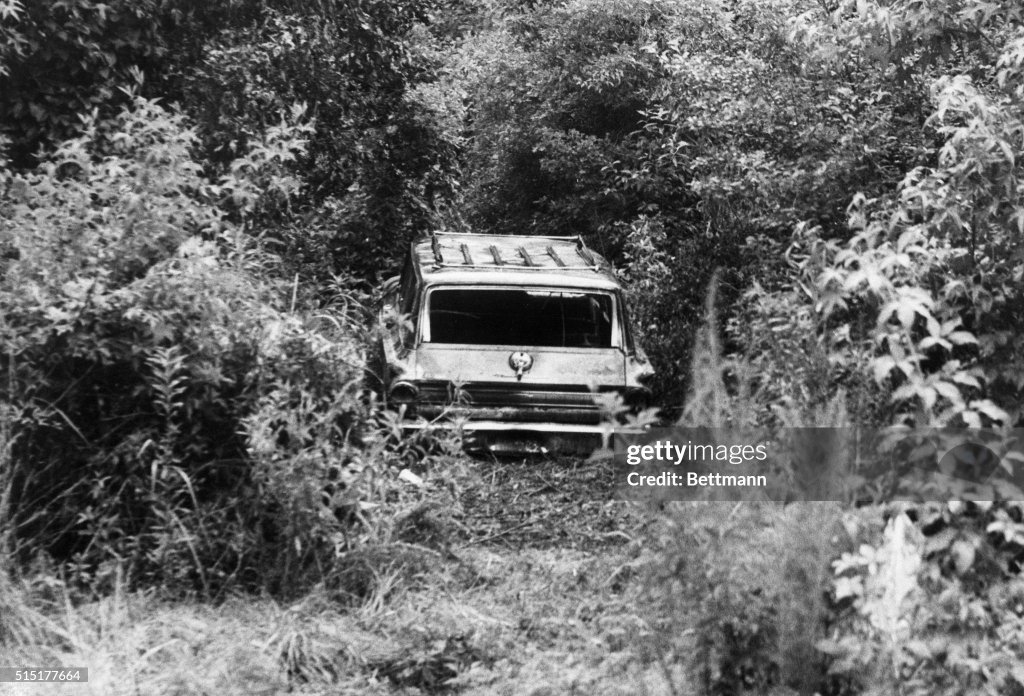
The station wagon belonging to Schwerner, Goodman, and Chaney was found, burned, roughly 100 feet off of Mississippi Highway 21 in Neshoba County, roughly 15 miles northeast of Philadelphia, Mississippi. There was no trace of the three men. Discovery of the 1964 Ford station wagon aroused deep concern over the fate of the men and brought an intensified search by agents of the Federal Bureau of Investigation and by state highway patrolmen. The three men have not been heard from since Sunday night, when they were released from the Neshoba County jail here. They had been arrested four hours earlier, shortly after they began work in a two‐month civil rights campaign in Mississippi.
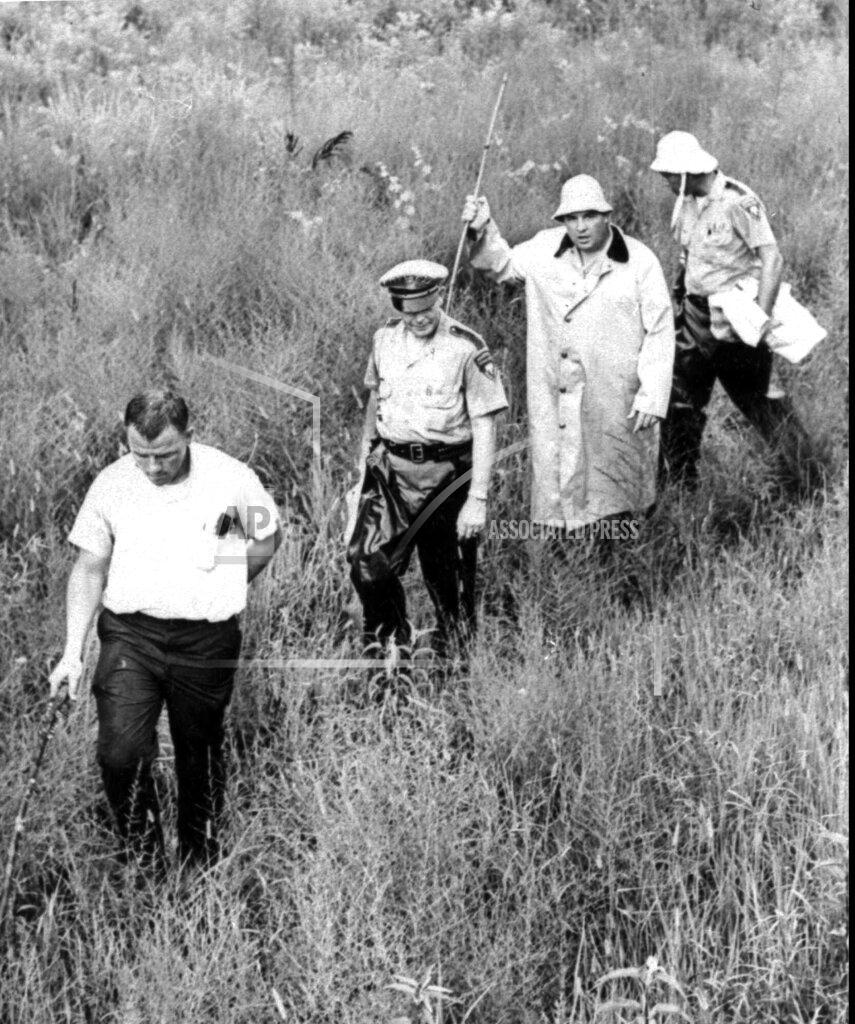
FBI agents, acting on a tip, found the station wagon wreckage in a swamp on Bogue Chitto Creek, about 50 feet off State Highway 21, in the county’s northeastern corner. The FBI will examine the charred auto, which was brought to Philadelphia and locked in a garage. H. G. Maynor, special agent in charge of the bureau’s New Orleans office, declined to say if clothing or other items belonging to the three men had been recovered. Mr. Maynor, reached by telephone, said the search would be continued by agents sent here yesterday on orders from Washington and by the state patrolmen. Two helicopters assisted in the hunt through the swamps and rolling red hills.
A spokesman for the Council of Federated Organizations, the coalition of civil rights groups carrying out the Mississippi project, said tonight it had learned that the license number of the burned car had been included on lists circulated recently by the segregationist Citizens Council. The list identified this and other numbers as ones that had been seen on cars parked near civil rights centers around the state. The missing men drove here from Meridian Sunday morning to look into the burning of the Mount Zion Methodist Church in a nearby Black community. The church had been used for civil rights meetings. A sheriff’s deputy arrested Mr. Cheney on a speeding charge on the town’s outskirts Sunday afternoon and took the two white men to jail for investigation They were freed at 10:30 PM after Mr. Cheney had paid a $20 fine.
John Lewis, national chairman of the student committee and a key leader in the Mississippi project, said he would visit Philadelphia tomorrow accompanied by Mrs. Rita Schwerner, wife of one of the missing men. “I think it important that as many of us as possible be there on the scene to render whatever aid we can,” he said. “I don’t know how much we can do in trying to find the people that are missing.” Mrs. Schwerner had stayed behind when her husband and the other men left Oxford, Ohio, Saturday, following the first of two week‐long orientation courses for student volunteers in the project. She and her husband opened one of the first community centers for Blacks in Mississippi, at Meridian, six months ago.
In contrast to the relatively restrained manner in which this town greeted strangers yesterday, considerable tension developed this morning. Newsmen were threatened by whites at the Neshoba County Courthouse and warned to leave the county. The whites said they did not think the disappearance of the three civil rights workers merited the attention it was receiving and asserted newsmen had no right to be here.
Other incidents connected with the civil rights drive were reported today. Officials at McComb, in southwestern Mississippi, said one home had been bombed last night and attempts appeared to have been made to bomb two others. All three homes belong to Blacks active in the civil rights movement.
President Johnson decided tonight to send Allen W. Dulles to Mississippi to assist in the search for three missing civil rights workers. Mr. Dulles, former director of the Central Intelligence Agency, will leave tomorrow. He will consult with state and Federal officials in Mississippi on the disappearance case and on the broader question of observance of law there. The President’s decision was announced in a White House statement tonight after he had held a lengthy meeting with top officials of the Justice Department. Attorney General Robert F. Kennedy was there with his deputy, Nicholas DeB. Katzenbach, and his civil rights chief, Burke Marshall. The statement disclosed that the President had talked on the telephone today with Governor Paul B. Johnson Jr. of Mississippi. It said that Governor Johnson had pledged the state’s law enforcement facilities to prevent acts of violence. “By arrangement with Governor Johnson,” the statement said, “the President has asked Allen W. Dulles to go to Mississippi to meet with the Governor, other officials of the state, the F.B.I. and others who have information on the law observance problems that exist there and are a matter of such great concern.”
The “law observance problems” referred to were evidently the announced determination of various white groups in Mississippi to use any means to preserve racial segregation. Among other things, an upsurge of Ku Klux Klan activity has been reported. “We are basically law‐abiding nation,” the White House statement continued. “And all the forces of our society, both state and Federal, must be directed to preserving law and order.”
“The President,” the statement also said, “shares the anxiety and deep distress of the parents of these young men.” The statement concluded by saying that the President “called for the cooperation and the restraint of all the citizens of this country in maintaining a society free of anarchy, violence and disdain for the law.”
Further evidence of this concern was seen tonight when the Attorney General postponed his scheduled departure for a one-week European trip from tomorrow morning to evening. He wanted to await developments in Mississippi. Attorney General Robert F. Kennedy ordered a full‐scale inquiry by the Federal Bureau of Investigation as soon as he heard about the disappearance yesterday. President Johnson approved that step and also the use of helicopters from a nearby military base to help in the search. This afternoon the President personally assured the parents of the Goodman and Schwerner boys that the Government was doing everything it could to help find them.
Roy Wilkins has denounced “teenage Negro hoodlums” who by their violence “are undercutting and wrecking gains made by hundreds of Negro and white youngsters who went to jail for human rights.” Mr. Wilkins, executive secretary of the National Association for the Advancement of Colored People, expressed his view in a recent column in The Amsterdam News, a Black weekly newspaper published here. He writes the column, “Along This Way,” every other week for the paper. The Rev. Martin Luther King Jr., chairman of the Southern Christian Leadership Conference, writes the column on the alternate weeks. In May and earlier this month there were a number of outbreaks of teen‐age violence in New York, particularly on the subway lines. Most, but not all, of the incidents involved Black youths. Mr. Wilkins called the Black youths involved “punks,” “foulmouthed smart alecks,” and “Harlem and Brooklyn morons.”
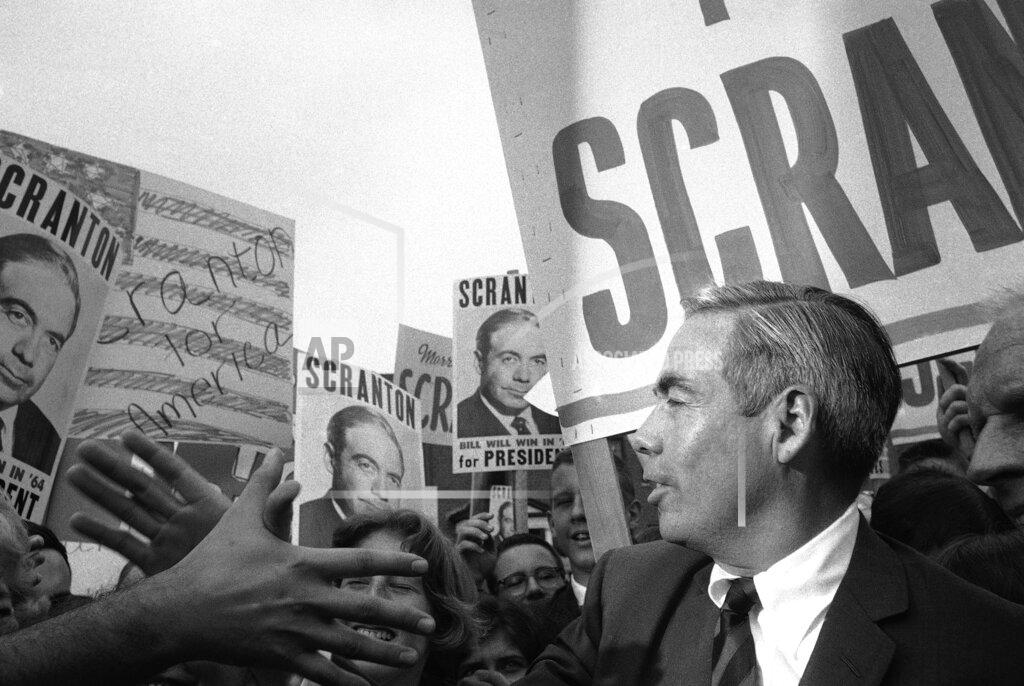
Ambassador Henry Cabot Lodge said tonight that he resigned to help rally the Republican party behind Mr. Scranton and thus to prevent Mr. Goldwater from gaining the Republican nomination. He said that he had accepted an invitation to appear before the resolutions committee of Republican National Convention early next month. “I believe it is my duty to everything I can to help Governor Scranton to win his contest for the Republican nomination for President,” Mr. Lodge said in a brief statement read by an aide. He gave no indication of how soon he would leave Saigon. His statement indicated his continuing support for American and Vietnamese efforts to defeat the Communist insurgency. “Vietnam is on the right track,” Mr. Lodge said. “With persistency, its freedom and independence will surely be achieved. Truly, it makes me sad to leave.”
President Johnson scored a personal triumph today in his fight for a $3.5 billion foreign aid money bill. By a 7–5 vote, the House Appropriations Subcommittee on Foreign Aid decided during a hard‐fought five‐hour session to recommend an appropriation of $3,316,700,000 for economic and military aid during the fiscal year beginning July 1. This was just $200 million less than the President’s asking figure. But it was the first time in 10 years that a President had won over the subcommittee chairman, Otto E. Passman of Louisiana, who had defied the parent committee’s chairman, George E. Mahon of Texas, in his demand for a combined cut of $519.4 million in the Administration’s asking figure.
The implacable foe of foreign aid programs stormed out of the meeting when it was clear that he was beaten and told reporters that he would not “be used as a rubber stamp for the Administration” and would not be dissuaded from his fight by offers of “airplane rides and sniffling at the roses.” Mr. Passman had planned to make a trip to South Vietnam, in mid‐June along with several of his anti‐aid supporters. But the new Appropriations Committee chairman, Mr. Mahon, notified him that he would agree to the trip only if Mr. Passman obtained affirming signatures of all members of his subcommittee.
Attorney General Robert F. Kennedy removed himself today as a potential candidate for the United States Senate from New York this fall. In a brief statement he ended speculation that he might seek the Democratic nomination by saying: “I will not be a candidate.” He gave no reasons and did not indicate his long‐range plans. Mr. Kennedy said in his statement: “Over the last several weeks, Democratic leaders and friends in New York and elsewhere have contacted me urging that I seek the Democratic nomination for United States Senator for New York. Representing the state of New York in the United States Senate is a challenging and important opportunity for public service. I deeply appreciate the loyalty and friendship of those who have urged me to run and who believe I could perform a service for the people of New York. However, in fairness to them, to end speculation, I wish state that I will not be a candidate for United States Senator for New York.”
Jack Kilby was awarded U.S. Patent No. 3,138,743 (filed on February 6, 1959) for his invention of the miniature integrated circuit that made portable electronic devices, including hand-held computers, possible. Kilby, along with Robert Noyce (who invented an integrated circuit independently of Kilby) would be awarded the Nobel Prize in Physics in 2000.
Charlie Lau ties a Major League record with 2 pinch hits in the 8th inning of Baltimore’s 9–8 win over the Yankees. The O’s, losing, score 7 runs in the inning after 2 are out. Yanks manager Berra is criticized by some of his players for lifting starter Bill Sheldon, who was leading 7–2, having allowed just two solo shots by Boog Powell. Rookie reliever Pete Mickelson cannot hold the lead as the O’s move into first place.
Dick McAuliffe’s grand slam in the 8th helps Detroit earn a split on the day as the Tigers win, 9–3, in game 2. Kansas City takes game 1, 2–1.
Pete Ward’s eighth homer tonight sparked a 2–0 Chicago White Sox victory over the Boston Red Sox. Chicago also ended a four‐game losing streak with a rookie, Fred Talbot, pitching an eight‐hitter.
In the nightcap of 2, Len Gabrielson’s 6th inning single is the only hit the Cubs manage off the Phils’ Ray Culp, who wins 9–0. Dick Ellsworth tosses a 2–0, 5-hit shutout for Chicago in the opener.
Marty Keough, who earlier drove in two runs with a single, led off the 11th inning with a home run, giving the Cincinnati Reds a 5–4 victory over the San Francisco Giants in the second game of a double‐header tonight. Jim Hart’s second homer of the game with two out in the eighth inning sent the contest into extra innings. The Giants won the opener, 4–0, as Juan Marichal won his ninth game against three defeats. He scattered seven hits and allowed only two Reds to reach third base.
The Milwaukee Braves scored three runs after two were out in the seventh inning tonight to down the Los Angeles Dodgers, 5–2, and end a seven‐game losing streak. Doubles by Hank Aaron and Felipe Alou along with singles by Lee Maye and Joe Torre accounted for all Milwaukee’s runs in the seventh.
Willie Crawford, 17-year-old prize plum from Fremont High School in Los Angeles, signs a Dodger contract calling for $100,000 bonus as Al Campanis, director of scouting for Dodgers, beams approval. Crawford was All-City in both football (1963) and baseball. With 9.7 speed in 100 yards, he was a highly recruited running back by colleges to play football. Because of the Bonus Rule in existence at the time, Crawford had to play for the Dodgers’ major league team in both 1964 and 1965. He will make his debut September 16, 1964. As a rookie, he batted .313 (5-for-16) with three runs, one double, and stole a base.
Dow Jones Industrial Average: 822.70 (-3.68).
Born:
Joss Whedon, American director, screenwriter and producer (“Buffy the Vampire Slayer”, “Avengers”), in New York, New York.
Joey Allen [Cagle], American glam-metal rock guitarist (Warrant, 1987-1994, 2004–present; “Cherry Pie”), in Fort Wayne, Indiana.
Trent Bushey, American actor (David Rampal-“All My Children”), in Haverhill, Massachusetts.
Lou Yun, Chinese gymnast and 1987 vaulting world champion; in Hangzhou, China.
Mark Dusbabek, NFL linebacker (Minnesota Vikings), in Faribault, Minnesota.
Bob Riley, NFL tackle (Cincinnati Bengals), in Pittsburgh, Pennsylvania.
 History Diaries