The State Department said today there could be little doubt that Communist leaders throughout the world fully understood that the United States was determined to repel aggression in Southeast Asia. A brief statement, read by a department spokesman, Richard I. Phillips, was designed to assure those who feared “another Korea” that the United States was making its warning messages understood. Many persons believe that the Korean war would not have broken out if the Communists had been adequately warned of United States intentions to defend South Korea. Today’s statement, in answer to a question on the possibility of a major war in Asia, was based on recent diplomatic moves as well as military and public relations actions.
It is assumed here, for example, that President de Gaulle relayed to the Chinese Communist Ambassador in Paris, whom he saw last week, a warning of the United States attitude that was conveyed to him by Under Secretary of State George W. Ball. In addition, it is understood that the British Government has relayed similar warnings through its embassy in Peking. These diplomatic moves coincided with United States military reconnaissance flights over Laos and public statements by high American officers.
General Paul D. Harkins, who retired last week as commander of United States forces in South Vietnam, said upon his return to Washington today that the attempt to prevent a Communist take‐over in Southeast Asia was “very much” worth the risk of a war with Communist China. The State Department spokesman, in his meeting with newsmen today, was asked to comment on a similar statement by Admiral Harry D. Felt, retiring commander in the Pacific. Admiral Felt said in Taiwan Saturday that the United States was ready to risk war with Communist China to prevent a in Southeast Asia.
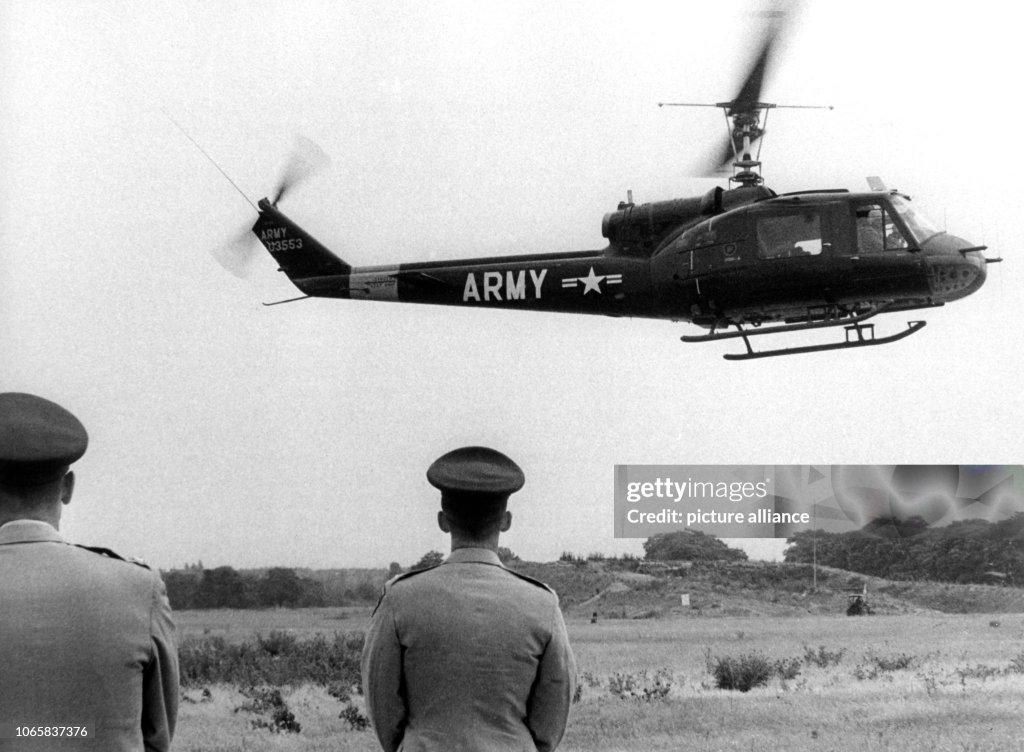
Two Vietnamese paratroop battalions have captured the village of Bàng Long from the Communist guerrillas in a vicious battle marked by a charge across 150 yards of muddy paddy fields in the face of enemy machine gun fire. The Vietnamese suffered heavy casualties in wiping out a Việt Cộng suicide unit, but admiring American advisers hailed it as a significant military and psychological victory. Vietnamese losses were listed as 29 killed and 85 wounded — some suffered accidentally due to their own eagerness to come to grips with the enemy.
The battle was fought in a swampy corner of the Plain of Reeds 45 miles southwest of Saigon. “They didn’t wait for artillery fire to help them,” said Lieutenant Fred A. Dilres of Woodbury, New Jersey, a United States adviser, in describing the Vietnamese attack. An American source said their eagerness was responsible for four killed and five wounded by support fire from fighter aircraft and helicopters. The paratroopers had been lifted by helicopter to the vicinity of Ấp Bắc, scene of a major government defeat in January of last year. When the Việt Cộng opened up with machine guns from three positions, the paratroopers charged. In the village of Bàng Long itself a rearguard of Việt Cộng was destroyed.
Premier Souvanna Phouma in a sharp reply to Communist protests against United States reconnaissance flights, said today that the missions had proved North Vietnamese intervention in Laos. Both Communist China and North Vietnam have protested the reconnaissance flight as violations of the 1962 Geneva agreement on Laos. They also accused United States planes of attacking Communist positions on the Plaine des Jarres, 110 miles north of Vientiane.
“Recent aerial photographs taken over the Plaine des Jarres and in the Valley of Pugia [20 miles northeast of the Communist headquarters at Khang Khay] constitute an excellent reply to the Government of the Democratic Republic of Vietnam,” the Premier said. United States Navy reconnaissance photographs showed large convoys of Communist troops and equipment moving into the Plaine des Jarres region from North Vietnam.
Britain can be expected to make soon a show of military support for the United States in Indochina, it was reliably reported tonight. One qualified source said the support would probably be similar to that extended in 1962. At that time the United States sent marines and the Royal Air Force dispatched a squadron to Thailand to counter a Communist threat. The British will also strengthen, with additional helicopters and other equipment, their own military forces battling Indonesian guerrillas on the Malaysian frontier, it was learned. The Malaysia issue, however, was being treated here as a separate problem and one of much smaller dimensions.
Indonesian guerrillas have resumed warfare against Malaysia following the failure Saturday night of a peace conference in Tokyo among the heads of government of Indonesia, Malaysia and the Philippines. Indonesia has vowed to “crush” the Malaysian Federation, formed last September through a merger of Malaya, an independent member of the British Commonwealth, and the former British colonies of Singapore, Sarawak and Sabah (North Borneo). British and Malaysian troops are engaging the Indonesian guerrillas in Sarawak and Sabah. The stepping‐up by the United States of its military commitment in Indochina is viewed here as putting at stake both America’s prestige as a world power and the solidarity of the Western allies in the face of threats from Communist China.
Anastas I. Mikoyan, a Soviet First Deputy Premier, began an 11-day visit to Indonesia today. He is believed to be hopeful of curbing Communist China’s influence in the Indonesian Communist party.
President Johnson and Premier İsmet İnönü of Turkey reviewed the Cyprus crisis at two meetings today as political forces in Turkey pressed the Premier to resist any United States efforts for compromise. The two men met for 50 minutes this morning at the White House immediately after the Turkish leader, his wife and advisers arrived from Williamsburg, Virginia. He had spent the night there following his flight from Ankara. They also discussed the Cyprus problem at a luncheon given by Mr. Johnson. Later they attended a reception at the Turkish Embassy.
A high‐ranking Cyprus Government official confirmed that General George Grivas, former leader of Greek Cypriot guerrillas against the British, was in Cyprus. A Greek Government spokesman said the general’s purpose was to help promote peace.
Mr. Johnson and Mr. İnönü will have a final conference tomorrow afternoon, but important substantive discussions are expected to take place in the morning at the State Department. There the 79‐year‐old Premier and his advisers will meet with Secretary of State Dean Rusk and Under Secretary George W. Ball. The main purpose of United States diplomacy is to persuade both Turkey and Greece to refrain from any actions that might lead to a war over Cyprus. At the same time, the President is seeking to lead the two Governments to agree to negotiate directly on the future of the Mediterranean island.
There were no indications tonight on Mr. İnönü’s reaction to Mr. Johnson’s attempt at persuasion. In his formal remarks on arrival, the Premier told the President: “We believe in peace, but we also know that peace cannot be lasting unless it is based on justice.” The second phase of the President’s urgent diplomatic operation. will open Wednesday when the Premier of Greece, George Papandreou, arrives for two days of consultations. Mr. İnönü’s Government reluctantly acceded June 6 to a personal request by President Johnson that it call off a planned invasion of Cyprus. The Premier was said to have told the President today that Turkey could no longer tolerate what she terms the massacres of Turkish Cypriots by the Greek Cypriot Government and irregulars.
He was understood to have argued that the Government of Archbishop Makarios, the President of Cyprus, had violated the 1959 agreements under which the island became an independent nation, when it acted last November to change the Constitution. One of the changes sought to remove Turkish Cypriot veto power over Government decisions.
The Soviet Union has protested to the United States over an American commercial airline’s new service between New York and West Berlin. In a note delivered Saturday to the United States Embassy here, the Russians said that the flights, by Pan American World Airways, were “unlawful” without the consent of East German authorities. According to the Soviet press agency Tass, the note said that the safety of the flights, which it called contrary to existing agreements, could “not be guaranteed.” Western diplomatic sources said that the Soviet note was based on Moscow’s long‐standing contention that under postwar four‐power agreements foreign airlines were allowed to fly to West Berlin from West German airports only.
Indian troops were reported today to have suffered more than 100 casualties over the weekend at the hands of civilians on the Pakistani side of the cease-fire line in Kashmir. The civilians were also understood to have suffered casualties. A spokesman for “Azad” (free) Kashmir, controlled by Pakistan, said in Muzaffarabad, the territory’s capital, that Indian pickets had been firing on villagers for several days. He said “this made the villagers desperate and they hit back.” The spokesman said that in the last seven weeks Indians had killed 66 civilians. The cease-fire line came into being January 1, 1949.
Violence has broken out in Stanleyville, the Congo’s third largest city. Reports reaching here today said bands of youths made attacks last night against two army camps in the city, which was once the stronghold of Antoine Gizenga’s leftist government. The attacks were apparently designed to capture arms. At one camp, where a gendarmerie battalion is based, the youths seized 22 automatic rifles and a pistol. At the city’s commando camp the attackers ran into resistance and did not get any weapons. Two sentinels were wounded. A 6 PM to 6 AM curfew has been imposed in the city.
The New York Times reports today:
Three workers in a day-old civil rights campaign in Mississippi were reported missing today after their release from jail in Philadelphia, Mississippi last night. Leaders of the drive said they feared that the three men — two whites, both from New York, and one Black — had met with foul play. The three had been held by Neshoba County authorities for four hours following the arrest of one on a speeding charge and the jailing of the others “for investigation.” Agents of the Federal Bureau of Investigation began arriving here in force early tonight after the Justice Department ordered a full‐scale search. The Mississippi Highway Patrol issued a missing‐persons bulletin, but a spokesman in Jackson indicated late today that it had no plans at present for further action.
All three missing men arrived in Mississippi late Saturday afternoon from Oxford, Ohio, where they had taken part in a one‐week orientation course for the statewide project. They were among the advance group of some 175 workers who are expected to be followed by another 800 participants in the campaign of political action, education and cultural activities among Blacks. One of the missing whites is Michael Schwerner of Brooklyn, a 24‐year‐old former settlement‐house worker. He came here six months ago with his wife, Rita, to open one of the first community centers for Blacks in Mississippi. Mrs. Schwerner remained at Oxford to take part in the second orientation course for volunteers. The second missing man is Andrew Goodman, 20, a student volunteer from Queens. The third is James E. Cheney, 21, a Meridian plasterer and driver of the late‐model Ford station wagon in which they were last seen.
Both Mr. Schwerner and Mr. Cheney are members of a civil rights task force organized by the Congress of Racial Equality, which is cooperating with the Student Nonviolent Coordinating Committee and other organizations in the Mississippi project. Concern over the fate of the three was heightened by the fact that the two CORE men had always reported their whereabouts before at frequent intervals, according to campaign spokesmen in Jackson. Workers in the Meridian drive headquarters said Mr. Schwerner had repeatedly emphasized the importance of this to the others during their drive here from Oxford. Further, the prospect of the civil rights campaign had led an increasing number of violent incidents even before the workers began arriving last Friday.
The three men left Meridian yesterday at about 9:30 AM for Philadelphia, about 35 miles away, where they planned to look into the burning of the Mount Zion Methodist Church last Tuesday night. The Black church was in the Longdale community, some 12 miles east of Philadelphia, town of 5,500 persons in east‐central Mississippi. Cecil Price, the Neshobal County deputy sheriff, said he had halted and arrested the three about 5:30 PM yesterday. He said Mr. Cheney had been driving 65 miles an hour in a 30‐mile zone on the outskirts of Philadelphia before he stopped them. The whites were held “for investigation.” The three were released from the county jail here at 10:30 PM after Mr. Cheney paid a $20 fine.
“I told them to leave the county,” said Mr. Price. The three then drove out along State Highway 19 after having told the deputy they were returning to Meridian, according to him. Sheriff L. A. Rainey, a burly, tobacco‐chewing man, showed little concern over the report that the workers were missing. “If they’re missing, they just hid somewhere, trying to get a lot of publicity out of it, I figure,” he said. Robert Well, spokesman for the campaign headquarters in Jackson, said campaign leaders “definitely fear that there was foul play, perhaps by the local citizens after they were released.”
[Ed: Of course, these three young men are already dead.]
The House of Representatives set the civil rights bill on the last leg of its legislative course today. At 12:30 PM the bill, which passed the Senate last Friday night, was sent to the Rules Committee. There it must get clearance to be sent to the floor of the House for a vote on concurrence with changes made by the Senate.
The only obstacle ahead is the 81‐year‐old chairman of the Rules Committee, Representative Howard W. Smith, Democrat of Virginia, who regards the bill as unconstitutional in all its eleven titles. However, “Judge” Smith does not command a majority of his committee, and if he should try to block a rule for the bill, the majority can take it away from him. Because Mr. Smith knows this very well, Speaker John McCormack said today that he had “every confidence” the bill would be on President Johnson’s desk for signing by July 4.
However, Charles A. Halleck of Indiana, the Republican leader, who was in a snappish mood, said that President Johnson would be well advised, if he wanted to meet his target, to accede to Republican wishes for an adjournment on July 2. Mr. Halleck and his colleagues want to adjourn then to attend meetings preliminary to the opening of the Republican Presidential convention on July 13.
The Senate approved two long‐blocked high‐priority Administration measures today by voice vote after a minimum of debate. The bills had been stalled by the 83‐day civil rights debate. One measure, a $5,246,293,250 authorization for appropriations to run the National Aeronautics and Space Administration in the fiscal year starting July 1, was sent to conference for adjustment of differences with the House. The House passed the bill March 25. The legislation meets fully the Administration’s request for authorizations for the two manned space vehicles intended to land a man on the moon by the end of the decade. The other measure voted today, a $2,636,577,000 authorization for the Atomic Energy Commission for the same period, was approved as the House had passed it May 7. It was sent to the White House. The Senate actions were taken as the chamber set out to return to normal status by calling up the $1,029,266,400 appropriation bill for the Department of the Interior. This was the first regular money bill to reach the Senate floor, although the House has passed all but one of the regular dozen due to be completed by a week from next Wednesday.
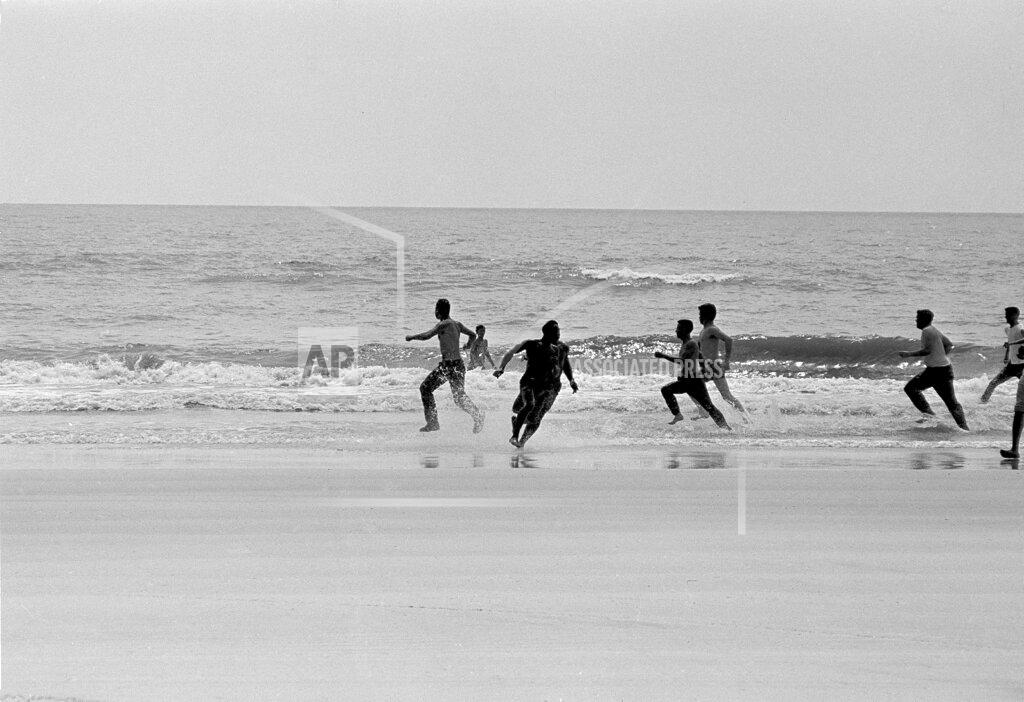
White racist gangs attacked Black and white integrationists with fists and clubs twice today at a public beach in the racially torn city of St. Augustine, Florida. The new outbreaks of violence came as a federal judge ordered Governor Farris Bryant to show cause why he should not be held in contempt of court for banning after-dark demonstrations. The incidents at the beach occurred several hours apart and were broken up by dozens of law enforcement officers after several Black and white integrationists had been beaten. Among those injured were a white integrationist, who was clubbed on the head by an officer, and a Danish television cameraman filming a documentary on the United States. One Black boy suffered a broken finger, a Black woman’s arm was slashed and another suffered cuts of the head. Josea Williams of Savannah, Georgia, an integration leader, said about nine persons had been taken to a hospital for treatment.
He said the white youth who was hit by the police was Peter Bancroft of Amherst, Massachusetts, who was attacked by segregationists at the beach Saturday. About 15 white men and youths armed with wooden clubs plunged into the surf after the integrationists when they, returned to the beach following the earlier wade-in. Several Blacks were struck, but none appeared hurt seriously. Policemen ran into the water shouting, “Break it up! Break it up!” About five of the white assailants were arrested. One Black and two white integrationists were also taken into custody.
About two hours earlier, 19 integrationists waded into the water and were attacked immediately by about 25 whites. The whites chased the integrationists out of the water onto the beach. State police arrested four Blacks, two white integrationists and six white segregationists. Most were charged with disturbing the peace, some with resisting arrest and disobeying a police officer. After the first wade‐in, the integrationists remained on the beach for about 45 minutes, singing and chanting. Then they were ordered to leave by state police, who stood between them and the jeering, taunting whites.
In Cooper v. Pate, the U.S. Supreme Court ruled in a 100-word opinion that state prison inmates had standing to bring lawsuits in federal courts and, by extension, in individual state courts as well. The U.S. District Court in Chicago was ordered to hear Thomas X. Cooper’s complaints that he had been deprived of his civil rights by the warden of the Stateville Correctional Center, and a year later, that court would rule in his favor on most of the complaints, in what “marked a turning point for inmates, not only in Illinois but around the country… Before Cooper, all power in prison had flowed from the wardens. Now it flowed from the courts.” Thousands of civil rights lawsuits would be filed by inmates and “the nation’s prisons, many of them truly awful places, were vastly improved.”
In Escobedo v. Illinois, a 5‐to‐4 majority of the U.S. Supreme Court placed a sharp new restriction today on the use of confessions in criminal trials. If the police focus on a principal suspect, the Court said, and question him without letting him see his lawyers or without warning him that his answers may be used against him, any resulting confession must be barred from evidence. Justice Arthur J. Goldberg wrote the decision, which is likely to have broad effects on law enforcement across the country. The ruling was based on the integrity of the right to counsel — a right applied in full force just last year to state as well as to Federal trials. This holding was later implicitly overruled by Miranda v. Arizona in 1966, where the Supreme Court held that pre-indictment interrogations violate the Fifth Amendment, not the Sixth Amendment. As Escobedo was questioned during a custodial interrogation, the result for him would have been the same.
In Aptheker v. Secretary of State, the high court struck down law denying passports to American communists in a 6–3 ruling. Justice Arthur J. Goldberg’s opinion relied chiefly on the right to travel as a “liberty” protected by the Fifth Amendment. He stated that the law, which allowed the secretary of state to deny passports to all members of the Communist Party of the United States or communist-front organizations unnecessarily swept up the innocent with the guilty. He further observed that the ban applied regardless of the purposes of the travel. Not only was the law unconstitutional on its face, Goldberg asserted, but it seemed to him also that it would be impossible to adapt its language in such a way as to save it.
In the Ashes, the annual test cricket series between England and Australia, batsman John Edrich was first up for England and scored 120 runs before being retired. Despite a 246 to 176 lead for England after the first of two innings, the second Test at Lord’s Cricket Ground ended in a draw the next day because of heavy rains.
Abe Segal of South Africa defeated Clark Graebner of the U.S. in the first round of Wimbledon in straight sets, 6–2, 7–5, 6–2. The tennis match made headlines worldwide because the line umpire, Dorothy Cavis-Brown, had fallen asleep and didn’t call the match point when Graebner’s shot was out by a couple of feet. Graebner laughed and conceded the point, and the crowd laughed as Cavis-Brown, who was exhausted from overwork, continued sleeping until a ball boy woke her up.
Willie Smith’s pinch single in the seventh inning tonight broke a 2–2 tie and sent the Los Angeles Angels to a 5–2 victory over the Washington Senators. The Angels’ victory was their sixth straight.
In Cincinnati, Willie McCovey belts a sixth-inning grand slam as the second-place San Francisco Giants whip the Reds, 6–2. McCovey connected off John Tsitouris, who hadn’t allowed a hit until that inning. Chuck Hiller’s pinch single with none out was the first hit off the Reds’ right‐hander. José Pagan scored the Giants’ first run after reaching first on Pete Rose’s error. He went to second on Hiller’s hit and scored on a single by Jesus Alou. After Hal Lanier sacrificed, Williel Mays was walked intentionally. McCovey then connected.
The Los Angeles Dodgers scored six times in the seventh inning tonight to offset five Milwaukee home runs and send the Braves to their seventh straight defeat, 10–9. Tommy Davis’s two‐run double keyed the Los Angeles seventh, in which 11 Dodgers went to the plate. The loss dropped the Braves deeper into ninth place in the National League and lifted the defending world champions into a tie for sixth with St. Louis.
Dow Jones Industrial Average: 826.38 (+1.13).
Born:
Dan Brown, American author of “The Da Vinci Code,” in Exeter, New Hampshire.
Amy Brenneman, American TV actress (“Judging Amy”), in New London, Connecticut.
Hiroshi Abe, Japanese film actor (“Godzilla 2000: Millennium”), in Kanagawa, Japan.
Dicky Barrett, American rock and ska singer (Mighty Mighty Bosstones), and TV announcer (“Jimmy Kimmel Live!”, 2004-2022), in Providence, Rhode Island.
Mike Edwards, British rock vocalist (Jesus Jones – “The Devil You Know”), in Wiltshire, England, United Kingdom.
Greg Anderson, NBA power forward and center (San Antonio Spurs, Milwaukee Bucks, New Jersey Nets, Denver Nuggets, Detroit Tigers, Atlanta Hawks), in Houston, Texas.
Jim Hunter, MLB pitcher (Milwaukee Brewers), in Jersey City, New Jersey.
Chuck Steele, NFL center (Detroit Lions), in Los Angeles, California.
Mark Nelson, NFL tackle (Kansas City Chiefs), in Grand Forks, North Dakota.

 History Diaries