Reichsprotektor of Bohemia and Moravia Konstantin von Neurath decreed that Jews could no longer make new acquisitions of real estate, stocks or bonds, and could not enter new business contracts. Jews were also forbidden from buying, selling or pawning valuables such as gold or silver and were ordered to report such valuables to the bank. Registration of valuables must be completed by July 31, and they may not be transferred before that date. The measure is retroactive to March 17, the time of the German occupation, and transfers since that date will be penalized.
Jews are defined in the decree as those who have at least three full Jewish grandparents and those who have two full Jewish grandparents and have themselves on or since. March 17 been members of the Jewish faith or have married such persons. Some 200,000 will be affected by this definition.” The decree establishes the Reich Protector as the final authority on the Jewish question. He can, however, delegate his authority and he is empowered to appoint trustees to facilitate the application of the decree, which trustees may be appointed for non-Jewish as well as Jewish concerns.
Announcement of the Protector’s decree came as a complete surprise to the Czech Government. A Jewish bill drafted in detail by the National Unity party committee had been laid before the Protector’s office many weeks ago, since which time it had passed to and fro between the Czechs and the Germans. The Czech proposals included the gradual transfer of the control of Jewish property and industry to Czech hands, extended over a four-year period, so as to reduce the Jewish share of the nation’s economic life to a figure proportionate to the population figures.
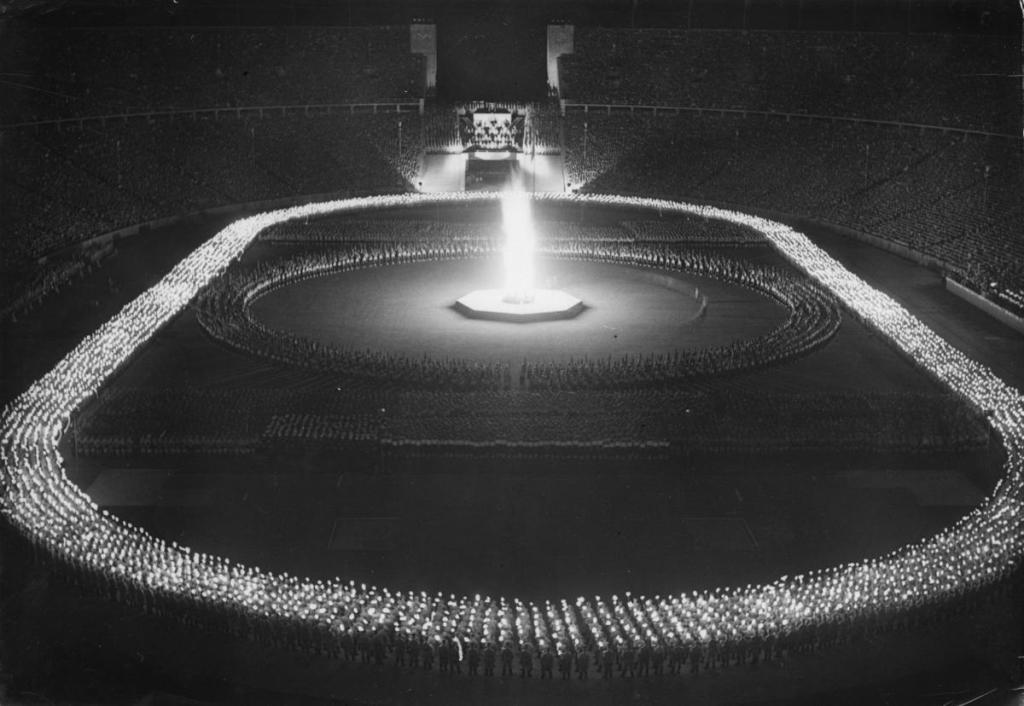
German Propaganda Minister Joseph Goebbels told 120,000 Germans at the Olympic Stadium in Berlin that Great Britain should see that the “Danzig question” is settled promptly. “We know what we want, and we want what we want … England charges as with desiring to rule the world. That is silly. Such ambitions we leave to England and Poland…”
In Vienna, Reich Commissioner Buerckel issues a new decree banning Jews from entering any part of the Prater, the city’s famous park.
The Slovakian cabinet approved an ordinance forcing Jews out of the army.
Soviet Russian quarters tonight declared that a two-hour conversation on a proposed British-French-Russian mutual assistance pact had failed to produce any progress in the long-drawn negotiations. A communiqué of Tass, official Soviet news agency, stated: “British Ambassador Sir William Seeds, French Ambassador Paul-Emile Naggiar and William Strang, special British envoy, were received by Foreign Commissar Vyacheslav Molotov. They handed him ‘new’ Anglo-French proposals which repeat the previous proposals of Great Britain and France.
“Circles in the People’s Commissariat of Foreign Affairs note that the ‘new’ Anglo-French proposals do not show any progress as compared to previous proposals.” The communiqué abruptly canceled any optimistic hopes that Britons and Frenchmen in Moscow might have entertained that a quick agreement would be forthcoming from today’s meeting.
It was known that the British and French negotiators had recently received new instructions from their governments and some sources said a new Baltic formula was among the points discussed. The principal obstacle to agreement has been considered Russia’s insistence on a pledge of aid for her Baltic neighbors — Finland, Latvia and Estonia — in case of attack. They have said they want no such guarantees as possibly dangerous to their neutrality. Some diplomats expressed belief that the only vital issue, however, was whether Moscow wanted to sign a pact now or preferred to wait to see what happened at Tientsin, where the British and Japanese are in dispute, and in the Free City of Danzig, which Germany wants.
Others said they had the impression that the British and French attitude was stiffening and they were inclined to believe that Mr. Molotov now has a clear idea of the ultimate concessions he can expect from London and Paris. Diplomatic observers said a proposal for British-French-Russian cooperation in the Far East might be involved but both sides said the Far East had not entered the discussions. Harry Roberts, who came here as assistant to Mr. Strang, will return tomorrow to London by airplane. There was no indication of how long Mr. Strang would remain.
Concerning negotiations with the Soviet Union, British Foreign Secretary Lord Halifax stated “I think we have so far failed (to reach an agreement) we can truly feel that it has not been our fault.”
Winston Churchill, who, until a few months ago, was the most powerful critic in this country both of the government’s foreign policy and of its lagging rearmament efforts, tonight pledged his full support to Prime Minister Neville Chamberlain and Viscount Halifax, his Foreign Secretary. Paying tribute to Lord Halifax as “an Englishman,” a fox-hunter and a friend,” Mr. Churchill said at a dinner in the Foreign Secretary’s honor that he fully supported the government’s present foreign policy, but expressed the fear that, despite the adoption of a policy of “grand alliance,” “war may yet come.”
“We are here tonight,” he said, “to give the Foreign Secretary and Prime Minister assurance that if, after every resource and expedient has been exhausted, they feel it necessary to give the dread signal, a united party, a united nation and a united empire will do their duty and do their best.” He spoke at a London dinner given by the 1900 Club, a group of Conservative members of Parliament.
“The time has come,” Mr. Churchill said, “when further acts of unprovoked aggression must be resisted by the united strength of Great Britain and the empire of which we are the head. We believe that in such resistance we shall be moving in alliance or companionship with at least three-quarters of the population of the globe.”
These declarations immediately aroused speculation as to whether Mr. Churchill, who in 1914 was First Lord of the Admiralty, may return to that post in the expected reorganization of the government. The German press already has made it clear how this would be interpreted, but Mr. Churchill gave an assuring word to Germany tonight with this statement: “Not a single element representative of the British nation would support for a moment designs against the peace and safety of the Reich and its legitimate prospects of growth and expansion.”
A Parisian sells a collection of Napoleon’s letters to her sister, bringing in 513,200 francs.
Finland’s Foreign Minister, Eljas Erkko, in an interview today confirmed the report that Field Marshal Baron Carl Gustav Emil Mannerheim, Finland’s grand old man and President of the Council of National Defense, has made certain demands concerning the nation’s defense and has threatened to resign if they are not met. Baron Mannerheim, hero of the civil war and of Finnish independence, principally demands the fortification of the Aland Islands, which, against the experts’ advice, was rejected by the government.
President Roosevelt today sent to the Senate the nomination of former Senator F. Ryan Duffy of Wisconsin to be Federal District judge for the Eastern District of Wisconsin, signed several minor bills and transacted other executive business.
The Senate completed Congressional action on the $305,000,000 Rivers and Harbors Bill, approved the conference report on the Agriculture Appropriation Bill, considered the bill to extend the Stabilization Fund and the President’s power to further devalue the dollar and adjourned at 5:50 PM until noon tomorrow. The Foreign Relations Committee approved revised treaties with Panama.
The House considered the $292,000,000 supplemental War Department Appropriations Bill, voting to reduce the number of airplanes provided to 1,180, and adjourned at 6:13 PM until noon tomorrow.
Senators Guffey of Pennsylvania, Smathers of New Jersey, and Hughes of Delaware declared today. for the nomination of President Roosevelt. Mr. Guffey and Mr. Smathers said that the delegations from their States would cast their votes for the President at the Democratic National Convention next year. Several other Senators indicated their willingness to support the President for a third term but were of the opinion that he would not defy the third-term tradition. Senator Smathers said that New Jersey’s delegation to the 1940 convention would be pledged to the renomination of the President. Senator Guffey has been urging the renomination of Mr. Roosevelt for the Presidency. He expects to seek renomination to the Senate for himself on a Roosevelt platform.
Henry L. Mencken, journalistic sage of Baltimore, arrived in Indianapolis today with the startling announcement that he “favors” a third term for President Roosevelt. “I’m for the re-election of Roosevelt for a third term,” he said. “He ought to be made to bury his own dead horse. It would be cruel and unusual punishment to permit anyone else to take over the autopsy.” The “dead horse,” he explained, is the New Deal.
Convinced that Dr. Francis E. Townsend, head of the old age pension movement, is honest and not a demagogue, Mr. Mencken, nevertheless, is skeptical about the plan. But he would like to see the plan tried out. “I’d like to see what would happen,” he said. “I’d like to see a volcano erupt, too, and I’ve always wondered what it would be like to see New York bombed from the air.”
A Senate filibuster organized by the inflation-silver group threatened today to block three major bills on which Congress must act before midnight, June 30, or disrupt the government routine. The filibuster, organized by Senators Thomas of Oklahoma and McCarran of Nevada against the Monetary Bill, moved into broader fields, as its sponsors prepared to use the same tactics on the Tax Bill, scheduled to be taken up tomorrow, and the Relief Bill, which the Appropriations Committee will be ready to report late this week or early next week.
While Senator Thomas held the Senate floor from 11:15 AM until 5 PM, by reciting the monetary history of the United States, Senator McCarran argued in cloakrooms and the Senate lobby that the fight is “much broader than the question of the price of silver alone.” Nevertheless, the indication was clearly given that a substantial rise in the price which the Treasury pays for domestic silver would bring the filibuster to an end.
Barring that concession by the Administration — it was one which President Roosevelt was reportedly not ready to make — the silver forces planned to apply the same tactics to the Tax Bill. Waiting as relief speakers to follow Senator Thomas were a minority of members, but a powerful group, including Senators McCarran, Frazier, and Pittman, and others whose names Mr. McCarran declined to divulge.
The potential results of the filibuster, which found its main force, in a conjunction of dates with the usual legislative jam attending the end of the fiscal year, were so great as to point strongly toward some giving of ground. The Tax Bill provides for the extension of nuisance taxes which otherwise expire on June 30. They yield revenue of about $1,800,000 a day. Failure to act upon the Relief Bill by June 30 would leave the WPA with funds sufficient for only one week.
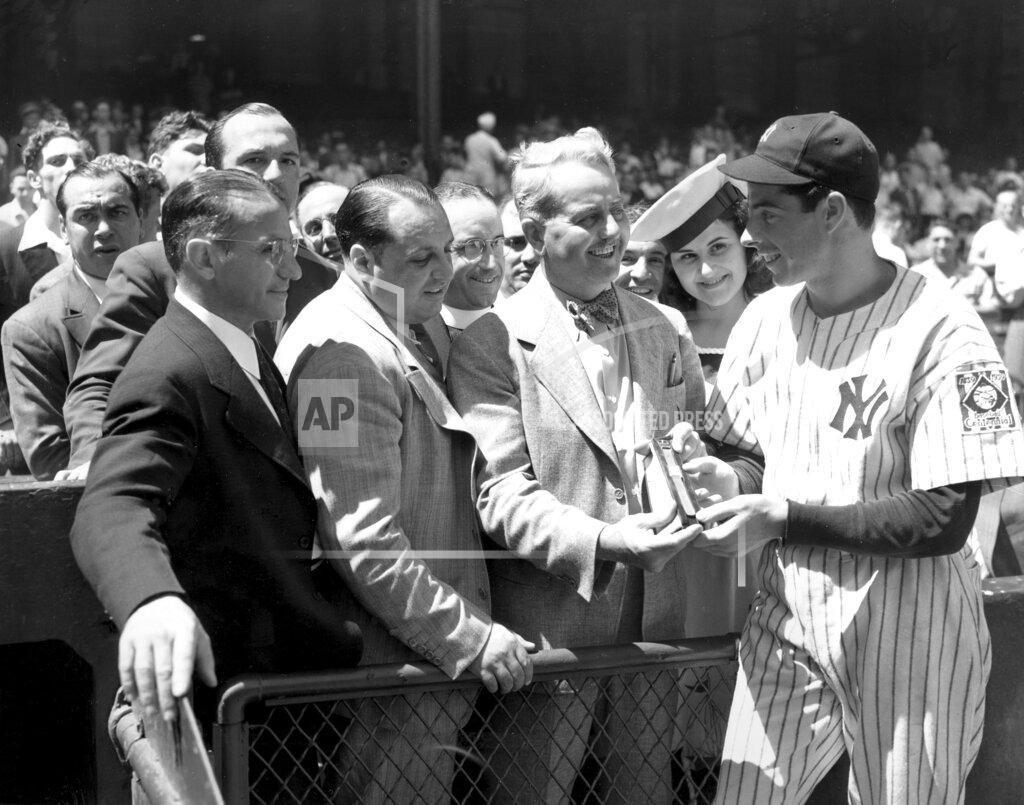
The Mayo Clinic diagnoses Lou Gehrig as having amyotrophic lateral sclerosis. It is reported in the media as infantile paralysis. He will be forced to quit baseball, leaving fans shocked. He takes the verdict philosophically and remains as captain of the team.
The New York Yankees announce Lou Gehrig’s retirement, based on the report yesterday from the Mayo Clinic that he has amyotrophic lateral sclerosis. The 36-year-old star will remain with the team as captain.
The Citizens’ Conference on Government Management contrasts a Mormon relief plan with that of the federal government. The Mormon Church frowns on government subsidies.
Senator Wheeler of Montana, Chairman of the Committee on Interstate Commerce, protested to the Civil Aeronautics Authority today against the proposed merger of Western Air Express and United Air Lines. The consolidation is sponsored, according to Senator Wheeler, by bankers who control large blocks of stock in Western Air Express and United Air Lines, the managements of which, he contended, have never been consulted about the matter. This also is true, he asserted, in the case of a majority of the stockholders.
An early morning fire broke out in a tenement building on Doyer Street in Chinatown, Manhattan, killing 8.
Admiral Harry E. Yarnell, commander-in-chief of the U.S. Asiatic Fleet flatly rejected Japanese demands that the U.S. destroyer USS Pillsbury (DD-227) and American citizens leave Swatow, China. Yarnell was reported to have told Admiral Oikawa Koshiro of Japan’s Third Fleet in Chinese waters that the American Navy’s duty was to protect American lives and property wherever they existed. British authorities stated they had refused a Japanese demand for the removal of the destroyer HMS Thanet (H 29).
Dispatches said the Japanese naval commander had given all foreign warships until 1 p.m. to leave Swatow harbor. Japanese naval officials in Hong Kong said that the Japanese actually meant that foreign vessels should clear specified sections of the harbor where Japanese military supplies and troops were expected to land.
The Swatow Operation began. The Japanese captured the city of Swatow (today Shantou). Part of Goto Detachment and a part of Sasebo 9th SNLF landed on the east coast on June 21 near the airfield east Swatow. Other Japanese troops in more than ten motor boats proceeded up the Han River and landed at Mei-hsi (near modern Anbu) cutting the road between Swatow north to Chao-chow. A coordinated attack by the Japanese drove the Chinese defenders, Hua Chen-chung’s brigade and local militia units, from the city of Swatow. They fell back to the Yenfu–Meihsi line on June 23.
Japanese troops are marching toward Chaoan, terminus of the Swatow-Chaoan railway, twenty-five miles north of Swatow. Three hundred Japanese landed under cover of cruiser fire from twenty transports at Swatow this morning and were followed by 7,000 troops who immediately started inland toward Chaoan.
The occupation of Swatow has cut off China’s most fruitful remaining coastal trade and also has ended foreign shipping. The invasion probably will result in another Japanese blockade because there is a large foreign community in this treaty port. Three foreign warships are standing by but it is not expected there will be a rush to leave.
Britain reinforced its garrison at Tientsin and increased its food stocks there.
British Foreign Secretary Lord Halifax expressed hope for a settlement of Britain’s controversy with Japan. Halifax declared it was never the British intention to allow the Tientsin concession to be used as a base for activities “prejudicial to Japanese military interests.” He expressed hope for a peaceful resolution of the matter.
General Gen Sugiyama, commander-in-chief of Japan’s expeditionary force in North China, charged Britain had forfeited her rights as a neutral by what he called policies. designed to assist Generalissimo Chiang Kai-shek. In a statement issued from his headquarters at Peiping, General Sugiyama declared forces under his command would follow a “resolute” policy toward the Tientsin British Concession until Britain recognized Japan’s “new order in East Asia” and cooperated in establishing it.
Some of the British refugees boarded a steamer last night and arrangements were completed for the whole party to leave today. The women and children were to sail from the British bund aboard a small British river boat for Tangku, the port of Tientsin at the mouth of the Hai River. There they were to transfer to the steamers Wingsang and Shengking. Most of them had planned previously to go to summer homes there but had been delayed by the blockade imposed by the Japanese after British officials had rejected Japanese demands for custody of four Chinese accused of killing a local official.
One hundred British women and children were evacuated from Tientsin’s blockaded British Concession today as the second week of Japan’s “siege” began. They began a 200-mile voyage to Peitaiho, a resort to the north on the coast. An official British report in Tokyo said 1,000 women and children would be evacuated at Tientsin preparatory to an “indefinite period of resistance,” according to The Associated Press.
With the departure of the women and children the British male community in the isolated British and French Concessions considered itself in a better position to take care of itself in the long-drawn test of patience that was foreseen. The women and children had been most inconvenienced by the lack of milk and fresh food.
Dow Jones Industrial Average: 137.61 (+0.04).
Born:
Charles Boone, American composer, in Cleveland, Ohio.
Rubén Berríos, Puerto Rican politician, in Aibonito, Puerto Rico.
Naval Construction:
The Royal Australian Navy Bar-class boom defense vessel HMAS Koala (Z 69) is laid down by the Cockatoo Docks and Engineering Co. Ltd. (Sydney, New South Wales, Australia).
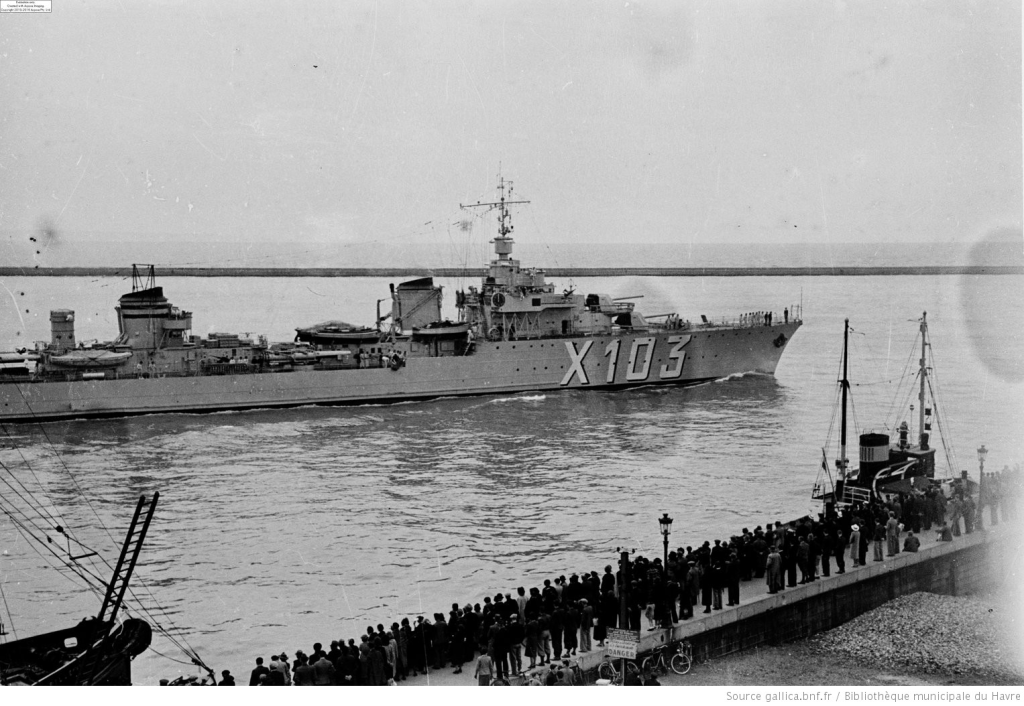
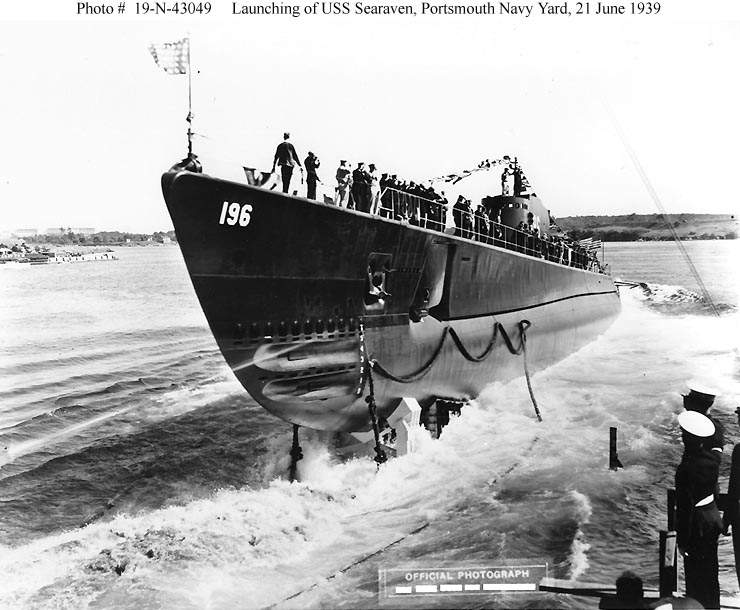
The U.S. Navy Sargo-class submarine USS Searaven (SS-196) is launched by the Portsmouth Navy Yard (Kittery, Maine, U.S.A.).
The U.S. Navy Sims-class destroyer USS Roe (DD-418) is launched by the Charleston Navy Yard (Charleston, South Carolina, U.S.A.).

 History Diaries