The United States has nearly completed construction of an elaborate Air Force base at Da Nang that, tied in with specialized facilities elsewhere in South Vietnam and in Thailand, gives the West a forward strategic position to face Communist China. A system of installations has been planned to serve an anti‐Communist strategy in Southeast Asia that is far broader than the present war effort. within South Vietnam. American officials have long recognized that the Seventh Fleet or existing land bases would provide an insufficient staging position if there ever was a large‐scale United States military involvement in the lands on China’s southern frontier.
It has become known in Saigon that the high‐level American conference in Honolulu early this month confirmed and elaborated on preparedness measures to be undertaken with highest priority. The Honolulu meeting and subsequent White House decisions are understood to have emphasized that the United States stands ready to meet Communist China head‐on rather than be forced out of Southeast Asia. The accelerated military build‐up grew from a realization that facilities and organization have to be ready before any threats of retaliation against continued Communist advances can be made effectively. Though the work is not yet completed, the Da Nang airfield on the coast of South Vietnam, about 350 miles north of Saigon, is already serving as a base for F-100 jet fighters. It has been reported that they attacked Communist positions in the Plaine des Jarres in Laos.
Almost daily, eight of these Supersabre jets take off from Da Nang heavily armed with rockets and bombs. Other jet aircraft, presumably carrier‐based in the South China Sea, are heard regularly. United States spokesmen declined comment on any operations from Da Nang or other South Vietnamese airfields. Refusing to deny reports of Air Force action in Laos, officials said any announcements of such operations would have to come from Washington. Meanwhile, Major General Joseph H. Moore, commander of the Second Air Division, based in Saigon, is known to be in close touch with American policy‐makers in Laos and Thailand. Besides operating propeller aircraft used in South Vietnam against the Communist Vietcong insurgents, the Second Air Division has coordinated jet reconnaissance flights, including those by U2 planes, over Southeast Asia.
The government has insisted that the question of having jet contrary based in South Vietnam contrary to the 1954 Geneva agreement is answered by the contention that these planes are not being used for military action in South Vietnam. When it is finished next month the Danang airfield will be big enough to handle the largest jet aircraft. Vast parking aprons are being prepared to accommodate planes in readiness. Maintenance shops, radar and communications stations and housing facilities are included in the airport expansion project. The radar station is on Monkey Mountain, a 2,000-foot peak on a promontory in the South China Sea, just east of Da Nang. From there it is only 160 miles to the Chinese island of Hainan.
The Da Nang base will tie in with other Air Force installations at the Tân Sơn Nhứt and Biên Hòa airbases near Saigon, at the Nha Trang airport and at bases in Thailand, particularly Udon. Udon was the center of an Air Force build‐up two years ago when American troops were dispatched to Thailand in the face of Communist military pressure in Laos. Under construction at Tân Sơn Nhứt is a photo laboratory to process films used on photo reconnaissance flights. Currently these films are flown to Clark Field in the Philippines for processing. A build‐up far in excess of what would be needed in the war in South Vietnam was planned as policymakers realized that an eventual confrontation with Peking might have to take place. A dispatch from the base at Udon, Thailand Saturday said 10 United States‐made T-28 fighter‐bombers were parked on a runway there. Five had Laotian Air Force markings and five were unmarked.
Communist guerrillas have rolled over a company of South Vietnamese Special Forces with human wave attacks, apparently capturing three Americans, United States sources reported today. A military spokesman said a wounded American officer and two American enlisted men had disappeared during the battle, with the Việt Cộng. It was fought 10 miles northeast of Tây Ninh, which is 55 miles northwest of Saigon. An American Special Forces man was killed in an ambush in the same general area eight days ago. The guerrilla attack, made Friday by 300 to 500 men, overwhelmed a company of 100 men on patrol out of the nearby Suối Đá Special Forces camp. The military spokesman said 60 men were still missing today, together with the Americans. The Việt Cộng have been building their strength around the Tây Ninh area in recent weeks, American sources said. Fear had been expressed that the Việt Cộng might attempt to capture the provincial capital of Tây Ninh. Special Forces activity in the region has been intense.
American sources said it was not yet certain that the Americans had been captured. It was presumed they had been because they were missing for nearly two days in a region close to government bases. The Americans were first reported missing Saturday. Government reinforcements moved into the area soon after the battle and within two hours 300 troops were combing the area. Sporadic fighting took place. Military operations continued today in the hope of recovering the missing American and Vietnamese soldiers. If the Việt Cộng in fact captured the Americans, it would bring to 11 the total of American prisoners believed to be in guerrilla hands. During 1963 seven American Special Forces men were captured — four from a camp west of Saigon and three from a camp in Cà Mau. Four of these men are known to be in a Communist prison camp in the Cambodian border region. Another American was presumed to have been captured near Da Nang recently. Six more Americans reported missing in Vietnam were involved in plane crashes in the central and northern mountain regions.
In Saigon, meanwhile, the new United States military commander in South Vietnam issued a message to his men to‐day. Lieutenant General William C. Westmoreland urged them to adhere to the fundamentals of “discipline, alertness, security, aggressiveness, fire and maneuver, emphasis on night operations and, always, consideration for the civilian population.” General Westmoreland assumed command yesterday, succeeding General Paul D. Harkins. “We approach our task with enthusiasm, but we should not allow this ardor to affect our objectivity,” General Westmoreland said. “We must get facts and objectively appraise the situation if we are to give our stout-hearted Vietnamese friends appropriate advice and assistance,” he told the 16,000 United States men serving in Vietnam. “We must keep in mind that campaigns will be won at province, district, village, and hamlet levels where battle is being waged for the hearts and minds of the people.”
Prince Norodom Sihanouk of Cambodia expressed grave concern over the deepening of conflicts Southeast Asia, and accused the United States of indirectly aiding Communism by maintaining “de facto domination and military presence” in the area. The Cambodian head of state, in an interview with the magazine Combat, opposed as “oversimplified” the opinion that the civil wars raging in South Vietnam and Laos should be viewed under the sole angle of “defense against Communism.”
Malaysian and British troops resumed operations against Indonesian guerrillas in the jungles of Borneo today after conciliation talks in Tokyo collapsed. Malaysia informed her troops that talks between President Sukarno of Indonesia and Prime Minister Prince Abdul Rahman had broken down, and ordered the security forces into operation once again. An announcement broadcast by the Malaysia radio here on the talks’ failure said that preparations for withdrawal of Indonesian guerrillas had been terminated. The Malaysians said that reports of the withdrawal of 32 guerrillas were “short‐term frauds.” “Counter-measures against terrorists will continue,” the broadcast said. “No further safe conduct is to be given.”
Once again attempts to preserve peace in the Pacific have been torpedoed by the imperialist aims of President Sukarno of Indonesia. His refusal to withdraw all Indonesian guerrillas from Malaysia left Prince Rahman convinced that Sukarno would never abandon his “Crush Malaysia” campaign, no matter what an international conciliation commission might recommend. Thus, the effort at Tokyo to produce an Asian solution to an Asian problem has come to the same empty end as the truce effort initiated by Attorney General Kennedy in his visit to the Far East last January. The pressure put on Sukarno by the desperate economic situation in his own country and by the demands of the powerful Indonesian Communists makes him welcome an outlet for aggression in Borneo.
More guerrillas are in training to move across the Malaysian border. The prospect is for more disruption and for an aggravation of the problems that afflict both countries. Under the guise of attacking British “neocolonialism” in Malaysia, Sukarno is increasing that new nation’s dependence on Britain for troops and other help and thus making it harder to implement Malaysian independence. But he is not succeeding in making it turn to his brand of colonialism as a road to peace.
Communist China warned the underdeveloped countries today that they would become subject to Soviet domination if they accepted aid from Moscow. Peking urged the countries of Asia and Africa to develop “national independent economies” through mutual help without relying on aid from the Soviet Union, the United States or the United Nations. Biting criticism of Soviet aid programs was contained in a report delivered yesterday by Nan Han‐chen, head of the Chinese Communist delegation to the second Asian Economic Seminar. The Communist‐organized meeting in Pyongyang, capital of North Korea, is being attended by delegates from most of the Asian countries and observers from African and Middle Eastern nations. The report was published today in Peking newspapers and transmitted abroad by Hsinhua, the Chinese Communist press agency.
İsmet İnönü, the 79-year‐old Premier of Turkey, arrived in the United States tonight for two days of crucial conferences with President Johnson on the future of Cyprus. The meetings will begin here tomorrow morning. They will represent the first phase of a United States effort to bring Turkey and Greece into direct conversations on the fate of the Mediterranean island. The Administration increasingly fears that if the dispute over Cyprus continues, it may erupt into a war. The second phase of the White House diplomacy will be the visit here on Wednesday and Thursday by the Greek Premier, George Papandreou. President Johnson invited the two leaders for separate talks after he personally intervened June 6, when it seemed that a Turkish invasion of Cyprus was imminent.
General George Grivas, former guerrilla leader of the Greek Cypriots, was reliably reported today to have returned to Cyprus on a secret mission. The 66-year‐old Cypriot‐born Greek general, who lived in retirement at a country house in Chalandri near Athens, led the Greek Cypriot fight against the British in Cyprus between 1955 and 1959. He was given safe conduct to return to Greece after an agreement was reached the make Cyprus independent. News or the general’s clandestine departure for Cyprus was carried in the opposition newspaper Kathimerin today. It could not be determined how he traveled.
The École Freudienne de Paris was founded by psychoanalyst Jacques Lacan after his recognition was withdrawn by the International Psychoanalytical Association.
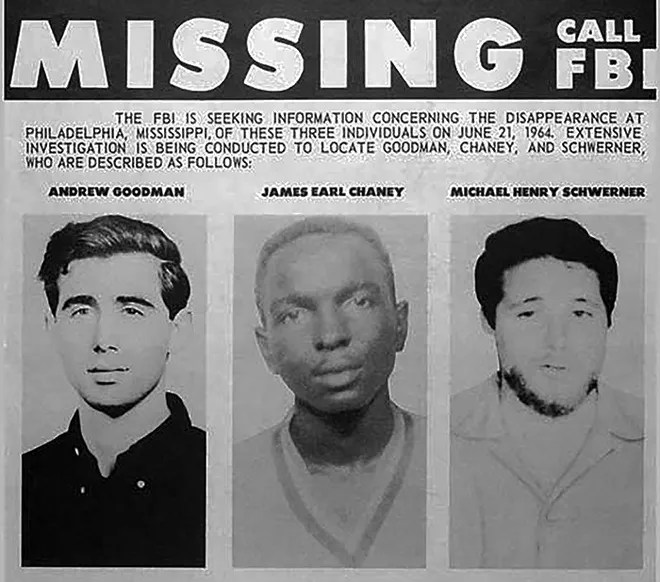
The kidnapping and murder of three civil rights activists — Michael Schwerner, 24, and Andrew Goodman, 20, both white New Yorkers, and James Chaney, 21, a black local resident — took place near Philadelphia, Mississippi. The three had left Meridian at 9:00 to travel 40 miles north to Philadelphia to investigate the burning of a church, and failed to return to Meridian at 4:00 that afternoon. After investigating the burning of the Mount Zion Methodist Church in Neshoba County, the three passed through Philadelphia and were arrested by Deputy Sheriff Cecil Price and taken to jail. They were released at 10:30 that night and allowed to drive back toward Meridian under a police escort, then guided to a side road where all three were shot by Alton Wayne Roberts and James Jordan. Under the direction of Deputy Price, the three were buried in an earthen dam. Their bodies would remain undiscovered until August 4. News of the disappearance of the three does not make the next day’s papers.
The advance units of a volunteer force of 1,000 civil rights workers opened a two‐month drive today against racial barriers in Mississippi. Two incidents of alleged threats and harassment were reported as the 200 student volunteers arrived from a one‐week orientation course at Western College for Women in Oxford, Ohio. The most serious incident reported so far took place tonight at Mathiston in east‐central Mississippi after the arrest of James Robert Brown of Itta Bena, a 20‐year‐old Black, on a charge of reckless driving. A spokesman for the Student Nonviolent Coordinating Committee, key organization in the Mississippi project, said a crowd of whites, some armed with guns and knives, gathered and then spat upon, cursed and threatened another youth among the five persons riding with Mr. Brown.
The incident took place, according to the spokesman, after Trooper Webb Brunt of the state highway patrol had arrested Mr. Brown and had driven him to the Choctaw County Jail in Ackerman. The trooper, reached by telephone, said the youth had crossed the yellow line three times on U.S. Highway 82, some 300 yards of which run through Choctaw County. He filed reckless‐driving charges against Mr. Brown in both Choctaw and adjoining Webster County. Mr. Brown was released on $50 bond by Choctaw authorities today but must appear at Eupora, the Webster County seat, tomorrow to post bond. Mr. Brown said his station wagon had been followed constantly by highway patrolmen and city policemen since he had crossed the state line. He and the others were returning from a citizenship training school at Bricks, North Carolina, to take part in the civil rights drive here.
It was the second brush of the day with law officers for Mr. Brown, a field assistant of the Southern Christian Leadership Conference. The conference is one of several civil rights organizations cooperating in the project. Mr. Brown said he had been stopped yesterday afternoon at Tuscaloosa, Alabama, by a policeman who asked “how long before the bus and the two cars would be along.” The youth said other policemen arrived, apparently in anticipation of the arrival of the volunteers bound for Mississippi. Mr. Brown said he was charged falsely with speeding and paid a $105 fine.
The second incident involved Andrew Barnes, a Black and a student committee field worker returning from the course in Ohio. Robert Weil, spokesman for the committee, said that after Mr. Barnes had reached a home in Fayette, in southwestern Mississippi, shortly after midnight, two white men in plain clothes pulled up and shouted to the youth to come out. Instead, he fled from the back of the home and was driven to Natchez. State and city officials at Fayette said they had been pursuing Mr. Barnes to arrest him on a reckless‐driving charge.
The summer project has aroused fear and tension among whites and Blacks. State, county and local police forces have added new men and new hardware, and a number of new laws aimed at thwarting the project have been passed. An increasing number of violent incidents has been reported. A Black church was burned last Tuesday night in the Longdale community some 12 miles east of Philadelphia in east‐central Mississippi. On the same night, a Roman Catholic parish meeting hall used by Negroes was destroyed by fire at Hattiesburg. The project is divided into three phases — voter‐registration drives, freedom schools and community centers. The first group will concentrate on increasing the number of registered voters. It is estimated that no more than 28,000 of the state’s 915,722 Blacks, who make up 42 percent of the population, are on the voting rolls.
Parliamentary maneuvers to get the Senate version of the civil rights bill through the House will begin shortly after noon tomorrow. The House will meet then for the first time since the Senate passed the bill last Friday evening, by a vote of 73 to 27. House leaders are committed to accepting the Senate draft, but the question is how to get it past Southern objections.
The first move will be for someone — probably Representative Emanuel Celler, the Brooklyn Democrat who is chairman of the House Judiciary Committee — to ask unanimous consent for immediate approval of the Senate bill. An objection by a Southerner is believed certain. That will bring the bill up against the Rules Committee. Its chairman is one of the shrewdest opponents of civil rights legislation, Representative Howard W. Smith, Democrat of Virginia. Under ordinary circumstances it is left to the chairman to call meetings of the Rules Committee. But these circumstances are not ordinary, and Mr. Smith would be unlikely to call any meeting without some pressure on him.
The pressure will start tomorrow. Mr. Celler or another advocate of the civil rights bill will introduce a resolution to send the Senate bill to the floor, for a vote. Three members of the Rules Committee will then, immediately, write a letter to Mr. Smith requesting a committee meeting to consider this resolution. Under the rules he will have three days after tomorrow, until Thursday midnight, to act. If he decides to hold a meeting in response to the letter, he can pick any day within seven of the time he calls it — which at the latest would be a week from Thursday. If Mr. Smith does nothing by Thursday midnight, a majority of the committee — eight of the 15 members — can call a meeting themselves at any time. In any event, it appears likely that the House will vote on the bill and send it to the President in about a week or ten days.
Unhappy Southern leaders are making mixed forecasts on how the forthcoming Federal civil rights law will fare in their areas. The indications yesterday were that many more legal means of resistance would be explored. Governor George C. Wallace of Alabama, in a news conference in Raleigh, North Carolina, opening a drive to get on the ballot there as an independent candidate for President, said yesterday: “It’s not up to me as Governor of Alabama to enforce that law. It’ll be up to the Justice Department, the executive wing — and the Army, probably. They needn’t call on me. I’m not going to help enforce the law that will put a barber in jail when he refuses to shave a man. I don’t ask disobedience of law, but it is not my responsibility to enforce the civil rights bill. My attitude will be to leave it alone. It will take a police state to enforce it.” The Alabamian predicted the law would be repealed “in a few more years by a new bunch of faces in Congress.”
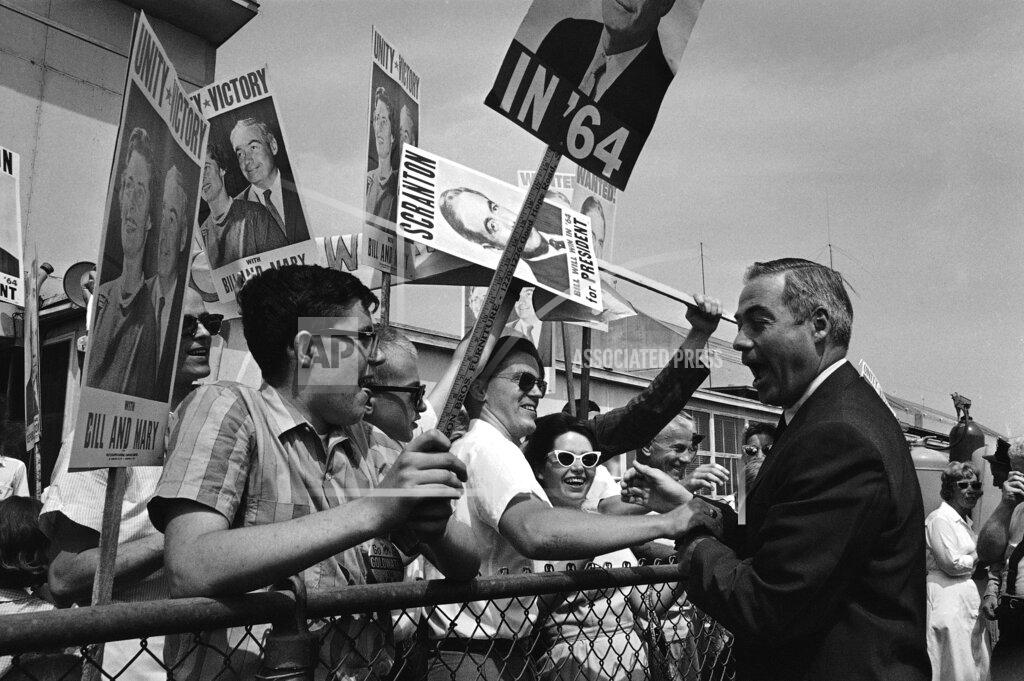
Governor William W. Scranton suggested today, that the civil rights bill, assuming enactment, would give Senator Barry Goldwater conscience trouble as a candidate and as President. If the Republican platform included a pledge to enforce that law “I think it would be a real test of his conscience” to campaign on such a platform, the Pennsylvania Governor said. He made the statement on “Face the Nation,” a Columbia Broadcasting System television show. “Anybody who has voted as he has consistently over the last few days on this subject, it would seem to me, would have great difficulty going along with the platform that was in favor of this bill,” Governor Scranton said. The Arizona Senator voted against passage of the bill for the expressed reason that its sections on fair employment and public accommodations were, in his opinion, unconstitutional. He also voted against closure of debate on the bill.
Spain beat the Soviet Union, 2–1, to win the 1964 European Nations Cup in front of a crowd of 120,000 people at Madrid.
The Chess interzonal championship ended in a four-way tie in Amsterdam as Denmark’s grandmaster, Bent Larsen, finished with 17 points along with three Soviet grandmasters, former world champions Vassily Smyslov and Mikhail Tal, and future world champion Boris Spassky. The final score was reported as “Larsen, Smyslov, Spassky, and Tal 17”.
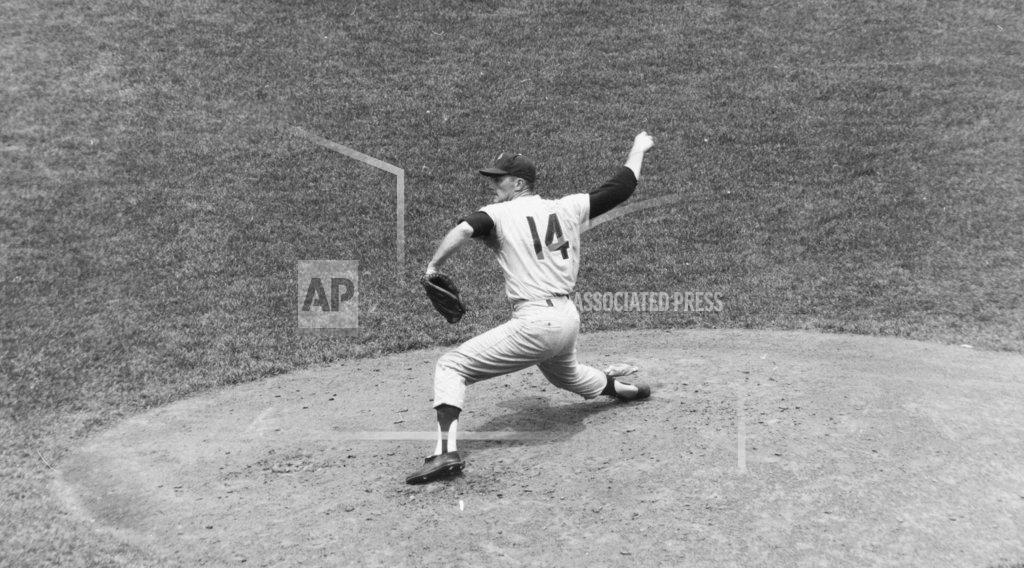
On Father’s Day at Shea Stadium, Jim Bunning fans 10, drives in 2 runs, and pitches the first perfect game (excluding Don Larsen’s 1956 WS effort and Harvey Haddix’s 1959 overtime loss) since Charlie Robertson’s on April 30, 1922. Jim Bunning pitched the first perfect game in the National League in 84 years, guiding the Philadelphia Phillies to a 6–0 win over the New York Mets. With no hits, no errors, and no men on reaching base, Bunning retired 27 batters. Second baseman Tony Taylor helped save the perfect game in the 5th inning when he dived for a grounder by the Mets’ Jesse Gonder and was able to keep Gonder from reaching first base. Bunning also becomes the first pitcher to win no-hitters in both leagues, and Gus Triandos becomes the first catcher to catch a no-hitter in each league. Bunning throws just 90 pitches in winning his second no-hitter. The next time Bunning faces the Mets he will shut them out, the first no-hit pitcher this century to do that. It marked only the 8th perfect game in major league baseball up to that time. John Montgomery Ward of the Providence Grays had pitched a perfect game on June 17, 1880, in a 5–0 win over the Buffalo Bisons. Bunning would later be elected as a U.S. Representative and then a U.S. Senator from Kentucky.
The Mets don’t fare much better in the nightcap as 18-year-old rookie Rick Wise wins his 1st game and gives up just 3 hits for an 8–2 win. Johnny Klippstein comes on in the 9th. The Phils increase their National League lead to 2 games over the Giants.
The Houston Colts spank the Milwaukee Braves, 5–2 and 5–4, to complete a four-game sweep. Rusty Staub is the opening-game star with four hits, including two home runs. Pitcher Ken Johnson and outfielder Joe Gaines go deep in the nightcap. Bob Lillispicks up five hits in the twinbill. In addition, the team signs high-school phenom Larry Dierker.
The Yankees move into first place by 8 percentage points over Baltimore, as they outpitch the White Sox to win 2–0 and 2–1. Mickey Mantle and Elston Howard home runs win it 2–0 for Jim Bouton in the opener against White Sox pitcher Juan Pizarro, and an error wins the nightcap 2–1 in the 17th. The Yankees sweep 4, giving up just one run in 41 innings, and take 9 games from Chicago in 11 days.
Born:
David Morrissey, British actor (“State of Play”, “The Walking Dead”), in Liverpool, England, United Kingdom.
Doug Savant, American actor (“Melrose Place”), in Burbank, California.
Kari Kennell, American actress (“Eric’s Revenge”), in Colorado Springs, Colorado.
Sammi Davis-Voss, English actress (“Hope & Glory”), in Kidderminster England, United Kingdom.
Brad Moore, MLB pitcher (Philadelphia Phillies), in Loveland, Colorado.
Jon Francis, NFL running back (Los Angeles Rams), in Corvallis, Oregon.
Patrice Bailly-Salins, French biathlete who won the 1995 sprint world championship in 1995; in Morez, France.
Died:
Andrew Goodman, 20, American civil rights activist, murdered.
James Chaney, 21, American civil rights activist, murdered.
Michael Schwerner, 21, American civil rights activist, murdered.



 History Diaries