A group of Ethiopian military officers organized the Coordinating Committee of the Armed Forces, Police and Territorial Army, generally referred to as the Derg, and selected Major Mengistu Haile Mariam as its leader. On September 12, the Derg would overthrow the Ethiopian imperial government and arrest longtime Emperor Haile Selassie, replacing it with a military junta led by Mengistu.
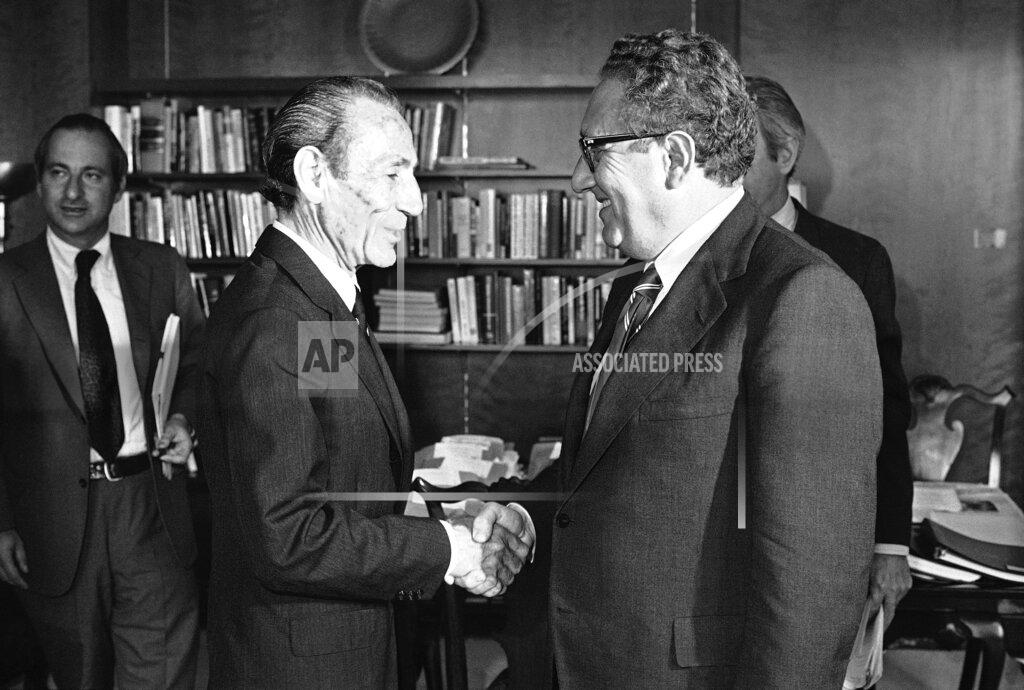
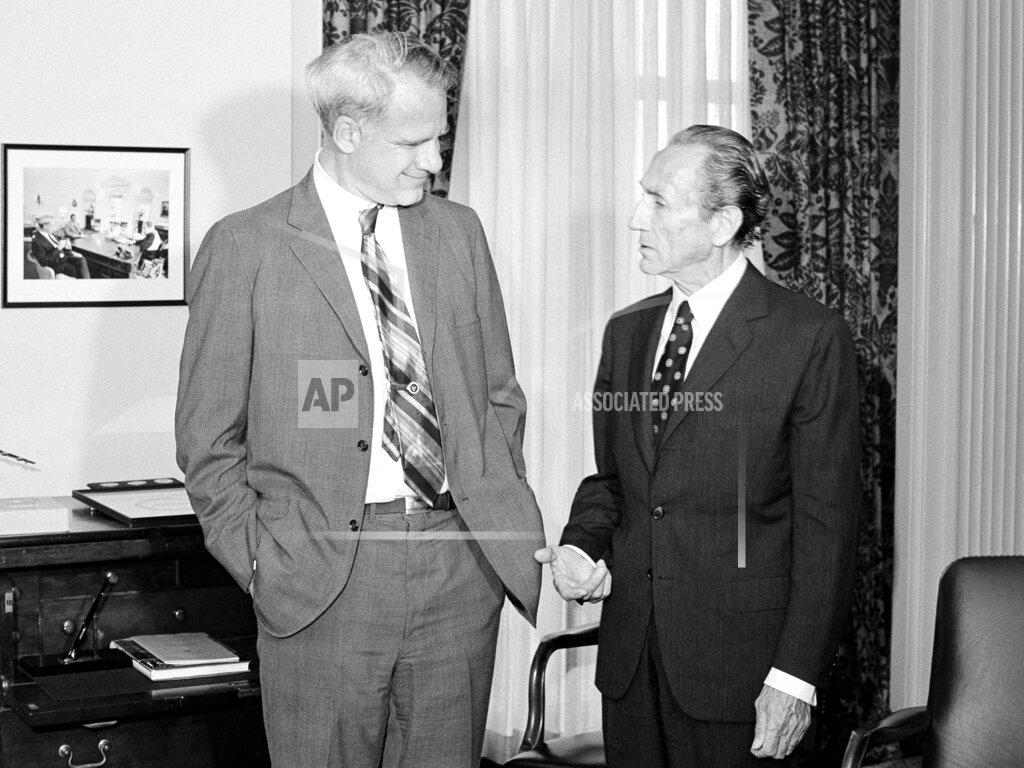
Nixon administration officials disclosed that Secretary of State Kissinger, without informing Congress, made at least two secret arrangements with Soviet leaders in 1972 on the number of strategic missiles on each side. The failure to notify Congress may be a violation of the Arms Control and Disarmament Act of 1961. The secret arrangements concerned the interim agreement, expiring in 1977, that mutually limits offensive nuclear missile launchers. It does not concern the treaty, signed in Moscow at the same time in May, 1972, that restricted defensive missile systems. Mr. Kissinger, according to sources, gave private assurances to Soviet officials that the United States did not intend to build the maximum number of missile launchers permitted by the interim agreement. Secondly, Mr. Kissinger agreed that the Russians, by putting modern missile launchers into old submarines, could if they chose exceed the number that Congress had been led to believe was permissible under the interim agreement.
This second arrangement was disclosed to a Senate committee yesterday in closed session, Congressional sources said by Paul H. Nitze, who resigned last week as a member of the American negotiating team for the arms talks. The Congress, however, has yet to be informed of the first arrangement. This came out only when Government officials were questioned about the second matter. Senator Henry M. Jackson, Democrat of Washington and chairman of the subcommittee, said later today, “I don’t think it will upset the balance of power, but the numbers represent a substantial alteration of the agreement as represented to the Congress.”
Jewish activists were reportedly rounded up in Moscow by Soviet authorities in an apparent attempt to forestall any demonstrations during President Nixon’s visit to the Soviet Union next week. More than 30 people, some of them well-known scientists, were arrested in Moscow and other Soviet cities, Jewish sources said. In at least two cases the police smashed down apartment doors to make the arrests. Other Jews have reportedly blockaded themselves in their apartments or have gone into hiding, among them one who escaped across roofs. Still other Jews have been summoned by the authorities and warned of criminal prosecution or have been beaten up, the sources reported. “In Moscow there’s a real hype on for Jews,” asserted Aleksandr Goldfarb, a 27‐year‐old biochemist who said he had evaded several police traps. “We are on the run. We are under siege. It is not a very pleasant feeling to hide away like a rat.”
Strikes by hundreds of thousands of British workers disrupted production at numerous companies, including the British Leyland Motor Corporation and the General Electric Company, as the government reported another big increase in retail prices for May. Workers are seeking wage increases to offset the rise in the cost of living. Workers are seeking rises in wages to offset the increase in the cost of living, which amounted to 1.4 per cent in May and a postwar record of 16 per cent in the 12 months through May, as measured by the retail price index in the report issued today.
In a separate labor dispute, strikes halted publication of The Times of London, The Financial Times and The Daily Mirror for two days. A settlement tonight came too late to affect numerous local newspapers outside London and some magazines, including Radio Times, the leading guide to all programs of the British Broadcasting Corporation. The general air of turmoil and uncertainty over the economic outlook caused the stock market to weaken anew. Prices on the London Stock Exchange, which had fallen to a 12‐year low on Tuesday, touched a 15‐year low today. The British pound also weakened against the United States dollar.
A series of defeats in Parliament for Britain’s three-month-old Labor government appears to have renewed speculation about the date of a new general election. Most politicians predict that the next voting will be in late September or early October. Two Labor party Members of Parliament returned to a dinner party on Wednesday night after slipping out to vote in the House of Commons for a Government proposal. They left the House before the final tally and earned only later that the Labor Government had suffered its first major defeat since the election last February. There was no gloom. As they saw it, the Labor party needed some defeats in Parliament, if only to help justify another election sometime this year. Laborites hope to win an outright majority in the Commons and to end Prime Minister Wilson’s uncertain term as leader of Britain’s first minority Government in 45 years. “If we won every vote in the Commons, how could we convince the voters that they have to go through another election campaign?” one politician asked. “It’s probably much better if we lose a few.”
The present Italian crisis has been the worst since World War II. The economy remains on the brink of collapse; the system of law and order has broken down; the curious formula of administering the state with a nongovernment or, in fact, virtually without government has reached a dead end; and the tentative groping for compromise between the two main ideological groups, Catholics and Communists, has ceased. The result is a continuing possibility of financial disaster and social disorder with a lame‐duck regime floundering. It is unlikely the population would ever tolerate a Communist regime, even if legally produced. It is equally unlikely it would accept a dictatorship, either fascist or military. Nor is any compromise such as Italian Gaullism possible. Italy has no de Gaulle.
24th Berlin International Film Festival: “The Apprenticeship of Duddy Kravitz” wins the Golden Bear.
Stripped to their underwear, four soldiers cannonballed off the gnarled wreckage of the bridge into the flat, clean water of the Thạch Hãn River. Their laughter wafted across the river, where two Việt Cộng soldiers — the enemy — were squatting at the water’s edge, washing. At 11:30 AM, as it does every day, a loudspeaker on the opposite bank began squawking a broadcast from Liberation Radio. “It’s a very headachy noise,” said a young marine captain. “Yesterday, they had a special broadcast about a visiting Russian troupe.” The only fighting that goes on at this northernmost front of South Vietnam is oral. At night the two sides swap insults. Soldiers on this side, say that then the Communists quickly descend into extremely earthy obscenities.
Military Region I is the quietest of South Vietnam’s four military regions. In the provinces of Quảng Trị and Thừa Thiên, the cease‐fire is almost a reality. Government-held Quảng Trị is the only part of the country where people drive on the roads deep into the night. Several reasons are given for the relative peacefulness of the northern part of Military Region I. Here two regular armies face each other across clear boundaries. Cease‐fire cheating is difficult. The South Vietnamese have their three best divisions in Quảng Trị and Thừa Thiên — the Marines, the Airborne and the First Division — and some people believe that the Communists prefer to let these combat outfits stay idle rather than hone them in battle.
Defense Minister Shimon Peres called on Lebanon tonight to act against Palestinian guerrilla organizations to stop them from raiding Israel. “This is the 11th hour and Israel demands that Lebanon take constructive steps toward sealing her frontier with Israel against the passage of terrorists setting out to commit murderous, acts,” Mr. Peres said on Israeli television. His plea followed an Israeli announcement that her United Nations representative had been instructed to protest immediately to the United Nations Security Council against Lebanon for allowing “an independent rule of murder and sabotage” to operate from her territory. Israel’s protest note followed Israeli air raids yesterday on guerrilla bases in Lebanon, centered mainly on the ancient Mediterranean ports of Tyre and Saida.
President Anwar el‐Sadat called on President Nixon today to take a “firm stand against Israel’s repeated aggressions on Lebanon,” the newspaper Al Akhbar reported today. The independent Cairo daily said Mr. Nixon had replied to Mr. Sadat that his message had been received with “due attention in Washington.”
A clash between Arab countries and Israel today threatened to disrupt the United Nations conference in Caracas, Venezuela that is seeking to draft a treaty governing use of the oceans. Arab diplomats said that they planned to ask the Third United Nations Conference on the Law of the Sea to admit the Palestine Liberation Organization as an official observer. A spokesman for the Israeli delegation said any such attempt would be vigorously contested. “This is a conference dealing with the sea,” he said “It’s inconceivable that a terrorism movement which throughout its existence has used the weapons of indiscriminate murder, atrocity and sabotage in pursuit of its objectives should be permitted to take part in the conference and say how governments should conduct themselves.”
Slightly more than 20 years after the landmark U.S. Supreme Court decision in Brown v. Board of Education, finding that de jure racial segregation of public schools was unconstitutional, U.S. District Judge W. Arthur Garrity held that the northeastern U.S. city of Boston, Massachusetts, had made an unconstitutional practice of de facto racial segregation of its schools, with 82% of Boston’s black students in majority black schools. The ruling came in the case of Morgan v. Hennigan, filed in 1972 by the NAACP on behalf of 14 African-American families whose children were unable to attend predominantly white schools because of school zoning. Issuing his ruling on the last day of school in Boston, Judge Garrity ordered that Boston would need to desegregate its schools by busing children from black school districts to mostly white schools, and children from white districts to predominantly black schools. In a specific decision, Judge Garrity ordered that the classes of the mostly white South Boston High School would be integrated with the nearly all black Roxbury High School, with half of the sophomore class of each school to attend the other.
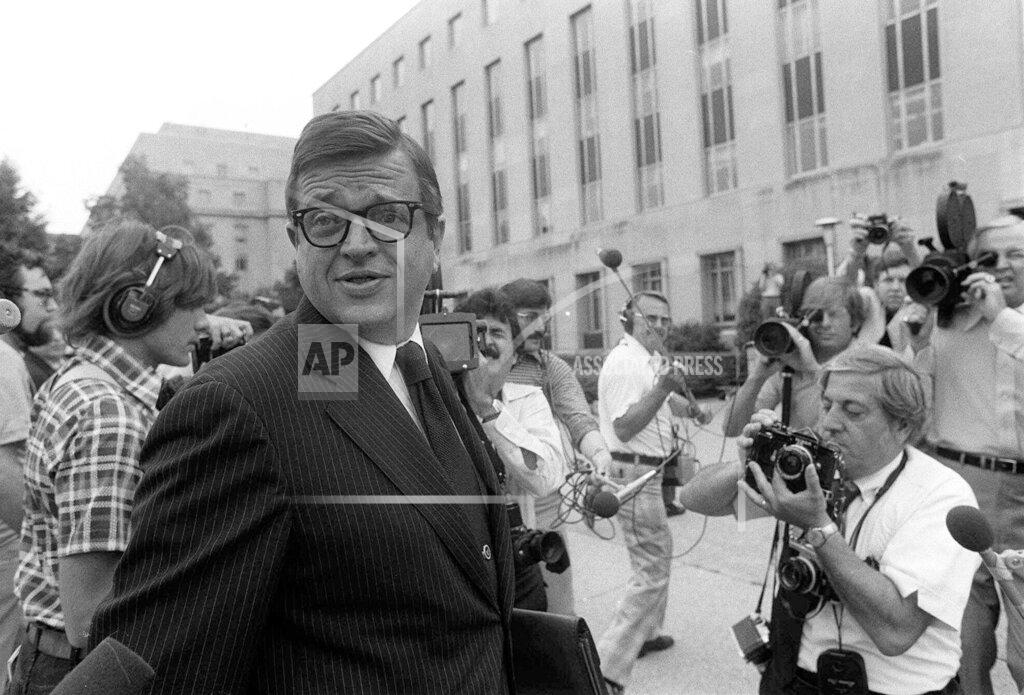
Charles Colson, a former close presidential aide who pleaded guilty June 3 to a felony count of obstruction of justice, was sentenced to one to three years in prison. He told Judge Gerhard Gesell in the Federal District Court in Washington that President Nixon had urged him “on numerous occasions” to commit the acts for which he was being jailed. Mr. Colson’s allegation against the President came as he expressed regret and contrition to Judge Gerhard A. Gesell in United States District Court for his role in disseminating derogatory material about, Dr. Daniel Ellsberg and his attorneys in 1971. In a surprise move, he pleaded guilty June 3 to a felony count of obstruction of justice.
Members of the House Judiciary Committee said that Mr. Colson’s courtroom statement implicating President Nixon in possible obstruction of justice made it imperative to call Mr. Colson as a witness at impeachment hearings. Mr. Colson, a former White House special counsel, told United States District Judge Gerhard A. Gesell that the President had repeatedly “urged” him to disseminate information that might discredit Dr. Daniel Ellsberg while Dr. Ellsberg was a defendant in the Pentagon papers conspiracy, trial. Committee members said that if Mr. Colson’s statement was correct, Mr. Nixon might be legally accountable as a party to obstruction of justice, the charge to which Mr. Colson pleaded guilty.
The Watergate special prosecution decided that at least 26 persons, ranging from President Nixon to the Watergate burglars, conspired to cover up the Watergate break-in, a number of sources said. Seven of the alleged conspirators have been indicted. Today, the sources said, the prosecution gave defense counsel in the cover-up case a list of 19 unindicted co-conspirators.
In legal briefs filed with the Supreme Court, President Nixon’s Watergate lawyers accused the Watergate special prosecutor, Leon Jaworski, of interweaving the Watergate criminal prosecutions and congressional impeachment proceedings in a way that was “manifestly unfair” to Mr. Nixon. In legal briefs filed with the Supreme Court, the President’s lawyers charged that if they surrendered 64 more tape recordings to the special Watergate prosecutor for trial evidence the House Judiciary Committee would, as a result, get fresh information that it could not otherwise obtain.
Countering in his own written argument to the Justices, Mr. Jaworski conceded that the evidence he sought was involved in impeachment as well as pending criminal prosecutions but said this only strengthened his case. “The President, the prosecutor maintained, “cannot be a proper judge of whether the greater public interest lies in disclosing evidence subpoenaed for trial when that evidence may have a material hearing on whether he is impeached and will bear heavily on the guilt or innocence of close aides and trusted advisers.”
The Federal Power Commission authorized a large increase in the ceiling price of natural gas sold in interstate commerce on the ground that a “national energy emergency” exists and will continue. The new national ceiling of 42 cents a thousand cubic feet, plus a cent-a-year escalation, unless blocked by the courts, will bring about a gradual, cumulative rise in the average cost of gas to interstate pipelines, local distribution companies and consumers.
The Labor Department reported consumer prices resumed their rapid rise last month after some moderation in April. Food prices, except meat, rose and the Consumer Price Index climbed 1.1 percent both before and after adjustment for normal seasonal changes in some prices.
The House of Representatives passed tonight a $13.4‐billion appropriations bill for agriculture environmental and consumer protection programs, but cut back on food funds for Southeast Asia and‐dropped college students from the food stamp program. The moves were made as the House, by a vote of 278 to 16, passed the omnibus bill and sent it on to the Senate. Under the bill’s terms, food for peace funds for South Vietnam and Cambodia would be reduced from the current level of $363‐million to $85‐million. Passage came after almost 10 hours of debate on dozens of amendments during a boisterous session. The amendment generating much of the attention would, starting next month, deny food stamps to students “enrolled in an institute of higher learning” who are both 18 years old and dependent children of parents not eligible for the food stamp program.
The Senate approved a landmark bill today giving Congress new machinery for dealing with the Federal budget and deciding how to spend the money. The bill, which passed, 75 to 0, now goes to President Nixon, who is expected to sign it even though it would limit his power to impound, or refuse to spend, money appropriated by Congress. “No problem,” Senator Charles H. Percy of Illinois, the Republican floor manager of the bill, said when asked about prospects for a Presidential signature or veto. Mr. Percy said he talked this morning with Kenneth Rush, counselor to the President for economic affairs, and that the “only question” was whether Mr. Nixon would have a public ceremony when he signed the Measure.
Once a sleepy little city in the heart of Connecticut’s affluent Gold Coast, Stamford is now hard at work recreating the urban dream. And Stamford, close enough to New York to reap its big. city benefits and far enough away to escape its big‐city problems, is reveling in its newly found position of eminence. The state’s Southwestern Regional Planning Agency, in its 1974 report on the future of the area, forecasts that Stamford will soon be the business, shopping and cultural center for much of the region north of the Bronx, competing only with White Plains. Stamford has persistent big‐city problems, like housing, unemployment, poverty, crime and drugs, but on a miniature scale, compared with Hartford, New Haven or Newark.
The Atlanta Braves fire manager Eddie Mathews, the only man to play for the Braves in Boston, Milwaukee, and Atlanta. Clyde King is hired to replace him.
The Chicago White Sox pound the host Minnesota Twins, 11–7, as Ken Henderson hits a pair of homers and tallies 6 RBIs and Carlos May has 5 hits. The Sox collect 21 hits, their high for the year.
The Texas Rangers swept a doubleheader with the California Angels, winning 12–3 and 6–2. California scored two runs in the first inning of the first game, and then Texas went wild. In the opener, the Rangers pounded out a club record of 19 hits, five of them by Len Randle and two others homers by Toby Harrah. In the second game, Jeff Burroughs drove in the go‐ahead run with a sacrifice fly in the fourth inning, raising his league‐leading total of runs batted in to 59.
“The Mets are streaking, baby!” So sounded the joy in the Mets locker room tonight after they had beaten the Philadelphia Phillies, 3–1, on three home runs, two by John Milner and one by Rusty Staub. The victory, the second in a row, helped New York jab its needle a little farther into the first‐place Phils’ bubble. Three games are lift in the series.
Ted Simmons drove in three runs with a pair of clutch singles as St. Louis beat the Montreal Expos, 5–1, and moved within a half game of first‐place Philadelphia in the East. Sonny Siebert got the victory for the Cardinals, his seventh against four defeats.
Dow Jones Industrial Average: 815.39 (-5.40, -0.66%).
Born:
Rob Kelly, NFL safety (New Orleans Saints), in Newark, Ohio.
Sean Runyan, MLB pitcher (Detroit Tigers), in Fort Smith, Arkansas.
Craig Lowndes, Australian racing driver (V8 Supercar Champion), in Melbourne, Victoria, Australia.
Susie Hopson-Shelton, WNBA forward (Charlotte Sting), in Burnsville, North Carolina.
Natasha Desborough, British radio personality, in London, England, United Kingdom.
Neely Jenkins, American indie rocker (Tilley and the Wall), in Omaha, Nebraska.

 History Diaries