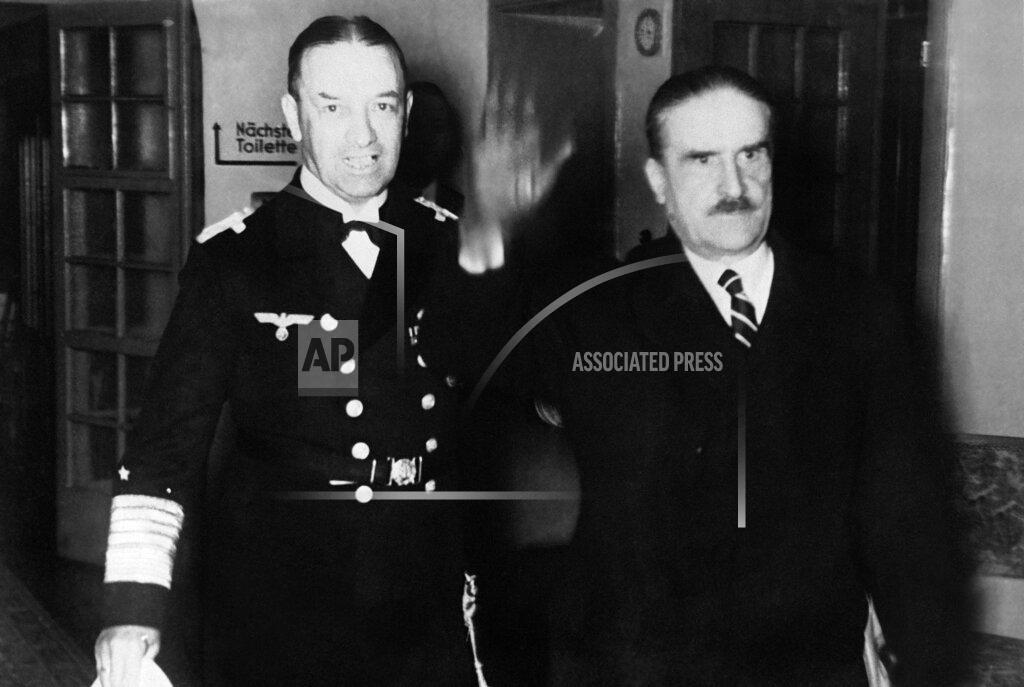
The SS Heimwehr Danzig was formed. The III Battalion of the 4th Company of the SS-Totenkopfstandarte Ostmark was smuggled into the Free State from Koenigsburg and Elbling with the men in civilian clothes. The unit got the name SS Heimwehr Danzig in July 1939 and became part of the SS-Totenkopfstandarte Ostmark with units stationed in Bischofsbergkaserne barracks and a school in Danzig. After receiving anti-tank and anti-aircraft unit reinforcements from Germany it reached full strength of around 1,550 soldiers on 18 August 1939 when it openly paraded in the Free City saluted by Gauleiter Albert Forster.
On 1 September 1939 in the aggression against Poland, most of the unit was sent south to Tczew in the attempt to capture the Vistula bridges. However, units also attacked the Polish Post Office in the Free City. The defenders of the Polish Post Office, armed only with armed with pistols, rifles, light machine guns and grenades held out for 15 hours even though the attackers were able to call on ADGZ armored cars as well as 75mm and 105mm artillery. It participated in a number of crimes, the most serious being on 8 September 1939 when between 33 and 130 people living in the village of Książki were murdered. The unit was disbanded on 29 September 1939 and the following day it was incorporated into the 3rd SS Panzer Division Totenkopf, forming the cadre of its artillery regiment. The commanding officer Goetze was killed in action aged 42 near Le Paradis in France on 27 May 1940, the death of whom was followed by the murder of British POWs.
General Walther von Brauchitsch issues a directive ordering cooperation between the Wehrmacht and the Waffen-SS (SS-Verfuegungstruppen).
Professor Eugen Fischer, of the Frederick William University of Berlin, and formerly head of the Kaiser Wilhelm Institute for Anthropology, Human Heredity, and Eugenics, says in a lecture: “When a people want, somehow or other, to preserve its own nature, it must reject alien racial elements, and when these have already insinuated themselves, it must suppress them and eliminate them. The Jew is such an alien and, therefore, when he wants to insinuate himself, he must be warded off. This is self-defense. In saying this, I do not characterize every Jew as inferior, as Negroes are, and I do not underestimate the greatest enemy with whom we have to fight. But I reject Jewry with every means in my power, and without reserve, in order to preserve the hereditary endowment of my people.”
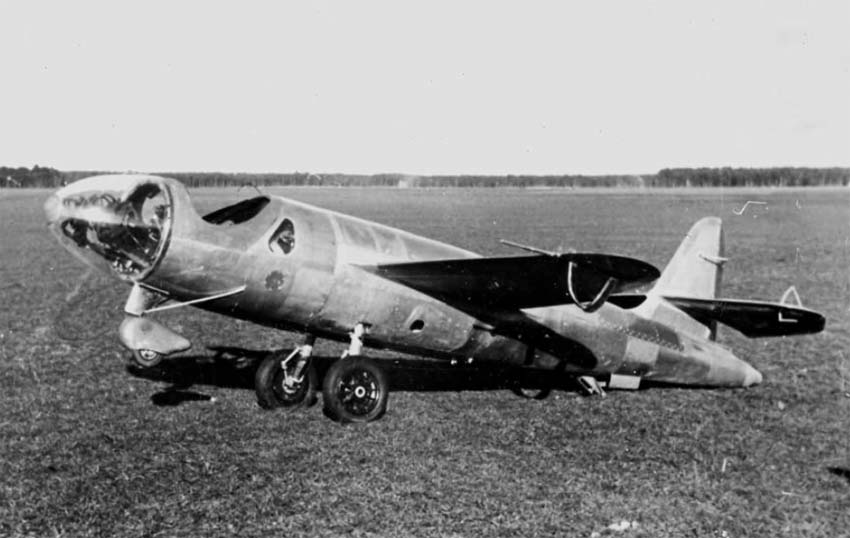
The German Luftwaffe’s Heinkel He 176 rocket plane, the first aircraft powered solely by a liquid-propellant rocket, made its first flight at Peenemünde, Germany with Erich Warsitz at controls.
The German-Russian trade negotiations conducted intermittently since February, which involve a new German trade credit to Russia of several hundred million marks, have now progressed sufficiently for the German Government to begin the organization of a trade delegation. It is scheduled to leave for Moscow within ten days.
These trade negotiations and especially the trade credit, which may exceed 300,000,000 marks and thus bring the total outstanding German credit to Russia to 500,000,000, have been Germany’s main card with which she has attempted to “appease” Joseph Stalin and thereby perchance torpedo the Anglo-Russian alliance negotiations for a “peace front,” which the Germans denounce as “encirclement.” In line with this effort, German quarters let it be known today that while the trade delegation was being organized it was not yet quite certain whether it would actually leave for Moscow because that would depend on future developments to be ascertained by Count Friedrich von der Schulenburg, the German Ambassador, when he returns to Moscow in a few days.
Hungarian Nazis say they were forced to sign suicide notes in case they are “liquidated” after betraying secrets.
France and Spain move toward an accord. The envoys of both nations say no Axis pact has been made.
In an effort to convince voters that no one will be allowed to make inordinate profits from Great Britain’s present danger, the British Government today announced the imposition of a 60 per cent tax on excess profits of companies receiving more than £200,000 worth of rearmament orders in any year. The White Paper containing this proposal is to be embodied in the Finance Bill now before the House of Commons.
On paper at least the new tax represented the most ambitious attempt ever made in peacetime to limit the profits of armament manufacturers. It was all the more striking because it was being imposed by an overwhelmingly Conservative government, one headed by a businessman, which represents businessmen and which in the past, has resisted every attempt to expose and control the activities of the armament industry.
The new tax will apply for three years, and not only to companies manufacturing actual armaments and machines or supplies needed to make them, but also to an even larger number of companies making “equipment, appliances and materials” for protecting the civilian population against air raids. Whether it will really be effective was a question no one could answer with any confidence tonight. Apparently, the government had no accurate idea what the annual yield would be.
The French negotiations with Turkey are drawing to a close. The Turks during these discussions have taken the view that even the cultural institutions that France has maintained for many generations in Turkey cannot be continued as they have the appearance of special privilege prejudicial to full national independence. With much reluctance because of the long tradition of the interests involved, the French appear to have met the Turkish views fully and it is expected the treaty will be ready for signature by the end of this week.
The last customs barrier between Turkey and Hatay was abolished today in apparent preparation for annexation of the Republic by Turkey. A large military review is to be held July 5 commemorating the entry of Turkish troops a year ago to begin joint administration of the area with French troops.
The Axis backs Arabs in their freedom quest. The German foreign office announces its determination to support Near East peoples.
Today in Washington, President Roosevelt conferred with Mayor La Guardia on the proposed Battery-Brooklyn bridge, with former Attorney General Cummings on the political situation, and with Governor Stark of Missouri on the recent drive on corruption in Kansas City. He vetoed a bill extending the time for starting and finishing the Niagara Falls bridge. At a press conference he announced a second postponement of his Western trip, made plain his desire for passage of neutrality legislation before adjournment of Congress and declined to answer directly a question whether he would be a candidate for re-election in 1940.
The Senate considered the bill for continuing the stabilization fund and the President’s dollar-devaluation powers and recessed at 4:45 PM until 11 AM tomorrow. The Library Committee approved the nomination of Archibald MacLeish to be Librarian of Congress and the Finance Committee approved, with minor amendments, the tax bill passed by the House.
The House adopted the conference report on the War Department Civil Functions Appropriation Bill, sent to conference the bill extending the Connally Hot Oil Act until June 30, 1942, and adjourned at 3:55 PM until noon tomorrow. The Ways and Means Committee agreed to start hearings on June 28 on proposals for taxing government securities.
President Roosevelt repeated at his press conference today his desire for Congressional action on the Administration’s “cash-and-carry” neutrality plans before the summer adjournment. If Congress went home without acting on the amendments and a war broke out, he remarked, it would be difficult to pass a bill without having it said that this government was favoring one side or the other.
With this utterance, Mr. Roosevelt coupled an endorsement of the Bloom resolution to give effect to the Administration-sponsored amendments. They would clothe him with discretionary powers over shipments of arms and munitions in the event of a foreign war. Enactment of the measure, he said, would go a long way toward increasing this nation’s influence for peace.
President Roosevelt had been asked whether he was insisting on Congressional action on the neutrality amendments at the present session. He explained first his opinion of the difficulty of amending the present law after a war had broken out, and the charges. of favoritism that would arise. Then he added that for the sake of Congress itself it would be much better to insure against that dilemma.
The first direct attempt at a press conference in more than a year to “smoke out” President Roosevelt on the third term question failed again today when he refused to answer the question of whether he would be a candidate for re-election next year. He told the questioner to go stand in a corner. The reply was only a slight variation of his original answer to a similar question as to whether he would accept the Democratic Presidential nomination again if it were proffered. At that time he told the inquiring reporter to put on a dunce cap and go stand in the corner.
A week ago, a half-hearted effort was made to elicit from the President his attitude on the subject with a request for comment on an article by Secretary Ickes in a picture magazine. The Secretary proposed the nomination of Mr. Roosevelt for a third term. But Mr. Roosevelt evaded that one easily with the remark he had only read the headlines. When asked the direct question today the President remarked that some commentators had attached undue significance to his omission of the rebuke a week ago, so he was reviving it. Newspaper columnists had inferred that because the rebuke was omitted the third term subject was less objectionable to him now than formerly.
Told a week ago that various politicians had been leaving the Executive Office after conferring with him and were issuing statements that he should seek renomination, the President remarked that he was not responsible for statements issued from the White. House steps. The subject came up again today when Mr. Roosevelt was asked about his discussion with Mayor La Guardia, who visited him briefly. The President replied that a lot of things had been discussed. He conceded that a New York bridge project which the mayor was advocating had figured in the conversation.
Then the President was asked, specifically, whether “politics” was discussed with Mr. La Guardia. He smiled broadly, and his reply, to the effect that Washington was getting into the hot season, was given with a groan. “Do you mean the question about politics?” the President was asked. He said he did not, and that he was referring only to the weather. At this point Mr. Roosevelt was asked whether he would be a candidate for re-election in 1940. A pin would have dropped with a resounding thud as correspondents awaited the reply. But they went away no wiser than they had come.
Former U.S. federal judge Martin Thomas Manton was sentenced to two years in prison and fined $10,000 for accepting bribes.
When the Senate Appropriations Committee began its hearings today on the $1,735,000,000 relief bill, as passed by the House, it was confronted by a group of theatre headliners led by Tallulah Bankhead, who mingled serious appeals for restoration of theatre projects with comic interludes involving the Bankhead family.
In the background hovered Senator Pepper, who marshaled the theatre group as leader of a Senate movement to keep the WPA theatre projects from being dropped June 30. The House bill provides no funds to continue the projects. Mayor La Guardia, who was in Washington on business at the War Department, dropped in at the committee quarters and stayed long enough to say that limitations in the House bill would badly restrict WPA operations. Much of the day the committee plodded through the House bill in executive session, with Colonel F. C. Harrington, WPA Administrator, as consulting witness.
Miss Bankhead arrived in Washington with a handful of equally well-known stars, but she had the publicity advantage of having, for her father, the Speaker of the House, and for an uncle, Senator Bankhead.
The monetary bill before the Senate, designed to continue for two years after June 30 President Roosevelt’s authority to devalue the dollar and to operate the Stabilization Fund, ran today into a movement giving every indication of a filibuster organized to force the Treasury to pay a higher price for domestic silver. Whether a filibuster actually would develop was debatable, but Senate leaders were certain one way to stop it would be for the Treasury to increase the price of silver from the current level of 64 cents to about 77 cents.
The fight has not reached the floor of the Senate, but Senator McCarran of Nevada, one of the leaders of the silver bloc, thrice blocked efforts by Senator Barkley, the majority leader, to obtain an agreement to vote or an amendment by Senator Adams which would have cleared the way for consideration of an inflation and silver amendment by Senators Thomas of Oklahoma and McCarran. How serious the filibuster threat I might be was not apparent tonight for the reason that for two hours at the end of the session Senator Reynolds held the floor to restate his objections to admission of refugee children to this country. However, Senator Barkley summoned the Senate to meet tomorrow at 11 AM, instead of at noon, the customary hour.
Joe Vosmik ruined Rookie right-hander Harry Kimberlin’s first start as a major leaguer today by giving a perfect performance at the plate as the Boston Red Sox defeated the St. Louis Browns, 8–1. Vosmik went four for four, including two consecutive triples, scored two runs and drove in three more.
The New York Yankees pound out 19 hits and rout the Chicago White Sox, 13–3. Monte Pearson gets his sixth win of the year.
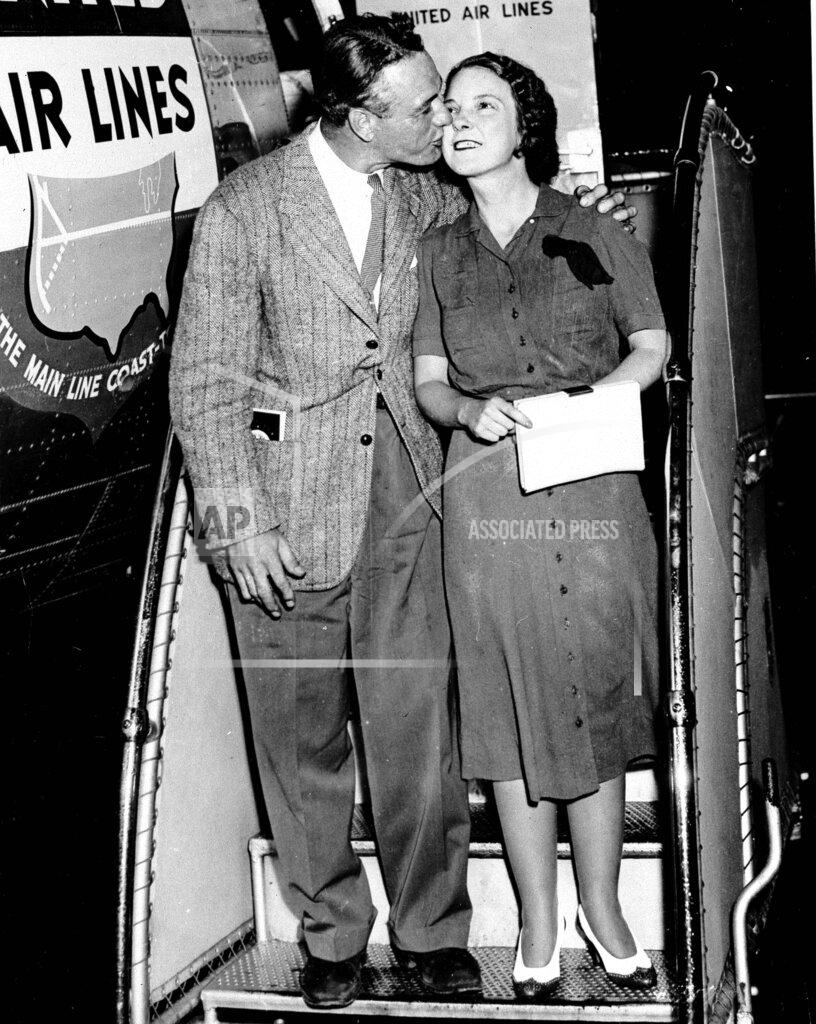
Lou Gehrig, ailing first baseman of the Yankees, arrived at the Newark Airport from Chicago tonight, after having spent a week at the Mayo Clinic in Rochester, Minnesota, undergoing a thorough physical examination. Gehrig, who refused to comment on the findings of the Mayo doctors, arrived on a United Air Lines plane at 8:30 PM. He was met at the field by his wife, who said that they would drive tonight to their home in Larchmont, New York.
Gehrig, who has been out of the Yankee line-up for some time, said that the treatment at the Rochester clinic was “the most marvelous. thing I have ever seen.” He added that he was certain that he had been given a most thorough checkup. “I’ve got the envelope with the report on my physical condition in my pocket,” he told reporters, “But I am not going to reveal its contents now. I intend giving the report tomorrow to Manager McCarthy, and I imagine he will release its contents.” Gehrig refused to say whether the report was favorable or unfavorable.
King George and Queen Elizabeth had smooth sailing tonight as their gleaming white liner, convoyed by her cruiser escort, ended her third day on the Atlantic and steamed eastward only thirty hours from the chalk cliffs of England. The royal couple, taking advantage of fine weather, joined members of their party in cricket practice during the afternoon. The royal party was completely recuperated from its strenuous month-long tour of Canada and part of the United States.
Japanese military authorities erected a live wire barricade around the British and French concessions in Tientsin. Japan tightened their blockade of British and French concessions in Tientsin, China, by adding electrified wires to the situation. There were many reports (but not confirmed) of Chinese food vendors being shot are bayoneted by Japanese guards at the concession boundaries. Lines carrying 1,000 volts of electricity isolated the British and French Concessions today, threatening possible death to any who dared try to slip past Japanese sentries. The Japanese who established their military blockade last Wednesday whipped high tension wires around the concessions late last night. The action contrasted sharply with a Foreign Office statement in Tokyo expressing hope for prompt settlement of the Tientsin dispute.
There were many reports-which officials could not confirm-that Chinese food vendors had been shot or bayoneted by Japanese guards at the concession boundaries. The electric barricade was directed primarily at those Chinese trying to smuggle in food. A spokesman for the British said they were ready “to fight it out,” but had arranged that women and children should go tomorrow to Chinwangtao and Peitaiho, coastal resorts farther north, to relieve the demand for water and food, because of the excessive heat, and because normally many of them go there in the Summer. The seasonal transfer had been interrupted by the blockade.
Some fresh food was entering the concessions, but not enough. The danger of a shortage of water also loomed. The dispute between the Japanese and British evolved from Japanese demands for the surrender of four Chinese suspected of terrorism. The British refused, but suggested an investigation to determine whether evidence warranted prosecuting the Chinese. From this has evolved a far more serious dispute, including a demand by the Japanese for “cooperation” with the “new order in East Asia” (as against Generalissimo Chiang Kai-shek’s régime) and involving the rights of foreign nations in China.
A Japanese military spokesman today called the British concession a “branch office of the Chungking (Chiang) Government,” and warned other governments not to aid the British in any economic reprisals that London might adopt. The spokesman charged that Britain was trying to get the United States to “snatch her chestnuts out of the Far Eastern fire” and that Britain was spreading false propaganda that all foreign rights were endangered by the blockade.
Japanese “courteously informed” United States officials of the blockade and were endeavoring to avoid inconveniences to Americans and other third-power nationals, he declared, adding, however: “If British propaganda is successful in bringing widespread economic reprisals against the Japanese for the blockade, then local Japanese military authorities would consider that such action automatically released them from obligations to protect foreign rights in China.”
Britain began evacuating 1,000 women and children from the Tientsin concessions preparatory to “and indefinite period of resistance” against Japan’s blockade. The men remaining had been requested to refrain as much as possible from passing through Japanese barriers to avoid confrontation.
Dow Jones Industrial Average: 137.57 (+1.17).
Born:
Countess Ludmilla von Galen, daughter of Christoph Bernhard von Galen, in Haus Assen, Lippetal, Germany.
Bob McCreary, NFL tackle (Dallas Cowboys), in Lenoir, North Carolina.
Naval Construction:
The U.S. Navy Curtiss-class seaplane tender USS Albemarle (AV-5) is laid down by the New York Shipbuilding Corp. (Camden, New Jersey, U.S.A.).
The Kriegsmarine (German Navy) Type 1936 destroyer Z21 Wilhelm Heidkamp is commissioned.
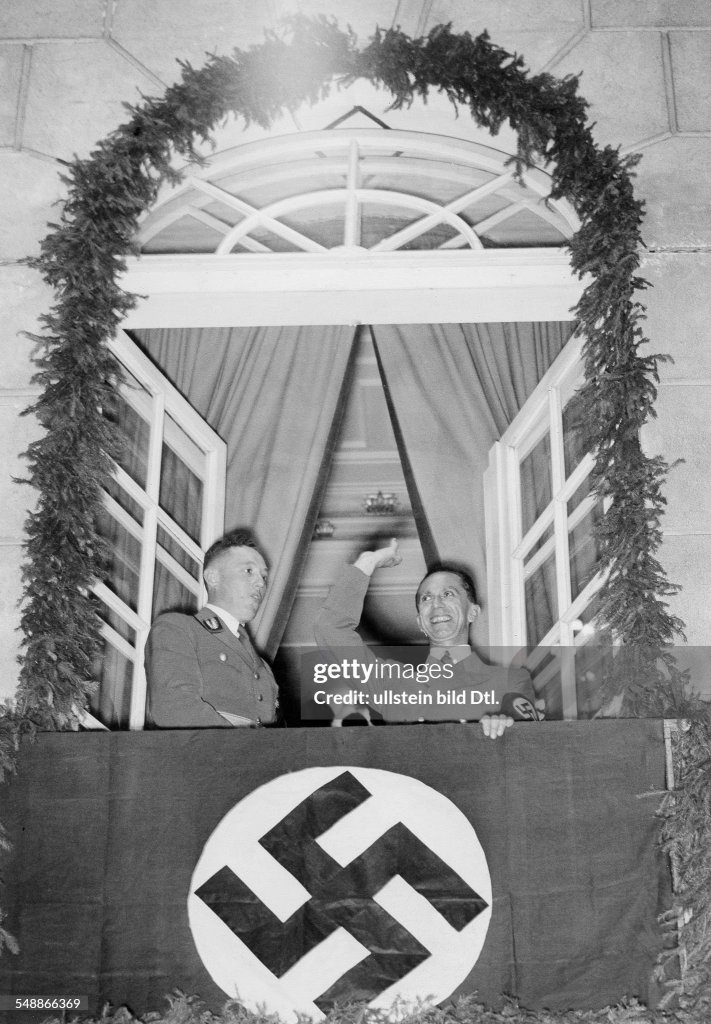
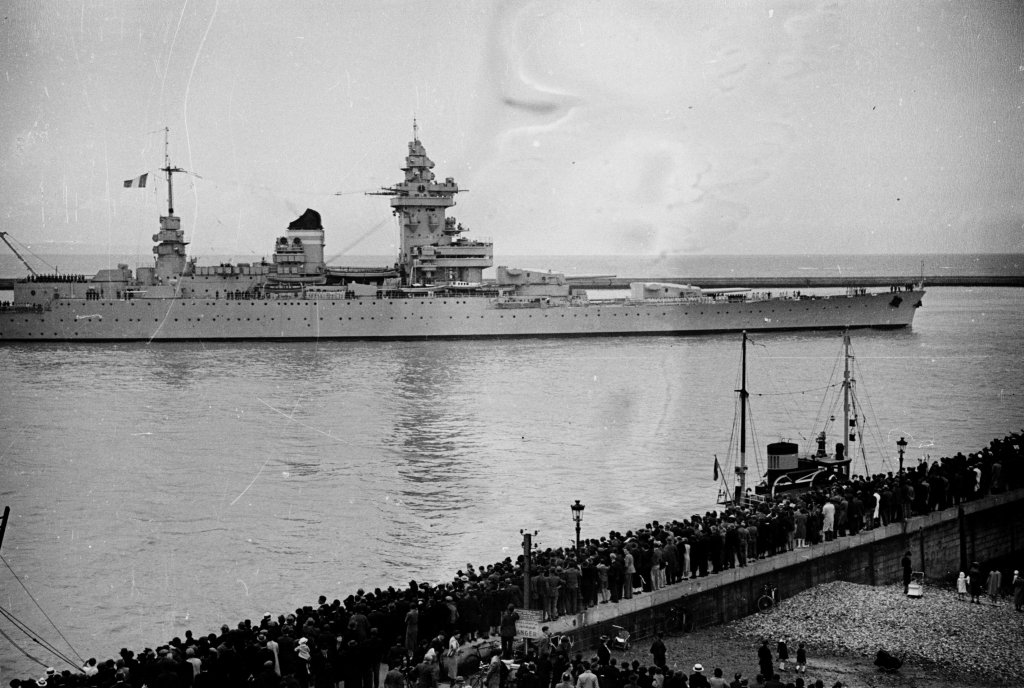
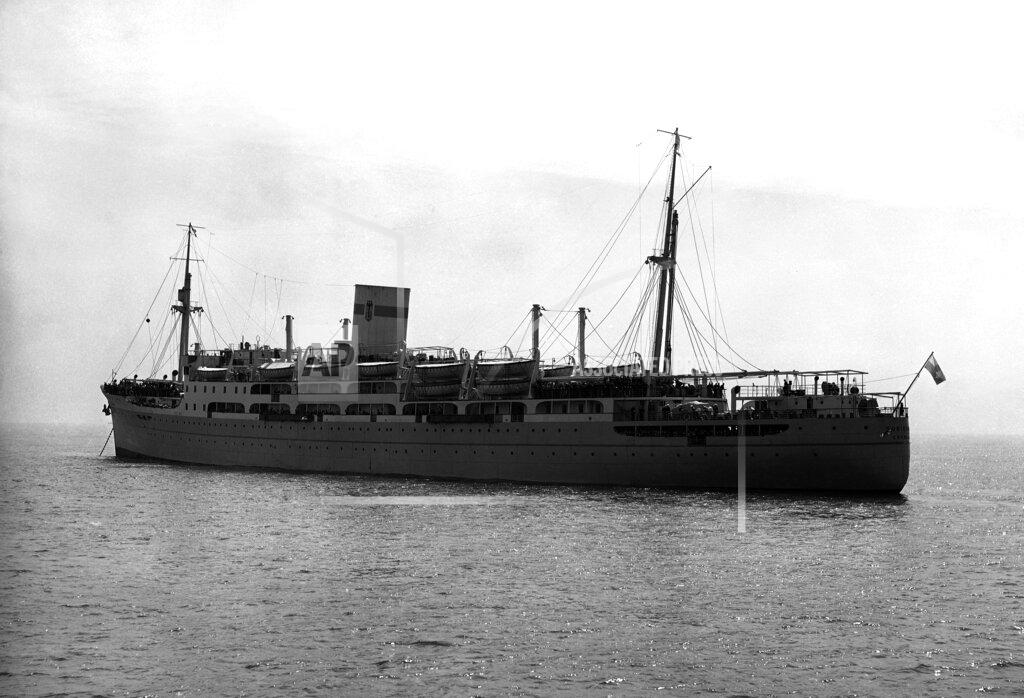

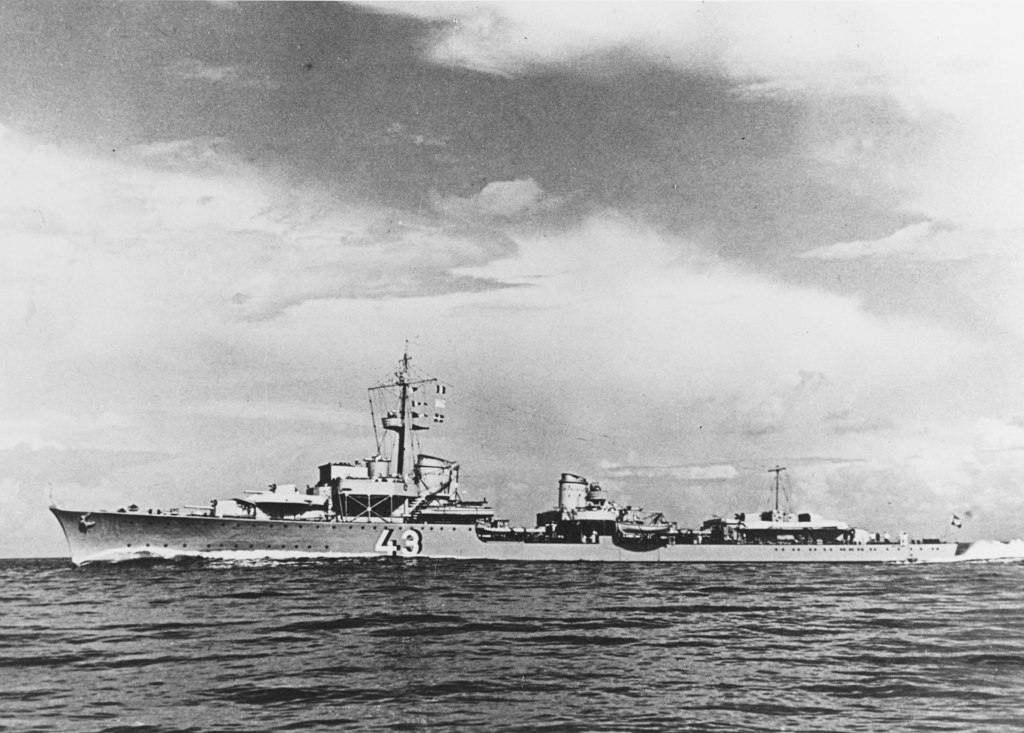
After working up, Z21 Wilhelm Heidkamp became the flagship of the Commander of Torpedo Boats (Führer der Torpedoboote) Rear Admiral (Konteradmiral) Günther Lütjens and patrolled the Skagerrak to inspect neutral shipping for contraband goods in late September.
On the night of 17/18 October, the ship led Z16 Friedrich Eckoldt, Z17 Diether von Roeder, Z18 Hans Lüdemann, Z19 Hermann Künne, and Z20 Karl Galster as they laid a minefield off the mouth of the River Humber. The British were unaware of the minefield’s existence and lost seven ships totaling 25,825 gross register tons (GRT). On the night of 12/13 November Z21 Wilhelm Heidkamp, now the flagship of the Commander of Destroyers (Führer der Zerstörer), Captain (Kapitän zur See) Friedrich Bonte, escorted Z18 Hans Lüdemann, Z19 Hermann Künne, and Z20 Karl Galster as they laid 288 magnetic mines in the Thames Estuary. Once again unaware of the minefield’s existence, the British lost the destroyer Blanche and thirteen merchant ships displacing 48,728 GRT. Less than a week later, Z21 Wilhelm Heidkamp, Z19 Hermann Künne, and Z11 Bernd von Arnim laid 180 magnetic mines in the Thames Estuary on the night of 17/18 November. The mines sank the destroyer Gipsy, a fishing trawler, and seven ships of 27,565 GRT.
After a refit in Stettin between 27 November and 24 December, Bonte and Z21 Wilhelm Heidkamp led a minelaying sortie to the Newcastle area together with Z16 Friedrich Eckoldt, Z20 Karl Galster, and Z22 Anton Schmitt on the night of 10/11 January 1940. The destroyers Z14 Friedrich Ihn and Z4 Richard Beitzen were also supposed to participate, but the former had problems with her boilers that reduced her maximum speed to 27 knots (50 km/h; 31 mph) and she had to be escorted back to Germany by the latter ship. The minefield only claimed one fishing trawler of 251 GRT.
In retaliation for the Altmark Incident where the Royal Navy seized captured British sailors from the German tanker Altmark in neutral Norwegian waters on 16 February, the Kriegsmarine organized Operation Nordmark to search for Allied merchant ships in the North Sea as far north as the Shetland Islands. Z20 Karl Galster and Z21 Wilhelm Heidkamp escorted the battleships Scharnhorst and Gneisenau as well as the heavy cruiser Admiral Hipper during the sortie between 18 February and 20 February.
Z21 Wilhelm Heidkamp was the flagship for Group 1, commanded by Commodore (Kommodore) Bonte, for the Norwegian portion of Operation Weserübung in April 1940. The group’s task was to transport the 139th Mountain Infantry Regiment (139. Gebirgsjäger Regiment) and the headquarters of the 3rd Mountain Division (3. Gebirgs-Division) to seize Narvik. The ships began loading troops on 6 April and set sail the next day. On 9 April, Z21 Wilhelm Heidkamp sank the old coastal defense ship Eidsvold with torpedoes after an attempt to get her captain to surrender failed. Afterwards, she landed her troops in Narvik without resistance and then refuelled from the whale factory ship SS Jan Wellem. Bonte intended for his flagship to patrol the fjord during the night, but Brigadier General (Generalmajor) Eduard Dietl, commander of the 3rd Mountain Division, requested that Z21 Wilhelm Heidkamp remain in harbor to ease coordination between the Army (Heer) and the Kriegsmarine and to facilitate communications with his commanders.
Shortly after dawn on 10 April, the ship was moored aft of Jan Wellem, in Narvik harbor, when the five destroyers of the British 2nd Destroyer Flotilla, Hardy, Havock, Hunter, Hotspur, and Hero appeared. Z21 Wilhelm Heidkamp was struck in the stern by a torpedo from Hardy’s first salvo that detonated the ship’s aft magazine. The explosion threw her aft guns into the air and killed 81 men, including Bonte. Although Z21 Wilhelm Heidkamp’s stern was below water, her captain, Lieutenant Commander (Korvettenkapitän) Hans Erdmenger, managed to moor her to a nearby Swedish freighter. She capsized the following day, but not before her torpedoes were transferred to the surviving destroyers. Her survivors joined the other survivors ashore in an ad-hoc naval infantry unit.
 History Diaries