The German Army reported that thus far 168 officers had been infiltrated into Danzig in preparation of action.
Nazi German Propaganda Minister Joseph Goebbels’ speeches at Danzig’s “Culture Festival” over the week-end are hailed here as the Free City’s first real “Anschluss” demonstration. Another such demonstration, designed to test Polish nerves even more severely, is scheduled for next weekend. On the latter occasion Danzig will dedicate a new war memorial. The German Navy, in which Arthur Greiser, the Free City’s Senate President, now doing duty as a first lieutenant, will be represented by a delegation with its own military band. Inasmuch as Poland is charged with the conduct of Danzig’s foreign affairs, the presence of foreign troops on Danzig soil is bound to raise a delicate problem for Warsaw, whose attitude is still to be determined.
With that knack for simplification that is the secret of its success, National Socialist propaganda today reduced the whole world situation to a tale of two cities — Danzig and Tientsin. This simplification has been made not for the benefit of the German masses, who are sufficiently acquainted with the National Socialist program to know better, but for the benefit of the British man in the street and the remnants of the “appeasement” circle, which, in the view of the German press, is now led by two inveterate compromisers, Sir John Simon and Sir Samuel Hoare. They are also credited with fighting the Anglo-Russian alliance within the British Cabinet.
The purpose of this simplification is frankly explained by the Deutsche Allgemeine Zeitung. The average Britisher, it says, as a rule does not interest himself in the details of politics and usually does not know much about them. Therefore, he readily reacts to primitive pictures. The newspaper hastens to suggest that this supposedly uninformed uninterested Britisher ask himself this primitive question: “Must we fight for Danzig or Tientsin?” For the Allgemeine Zeitung there is, of course, only one answer that the British man in the street can make. The fact that he is faced with such a choice of two wars is, for this paper, the most effective condemnation of the new policy that has made Great Britain an “advocate of world reaction.”
Polish authorities issued deportation orders today to three important German landowners in the Polish sea district bordering the Free City of Danzig. A night meeting of young farmers in Warsaw turned into an anti-German demonstration. Resolutions were adopted asserting the farmers’ readiness to fight for the “conquest of East Prussia [separated from the main part of Germany by Pomorze, the Polish Corridor] and German Silesia” and declaring that “Danzig was and will be Polish.”
Commenting on addresses made in Danzig over the weekend by German Propaganda Minister Joseph Goebbels asserting the Free City would return to Germany, the pro-government newspaper Kurjer Cerwony declared today that “the time has passed when it was sufficient for a representative of the Reich to say we want this or that and get it.”
“One cannot conceal the fact that the bloodless successes of Germany have come to an end,” it added “and that Germany must either back down or fight. This is the danger of the situation — mainly for Germany herself.”
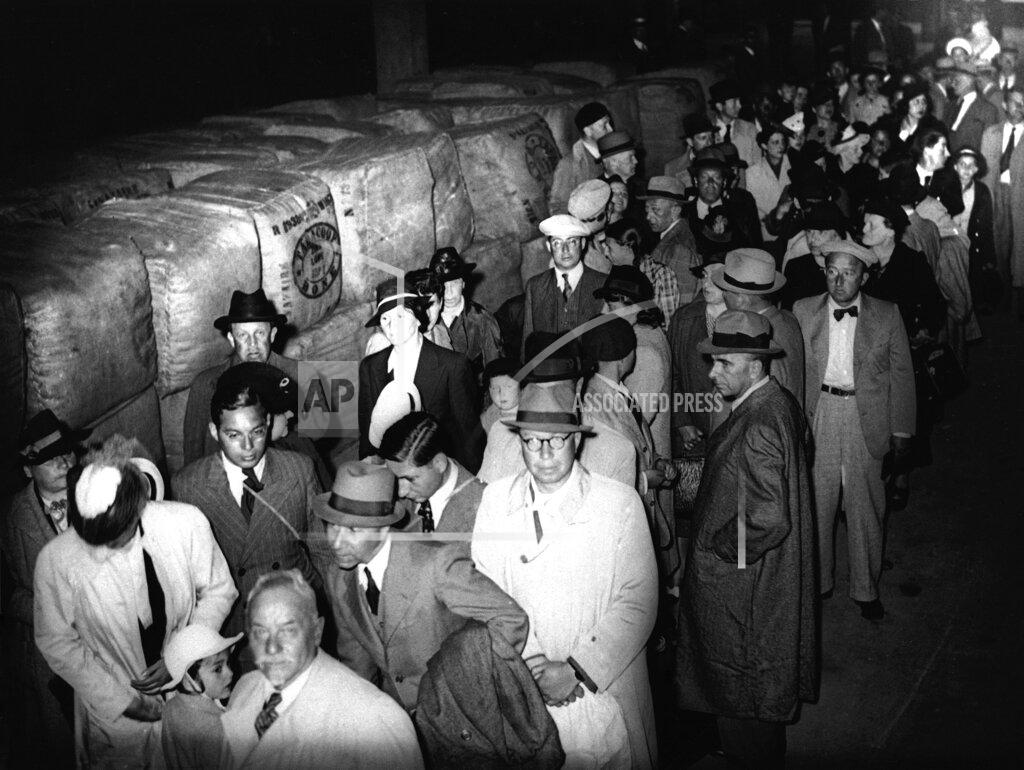
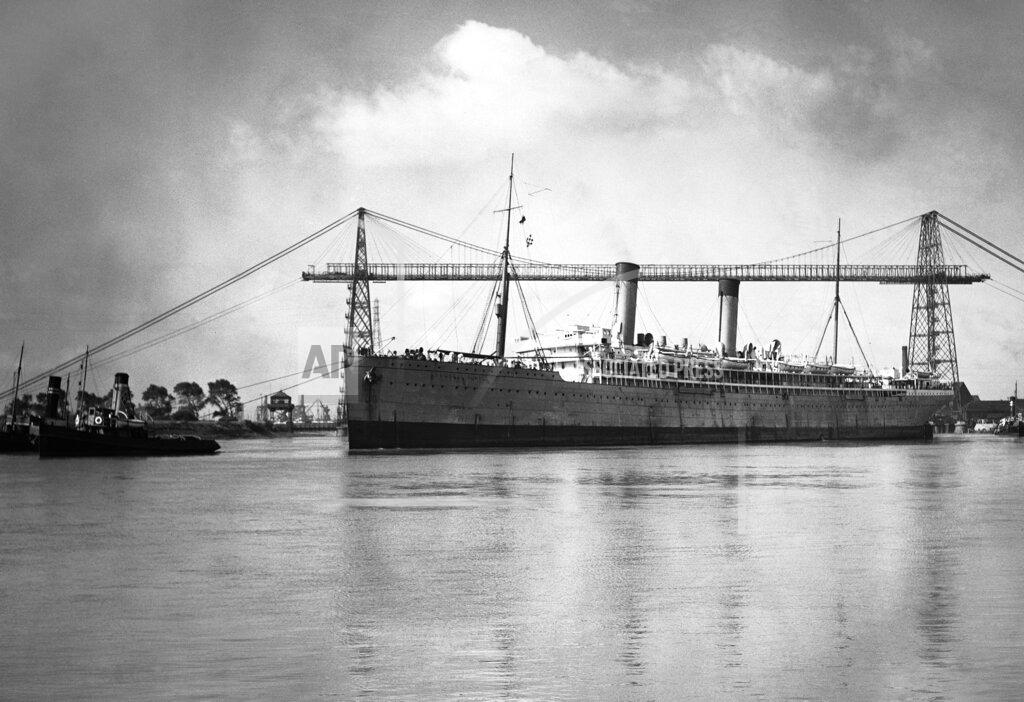
Five hundred of the German Jewish refugees stranded on the ship MS St. Louis are on their way to temporary homes in England and France. The Hamburg-American steamer Rhakotis left Antwerp today for Boulogne, France, and Southampton, England, with 500 German Jewish refugees transferred from the liner St. Louis. The 500 were part of a group of 907 who were taken to Cuba and back in search of temporary homes. The others will receive temporary homes in Belgium and the Netherlands. About half of those sailing on the Rhakotis will remain in France and half will go to England.
A band of ninety-seven German and Czecho-Slovak Jews who had been aboard the French steamer Flandre since May 16, unsuccessfully seeking a refuge in the New World, landed tonight to take up temporary residence in Western France. The refugees, who were barred by Cuba and Mexico, danced down the gangplank, weeping for joy. Among the ninety-seven were twenty children. The majority of the men were shopkeepers, lawyers, doctors and engineers in their old homes. The American Joint Distribution Committee posted bonds of $500 each for the refugees as assurance they would not become public charges.
The Italian chief of staff, Pietro Badoglio, is in Albania, set to push military plans aimed at the Balkans. A road program is planned to build excellent highways leading to Yugoslavia and Greece.
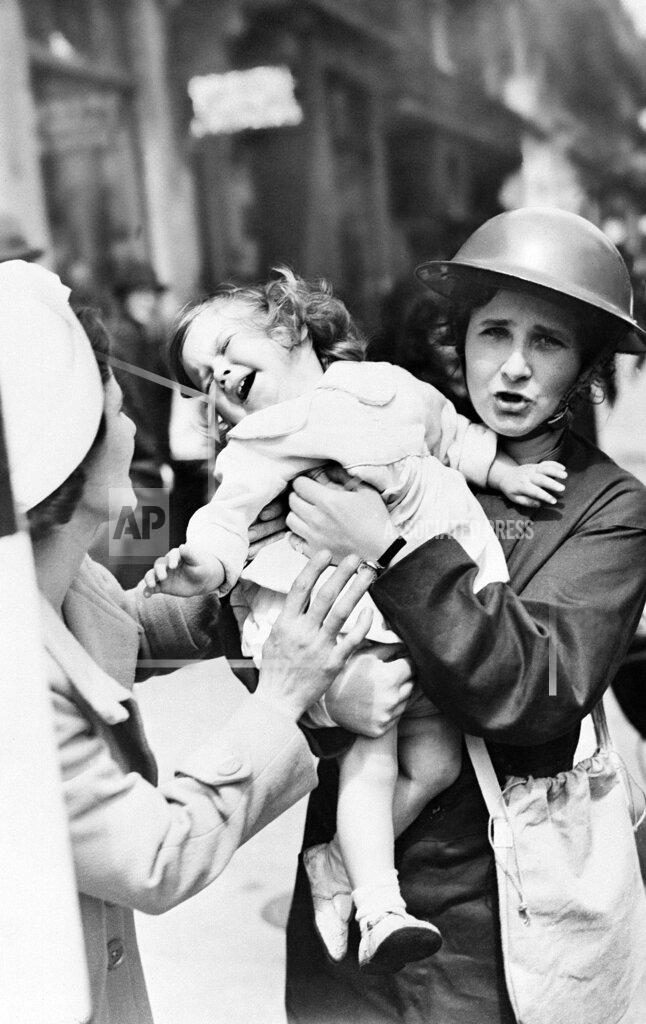
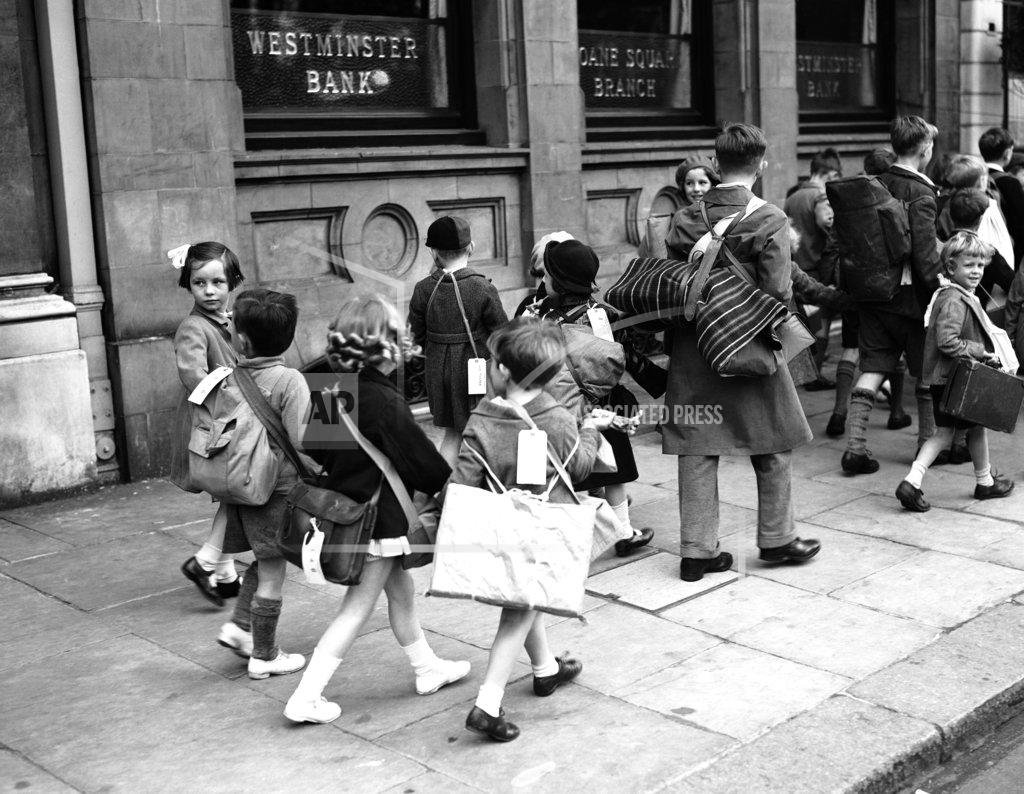
Chelsea — that part of London where writers live together with those who would like to be considered writers or artists — was subjected to a mock air raid today, with the streets cleared, people rushing for shelters, children evacuated and all air-raid wardens on duty. The experiment was pronounced a success afterward by Sir John Anderson, Minister of Civilian Defense. Observers had praise for the manner in which traffic and population were handled. It was estimated that there were 8,700 persons in the streets when the warning signals went off. Of these 6,250 took shelter in the bombproof hideouts, of which there are only three actually constructed. Other “shelters” were simply areas chalked off on the streets and marked in some such fashion as “air-raid shelter for 130 persons.”
Precisely at 12:30 PM, police whistles signaled the raid and air raid wardens, who had been standing idly about in their new brown uniforms and tin hats began herding people inside the chalk lines. Police, also in tin hats, assisted with the friendly, cheerful crowds. The sidewalks of busy Sloane Square, heart of the area, were cleared in a few minutes. Those crowded inside the “shelter” had a good view of the proceedings and cheered the officials who went about their duties somewhat shamefacedly amid the crowd’s laughter. The biggest “draw” was a sheepish individual on a bicycle who rode through the streets with a notice pinned on his back and front saying “Take cover.”
Meanwhile, the air-raid organization got busy. Selected women. threw themselves on the street as “casualties” and ambulance men dashed up and took them away; airplanes cruising overhead dropped dummy bombs and gas squads and fire engines rushed to the spot. All traffic ceased in the area. Most of the buses refrained from coming in but those that were caught were deserted as drivers, passengers and conductors took shelter together. There was some irascibility when elderly colonels were told that they had to pay off their taxicabs and join their drivers in the nearest shelter. The raid lasted fifteen minutes and was a good picnic for most of the participants, the largest number of whom gathered, ironically enough, under the statue of Thomas Carlyle, one of Chelsea’s most famous residents, on the Embankment.
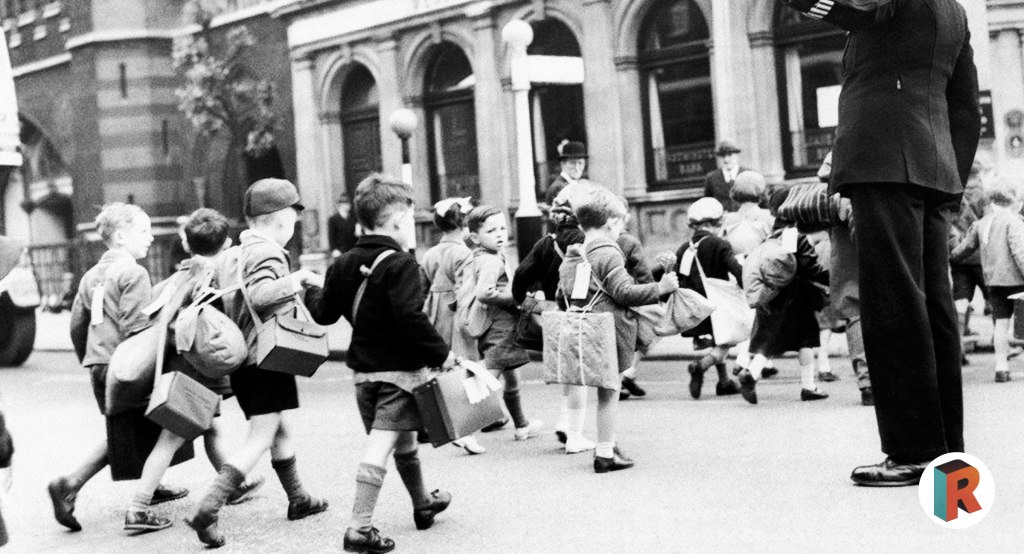
Earlier in the day a more serious test was carried out successfully when 5,000 school children were evacuated in perfect order from twenty-one schools. They had come to school equipped with gas masks, blankets and food and marched to three railway stations. In case of war, they would have left from these stations by special trains.
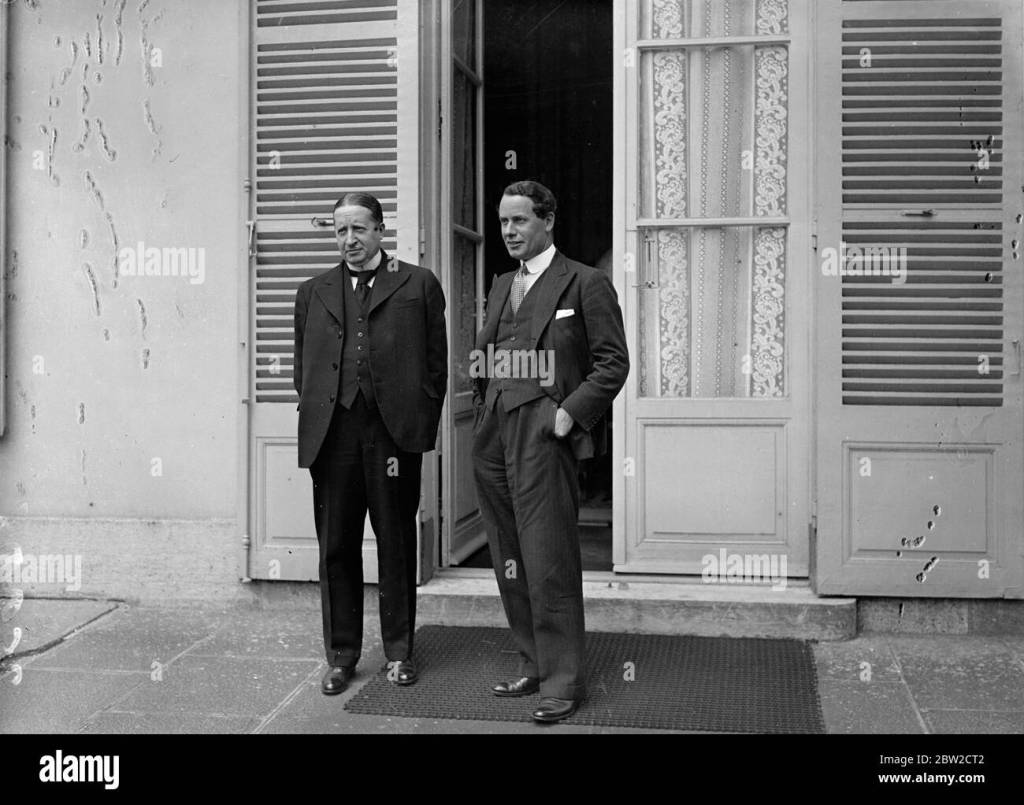
The British Secretary for Colonies, Malcolm MacDonald, and his French colleague, Georges Mandel, discussed the Far Eastern situation and other colonial problems, including distribution of Jewish refugees, during a long conference in Paris this morning, followed by a luncheon in Mr. MacDonald’s honor. Mr. MacDonald, evidently at the wish of Prime Minister Neville Chamberlain, halted here to discuss these and other questions with his French colleague. At the luncheon General Gustave Gamelin, Supreme Commander of French Defense Forces, and General Buhrer, Chief of Staff of the French Colonial Armies, were guests.
Although until now the Japanese have differentiated between the British and French Concessions at Tientsin and there has been little or no interference with food supplies for the latter, the French consider that in this quarrel, as in all others, they must and will stand solidly alongside the British in any action that is decided upon.
A market in Haifa was bombed, killing 18 Arabs and wounding 24. Palestine’s latest wave of terrorism reached a new high level today when eighteen Arabs — nine men, six women and three children — were killed and twenty-four wounded by the explosion of a time bomb in the Arab vegetable market at Haifa near the Central Police Station. Shortly afterward an Arab crowd stoned and seriously injured a Jew who was visiting the mortuary of the government hospital where the bomb victims lay. Two more bomb explosions in the Jewish quarter of Haifa destroyed a telephone booth and damaged a telephone manhole.
A curfew was declared at Haifa at 9 o’clock this morning but was lifted from 4 o’clock this afternoon until midnight, when it will again be imposed, as usual, until 5 A. M. The curfew includes all traffic in and out of Haifa as far as the Jewish colony of Zichron Yaacob. At that point all vehicles were turned back to Tel Aviv. Apparently as a retaliation for the explosion at the market, three bombs were thrown this afternoon at Jaffa, one at Jews working near the Jaffa-Tel Aviv border and two at police stations, but there were no casualties. A curfew was also imposed at Jaffa beginning at 2 PM.
Palestine authorities seem to believe that Jews were responsible for today’s bomb at Haifa and the military commander of the Northern district summoned Jewish leaders there and issued a stern warning. The Jewish communal leaders replying to the commander condemned the “dastardly murder of innocent Arabs, women and children,” but emphasized that it was not certain and was not proved that Jews were guilty of today’s outrage. This evening the Jewish colony of Ness Zionah was heavily attacked by Arabs. A Jewish supernumerary policeman was shot in the neck. He was taken to the hospital at Tel Aviv in a grave condition.
The Hebrew Labor daily Davar, commenting on the Haifa outrage, will say tomorrow: “Who throws bombs? Is it the same hand that is sowing blood and ruin in the Arab market and in the Jewish suburb? These are not the ways of the Jewish population in Palestine in their struggle. The murder of innocent Arabs will not make an impression on the Arab leaders at whose orders hundreds of Arabs were murdered. Neither will it make an impression on the mandatory authorities. Ruin and paralysis of economic life will only hurt the Jews in Palestine. Sacrifices may be necessary. for our political struggle but every act of paralyzing our life unnecessarily weakens the Jews here more than it sabotages the Palestine Government’s new policy and it only causes the failure of Palestine Jewry’s struggle against this policy.”
British troops aided by planes killed nine terrorists in a battle near Jericho today. The encounter between the troops and the terrorist band followed the early morning bomb explosion in the Haifa marketplace.
Wailing Arabs crowded the government hospital morgue at Haifa tonight in search of relatives among the bomb-torn victims of today’s explosion. Authorities said that they believed the bombs were brought into the city from outlying districts and concealed in vegetable baskets. Many Arabs were reported to have massed around the German Consulate at Haifa demanding “protection from bomb-throwers.”
In Washington, President Roosevelt conferred with House and Senate leaders on the legislative situation and discussed fiscal policies with Secretary Morgenthau and other Treasury officials.
The Senate considered the bill to extend the stabilization fund and dollar devaluation powers until June 30, 1941, heard Senator Reynolds demand payment of the British war debts, approved the nominations of Claude G. Bowers to be Ambassador to Chile, Edwin C. Wilson to be Minister to Uruguay and Douglas Jenkins to be Minister to Bolivia, and recessed at 6:05 PM until noon tomorrow. The Education and Labor Committee heard a representative of the National Manufacturers Association propose changes in the National Labor Relations Act.
The House passed the tax bill, completed Congressional action, on the bill postponing the effective date of labeling provisions of the new Pure Food and Drugs Act and adjourned at 6:50 PM until noon tomorrow.
The tax revision bill intended to remove “irritants” in the revenue structure was passed tonight by the House with only one dissenting vote, and in such form that its sponsors hope it will retain all of the nearly $2,000,000,000 in revenue accruing annually under the present law.
The vote was 358 to 1, Representative Tinkham of Massachusetts being the lone dissenter. This was immediately after the House, by 205 to 150, divided along party lines, had refused to recommit the bill to the Ways and Means Committee with instructions to report it back with a provision permitting corporations to carry over their losses. from last year. The bill provided that such carryovers start on January 1. The motion to recommit was offered by Representative Treadway, Republican, of Massachusetts. The bill again levies for two years the nuisance taxes, which would expire June 30, and the corporation. tax structure, which expires December 31. The measure now goes to the Senate, where quick action is promised.
With little indicated opposition, the debate was in the nature of “record” speeches in which members of both parties claimed credit for a measure which would remove the much-criticized undistributed profits tax and substitute a flat income tax rate of 18 per cent on corporations having net incomes of more than $25,000 a year. The present rates on corporations having incomes of less than $25,000 were retained. While in committee of the whole, the House rejected an amendment by Representative Treadway designed to make repeal of the undistributed profits tax effective as of January 1, 1939, and allow carryover of last year’s losses in returns to be filed for this year. The vote was 109 to 65.
The Republicans, led by Mr. Treadway and Representative Jenkins of Ohio, took the position that “if this is a good bill, it should be put into effect now.” But the Democrats, led by Representative Doughton, chairman of the Ways and Means Committee; Representative Cooper of Tennessee and Representative McCormack of Massachusetts, contended that the Republican proposal would in effect discriminate against corporations which had paid their taxes for last year.
President Roosevelt insists on a Neutrality Bill. He demands a vote on the amendments before Congress adjourns. Expectation of adjourning Congress by July 15 faded perceptibly today when legislative leaders came away from their weekly visit to the White House with the information that President Roosevelt would insist upon action on amendments to the Neutrality Law before the session ended. Hope was not entirely abandoned, however, for many members of Congress, including some leaders, still believed that the President. might consent to laying aside changes in the Neutrality Law until next January if they were adopted by the House. They did not think that he would insist upon keeping the session going for long, if, as they expected, a filibuster developed in the Senate against relaxing the neutrality arms embargo against belligerents.
Consequently, the Congressional high command pressed forward with items on the “must” list today, hoping to get the decks cleared of everything but neutrality by July 1. The Tax Bill was passed by the House and sent to the Senate, where the Finance Committee was primed to consider it immediately. Senate leaders also prepared for quick action on the new relief appropriation. Taxes and relief are items 1 and 2 on the slate of essential legislation now before Congress,
Meanwhile, the Finance Committee was rushing work on the Social Security Law amendments, hoping to have them ready for consideration on the floor soon after the Senate has disposed of the bill extending the $2,000,000,000 stabilization fund and continuing the powers of the President to revalue the dollar. Senate leaders planned to lay aside other pending matters and act on the tax or on the relief bill as soon as either is ready. These two, as well as the stabilization fund extension, must be passed upon by June 30.
House chieftains planned to take up the proposed amendments to the Neutrality Law next week. Speaker Bankhead is understood to have pledged the President speedy action in that body, and to have added that, with Senate cooperation, Congress could adjourn by July 15. The Speaker conceded after the White House conference that there. were many “ifs” in the adjournment situation. He said he knew of no new proposals which the President had in mind for the session. This was in answer to a question as to the possibility of new spending-lending legislation.
Condemnation of the “inequalities” of the National Labor Relations Act and the “perversion” of the law by the National Labor Relations Board was voiced to the Senate Committee on Education and Labor today by John C. Gall, counsel for the National Association of Manufacturers, who urged eleven amendments. Asserting that the association represented 7,500 manufacturers with several million employees, Mr. Gall told the committee that the business world held that the Labor Board and its agents “have been intensely pro-CIO; that they have been hostile to employers, to independent unions and to employees not affiliated with national labor unions.”
“The board and its agents,” continued Mr. Gall, “have violated many elementary principles of fair play,” and instead of helping reduce labor disputes, have “sown the seeds of future discord.” In his brief, which he did not finish reading to the committee, Mr. Gall condemned some of the board’s “cease and desist” orders and its “affirmative action” directed at employers as placing the entire business of an employer at the mercy of a “general injunction against all possible breaches of the law.” This, he said, was “an evil equally great” as that of the sweeping anti-labor injunctions from. which the Norris-La Guardia act sought to safeguard employees and labor organizations.
After six days of extensive testing at the clinic, the Mayo Clinic Hospital in Rochester, Minnesota diagnosed Lou Gehrig with amyotrophic lateral sclerosis on his 36th birthday. Gehrig makes no statement to the press on this day. Tomorrow he will travel to New York to break the news to the Yankees. The prognosis was grim: rapidly increasing paralysis, difficulty in swallowing and speaking, and a life expectancy less than three years, although no impairment of mental functions would occur. Eleanor Gehrig was told that the cause of ALS was unknown, but that it was painless, not contagious, and cruel; the motor function of the central nervous system is destroyed, but the mind remains fully aware until the end.
Gehrig often wrote letters to Eleanor, and one such note written shortly after the diagnosis said in part: “The bad news is lateral sclerosis, in our language “creeping” paralysis. There isn’t any cure… there are very few of these cases. It is probably caused by some germ… Never heard of transmitting it to mates… There is a 50–50 chance of keeping me as I am. I may need a cane in 10 or 15 years. Playing is out of the question…” Gehrig’s illness will be incorrectly reported by most newspapers as “infantile paralysis” (polio), which, while bad, would not necessarily have been fatal.
The New York Yankees score five times in the first inning and survive Tiger rallies to win 8–5 over Detroit.
King George and Queen Elizabeth sped homeward today, catching up on the rest and sleep they lost in their ceremony-filled visit to Canada and the United States, At 8 AM, Eastern Daylight Time, this big liner bearing the royal party was more than 800 miles east of Newfoundland, slipping along beneath cloud-flecked skies at twenty knots. A warm south wind swept the decks.
The King ordered that the clocks be put ahead an hour at 3 PM instead of the usual midnight change so that his entourage would not be deprived of an hour’s sleep. During the day the King and Queen spent some time viewing colored motion pictures of their tour of Canada’s Rockies. The pictures were taken by George Steward, press liaison officer on the tour.
Princesses Elizabeth and Margaret Rose will use a destroyer and a royal barge to meet the Empress of Britain to spend an hour with King George and Queen Elizabeth before the liner docks. The ship returning their parents from the United States and Canada is due at The Needles, Isle of Wight, at 12:30 PM Thursday. The Princesses will board the liner fifteen minutes later.
They will use the destroyer HMS Vanoc to travel from Portsmouth to Yarmouth, Isle of Wight, where they will board the royal barge which will take them to the side of the Empress. The Empress will dock at Southampton in mid-afternoon.
The Bolivian Government announced today that Jewish refugees who had entered the country on alleged irregular visas would be permitted to remain. The government is investigating a group that is accused of selling visas to refugees in Europe.
Eugene H. Doorman, the American Charge D’Affaires in Tokyo, lodged an American protest with the Japanese foreign office during which he was said to have had discussions concerning the Japanese blockade of the British and French concessions at Tientsin. Doorman also protested Japan’s continued bombings of American property in China.
Chinese military reports say the Japanese continue to retreat from the Chungtiao Mountains in Southwest Shansi, into which they launched a clean-up drive recently. The Chinese assert Japanese casualties in the last ten days have totaled 6,000 or 7,000. The invaders are now reported falling back at Wensi, Yuncheng, Hsiahsien, and other points and to be constantly harassed by Chinese mobile units. The Chinese also admit heavy casualties in last week’s bitter Chungtiao fighting. One entire regiment with its commander was said to have been wiped out. in one engagement. Chinese airplanes are reported to have bombed the Japanese at Nanchang and Canton during the last few days.
Dow Jones Industrial Average: 136.40 (+1.09).
Born:
Al Wilson, American soul singer (“Show and Tell”; “The Snake”), in Meridian, Mississippi (d. 2008).
Michael Standing, British actor (“The Italian Job”), in London, England, United Kingdom.
Died:
Grace Abbott, 60, American social worker.
Naval Construction:
The Nihon Kaigun (Imperial Japanese Navy) Kagerō-class destroyer HIJMS Isokaze (磯風, “Wind on the Beach”) is launched by the Sasebo Naval Arsenal, Sasebo, Nagasaki, Japan.




 History Diaries