In a meeting with North Vietnam’s Premier Phạm Văn Đồng, J. Blair Seaborn, the chief Canadian delegate to the ICC, is serving as a secret envoy for the U.S. government for he has been authorized to appraise the situation in Hanoi specifically, to see whether the North Vietnamese leaders are ready to pull back from the war. Although Seaborn is not authorized to make any literal threats, he leaves the Premier with little doubt that the United States was prepared to ‘carry the war to the North… if pushed too far.’ However, Seaborn was not informed about, nor authorized to convey a package of proposals including the withdrawal of U.S. forces and various forms of economic aid if Hanoi would halt all hostilities in South Vietnam. When Seaborn returns to Saigon and sends two long reports to the U.S. State Department, no action is taken by the U.S. authorities.
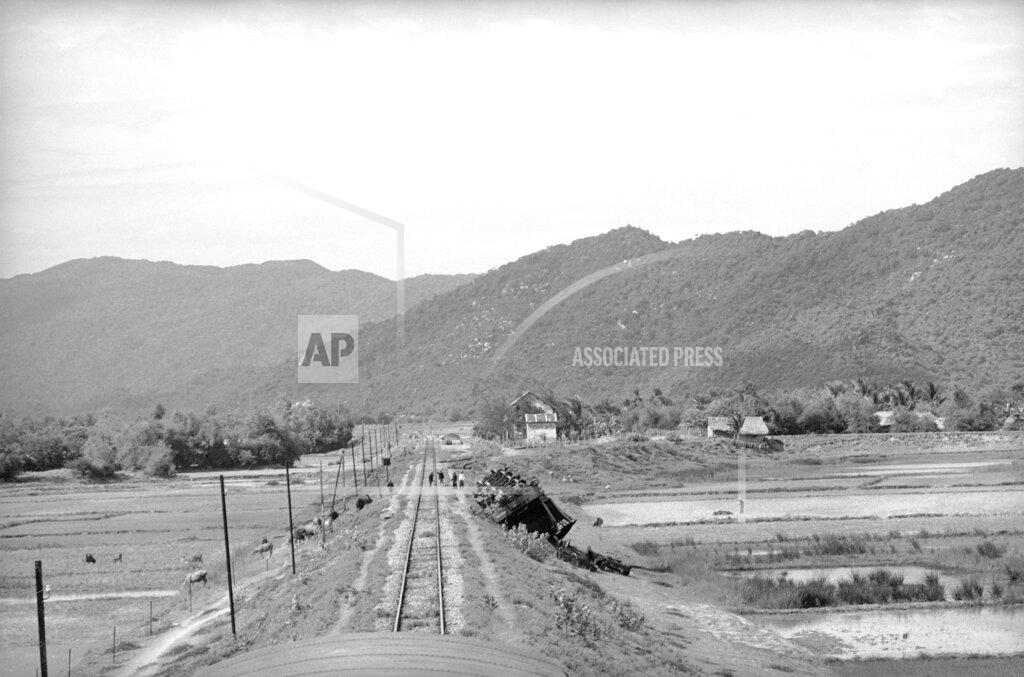
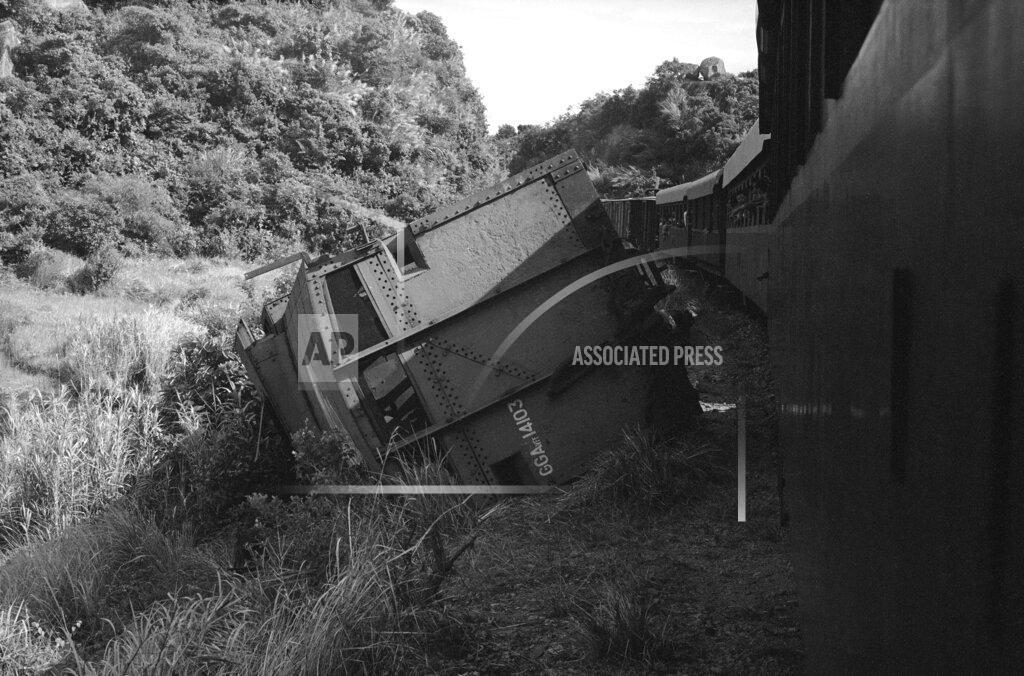
Guerrillas blow up four cars of a passenger train and kill 20 Vietnamese. Communist guerrillas blew up four cars of a crowded passenger train and killed 20 Vietnamese. It was one of the worst instances of terrorism directed against civilians by the Việt Cộng. Forty people were injured. The victims were dragged out of the wreckage by Vietnamese rescue crews who labored all night. United States sources said many women and children were aboard the train, traveling from Nha Trang to Saigon to visit relatives. The explosion occurred about 10 miles south of Nha Trang, a coastal resort. Most of those killed died in the initial explosions of a series of land mines detonated by guerrillas hiding in a jungle along the track. Nearly all the inujred were caught in fires that swept through two crowded cars.
Two of the most experienced United States officers in South Vietnam have gone on record with sharply contrasting evaluations of the outlook for the war against the Communist guerrillas. Both are leaving South Vietnam in a few days after having served in key positions since the start of the American military buildup two and a half years ago. General Paul D. Harkins, retiring United States commander, maintained today the confident and optimistic tone he has employed throughout his service here in the face of military reverses and press criticism.
He took issue on several points with one of his senior advisers who made public yesterday some of the charges that up to now have been reported by newsmen without pinpointing their sources. This officer, who was quoted in dispatches yesterday, spoke out against a “lack of dedicated leadership” in the South Vietnamese armed forces, the predominant role of “political maneuvering” in promotions to positions of high responsibility and the lack of any “hard sell” on the part of Americans to force necessary but unpopular decisions. Asked whether he thought South Vietnamese officers had responded to American advice, General Harkins said: “If they hadn’t, they wouldn’t be where they are today, and I think they’re doing very well.”
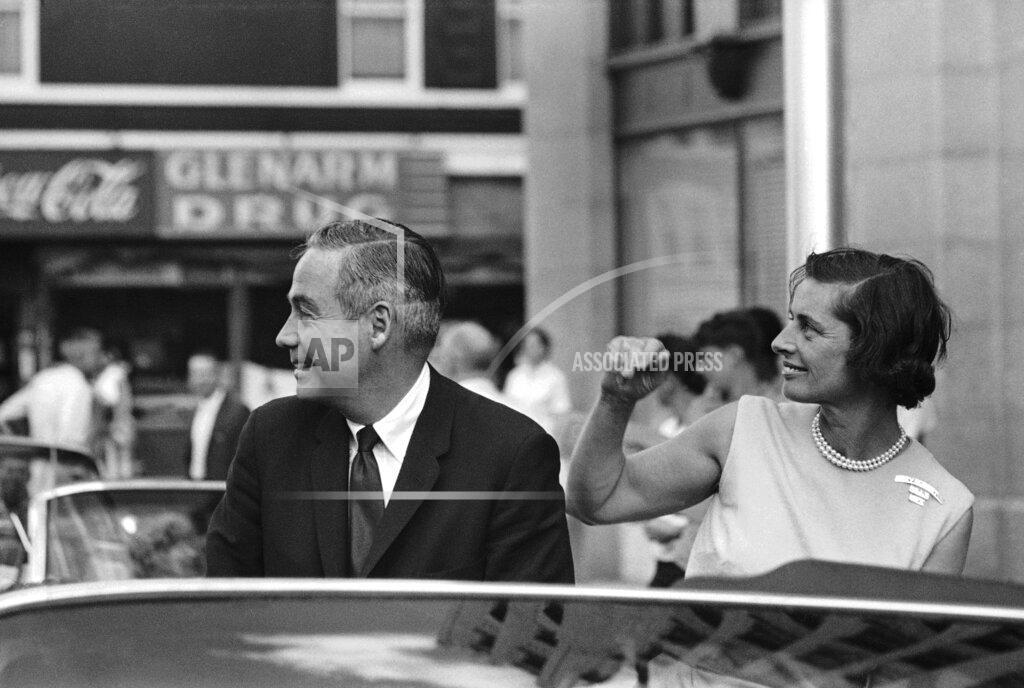
The White House reiterated today that it had had no communication from Ambassador Henry Cabot Lodge about his term of service in South Vietnam. Questions about the subject have been put daily to George E. Reedy, the White House press secretary, since The New York Times reported Monday that Mr. Lodge had asked to be relieved of his assignment within 30 days, before the start of the Republican National Convention July 13. The Times article from Washington said that the Ambassador gave unspecified reasons of health for his resignation.
The next day, Mr. Lodge said in Saigon that reports of his resignation for health reasons were “totally false.” Dispatches from South Vietnam suggested that he was considering resignation for political reasons, to help deny the Republican nomination to Senator Barry Goldwater of Arizona. United Press International reported from Washington today that Mr. Lodge would not come home before the convention. It quoted Republican party sources as saying the Ambassador had so advised the White House.
Laotian planes attacked Pathet Lao positions north of the Plaine des Jarres today as the neutralist commander, General Kong Le, arrived in Vientiane. The general brought with him weapons alleged to have been made by the Chinese Communists. They were captured from the Communist‐led Pathet Lao. Asked about the situation north of the plain, where small‐scale fighting was continuing, the general said, “It is O.K.” The latest air attack on Pathet Lao positions on Phou Kout, a key hill north of the plain, followed the withdrawal of neutralist forces from the area yesterday after they had held the hill less than 24 hours. The 4,000-foot hill has changed hands four times in the last three weeks. It commands the road to Muong Soui, the last neutralist stronghold on the Plaine des Jarres 12 miles away.
The neutralists have captured 27 Chinese Communist‐made weapons from the Pathet Lao, General Kong Le said. He brought with him to Vientiane an automatic rifle and two carbines, which he said bore Chinese markings on their chambers and were imitations of American‐made guns. Looking healthy in his plain olive green uniform and wearing a floppy gray hat, the general spent only 15 minutes in Vientiane, Laos’s administrative capital, before boarding a plane for Vang Vieng, a neutralist‐held town 70 miles to the north. Meanwhile, a bombing raid on Pathet Lao headquarters at Khang Khay a week ago was reported by Western military sources to have been made by a lone Laotian Air Force piston-engine plane. The sources said yesterday that reports of air raids on Pathet Lao headquarters and other places in central Laos were exaggerated.
Assistant Secretary of State William P. Bundy, in testimony made public today, said that if Communist forces got the upper hand in Laos, “the only response we would have would be to put our own forces in there.” He also said that “we are going to drive the Communists out of South Vietnam” even if that eventually involves a choice of “attacking the countries to the north.” Mr. Bundy, who handles Far Eastern affairs and is a brother of McGeorge Bundy, an adviser to President Johnson, spoke in a May 4 closed session before the House Appropriations subcommittee that was considering President Johnson’s $3.5-billion foreign aid goal.
Soon after Mr. Bundy testified, the North Vietnamese‐supported Pathet Lao overran the Plaine des Jarres of Central Laos. The United States then started escorted reconnaissance flights over Laos to watch Pathet Lao movements and to show determination to halt the Communist tide. Officials in Washington were quoted Wednesday as having said that the United States would not relax diplomatic and limited military pressure in Laos until the neutralist government was revitalized.
The Security Council’s three‐man mission to investigate conditions on the border of Cambodia and South Vietnam will leave Sunday for Cambodia by way of France. It has been invited to stop in Nice for a “working dinner” with Prince Norodom Sihanouk, Cambodia’s chief of state.
The most serious violence on Cyprus since April erupted on Tylliria Promontory today between Greek and Turkish Cypriots. At least one Turkish Cypriot was killed and two Turkish Cypriots and three Greek Cypriots were wounded in a four‐hour exchange of fire between hostile villages on this northwestern coastal promontory.
More than 300 Swedish troops of the United Nations peacekeeping force were in the area with 11 armored vehicles to try to halt the fighting. The shooting in the rough, hilly terrain began three days ago and has steadily increased in intensity. Turkish Cypriot fighters in the village of Mansoura fired mortars into the neighboring Greek Cypriot village of Mosphilerl. Grass in and around the village was set ablaze by the mortar bursts. A Swedish major and his men took two mortars and a bazooka away from Turkish Cypriots in the village of Kokkina because “heavy weapons are not allowed when the lives of women and children are in danger.”
It was the second time since the United Nations force became operational March 27 that Swedish troops had disarmed Cypriots. Previously Swedish soldiers had disarmed 40 Greek Cypriot irregulars in the southern village of Timi. The weapons seized in Timi eventually were returned to the Greek Cypriots. The major who seized the weapons in Kokkina promised the Turkish Cypriots that they would be returned when “quiet is restored.” Under its terms of reference, the peace force does not have the right unilaterally to disarm anybody.
Five small-power U.N. members introduced tonight a resolution under which the Security Council would authorize the United Nations peace‐keeping force to stay in Cyprus for another three months after its original mandate expires on June 27. The United States, Britain and other Western members of the Council hope to obtain adoption of the resolution by the end of the week. Foreign Minister Spyros A. Kyprianou of Cyprus told the Security Council that his government would agree to the three‐month extension of the United Nations force, as requested Tuesday in a report by the Secretary General, U Thant.
In an allusion to reports that Western Governments were now disposed to favor some form of partition of Cyprus, Mr. Kyprianou emphasized that Cyprus, as a member of the United Nations, was “one and indivisible.” At the same time, he asserted that Greek and Turkish Cypriots could live together in peace and he charged that Turkey was entirely responsible for the fighting on Cyprus before and after the arrival of the United Nations force. The fighting broke out last December after Greek Cypriots moved to amend Cyprus’s Constitution in a way the Turkish Cypriot minority feared would abrogate its guarantees.
The United States and the Soviet Union broke a two‐year procedural deadlock at the disarmament conference today. Later, the Soviet Union said it would take a “flexible position” on the question of an American proposal for a “bomber bonfire.” Considerable interest was aroused at the 17-nation conference by a conciliatory statement by Valerian A. Zorin, head of the Soviet delegation, on the bonfire idea. The Deputy Foreign Minister said the Russians were willing to seek limited accords aimed at reducing international tension by restricting the arms race. On the matter of the procedural deadlock, the United States and the Soviet Union have agreed on an order of priorities for discussing proposals each has offered for advancing the cause of disarmament by improving the international atmosphere. The two nuclear powers are the conference’s co‐chairmen.
The first telephone cable between Japan and the United States was inaugurated with a phone call between U.S. President Johnson (in Washington) and Japan Prime Minister Hayato Ikeda in Tokyo. A joint venture between AT&T and the Japanese telephone company Kokusai Denshin Denwa (KDD), the 5,300-mile-long undersea cable was laid between Tokyo and Honolulu and gave Japan direct-line communications for the first time between Japan and North America, Europe and Australia.
Marshal Rodion Malinovsky, Defense Minister for the Soviet Union, signed orders starting the development of the first Soviet space station, the Soyuz-R.
The typhoid epidemic in Aberdeen, in which 507 people had been sent to hospitals from bacteria traced to a single can of corned beef, was declared to be at an end, more than a month after the first case had been detected on May 12.
The African Groundnut Council forms in Dakar.
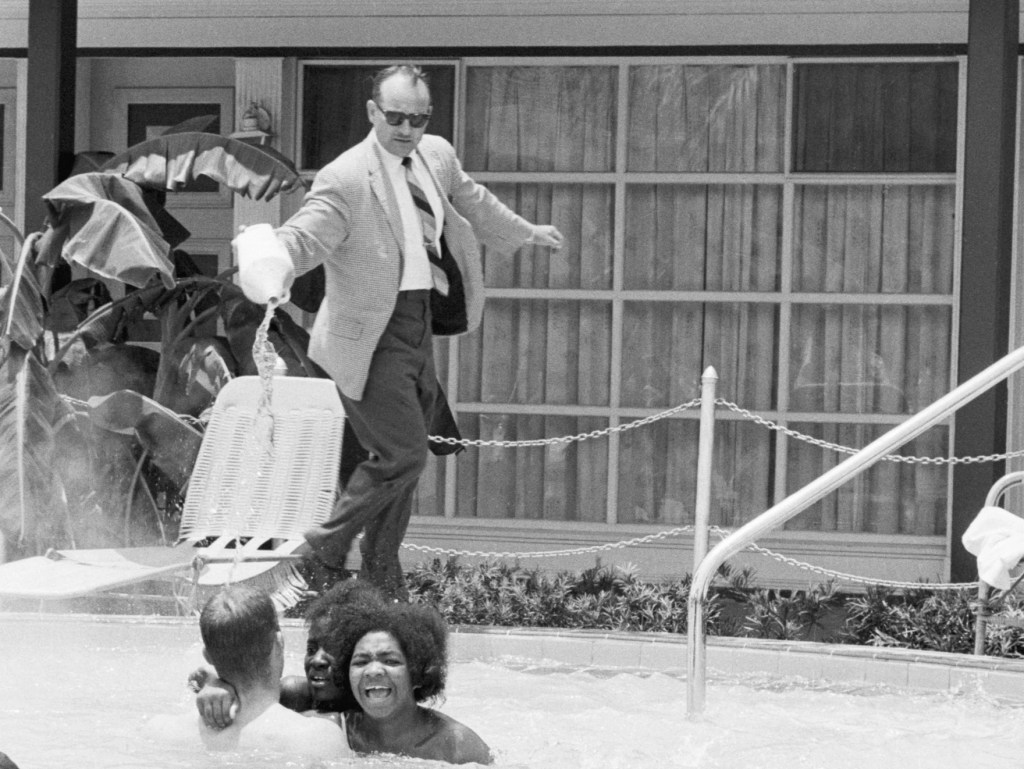
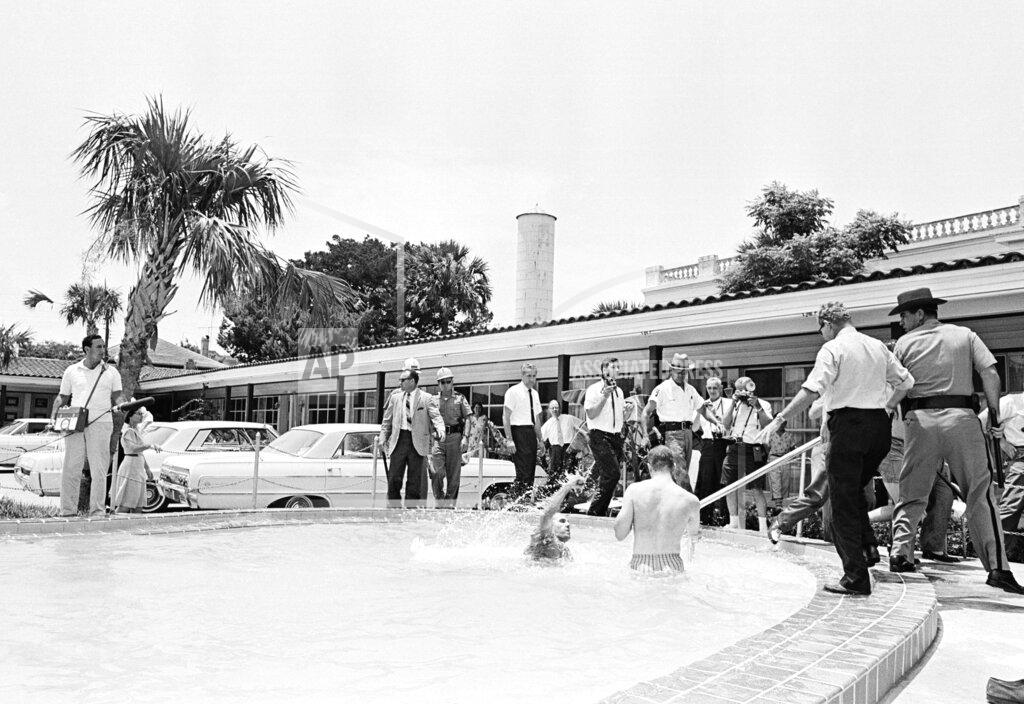
Black and white protesters jumped into the whites-only pool at the Monson Motor Lodge in St. Augustine, Florida. In an attempt to force them out, the owner of the hotel, James Brock, poured acid into the pool.
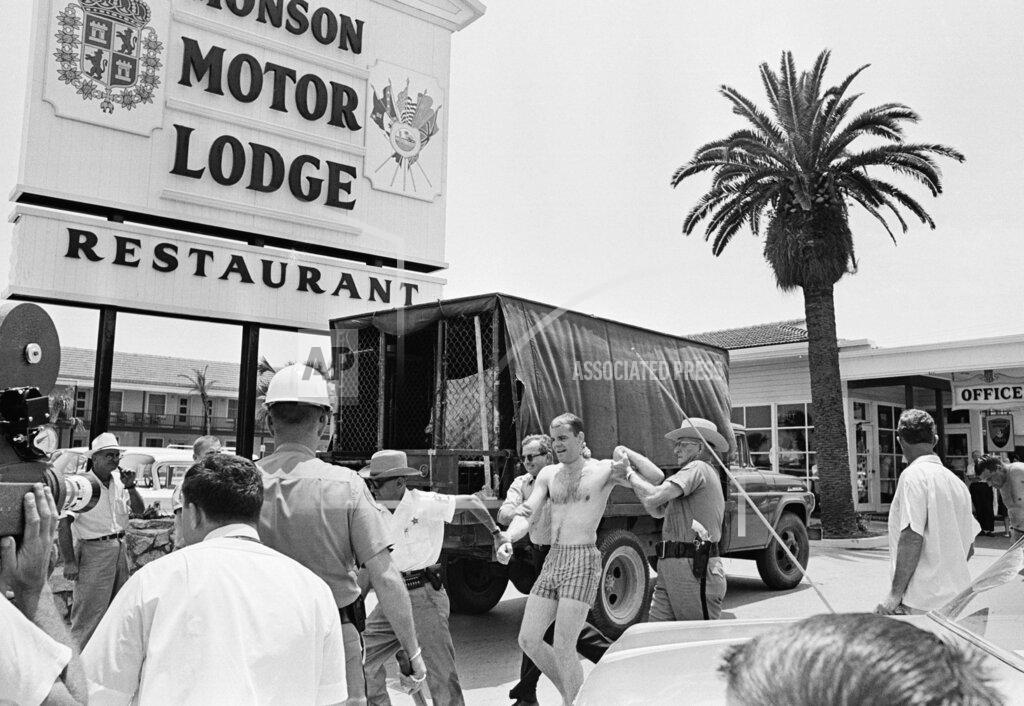
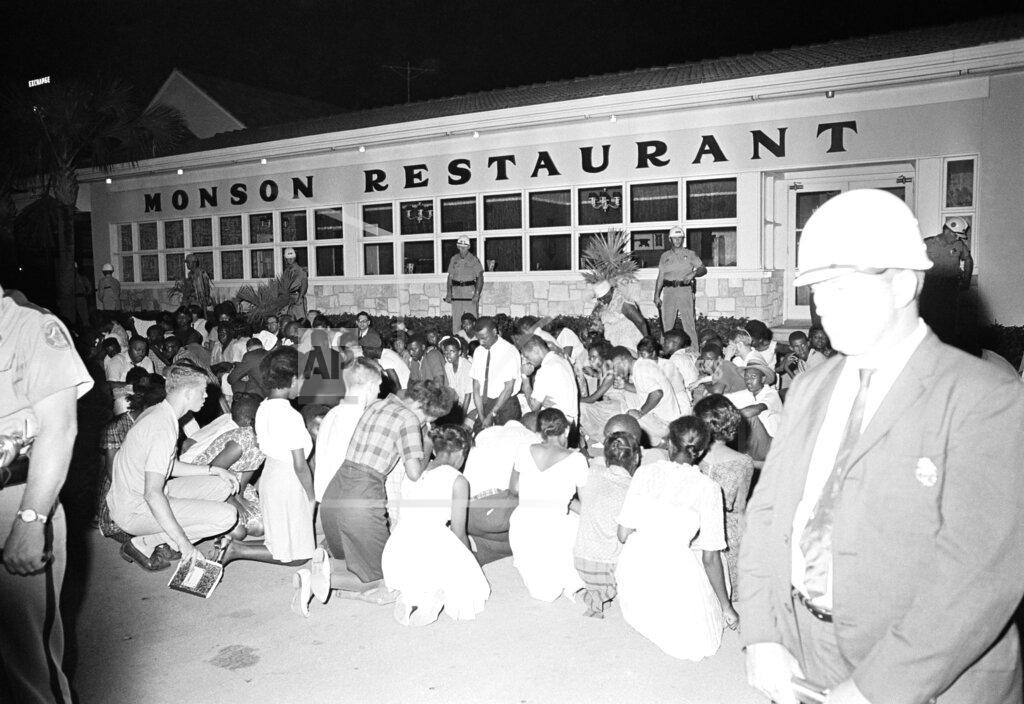
A. swimming pool dive‐in that occurred as a group of integrationists were being pushed away from a segregated restaurant set off new violence in St. Augustine, Florida today. There was cursing and pushing, and authorities roughed up some of the demonstrators. The Rev. Dr. Martin Luther King Jr., the leader of the civil rights movement here, watched from across the street. “It was raw police brutality,” he said. “Cattle prods were used on our demonstrators and people were actually beaten.” Forty‐one persons, including 16 rabbis, were arrested during the day. No one was seriously injured. A few hours after the outbreak at the Monson Motor Lodge, the St. Johns County grand jury proposed a 30‐day cooling‐off period during which there would be no demonstrations and Dr. King would leave town. After 30 days, the grand jury would name a biracial committee to negotiate a truce. Dr. King immediately rejected the grand jury proposal and said demonstrations would be resumed immediately. He said the jury asked the Blacks to make concessions but made no demands of the whites, who have been holding demonstrations of their own.
About 70 demonstrators, including the rabbis who arrived here yesterday to help in the movement, descended on Monson’s at noon. They were led by the Rev. Fred L. Shuttlesworth, a Birmingham, Alabama, integration leader and associate of Dr. King, and the Rev. C. T. Vivian of Atlanta, another King aide. Also arrested with the rabbis was a lay member of the group. James Brock, manager of the motel and president of the Florida Hotel and Motel Association, was angry when they arrived. Monson’s has been the focal point of demonstrations since Easter week. He met the demonstrators outside the restaurant, a few feet from the swimming pool. “This is private property and I will have to ask you to leave,” Mr. Brock said.
When the demonstrators refused to do so, he began pushing. First, he pushed the leaders and one by one he pushed the rabbis. As one rabbi was pushed aside another would step forward to take his place. A crowd of white businessmen and townspeople stood by and shouted. A spokesman said they were angry because state troopers did not arrest the demonstrators who had conducted a prayer service outside the motel last night.
While everyone’s attention was directed to the scene in front of the restaurant, five Blacks in swim suits jumped out of an automobile and dived into the pool. They joined two white men, also members of the civil rights movement, who were registered guests. Mr. Brock quickly fetched two containers of muriatic acid, a cleaning agent, and poured them into the pool. The demonstrators stayed in the water despite the acid, which is harmless, and refused orders to leave. A police officer, Henry Billitz, dived in and forced them out. Several other officers seized them, clubbed them and thoroughly roughed them up. The 16 rabbis, the swimmers, the two leaders of the march and nine other demonstrators were taken to jail to join the more than 200 persons arrested earlier in sit‐ins.
After a flying trip to Gettysburg to explain his reasons to former President Dwight D. Eisenhower, Senator Barry Goldwater told the Senate tonight that he would vote against the civil rights bill. He said that the public accommodations and fair employment sections of the bill “fly in the face of the Constitution” and would lead to the “creation of a police state.” The Senate galleries were almost full and about half the 100 Senators were on the floor when Mr. Goldwater spoke. His colleagues gave a respectful hearing to Mr. Goldwater, who is the front‐runner for the Republican Presidential nomination. “If my vote is misconstrued, let it be, and let me suffer its consequences,” the Arizona Senator said.
Tonight, it was difficult to assess the consequences of Mr. Goldwater’s speech, particularly whether his intention to vote against the great majority of his fellow Republicans would cause a reduction in his commanding lead for the nomination. After his Senate speech explaining why he planned to vote “no” on Final passage of the bill tomorrow, he was asked if he thought his stand would lose him delegates to the Republican National Convention, opening July 13 in San Francisco. His back already turned, the conservative Senator, who was walking to an elevator, merely shrugged his shoulders expressively.
Senator Barry Goldwater’s decision to vote against the civil rights bill has clearly widened the split in the Republican party and may very well have strengthened those who oppose his nomination as the Republican Presidential candidate. There was admiration in the Senate for the Senator’s frankness, but he not only took a position against the Republican majority and leadership in the Senate, but also seemed to be attacking the Senate itself for preparing to put into law “provisions which fly in the face or the Constitution and which require for their effective execution the creation of a police state.”
The Senate slowly wended its oratorical way today toward a final vote on the civil rights bill. The expectation tonight was that the vote would come tomorrow about 3 PM — a year to the day after President Kennedy sent the bill up. Last night, the Senate cleared the way for passage when it adopted, by a vote of 76 to 18, the Dirksen‐Mansfield substitute to the House‐passed bill, and then gave it a third reading. This foreclosed any further consideration of amendments.
Hopes of the bipartisan readership for a final vote today evaporated early as Southern opponents, one after another, rose to protest against what Senator Richard B. Russell of Georgia called “the manifold evils” of the bill and to predict that dire consequences would follow its passage. For their part, several Northern advocates praised the measure as long overdue and urged that state and local officials loyally support it as at least a legal beginning in. solving the urgent racial problems facing the nation. Under the rules, each Senator has an hour to speak after closure is invoked, and this can be fragmented as he pleases. Closure was voted June 10. When the Senate convened this morning, the Southerners had remaining to them a combined total of just over 10 hours. Most of this was used up during the day.
“If you think you’re going to Mississippi just for a little summer pastime, just put it out of your mind,” said R. Jess Brown, “for they mean business. No question about that. They’ll arrest anybody.” The 200 student volunteers for a two‐month civil rights campaign in Mississippi sat up attentively in their seats in Peabody Hall at the Western College for Women in Oxford, Ohio. Mr. Brown, a Jackson, Mississippi, resident who is one of the state’s four Black lawyers and one of three who will accept civil rights cases, then suggested how the students might avoid arrest, what to do if arrested and how to behave in court if brought to trial without consent. Jack Greenberg, chief counsel of the N.A.A.C.P. Legal Defense and Educational Fund, and John M. Pratt, counsel for the Commission on Religion and Race of the National Council of Churches, also discussed the legal problems the students might face.
[Ed: For three of these young men, James Chaney, Andrew Goodman, and Michael Schwerner, the price paid will be the ultimate one. They have just three days to live.]
Milton S. Eisenhower offered his “full support” today to Governor William W. Scranton’s campaign for the Republican nomination for President. Mr. Eisenhower is president of The Johns Hopkins University in Baltimore and a former president of the Pennsylvania State University in Forest Park. He is a younger brother of former President Dwight D. Eisenhower. The two are very close. As President, General Eisenhower used his brother’s capacities on various chores, particularly in Latin America.
Ed Charles, leading off the ninth inning against his former teammate, Ed Rakow, hit his eighth homer of the season today to give the Kansas City Athletics a 3–2 victory over the Detroit Tigers.
Mike Hershberger and Al Weis slammed home runs tonight as the Chicago White Sox regained the American League lead by defeating the Baltimore Orioles, 2–0.
Two-run homers by Danny Cater, a rookie, and Johnny Callison led the National League-leading Phillies today to a 6–3 victory over the Cubs.
Julian Javier slammed a homer, double, and single and drove in five runs as the St. Louis Cardinals defeated the San Francisco Giants, 7–6, tonight.
Dow Jones Industrial Average: 823.98 (+0.63).
Born:
Uday Hussein, Iraqi military leader, administrator, murderer, tyrant, and eldest son of Saddam Hussein; in Tikrit, Iraq (killed 2003).
Bob Rouse, Canadian NHL defenseman (Minnesota North Stars, Washington Capitals, Toronto Maple Leafs, Detroit Red Wings, San Jose Sharks), in Surrey, British Columbia, Canada.
Scott Stephen, NFL linebacker (Green Bay Packers, Los Angeles Rams), in Los Angeles, California.
Leonard Burton, NFL center (Buffalo Bills, Detroit Lions), in Memphis, Tennessee.
Jim Dick, NFL linebacker (Minnesota Vikings), in Great Lakes, Illinois.
Randy Frazier, NFL linebacker (Kansas City Chiefs), in Letcher County, Kentucky.
Tommy Hinzo, MLB second baseman (Cleveland Indians), in San Diego, California.
Died:
Alexander Shamil’yevich Melik-Pashayev, 58, Georgian conductor and composer (Bol’shoy Theatre, 1931-1962).
Giorgio Morandi, 73, Italian painter and printmaker.
 History Diaries