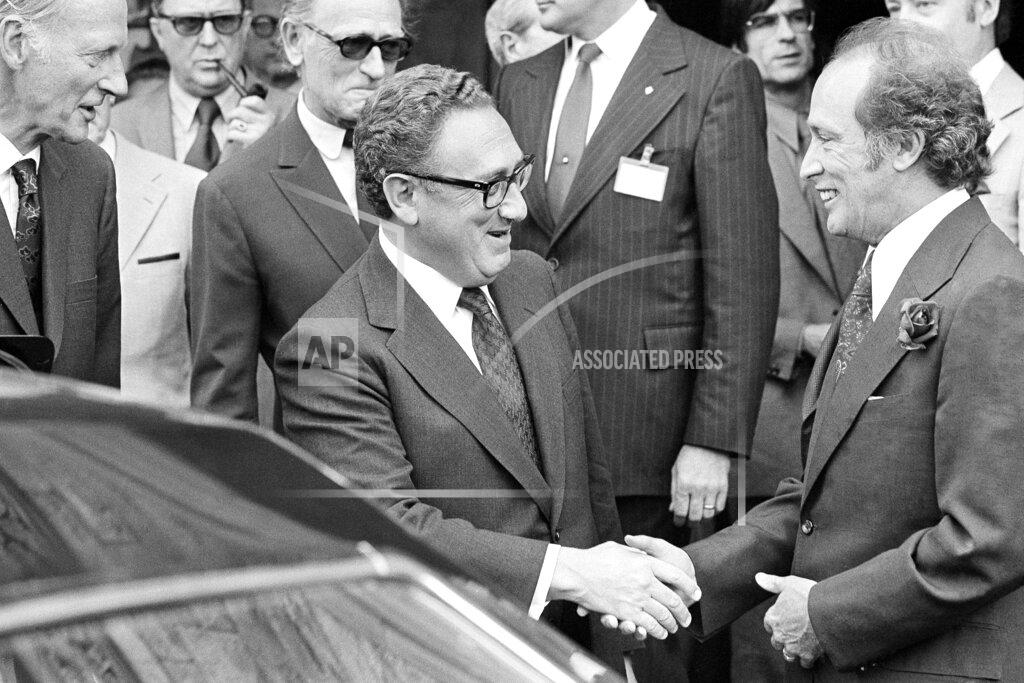
President Nixon completed his week-long tour of five Middle Eastern countries, terming it a success under his limited set of objectives. His trip, the President said, was only the beginning of a much longer journey toward the goal of “a just and lasting peace in this part of the world,” and that the problems ahead were “still enormously difficult.” He and Mrs. Nixon went on to the Azores for an overnight stay.
As President Nixon started his trip home, Israeli planes resumed bombardment of alleged Arab guerrilla bases in Lebanon. The jets bombed targets on the western slope of Mount Hermon and in the Hasbani River Valley. The bombings apparently were in retaliation for the guerrilla killings of three women on June 13 in an Israeli kibbutz. An Israeli official said that President Nixon’s Middle East visit might have been a factor in preventing the Israelis from striking back earlier.
The U.S. House of Representatives shouted down an effort to require congressional approval of President Nixon’s plan to give Egypt and Israel nuclear materials. Rep. Mario Biaggi (D-New York) tried to get the requirement into a $5.3 billion appropriations bill for the departments of State, Justice and Commerce. The House later approved the money bill on a 365-36 roll call vote, sending the measure to the Senate. Members of the Joint Committee on Atomic Energy assured their colleagues the agreements would be closely studied.
The United Arab Emirates, an oil-rich Persian Gulf state, has announced a $400 million emergency aid program for countries hit by inflated food, fuel and fertilizer prices. Foreign Minister Seif Ghobash told U.N. Secretary General Kurt Waldheim in a message, the money would be used for grants to Arab, Asian and African nations in need of drought relief or deficit development assistance.
Federal Energy Administrator John C. Sawhill said the decision of the oil-producing countries to increase the petroleum royalty tax rate “should mean little or no price change at the pump.” Commenting on the decision in Quito, Ecuador, by the Organization of Petroleum Exporting Countries to increase by 2% the royalty charged to oil companies, Sawhill said he had hoped the actual oil price would be reduced.
The police authorities tightened security today at the Houses of Parliament and around Queen Elizabeth at the royal race meeting at Ascot after the bomb attack at Parliament yesterday. Officers said the security surrounding the Queen was the heaviest in the history of Ascot, where fashion annually assumes more importance than the horses. Special‐Branch men, some dressed in gray top hats and morning coats, mixed with the crowds around the Royal Enclosure at Ascot, 30 miles west of London. At the Houses of Parliament, where the explosion damaged 900‐year‐old Westminster Hall, policemen questioned everyone before allowing admission. Until the attack most visitors had found security somewhat erratic. The explosion, attributed to the Provisional wing of the Irish Republican Army, damaged the oldest remaining part of the original Royal Palace of Westminster, which dates from the 11th century. The hall’s famous ceiling of curved oak arches and carved hammer beams remained largely intact, but an annex of offices and a canteen were wrecked.
West Germany’s law on abortion of pregnancy, which had been narrowly approved by the Bundestag on April 26, was signed into law by President Gustav Heinemann, to allow abortion in the first trimester of pregnancy. The amendment to the Fifth Criminal Law Reform Act would be challenged immediately in court, and on June 21, the Federal Constitutional Court ruled, 5 to 3 that the change in the law “shall not enter into force for the time being.”
West Germany’s Bundestag passed its most broad consumer protection law up to that time, the Lebensmittel und Bedarfsgegenständegesetz (Law on Food and Commodities), providing for standards on labeling, safety and sanitation, and regulation of advertising and additives, applicable to food products as well as to tobacco and cosmetic products.
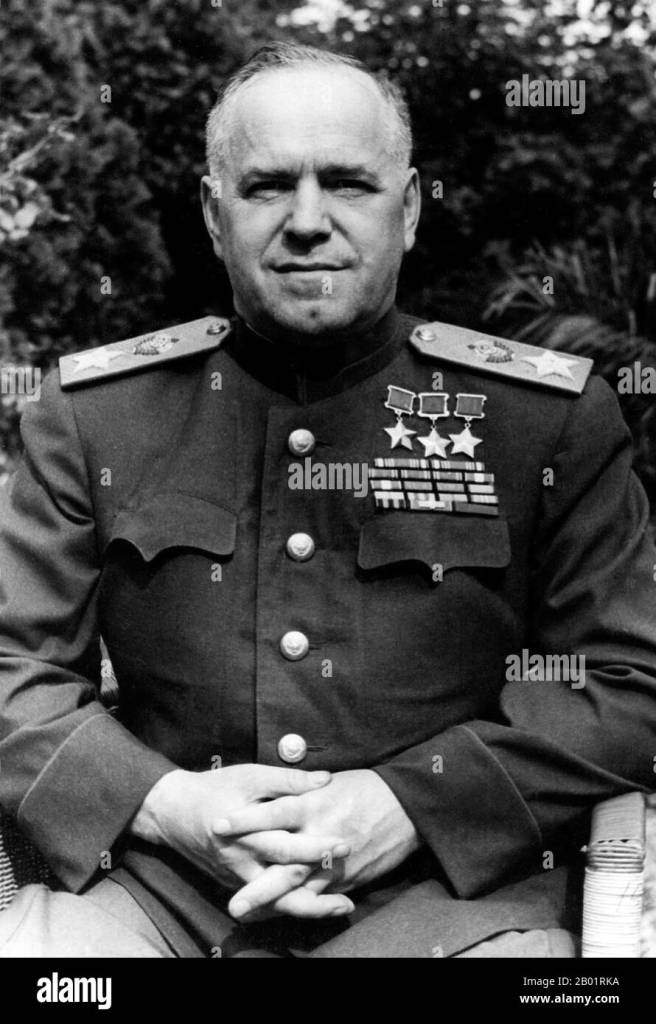
Marshal Georgy Konstantinovich Zhukov, who led the Red Army into Berlin, died today of a heart attack in the Kremlin Hospital, unofficial Soviet sources reported. The Soviet military leader honored four times as a Hero of the Soviet Union, was 77 years old.
Ballet dancer Valery Panov said at a Tel Aviv press conference that Soviet Jews would be persecuted during President’s Nixon’s visit June 27. Panov, a Jew who with his wife was allowed to leave Russia after two years of trying, arrived in Israel Saturday. “The visit of President Nixon to the Soviet Union will quite certainly lead to the persecution of these people (Soviet Jews),” he said, because official persecution was “an ordinary measure” to isolate Jews from a state visitor.
A Cambodian task force pushing up Highway 5, twelve miles north of Phnom Penh, found little rebel resistance and gained full control of Ponhea Loe. More than 300 insurgents were reported killed, with the loss of 21 government soldiers killed and 70 wounded.
The United States accused North Vietnam and the Việt Cộng today of refusing to honor the Vietnam cease‐fire and trying to conquer South Vietnam by military force. A strongly worded United States Embassy statement said that Hanoi continued to ship “massive quantities of war matériel and thousands of their young men into the South, both in obvious violation” of the Vietnam peace agreement. It said that 66,243 North Vietnamese and 17,979 South Vietnamese soldiers had been killed since the cease‐fire was signed in January, 1973.
The South Vietnamese Government “has been ready for all these months to make the cease‐fire effective.” The American Embassy’s statement said. “Yet the North Vietnamese have continued and stepped up their military attacks and are still trying unsuccessfully to conquer the people of South Vietnam by pure military force.” The statement was issued after the Việt Cộng delegation again walked out of the two‐party Joint Military Commission and the four‐party Joint Military Team. The Communists charged that the South Vietnamese and the Americans refused to discuss the question of the Việt Cộng delegation’s diplomatic privileges and immunities.
Three months ago, Lieut. Hiroo Onoda of the Imperial Japanese Army returned to Japan after hiding in a Philippine Jungle for 30 years. He told the Japanese he had stayed there because he thought of “nothing but accomplishing my duty.” Today, Mr. Onoda has told close associates, he thinks he was a fool. The former intelligence and guerrilla officer, ordered to remain on Lubang Island when the Japanese Army withdrew toward the end of World War II, has said he realizes now that his sacrifice was meaningless. Mr. Onoda, who was greeted with an outpouring of national pride and emotion when he came home, says he has pondered his primitive life in the jungle and the modern life of Japan since he got back. He has concluded, “What a fool I was,” according to persons who have talked with him at length. They said Mr. Onoda apparently felt his 30 years in the jungle had been a waste of his life.
A U.S. Navy spokesman said in Tokyo that 16 of 52 men who failed to show up in time for the departure of the aircraft carrier USS Midway from Yokosuka have turned up at the base there. Eight of the men are already back aboard the carrier, he added. Japanese press reports earlier said the 52 men refused to return to the Midway in protest against alleged racial discrimination and long working hours.
The Korean Cultural Property Preservation Assn., a Seoul civil organization headed by former Education Minister Lee Sun Keun, said former U.S. diplomat Gregory Henderson took national treasures worth several million dollars out of the country after he served in the U.S. Embassy from 1958 to 1963. The Korean organization is appealing for their return. Henderson, an associate professor at Tufts University in Medford, Mass., denied that a collection of ceramics he acquired during his Korean tour included any ceramics listed as national treasures.
Two U.S. Air Force squadrons will be withdrawn from Taiwan one soon and one in several months — in line with the Shanghai agreement between President Nixon and Chinese Premier Chou En-lai, reliable sources reported. The newest withdrawals will leave U.S. forces of only about 3,500, the sources added.
Chile’s secret police, the Dirección de Inteligencia Nacional (DINA), was created by Decree Law 521 from the ruling military junta headed by Augusto Pinochet, as “an intelligence-gathering organization” headed by Manuel Contreras, but which “quickly became the center of the state terror apparatus, with a string of secret detention and torture centers throughout the country.
Proposed regulations designed generally to end sex discrimination in education were published by the Department of Health, Education and Welfare. In addition to prohibiting the common practice of limiting home economic courses to girls and carpentry courses to boys, the regulations cover a large number of controversial areas. These include admissions policies; scholarships and other financial aid; curfews in dormitories; counseling and testing that may have a sex bias; financial aid for sororities and fraternities that limit membership to females or males, and a ban on sex-segregated classes in all except sex education.
Leon Jaworski, the special Watergate prosecutor, responding in an interview to the first serious criticism of his seven months in office, justified plea-bargaining as a fair, legal and even necessary way to prosecute Watergate criminals. He also defended the results of the bargains the prosecution has negotiated — the guilty pleas frequently offered by Nixon campaign aides and White House officials. Exploring the President Nixon’s possible motive in ordering the dismissal of Archibald Cox, the first Watergate special prosecutor, the House Judiciary Committee focused on when the President first learned of the Watergate cover-up.
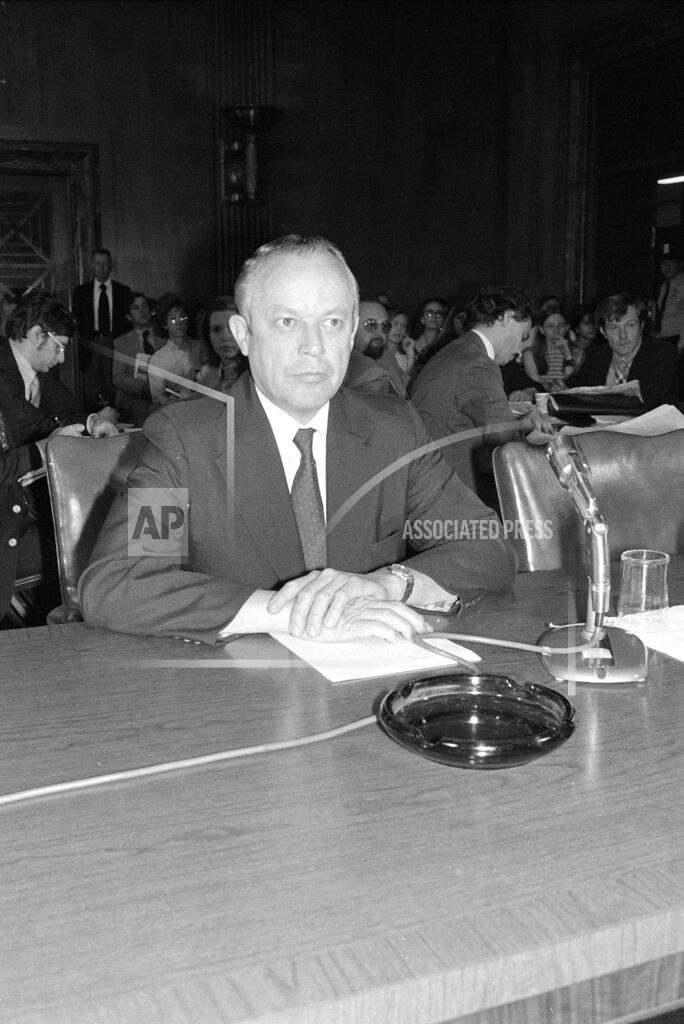
Fornier Attorney General Richard G. Kleindienst, reviewing the early investigation of the Watergate affair, said today that he had put no pressure on subordinates, could not remember receiving any instructions from the White House and had generally withdrawn from any part in the criminal investigation. Mr. Kleindienst testified today before the Senate Judiciary Committee, which is considering the nomination of Earl J. Silbert to be United States Attorney for the District of Columbia. Mr. Silbert was the head of a three‐man team of prosecutors that investigated the burglary of Democratic National Headquarters at the Watergate office building on June 17, 1972.
Mr. Kleindienst underwent a day‐long session of intensive questioning by Senator Sam J. Ervin Jr., Democrat of North Carolina. He defended both Mr. Silbert and Henry E. Petersen, head of the Criminal Division of the Justice Department, against any implication that they had limited the Watergate investigation under pressure from him or from the White House. At the same time, he seemed at a loss to explain his report to the President on April 15, 1973 that the conduct of “everybody over here” at the White House “really created great suspicions in the minds of Silbert and Petersen.”
Ken W. Clawson, the communications director to the President, said today that leaks from the House Judiciary Committee were part of “a purposeful effort to bring down the President with smoke‐filled room operations by a clique of Nixon‐hating partisans.” Mr. Clawson’s statement followed publication of an article today by The Washington Post, based on a confidential memorandum prepared by a staff member of the House committee, that said that President Nixon was “planning to assume some culpability” for the payment of hush money to E. Howard Hunt Jr., one of the convicted Watergate conspirators. In the statement, Mr. Clawson called the memorandum “one‐sided” and noted that the staff member who prepared it was William Dixon, a campaign worker for Senator George McGovern, the Democratic Presidential nominee in 1972.
The Senate completed Congressional action today on a bill raising the Federal contribution to school‐lunch and nutrition programs by $210‐million in the next fiscal year. The bill, passed by voice vote without debate, now goes to the White House. It was approved 354 to 15 yesterday by the House. The legislation raises from seven to 10 cents the minimum Federal contribution, in food or cash, for each school lunch. The $120‐million increase is designed to offset the rising cost of foods.
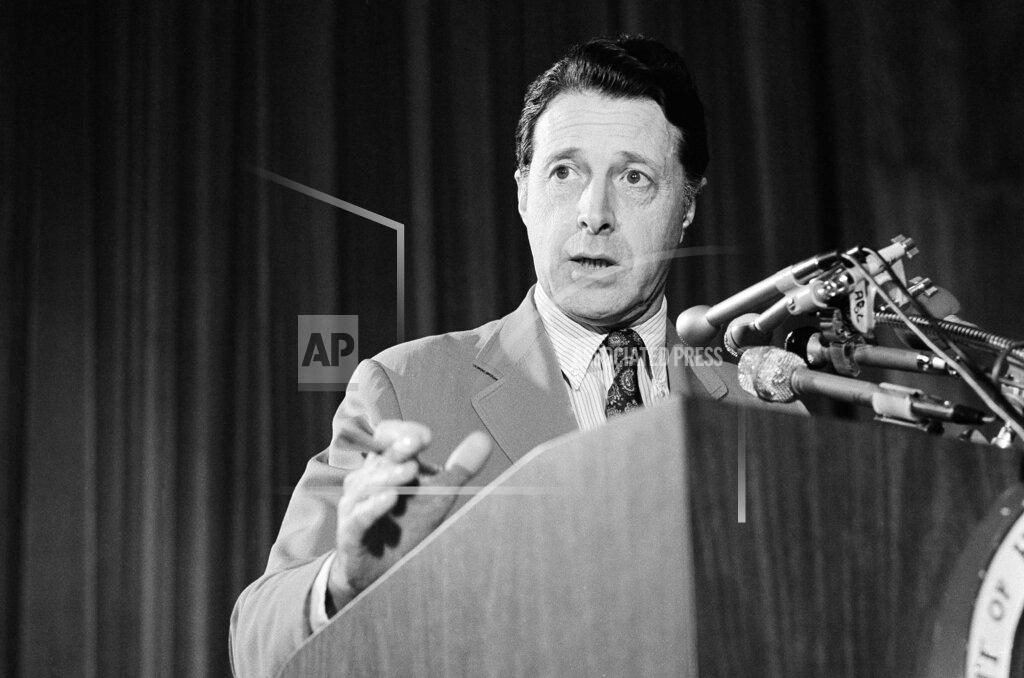
The Senate voted 87 to 4 to confirm John C. Sawhill as the new chief of the Federal Energy Administration. The action came after Sen. James L. Abourezk (D-South Dakota) called for Sawhill’s rejection “as a clear signal to the Administration that the Congress is fed up with fuel pricing policies that fleece the public for the benefit of the major oil companies.” The action on Sawhill, who succeeds Treasury Secretary William E. Simon, was delayed 24 hours after first being approved on a voice vote when Senate leaders learned Abourezk wanted to speak against him.
New machinery to establish control by Congress over federal spending was overwhelmingly approved by the House and sent to the Senate, where it is expected to be passed today and sent to President Nixon. The bill is designed to give Congress equal expertise and power with the President in setting annual budgets. Presidents still would submit spending budgets each January, but Congress-with the expert staff help of a new Congressional Budget Office, plus new House and Senate budget committees would set its own budget limit by each May 15.
A wharf fire in Galveston, Texas, destroyed $6 million in cotton, rice and equipment. It was described as the city’s worst in 25 years. The ruins of two warehouses smoldered on the two-block-long pier as firemen continued to pour water on the smoking bales and watched for new outbreaks. More than 125 firemen from Galveston and nearby communities battled the blaze for more than six hours before bringing it under control. No one was injured. A Fire Department spokesman said that apparently a single cotton bale on the dock had been ignited and sparks had blown into the warehouse. The exact cause was being sought.
Idaho’s rampaging “River of No Return,” a section of the Salmon River, has killed four raft-riding river runners in recent days, prompting the U.S. Forest Service to close it to all boaters as “extremely hazardous and suicidal.” Authorities identified the latest two victims as Mr. and Mrs. Mervin Minish, both about 50, of Bellevue, Washington, who drowned when their raft overturned 60 miles east of Riggins. The couple were part of a 43-member raft party sponsored by the American River Touring Association of Oakland, California. Two members of a 25-person party from Illinois drowned last Friday.
Shelter Island in Suffolk, Long Island, is a summer vacation spot but it has 1,800 permanent residents who, like most other people in Suffolk County, are stanch Republicans. Watergate has not weakened the faith of the island’s residents in President Nixon. Some of them, like Evans Grilling, the former town supervisor known as Mr. Conservative Himself, say that they are dismayed that support for Mr. Nixon seems to be eroding among the nation’s conservatives.
Some legislative opponents of Governor Byrne’s proposed tax program offered an alternative: a statewide property tax that would be levied at a higher rate against business and industrial property. This would, its sponsors said, enable New Jersey to assume the full cost of operating public schools and eliminate the need for a state income tax, which Mr. Byrne recommends.
When a fist fight broke out last night at a gathering of this city’s leading Democrats, nobody was really surprised. “Actually, I was sort of disappointed,” one of them jested afterward. “It was the only one of the evening, and not much of a fight at that.” Still, the set‐to seemed altogether appropriate for the Democrats’ meeting since it involved, on the one fist, an aide to Mayor Frank L. Rizzo and, on the other, some loyal friends of the party’s leader, Peter J. Camiel. For more than a year the two men have been the major antagonists in a fierce and sometimes zany rivalry that has brought a serious schism to their party and new twists to the ancient art of political infighting.
Orioles second baseman Bobby Grich makes Ross Grimsley’s home win over the Twins a little easier by belting three consecutive homers as he drives in 6 runs. The O’s win, 10–1.
Hello, Kitty. Jim Kaat wins his 200th as the White Sox pound Cleveland, 7-3. The Sox support Kaat with 6 homers, 2 each by Dick Allen and Jorge Orta. George Hendrick hits a pair of homers for Cleveland.
Mike Cosgrove almost had his first start in the majors. Houston’s 23-year-old rookie lefthander came in with one out in the first when Dave Roberts, the starter, hurt his left shoulder, and permitted just two bunt singles the rest of the way to pick up his second victory, as the Astros beat the Reds, 1–0. Tommy Helms provided the only score with his third homer of the season, a two‐out blast in the second.
Dave Giusti, in his 12th major league season, was pressed into his first start in four years and pitched five‐hit ball for seven innings as the Pittsburgh Pirates defeated the Los Angeles Dodgers, 2–0, at home in Three Rivers Stadium.
Dow Jones Industrial Average: 830.26 (-2.97, -0.36%).
Born:
Bumper Robinson, American actor (“Webster”, “A Different World”, “Flatland”), in Cleveland, Ohio.
Keith Poole, NFL wide receiver (New Orleans Saints, Denver Broncos), in San Jose, California.
Carlos Méndez, Venezuelan MLB pinch hitter, first baseman, and designated hitter (Baltimore Orioles), in Caracas, Venezuela.
Died:
Marshal Georgy Zhukov, 77, Soviet general who was the commander of Soviet Red Army forces during World War II, died of a heart attack after six months hospitalization. Zhukov, described in the West as “The Eisenhower of Russia”, was the only World War II hero to receive four Hero of the Soviet Union medals and had commanded Soviet forces from the defense of Moscow in 1941 to the capture of Berlin in 1945.
George Kelly, 87, American playwright, and winner of the Pulitzer Prize in 1925 for Craig’s Wife.

 History Diaries