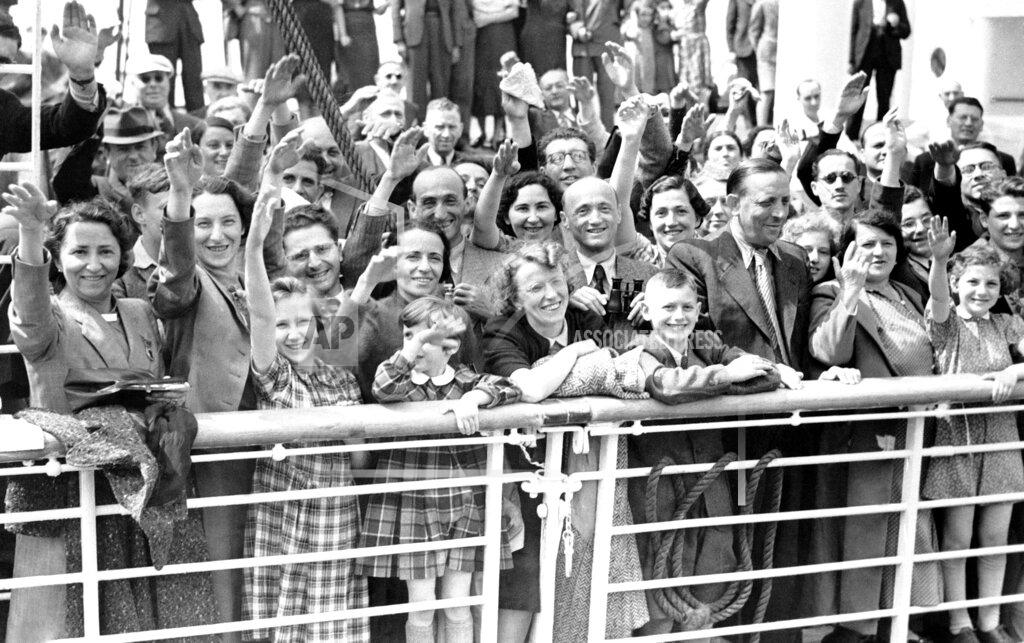
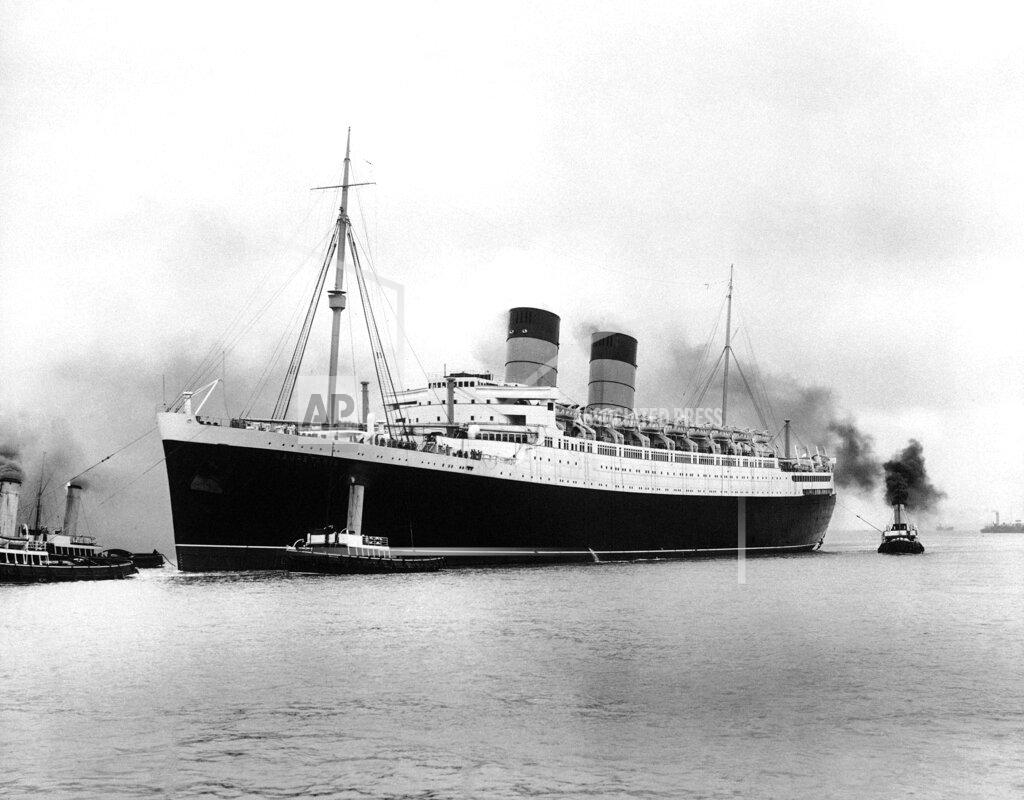
The five-week cruise of 907 Jewish refugees in search of a country that would admit them ended here today when the St. Louis docked in Antwerp harbor. Although the ship docked soon after 2 o’clock this afternoon the contingent of 272 allowed to land in Belgium could begin debarking only around 7 o’clock, for meanwhile representatives of France, Britain, Belgium and the Netherlands as well as representatives of the American Joint Distribution Committee and other Jewish aid organizations were busily engaged in dividing the passengers among the various countries.
The Belgian contingent entrained tonight for Marneffe, near Brussels, where it will remain until American visas are received. Antwerp authorities were severe in dealing with the refugees. They were strictly isolated from the beginning and were placed in wooden third-class coaches on a siding. Along this track runs an iron barrier separating the yards from the street. Some friends, relatives and sympathizers had gathered outside this barrier hoping for a brief chat, but the police shooed them to the other side of the street from where they had no chance to communicate with the refugees. There was an absolute ban on the boarding of the ship by reporters or even approaching the passengers after they had landed, and if a few succeeded in breaking this rule it was done at the risk of being jailed on a misdemeanor charge.
In all fairness it must be stated that the St. Louis refugees looked well and the majority of them appeared to be fairly prosperous. Ever since the Spanish war the word “refugee,” of course, has been associated with starving people in rags; so one was unconsciously led to expect that tragedy would also be stamped on these people from the refugee ship. But for the solemn and anxious faces peering from behind the rails this could have been an ordinary cruise ship or any transatlantic liner as far as the appearance and general demeanor of the passengers were concerned. But tragedy was there just the same, and as one passenger told a reporter: “Eighty percent of us would have jumped overboard had the ship put back to Hamburg.”
An alleged plot to assassinate Carol II of Romania and Prime Minister Armand Călinescu was revealed as seven former members of the banned Iron Guard organization were arrested. The reported plan was to throw grenades at the royal box during Sunday’s horse race at the Bucharest race track. This brought a nationwide round up of former members of the outlawed fascist Iron Guard.
Joseph Goebbels told a pro-Nazi crowd in the Free City of Danzig that reunification with Germany was “inevitable”, and any power that tried to prevent it was making “a mistake if it bases its calculations on the assumption that Germany is weak. It is strong, and unlike some other states whose destinies are in the hands of weak men, this new Germany is led by Adolf Hitler.” Dr. Goebbels, who will speak tomorrow at the final meeting of the Danzig Week of Culture, was constantly interrupted in his talk tonight by choruses of “We want to come home to the Reich,” “One people, one Reich, one Führer” and “We want the Führer in Danzig.”
“The Führer,” Dr. Goebbels declared, “already has given expression to your desire in his speech before the Reichstag, when he said, ‘Danzig is a German city and wants to return to the Reich.’ The world is making a very dangerous mistake in its belief that he would give way to threats and blackmail. It should be realized now that he speaks no empty words.
“You Danzigers may look with confidence to the future. The National Socialist Reich stands side by side with you. Germany is everywhere, and where there are Germans, therefore, Germany is with you.
“I myself have seen that the feeling that you belong to the Reich is not a product of recent times, as the British and French press maintain, but that you have felt that way ever since the rank injustice separating you from Germany was perpetrated.
“The spontaneous enthusiasm with which you have received me tonight is proof of the blood ties that unite you with the great German Reich and shows your determination, come what may, to keep faith with the great Fatherland.”
[Ed: Let’s see how much you want the Führer in 1945 when Ivan comes calling.]
The Norwegian, Swedish, and Finnish governments rejected an offer from the German government to negotiate a mutual non-aggression pact. The German offer was spurred by U.S. President Franklin Roosevelt’s suggestion that Germany’s neighbors felt threatened by aggression. These states also announced their opposition to a joint Anglo-French-Soviet guarantee of the independence of the Baltic States. The Nordic foreign ministers discussed the German offer at length, but agreed to remain aloof from all commitments to rival power groups.
The Danish government was the only Scandinavian power to accept the German offer of a mutual non-aggression pact.
Relations between the Finns and the Soviets began to cool, especially as the Soviet delegation to the League of Nations blocked League approval for the refortification of the Aaland Islands. The Danish government was the only Scandinavian power to accept the German offer.
With the return of Generalissimo Francisco Franco’s Interior Minister and brother-in-law, Ramon Serrano Suñer, from an official visit to Italy and the return of several of the best Nationalist staff generals from a similar mission in Germany, the Spanish press is devoting considerable space to conjecture over how close will be this country’s future collaboration with the Rome-Berlin Axis. It has already been announced from Rome that Count Galeazzo Ciano, the Foreign Minister, will visit Spain in August. Another development indicating the present trend of Italo-Spanish relations was the appointment of General Gastone Gambara, who commanded the Italian legionnaire forces in Spain, as military attaché at the Italian Embassy here.
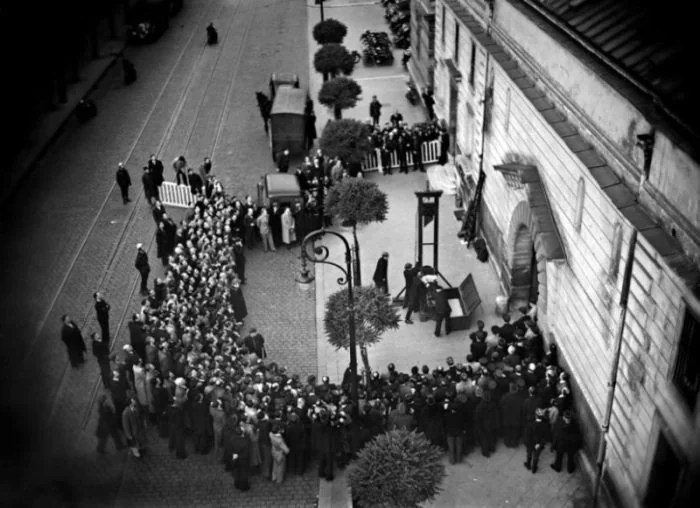
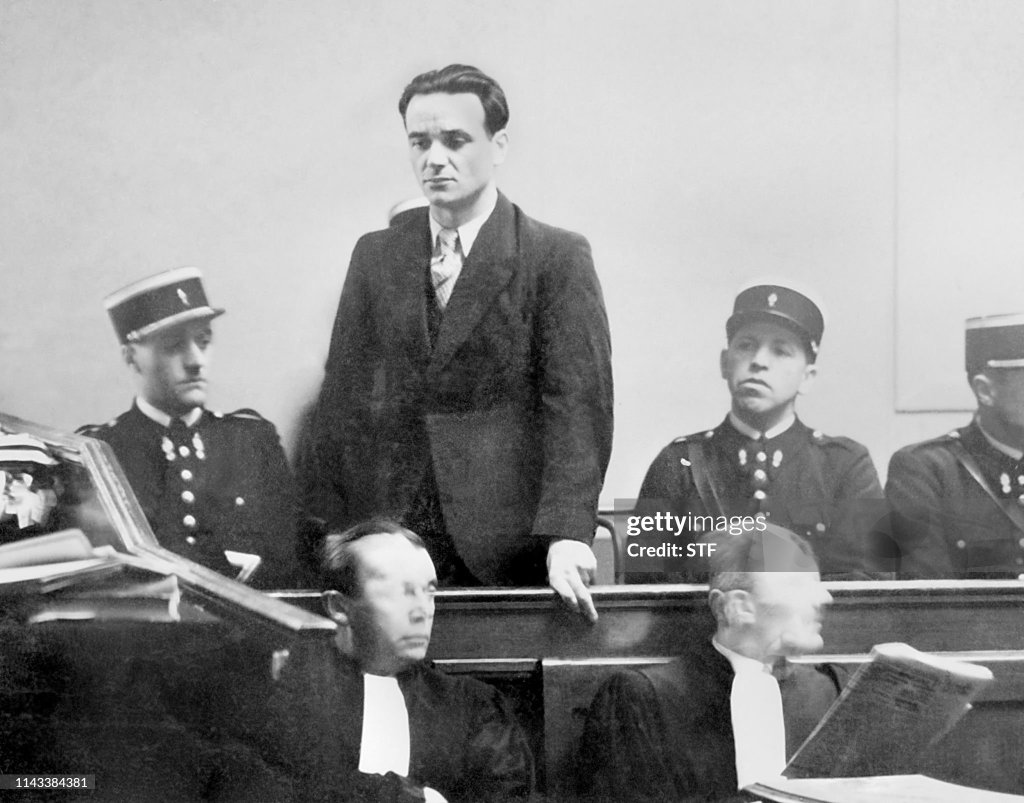
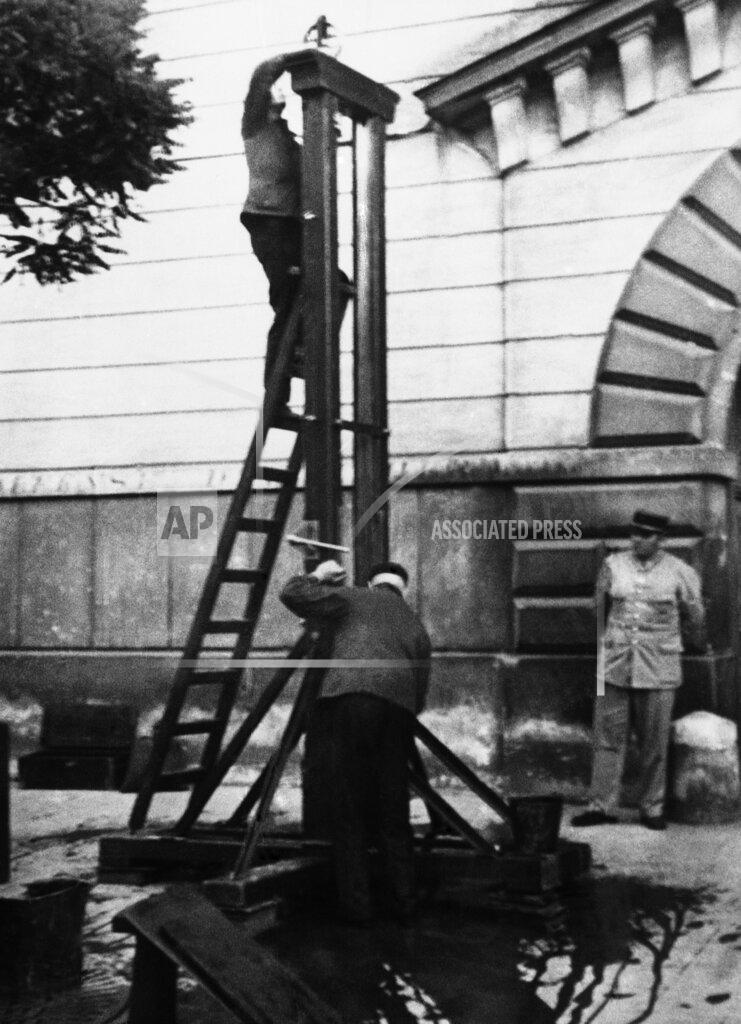
The last public execution takes place in France. Eugen Weidmann is guillotined for murder in Versailles outside the prison Saint-Pierre. When asked if he had remorse for his victims he had killed, he replied, “Remorse, what for? I didn’t even know them.”
In Paris, Frederic Joliot, co-winner of the 1935 Nobel Prize for chemistry, is trying to find a way to make a $2 pound of uranium give up as much heat or power as is now obtained from burning $10,000 worth of coal. Atomic power could unlock vast resources of energy, if only scientists could find a way to harness it…
French Championships Men’s Tennis: American collegiate champion Don McNeill beats countryman Bobby Riggs 7–5, 6–0, 6–3.
44th Women’s French Championships: Simonne Mathieu beats Jadwiga Jedrzejowska (6–3, 8–6).
The Roosevelt Administration’s foreign policy will have another hurdle of criticism, in addition to revision of the Neutrality Act, when the Maritime Commission’s bill to create a war-risk marine insurance agency reaches public debate. The measure was introduced in the House by Representative Bland of Virginia more than two weeks ago at the request of the Administration, and it was believed it could be reported to the House without holding hearings. Mr. Bland, who is chairman of the Merchant Marine Committee, to which the bill was referred, said today that he had been told that some of the proposal’s provisions were “pretty sweeping,” and that he would ask his committee to hold hearings before it reported the measure.
As sent to Speaker Bankhead from the Maritime Commission, the bill would prepare for a foreign war in which the United States would be neutral. The measure would be open to the same objections that are being advanced against the Administration’s recommendations for revision of the Neutrality Act. The Maritime Commission would provide marine insurance and reinsurance from a revolving fund set up in the Treasury. This insurance would cover war risks on American vessels, their cargoes, their crews and foreign vessels “engaged in the foreign or domestic trade of the United States.” Commercial vessels owned or controlled by the United States Government would also be covered.
A sliding scale of benefits to injured seamen would be established, ranging from $2,000 to $5,000. Captured seamen would continue to draw full wages or have them. paid to stipulated beneficiaries. Death benefits would go to their families and all benefits of whatever nature would be free from liability for any kind of debt and would be non-assignable. The detention benefits would apply to seamen aboard a foreign vessel insured with the commission.
Mr. Bland said that the Merchant Marine Committee, at its next regular meeting on Tuesday, would not have time to consider this bill, but that he thought hearings and discussions would be started soon, with every prospect that some effort would be made to obtain its enactment at the present session. Opponents of the “cash-and-carry” provisions of the Administration’s neutrality policy, as well as the repeal of the arms embargo, would find in this bill a plan to facilitate commerce with such belligerents as had control of the seas. These, in both the Senate and the House, are already laying their plans to fight the neutrality revisions the Administration favors.
Relatively easy passage of the tax bill through the House Monday was forecast today when the report of the minority members of the Ways and Means Committee was made. public. Signed by all of the ten Republicans on the committee, it promised Republican support for the measure. The minority members expressed regret over the absence of three further changes in the majority report, saying that were these in the bill they could have given it wholehearted support. The changes they desired were:
- Strike out the portion relating to continuance of the “nuisance taxes” and the three-cent postage rate.
- Make the repeal of the undistributed profits tax and the substitution of the flat corporate income tax effective January 1, 1939, instead of January 1, 1940.
- Make the loss carryover provisions applicable to last year’s losses, so that they could be applied to 1939 income.
Even without these features in the bill, the Republicans announced that “we support it with reservations.”
“We are in favor of the tax-relief provisions of the bill so far as they go — which is not far enough in our opinion — but we believe that the proposed relief should be given now and not held off until next year,” their report said. “We challenge the Democratic majority to offer any valid and compelling reason for the postponement of the effective date of several of the major relief proposals. Just as it is no solace to a drowning man to assure him that he will be thrown a life preserver tomorrow, so the prospect of future tax changes is no relief from present-day burdens and restrictions. Since existing tax methods are acknowledged — even by the Treasury Department — to be business deterrents, it follows that any delay in modifying them acts to defer and impede recovery, which under this. Administration the country has long sought but never achieved. During the past six years the New Deal has not hesitated to make tax increases effective as of the first of the year in which the respective revenue measures have been enacted, and we of the Republican minority cannot see how the Democratic majority can consistently refuse to make tax relief currently effective, especially when no loss of revenue is involved.”
Senate leaders arranged today to speed action on the Relief Bill, while strategists of the economy group decided to concentrate their efforts on preventing any increase in the $1,735,000,000 measure. Passed by the House early today after a fourteen-hour session, the bill will be considered by a Senate appropriations subcommittee next Tuesday.
Chairman Adams, Democrat, of Colorado said that he hoped to send the bill to the Senate floor toward the end of the week, and Senator Barkley, majority leader, promised that it would receive right-of-way. Mr. Barkley said that speed was essential because the existing WPA appropriation would run out on June 30. In addition, the WPA has said that the new allotment should be approved before that date in order to avoid administrative confusion.
Scoring in the ninth inning, the New York Yankees beat the Tigers, 1–0, and ended Detroit’s winning streak at nine games. Tommy Henrich’s single produced the run that decided a pitching duel between Red Ruffing and Buck Newsom.
The Brooklyn Dodgers also won in the ninth, getting all their runs then to subdue the Chicago Cubs, 5–0.
The Philadelphia Phillies overwhelmed the Pittsburgh Pirates today, pounding three Pittsburgh pitchers for 16 hits and an 11–2 victory.
The New York Giants captured their ninth straight, defeating the St. Louis Cardinals, 7–5, despite three Cardinal home runs.
After a last stop in St. Johns, Newfoundland, King George and Queen Elizabeth sail for England. Before he leaves, the king makes a radio address in which he expresses his desire for peace.
British-Japanese tension in the Far East increased again at Shanghai yesterday when Japanese troops aided by Chinese police attempted to occupy a closed police station in the British defense sector. The Japanese withdrew after a sharp exchange of words. In Tientsin the shortage of perishable foods grew more acute as the Japanese maintained their blockade of the British Concession, and a British exporter was arrested.
In Tokyo hopes for a peaceable settlement of the Tientsin dispute were revived by a Foreign Office statement that appeared to narrow the controversy down to its original basis as a police matter.
In London official quarters appeared slightly more optimistic over the possibility of an amicable settlement, although deep concern continued to be felt.
Admiral Yarnell, commander-in-chief of the United States Asiatic fleet, will arrive at Tientsin tomorrow. The Navy Department announced the arrival of two American warships at Chefoo, south of Tientsin. There were unconfirmed reports that Britain and France had suggested that Washington cooperate by sending three cruisers to the Far East.
Britain’s “humiliation” provided much amusement for the German press, which mocked London’s seeming inability to combat Japan’s threats and also saw a sharp blow to the interests of the Soviet Union. The Italian newspapers joined in the chorus of glee at Britain’s discomfiture.
Dow Jones Industrial Average: 135.31 (+0.64).
Born:
Donald Anderson, British Labour Party politician, born in Swansea, Wales, United Kingdom.
Hanna Johansen, Swiss writer, born in Bremen, Germany.
James Gadson, American drummer and session musician, born in Kansas City, Missouri.
Died:
Eugen Weidmann, 31, German-born serial killer and last person to be publicly executed in France (guillotined).
Naval Construction:
The Marine Nationale (French Navy) Élan-class aviso dragueur de mines (minesweeping sloop) Gazelle is launched by Arsenal de Lorient (Lorient, France).
The Marine Nationale (French Navy) Chamois-class avisos dragueur de mines (minesweeping sloops) Annamite, Chevreul, and La Surprise are launched by Arsenal de Lorient (Lorient, France).
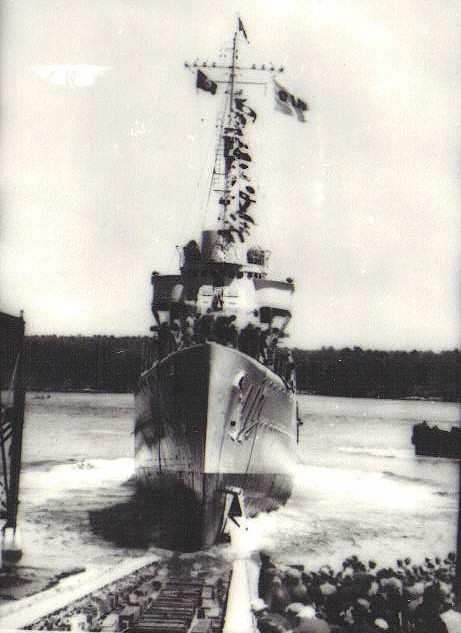
The U.S. Navy Sims-class destroyer USS Hughes (DD-410) is launched by the Bath Iron Works (Bath, Maine, U.S.A.).
The Nihon Kaigun (Imperial Japanese Navy) light cruiser HIJMS Katori (香取), lead ship of her class of 4 (3 completed), is launched by the Mitsubishi Shipyard (Yokohama, Japan).


 History Diaries