
Amid speculation that Ambassador Lodge will have to be replaced in Vietnam because of his possible role as a Republican presidential candidate, there is also a rumor that Attorney General Robert Kennedy might be named to succeed Lodge; President Johnson asks him to stay in his present role. Attorney General Robert F. Kennedy has offered to serve in South Vietnam “in any capacity,” but President Johnson has rejected the offer and asked him to stay at his present post. It is understood that the question arose when the government was considering what to do if Ambassador Henry Cabot, Lodge’s involvement in the Republican Presidential nomination led to his sudden resignation. At that time, the Attorney General wrote a letter to the President saying that he would go to South Vietnam to do anything the President wanted him to do there. The President telephoned him immediately and expressed with some feeling his gratitude for the Attorney General’s offer and his loyalty, but said that he was not prepared to act on the suggestion.
There were several reasons for this. First, the President wanted him to remain at the Justice Department during the present critical phase of the civil rights problem. The Administration is concerned about racial conflict this summer and during the election in November.
Second, there has been a lot of speculation that the President was on bad terms with the Attorney General — he denies this — and that he was opposing those who wanted Mr. Kennedy to be the Democratic party’s Vice‐Presidential nominee. In the light of this, the President did not want to send the Attorney General to Saigon and be charged, as he believed he would be, with banishing him from the country during the nominating conventions and the campaign.
Third, it is understood that the President thought that the Kennedy family had gone through enough sorrow in the last few years without having to sustain the anxiety of having its eldest surviving son and the Attorney General’s large young family in a critical war zone.
An unnamed top U.S. military adviser leaving after three years in Vietnam reports on the improvement of the Việt Cộng in recent years and claims that over 90 percent of their weapons come from the U.S. military aid program for South Vietnam. The Việt Cộng guerrillas, who control much of the countryside, are “much better armed and professionally more competent” today than they were three years ago, he said at a news conference before his departure for Washington. The biggest problem the United States faces in South Vietnam, the officer said, is the problem of getting the Vietnamese Government and Army to accept American advice.
He said that the quality of Vietnamese Army personnel, had improved since President Ngô Đình Diệm was overthrown last November and that the effectiveness of the Vietnamese Government forces was 50 to 100 percent better than three years ago. “But this rate of improvement was not enough to win the war,” he said. The officer’s outspoken opinions were given to reporters on condition that he not be quoted by name. He was permitted to be identified as a United States Army officer of the grade of major or colonel. His comments were similar to informal comments heard from American military advisers in the field but were in sharp contrast to those of official United States military spokesmen in Saigon
“The Vietnamese must improve their management and direction of the war,” he said. “They need dedicated, competent leaders and must arouse the same high degree of discipline and dedication in the armed forces as the Việt Cộng have aroused among their guerrillas. One of our main problems is to get the Vietnamese to establish some realistic priorities,” the officer continued “The leadership in South Vietnam thinks this war can be settled by political means. Politics, corruption and nepotism are the main Vietnamese vices. Many of the generals here have become generals through political intrigue and not because of their military talent. There are too many second‐raters running the war on a provincial level.”
ARVN forces beat back a Việt Cộng attack on Đức Hòa, killing 19 but take 51 casualties of their own. Vietnamese gunners manning two 105-mm. howitzers blasted a Communist Việt Cộng battalion from Đức Hòa today after the guerrillas had all but captured this government stronghold 10 miles west of Saigon. The war’s tempo was rising after a relative lull for a month. About 600 guerrillas hit Đức Hòa at 3:30 A.M., setting off a three‐hour battle whose sights and sounds carried to Saigon like a thunderstorm on the horizon. The Vietcong force was backed by mortars, recoilless rifles and machine guns. The defenders suffered 51 casualties, including 15 dead.
Nineteen guerrillas were known to have been killed and United States advisers estimated the toll may have reached 50 or 60. Most of the Việt Cộng casualties were carried away on the retreat. The artillerymen, whose two stubby, American‐made 105’s helped turn the tide at Đức Hòa, drew praise from an American officer who arrived on the scene with reinforcements a few hours later. Operating at times under direct attack and shooting at point‐blank range, the two gun crews fired 322 shells in less than an hour. Bodies of guerrillas lay in the main square of Đức Hòa, a town of 7,000, where they had been cut down while trying to raise a Communist flag.
Virtually every concrete building in the town was pockmarked with bullet holes. Blood soaked the muddy earth around the district chief’s house, where Việt Cộng riflemen had massed for an attack on the government’s artillery. The guerrillas appeared to lose heart about 5 AM. The attack slackened from then until dawn. At 6:30 AM, defenders moved out of their positions and drew only light sniper fire. This soon ended. A Ranger battalion summoned from nearby checked the surrounding countryside without finding any guerrillas.
However, six Vietnamese — two men, two women and two children — were killed in midmorning by a mine that wrecked a bus on a road a mile east of Đức Hòa. The Việt Cộng had apparently laid the mine prior to their attack.
United States officials emphasized today that they would not relax their diplomatic and limited military pressure in Laos until the neutralist Government there had been revitalized. Noting that the situation in Laos was settling down some‐what, officials reviewed the events of the last month. They said they had decided not to allow pro‐Communist forces to digest the “large hunk of salami” in territory and psychological advantage gained in seizing additional territory. United States jet reconnaissance flights will be maintained and defended as necessary, officials said. Further pressure is expected from the bombing flights by propeller‐driven T-28 planes supplied by the United States. It was disclosed today that the planes were being flown by Thai as well as by Laotian pilots, but not by Americans. The flights have been a form of “escalation” in the contest between the United States‐supported neutralist coalition Government of Prince Souvanna Phouma and the Communist‐led Pathet Lao, bolstered by troops and supplies from North Vietnam.
Communist‐led Pathet Lao troops staged a lightning counter‐attack in a driving rain late yesterday and recaptured the summit of Phou Kout hill from neutralist forces, a neutralist military spokesman said today. The neutralists had retaken the hill earlier in the day. The new attacking force was comprised of Pathet Lao and Communist Vietminh units from North Vietnam. The spokesman said neutralist losses were 11 dead.
Pope Pius XII told the United States in 1943 that he could not specifically denounce Nazi atrocities without also naming those of the Communists and thus displeasing the Allied side in World War II. A record of the Pope’s comments, which have a bearing on the controversy aroused by a contemporary German play, has been released in a collection of diplomatic documents by the State Department. The play is “The Deputy” by Rolf Hochhuth, a West German. It accuses Pope Pius of having refused to condemn the Nazi murders of Jews for “reasons of state.”
The U.S. State Department, barely disguising its displeasure with other arms of the government, said today that it had an understanding that United State citizens would not fly any more combat missions in the Congo. The department suggested, without actually saying so, that it disapproved of direct United States participation in raids against rebel Bafulero tribesmen in the eastern Congo. It obtained assurances against further violations of policy, the Department indicated, even though it held to the public position that the flights were arranged by the Congolese Government and two or three civilian “individuals.” Officials gave only perfunctory “no comment” replies to reports that the handful of American pilots in the Congo were recruited and supervised by the Central Intelligence Agency.
The United Nations precipitated a heated controversy here today by accusing “extremist elements known to the Cyprus Government” of the abduction last week of two British members of the international peacekeeping force. This bluntest of public accusations yet made here against the activities of armed irregulars evoked a formal denial by the Cypriot Government that it knew the extremist elements responsible for the abduction. The dispute coincided with a resumption of shooting incidents on the eve of the Security Council debate to extend the mandate of the peace force. Although the statement avoided specifying the extremists as Greek Cypriots, its tone and phrasing made it clear that the statement was directed at them and at the Greek Cypriot authorities.
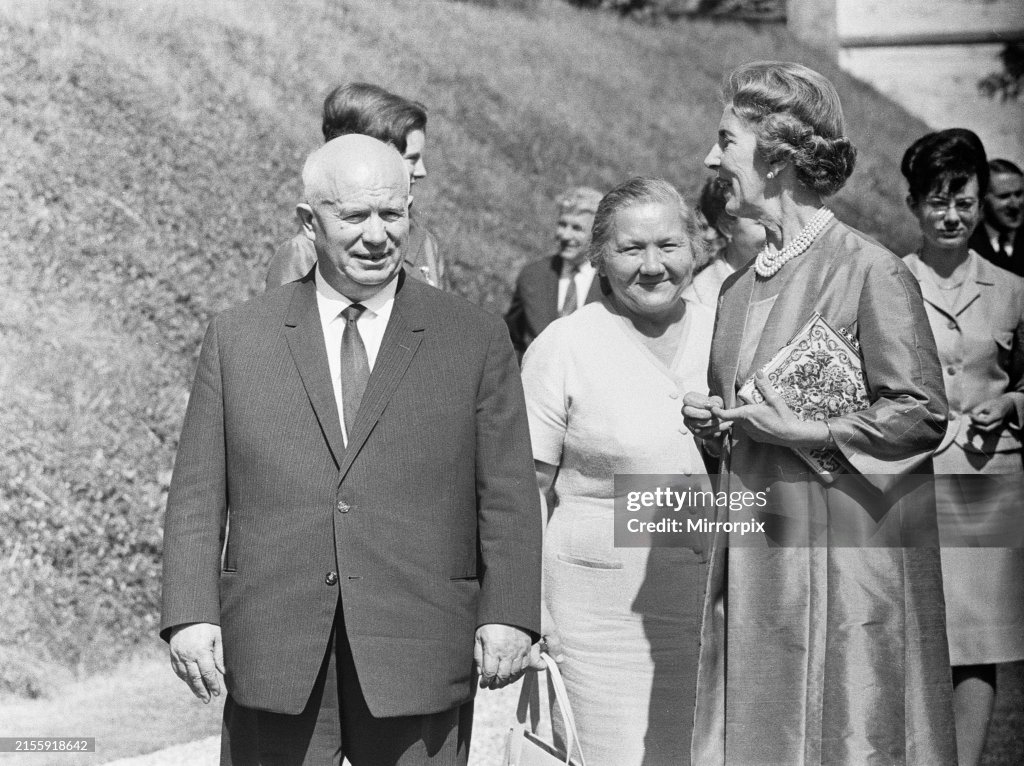
Visiting Soviet Premier Nikita Khrushchev and his host, Danish Premier Jens Otto Krag, talked trade this morning and set up a committee of officials to pursue the subject further. Mr. Khrushchev who arrived yesterday on a 19‐day goodwill tour of Denmark, Sweden and Norway, later visited a middle‐income housing development and said the construction work was better than that in the Soviet Union. “But one must remember” he added, “that Soviet building workers often come to the cities from the country, and that can be seen in their work.” Then he and Mrs. Khrushchev made their way past a large group of cheering schoolchildren to a kindergarten, where they were entertained with songs.
Malaysia made another concession today and agreed to a meeting with Indonesia and the Philippines to prepare an agenda for a conference of their heads of government. The meeting began this morning. Indonesia was represented by Dr. Subandrio, First Deputy Premier and Foreign. Minister; Malaysia by Tun Abdul Razak, Deputy Prime Minister, and the Philippines by Salvador P. Lopez, former Foreign. Minister who has served as a special envoy in arranging the Tokyo talks. Information was received last night that Thai observer teams were at checkpoints on the Malaysian‐Indonesian border to verify a token withdrawal of Indonesian guerrillas from Malaysian territory. Malaysia abandoned her previous insistence that no talks at any level could open until the guerrillas had started to withdraw.
A missing persons investigation was launched in Fallowfield, Manchester, UK, as police searched for twelve-year-old Keith Bennett, who went missing on the previous evening. The boy’s stepfather, Jimmy Johnson, became a suspect; in the two years following Bennett’s disappearance, Johnson was taken for questioning on four occasions. Detectives searched under the floorboards of the Johnsons’ house, and on discovering that the houses in the row were connected, extended the search to the entire street.
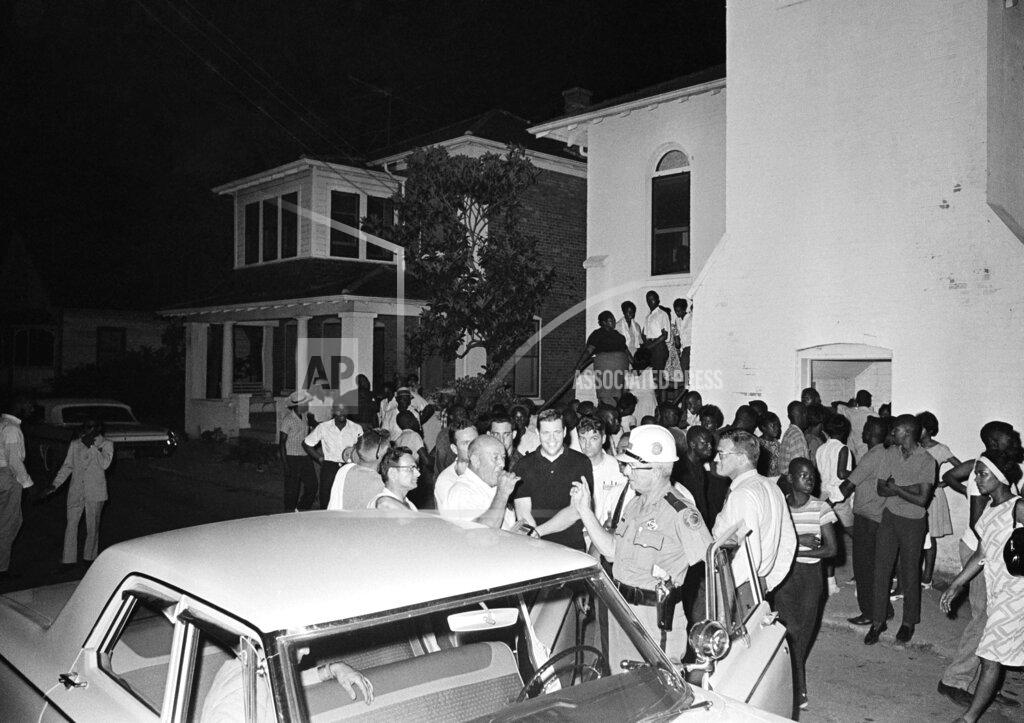
An arson fire destroyed the Mt. Zion (African-American) Church near Philadelphia, Mississippi. Mt. Zion Church was burned to the ground, one of 20 black churches to be firebombed across the state during that Freedom Summer. White supremacists burned the church with the intent of attracting civil rights workers to Neshoba County, and subsequently murdered the three men who arrived four days later to investigate. The killing of James Chaney, Michael Schwerner, and Andrew Goodman was a signal event in the history of the American Civil Rights Movement.
The U.S. Senate took the next‐to-last step toward passage of the civil rights bill tonight when it approved by an overwhelming margin the Dirksen‐Mansfield substitute for the House‐passed bill. The vote was 76 to 18. Only Southerners voted against the substitute. Immediately after the vote, Senator Mike Mansfield of Montana, the Democratic leader, said he hoped for final passage of the bill tomorrow, but was “more hopeful for sometime Friday.”
On Friday it will be just a year since President Kennedy sent his civil rights bill, with accompanying message, to Congress. The Dirksen‐Mansfield substitute comprises the package of about 80 amendments that Everett McKinley Dirksen of Illinois, the Republican leader, assembled in cooperation with the leaders of the civil rights coalition and the Justice Department between March 26 and May 26. This package had the legislative status of “an amendment in the form of a substitute” for the House bill. As such, it had to be called up last, after other amendments had been disposed of.
The substitute was also sponsored by Mr. Mansfield and by Hubert H. Humphrey of Minnesota and Thomas H. Kuchel of California, the Democratic and Republican floor managers of the bill. What the Senate did by its vote tonight was to make this substitute bill the pending business. Immediately after the vote, the bill was given a third reading — an action that foreclosed any further amendments.
Just before adoption of the substitute, Senator Richard B. Russell of Georgia, who led the band of 19 Southern opponents of the bill in a 75-day filibuster against it, rose and said in a voice brimming with bitterness: “I must say I find the Dirksen‐Mansfield substitute more obnoxious than the House bill.” The two sections of the bill dealing with discrimination in public accommodations and employment, Mr. Russell said, had been drawn “to make this a sectional measure aimed at the South… The bill is unfair, un‐American and unjust,” Mr. Russell declared. “We deserve better than that at the hands of the Congress.”
Mr. Humphrey replied: “It was with real heavy heart that I heard this bill described is a sectional bill. The process of legislation requires accommodation. Ultimately the effectiveness of the bill will depend on State Governors and local communities. On my honor I say it, there was not one scintilla of sectionalism on my part.”
While the Senate debated the civil rights bill today, Senator Barry Goldwater debated with himself. Political associates said they expected Mr. Goldwater to vote against the bill on final passage on the grounds that the public accommodations clause and the fair employment practices section were unconstitutional. Mr. Goldwater himself, however, said that he was still trying to make up his mind. He may issue a statement tomorrow.
Tonight, when the Senate approved the Dirksen‐Mansfield substitute for the House‐passed civil rights bill, Senator Goldwater was paired for the substitute against Senator John G. Tower, Texas Republican, who was against it. That is, the two Senators of opposing views agreed not to vote on the question. However, Mr. Goldwater’s being recorded as for the substitute does not necessarily mean he will back the bill on the final vote. He may just have preferred the substitute to the House measure. Although a vote by Mr. Goldwater against the bill would be no surprise, it might intensify efforts of liberal and moderate Republicans to prevent the conservative Arizonan from winding the Republican Presidential nomination. It might also enhance their chances of success.
According to an Associated Press poll of delegates to the Republican National Convention, Mr. Goldwater now has 677 votes, or 22 more than the number necessary to nominate. This is close to Mr. Gold‐water’s personal estimate, but well ahead of that of his campaign headquarters, which claims only 628 “publicly committed” delegates. United Press International put Mr. Goldwater’s total at 658 delegates. In all of these vote totals, however, most of the delegates are not legally committed to Mr. Goldwater; they are personally pledged or pledged as a result of state convention instructions, and could shift their allegiance before the first ballot is taken.
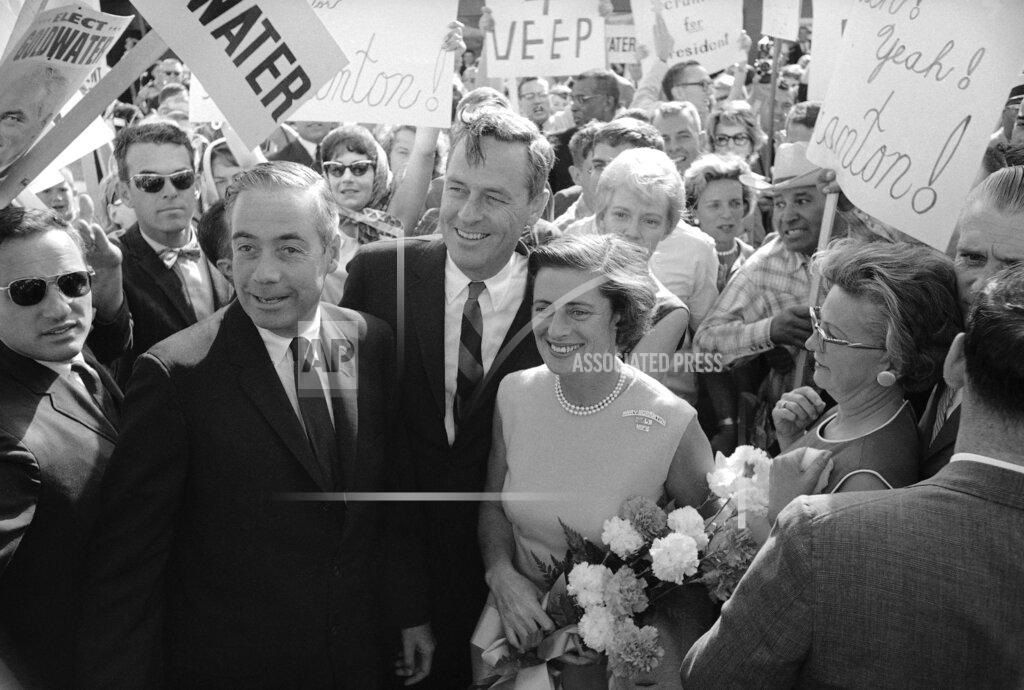
Pennsylvania Governor William W. Scranton assailed tonight Senator Barry Goldwater’s refusal to debate him but said he did not mean to question the Arizonan’s personal courage. He declared that no one could win the Presidency while he was carefully guarded from the press and public. The Pennsylvania Governor promised that if he won the Republican nomination for President he would wage “the strongest, fightingest campaign America has ever seen.” At a news conference earlier in the day in St. Louis, Governor Scranton said the Senator’s refusal to debate “indicates an apparent lack of courage to face people.” In Denver later, he told a questioner that “my use of the word ‘courage’ was perhaps ill‐advised.”
Most of the nation’s Republican Governors oppose Senator Barry Goldwater’s candidacy because they are apprehensive over his policies, private conversations during the last few days have indicated. In some cases there also appears to be ambition behind the opposition — ambition to create a personal national following, or to carve a personal national niche out of the turmoil that will come as the “stop Goldwater” drive either succeeds or fails. More often, however, an open or a barely concealed animosity, to the Senator’s candidacy is traceable to nagging worries that the Senator just does not know what he is talking about on a lot of subjects. Then there is the concern that a Goldwater victory might bring to the forefront of the government, political extremists who are without experience in administration, and who would be equipped only with a set of slogans as the basis for decisions.
In Cleveland today, President Johnson made a strong plea for labor support today in another of his demonstrations of how to campaign without campaigning openly. He received an enthusiastic response from 5,000 delegates to the annual convention of the Communications Workers of America who filled half of the barn-like Cleveland Municipal Auditorium. On his way there from his helicopter landing point at Edgewater Park, Mr. Johnson was cheered by tens of thousands of Clevelanders, mostly along Superior Avenue and in Public Square. At the corner of Superior and East Sixth Street, his closed car was all but overrun by crowds surging out from the curbs. There and in Public Square he emerged briefly to shake hands with those thronging around him.
The Administration opened a campaign today for “every dollar” of the $3.5 billion foreign aid program demanded by President Johnson and authorized by the House last week. Key Democratic members were already on notice by the President that “anyone voting to cut a dollar from the authorized ceiling is not a Johnson man.” The House last week authorized the full amount asked by the President. But that authorization bill merely set the money ceilings on the separate aid categories proposed in the program for the new year. The money must be provided in a separate appropriation measure recommended to the House by the Appropriations Committee. This is the bill involved in the appropriation subcommittee fight. The admonition, given at a recent White House meeting, was generally accepted as a reminder to all Democrats that this was a Presidential election year in which all House members must stand for re‐election.
Secretary of Labor W. Willard Wirtz disclosed today plans to set up a national network of youth opportunity centers to help disadvantaged young people find jobs and a place in society. The centers, alluded to by Mr. Wirtz in testimony on the Administration’s antipoverty program before a Senate Labor subcommittee today, would be designed as the focal point for an all‐out community attack on youth unemployment. In a separate announcement, Mr. Wirtz also disclosed plans to recruit and train 2,000 counselor aides and youth advisers to help staff the centers. The Labor Department is asking Congress for $38 million to support the centers, which would be administered by the Federal‐State Employment Service System.
California’s Motor Vehicle Pollution Control Board forced automobile manufacturers to comply with the state’s new regulations requiring motor vehicles had to include a catalytic converter or another type of vehicle emissions control device, a few days after a spokesman for the U.S. Automobile Manufacturers Association said that GM, Ford and Chrysler would not be able to include the technology for at least two years. California had become the first state in the United States to require emissions control devices on all cars sold within its borders, and to counteract the delays by the nation’s automakers, the MVPCP certified four devices from other vendors. “Faced with the prospect of installing devices made by third parties on their own cars,” it would be written later, the car makers would decide on August 12 to create their own devices within a year.
The Red Sox lead New York, 3–1, in the 8th when Mantle reaches Dick Radatz for a homer into the right field bleachers. New York scores again in the 9th to tie, but the Bosox win in 12 innings, 4–3. Radatz is the winner, his 4th straight over New York.
Dow Jones Industrial Average: 823.35 (+5.19).
Born:
Erin Murphy, American child actress known for portraying “Tabitha Stephens” in 103 episodes of “Bewitched” from 1966 to 1972 (ages 2 to 7); in Encino, California.
Diane Murphy, American child actress, fraternal twin sister of Erin Murphy, shared for a time the role of “Tabitha Stephens” in “Bewitched”; in Encino, California.
Michael Gross, German swimmer (3 Olympic gold medals, 1984, 1988), in Frankfurt, West Germany.
Rinaldo Capello, Italian racing driver, in Asti, Italy.
Died:
Joel S. Goldsmith, 72, American spiritual healer and founder of “The Infinite Way” movement.
Clarence G. Badger, 84, American film director.





 History Diaries