President Nixon and President Hafez al-Assad of Syria announced in Damascus the restoration of diplomatic relations between their countries, which were broken off during the Arab-Israeli war of 1967. The announcement was made as the two leaders stood outside the presidential palace near the end of Mr. Nixon’s visit to this ancient capital. The Presidents said that the restoration of relations, broken by Syria as a result of United States support for Israel during the 1967 Arab‐Israeli war, was a first step toward establishing lasting peace in the Middle East. They said that ambassadors would be named within two weeks and that cultural and educational ties would be resumed, but no mention was made of trade relations or of possible American aid to Syria. An official flag‐raising ceremony is scheduled for tomorrow morning at the United States Embassy building. American diplomatic affairs have been in the care of the Italian Embassy since the 1967 rupture.
President Assad said Syria was ready to pursue “sincere, constructive cooperation with the United States” to establish peace in this part of the world. He also said that Syria was grateful for American efforts in achieving the disengagement agreement under which the Syrian and Israeli armies were separated and Israel “was evacuating the Syrian land she captured in the October war. Israel still holds Syrian territory captured in the 1967 war.
President Nixon, in his turn, spoke of “an expansion in contacts and cooperation with Syria. “President Assad and I have agreed that our governments will review and develop further concrete ways in which the United States and Syria could work more closely together,” he said. “A senior Syrian official will visit Washington in the, near future to discuss specific plans to accomplish this goal,” Mr. Nixon added.
Despite some apprehensions about the new American initiatives for friendship with her enemies, Israel showered President Nixon with praise and cheers as he arrived in Jerusalem for conferences with Arab leaders. However, Mr. Nixon, the first President of the United States to visit Israel, encountered the first show of hostility of his Middle Eastern journey — signs held by some in the crowds greeting him that disparaged his role in the Watergate case. “You are the first President of the United States to visit the state of Israel,” President Ephram Katzir told Mr. Nixon in a ceremony at Tel Aviv airport. “You, personally, Mr. President, have demonstrated in a singular manner your amity and your constant readiness to come to our assistance. We shall never forget that you stood with us in hours of grave perils as well as in days of opportunity and hope.”
King Hussein of Jordan is apprehensive that his claim to the West Bank of the Jordan River and East Jerusalem will be set aside in a Middle Eastern peace settlement, and that is the major issue that Jordanian officials are expected to raise with President Nixon when he visits Amman Monday. The future of the West Bank and the Arab sector of Jerusalem, now occupied by Israel, is a problem not only between Jordan and Israel but between Jordan and Arab neighbors. Although Jordan claims entitlement to any of the West Bank from which the Israelis withdraw, the Arab chiefs of state decided at a meeting at which King Hussein was not present that the territory rightfully belonged to the Palestinian people, represented by the Palestine Liberation Organization.
The Jordanians have submitted a disengagement plan to Israel calling for withdrawing military forces about 11 miles from the river. The proposal would eliminate fortified Israeli positions there. This has been flatly rejected by the Israelis, who insist that any settlement on the West Bank allow them to maintain a permanent defense line along the Jordan and that the unification of Jerusalem under Israeli control be recognized. King Hussein could not accept such a settlement without isolating his small country of 2.5 million from the rest of the Arab world, including Saudi Arabia, whose ruler, King Faisal, has insisted on restoration of Arab control in East Jerusalem, the site of the Dome of the Rock, a principal holy place of Islam.
Eight Palestinian Black September guerrillas who seized the Saudi Arabian Embassy and killed two American diplomats and a Belgian attaché last year committed “a legitimate self-defense act,” their lawyers said in Khartoum, Sudan. In the final defense summation presented to a three-man court, the lawyers also contended not all eight of the defendants could be guilty of murder since some of them were on the embassy roof when the three Westerners were shot in the cellar.
A South Vietnamese task force was reinforced in an effort to clear a vital highway east of Saigon, but failed for a sixth day to dislodge Việt Cộng units. Field officers said it would probably take another week to drive 300 Communists from a six-mile stretch of Highway 1. The Saigon command also reported heavy casualties in fighting north of the city.
Cambodia’s Premier Long Boret announced a new cabinet with no members from the opposition Republican Party. He had tried for three days to include the Republicans, but they reportedly refused to join. The new 16-man cabinet contains seven members of President Lon Nol’s Social-Republican Party, seven independents and two military men. The Republicans are expected to have a role in running the country through the newly expanded Executive Council.
President Ferdinand E. Marcos has indicated that he considers it necessary to continue to rule the Philippines by martial law for some time to come. In an interview today, the 56‐year‐old President said that while he had largely “neutralized” the “public disorder and rebellion” that led him to impose martial law and nullify the country’s American‐style Constitution nearly two years ago, he had not yet been able to complete the social and economic reforms that he said were necessary to prevent a recurrence of the so‐called rebellion.
In the Soviet Union, elections were held in a yes-or-no vote of Communist Party-approved candidates for the two houses of the national parliament, the Supreme Soviet. Pre-printed ballots with the candidates for the electoral district were provided for each voter, who could simply drop the paper into a ballot box if voting “yes,” but would have to mark the ballot if voting “no.” All 767 seats of the Soviet of the Union and all 750 seats of the Soviet of Nationalities were approved by a reported turnout of more than 161 million voters.
Leonid Brezhnev, the Soviet Communist party leader, predicted that “good new agreements” that would please both the Soviet and the American people would be reached during President Nixon’s visit to Moscow late this month. Mr. Brezhnev, speaking briefly to newsmen after voting in the Soviet elections, took issue with the views of unnamed American pessimists about Mr. Nixon’s trip to the Soviet Union and appeared to regard with equanimity Mr. Nixon’s Middle Eastern journey. But the Soviet press showed keen sensitivity to the American diplomatic offensive.
Dean C. Hoxsey, 47, a former American marine who defected to the Soviet Union 17 years ago and now wants to go home, lost his U.S. citizenship in 1957, the State Department said. Hoxsey became a naturalized Soviet citizen soon after he arrived in Moscow. He struggled past militiamen guarding the American Embassy in Moscow on May 15 to register as a U.S. citizen and inquire about returning home.
A Cypriot union supporter of President Archbishop Makarios was shot to death and two men wounded in an ambush police believed was staged by anti-Makarios guerrillas. Officials said the suspected EOKA B attackers, who back union of Cyprus with Greece, opened fire on the Pan-Cyprian Farmers Union official and the two others, one a policeman, as they emerged from a bar in the village of Zakati. Five bombing incidents were reported over the weekend.
Prime Minister Gough Whitlam said that France apparently exploded a nuclear device in the atmosphere southwest of Tahiti early today. He termed it “regrettable.” “The Australian Government has reason to believe that France exploded a nuclear weapon device in the atmosphere over Mururoa atoll this morning,” Mr. Whitlam said in a statement.
“The days of shouting, ‘My Life for Perón!’ have passed,” said the President of Argentina last week. “We are living moments in which it is indispensable to demonstrate by sincere acts that we are ready to serve the common goals of all Argentines.” But in the year since Juan Domingo Perón returned from lengthy exile with the stated intention of uniting his politically divided countrymen and setting this potentially rich nation on the road toward economic progress, “common goals” and “sincere acts” are no closer to realization.
President Antonio de Spinola of Portugal will fly to the Portuguese Azores to meet President Nixon Wednesday. Mr. Nixon will stop there on his way back to Washington from the Middle East. Reports of the meeting were confirmed by the United States Embassy in Lisbon. The two leaders are expected to discuss the status of the American air base at Lajes in the Azores, Portugal’s African problem and the continuing Arab oil embargo against Portugal.
Peace talks have collapsed between the Portuguese Guinea rebel delegation and Portuguese officials at Algiers, sources close to the rebel group said. A minister from Lisbon said the stumbling block was only minor, but those close to the rebel Provisional Revolutionary Government of Guinea-Bissau and the Cape Verde Islands called the break, the second in a week, “a complete stop of negotiations.” At issue is an end to the 11-year-old war in the African territory and self-determination there.
U.N. Secretary General Kurt Waldheim said he has been in contact with both the Portuguese government and liberation movements fighting it concerning the future of Lisbon’s African territories. “The U.N. is committed to the self-determination and independence of all colonized peoples,” he told newsmen in Nairobi, Kenya. He had just arrived from Mogadishu, Somalia, where he said he had talked with groups fighting for independence in Angola, Mozambique and Portuguese Guinea as well as attending a meeting of the Organization of African Unity.
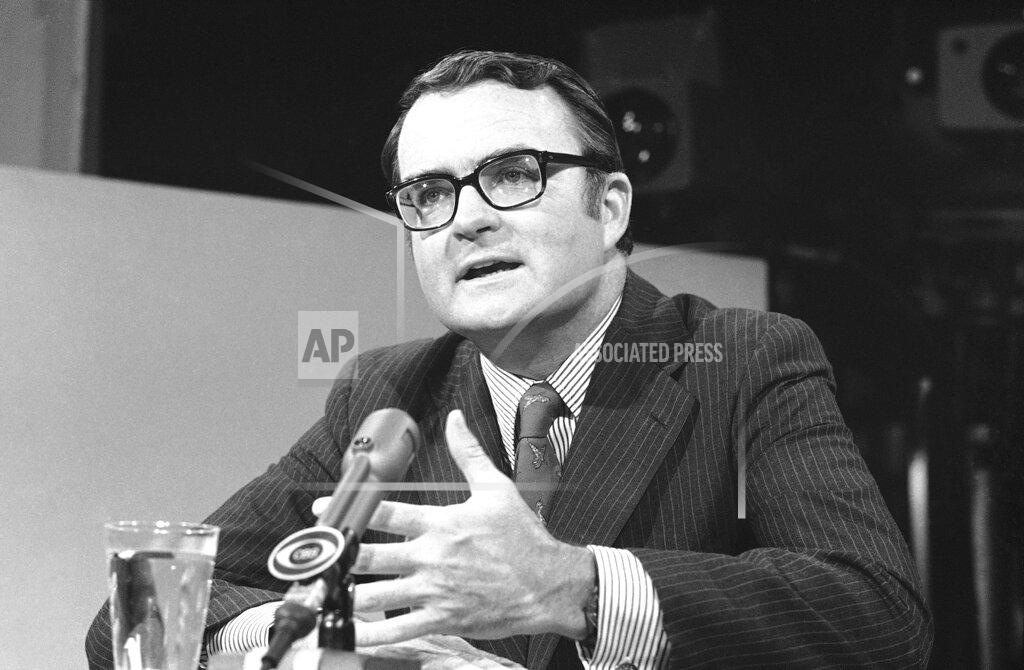
Secretary of State Kissinger’s contention that he was not responsible for initiating the wiretaps of 13 government officials and four newsmen from 1969 to 1971 was supported by William Ruckelshaus, former Acting Director of the Federal Bureau of Investigation. On the “Face the Nation” television program, Mr. Ruckelshaus said that Mr. Kissinger’s role in the controversial wiretaps, “as best I’ve been able to determine, is pretty much as he’s described it.” Mr. Ruckelshaus, who also served as Deputy Attorney General until his dismissal for refusing to discharge Archibald Cox as special Watergate prosecutor, investigated the wiretapping of the 17 individuals last year and had access to all the F.B.I. documents on the case.
Mr. Kissinger last week threatened to resign unless his reputation was cleared by the Senate Foreign Relations Committee of any allegations that he had deceived the panel during his confirmation hearings last fall in describing his role in the wiretapping. Press reports in recent weeks, some quoting sources on, the House Judiciary Committee considering the impeachment of President Nixon, said that F.B.I. reports in 1969 asserted that Mr. Kissinger had asked for wiretaps on certain individuals. At Mr. Kissinger’s request, the Foreign Relations Committee has now begun a new study to see if Mr. Kissinger perjured himself last September. It received all the F.B.I. wiretap documents last Friday.
Archibald Cox, the former special Watergate prosecutor, said today that wiretap charges being leveled against Secretary of State Kissinger were similar to those leveled against others in the “heyday” of McCarthyism. Mr. Cox, who delivered the graduation address at Stanford, University’s 83rd annual commencement exercises, criticized the news media and called for an end to unsubstantiated news leaks on Watergate related incidents. “We read no editorials condemning ex parte accusation ‘leaks’ to the press and judgments without true adversary proceedings,” Mr. Cox said. “Are they now any less unfair than they were 20 years ago? Procedural fairness does not depend upon whose ox was gored.”
An extensive plan to politicize programs to aid the elderly was part of a White House effort on behalf of President Nixon’s 1972 re-election campaign, according to a Senate Watergate committee staff report. White House officials, seeking to gain voter support among the elderly, were said to have put pressure on federal agencies to cut the funds of two long-time advocate agencies for the elderly that were regarded as “enemies” of the President.
State-operated lotteries are becoming involved in a struggle with the underworld and the federal government over how profits from gambling activities are to be divided. State lotteries in Delaware, Massachusetts and New Jersey aim to compete with illegal gambling operations. Other states are expected to do the same.
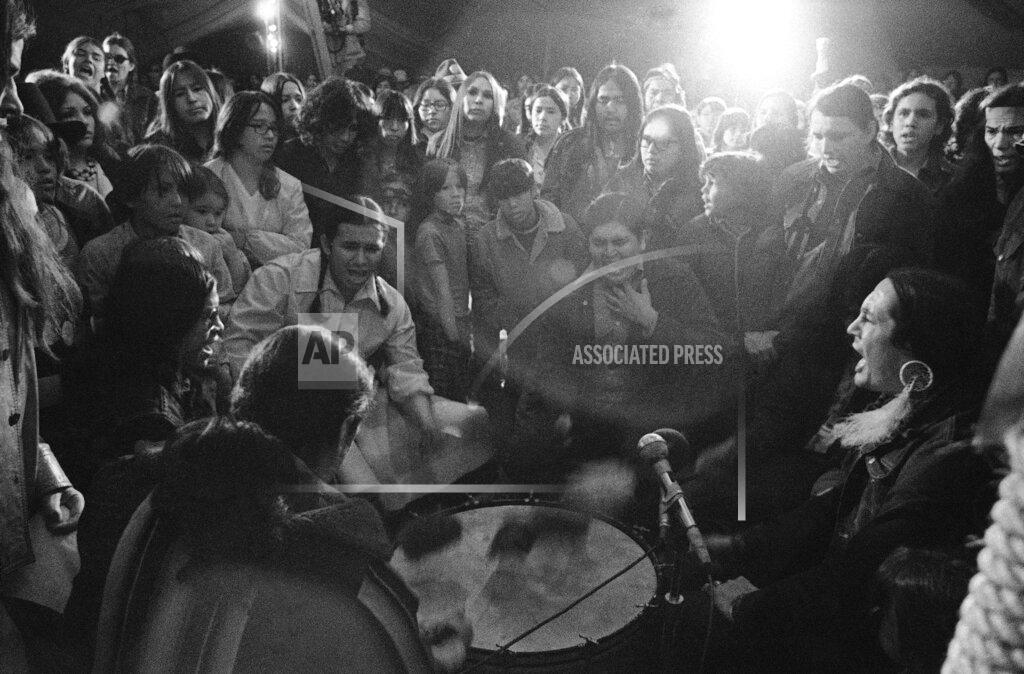
A treaty conference sponsored by the American Indian Movement ended in Mobridge, South Dakota, with the establishment of an international body that is to apply for United Nations membership on behalf of all Indians. In forming the International Indian Treaty Council, the 1,000 participants from 97 tribes directed it to open negotiations with the U.S. government through the State Department for the return of Indian lands. The Indians, who now deal with the government through the Interior Department and the Bureau of Indian Affairs, said they would negotiate as a sovereign people rather than U.S. citizens.
Governor George C. Wallace lost a bid to gain control of the Democratic Party machine in Alabama. Robert S. Vance Jr. won his third four-year term as chairman of the state Democratic Executive Committee, defeating Wallace’s choice, former state Sen. Bert Haltom of Florence, 66 to 51. The committee then unanimously selected Haltom as vice chairman. After the 90-minute meeting, Wallace said that if he became a candidate for national office in 1976, he expected all committee members to support him.
Divers recovered four more bodies from the Gulf of Mexico, victims of a Saturday oil rig explosion near the mouth of the Mississippi River that killed at least three workers and injured five. Two more still were missing and presumed dead in the explosion on a Chevron Oil Co. rig 76 miles southeast of New Orleans. The blaze was quickly extinguished but an oil company spokesman said seven of the crew either jumped or were blown into the water.
A reputed mobster whose wife died in 1972 after drinking a soda containing arsenic has sued the Coca-Cola Bottling Co. The suit was filed in Superior Court in Toms River, New Jersey, by John (Johnny Coco) Lardiere, who is serving a prison sentence for contempt for refusing to answer questions about organized crime. Lardiere, 67, said at the time of his wife’s death that he thought she had been murdered, but police said they lacked the evidence to call it murder. The suit alleges that Mrs. Ladiere became “violently ill and died as a result of drinking” a bottle of Fresca. A medical report showed the bottle had contained 2 ounces of pure arsenic, enough to kill 700 people.
Expense-paid trips to Republican national conventions were suggested as a means of bringing poor people and persons from minorities into party affairs. The recommendations came from the Rule 29 Committee of the GOP National Committee in a preliminary report from St. Louis on carrying out rules for the 1976 convention. The group will make further revisions before submitting its final report in December to the main committee, which then will decide whether to approve the guidelines. There was near unanimous agreement, however, that the GOP should not select delegates on proportional representation or a quota system.
Senator Russell B. Long (D-Louisiana) reaffirmed his opposition to removing tax benefits, such as the oil depletion allowance, on domestic oil companies for fear such action would increase the price of gasoline and home heating oil. But Long, chairman of the Senate Finance Committee, said he favored removing the benefits from foreign oil. Long said on the television program Meet the Press that lifting the allowance domestically would raise oil and gasoline prices 3 or 4 cents a gallon.
The Milwaukee Road ended operation of its electric locomotives in Montana and Idaho. Trains over the Rocky Mountains were now solely powered by diesel.
Fire swept through a wood frame house in Ucedale, Mississippi while a family slept early today, killing a woman and five children. Only the woman’s husband and a 4‐year‐old daughter escaped the blaze. Florine Henderson, about 32 years old, was killed along with four of her children and a visiting cousin.
The popular Brazilian Saturday afternoon TV program “Clube do Bolinha” began a run of almost 20 years, remaining on the air until May 7, 1994.
The 1974 24 Hours of Le Mans ended in a third consecutive victory for French drivers Henri Pescarolo and Gérard Larrousse.
The championship of soccer football in Greece, the Greek Football Cup, was won by PAOK Thessaloniki over Olympiacos of Piraeus on penalty kicks after the teams were tied at 2 to 2 at the end of extra time in regulation.
Richard Petty defeated David Pearson in the Motor State 400 today, as stock car racing’s biggest money winners staged a head‐to‐head duel before 51,500 spectators. The confrontation between the two foes, winners of more than $2.5‐million and 300 major races between them, began almost from the start of the event, staged under a threat of rain. It ended four laps from the finish of the 360‐mile test when Pearsons was forced to stop for new tires just as several cars tangled in the third turn to bring out the day’s sixth yellow‐light.
The Boston Red Sox pushed their Eastern Division lead to 3½ games by rallying in the ninth inning for six runs to beat the California Angels, 7–4. Carlton Fisk, who earlier had cracked his 10th homer, highlighted the rally with a tie‐breaking double.
Cincinnati Reds reliever Clay Carroll makes a rare start (3 this year) and pitches 8 shutout innings in beating the Phillies, 5–0.
Lynn McGlothen scattered seven hits and lined three of his own to snap a four‐game Atlanta winning streak, as St. Louis downed the Braves, 6–3. The Cardinals moved to within one game of the Phillies, the Eastern Division leaders.
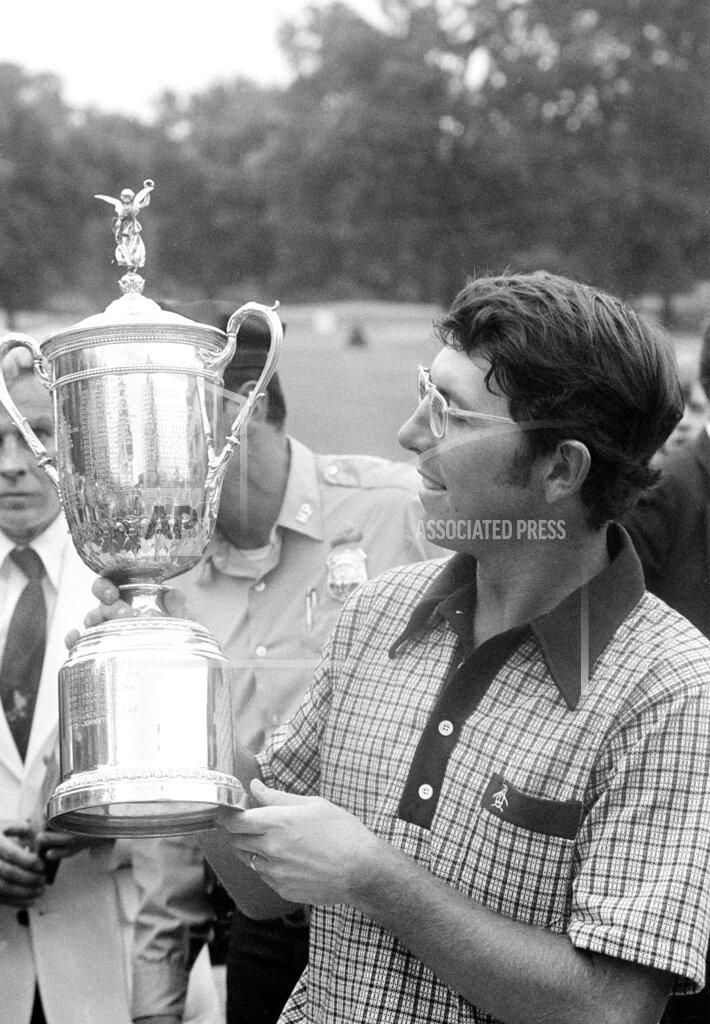
American golfer Hale Irwin won the U.S. Open tournament at Mamaroneck, New York, by two strokes over Forrest Fezler.
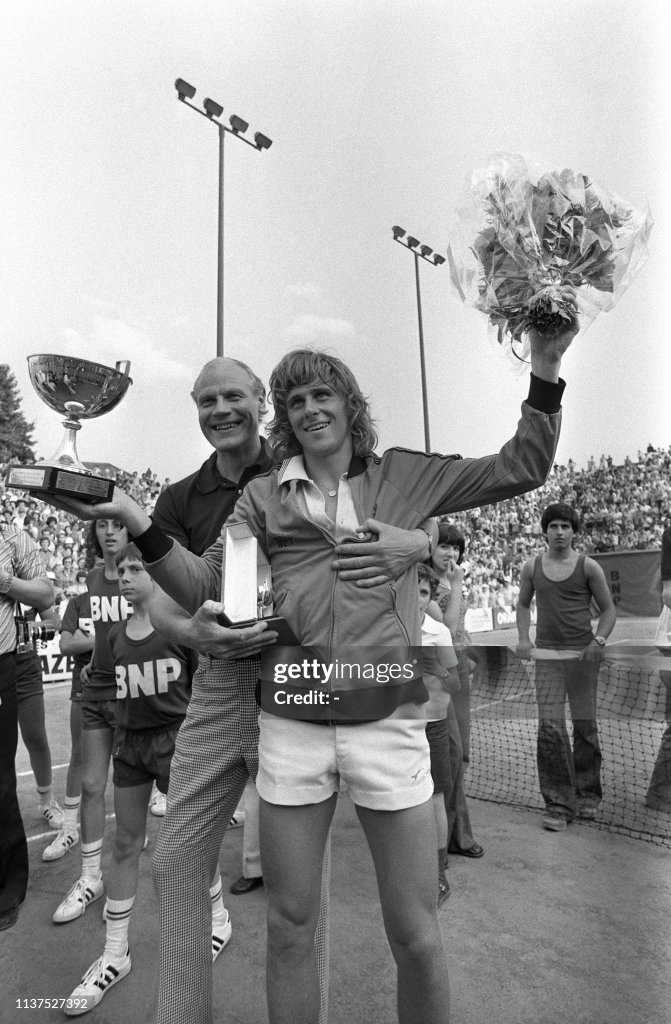
French Open Men’s Tennis: Eighteen-year-old Björn Borg of Sweden won his first career Grand Slam title; beating Manuel Orantes of Spain 2–6, 6–7, 6–0, 6–1, 6–1, Chris Evert, 19, beat Olga Morozova of the Soviet Union, 6–1, 6–2, in just over an hour to take the women’s title. Miss Evert is the youngest winner in the French Open since Mrs. Christine Truman Janes, who was 18 when she won in 1959. Borg is the youngest men’s champion ever.
Born:
David Fizdale, American basketball head coach (New York Knicks 2018-2019; Memphis Grizzlies 2016-2017), in Los Angeles, California.
Joseph May, British-born Canadian actor (“Casualty”, “Stargate: Atlantis”), in Southampton, England, United Kingdom.
Alexandre Astier, French TV producer and actor, known as the creator and star of Kaamelott; in Lyon, France.
Juraj Červenák, Slovak fantasy and mystery novelist; in Žiar nad Hronom, Czechoslovakia.
Akhtar Raza Saleemi (pen name for Muhammad Pervaiz Akhtar), Pakistani novelist and poet; in Kekot, Khyber Pakhtunkhwa province, Pakistan.
Died:
Mauritz Hugo, 65, Swedish actor (“Atomic Blonde”, “Death Valley Gunfighter”), from heart disease.
Kulap Saipradit (pen name Sriburapha), 69, Thai novelist and newspaper editor, died in exile 16 years after leaving Thailand to live in the People’s Republic of China.

 History Diaries