Prague tonight is divided on what will happen tomorrow-the long-heralded June 15. That something will happen everyone feels certain. The presence of Heinrich Himmler, chief of all German police, has heightened the feeling of expectation. The recent incidents in Kladno and Nachod in which German and Czech lives were lost, and other instances of open conflict between the inhabitants and the occupying forces have made the people think that some change must take place soon.
Although the man in the street is content to think that this will mean the disappearance of the fiction of the protectorate, more considered opinion holds that Germany will maintain the protectorate and will impose her will by taking over the police forces, removing the Minister of the Interior’s functions from the Czech Government’s hands and turning over the whole task of civil order to a department of the office of the Reich Protector, Baron Constantin von Neurath.
This could be done without any great difficulty, for the Germans have built up a shadow organization that at any moment could take over the whole running of the protectorate’s affairs. To quell possible unrest and damp down the reckless courage of the Czechs — so marked a feature of recent weeks — any change here would probably be accompanied by the imposition of a curfew, the closing of the schools, the arrest of various. key figures and other precautions similar to those used last March. But a section of Czech opinion believes that any change here would be a covering precaution for a German occupation of Slovakia.
Since Germany already has garrisons on Slovak soil in key positions and has for many weeks been massing troops in the northeast corner of Moravia near Slovakia and Poland, the seizure of Slovakia could be carried out without any extensive troop movements from the Reich. The garrisons of German soldiers in Slovakia and the protectorate are constantly being changed to avoid demoralization, and no militant significance need be read into reports of troop movements here. The fact remains, however, that the occupation of Slovakia could at the present time. of the year be carried out just as swiftly and easily as the occupation of the Czech lands in March.
Signs that the Germans have some immediate plan of action, obtained from absolutely reliable sources tonight, are as follows: Various Prague hotels during the last few days, under cover of German Cultural Week, have taken in guests found to be police officers from the Reich. Two Prague hotels have groups of twelve such officers. German officers and policemen who since March have been joined by their families have been told to send their wives and children to the Reich — the reason given being that the Czechs were preparing a “St. Bartholomew’s massacre.” Local authorities in Moravia have been told that within the next two days the roads from Bruenn to Olmuetz and Iglau — both principal highways — must be kept clear of civil traffic. Orders have also been issued that railway locomotives in Pardubice and Prague must be kept with boilers stoked for the next two days.
Bergmann-type sub-machine guns have been issued to local Germans. Prague is calm tonight despite these speculations. The skeptical Czech does not put out of his mind that these measures, which seem to forebode radical changes, may be part of that game of bluff that they know so well and whose principal object is to unsteady European nerves and alarm Poland at the critical stage of the Anglo-Russian negotiations. A balancing of the situation indicates that the skeptical Czechs may be right and that what will happen during the next few days may not be in proportion to the alarm aroused.
In Slovakia, however, there is considerable panic. Czechs and Slovaks associated with the old regime are going into hiding. Rumors are rife that Germany and Hungary are about to destroy Slovakia and divide it among themselves.
The largest synagogue in the Moravian town of Moravska-Ostrava [Maehrisch-Ostrau] was completely destroyed by fire this morning. It was the fifth synagogue in the district burned down since last Thursday. The local German provincial Governor this morning sent a wreath to the funeral in Nachod of Jaroslav Miller, Czech police recruit slain by a German last week. Miller’s mother, to whom 50,000 crowns was awarded as compensation by the Reich Protector, refused to accept the gift, and a local collection is being made that already exceeds 50,000 crowns. Last night the Czech populace of Nachod gathered to give funeral honors to the police recruit, strewing flowers in the street. The gathering was by no means hostile to Germany. Miller’s father today was informed by the authorities that the policeman responsible for his son’s death would be shot.
Information from private sources abroad indicated that German troops had begun to concentrate behind the Slovak frontier facing Poland. General officers and military units were named. At Kustrin, about forty-five miles from the Polish frontier, headquarters are reported in process of installation for General von Rundstedt, said to be in Berlin awaiting announcement that he is to command the new German Army of the East.
General von Wittersheim, who helped carry out the occupation of C: echo-Slovakia, is reported already in Bratislava, working on a plan of operations against Southern Poland through Slovakia, around the flank of the fortified Polish-German frontier. Until assigned to the occupation of Czecho-Slovakia he was chief of the operations section of the Ministry of War. He was commander of the Fourteenth Corps when Chancellor Hitler entered Prague. He took up his present tasks, according to the reports, in April. The other commanders are given as Lieutenant General Bakhausen, military plenipotentiary with the Slovak Government, and Major General Engelbrecht, commanding German frontier troops in the valley of the Vag in Slovakia. Lieutenant General Bakhausen is reported at Bratislava also.
The troop movements reported include the transportation of the Twenty-eighth Infantry Division, which was in Bohemia, to the vicinity of Moravska-Ostrava. The Eighth Infantry Division is now reportedly placed south of that town, and not far from it are the Thirty-first Infantry Division, the Fourth Tank Division, and the 118th Heavy Artillery Division. Near Olmuetz, a part of the Third Tank Division is reported in readiness. In Eastern Slovakia, near the Polish frontier, the 131st and 132d Infantry Divisions are reported stationed. Near Poperad, in the Carpathian Mountains, six miles from the Polish frontier, it is reported that there. are a regiment of mountain infantry, munitions depots, a military aviation field and Pursuit Squadron 165, which is understood to be destined to attack the industrial region near Tarnow in the event of a conflict.
The German press unanimously reacted to these reports with vigorous denials, calling them British “brazen lies.”
German Ambassador, Hans Adolf von Moltke, today paid his first visit to the Foreign Office since Chancellor Hitler made his demands for Danzig’s return to the Reich and a motor road through Pomorze [the Polish Corridor] three months ago. Herr von Moltke probably will call on Foreign Minister Josef Beck within a few days. Diplomatic circles regard the visit as an attempt to normalize Polish-German relations. The Germans, it is maintained, will not withdraw their demands — particularly Danzig’s incorporation — but some kind of modus vivendi will be sought by them. The suggestion of a “press truce” for the cessation of attacks by both countries, as well as the cessation of hostile propaganda, was made by the Germans a fortnight ago.
The minority problem, it is held, was one of the subjects of today’s exchange of views. The Polish minority in Germany and the German minority in Poland are the worst sufferers from the present tension. Many prominent Polish and German leaders have been driven out of their homes along the frontiers and sent, respectively, to the interior of Germany and Poland. Poles in the Reich are frequently assailed or molested by the Nazis and Germans here are victims of attacks by Polish nationalists. The newspapers of the minorities of both countries are being confiscated almost daily. Political organizations, professional and even charitable institutions are being dissolved or put under police control.
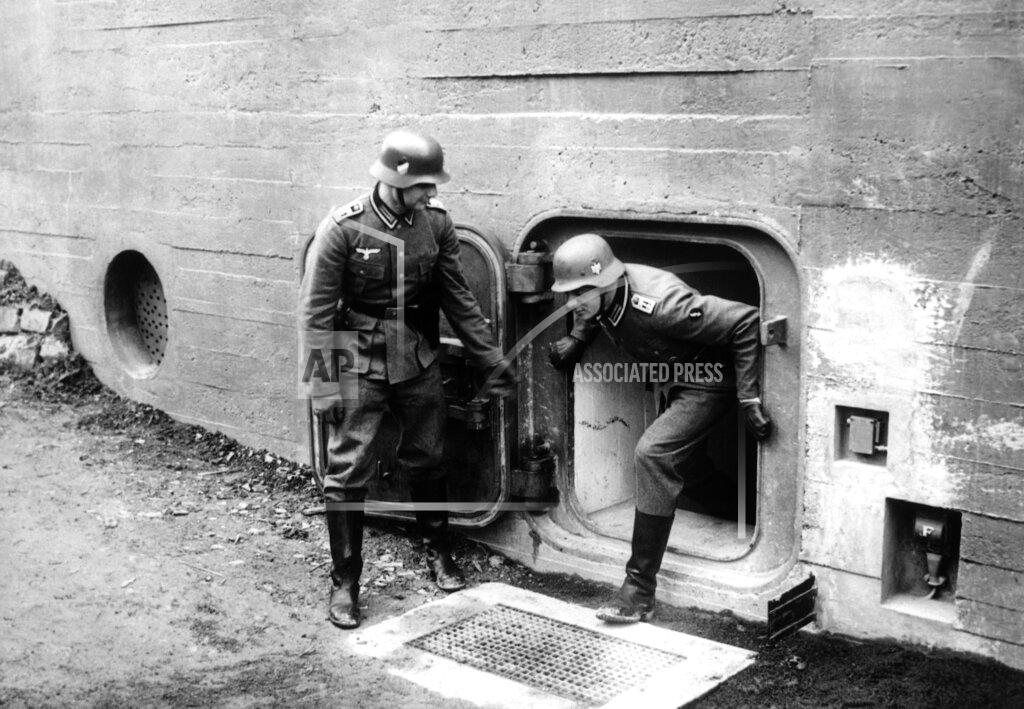
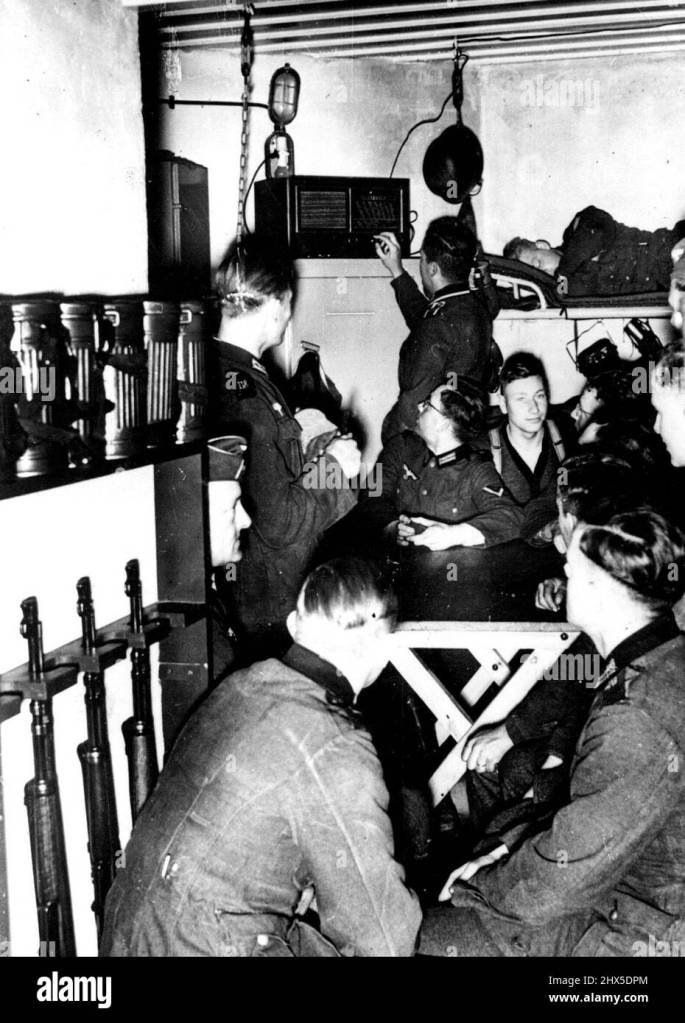
The German elite infantry regiment Grossdeutschland was created.
Franco will visit Italy in September. The plans give rise to talk that the tie with the Axis will be signed.
With British-Japanese tension in the background, Sir William Seeds, British Ambassador to Moscow, conferred at length today with William Strang, British Foreign Office executive, who had brought fresh instructions from London regarding negotiations to win Russia to the French-British “anti-aggression” front. There seemed to be no disposition to hurry matters.
Observers hesitated to predict what effect on the negotiations the British-Japanese dispute in Tientsin might have. Some regarded the blockade imposed by the Japanese military on the French and British Concessions in Tientsin as a broad hint to Britain not to go too far in satisfying Soviet demands for an “effective” three power pact. Others pointed out that the new anti-British pressure by Japan might have the opposite effect of driving Britain into the closest possible cooperation with the Soviet Union, both in the East and the West.
The Mendelian law, long accepted by scientists the world over as the basis of genetics, is denounced as contrary to Marxian theory, and the concept of the gene, which grew out of Mendel’s studies, is repudiated as not conforming to Marx’s dialectical materialism, in a letter signed by twenty-four students of the Timiryazev Agricultural Academy here. and published today by Socialist Agriculture, official organ of the Commissariat of Agriculture. The students in this letter furthermore deride “bourgeois formal genetics,” as taught by Professor N. I. Vavilov and other famous geneticists as an outmoded superstition comparable to the ancient theory that the world floats on the backs of whales and tortoises.
The students demand suppression of a recent textbook for plant breeding based on Mendelian theories. and call for the preparation of a new textbook, free of such “nonsense” and written by Professor T. D. Lysenko, a plant breeder popularly known as the Soviet Burbank. Now, if a group of students in an American university came forth with such demands it would be set down as simply a case of youth kicking up its ideological heels or of a spoof for some professor. But here it is different. Any utterance by anybody, from some Young Pioneer to Joseph Stalin himself, has meaning if it is published in the Soviet press.
[Ed: This “Lysenkoism” idiocy will hamper the Russian study of genetics for decades to come.]
Palestine will admit 7,850 Jews by October 1. The schedule “deducts” those who entered illegally.
The German liner MS St. Louis is now on its way to Antwerp, Belgium, where the 907 Jewish refugees onboard will then be taken to the countries which have offered them refuge. For some, it will be only a temporary respite.
President Roosevelt conferred with eight Democratic members of Congress on legislation which would establish duty-free quotas for certain products of the Philippines and transacted other administrative business.
The Senate was in recess. Its Foreign Relations Committee questioned Secretary Hull on the revised treaty with Panama and agreed to begin consideration of neutrality legislation on June 21. The Banking and Currency Committee approved a resolution for a study of monetary and banking policies. The Temporary National Economic Committee continued its investigation of insurance company practices.
The House considered the $1,716,600,000 relief bill for 1940; received the bill appropriating $23,466,000 for new Navy Department buildings and adjourned at 5:18 PM until 11 AM tomorrow.
The 1940 relief bill, intended to make the appropriation requested by the Administration go as far as possible toward alleviating the condition of the unemployed, and to separate the Works Progress Administration from the influence of subversive organizations, was taken up in the House today under plans which should see a final vote by Friday night. The bill, the product of the Appropriations subcommittee which has been investigating the administration of relief, allowed the full $1,477,000,000 requested by President Roosevelt to carry an estimated 2,000,000 persons through the next fiscal year, with the proviso that $125,000,000 of this amount be allotted to the Public Works Administration, which was continued for another two years.
In all, the bill carried $1,716,000,000, which included, in addition to the WPA, $81,000,000 for the National Youth Administration, $123,000,000 for the Farm Security Administration, $7,000,000 for the Puerto Rican Reconstruction. The bill’s outside figure compared with $2,539,805,000 appropriated for the current fiscal year. The only major cut was in the fund for the National Youth Administration, whose budget request of $123,000,000 was trimmed to $81,000,000 by the committee. This amount, however, is $6,000,000 more than the current appropriation. The proposed appropriation is $823,205,000 less than current appropriations, and $45,890,000 under the estimates submitted by the budget bureau.
Nineteen provisions, all new to the WPA, were written into the thirty-five-page bill by the subcommittee. The aims are two-fold; first, to discourage the tendency to make WPA employment “a career,” and second, to remove the influence of such organizations as the Workers Alliance on the work program. Representative Woodrum of Virginia, leader in the fight to revamp the program, summed up the aim of his colleagues by saying the “country is concerned with trying to dress up, or clean up, the work relief program.”
The Republicans, who filed a minority report, conceded that the bill was a “great improvement” over previous relief measures which contained little or no restrictions on the expenditure of the huge funds voted for the last six years. The Republicans contended, however, that the bill failed to go far enough. They insisted that it should have provided for decentralization of the relief administration by returning the responsibility to the states, a view that has been largely abandoned by the Democrats since the relief investigation was started.
The Senate Banking and Currency Committee reported favorably today a resolution which, if adopted by the Senate, would empower it to survey the monetary and banking policies of the federal government. The committee acted on the resolution introduced last April by Senator Wagner, its chairman, and it is expected to pass the Senate with overwhelming approval, since it proposes to do something which would have the support of Administration supporters and opponents alike.
The scope of the proposed study was indicated by the fact that the committee voted to increase to $100,000 the sum of money which might be expended on the study, although Senator Wagner had suggested only $25,000. The resolution would authorize the committee “to conduct a study and to hold hearings to determine a national monetary and banking policy by which the monetary and banking authorities of the federal government shall be guided and governed, and to determine the character of governmental machinery best calculated to carry out such policy.”
Herbert Hoover asserts that jobs can be found for all, once Roosevelt’s policies are stopped.
John L. Lewis blasted the possibility of peace between the American Federation of Labor and the Congress of Industrial Organizations by declaring today that it was “impossible” to make peace with the federation because that organization was in the hands “of a small group of leaders, firmly entrenched and reactionary in their attitude on public questions, who are tolerant of many evil conditions existing in the AFL.” The president of the CIO, his wavy gray-auburn hair disheveled after an all-day session of the CIO executive board, made his statement to newspaper men in the press room of the United Mine Workers Building.
He said that the CIO peace committee, of which he, Sidney Hillman and Philip Murray are members, had reported on the recent peace conferences with the AFL and that the board was unanimous “in the belief that the AFL leaders were following a rule or ruin policy as exemplified by recent threats to the Department of Labor to defeat the appropriation for the International Labor Office now pending in the House Appropriations Committee if the Labor Department did not give all labor representatives at the ILO to the AFL.”
Although the peace conferences had virtually collapsed shortly after the recent bituminous coal conferences began two months ago, Department of Labor officials and others felt that they would be resumed within a reasonable time. “Too ridiculous to merit serious consideration,” was the way William Green, president of the AFL, characterized Mr. Lewis’s attack on AFL leaders. He accused the CIO chief of seeking merely to “mislead the public.”
Marlene Dietrich’s tax issues lead to a drama on the New York waterfront when the liner Normandie is held for several hours. Miss Dietrich apparently is held by the U.S. government to owe taxes on income earned in Europe. She resolves the standoff by leaving over $100,000 in jewelry in escrow. The Normandie slips out just in time to beat the falling tide.
Veteran outfielder Earl Averill is swapped by Cleveland to Detroit for Harry Eisenstat and cash.
The Detroit Tigers extended their winning streak to seven games today by coming from behind twice to defeat the Boston Red Sox, 9-8 and 6-2, in the double-header that opened their second Eastern road trip.
Bob Feller becomes the first Major Leaguer to win ten games this season as the Cleveland Indians mount a ninth-inning rally to beat the New York Yankees, 4–2.
Lou Gehrig is staying at the Mayo Clinic, probably for four more days. After his exam today, he tells reporters, “I don’t know any more than when I started.” Tragically, this will soon change.
King George and Queen Elizabeth visit Prince Edward Island as their tour of Canada approaches its end.
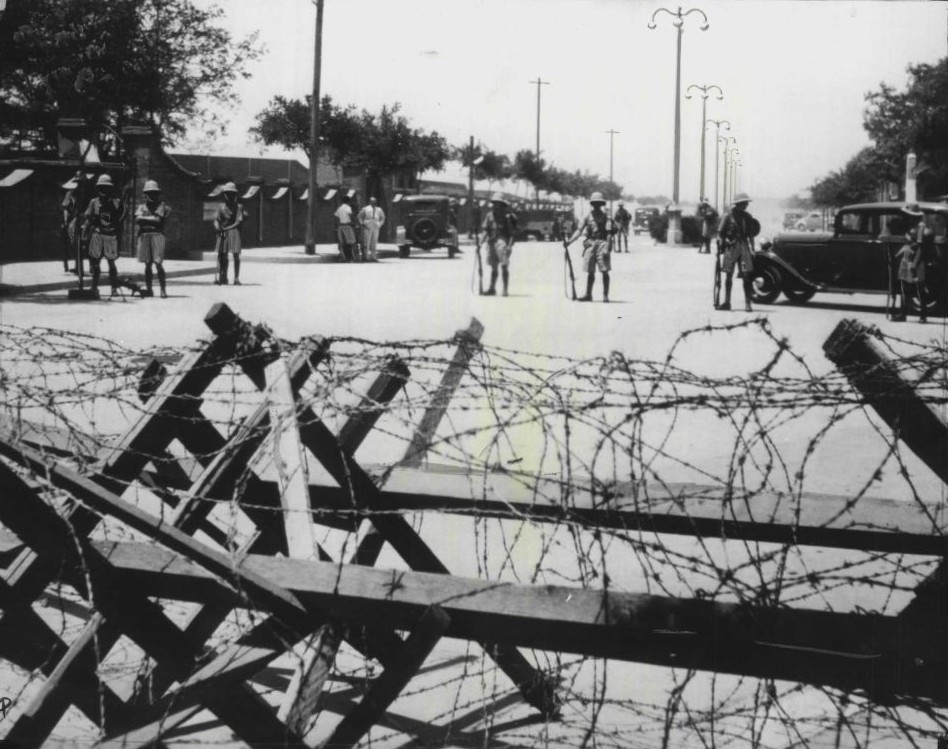
The Japanese Northern China Area Army surrounded and blockaded the foreign concessions over the refusal of the British authorities to hand over four Chinese who had assassinated a Japanese collaborator and taken refuge within the British concession. Anyone wishing to leave or enter the concession was publicly strip searched by Japanese soldiers, and food and fuel were not permitted to enter the concession. To cut off the concession, the Japanese Army built an electrified wire fence around it. The Japanese government declared the issue of the accused killers not to be the point of the blockade and that handing over the four would not end the blockade.
A Japanese spokesmen stated: “The arrow is already off the bow and therefore the question cannot be settled by the mere transfer of the four suspect assassins”. The Japanese demanded the British government to turn over all silver reserves belonging to the Chinese government within British banks to them, to forbid all anti-Japanese radio broadcasts from anywhere in the British Empire, to ban school textbooks that the Japanese government considered offensive and to end the issuing of fapi currency. The real aim of the Japanese was not the handing over of the assassins but the end of British financial support of China.
At the request of the Cabinet, British officials today studied plans for economic retaliation against Japan as a possible reply to the blockade of the British Concession at Tientsin and the implied threat to abolish all British concessions in China.
Experts at the Board of Trade were asked to dust off and “examine” old plans for shutting British Empire ports to Japanese shipping and imposing retaliatory duties against Japanese goods. Such plans have been drawn up for the Cabinet from time to time during the war in China but each time they were sent back to official pigeon holes because the Ministers thought them to be double-edged weapons that might hurt Britain as much as Japan. The fact that they are being “examined” again is proof that the British Government is uneasy and unhappy over the latest events in the Far East although it does not yet mean the Cabinet is prepared for any sort of showdown with Japan at present.
House of Commons spokesmen for British commercial interests in China were indignant today and bombarded Ministers with questions on the subject; British military authorities in the Far East were said. to be urging a strong stand by London as the only way to prevent the present Japanese tactics from spreading to the vastly more important International Settlement at Shanghai. But the Cabinet was chiefly concerned this morning with finding some way out of the Tientsin difficulty without yielding too obviously to Japanese pressure. Early in the day the Ministers still thought the civil authorities in Tokyo would overrule the army chiefs and agree to some compromise over the issue. at Tientsin.
As the day wore on, however, the nature of the Japanese threat was seen more clearly. The Japanese spokesman at Tientsin, whose words were not repudiated by Tokyo, seemed to be inviting the British Government to recognize China as Japan’s “Lebensraum” and, indeed, to help her develop it. Immediately the issue transcended the fate of the four Chinese held by the British authorities at Tientsin and became a direct threat to what remains of the British interests, influence and power in China. On this basis the British felt that no compromise was possible,
Unless Tokyo disavows such threats it will be hard for the British Cabinet to find any way out without surrender or resistance, or perhaps a protracted diplomatic tug-of-war while the British residents in Tientsin withstand a virtual siege. This afternoon, when more serious news from the Far East had reached London, R. A. Butler, Under-Secretary for Foreign Affairs, was asked in the House of Commons whether the government would “immediately inform the Japanese Government that unless the Japanese blockade were discontinued the Japanese would at once be denied all use of the ports of Hong Kong, Singapore, and Penang.”
Dow Jones Industrial Average: 137.50 (-0.70).
Born:
Steny Hoyer, American politician (Rep-D-Maryland, 1981-), in New York, New York.
Tom Matte, NFL running back (NFL Champions-Colts, 1968, 1970; Super Bowl champions-Colts, 1970; Pro Bowl 1968, 1969; NFL rushing TD leader 1969; Baltimore Colts), in Pittsburgh Pennsylvania (d. 2021).
Stew Barber, AFL tackle, guard, and linebacker (AFL Champions-Bills, 1964, 1965; All-AFL, 1963-1967; Buffalo Bills), in Bradford, Pennsylvania.
John F. MacArthur, American evangelist and author, in Los Angeles, California.
Naval Construction:
The Royal Romanian Navy minelayer and escort NMS Amiral Murgescu is launched by Galați shipyard (Galați, Romania).


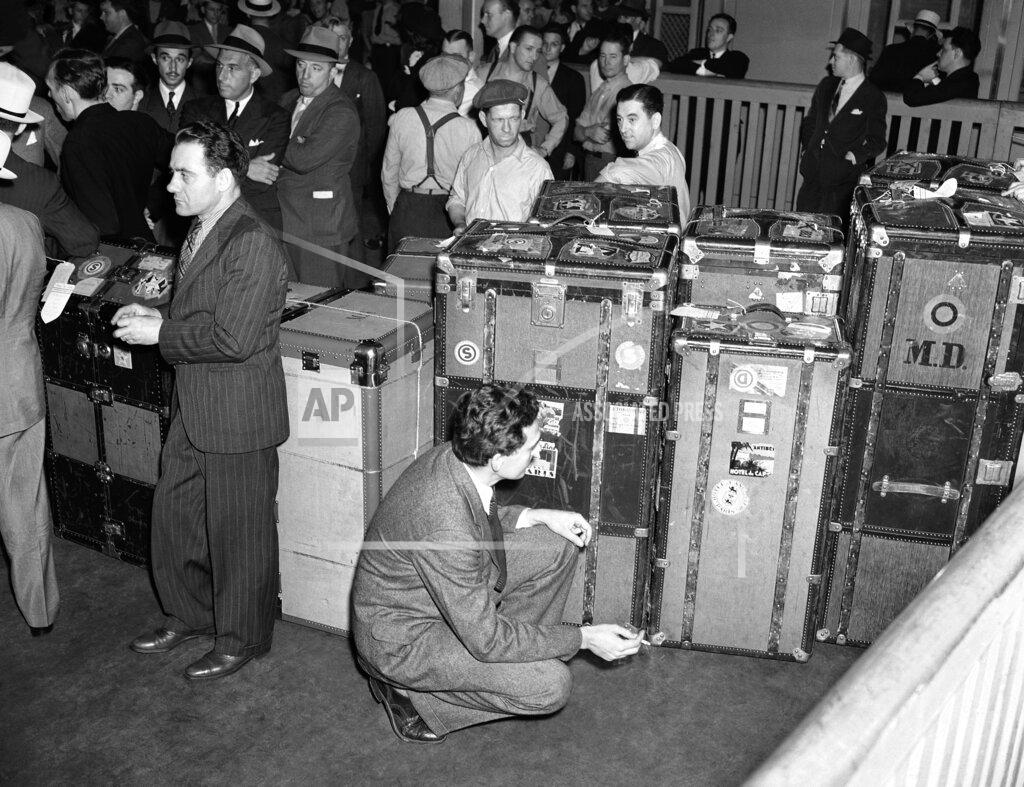
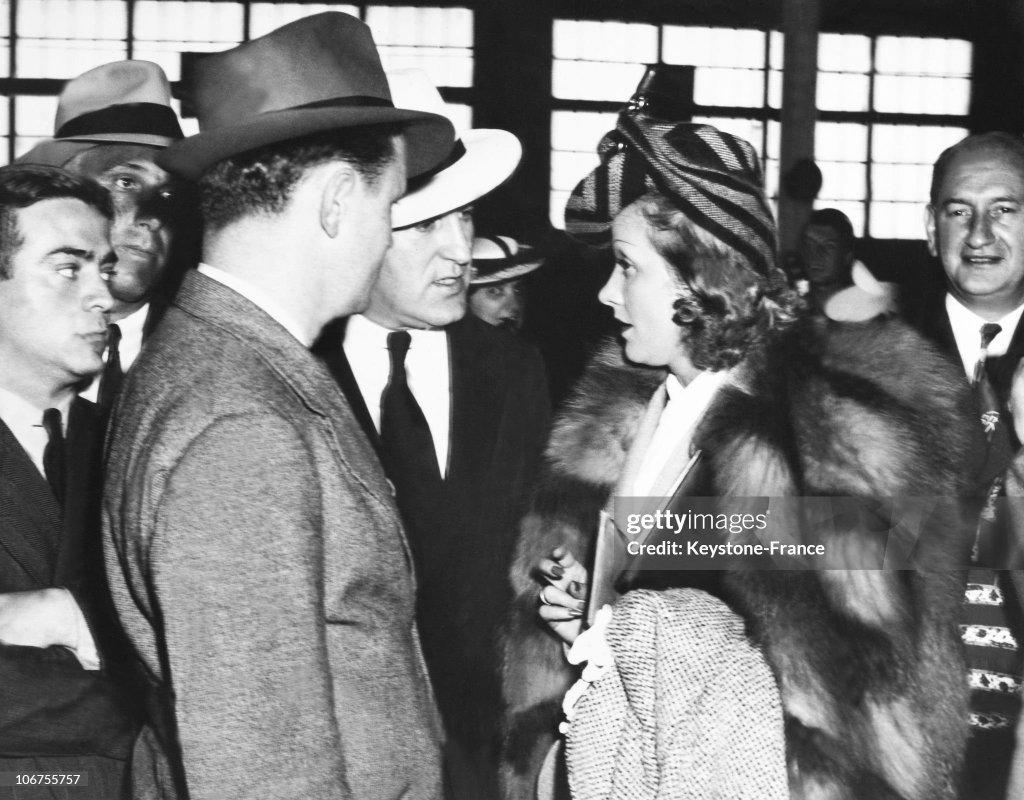
[Ed: All your dollar and pound are belong to us. The Feds want their cut of money she made in England.]
 History Diaries