General Westmoreland is in Malaysia to study the methods used by the British to defeat Communist guerrillas there in a 12-year war that ended in 1960. The general will take over as United States commander in South Vietnam next week. He stopped here for a two‐and‐a‐half‐day visit and talks with Malaysian military officials and policemen who crushed the Communists in an operation similar to that in South Vietnam.
A South Vietnamese river patrol is ambushed by Việt Cộng but manages to kill 23 guerrillas.
The U.S. Military allows its own pilots operating out of Thailand to hit ‘targets of opportunity’ in Laos.
Communist China charged today that United States fighter‐bombers had attacked Communist positions and the headquarters of the Communist‐led Pathet Lao in Laos for three consecutive days, including today. Hsinhua, the Chinese Communist press agency, reported from Peking that rocket, bombing and strafing attacks had been concentrated in the Plaine des Jarres, 20 miles northwest of Pathet Lao headquarters at Khang Khay and about 110 miles north of the Laotian administrative capital of Vientiane. Another Peking broadcast quoted the Pathet Lao as having charged that the United States had broken international law by retaliating against Communist antiaircraft positions in Laos.
The United States Navy began reconnaissance flights over the area on May 21 to check reports that North Vietnam was sending in troops and supplies in violation of the Geneva agreements of 1962 on Laotian neutrality. Military sources in Vientiane said the antiaircraft guns that were attacked had been manned by North Vietnamese. The Peking charge today did not describe the attacking planes as jets. It presumably referred to American-made T‐28’s, which are used by the Royal Laotian Air Force. They carry machine guns, rockets and bombs. Peking charged yesterday that United States jets bombed the Pathet Lao headquarters earlier this week, killing a Chinese Communist “cultural attaché” and wounding five other Chinese. The United States has made no official comment on the charge, but American sources said United States Air Force jets had delivered a smashing retaliatory attack against Communist antiaircraft positions last week.
In a commencement address at Williams College, Secretary of State Dean Rusk reviewed the problems in Southeast Asia and advised Communist China: “Leave your neighbors alone. It is in the vital interest of the free world that Peking and Hanoi — and all Communists everywhere — learn once and for all that they cannot reap rewards for militancy, aggression by seepage and duplicity,” he said. “For our part we certainly do not intend to abandon the peoples of Laos or Vietnam or other countries which are trying to remain free from Communist domination.”
The opposition Labour Party in Australia attacks the government for failing to tell Australians more about the situation in Vietnam while supporting the South Vietnamese and U.S. positions there. The Australian Minister for External Affairs gave blunt and sweeping endorsement today to United States policy in South Vietnam and the efforts of the Government in Saigon to defeat the Communist insurgents. The Minister, Paul M. C. Hasluck, dismissed proposals to neutralize Southeast Asia as “just an impractical dream.”
He spoke at a news conference after a three‐day visit to Saigon. In a series of brusque and matter‐of‐fact replies, he placed the Australian Government squarely behind United States attempts to show more flags of the non‐Communist world in South Vietnam. “We’re in a world power struggle,” he said. “You’ve got to stand up and be counted—you’ve got to say which side you’re on. We know which side we’re on and we’re going to stick to that side.”
For reasons of geographical proximity as well as solidarity against Communist expansion, Australia has shown particular concern over Southeast Asian developments. A team of 30 Australian military advisers has been here since 1962, working alongside American advisers and South Vietnamese. This team is soon to be doubled.
“If we were to lose here, that failure would have effects right throughout Asia and beyond Asia to many countries of the world,” Mr. Hasluck said. “If or when we win here, that success is going to have a tremendous heartening effect in every country of the world. This is something that’s vital to our side.”
U.S. Ambassador to Vietnam Henry Cabot Lodge has asked to be relieved of his post in South Vietnam within 30 days. Mr. Lodge told President Johnson that the resignation was prompted by reasons of health, which he did not specify. The timing of the request, dated yesterday, will assure his return home no later than one day before the start of the Republican convention in San Francisco on July 13. George E. Reedy, White House press secretary, said Sunday President Johnson “has received no such communication,” The Associated Press reported.
Mr. Lodge’s move will free him of the restraints of the Foreign Service and enable him to participate in efforts to deny the Republican Presidential nomination to Senator Barry Goldwater of Arizona. The Ambassador himself was a prominent candidate for the nomination after his victory by write‐in ballots in the New Hampshire primary last March 10. He now seems to have urged his supporters to rally behind Governor William W. Scranton of Pennsylvania. Rumors of the Ambassador’s poor health have circulated here for some time, but he went out of his way to deny them publicly two weeks ago during the Administration’s strategy conference on Southeast Asia in Honolulu. Mr. Lodge, who will be 62 years old next month, appeared then to be at least 10 years younger and in fine condition.
Malaysia and Indonesia have reached an agreement on border checkpoints in northern Borneo that opens the way for top‐level consultations here on the bitter Malaysian crisis, a Philippine mediator said today. Indonesian‐based guerrillas have harassed Malaysia’s frontier at Sarawak and Sabah (North Borneo) for months. Differences on the number and location of checkpoints, to be manned by neutral observers from Thailand, for monitoring the withdrawal of the guerrillas were ironed out following a breakfast meeting of Prince Abdul Rahman, Prime Minister of Malaysia, and President Diosdado Macapagal of the Philippines. President Sukarno of Indonesia is here to meet with those two heads of government.
Salvador P. Lopez, Philippine trouble‐shooter who announced the agreement, said instructions would go out to both the Malaysian and Indonesian sides to permit immediate movement of the Thai inspectors to the troubled borders. A meeting of border technicians preceded the Monday breakfast conference between the Prince and Macapagal. A meeting of the foreign ministers of the three countries, who accompanied the heads of government here, is planned. They would be expected to prepare the agenda for the conference of Prince Abdul Rahman and Presidents Sukarno and Macapagal.
The government of Romania announced that the Communist nation had released 7,674 political prisoners and that the ruling Romanian Communist Party had plans for a general pardon of “practically all” remaining prisoners of conscience in August. Diplomats saw the move as an effort by the Communist regime to win friends in the West. The disclosure was made in an interview by Deputy Premier Alexandra Birladeanu. He was the official who told the Soviet Union last year that Romania would not join Premier Khrushchev’s plan, now abandoned, for making a supranational organization out of the Council for Mutual Economic Assistance, or Comecon, the economic association of East European states.
Abdirizak Haji Hussein became the new Prime Minister of Somalia, replacing A. A. Shermarke after the Somali Youth League party lost 14 seats in the March 30 election. Hussein would be fired on June 10, 1967, after Shermarke’s election as President of Somalia.
Czechoslovakia held parliamentary elections in which voters were asked to vote for or against the list of 100 National Front (Národní fronta or Národný front) candidates for the National Assembly of Czechoslovakia.
Chancellor Ludwig Erhard said today that his talks with President Johnson in Washington had strengthened the close bonds of friendship between the United States and West Germany. The Chancellor said at Cologne Airport, after an overnight flight from the United States, that his trip to North America had been a success. He described his talks with President Johnson as “very intense and this time very serious.” This was an allusion to the Soviet‐East German friendship treaty, signed in Moscow Friday while Dr. Erhard was conferring with United States officials on a Western initiative aimed at the eventual dissolution of the Communist East German state.
After 18 days, the National Army of Colombia successfully completed its “Operation Marquetalia”, the destruction of the “Marquetalia Republic”, a leftist guerrilla stronghold in the rural Colombian departamento of Huila. The guerrillas and their allies were dispersed, and anything they left behind was destroyed by the soldiers.
The industrial powers and the underdeveloped countries reached agreement tonight on plans for a permanent new institution that will focus on international trade problems, particularly the problems of the two‐thirds of the world that is poor. Tired and suspicious, their representatives have spent the last two days maneuvering for power in the new institutional arrangement. The power question is being left undecided, but each side has been trying to establish favorable rules for deciding it. There were some long faces early today as the conference entered the final 48 hours of its three‐month life, with still no agreement on this or other major issues. The final break came tonight, when the African bloc reluctantly decided to accept terms that the Western bloc and the Asian and Latin blocs had already agreed to.
With U.S. Senate passage now all but assured, backers of the civil rights bill are making plans to get past the last obstacles and speed the bill to President Johnson. The final vote in the Senate is now expected this week, probably Wednesday or Thursday. The 71‐to‐29 vote last Wednesday to close debate made passage almost an anticlimax. But the Senate has adopted numerous amendments to the bill, and it will therefore have to go back to the House for concurrence. There a large obstacle could appear in the person of Representative Howard W. Smith, the Virginia Democrat who heads the Rules Committee.
The approval of the Rules Committee will be needed to send the bill to conference or to have a House vote under ordinary procedure on acceptance of the Senate version. Mr. Smith is not likely to be in any hurry to call the committee into session. The prospect now is for the House to accept the Senate bill and not to insist on changes. The only significant Senate amendment provides jury trials for criminal contempt cases arising under all but the voting title of the bill. House leaders will probably accept this.
The alternative would be to arrange a compromise and bring it before the Senate. Southerners could and probably would filibuster again, and dilution of the jury‐trial provision would make closure more difficult to obtain. Thus, the real question before the Administration and Congressional leaders is how to obtain a quick House vote on the bill as modified in the Senate.
One idea is to bring it up under suspension of the rules. This is a special House procedure, bypassing the Rules Committee, which permits only the briefest debate but requires a two‐thirds vote for passage. The suspension approach would be swift, but it also has dangers. Any unhappy feeling in the House about having the Senate amendments forced down without adequate debate might risk the chance of obtaining the necessary two‐thirds margin. The alternative will presumably be to force a meeting of the Rules Committee, as a majority can do. This would take about two weeks. As a result, the prospect is that legislative action can be completed on civil rights before Congress adjourns for the Republican National Convention, which starts July 13. The bill will probably be ready for the President to sign by July 4, and it could be sooner.
Governor William W. Scranton of Pennsylvania was promised today an estimated total of 42 convention votes from the organization working for Ambassador Henry Cabot Lodge. Added to the 105 votes already counted for the Governor in the latest tally by The Associated Press, this would give Mr. Scranton 147 of the 655 votes needed to win the Republican Presidential nomination. George C. Lodge, the Ambassador’s son, said he had received a telegram from his father expressing delight over the decision to support Mr. Scranton. Mr. Scranton, who also received some staff manpower from the Lodge organization, mapped a flying campaign to find any soft spots in the delegate line‐up claimed by Senator Barry Goldwater of Arizona.
Senator Goldwater, the leading contender for the nomination, was given 618 possible votes in The Associated Press tally. However, Mr. Scranton, who entered the race for the nomination last Friday, said he doubted that the Senator could count on that number of votes on the first ballot. He estimated that about 250 were legally obligated to the Senator at the party’s national convention, which opens July 13 in San Francisco. Governor Scranton may not get the Lodge votes on the first ballot. Mr. Lodge, the Ambassador to South Vietnam, won 14 of the votes in the New Hampshire primary March 10 and 28 in the Massachusetts primary April 28, and will probably get them himself on the first roll‐call. They could be switched before the first ballot was completed, however.
Despite Associated Press delegate polls indicating that Senator Barry Goldwater of Arizona will theoretically soon have enough national convention votes to win the Republican Presidential nomination, the Senator is somewhat skeptical. “We haven’t got it yet,” he was quoted as saying today by his press secretary, Edward Nellor.
The skepticism about delegate strength was expressed in the backyard of Senator Gold‐water’s desert home, where the Senator was industriously stoking an alarmingly large incinerator fire of desert brushwood that he had hacked off his property. It was understood, that the Senator will make his first major reply to Governor William W. Scranton of Pennsylvania, who is challenging him, for the nomination, in speeches tomorrow and Tuesday at Dallas. Another Goldwater move is planned for Tuesday or Wednesday. Some Republican Congressmen — the group is said to number more than 50 — are planning to issue a statement saying that Mr. Goldwater at the head of the ticket would help them in their own re‐election campaigns more than any other man.
One major element of the increasing attacks on the Senator is the charge that his nomination would cause the defeat of many other Republican candidates. An Associated Press poll of elected or favorable delegates1 to the Republican National Convention gives Mr. Goldwater 618 votes. With the 56 delegates he is expected to win. Tuesday at the Texas Republican convention, and the 14 Montana delegates he is expected to win Saturday, the A.P. calculation would give him more than the 655 votes necessary to nominate.
A confidential memorandum prepared by a group of Republicans who teach political science is being circulated to leading Republican moderates. It maintains that Mr. Goldwater’s nomination would lead to the “wholesale slaughter” of the party at the polls. The memorandum, prepared by the Ripon Society, a group of Republicans who teach political science and are graduate students at Massachusetts Institute of Technology, Harvard and Tufts University, contends a moderate still can win the nomination. It also urged that in a four‐week campaign to defeat the Arizona Senator “Goldwater’s weaknesses should be exploited mercilessly.” The Ripon Society got its name from the Wisconsin town where the Republican party was founded.
With one more state convention in the six Mountain States to go — in Montana next Saturday — Senator Barry Goldwater’s strength has more than lived up to the advance billing. Governor William W. Scranton’s candidacy has had almost no impact. As early as a year ago, it was thought that the Arizonan was most powerful in these thinly populated states along the spine of the continent. But there were suspicions that his strength would seep away as the Republican National Convention neared. If anything, however, he has become stronger. One by one the apples have fallen off the tree to land in Mr. Goldwater’s basket.
The individual delegations are small, but the total is impressive. There are 78 votes among the delegations of Montana, Idaho, Utah, Colorado, Nevada and Wyoming. Except for Montana’s 14, all are picked. In all, the Senator needs 655 votes to win the Presidential nomination at the national convention, which opens July 13 in San Francisco. Mr. Goldwater managed to get commitments binding all but a few of the Mountain States votes. Out of the total of 64 delegates picked so far, only one has announced opposition to his candidacy. It also appears that Montana Republicans will elect in Helena next weekend 14 Goldwater delegates.
Beatnik author Ken Kesey and his friends, the Merry Pranksters, departed from their commune at La Honda, California, on their bus “Furthur”, on a journey across the United States to the New York World’s Fair. The purpose of the trip was for the riders to experience the American road while high on the hallucinogenic drug LSD, which had not yet been outlawed. Author Tom Wolfe would later profile the trip in his bestselling book, The Electric Kool-Aid Acid Test.
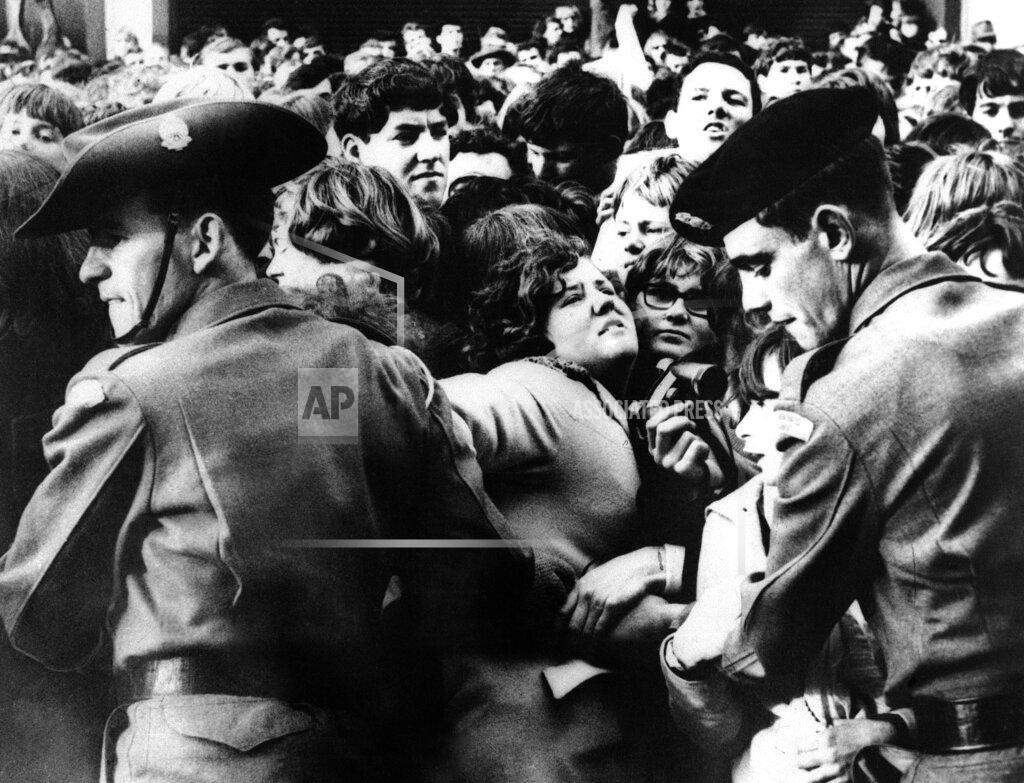
More than 100 fans of The Beatles required hospital treatment for their injuries when 250,000 people turned out at Melbourne to welcome the British group to its first visit to Australia.
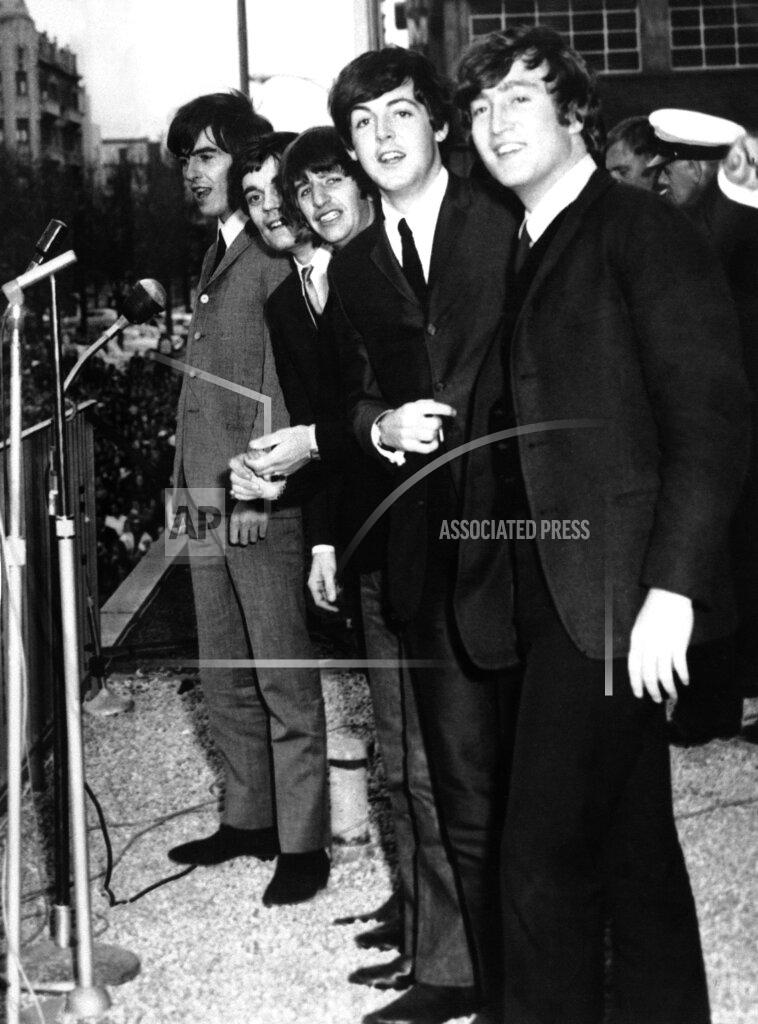
Drummer Ringo Starr re-unites with the Beatles in Melbourne, Australia, after recovering from tonsillitis.
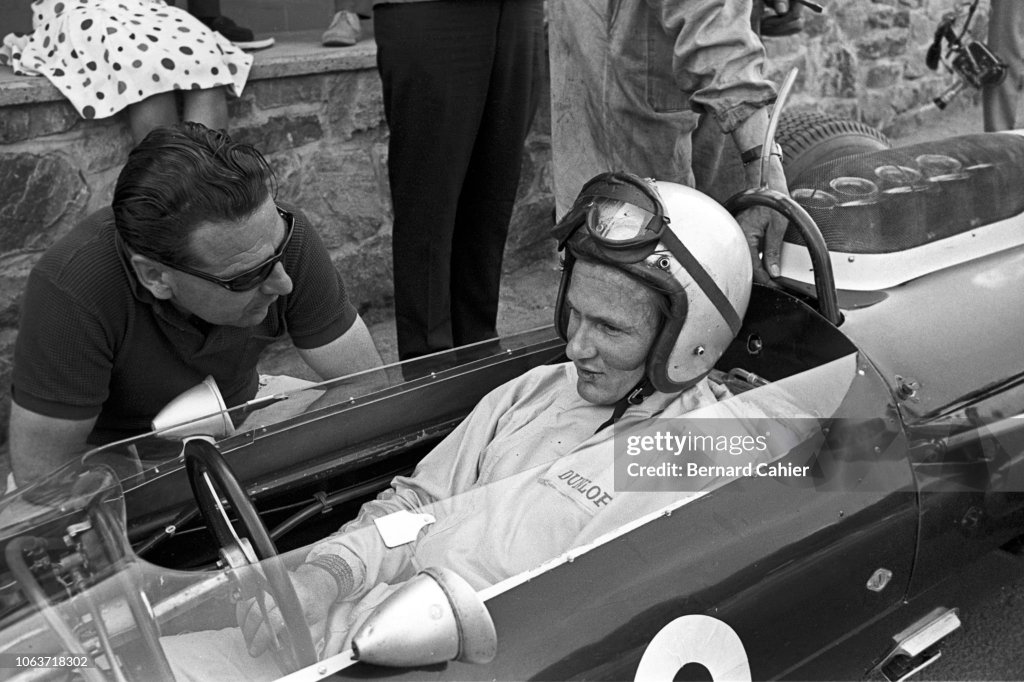
The 1964 Belgian Grand Prix motor race, held at the Circuit de Spa-Francorchamps, was won by Jim Clark.
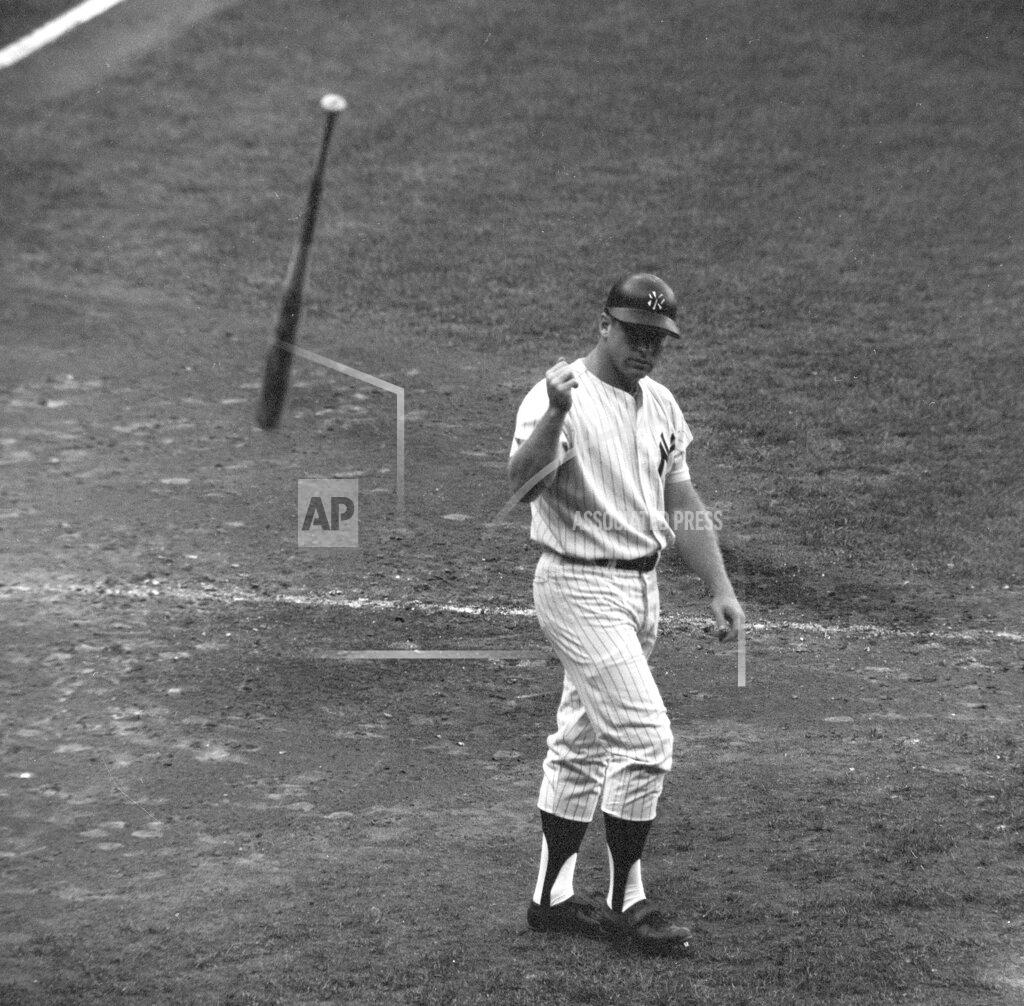
The Yankees complete a 5-game sweep of the White Sox with two victories 8–3 and 4–3 (in 10 innings) at the Stadium. Chicago falls to 2nd place behind the Orioles.
The Baltimore Orioles walloped the Boston Red Sox, 10–1 and 8–1, today and replaced the Chicago White Sox as the American League leaders. Chuck Estrada won the second game, posting his first victory since May 21, 1963, with help from Dick Hall. They combined for a five‐hitter. Brooks Robinson and Luis Aparicio made four hits each in pacing the Orioles in the opener. Jerry Adair, who had had only 10 runs batted in, added five in the double‐header.
Jim Ray Hart drove in three runs with a homer and double in support of Ron Herbel’s eight‐hit pitching today as the San Francisco Giants downed the Cincinnati Reds, 8–2. Hart doubled home two runs a three‐run first inning and hit his sixth homer in the third immediately after Orlando Cepeda had crashed a 420‐foot homer, his seventh, with Willie Mays on base.
Ray Culp’s stout relief pitching in the opener and the extra-base slugging of Johnny Callison in the second game, today enabled the Philadelphia Phillies to sweep a double‐header with the New York Mets, 9–5 and 4–2, before 21,020 fans in Connie Mack Stadium.
Born:
Jamie Dukes, NFL center and guard (Atlanta Falcons, Green Bay Packers, Arizona Cardinals), in Schenectady, New York.
Neal Guggemos, NFL defensive back (Minnesota Vikings, New York Giants), in Winsted, Minnesota.
Cleve Wester, NFL running back (Detroit Lions), in Albany, Georgia.
 History Diaries