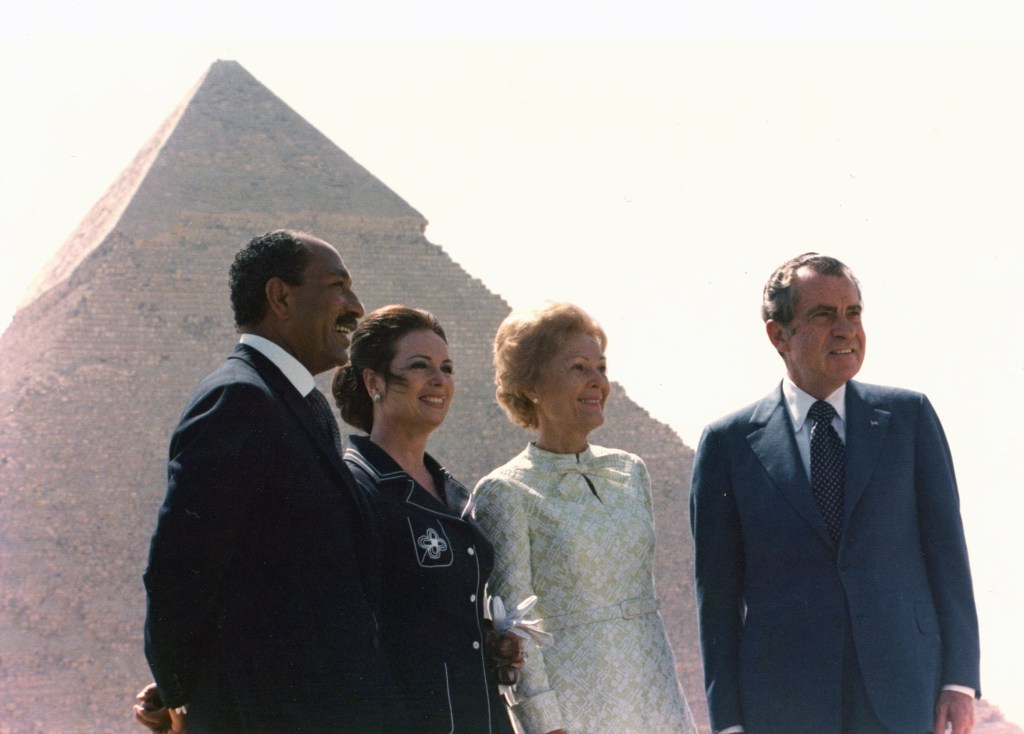
President Nixon and President Anwar Sadat of Egypt signed in Cairo a sweeping declaration of friendship and cooperation between the formerly hostile countries. Mr. Nixon pledged that the United States would make nuclear technology available to Egypt for peaceful uses; help strengthen Egypt’s financial structure; play an active role in the reconstruction of Egyptian cities along the Suez Canal; give the greatest possible amount of American economic aid to Egypt subject to congressional approval, and help satisfy Egypt’s urgent need for wheat and other basic commodities.
Mr. Nixon went on to Jidda, Saudi Arabia, where, at a state dinner, King Faisal warned him that lasting peace in the Middle East depends on justice for the Palestinians.
Key congressional leaders said that President Nixon would probably follow up the nuclear energy agreement with Egypt with a similar accord with Israel. Administration officials told senior members of the Joint Atomic Energy Committee and the Senate Foreign Relations Committee of both the Egyptian and Israeli nuclear agreements, the leaders said.
Vice President Ford urged today that the nation “let politics and controversy stop at the water’s edge” to strengthen the hands of President Nixon and Secretary of State Kissinger on what he called their “sacred mission” to the Middle East. Mr. Ford reminded a friendly audience of about 1,500 at Southern Baptist convention in Dallas this Morning that it was Mr. Nixon who had designated Mr. Kissinger to be Secretary of State, and he described Mr. Kissinger as “a man of the faith of the Old Testament, who has brought forth modern miracles.” Mr. Ford did not mention the impeachment inquiry being conducted against Mr. Nixon or the wiretapping controversy involving Mr. Kissinger, but the audience applauded when he said, “The detractors of these two men would do well in my judgment to dwell on the high purpose that the President and the Secretary of State are pursuing as emissaries of peace.”
The United States and its North Atlantic Treaty Alliance partners have virtually agreed on a formal “declaration of principles” that will be issued next week at the NATO foreign ministers’ meeting in Ottawa on the alliance’s 25th anniversary. A decision is being made on whether President Nixon and other NATO leaders will ratify the declaration when Mr. Nixon makes an anticipated stop in Brussels on his way to Moscow later this month.
In a major address at the end of the Soviet election campaign, Leonid Brezhnev said that the Soviet Union was ready to reach an agreement with the United States to limit underground nuclear tests, leading to their complete halt on an agreed timetable. He also said that the two countries “must move ahead” to place new limitations on strategic arms.
Paul H. Nitze resigned today from the American negotiating team at the Strategic Arms Limitation Talks, asserting that the “depressing reality” of Watergate makes prospects for slowing the nuclear arms race unlikely. Mr. Nitze, a lifelong Democrat and a former top Pentagon official, did not mention President Nixon by name, but as one official said: “The message is clear about Nixon and his trip to Moscow.” Mr. Nitze sent a one‐sentence letter of resignation to the President. The White House had no comment on the resignation.
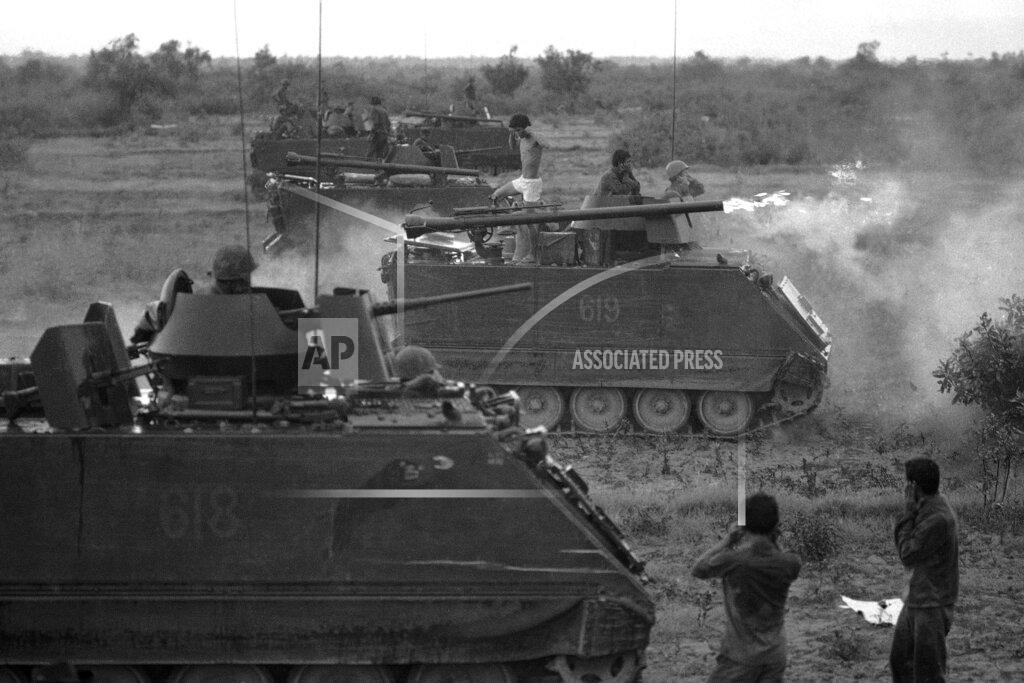
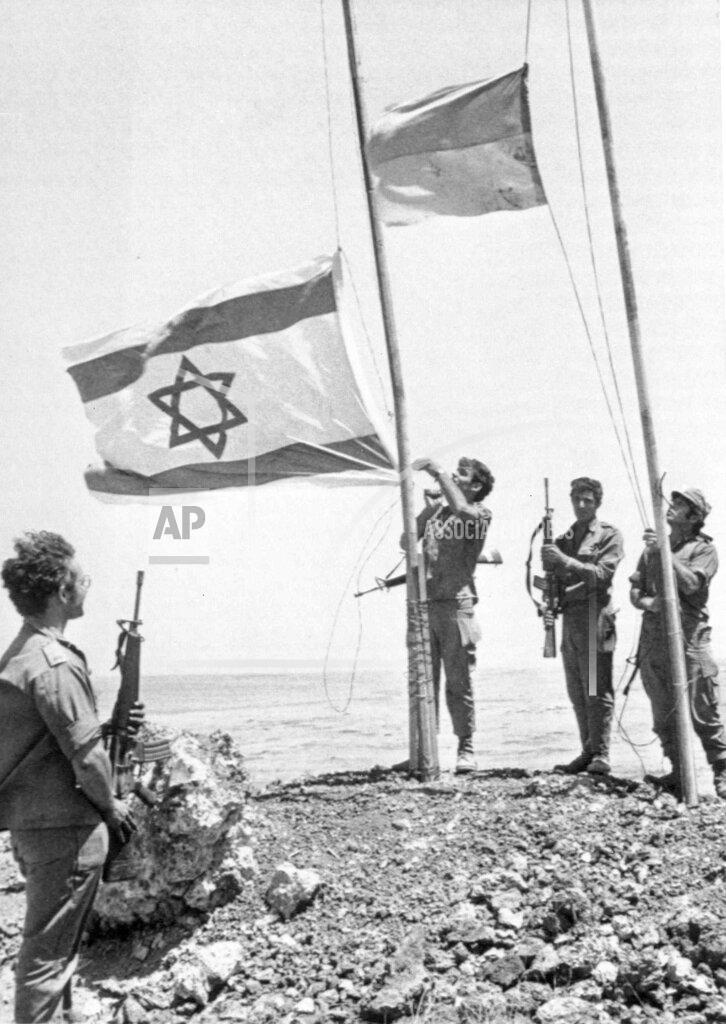
Israel evacuated her forces today from approximately one‐third of the salient captured from Syria during the war of last October. General Gonzalo Bricerio of Peru, interim commander of the United Nations Disengagement Observer Force, said the evacuation was completed at 4 PM with no difficulties. At 8 AM tomorrow, Syria is to take control of the evacuated section, an area of about 40 square miles in the southeast corner of the salient. Until then the area is under the command of the United Nations. The rest of the salient is to be relinquished by Israel by June 25 under the terms of the disengagement agreement signed in Geneva on May 31.
A headquarters of the United Nations force was established near the settlement of Tel Shams, which is about 25 miles from Damascus. A checkpoint manned by 10 United Nations soldiers armed with automatic rifles was set up less than a mile from the headquarters on a road to the Syrian capital. The evacuation today marked the first time since Syria and Israel went to war in 1967 that Israel has relinquished as much as one foot of captured Syrian territory. Colonel Tauno Kuosa of Finland, the United Nations field commander, said as he strode briskly from his headquarters to the new checkpoint that “both sides cooperated with us.”
With the blue United Nations flag fluttering in the evening breeze several hundred yards behind him, the colonel said that 10 Israeli and 10 Syrian liaison officers remained in the United Nations headquarters here to carry out the next stage of the Israeli evacuation, which is to take place in an area west of the one given back today. Asked if the Israeli and Syrian officers Were talking to each other face to face during the final hours of the withdrawal today, Colonel Kuosa smiled and said: “Ask them. All I can say is that the atmosphere was good.” Colonel Kuosa said he did not know how many Syrian troops would enter the formerly occupied area tomorrow, but he indicated that the number would not be large.
Portugal’s new government announced tonight that it was taking control of the country’s state‐subsidized television network. Press sources speculated that the take‐over was the first step in a crackdown on the country’s news media. A new press law covering newspapers, radio, theaters and motion pictures is expected within a few days, a government source said. General António de Spinola’s Government announced the move after a long cabinet session. The take‐over came four days after General Spinola’s junta ordered a nationwide television program off the air because it depicted a Roman Catholic patriarch of Portugal blessing a member of the Portuguese secret police, which the Spinola government has disbanded.
Portugal and negotiators from the rebel movement in Portuguese Guinea unexpectedly suspended their peace talks tonight because of what Portugal called “last‐moment difficulties.” No date was fixed to resume negotiations, and both delegations said they would leave Algiers tomorrow or Sunday. Today was the second day of talks in the Algerian capital. Foreign Minister Mario Soares, the chief of the Portuguese delegation, hinted today before the talks were broken off that the two delegations were “about to sign an agreement.”
Ten bombs exploded early today in Famagusta, in eastern Cyprus, damaging Government offices and cooperative shops. No casualties were reported. The targets included a shop belonging to a member of the House of Representatives who publishes a weekly newspaper supporting President Makarios. At the same time six masked and armed men stormed into a club in Limassol, on the southwest coast, and beat three men. The bombings were believed to be the work of sympathizers with the underground guerrilla movement formed by the late General George Grivas to campaign for union with Greece.
The Soviet ballet stars Valery Panov and Galina Ragozina, his wife, who lost their positions with the Leningrad Kirov Ballet when they applied to emigrates from the Soviet Union two years ago, arrived in Vienna today, on their way to Israel.
The ideological campaign in China has moved into a new phase as a result of orders from Peking barring local Communist party units from interfering with anyone who wants to put up a wall poster to denounce officials or policies he finds objectionable. As a result, party officials have come under attack in the last few days in a number of Chinese cities, including Peking, for blocking “revolutionary mass criticism” in earlier stages of the campaign and failing to promote the values of the Cultural Revolution that the campaign was supposed to revive. The consistency of themes indicates that the criticism is not merely being permitted now but is being orchestrated and that organized groups of activists are involved.
The posters in Peking inevitably recall the early phases of the Cultural Revolution of the late nineteen‐sixties. They concentrate their fire on “leading comrades” in the Municipal Revolutionary Committee, with particular reference to a “Comrade XX” — a designation hinting that the name has only two ideographic characters. As it happens, there are two characters in the name of the committee’s chairman, Wu Teh, who is also a member of the Politburo and chairman of the Communist party committee in Peking.
The most serious test in decades of whether Japan’s ruling Liberal Democratic Party can retain control of parliament began Friday. Prime Minister Kakuei Tanaka marked the occasion — the official opening of a 23-day campaign for a July 7 election for the upper house — by warning voters in Tokyo that “with the opposition in control, nothing can be solved.” With unofficial campaigning having been on for more than a year, there were few surprises Friday.
The one exception came from Shoichi Yokoi. The 59-year-old Japanese straggler from World War II — who came home from the jungles of Guam in February, 1972, to end a personal war that lasted nearly 28 years — declared himself a candidate of the at-large national constituency from which 54 of the 130 seats at stake will be filled. “Since I survived as if by a miracle, I think I must try to improve politics for the sake of my comrades who died in the war,” said Yokoi, en route to a speech in Akita. The ex-sergeant, who said he overrode opposition from his wife to reach the decision only four days ago, will run as an independent.
Deciding that the White House had fully “satisfied” its legal requirement to provide documents in the “plumbers” case, Federal Judge Gerhard Gesell set June 26 for the start of the trial of John Ehrlichman and three other defendants. Judge Gesell rejected a last-minute attempt by Mr. Ehrlichman and his lawyers to get full access to Mr. Ehrlichman’s personal notes in the White House files by ruling that the additional notes were not relevant.
Federal District Judge John L. Smith gave. the Department of Justice permission today to give the Senate Foreign Relations Committee documents relating to Henry A. Kissinger’s role in the wiretapping of Government officials and newsmen. A Justice Department spokesman said immediately after the order was signed by Judge Smith late this afternoon that a thick stack of materials “directly or indirectly” touching on the Secretary of State’s participation in the wiretap operation was being sent to the committee’s offices.
The arrangement to provide the panel with the materials, which it had requested for its review of the Kissinger role, was apparently worked out yesterday in a telephone conversation between Senator J. W. Fulbright, the committee chairman, and Deputy Attorney General Laurence H. Silberman. In a related development, Senator Fulbright said today that a petition signed by 52 of his colleagues praising Mr. Kissinger’s integrity was “premature” expression of support and raised “a serious question” as to the advisability of continuing the panel’s inquiry.
The possibility that the financially troubled Franklin National Bank in New York has been a conduit, perhaps unknowingly, for stolen government securities is being investigated by Senate investigators, well-informed sources said. The Justice Department was said to be making an investigation, too.
In Orange County, California, where President Nixon was raised and politics is stanchly conservative, there is one of the largest concentrations of white, elderly people in the nation. They represent a major element in the number of Americans who do not want to see Mr. Nixon impeached. In 1972, 83 percent of the residents of Leisure World, where many of these people live, voted for him.
“I don’t believe it’s necessary for me to tell you the seriousness of these charges,” the judge said as he sentenced Nelson Gross, the former Republican party chairman in New Jersey, to two years in jail and fined him $10,000. Mr. Gross was convicted of tax fraud and perjury stemming from his activities as chairman of the 1969 gubernatorial campaign of William Cahill.
The Gulf Oil Corporation building in Pittsburgh, rocked by an explosion last night attributed to a radical group that calls itself Weather Underground, was evacuated at noon today by a bomb threat. Company officials said a switchboard operator had received a call, similar to one received just before last night’s explosion, causing the company to evacuate approximately 800 workers today. The first call was from a man who said, “Listen very carefully. This is the Weather Underground. You have exactly 17 minutes to evacuate the building, and we mean business.” The Weather Underground is a remnant of the radical Weatherman student organization of the late nineteen‐sixties.
The Federal Power Commission today issued a license to the Appalachian Power Company to construct the controversial Blue Ridge hydroelectric project on the New River in western Virginia and North Carolina. However, the commission postponed until January 2 the effective date of the license to give Congress “full opportunity” to act on a bill that would prepare the way for putting 70‐mile section of the river in the National Wild and Scenic Rivers System. Such a designation would block the hydroelectric project. Last May 28, the Senate passed the bill, 49 to 19. On June 3, the House Interior Subcommittee on National Parks and. Recreation held hearings on it. The full committee and the House are expected to approve it in the next few weeks. Therefore, unless President Nixon vetoed the bill and the veto were sustained, it is likely that the license will never take effect. In that event the State of North Carolina, three rural counties and several environmental groups will win their nine‐year struggle to block the $430‐million project. If approval is granted, the project would have two dams backing up reservoirs covering 38,000 acres, 44 miles of the river and 212 miles of its tributaries.
Most of the Federal agencies that decide such questions as the price of natural gas or who should own a television station have been accused of failing to act to reduce the months and even years of unnecessary delay plaguing the regulatory process. The accusation was made in a report prepared for the Administrative Conference of the United States on how to measure the performance of a little-known but powerful group of Federal officials known as administrative law judges. Performance was measured on the number of cases decided each year.
Fresh from 2-hour-and-57-minute supersonic round trip to Miami, the Anglo-French Concorde set down at Logan International Airport today for a week‐end stay. The sleek, delta winged jetliner made the record trip to Miami in 80 minutes, less than half the flight time of conventional jets. The aircraft shuttled group of politicians, reporters and airport officials to Miami on a promotional tour as part of dedication ceremonies for the new John A. Volpe international terminal at Logan. Loaded with nearly 18 tons of test equipment, the Concorde had room for only about 32 passengers. Guests on the morning flight to Miami returned to Boston by conventional jet to make room for another group of passengers.
Too few Americans are immunized against polio, diphtheria and other serious communicable diseases to protect the public from the risk of epidemics, a government agency has reported to Congress. The immunization levels also appear to be too low for measles, rubella, or German measles, and whooping cough, the General Accounting Office reported after a nine‐state survey and review of data from the Government’s Center for Disease Control in Atlanta. The report recommended that the Department of Health, Education and Welfare encourage states to accept supplies of vaccines and take advantage of the department’s centralized procurement system.
Residents of South Jamaica, Queens, New York, stunned by the acquittal of Police Officer Thomas Shea, gathered at hastily called meetings yesterday to try to resolve the tense aftermath or the acquittal in the fatal shooting last year of 10‐year‐old Clifford Glover. In contrast to Thursday night, when groups of youths roamed the streets on and around New York Boulevard, few people were seen in the area last night. As darkness fell, patrol cars and other police vehicles were visible at nearly every intersection along the boulevard from Liberty Avenue to Linden Boulevard, but by an hour or two later they could be seen only at scattered points. A proposal was made by a board member of the Central Queens Community Association to file a lawsuit against Officer Shea under a Federal Civil Rights Law charging that he “conspired against the life of Clifford Glover.”
The Lunar Surface Magnetometers placed on the Moon by the Apollo 12 mission (at the Oceanus Procellarum in 1969) and the Apollo 15 mission (at the Palus Putredinis lava plain on the edge of the Mare Imbrium in 1971) were deactivated by NASA.
A converted U.S. Navy vessel with 10 people aboard, the privately-owned boat Shooting Star, disappeared in heavy seas in the Pacific Ocean off the coast of Mexico, after issuing two distress calls before midnight the evening before. Debris from the Shooting Star were located three days later with no signs of life.
Nolan Ryan strikes out 19 Red Sox in 13 innings, including Cecil Cooper 6 times in a row. In an unusual double-double, he also walks 10 batters for the 2nd time this year. Ryan throws 235 pitches. The Angels finally win in 15 innings, 4–3, with the victory going to Barry Raziano over Luis Tiant.
At Cleveland, Eric Soderholm has a grand slam and 5 RBI to pace the Twins to an 8–2 victory over the Indians.
Dow Jones Industrial Average: 843.09 (-8.99, -1.06%).
Born:
Rod Payne, NFL center (Cincinnati Bengals), in Miami, Florida.
Rodney Artmore, NFL defensive back (Green Bay Packers), in Galveston, Texas.






 History Diaries