Seven ARVN and one U.S. soldier are killed in an ambush 50 miles northwest of Saigon, the United States Army announced today.
Việt Cộng mines derail three trains, blow up two trucks and kill six Vietnamese.
Cambodian authorities charged today that South Vietnamese forces had bombarded a Cambodian monastery in Vietnam and a village on the border. A statement issued by Information Minister Tim Dong said the attack on the monastery, at Andog Trar, had killed three and wounded two of its community of 22 monks. Border guards in the village of Tralok said it was bombed Thursday by 60 helicopters and fighter‐bombers. No one was hurt. The guard told investigators for the International Control Commission that one L‐19 liaison plane, hit by ground fire, “flew away trailing smoke” but was unable to reach Vietnamese territory. They did not say specifically what had happened to the plane or its crew.
New Zealand regards Southeast Asia as her own front line and is increasingly concentrating defense efforts there. The Government made the point Thursday in its speech from the throne at the opening of Parliament. “The greatest threat to peace and security is now presented less by direct confrontation of the great powers than by other conflicts in which they may become involved.” The Governor General, Sir Bernard Fergusson, said. “This is particularly the case in Southeast Asia, where turbulent events in Malaysia, Vietnam and Laos endanger both the security of the area and world peace.” In practice New Zealand has treated support for Malaysia, a fellow member of the Commonwealth, against Indonesian pressure as her greatest responsibility. But she has also acknowledged obligations to assist Thailand and South Vietnam and is giving them some assistance.
The Australian Government, as distinct from the people, views the situation in South Vietnam as critical. There is no real evidence among people in the street of any awakening of purpose about bolstering defenses in South Vietnam, but the Federal Government is deeply concerned at the way the war is going. In particular, it views the possibility of negotiation after near‐defeat as disastrous. The hope is that the situation can be restored — a military offensive seems the only way — to a position of some equality with the Communist forces. Time would then be more opportune for a negotiated peace.
Communist China demanded today that the 14 nations that signed the 1962 Geneva accords hold emergency discussions to avert the danger of an extension of the war in Laos. Peking accused the United States of “wanton bombing and strafing” Thursday of the Chinese mission at Khang Khay, Political headquarters of the Communist‐led Pathet Lao movement in Laos. It asserted that one staff member was killed and five hurt.
In notes to the Soviet Union and Britain, the Chinese Foreign Minister, Marshal Chen Yi, warned that it would become impossible to restore peace in Laos unless the Geneva conference was reconvened as soon as possible. A parallel statement by the Chinese Communist Government declared that the “Laotian situation has reached a critical juncture.”
The statement added that Britain and the Soviet Union, as co‐chairmen of the Geneva conference, must act without delay or share responsibility for any further trouble in Laos. Diplomatic analysts here said that the Chinese Communist declarations were intended to meet a challenge posed by continued United States air operations over Laos. A failure of Peking to cope successfully with this problem, it was said, would entail a significant loss of prestige for the Chinese Communists in Southeast Asia.
Stern warnings issued by Peking early this week have failed to halt United States reconnaissance flights over Pathet Lao territory and bombing attacks by the Laotian Air Force. United States reconnaissance flights were resumed yesterday after an interval of two days during which the United States Ambassador consulted with Prince Souvanna Phouma, the Laotian Premier, on the advisability of continuing them. The attack on Khang Khay, which apparently destroyed several buildings of the Pathet Lao headquarters as well as the Chinese mission, was said by Peking to have been carried out during the period United States flights were suspended.
United States Air Force jet fighters from an undisclosed land base carried out last Tuesday’s retaliatory attack on gun positions of the Communist‐led Pathet Lao in Laos, it was reliably reported in Washington today. The targets were believed to have been modern radar‐guided guns that had knocked down an unarmed United States, Navy RF‐8 reconnaissance plane last Saturday and an armed Navy F‐8A escort plane last Sunday. The purpose of the Air Force raid was to demonstrate United States determination to continue reconnaissance flights over Laos, even at the risk of greater conflict. The damage done was not disclosed, but reconnaissance flights have been resumed.
There was no official comment about the report. Some knowledgeable persons speculated that the attacking planes were based at Clark Air Force Base in the Philippines. Similar planes are also stationed on a rotational basis for one, two or three months in Thailand and at United States bases in Okinawa and Japan. The F‐100 Super Saber jets have a normal range of about 1,000 miles but this can be ex tended through mid‐air refueling from tanker planes. The Philippine base is about 1,100 miles from the Plain des Jarres in north‐central Laos.
For the 188th time since March 14, 1962, the representatives of 17 countries and their advisers marched into the main conference room of Geneva’s Palais des Nations on Tuesday of this week and began to talk about disarmament. They did it again for the 189th time on Thursday and the prospects are that they will be discussing the subject for a long, long time to come. There was nothing much of substance said either Tuesday or Thursday that will count in the end, but for the oldest permanent conference in the world’s No. 1 conference city, the resumption was considered more than satisfactory.
For something is happening in the disarmament conference that could be very important. No one thinks any longer, if they ever did, which is doubtful, that the five Communist countries, four Western countries and eight nonaligned countries gathered in Geneva are suddenly going to come up with the formula that means the transformation of swords into ploughshares or, what is more apropos in the 20th century, the conversion of nuclear bombers into pesticide sprayers. But under the impact of the still‐developing cordiality between the United States and the Soviet Union, much of the sterility has gone out of the debates in Geneva. The nuclear giants are no, longer snarling at each other; on some days, in fact, they are so busy being nice to each other that the eight neutral delegates are not sure what to make of it all.
Premier Khrushchev received the West German Ambassador today for a long and apparently “positive” talk. The meeting came less than two hours after Wafter Ulbricht, the Communist head of East Germany, had left Moscow following the signing yesterday of a Soviet‐East German treaty of friendship, mutual aid and cooperation. Informed West German sources said the meeting between Premier Khrushchev and the Ambassador, Horst Gröpper, had been held at the German’s request and had not been connected with either the treaty or Mr. Ulbricht’s two‐week visit to the Soviet Union. There was immediate speculation that the meeting might have dealt with the possibility of a meeting between Premier Khrushchev and Chancellor Ludwig Erhard. But West German sources discouraged the suggestion as “too far‐reaching.”
Chancellor Ludwig Erhard of West Germany said today that in deference to the United States, his government was not now contemplating formal diplomatic or trade relations with Communist China. The Chancellor indicated that some expansion of trade with Peking was possible, but he promised the Johnson Administration in two days of talks here that such trade would not be formally sanctioned for the time being. He also said Communist China would not be given long term or government‐backed loans from West Germany, thus ruling out any sizable increase in commercial activity.
The United States and Britain have agreed to contribute $3 million toward the cost of keeping the United Nations force in Cyprus for another three months. Reliable sources said that the United States, in response to a request from the Secretary General, U Thant, had pledged $2 million for the period June 27 to September 27, and that Britain had promised $1 million. This will provide more than half the amount needed under the partial pay‐your‐own‐way plan being used to finance the force. It is understood that Mr. Thant is confident he can obtain the balance.
The White House announced today that Premier İsmet İnönü of Turkey would come to Washington June 22 for talks on Cyprus with President Johnson. Premier George Papandreou of Greece is expected to arrive later for separate talks with the President. White House sources ruled out any possibility that the Greek and Turkish leaders would participate in a three‐way conference with Mr. Johnson.
Officials in Washington made it plain that the President had no specific solution to the Cyprus question to offer Mr. İnönü. What he will seek, they said, will be an efficient working relationship with him and with Mr. Papandreou and, ultimately, such a relationship between the Greek and Turkish Governments. These governments have been at the point of armed conflict as a result of fighting between the Turkish minority and the Greek majority on Cyprus. The conflict began last December. A United Nations force on the island has established only a tenuous lull in the fighting.
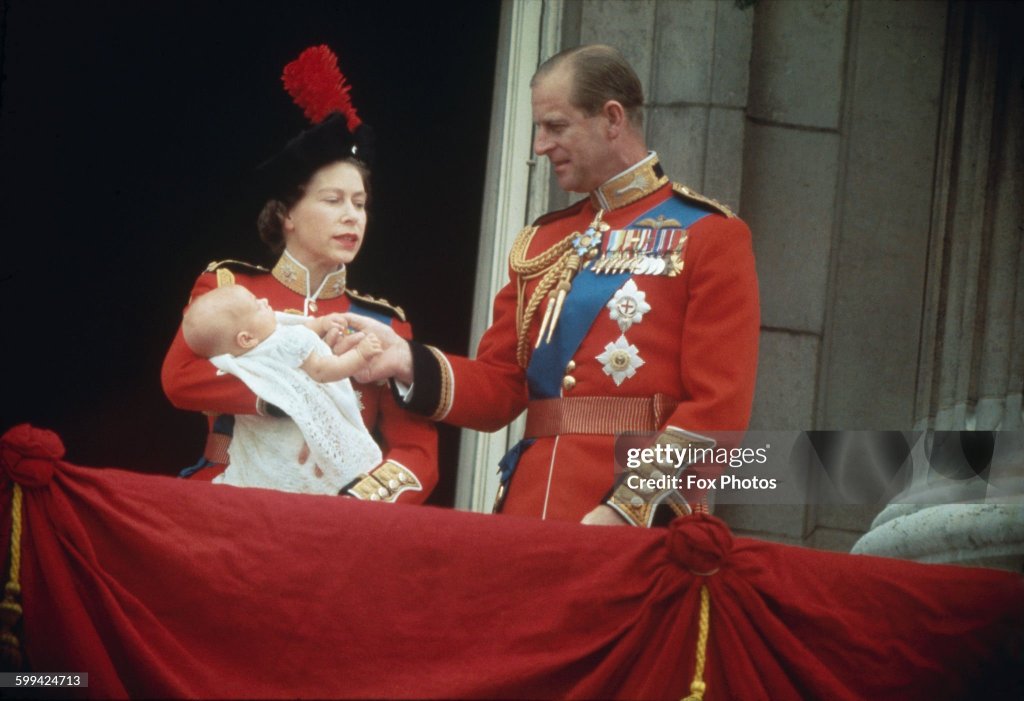
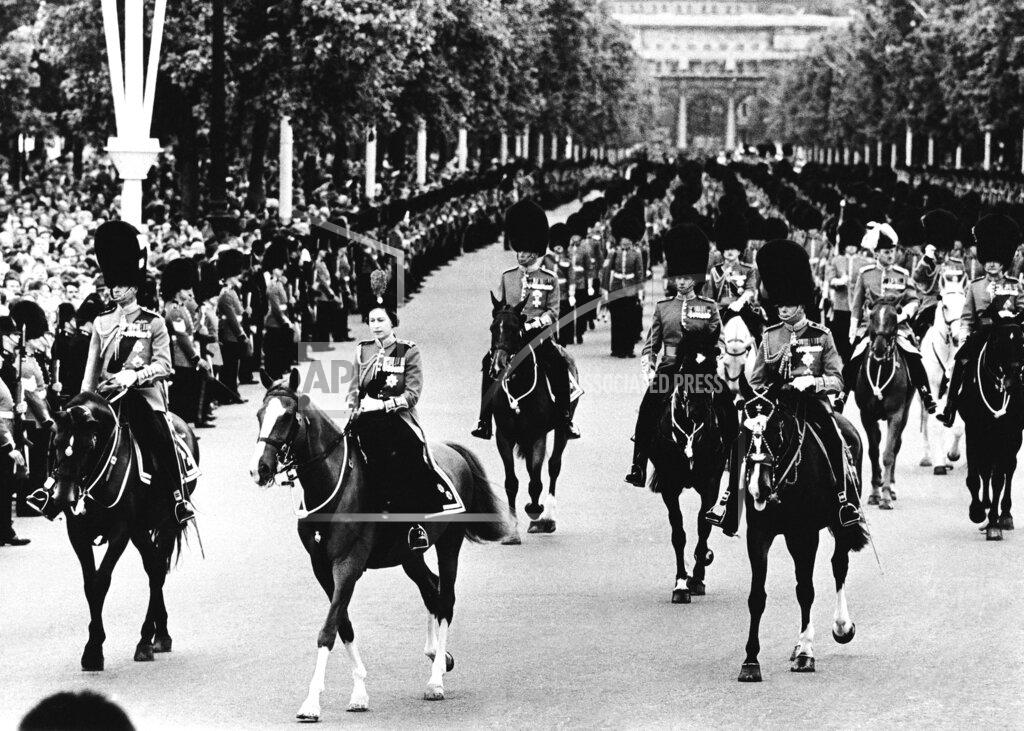
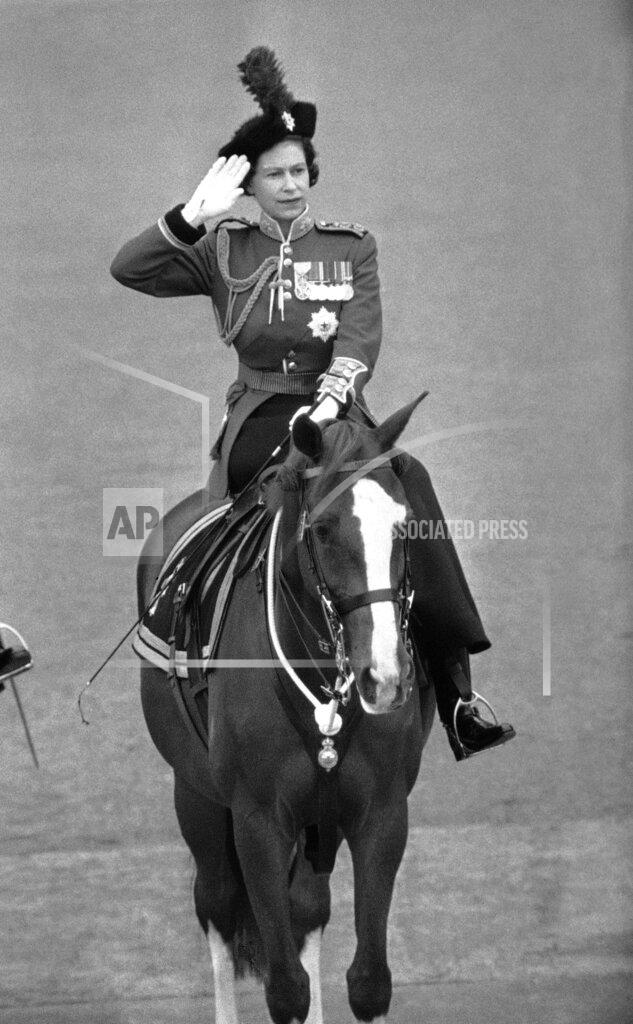
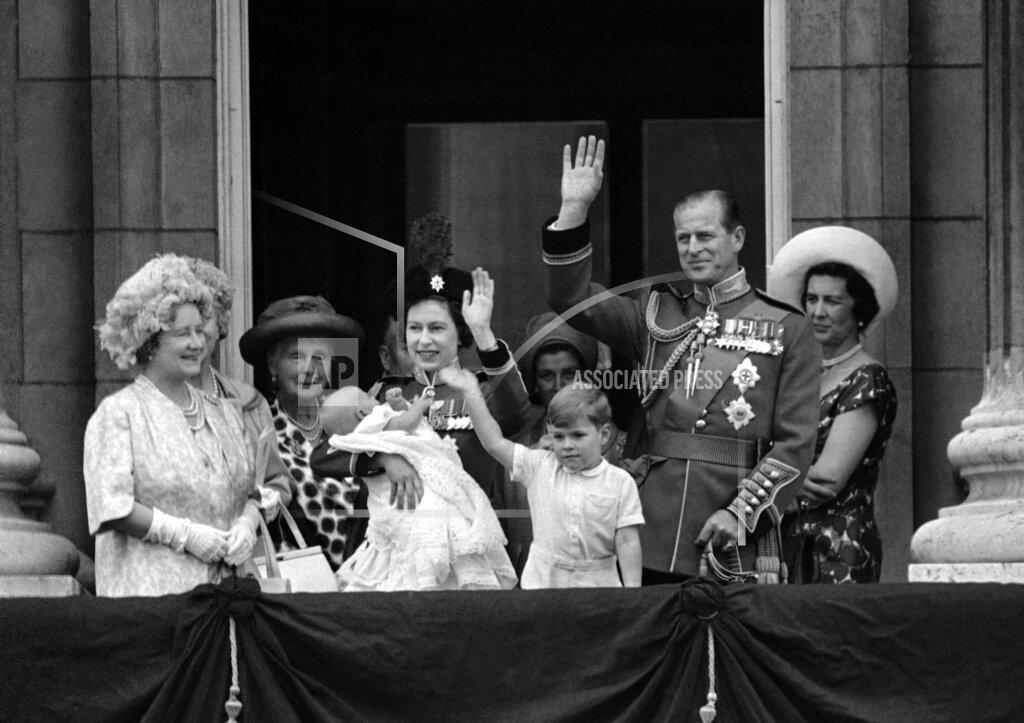
Troops marched in colorful regalia, jet planes roared overhead and ceremonial guns boomed today to honor Queen Elizabeth II on her official 38th birthday. The centerpiece of the celebration was the annual rite of Trooping the Colour at Horse Guards’ Parade, a quarter of a mile down the Mall from Buckingham Palace. The Queen, riding sidesaddle on a police horse named Imperial and accompanied by Prince Philip and her uncle, the Duke of Gloucester, took the salute from more than 1,500 troops honoring, this year, the flag of the First Battalion, the Coldstream Guards.
Tens of thousands of spectators, including a big contingent of American and other foreign tourists, jammed the Mall and the parade ground. There were lowering clouds following early‐morning showers but no rain fell and the sun peeped through a couple of times to flash on swords and gleaming helmets. Returning to Buckingham Palace, the Queen appeared on a balcony with her 12-week‐old son Prince Edward in her arms to watch the fighter planes fly past. His brother Prince Andrew, 4, was so fascinated by the cheering crowds that he leaned far out over a balustrade until he was pulled back by an attendant. The Queen’s birthday is April 21. Her official one makes place now in the hone of dry weather.
Sir Richard Luyt, the colonial Governor of British Guiana (now Guyana) proclaimed a state of emergency and ordered the arrest of 28 politicians and trade union leaders, in the wake of escalating violence arising from a strike of sugar workers.
Three times today, Senator Sam J. Ervin Jr. of North Carolina led a Southern assault, on the voting section of the civil rights bill, and three times the Southerners were routed. The voting provision of the bill prohibits registrars from applying different standards for whites and Negroes on literacy tests and from disqualifying Negroes for immaterial errors on voter applications. First, Mr. Ervin proposed striking the entire provision. This amendment was defeated, 69 to 16. No non‐Southerner voted for it. At full strength, the Southern band numbers 18 Democrats and one Republican, John G. Tower of Texas. Mr. Tower voted against the amendment. Two Democrats — A. Willis Robertson and Harry F. Byrd, both of Virginia — were absent and paired for the amendment. Next, Mr. Ervin proposed deleting the key prohibitions against applying different standards for whites and Blacks.
The North Carolinian, who said during committee hearings last summer that he was not aware of any misuse of literacy tests in Mississippi, argued today that the voting section was unconstitutional because it deprived the states of their right to set voter qualifications. The bill’s proponents argued that the title did not set qualifications but merely required that they be administered impartially. This amendment also went down, 69 to 16. Finally, Mr. Ervin moved to strike a provision stating that, in voting suits, a sixth‐grade education would constitute a presumption of literacy. This was defeated, 67 to 18. This was the fourth session devoted to debate and voting on amendments since closure was invoked last Wednesday by a vote of 71 to 29. Under the closure rules, each Senator is permitted one hour to talk before the final vote on the bill.
As on the other three days, Southern amendments continued to fall today like the autumn leaves in Vallombrosa. So far, the Southerners have failed to win elimination of the fair employment practices title and the title permitting a cutoff of Federal funds from programs in which discrimination is practiced. These were originally regarded as so vulnerable that they were put in the hill as possible trade‐off sections to save the section on public. accommodations. Even worse, from the Southern viewpoint, rather simple perfecting amendments have been moved down relentlessly. The Southerners were spiritless and in. disarray. They scarcely bothered to use up time to explain or defend their amendments, and it was assumed they were saving it for one long, last oratorical assault on the whole bill, which Senator Richard B. Russell of Georgia has termed “a punitive expedition against the South.”
Governor William W. Scranton opened his campaign for the Republican Presidential nomination in his native state of Connecticut today with an attack on Senate Barry Goldwater. He did not mention the Arizona Senator by name. But, referring to him as the “present front‐runner,” Mr. Scranton accused him of spreading “havoc across the national landscape.” He charged that the Senator was showing “recklessness” on foreign issues and, on domestic ones, had betrayed a “cruel misunderstanding of how the American economy works.”
The 46‐year‐old Pennsylvania Governor, who was born in nearby Madison, spoke in an unscheduled appearance at the Republican State Convention here. Technically, the Scranton speech had no effect on the composition of the state’s 16 delegates to the Republican National Convention, which opens July 13 in San Francisco. By prearrangement, four delegates have pledged themselves to Mr. Goldwater. The 12 others remain officially uncommitted, though it is believed they will be in the Scranton camp.
Senator Barry Goldwater gained 42 national convention delegates yesterday at four Republican state conventions. According to the unofficial Associated Press tabulation, this brought to 618 the number of delegates committed to or listed as favorable to the Arizona Senator’s candidacy for the Republican Presidential nomination. This leaves Mr. Goldwater only 37 votes short of the 655 needed for nomination at the Republican convention. The convention opens in San Francisco July 13.
However, only a few of the 618 delegates are irrevocably bound to vote for Mr. Goldwater. Some have already indicated movement away from the Arizona Senator. Yesterday, Mr. Goldwater gained 14 delegates at Idaho’s, Republican State Convention, 14 at New Mexico’s, 10 at Virginia’s, and 4 at Connecticut’s. Mr. Goldwater is also expected to pick up the 56 Texas delegate votes on Tuesday and the 14 in Montana next Saturday. This would give him the nomination if all the committed and favorable delegates vote for him.
Although Senator Barry Goldwater continued to pick up delegate votes yesterday, moderate Republican leaders were heartened by signs that some delegates were slipping away from the Arizona conservative. This loss of strength follows the announcement Friday by Governor William W. Scranton of Pennsylvania that he will fight for the Presidential nomination. Former Vice President Richard M. Nixon said in Milwaukee, meanwhile, that Mr. Scranton, in his hard‐hitting announcement, had repaired some of the image of “weakness and indecisiveness” that he had left earlier this week. Yesterday Mr. Nixon said Governor Scranton would have to prove that he was not a “puppet” tied to strings pulled by former President Dwight D. Eisenhower.
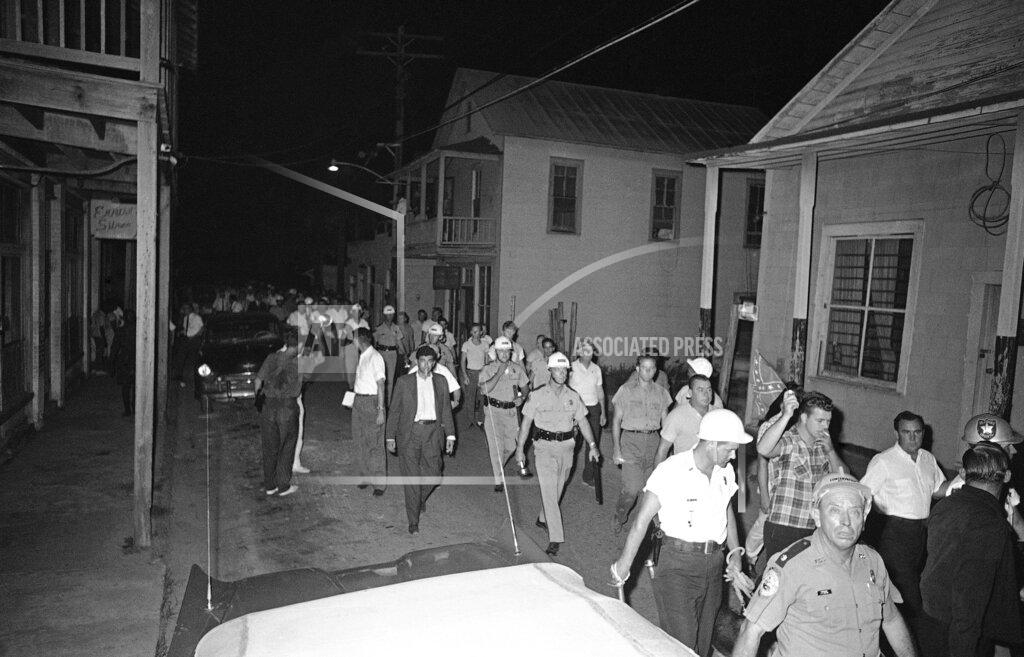
The first 300 volunteers for the “Freedom Summer” project, to register African-Americans to vote in Mississippi, arrived at the campus of the Western College for Women in Oxford, Ohio. They received instruction from members of the Mississippi chapters of the Student Nonviolent Coordinating Committee (SNCC), the Congress of Racial Equality (CORE), the National Association for the Advancement of Colored People (NAACP) and the Southern Christian Leadership Conference (SCLC).
Across the shady lawns of the University of Alabama, three young Black women walked to their classes today without drawing even a rude glance from white students. Two of them are roommates in a previously all‐white girl’s dormitory and take their meals in the dormitory dining hall. The third lives with her parents in Tuscaloosa. None of them has been insulted during this first week of the university’s summer session. They have been told to report immediately to university leaders any discourtesy, any overheard racial slur.
Only a year ago this same campus was the scene of an integration showdown. Governor George C. Wallace stood at the door of Foster Auditorium to block the court‐ordered enrollment of Vivian Malone and James Hood. Hundreds of newsmen were on hand to report the crisis. A small army of state troopers was there to protect the Governor from Deputy Attorney General Nicholas deB. Katzenbach and two Black students. Mr. Katzenbach confronted the Governor alone, keeping the two Black students waiting in a car. By this strategy the government avoided having to charge Mr. Wallace with contempt of a federal Court order. Late that afternoon a detachment of federalized guardsmen confronted Mr. Wallace, who stepped aside, and the two Blacks were registered.
Twenty‐nine Freedom Riders convicted in Jackson, Mississippi, three years ago took their cases to the Supreme Court today. All have been found guilty by the Mississippi courts of breach of the peace and sentenced to four months in jail and $200 fines. They had to go through four appeal proceedings in Mississippi before they could seek Supreme Court review. Their petition argues that their arrests had no basis except as a pretext to continue unconstitutional racial segregation. The petition was filed by Jack Greenberg, director counsel of the N.A.A.C.P. Legal Defense and Educational Fund.
Altogether, 303 persons who arrived in Jackson on the Freedom Ride buses in the spring and summer of 1961 were arrested. The state courts refused to consolidate their cases, requiring separate trials and appeals and bonds for each defendant. No Mississippi bail bond company would provide bonds for civil rights demonstrators, so cash had to be raised. In most cases bail was fixed at $1,500, and the total advanced for the Freedom Riders in Jackson exceeds $372,000. Only three lawyers in the state of Mississippi, all Blacks, will handle civil rights cases. Thus many of the accused persons had to bring counsel from more than a thousand miles away and had to return themselves for trial and new trials.
Basil Heatley runs a world record marathon (2:13:55).
In a 4–2 loss to Washington, second baseman Bernie Allen of the Twins is hurt in a collision with Don Zimmer. He will be out until August 4th.
Mickey Mantle is 3-for-3, including a homer, to lead New York to a 6–3 win over the first place White Sox. Mantle is hitting .331 and leading the Yanks in homers with 11.
Born:
Kathy Burke, English actress (“Absolutely Fabulous”, “Tinker Tailor Soldier Spy”), comedian, playwright and theatre director, in London, England, United Kingdom.
Shawn Patterson, NFL defensive end and nose tackle (Green Bay Packers), in Oahu, Hawaii.
John Evans, NFL tight end (Atlanta Falcons), in Houston, Texas.
Šarūnas Marčiulionis, Lithuanian NBA shooting guard and small forward (Golden State Warriors, Seattle SuperSonics, Sacramento Kings, Denver Nuggets), in Kaunas, Lithuanian SSR, Soviet Union.
Jennifer Gillom, Team USA and WNBA center and forward (Olympic gold medal, 1988; WNBA All-Star, 1999; Phoenix Mercury, Los Angeles Sparks), in Abbeville, Mississippi.


 History Diaries