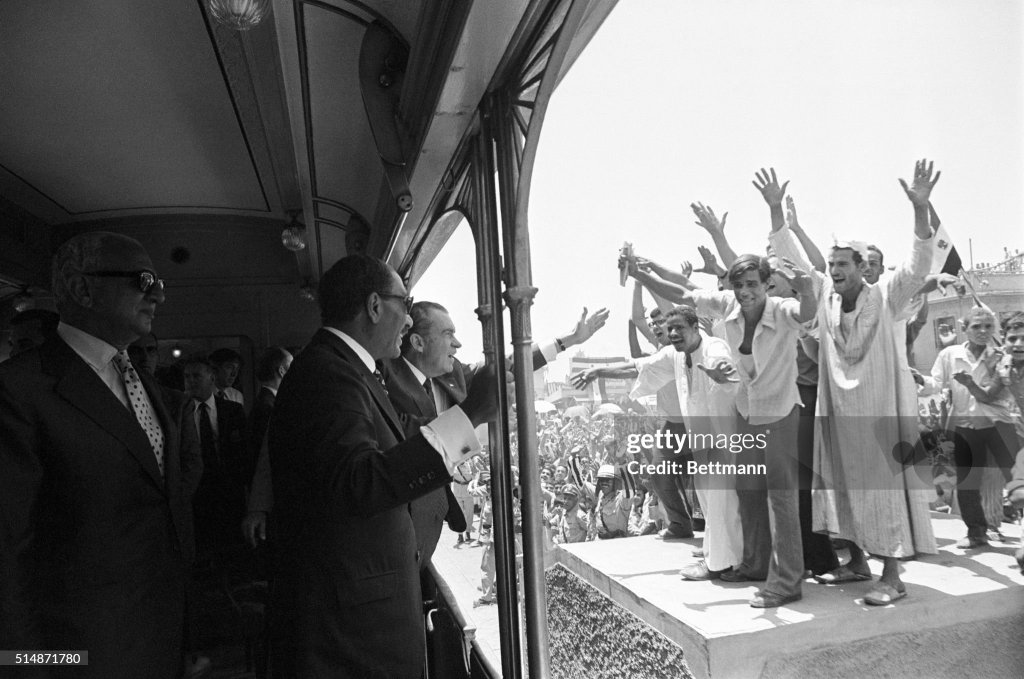
President Nixon announced that President Anwar Sadat of Egypt would make a state visit to the United States before the end of the year, the latest of several signs that the two leaders have developed a close relationship during Mr. Nixon’s triumphant visit to Egypt. Today the two men were again acclaimed by hundreds of thousands of cheering Egyptians as they journeyed by train from Cairo to Alexandria.
Saudi Arabia, the oil colossus of the Middle East, which President Nixon will visit Friday, is ready to play a world role in energy and finance and is eager for United States help in building a modern industrial economy. With mutual economic interests involved, President Nixon and King Faisal, the Saudi ruler, are expected to find much to agree upon in the way of economic cooperation, as well as in the area of military, assistance to bolster Saudi Arabia’s defense. The industrialized Western countries need what Saudi Arabia has in abundance — oil and surplus capital. And Saudi Arabia needs modern technology and management assistance — which the United States can provide — to achieve her ambitious development plans.
But regarding a political settlement of the Arab‐Israeli conflict, which is the main topic on the agenda of President Nixon’s visit, the cautious but resolute Saudi Arabian ruler is expected to be the most determined of the Arab leaders in demanding concessions by Israel on critical issues. King, Faisal is not only the monarch of an influential Arab country; he is also a revered figure throughout the Muslim world as the keeper of some of the holy places of Islam. These are principally Mecca and Medina in Saudi Arabia, where millions of Muslim faithful flock each year, but no less important in King Faisal’s view is the Dome of the Rock in Jerusalem, where Israel rules.
Four Arab terrorists attacked a kibbutz in northern Israel and killed three women before being killed during a gunfight with members of the kibbutz. The Popular Front for the Liberation of Palestine General Command promptly issued a statement claiming responsibility for the abortive raid and calling it a response to President Nixon’s Middle East trip.
Three Lebanese villages on the eastern slopes of Mount Hermon were shelled by Israeli artillery and Lebanon returned the fire, according to a military communiqué in Beirut, which said an Israeli military unit had been intercepted in the same area and forced to fall back. The Ministry of Defense said in a communiqué that tens of houses had been damaged and farms set on fire in Ibil as Sagy, Khreibeh, and Feraidess a few miles from the Israeli border. They were struck by 80 shells fired by Israeli guns in the occupied Syrian Golan Heights, the communiqué said.
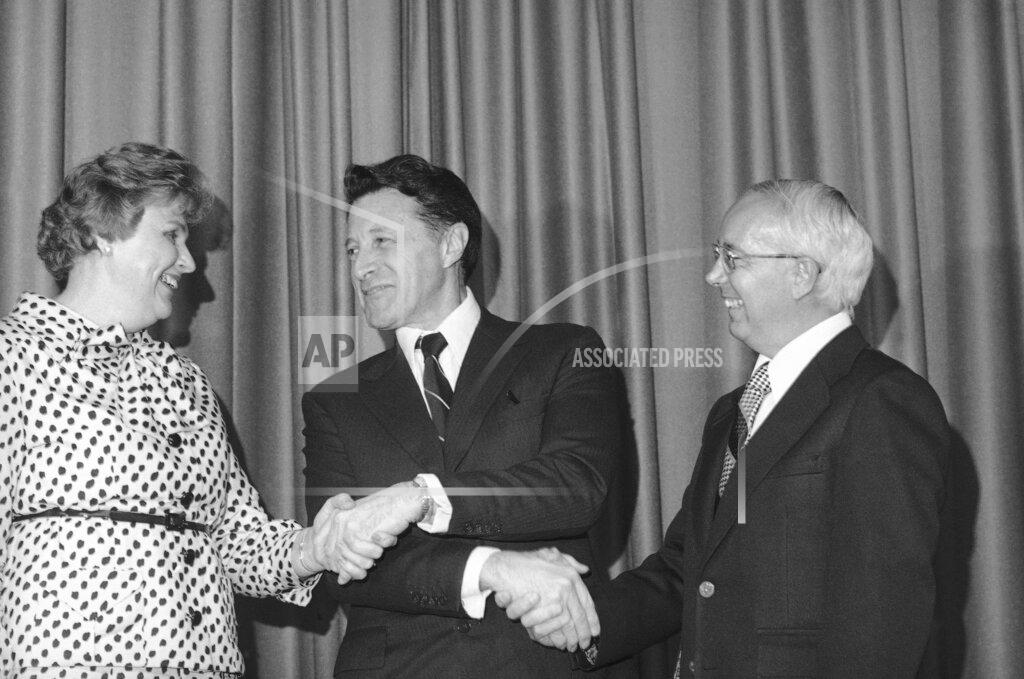
Former Israel Prime Minister Golda Meir, 76, has been hospitalized in Jerusalem for a series of tests, a hospital spokesman reported. He said Mrs. Meir entered the hematology department of Hadassah Hospital and would remain overnight. Mrs. Meir resigned last month as prime minister after more than five years in the post.
In the Yemen Arab Republic (commonly called North Yemen), a military coup d’état led by Lieutenant-Colonel Ibrahim al-Hamdi overthrew the government of President Abdul Rahman al-Iryani. Iryani went into exile in Syria. Hamdi worked on modernizing North Yemen but would be assassinated in 1977.
The 20 nations negotiating world monetary reform agreed to a series of “interim” arrangements pending an eventual return to more stable currency exchange rates. The arrangements are designed to promote financial harmony and to help the less-developed countries.
IMF establishes its “oil facility”, a special fund for loans to nations whose balance of payments have been severely affected by high oil prices
Soviet President Nikolai V. Podgorny declared that the West must stop interfering in internal affairs of the Soviet Union if it wants to succeed at the international negotiating table. The Soviet leader then welcomed the summit talks between Communist Party leader Leonid I. Brezhnev and President Nixon scheduled to begin June 27. He expressed hope they would “serve the interests of strengthening peace and international security.”
Jewish ballet star Valery Panov completed final paperwork in Moscow allowing him and his ballerina wife to emigrate to Israel. Panov, 35, and his wife Galina, 25, were recently given permission to leave after a two-year struggle. The couple were scheduled to leave today, but Panov expressed fear that a technicality might delay them. The Soviet government made a last-minute demand that Panov’s mother-in-law sign a statement that she needed no financial support from the couple. It was not clear how this might affect their travel plans.
President Giovanni Leone said Italy’s economy is too shaky for him to accept the resignation of Premier Mariano Rumor’s coalition cabinet. After three days of talks with political leaders, Leone issued a statement urging the Christian Democratic-Socialist government to use every means to heal the breach that forced its downfall. The Rumor government collapsed Monday over differences on how to handle inflation.
Portugal’s Foreign Minister Mario Soares, warning that talks aimed at ending 11 years of fighting in Portuguese Guinea could be long and difficult, began a second round of negotiations with African nationalists in Algiers. Soares told newsmen the talks with the African Party for the Independence of Guinea-Bissau and Cape Verde Islands were aimed at a “preliminary cease-fire agreement which could include an accord on some political principles.”
Gunmen in an automobile shot and killed a man in a Roman Catholic area of Belfast, bringing to 1,034 the number of persons killed in strife-torn Northern Ireland since August, 1969. The shooting, in the Lower Falls Road district, followed fire bombings in downtown Belfast department stores and a car bomb explosion that wounded a British military policeman.
British miners voted to demand more money less than four months after their previous pay dispute led to the downfall of the Conservative government. The vote was taken by the Scottish Area Conference of the National Union of Mineworkers meeting in Aberdeen, Scotland. The workers want the minimum weekly wage for coal miners raised from $103.50 to $149.50, an increase of $46 a week.
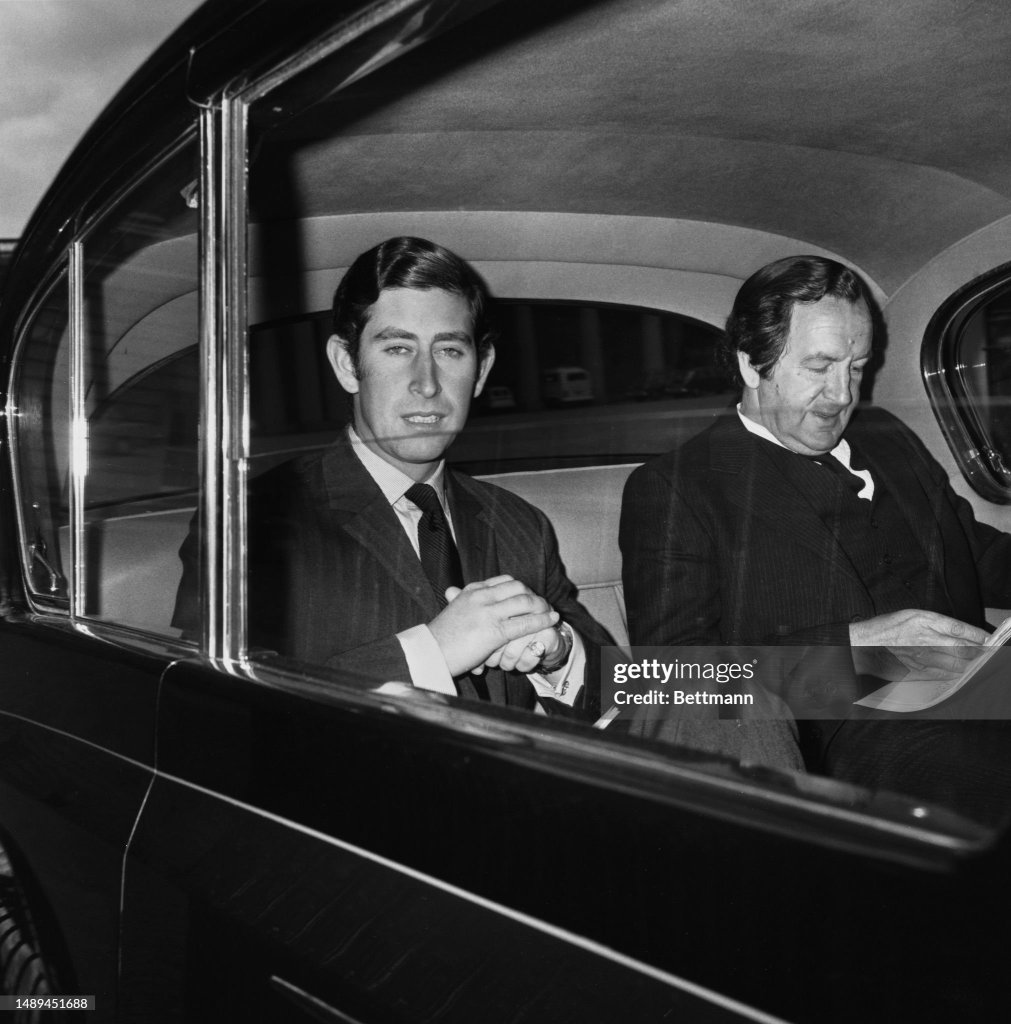
Prince Charles, the heir to the British throne, delivered his maiden speech from the floor of the House of Lords, the first such address made by a member of the royal family in 90 years. His plea for more government support of recreation seemed less significant than his appearance, which served to focus attention on the 25-year-old Prince of Wales. In the gallery as the prince’s guest was 20-year-old Laura Jo Watkins, an American. In his capacity as Earl of Chester, Prince Charles, the future King Charles III of the United Kingdom, delivered his first speech in the House of Lords, becoming the first royal to speak from the floor of the House since Albert, Duke of Saxony, the future King Edward VII, had spoken in 1884.
President Juan Domingo Perón today rejected the resignations offered by his Cabinet ministers last night in the wake of a growing economic crisis. The move was interpreted by some politicians as General Perón’s way of underlining the seriousness of the economic situation while reaffirming his confidence in his eight‐member Cabinet. The President himself dramatically threatened to resign in a nationally broadcast speech yesterday, but withdrew the threat when labor leaders staged a rally of more than 50,000 workers in his support.
The economic troubles appear to stem from a wage and price freeze that the Perónists negotiated between labor and business leaders when they took power a year ago. The pact has been credited with slowing the inflation that the Perónists inherited. But it has threatened to fall apart under pressure from dissident trade unionists demanding higher wages and from businessmen who maintain that price controls are driving them to the edge of bankruptcy. The growing shortages of industrial products, and even some food items in this agriculturally rich country are attributed by economists to producers who prefer to sell on the black market rather than at officially set rates.
Highly reliable sources said that Secretary of State Kissinger was not “a target” of the Watergate prosecutor’s investigation of the Nixon administration’s secret wiretapping program. And one source said that the prosecutor’s office had told the Senate Foreign Relations Committee that it had no indication of any criminal liability on the part of Mr. Kissinger.
A majority of the Senate membership endorsed a proposed resolution declaring Secretary of State Kissinger’s integrity and veracity to be “above reproach.” Among those who endorsed the measure were members of the Foreign Relations Committee, which has agreed to review Mr. Kissinger’s role in the secret decision to institute wiretaps of 17 officials and newsmen. Mr. Kissinger has threatened to resign if he is not cleared of allegations that he played a greater role in the wiretapping than he acknowledged in sworn testimony before the committee.
The House Judiciary Committee reportedly heard evidence of efforts by White House officials to use the Internal Revenue Service for President Nixon’s political benefit. Committee members said that, in most instances reviewed at a closed committee session, the I.R.S. had refused to cooperate with White House aides.
Fred Buzhardt, one of President Nixon’s key Watergate defense lawyers, suffered an apparent heart attack and was rushed to a Virginia hospital where he was reported in serious condition. His illness could create difficulties for Mr. Nixon since Mr. Buzhardt has been in overall charge of the President’s defense, according to some sources, and is reportedly more familiar with tapes and documents related to Watergate than anyone else in the White House.
The Senate voted 74 to 12 to clamp a $295 billion ceiling of federal spending in the fiscal year starting July 1. It is a $10 billion cut in President Nixon’s budget recommendations. The spending was added as an amendment to a bill raising federal deposit insurance from the present $20,000 maximum to $25,000. Also adopted by voice vote was another amendment designed to assure women equal access with men to credit and to protect consumers against unfair labeling practices. The measure now goes to a Senate-House conference.
Alabama Governor George C. Wallace’s national political committee reported collecting $758,333 and spending $640,834 so far this year of pre-presidential campaign activities. It showed by far the greatest spending of any potential candidate. Reports filed with the federal government showed that an exploratory committee for Senator Charles H. Percy (R-Illinois) reported receipts of $49,362 and expenditures of $63,060.
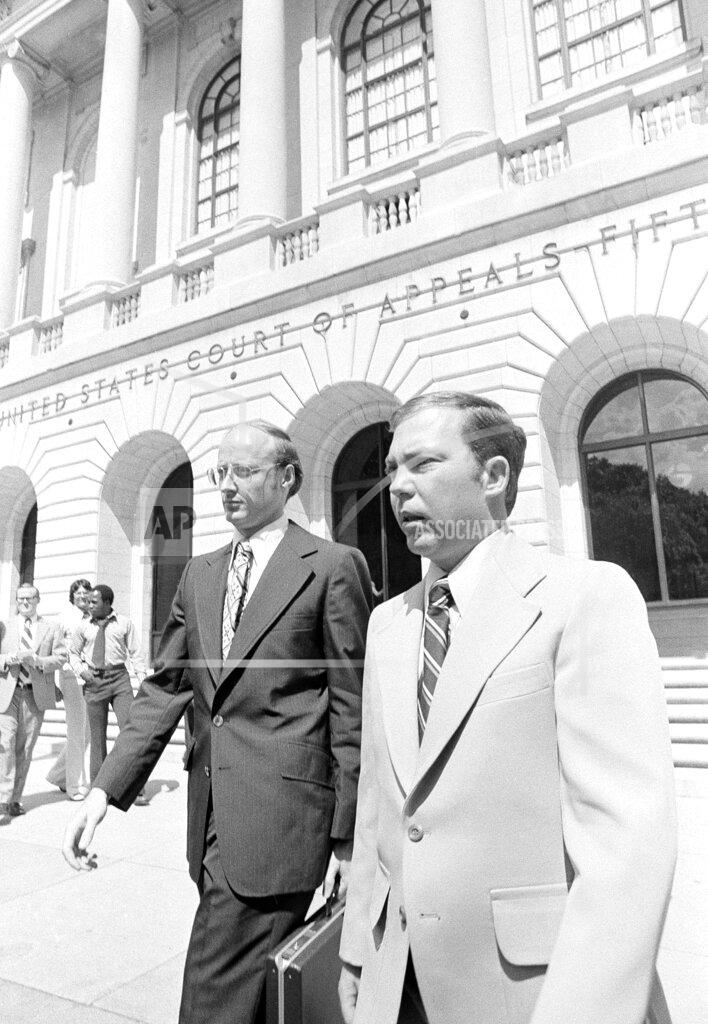
A federal appeals court today ordered an end to former First Lieutenant William L. Calley Jr.’s freedom on bail while his conviction for the My Lai slayings is argued in civilian courts. The United States Court of Appeals for the Fifth Circuit reversed the United States District Court judge who had granted bail for Mr. Calley, blocking the Army’s move to send him to military prison at Fort Leavenworth, Kansas. In a five‐page ruling issued 24 hours after a special expedited hearing, the three‐judge panel ordered Mr. Calley back into Army custody. Thus Mr. Calley must continue serving a 10‐year sentence while his lawyers argue before United States District Court Judge J. Robert Elliott in Columbus, Georgia, in an effort to have his military conviction retried in civilian court.
The Southern Baptist Convention in Dallas took a stand against racism and for governmental integrity. It also said abortion should be permitted “under such conditions as rape, incest, severe fetal deformity and danger to the emotional, mental and physical health of the mother.” The messengers (delegates) also affirmed their opposition to federal aid for nonpublic schools and approved a watered-down version of a resolution on peace that avoided the issue of conscientious objectors.
The Washington state Supreme Court, in a 6–3 decision, announced there was nothing illegal in an $800,000 fee sharing arrangement involving former Washington Attorney General John J. O’Connell and San Francisco Mayor Joseph Alioto. The decision affirmed a 1972 Clark County Superior Court jury verdict in the lengthy case. The case was brought by the current attorney general, Slade Gorton, who was seeking a refund of more than $2 million in legal fees paid to Alioto before he became mayor for work in a $16 million electrical antitrust settlement. Gorton asked for the refund on grounds that Alioto secretly shared more than $800,000 of his fees after O’Connell lifted a $1 million fee limit for Alioto’s work.
Senator John G. Tower almost succeeded today in getting the Senate to consider legislation that would have permitted Gen. William G. Westmoreland to retain his military retirement pay if elected Governor of South Carolina. Senator Tower, a Texas Republican, was blocked, at least temporarily, by Senator William Proxmire, Democrat of Wisconsin, who protested against a “private relief bill” for the general. At the request of the Republican leadership, Senator Robert C. Byrd, the Democratic whip, had scheduled the bill for consideration today. But Senator Proxmire objected, and the bill was temporarily laid aside.
A federal judge ruled that General Motors used wheels that were defective in performance on 200,000 Chevrolet and GM three-quarter ton trucks made between 1960 and 1965. U.S. District Judge Oliver Gasch ordered the firm to start a campaign immediately to notify all owners of the defect. He also gave GM and the National Highway Traffic Safety Administration, which brought the suit, 14 days to file briefs on how much civil penalties GM should pay. GM said it maintained its position that the wheels do not contain a safety-related defect but declined to say whether the ruling would be appealed.
The White House asked Congress to add 15 new areas totaling more than 6 million acres to the National Wilderness Preservation System, nearly doubling the present federal holdings. Presenting President Nixon’s message at a briefing was Interior Secretary Rogers C. B. Morton, who noted that Congress already had a backlog of 67 earlier wilderness proposals. Morton admitted that he saw little chance for action. in this session of Congress. The proposals include 2,510 acres in California’s Havasu National Wildlife Refuge.
The National Ballet of Washington, D.C., the ballet of the United States, ended operations, 12 years after its launch on January 3, 1962.
The 1974 FIFA World Cup, with 16 teams in four groups, opened at 5:00 in the afternoon in West Germany with a match between Yugoslavia and Brazil before 62,000 people at the Waldstadion in Frankfurt. The teams, both of which would advance to the second round, played to a 0 to 0 draw.
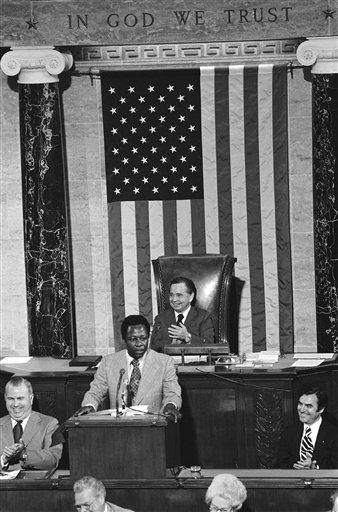
Hank Aaron addresses the House of Representatives in a special Flag Day ceremony. In the chamber is Representative Wilmer Mizell of North Carolina, who, as a southpaw hurler for the Cardinals, served up home run #61 in 1956 and #161 in 1959.
Dow Jones Industrial Average: 852.08 (+3.52, +0.41%).
Born:
Selma (stage name for Selma Björnsdóttir), Icelandic singer (“All Out of Luck”) and actress, in Reykjavik, Iceland.
Steve-O (stage name for Stephen Glover), English stunt performer, comedian and TV star; in Wimbledon, London, United Kingdom.
Valeri Bure, Russian National Team and NHL right wing (Olympic silver medal, 1998, bronze medal, 2002; NHL All-Star, 2000; Montreal Canadiens, Calgary Flames, Florida Panthers, St. Louis Blues, Dallas Stars), in Moscow, Russian SFSR, Soviet Union.
Brian Sweeney, MLB pitcher (Seattle Mariners, San Diego Padres), in Yonkers, New York.
Babatope Agbeyo, Nigerian businessman and philanthropist; in Usi-Ekiti, Nigeria.
Died:
Sholom Secunda, 79, Russian-born Jewish American composer.
George Frazier, 63, American news columnist and entertainment critic, died of lung cancer.


 History Diaries