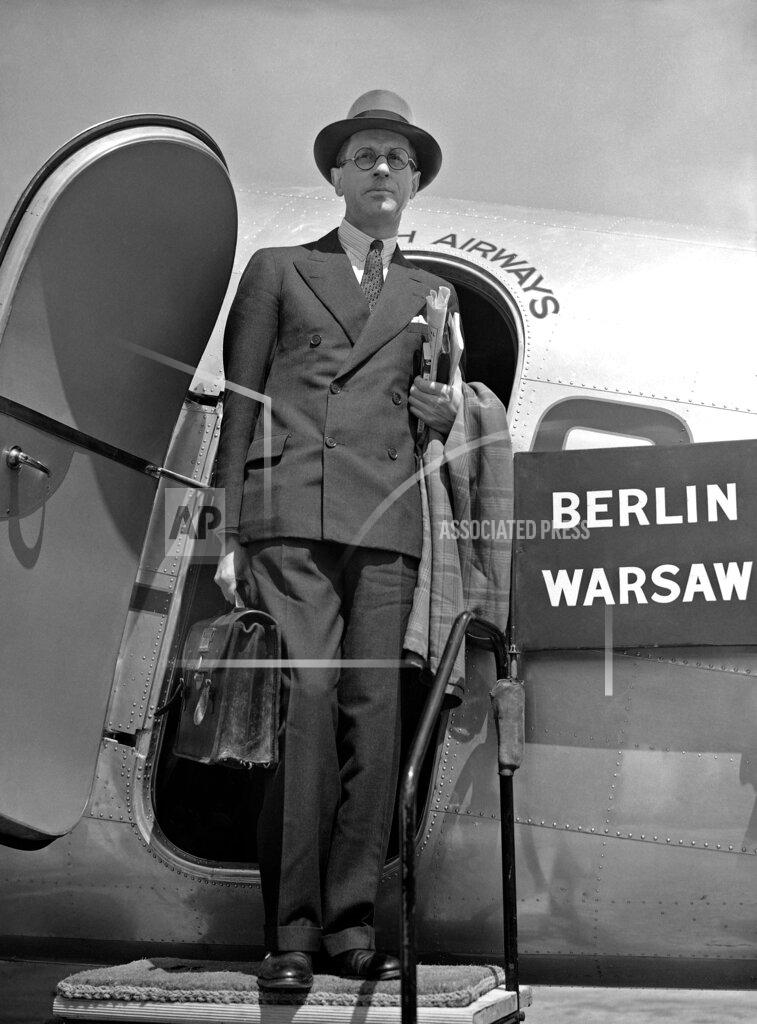
While William Strang of the Foreign Office was flying to Moscow today as a special envoy to speed up the Anglo-Russian negotiations, leaders of the British Government repeated that they were determined to push ahead toward a pact with the Soviet Union. Prime Minister Neville Chamberlain was stung, to anger in the House of Commons when Hugh Dalton, Laborite, charged that the government was “spinning out time until it can wriggle back to the Munich policy.” The honorable gentleman is very offensive in his suggestions,” snapped Mr. Chamberlain, jumping to his feet. “I see no reason why the delay should be attributed to His Majesty’s Government.”
At the same time Viscount Halifax, the Foreign Secretary, speaking in the House of Lords, declared that “the government, after due deliberation, has chosen its course. and cannot depart from it.” Thereby Lord Halifax was answering those who thought Britain was weakening in her desire for a Russian pact or who suspected a new turn back to “appeasement” in British foreign policy.
Whether such suspicions persist in the Kremlin and whether they will again prevent the conclusion of an alliance was anybody’s guess in London tonight. At any rate the Russian Ambassador, Ivan Maisky, was said to have been “moderately encouraging” during a visit to the Foreign Office, where Lord Halifax informed him of the nature of the new proposals being taken to Moscow. Mr. Strang is not taking any particular formula for overcoming Russian objections, but he has been well coached on the British Cabinet’s attitude and will be able to work out various alternative texts in consultation with Sir William Seeds, the British Ambassador in Moscow.
The British are still ready to give a sweeping pledge of support to Russia against any threat, direct or indirect — including, of course, any threat to Russia’s Baltic neighbors. But they are not willing to name the Baltic States directly in such a pledge in view of the categorical refusal of Finland, Latvia and Estonia to accept a guarantee.
The Jean-Antoine Watteau painting “L’Indifferent” was stolen from the Louvre in broad daylight. It would be recovered two months later. The theft, says the newspaper Paris-Soir, was probably committed during the daytime while guards were on duty and while the rooms of the most famous art gallery in France were crowded with visitors. The steel wires by which it was suspended were cut clean. The dainty little painting of a young man in a blue and rose cloak and breeches was probably slipped, frame and all, below the thief’s coat as he walked out of the gallery. The painting is one of the smallest of Watteau’s works, measuring only eight by ten inches, so that it would be easy to hide.
It is difficult to make a proper estimate of its value. The best basis is a comparison with recent sales of other paintings by the artist. They have brought between 3,000,000 and 4,000,000 francs. At yesterday’s exchange rate in New York this would be between $79,500 and $106,000. This canvas was admittedly one of the most exquisite of all Watteau’s works.
As a result of the combined efforts of Jewish relief committees in Amsterdam and Brussels, Belgium, the 900-odd Jewish refugees from Germany now on their way back to Europe aboard the Hamburg American liner St. Louis will be allowed to land in The Netherlands, Belgium and France after vainly applying for admission to several American countries. The Ministry of Justice decided today that 194 of the group should be temporarily admitted to The Netherlands. The cost of their upkeep here, however, must be borne by private resources under the auspices of The Netherlands relief committee.
Jewish organizations here reported tonight that they expected the remaining emigrants on the St. Louis, said to number 711, would find temporary refuge in Belgium and France. The total number on the St. Louis has previously been given as 907. This news was radioed to the St. Louis in mid-Atlantic.
James E. Rosenberg, chairman of the national council of the Joint Distribution Committee, yesterday issued the following statement: “I believe we may now fairly state after four days and nights of tireless efforts that, through the hospitality of various European governments and with the whole-hearted cooperation of refugee committees and of prominent people of all creeds, all the refugees of the (liner) St. Louis will find a haven in Europe. With these governments and committees, the representatives of the Joint Distribution Committee have been in constant contact. It would be improper for us here to issue any final statement at this time. These must come from the splendid governments which, we are assured, will give asylum to the 907 refugees. The press has already reported that a substantial number will be received in Holland, and I have reason to believe that this will be the case and that it will be in keeping with the tradition of hospitality of that country.”
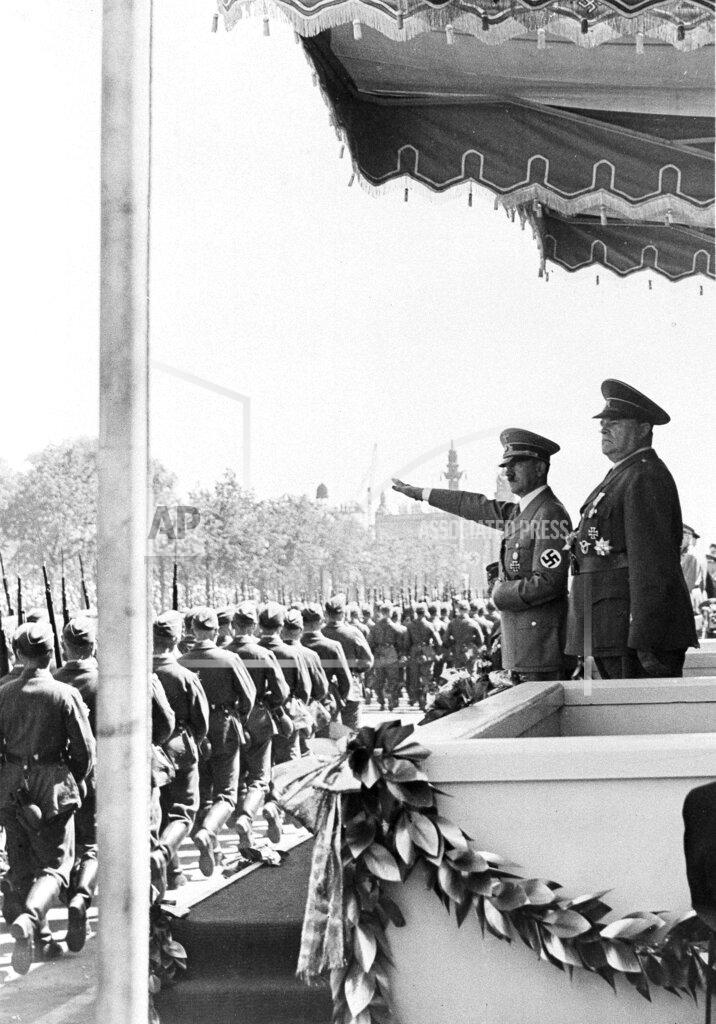
Soviet jockeying over a pact has Germany on edge.
Hungary’s Parliament meets, and the Nazis present a program of anti-Jewish laws and land redistribution. Outright expropriation of Jewish land will provide an initial 500,000 acres for non-Jewish Hungarian peasants.
A Reich editor gibes President Roosevelt on the royal visit, saying the trip was scheduled before Hitler wrecked his leadership.
The Spanish press opposes U.S. adoptions of Spanish refugee children, calling it kidnapping.
Rumania imposes a special tax on denationalized Jews, ranging from 2,000 to 10,000 lei annually.
Archaeologists claim to unearth an ancient factory town called Ezion-geber, in Jordan, adjacent to Palestine, on the Gulf of Aqaba. The smelting and refining facility is believed to have been built by the Biblical King Solomon. [It is now thought that this may not be the Biblical Ezion-geber after all.]
Rachel Ohevet-Ami (Havshush), perhaps 17, Yemenite Jewish girl who was arrested last Friday while trying to deliver into the central prison in Jerusalem a fruit basket containing a time bomb, was sentenced to life imprisonment by a military court here today. The girl, whose age is doubtful, denied the charge. Evidence was given by an 11-year-old Arab boy, who stated he had carried the basket for her, and by the policeman who arrested her. Assuming that she was less than 18 years old, the court limited the penalty to life imprisonment. This is the first time a Jewish woman in Palestine has faced such a grave charge, involving a possible death penalty. [Rachel was a member of the embryonic Irgun.]
One Arab was killed and twelve were wounded at Tiberias today when a land mine exploded under a Public Works Department truck carrying Arab laborers. In a search of the Jewish quarter of Tiberias, through which the truck was passing at the time of the explosion, two revolvers and some ammunition were found. A half hour later a Jewish-owned car was fired on between Tiberias and the Jewish colony of Migdal, and a Jewish girl was slightly wounded. Curfew was declared in the Tiberias district until further notice.
The British authorities in Palestine are facing not only Arab-Jewish strife but also Arab terrorism against Arabs. Early today Arabs near Tulkarm attacked a farm belonging to members of the Nashashibi party, who oppose the Mufti. Dozens of shots were fired at Arab farm hands, who returned the fire and drove off the assailants. The same farm has been attacked by Arabs several times previously.
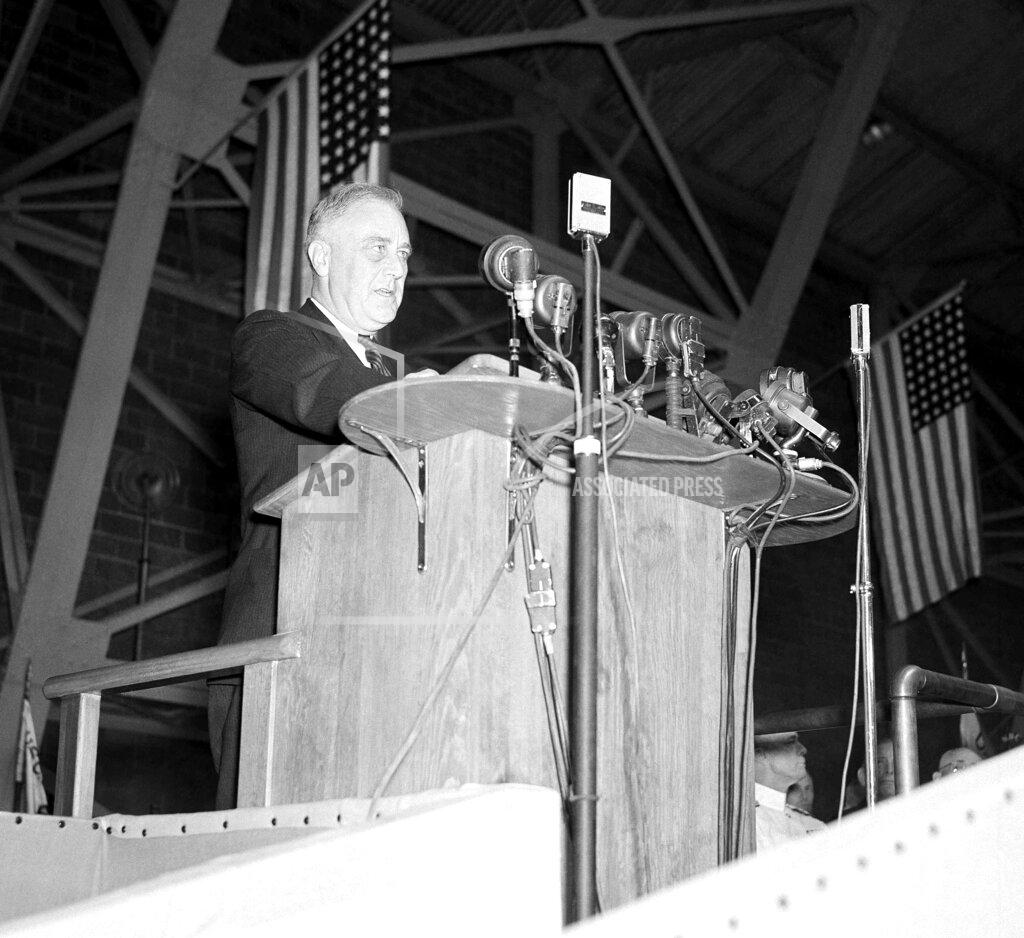
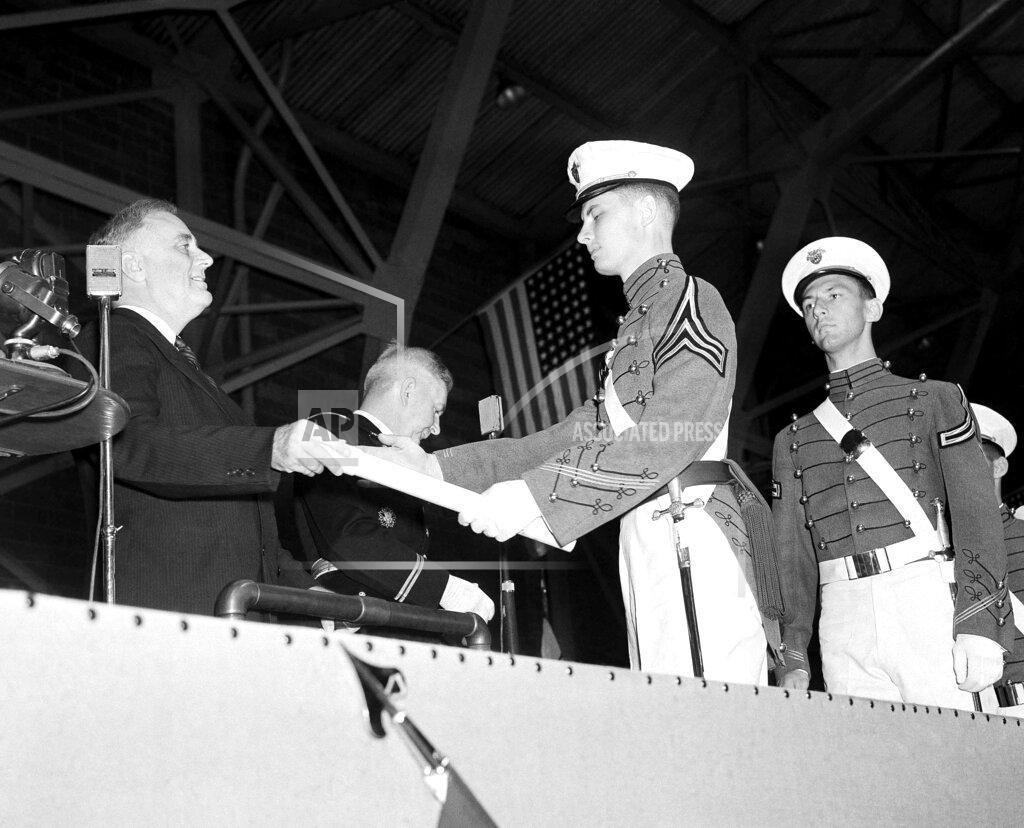
U.S. President Franklin D. Roosevelt told the graduating class of U.S. Army cadets at West Point that the nation’s armed forces should be further strengthened, but he emphasized that the U.S. still desired peace “by honorable and pacific conduct of our international relations.” The Commander in Chief of the army and navy, President Roosevelt, told 456 of West Point’s graduates today that “the nation’s desire for peace must never be mistaken for weakness.” It was the largest graduating class in the academy’s history. In the ceremonies, which departed from tradition in several respects, the President declared that recent international political considerations, dramatically illustrated by the “fate of undefended nations,” had necessitated “still greater emphasis upon the vitalization of our defense,” and urged the cadets to that strength “which comes not from arms alone” but which is “the product of trained and disciplined minds.”
The visit of King George and Queen Elizabeth was described by Mr. Roosevelt as “a courteous recognition of the cordiality and goodwill that prevails between two great nations. “Its significance,” he said, “lay in the fact that friendship could exist between the two countries because both nations were without fear — without fear of any act of aggression of one against the other.”
But to achieve such a happy situation “strength is needed,” a strength built upon a comprehension of the true meaning of discipline, an understanding of leadership and how to exercise it. He urged upon his hearers, the “gentlemen of the graduating class,” a study of their fellow men, to the end that they might “command the cooperation of all elements in national life.”
“These qualities of cooperation, discipline and the self-restraint and self-reliance which make them useful are the very fabric of modern life,” the President emphasized. “If it can be developed internationally as well as nationally, we shall be materially nearer to a realization of our hopes of peace.” The President, accompanied by Mrs. Roosevelt, Rear Admiral Ross T. McIntire, Chief of the Bureau of Medicine and Surgery of the Navy Department and physician to the White House, and others of his personal party arrived by automobile from Hyde Park about 11:30 AM. He was met at the gate by Brigadier General Jay L. Benedict, superintendent of the academy, as a twenty-one-gun salute was fired. The Second Squadron of the Tenth Cavalry, besides armored cars and a motorcycle escort, accompanied the Presidential party to the huge new field house or armory, where the graduation ceremonies were held indoors for the first time in decades.
There the corps of cadets, numbering more than 1,800 and augmented by 6,000 to 7,000 of their relatives and friends, were seated beneath the high arching steel and skylight roof. Instead of a gleaming vista of the Hudson, with the wooded shoulders of Storm King as a background for the speakers’ stand, the audience looked upon the north wall of the armory, flag-bedecked but grim, with that cold but strong austerity which is West Point. Immediately above the speakers stand, flanked by the national ensign and the President’s flag and decorated with company guidons, was a reproduction of the seal of West Point with its motto, written large for all to see: “Duty, Honor, Country.”
A chaplain calls 456 new West Point Army officers to dedicate their lives to commission and to defend the nation in times of crisis.
[Ed: Of the 456 graduates, 37 would die in the coming, terrible war. One more would die in Korea. Twenty-four members of the class were POWs in WWII and another in the Korean War. Twenty-four members of the class were awarded the Distinguished Service Cross and 96 the Distinguished Flying Cross in addition to hundreds of other awards and medals spanning three wars. Notable graduates from the Class of 1939 include Major Robert W. Crandall, captain of the swimming team; a POW in Germany, liberated, and then killed in action in Sarzana, Italy one week before the end of hostilities in WWII-Europe. Crandall Pool in Arvin Gymnasium was dedicated in May 1989. Two graduates received the Medal of Honor for actions in WWII but were killed before the award could be presented to them, Lieutenant Colonel Robert Cole and Lieutenant Colonel Leon Vance.]
[Freedom isn’t free. And it’s paid for in blood.]
The House Ways and Means Taxation subcommittee voted tentatively today to end the undistributed profits tax and substitute a flat 18 per cent tax on corporations with net income of $25,000 or more annually. It would retain the rates of 12½ to 16 per cent on corporations having net. income of less than $25,000. The subcommittee also approved the other provisions of Secretary Morgenthau’s program of corporate tax revision and recommended elimination of the “double taxation” which, the New York Board of Trade had protested, resulted from the Supreme Court’s interpretation of the tax law as applied to merged corporations.
So swiftly did the subcommittee move that the committee chairman, Representative Doughton of North Carolina, expressed the belief a tax revision bill would be brought to the House floor next Monday and passed with only one day’s consideration. Representative Cooper, chairman of the subcommittee, said that there remained for it to consider only two or three tax changes to be proposed by John W. Hanes, Undersecretary of the Treasury.
The 1940 Relief Bill containing provisions for an oath of allegiance, aimed directly at the Workers Alliance and its alleged parent, the Communist party, was made ready today in the House Appropriations Subcommittee for presentation to the House next Wednesday. Representative Woodrum of Virginia, the subcommittee chairman, obtained unanimous consent in the House today for consideration of the bill starting Wednesday under a program that will see a final vote on it Friday.
The subcommittee, it was said on good authority, will recommend practically all the relief funds requested by President Roosevelt, the only major item slashed being that of the National Youth Administration, to which was voted $81,000,000, compared with $123,000,000 recommended by the Budget Bureau and $75,000,000 which it received this year. Even the conservative members were said to regard Mr. Roosevelt’s request for $1,477,000,000 for the WPA as “most reasonable,” but in trimming the NYA item they took the position that the increased amount recommended was out of line with the one-third reduction requested for the WPA over the current year’s appropriation.
Congress was asked today by the House Appropriations Committee to provide $292,695,547 in funds and contract authorizations for air defense, after Colonel Charles A. Lindbergh had testified that the United States would require from three to five years to regain its aeronautical research leadership.
U.S. Secretary of State Cordell Hull invited Germany and Italy line up with the United States on trade issues and warned them that their closed economies were leading them to destruction. Hull warned that Germany and Italy’s agreement to divide their spheres of influence would result in a general collapse. He also warned the small nations of Europe which had or were concluding barter agreements with Germany were in danger of becoming political vassals.
The Harvard University president says the United States should identify which islands are so important to national security that the nation will fight to defend them.
Shooting begins on Paramount Pictures’ “Dr. Cyclops,” the first horror film photographed in three-strip Technicolor.
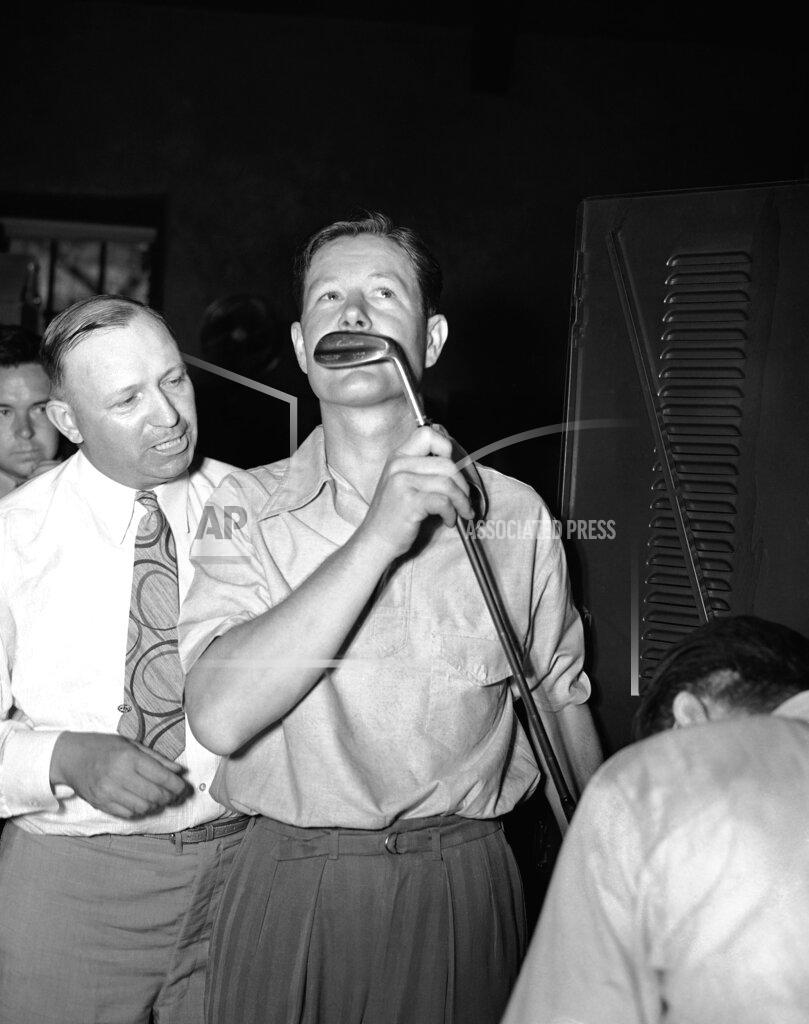
U.S. Open Men’s Golf, Philadelphia Cricket Club: Byron Nelson wins by 3 strokes from Craig Wood and 7 ahead of Denny Shute in a 36-hole playoff to claim the second of his 5 major titles.
In front of a record crowd of 23,864 fans at Ruppert Stadium, Lou Gehrig plays his last game in a Yankee uniform when he participates in an exhibition contest against the Kansas City Blues (AA), the team’s American Association farm club. The ‘Iron Horse’, playing only three innings and batting eighth, grounds out weakly to second base in his only at-bat.
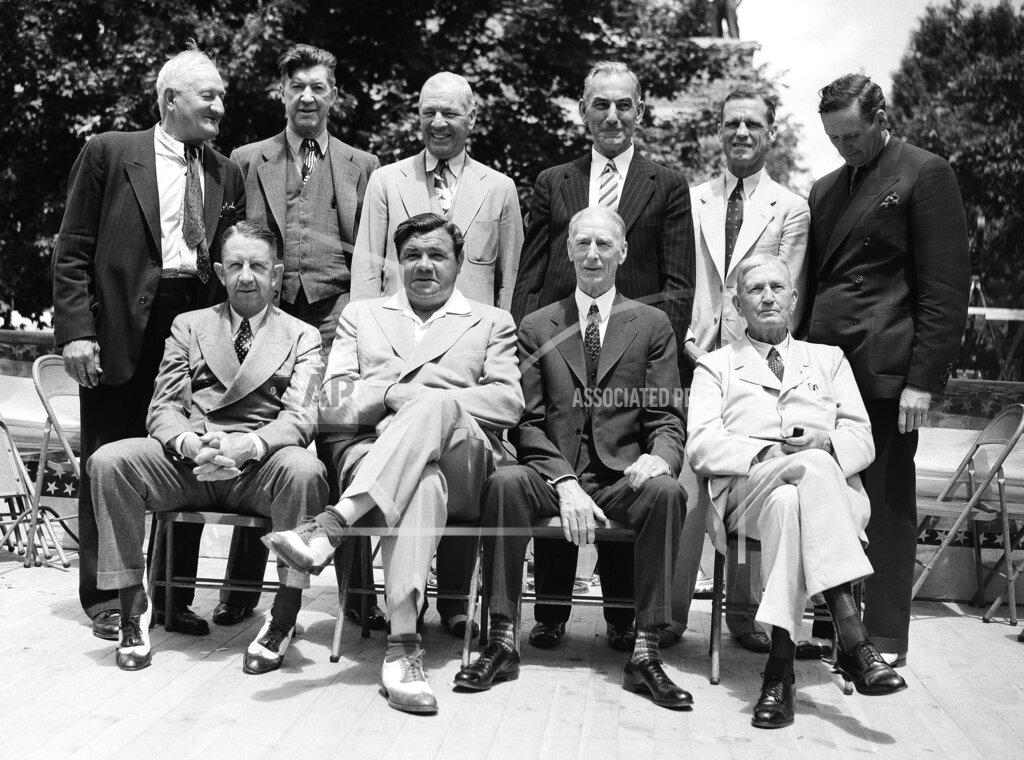
The first Baseball Hall of Fame induction ceremony was held in Cooperstown, New York. 25 inductees had already been named since the induction process began in 1936. All 11 living inductees participated in the inaugural ceremony. The greatest gathering of members and future inductees of the Baseball Hall of Fame assembles in Cooperstown, New York, for the dedication of the museum. A 6-inning game at Doubleday Field showcases lineups studded with players who will be elected in the future. Honus Wagner’s lineup defeats Eddie Collins’ squad, 4–2. Babe Ruth, Ty Cobb, Honus Wagner, Walter Johnson, Grover Alexander, Nap Lajoie, George Sisler, Eddie Collins, Tris Speaker, Cy Young, and Connie Mack accept their plaques. Cobb, angry at Commissioner Landis, shows up after the ceremony and photo taking to accept his plaque. Other inductees, all deceased, include Cap Anson, Charles Comiskey, Candy Cummings, Buck Ewing, Hoss Radbourn, Al Spalding and Wee Willie Keeler.
The royal train, with King George VI and Queen Elizabeth aboard, stopped for ten minutes tonight at Levis, Quebec, just across the St. Lawrence River from Quebec, where twenty-seven days ago the first English Sovereigns to visit North America stepped ashore to begin their unprecedented journey through Canada and the United States.
Looking across the river the King and Queen could see the frowning Citadel, the high bluffs, the Plains of Abraham and the other scenes which met their eyes first from the deck of the Empress of Australia, which brought them from England. They had completed the circuit and were back almost exactly at the point from which the royal tour began, but they still had 933.2 miles to travel in Canada before starting their return voyage to England from Halifax Thursday evening. Since they first set foot on Canadian soil on almost the exact spot from which Wolfe sent his army to scale the heights in a surprise attack and wrest Canada from French domination, the King and Queen have traveled 9,093 miles by rail, automobile and motor car in less than a month. They have been seen, it is estimated, by about 12,000,000 persons in the United States and Canada.
Of the total distance covered they have traveled 6,673 miles by rail in Canada and 1,099 in the United States from Niagara Falls to Washington and back to historic Quebec by way of New York. In royal processions alone, they have ridden about 1,080 miles in automobiles. In addition, they have traveled 240 miles by water, to Victoria and back to Vancouver, from Washington to Mount Vernon and from Sandy Hook Coast Guard Station to the Battery in New York.
Although the royal train crossed the border at 5:22 this morning and the King and Queen awoke again in their own domain, the land through which they passed all day was less English in appearance than the foreign soil of the United States. Among the crowds at the widely separated stations the tricolor of France was more common than the Union Jack of England. The overalled men who replenished the water tanks of the royal cars and inspected the wheels spoke French for the most part.
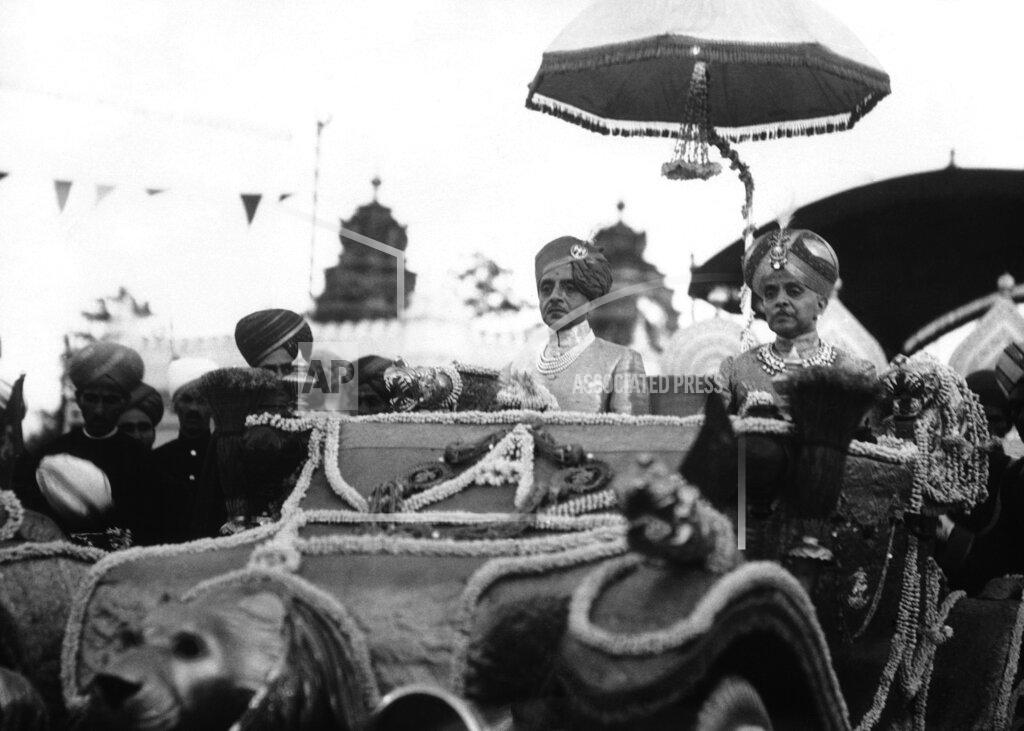
Fifty native Indian states rejected a British plan to establish India as a federation. The representatives, however, left the door open for further negotiations.
The roof of the German embassy in China’s wartime capital of Chungking was crushed by a 1000 pound dropped by a Japanese bomb in an air raid on June 11.
Dow Jones Industrial Average: 139.13 (-1.01).
Born:
Frank McCloskey, American politician, U.S. House of Representatives from Indiana (1983-1995), in Philadelphia, Pennsylvania (d. 2003).
Naval Construction:
The U.S. Navy Curtiss-class seaplane tender USS Albemarle (AV-5) is laid down by the New York Shipbuilding Corp. (Camden, New Jersey, U.S.A.).
The Marine Nationale (French Navy) Minerve-class submarine Pallas is commissioned.


 History Diaries