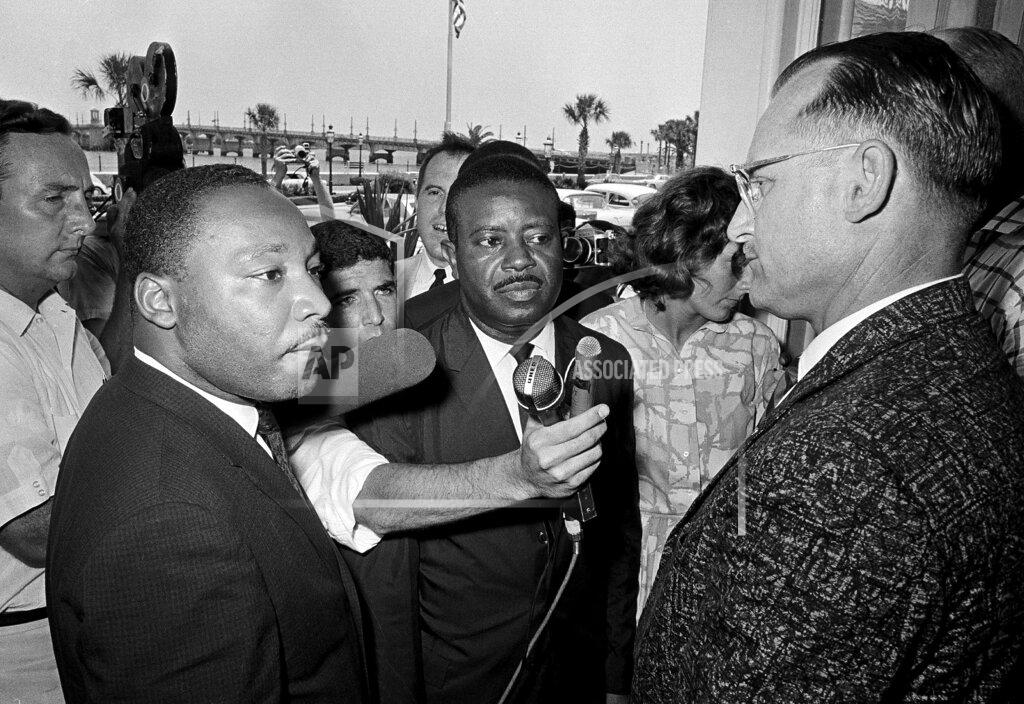
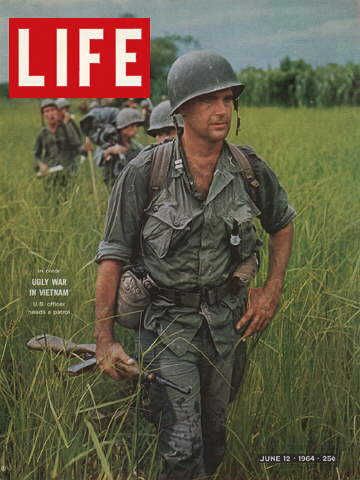
The White House announced today that General Paul D. Harkins, military assistance commander in South Vietnam (MACV), would return to the United States within 10 days. Lieutenant General William C. Westmoreland, the deputy commander, will take over full responsibility immediately. President Johnson plans to promote him to full general. General Harkins’s recall to Washington, prior to retirement, and his succession by General Westmoreland were not surprising but appear to have been ordered at least a few weeks earlier than contemplated.
ARVN (Army of the Republic of Viet Nam) troops attack a Communist convoy from Laos and kill 27 guerrillas. American advisers in the region said today, when reached by supply helicopter, that the Communists were caught in a jungle valley while the government forces held the high ground. Six prisoners were taken. They admitted having moved down from Laos. The Việt Cộng killed in operations in this region so far number 44, Americans advisers said. Saigon Government casualties are 2 killed and 10 wounded.
French President Charles De Gaulle calls for an end to all foreign intervention in South Vietnam. With sharper insistence than ever before, President de Gaulle in effect told Communist China and the United States today to get out of Southeast Asia. Throughout the day he stressed French determination to obtain peace in the former Indochinese states — North and south Vietnam, Laos and Cambodia — through neutrality. In a speech here tonight, he said that for 25 years these countries had been “unfortunate and torn” because of “interventions that have occurred there.”
West German Chancellor Ludwig Erhard pledges more aid to South Vietnam.
The New York Times observes:
"General Vo Nguyen Giap, North Vietnam's little military genius, assumes no democracy is willing to fight a drawn‐out guerrilla war. Giap clearly conceives his twin campaign in Laos and South Vietnam on the following strategy: The enemy will pass slowly from the offensive to the defensive. The blitzkrieg will transform itself into a war of long duration. Thus, the enemy will be caught in a dilemma—he has to drag out the war in order to win it and does not possess, on the other hand, the psychological and political means to fight a long‐drawn‐out war. The Honolulu conference of American commanders and statesmen seemingly confirms Giap's appreciation. Armed indecision appears to be the mot d’ordre. The Honolulu mountain labored and brought forth a strategic mouse. (...)

"Both Washington and Paris would like to neutralize South Vietnam but they disagree on what this means. The U.S.A. fancies an interpretation which is strongly anti‐Communist. The French fancy an interpretation implying an end to all pro‐Western bias — like, shall we say, Cambodia. The French assume China is preoccupied with internal and anti‐Russian problems and is reluctant to expand. We believe China aspires to nothing better than the chance of moving toward Singapore unopposed. The French claim that, if the U.S.A. tries to help its South Vietnamese clients by bombing North Vietnam, it will only provoke China into occupying the latter country. Then, they say, there will either be World War III with Russia forced to defend Communist China — or a drawn out, pointless slaughter.

"The French think the time has passed when any Western power can hope to retain political influence on the Asian continent. They counsel us to withdraw as gracefully as possible and to defend our Pacific interests from the island chain running from Japan to the Philippines. They admit we could bomb North Vietnam or even China without risk of retribution—if Russia stays quiet. But they say that when the killing stops, whatever its toll, we could never create a political solution. We couldn’t occupy China and would end up with a lot of dead Chinese and the enmity of world opinion. The last time such a choice was offered us was in Korea: and we backed down."
Communist‐led Laotian troops drove neutralist defenders from a vital defense post west of the Plaine des Jarres today, and Premier Souvanna Phouma announced that United States jet reconnaissance planes would resume operations. The neutralist Premier said the flights had shown “important” troop movements by Pathet Lao and North Vietnamese troops. He also said United States Navy planes had photographic proof for the first time of Communist North Vietnamese troops in Laos. There have been earlier unofficial reports of such photographic evidence.
A right‐wing general, Amkha Soukhavong, reported that the Communist‐led troops had driven neutralists from Phou Kout, a hill position commanding the important east‐west Highway 7. He said the attackers were only 11 miles from the neutralist strongpoint of Muong Soui. It was the second time in a week that Pathet Lao troops had captured Phou Kout. They overran the village last Friday and Saturday forcing the neutralists to retreat two miles. The neutralists counter‐attacked Sunday and won it back, but were unable to regain the favorable defensive positions they had lost the day before. This made it easier for the Communists to regain the village. General Soukhavong said reinforcements had been moved to Muong Soui, 110 miles north of Vientiane, and that a major battle appeared to be developing. A leftist victory at Muong Soui would wipe out the last major neutralist force and open the way to Vientiane. Phou Kout has been the scene of heavy fighting several times since the new outbreak of hostilities between the neutralists and the Pathet Lao last month.
Prince Souvanna Phouma has charged that North Vietnamese were supporting the Pathet Lao in violation of the Geneva agreements on Laotian independence and neutrality. Now, he said, the RF-8 Crusader jets have photographed them in action. He said the planes would resume operations in a few days. But diplomatic sources said there probably had been a flight today. The Premier said at a news conference that the reconnaissance flights were continuing “and if the Pathet Lao want them to stop they must create the necessary conditions.” He said he had approved the use of fighter escorts for the unarmed reconnaissance planes.
Turkish Premier İsmet İnönü has accepted President Johnson’s invitation to visit Washington, it was reliably reported here tonight. The United States Ambassador, Raymond Hare, will be informed tomorrow of the Premier’s acceptance. The date of the visit will be fixed later. An official spokesman described as “completely false” reports that George W. Ball, United States Under Secretary of State, had proposed during his recent visit to Ankara and Athens an exchange of populations and territory between, Turkey and Greece as a means of settling the Cyprus problem. “There is constant speculation of this kind following these visits,” the spokesman said. “We do not take it seriously.”
Dr. Dirk U. Stikker, who is retiring as secretary general of the North Atlantic Treaty Organization and who is trying to relieve tension between Turkey and Greece, conferred for two hours today with Mr. İnönü. The talks were officially described as “very frank and friendly” and as “very useful for both sides.” Dr. Stikker will leave Ankara tomorrow.
East Germany and the Soviet Union signed a 20-year “treaty of friendship” in Moscow, but stopped short of a formal peace treaty declaring an end to the USSR war with Germany during World War II. The agreement stated that the two nations considered West Berlin to be “an independent political unit” rather than a part of West Germany. Soviet premier Nikita Khrushchev and East German Chancellor Walter Ulbricht executed the pact in Moscow. The United States, United Kingdom and France would respond on June 26 with a rejection of the Communist description of West Berlin’s status.
President Johnson and Chancellor Ludwig Erhard of West Germany reasserted today the rights of the Western powers in Germany and Berlin and their interest in working toward the peaceful reunification of Germany. The two leaders found no ground for apprehension in the new treaty of mutual assistance between the Soviet Union and East Germany. They also found no new opportunity for reopening East‐West negotiations on the various issues in Central Europe.
The Soviet Union has reversed itself and agreed to the expansion of the United Nations Security Council and the Economic and Social Council to provide more seats for African and Asian members. Reliable sources said today that the Soviet delegation had sent a note to Latin‐American delegates, who also favor the expansion, stating that it would agree to broadening of the Security Council from 11 members to 15 and the Economic and Social Council from 18 to 27. The note stated that Communist China favored the expansion and implied that the Soviet Union would ratify the proposed expansion amendments. The fact that Communist China is not a member of the United Nations was previously used by the Soviet Union during the Assembly debate to justify its opposition to the expansion.
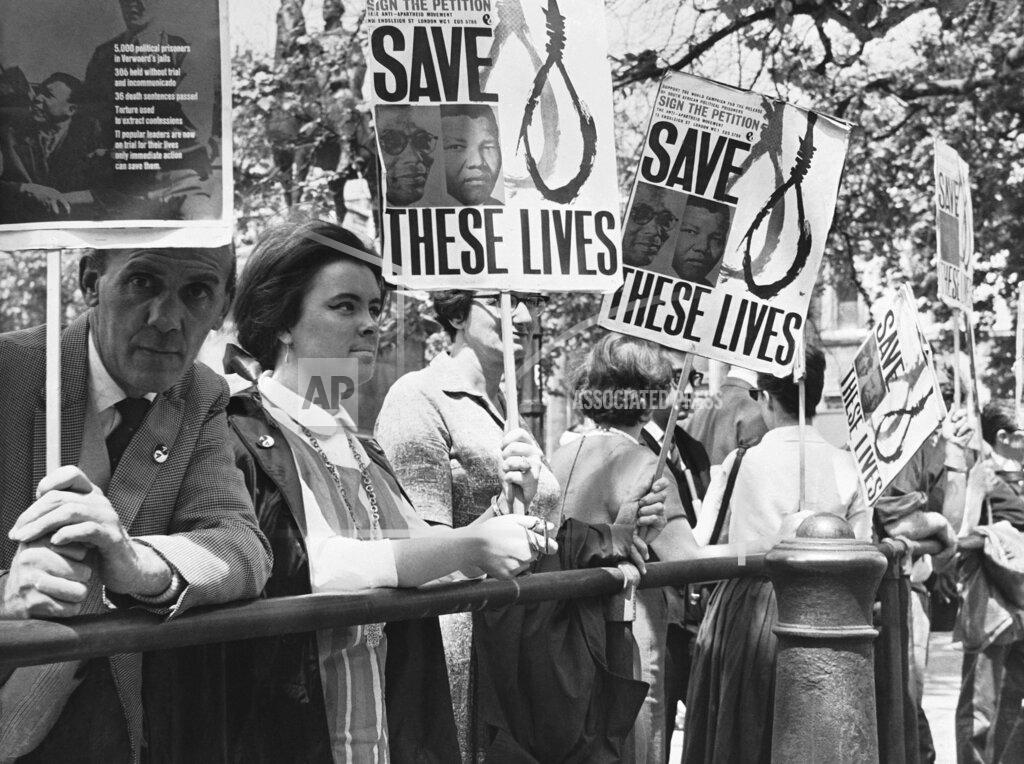
Nelson Mandela and seven co-defendants (Walter Sisulu, Ahmed Kathrada, Govan Mbeki, Denis Goldberg, Raymond Mhlaba, Andrew Mlangeni and Elias Motsoaledi) were sentenced to life imprisonment. Goldberg would be sent to Pretoria, while Mandela and the other black defendants went to the Robben Island prison. Mandela would not be released until 1990, and would later be elected as the first black President of South Africa.
The military commander of the Kivu rebels in the Congo denounced today what he called “America’s cruel and savage intervention against defenseless Congolese.” Louis Bidalira, who uses the title colonel, said his troops were outraged by a rocket and strafing attack this morning by two American‐donated T-28 planes against rebel positions in the Ruzizi valley. The planes were given to the Congolese Government. Seizing a spear from one of his followers, Colonel Bidalira declared: “Look, we are a people who fight for liberty with spears and clubs. You, the powerful Americans, are crushing us with bombs and planes. God will judge you! God will punish you!”
The Senate rejected overwhelmingly today a proposal by Richard B. Russell of Georgia for a national referendum on the civil rights bill. The amendment submitted by the leader of the Southern opposition provided that the 11 titles of the bill would not take effect until approved “by the qualified voters of the several states.” The amendment was defeated, 67 to 22. Only three Republicans voted for it — Bourke B. Hickenlooper of Iowa, Karl E. Mundt of South Dakota and John J. Williams of Delaware. Only two non‐Southern Democrats voted for it — Robert C. Byrd of West Virginia and Frank J. Lausche of Ohio. Senator Barry Goldwater of Arizona, the front‐running candidate for the Republican Presidential nomination, did not appear for the roll‐call. Earlier, however, the Arizonan voted for three Southern amendments that would have impaired the bill or greatly complicated its administration.
The first of these, proposed by Strom Thurmond of South Carolina, would have made any violation of the ban on discrimination in public accommodations a crime punishable by a fine up to $1,000 or imprisonment up to six months, or both. As the bill now stands, there are no criminal penalties, and the aggrieved person is required to institute a civil action for injunctive relief. The purpose of the Thurmond amendment in making violations a criminal offense was to make certain that the defendant would get a jury trial. Southern juries have displayed a reluctance to convict fellow Southerners in civil rights cases. The amendment went down by a vote of 66 to 23.
The second Southern amendment approved by Senator Goldwater was proposed by John G. Tower, Republican of Texas, one of his staunchest supporters. It would have eliminated the power of the President’s Committee on Equal Employment Opportunity to deal with discrimination by employers with Government contracts. At present this committee can cancel a contract if the employer continues to discriminate. Under the Tower amendment, the Equal Employment Opportunity Commission, which is created by the bill, would deal with discrimination in plants with Government contracts. Cases that come before this commission must go through an extended period of persuasion before reaching a court. The amendment was defeated 59 to 29.
The third amendment approved by Mr. Goldwater, also sponsored by Mr. Tower, would have voided union‐shop contracts, permitting compulsory unionism, if the union was guilty of discrimination. It was rejected 62 to 27.
However, Mr. Goldwater voted against an amendment by John Stennis of Mississippi. This one was dubbed “the Anti-freedom rider amendment” because it directed that any person traveling across a state line “with the intent and purpose” to violate a state or local law should be fined not more than $5,000 or imprisoned not more than five years. The Amendment was defeated after heated debate, 72 to 21. Senators Tower and Norris Cotton of New Hampshire were the only Republicans to vote for it.
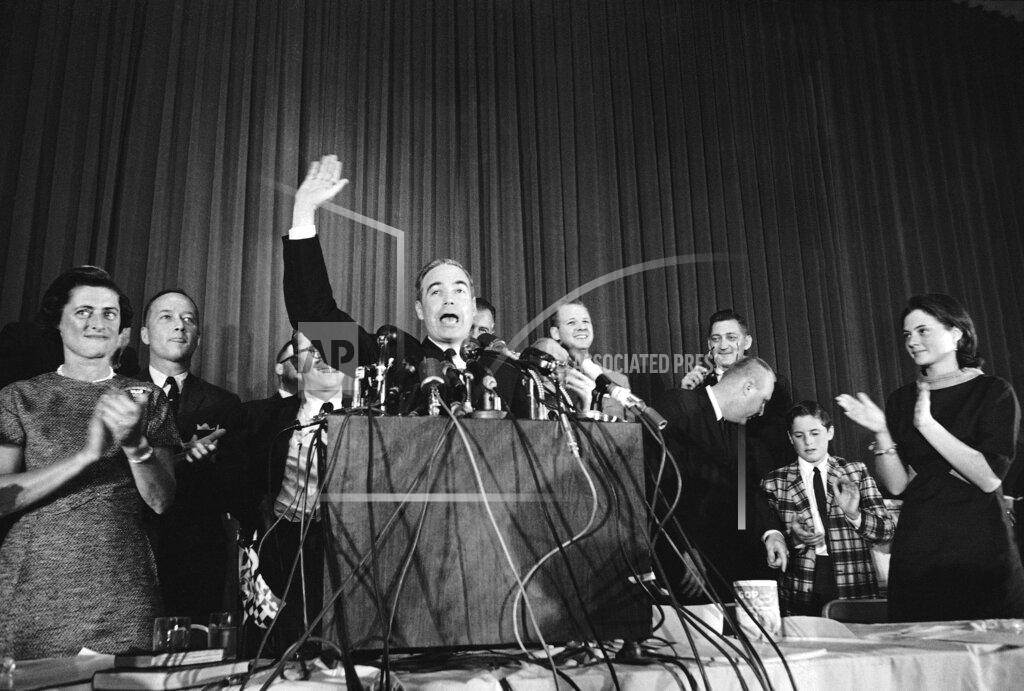
Pennsylvania Governor William Scranton announced his candidacy for the Republican Presidential nomination, as part of a movement to stop Barry Goldwater from receiving the nomination. By then, Goldwater had picked up 114 more delegates from other states after California, for 562 convention votes, just 93 short of the 655 needed to be nominated. The next day, he would receive 42 more votes from four more states to reach 618.
Governor William W. Scranton entered the contest for the Republican Presidential nomination today under a banner of “progressive Republicanism.” The 46‐year‐old Pennsylvanian announced his candidacy in a speech laced with barbed allusions to the conservative views of Senator Barry Goldwater of Arizona, the leading contender for the nomination. His forum was the Maryland State Republican Convention at the Lord Baltimore Hotel. Last night, shortly after deciding to become a candidate, he accepted a previously proffered invitation to address the convention. His announcement drew cheers and chants from the several hundred delegates present. There were also some jeers and shouts of “Goldwater! Goldwater!”
Senator Barry Goldwater was rocked today by the sharp attack from Governor William W. Scranton of Pennsylvania, who had been his best friend among major Republican party leaders. “The Republican establishment is desperate to defeat me,” said Mr. Goldwater. “They can’t stand having someone they can’t control.” Mr. Goldwater and his advisers are uncertain as to how seriously Mr. Scranton’s entry into the Republican Presidential race endangers the front‐ running Arizona conservative. Almost everything about Mr. Scranton’s hurried entry into the race surprised them. They had expected former Vice President Richard M. Nixon to be the challenger.
Richard M. Nixon declared his neutrality yesterday in Governor William W. Scranton’s drive to take the Republican nomination away from Senator Barry Goldwater of Arizona. The former Vice President and titular head of the Republican Party told reporters in London: “I will not endorse Scranton or anyone else before the convention. My role will be one of neutrality.” But Mr. Nixon did call the Pennsylvania Governor’s candidacy, which was announced yesterday in Baltimore, a “healthy situation.” But he hotly denied that he had had anything to do with Mr. Scranton’s decision to seek the nomination.
The national chairman of the campaign committee of Ambassador Henry Cabot Lodge threw his organization’s support today behind the 11th-hour bid of Governor William W. Scranton of Pennsylvania for the Republican Presidential nomination. Maxwell M. Rabb said in a statement: “Lodge would have given leadership of the highest standards, but so will Scranton. “We are proud to support Scranton and we know he will be victorious in July and then again in November.” Mr. Rabb made his announcement after conferring for an hour with former President Dwight D. Eisenhower. He held a news conference on the lawn outside Mr. Eisenhower’s office in Gettysburg, Pennsylvania.
Governor Rockefeller welcomed Governor William W. Scranton of Pennsylvania yesterday to the tanks of moderate Republicans seeking the party’s Presidential nomination. Mr. Rockefeller also reiterated that he would remain a candidate for the nomination. The New York Governor, long an active candidate for the nomination and long a critic of other moderates for their failure either to enter the race or back him, issued a brief statement that said in part: “I am glad to see Governor Scranton’s announcement that he is joining the battle to give our party a choice. As I said in Cleveland at the Governors’ Conference earlier this week, and at the meeting of the New York delegation in Albany yesterday, if the cause of moderate Republicanism is going to prevail at San Francisco, there must be others who will also join in the responsibility of leadership.”
[Ed: The battle between the “conservative” and “RINO” wings of the GOP has far deeper roots than Goldwater-Reagan versus Bush-Romney-Pence. It probably goes back at least as far as the peculiar and entirely accidental nomination of Calvin Coolidge to be vice-president in 1920.]
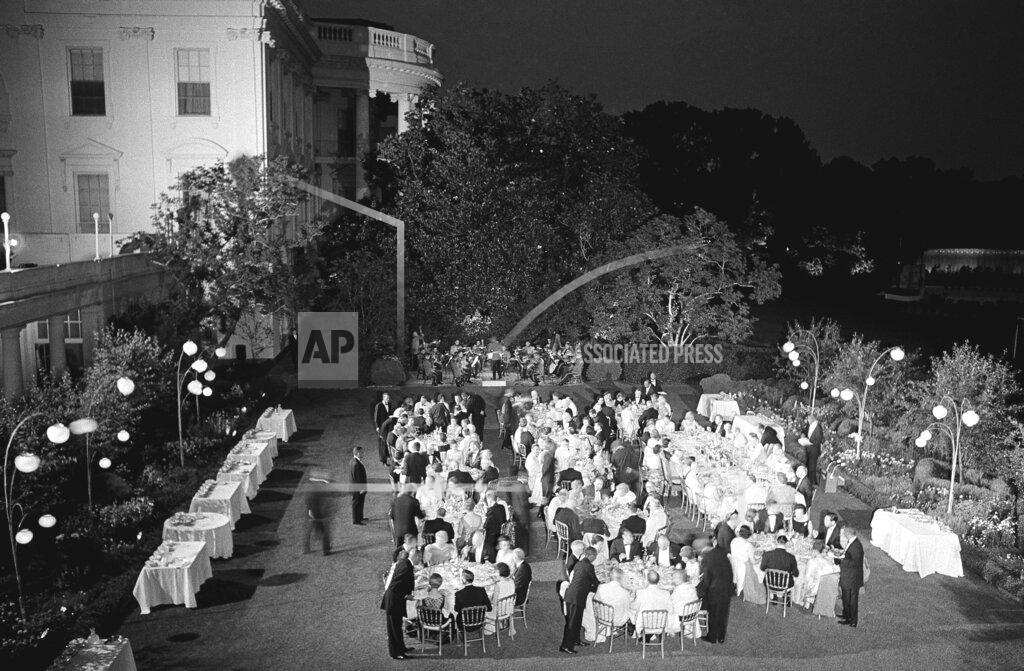
President and Mrs. Johnson gave tonight the first formal dinner held outdoors at the White House. It was in honor of Chancellor Ludwig Erhard of West Germany. The setting was the Rose Garden. The 140 guests at the black‐tie dinner could gaze down the slope of the south lawn, past fountains and stately trees to the lighted, Washington Monument and Jefferson Memorial. Candles and Japanese lanterns bobbing at the tips of bamboo wands lit the scene within the “L” of the Presidential office wing. The weather was balmy, with a light breeze.
The Mets knock Phils starter Dennis Bennett out in the 3rd inning — but its not the last New York will see of the Bennett family. Brother Dave, in his only appearance in the majors, pitches the 9th, allowing 2 hits and a run. The Mets roll over the Bennetts, 11–3.
Lou Clinton of the Angels hit a three-run shot off of Hank Aguirre in the top of the first in Detroit. The game was called off after a 50-minute delay in the top of the second with the Angels still ahead 3–0.
The Yankees sell rookie lefty Bob Meyer (0–3) to the Angels, who will sell him to the Kansas City A’s on July 29.
The Chicago Cubs manage just 4 hits but one is a grand slam by Joey Amalfitano in a six-run sixth inning that included just two Cubs hits, as they beat the Pittsburgh Pirates, 7–1.
Dow Jones Industrial Average: 809.39 (-1.86).
Born:
Derek Higgins, Irish auto racer (British Formula Ford Champion 1988; Mexican Formula 3 Champion 1995, 97), in Dublin, Ireland.
Doug Brown, NHL right wing (New Jersey Devils, Pittsburgh Penguins, Detroit Red Wings), in Southborough, Massachusetts.
Rick DiBernardo, NFL linebacker (St. Louis Cardinals, Los Angeles Rams), in Redondo Beach, California.
Lorraine Downes, New Zealand beauty queen (Miss Universe 1983), in Auckland, New Zealand.
Paula Marshall, American actress (Lindsay Sutton-“Chicago Sons”), in Rockville, Maryland.

 History Diaries