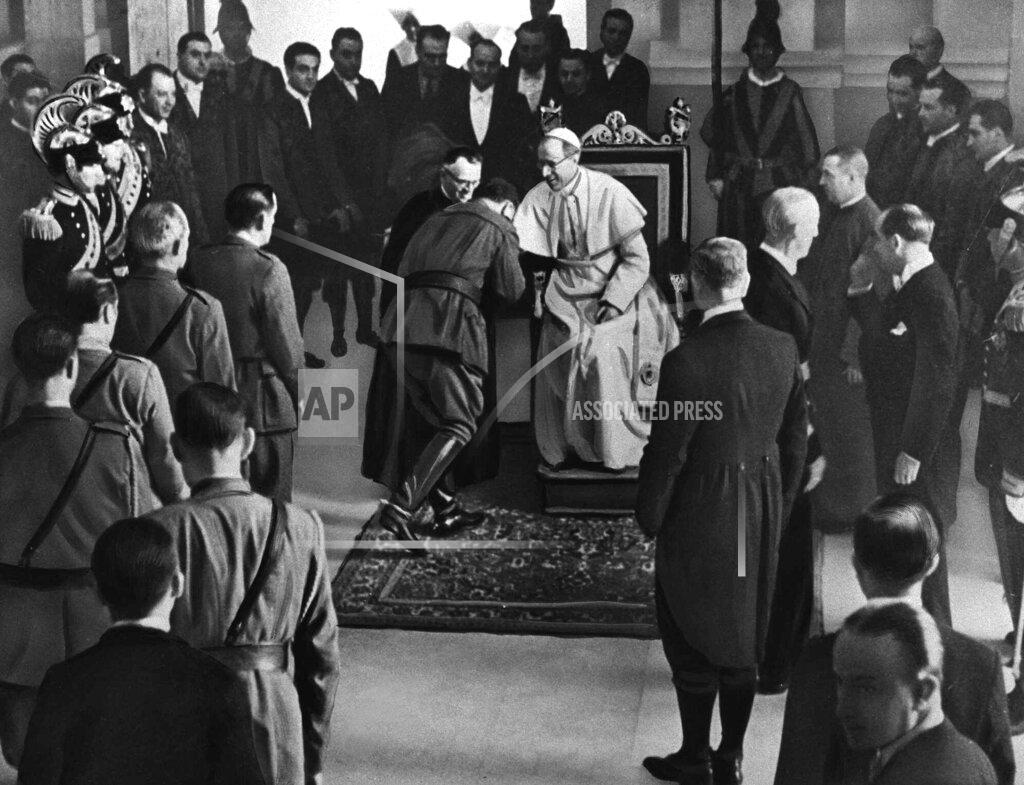
Pope Pius XII received 3,200 veterans of the Spanish Civil War at the Vatican and personally thanked them for defending “the faith and civilization of Spain” under Francisco Franco. Pope Pius today greeted the Spanish soldiers of the Italian Arrow division in words of the warmest praise for having brought a “triumph of the Christian ideal” to Spain. As in his broadcast of April 16-in which he expressed the same sentiments-the Pontiff spoke in Spanish. The troops numbered more than 3,000 and they were accompanied not only by their chaplains and their Italian officers but by Ramon Serrano Suñer, brother-in-law of General Francisco Franco, and his military mission.
Pope Pius greeted them in the vestibule of the Hall of Benedictions, entering on his Sedia Gestatoria while the Arrow bugle corps played the Spanish march, “Cara al Sol.” The troops applauded enthusiastically. Before mounting his throne, the Pontiff blessed 3,200 rosaries given to the soldiers by Spanish monks and nuns in Rome.
Pope Pius then addressed the troops, saying that they had brought him “immense consolation, for you have been defenders of the faith and of civilization.” He said that his thoughts went to those who had died and to the bereft mothers and children. Love of religion and country have reflowered, he continued, bringing them to “a victorious triumph of the Christian ideal.” The soldiers and the military mission will leave tonight for Turin, Milan and Genoa, embarking at Genoa on Wednesday.
Prime Minister Neville Chamberlain perseveres in his attempt to bring Soviets in line with the Stop-Hitler powers. Common danger is thought to make the British-Soviet alliance likely. The French are far less convinced an agreement can be reached. A decision reached by the British Ministers this evening, concerning the instructions to be given to William Strang, Foreign Office aide who is to go to Russia to push negotiations for an Anglo-French-Russian mutual assistance pact, is not yet known in Paris.
But we know that Prime Minister Neville Chamberlain, Sir John Simon, Chancellor of the Exchequer, and Sir Samuel Hoare, Home Secretary, during the last few days reopened a question that seemed to have been settled once and for all at the Cabinet meeting held last Wednesday. According to the formula that was discussed then, France and Britain extended to Soviet Russia, concerning the Baltic States, the concession granted to Poland last April in relation to Danzig and Lithuania. It meant that Russia alone would be competent to decide when her vital interests were being affected by German action in Latvia, Estonia or Finland and could set in motion the automatic mechanism of Anglo-French assistance to her.
Mr. Chamberlain and his two senior colleagues appear to have perceived after the Cabinet meeting that to insert such a clause in the contemplated Anglo-French-Russian pact was tantamount to giving Moscow a blank check, which, of course, can hardly be denied. At the same time, they failed to realize that, in today’s circumstances, it was hardly to be expected that Russia’s participation in the new security system could be won on cheaper terms and that the only alternative was the immediate ruin of that system.
As a consequence, they amended rather drastically the draft of the mutual assistance pact and provided for previous diplomatic consultation to take place whenever the territorial integrity or political independence of the Baltic States would be placed in jeopardy and Russia turned for help toward her two great allies. It goes without saying that such stipulation would not have even the most slender chance of proving acceptable to Moscow. Since yesterday the French Government has been hard put to it to convince London that, on the above lines, there is not any serious prospect that an agreement can be arrived at with Joseph Stalin and his advisers.
Hitler sounds a note of deepening impasse. Germans cling to the hope that he will not risk war.
Many Jews stay in Germany. Although anxious to leave, they have no hope of finding haven.
Pleas for asylum in Great Britain or at least permission to land at Southampton were reportedly cabled from the German liner MS St. Louis today to Prime Minister Neville Chamberlain by 907 German Jewish refugees barred from landing in Cuba. The message was said to have described the refugees’ position as “desperate,” explaining it was impossible for them to return to Hamburg.
Hungarian Nazi chiefs, elated at the expected coordination of Hungarian and German domestic policies as a result of the recent visit of German Interior Minister Wilhelm Frick, drafted a legislative program today for Parliament which opens tomorrow. Points reliably reported as heading the Nazi program included distribution of Hungary’s huge estates among the landless peasants, strict application and extension of sweeping anti-Jewish laws and heavy taxes on wealth.
Fifty Nazis, wearing uniforms similar to those of Germany’s black-shirted S.S. Guards, will take seats in the Lower Chamber. Representing six parties which have combined for Parliamentary action, the uniformed Nazis will sit with 210 other deputies. Among them are 200 members of Premier Count Pál Teleki’s Hungarian Life Party of whom, however, more than sixty have supposedly shown marked Nazi leanings.
The principles governing Danish neutrality were reaffirmed today in an interview by Foreign Minister P. R. Munch, who added that in the event of war “which Danes find it difficult to believe is inevitable” the Scandinavian powers, Finland and other smaller countries, by keeping outside of the conflict would “be serving not only their own interests but the general interest.” “If a great war breaks out a work of reconstruction would have to be taken up afterward,” he said, “and an international community of justice would have to be created to enable nations to collaborate. This would not be an easy task. Bitter feelings would prevail between the nations that had fought each other.
“It would be of the greatest value if there were still some nations which had not been shaken by the passions of war and which were therefore particularly suited to rebuild the bridges between nation and nation.” The Danes, Mr. Munch said, took it for granted that the leaders of all the great powers desired to preserve peace and that they had not abandoned hope that a peaceable solution of the questions in dispute might be attained. If, nevertheless, a great war breaks out the Danish government, he declared, would try to keep out.
Noting with “profound regret” how the movement toward universality in the first decade of the League of Nations had been replaced by schisms in the last decade he said that “even in these circumstances we and others of like mind desire to remain members of the League and as long as the States I have in mind are members of the League it will never be a one-sided body.”
[Ed: The Danes may not be interested in war; but war and Adolf Hitler are interested in them.]
King Peter of Yugoslavia bade farewell to sheltered palace life today with his enrollment in his army’s military college. The 15-year-old King celebrated the completion of his secondary school education with a family party at his palace outside Belgrade. His mother, Queen Marie; his uncle, Prince Paul, the chief regent, and his brothers, Prince Tomislav and Prince Andria, heard his tutor call him a “very good student.”
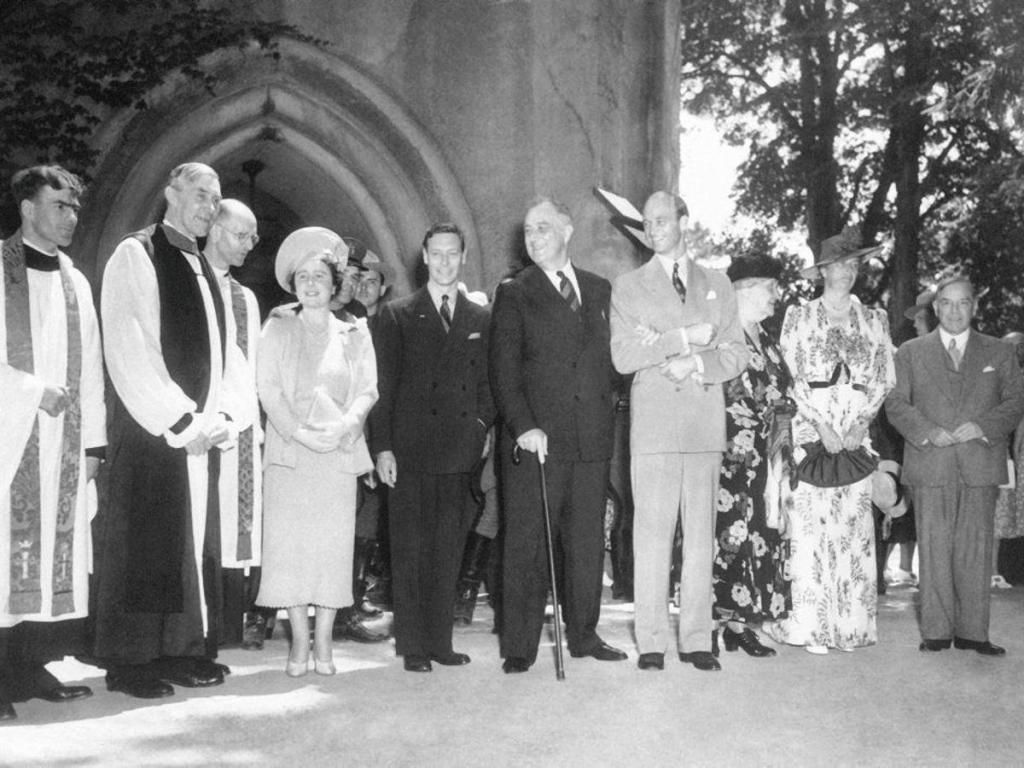
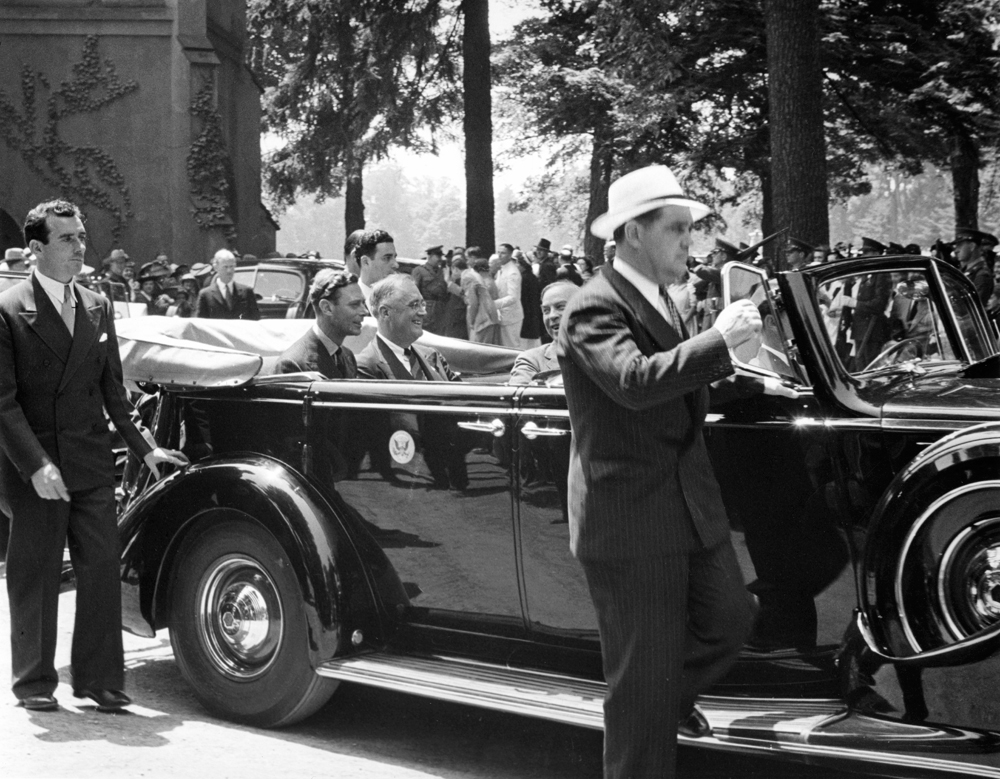
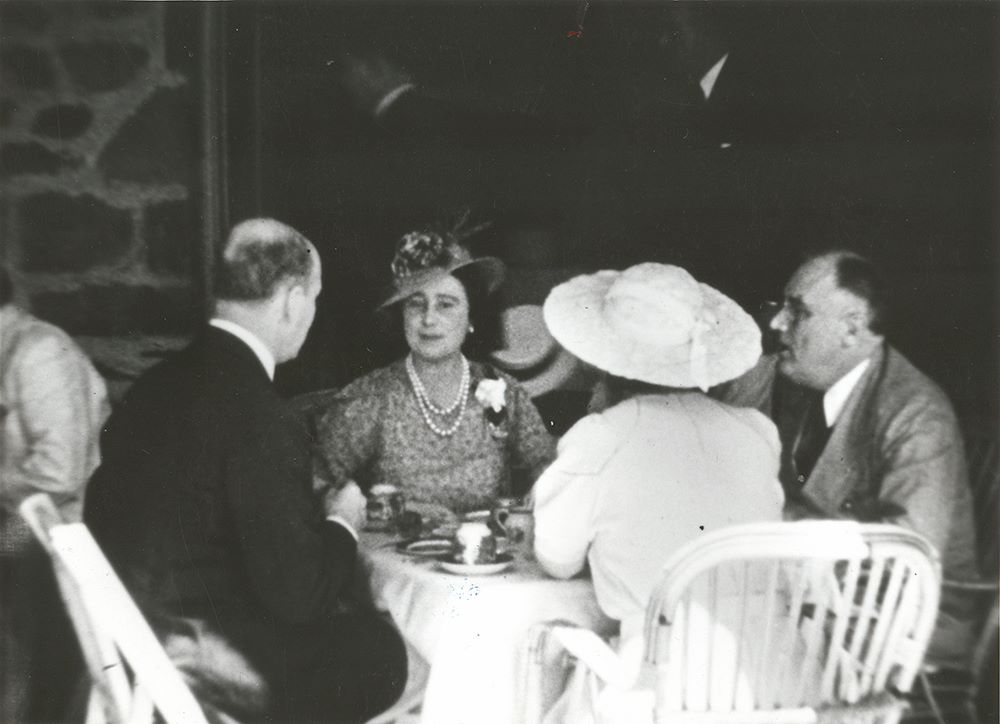
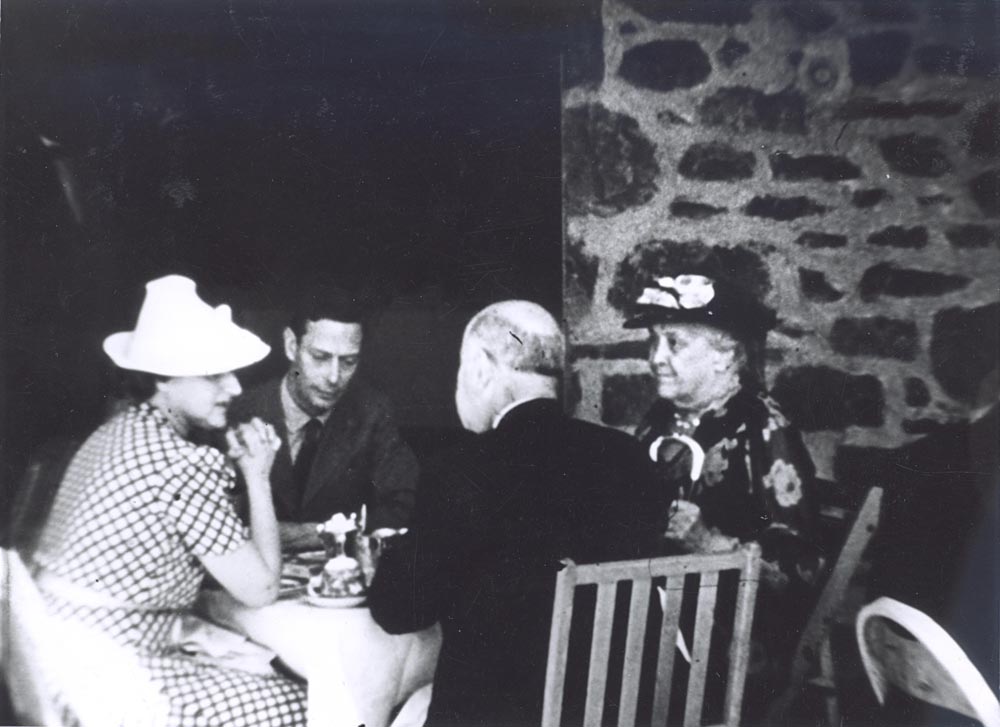
Franklin and Eleanor Roosevelt hosted the King and Queen of the United Kingdom at Hyde Park and served a dinner of hot dogs and beer, much to the media’s delight. The Queen did not know how to eat a hot dog. King George VI ate his first hot dog. was chauffeured by the President of the United States, and turned his own hand motion-picture camera against his photographers at a typical Roosevelt picnic party today on the slope of Dutchess Hill, where the Chief Executive’s new stone cottage provided an informal backdrop for a high point of the visit of the British sovereigns with the nation’s First Family.
No reporters were present and regular photographers were barred from the party but everyone present had a camera, and a detailed report of the party was given afterward by Michael J. McDermott, State Department liaison officer, who told how Mr. Roosevelt drove his own specially equipped automobile up Dutchess Hill from Hyde Park House with the King and Queen as his passengers.
The King himself clinched the informality of the outing by going swimming with the President in the spring-fed tile pool on the lawn of Mrs. Roosevelt’s Val Kill cottage, across the road from the family home. There were no other swimmers, other guests who came from the picnic to have tea at the Val Kill cottage remaining about the lawn.
After the swim the President, accompanied by the King and Queen and his daughter-in-law, Mrs. James Roosevelt, completed the afternoon by motoring down to the Hudson River banks of the Hyde Park estate to view the first-growth timber in which the Chief Executive takes great pride. The group returned to the family home at 6:10 PM to prepare for dinner.
The President of the United States bade farewell at 11:10 o’clock tonight to his guests, the King and Queen of Great Britain, in a simple ceremony at the little railroad station here. The leave-taking was like a friendly family party, breaking up after an unusually good time. King George and his popular young Queen, still in dinner clothes, stood waving from the back platform of their silver and blue train, while flashlights popped and uplifted arms still signaled the goodbyes they could no longer hear. The President, who had descended from his open car, was standing beside it, both hands upraised and clasped together in a parting gesture, as the royal train gathered speed.
Congress will go back to work this week and try to catch up on its program, toward the completion of which very little progress was made last week because of the visit of King George and Queen Elizabeth. The goal of adjournment within five weeks, or by July 15, will be before the leaders when the legislative sessions are resumed tomorrow. The chief obstacle to the achievement of that purpose is the neutrality bill, and this barrier looms as even more formidable as the battle lines tighten for a fight which no one appears to believe can be avoided.
The first definite draft of a neutrality bill is expected to reach the House tomorrow from its Committee on Foreign Affairs. The Committee will meet in the morning to consider final action on the bill and Representative Sol Bloom, the acting chairman, expressed his belief that a bill would be reported out at once. Except for Section 4, which embraces the “cash-and-carry” provisions favored by President Roosevelt and Secretary Hull, all the controversial sections of the bill have been disposed of by the committee. It has refused on two occasions to approve the automatic arms embargo provisions of the present law which President Roosevelt has found objectionable.
Administration leaders do not expect a prolonged fight on the bill in the House, and predict its passage substantially as it will come from the committee. The rough going which may defeat all adjournment plans is looked for in the Senate. The remnants of the isolationist bloc which defeated the League of Nations proposals two decades ago, plus recruits among Senators of less antiquity, such as Clark of Missouri, a Democrat, and Nye of North Dakota, a Republican, are forming their lines for a fight on any bill that vests in the President broad discretionary powers to direct the country’s policies toward nations which are at war.
Representative Hamilton Fish, charging President Roosevelt with a determination “to take this nation into war if one breaks out in foreign lands,” urged yesterday the defeat of the “dangerous and warmaking” neutrality bill now pending in the House Committee on Foreign Affairs. Mr. Fish, as chairman of the National Committee to Keep America Out of Foreign Wars, spoke at an anti-war rally held at Breinlinger’s Park, 4018 Boston Road, the Bronx, New York, under the auspices of the Bronx District Council of the Steuben Society of America and later repeated his address over Radio Station WNYC.
Pointing out that the pending neutrality bill would lift the present Neutrality Act’s prohibition on sales of arms, ammunition and implements of war to belligerent nations and would give the President a “one-man power” to determine the combat areas, Mr. Fish held| that the measure, if enacted, would make this country “the potential slaughterhouse and arsenal for Great Britain and France” and would eventually “drag us into the next World War.”
“The far-reaching power granted in the proposed bill is equivalent to a surrender by the Congress of its constitutional right to declare war,” Mr. Fish contended. “This is nothing more or less than a camouflaged aggressor nation power which the President has been trying to obtain from Congress for the last five years.” Declaring that “it is none of our business what form of government exists in any foreign land,” Mr. Fish, who is a member of the House Committee on Foreign Affairs, bitterly criticized the President, the State Department and some United States Ambassadors for “attacking” certain foreign governments, holding that such actions would in the end seriously disrupt efforts for world peace.
Federal relief is being administered with the “wasteful incompetence of an old-fashioned ice-cart in Summer or with a malicious mania to spend as much of the nation’s accumulated savings as possible while giving as little as may be to the needy out of the vast total wasted,” Ernest Angell, chairman of the National Economy League, declared here today. His statement accompanied the release of a report on a survey of relief made by John C. Gebhart, director of the league. “It’s time that those in genuine need of relief woke up to the mess that is being perpetrated in their name,” Mr. Angell said.
The report put the principal blame for mounting relief costs on the WPA and “recommended” a revamping of the relief program, Federal, State and local, to keep relief costs within governmental revenue. A return to the system of cooperative relief such as was in effect in 1935, the report said, “can result in substantial savings of both federal and state expenditures.” The overhead costs of relief administration and materials have risen from 10 to 25 percent during seven years in which federal, state and local governments have spent $20,500,000,000 on relief, the report asserted in noting that an “emergency” still exists with 22,000,000 persons still receiving relief payments in one form or another.
Hollywood prepares for the worst as the Attorney General says that six or seven of the biggest men in film face indictment for income tax fraud.
The Ku Klux Klan names a former veterinarian as its new chief.
A U.S. psychologist says that shaming children is the weakest tactic in improving behavior. He claims clear thinking and explaining work much better.
In game 1 in Chicago, White Sox pitcher Ted Lyons wins another Sunday outing beating Boston, 7–5, and pitches the last 4 innings without allowing a walk. He will go 42 innings in all, until the 1st inning of the June 23rd game in Chicago, without giving up a base on balls. The Red Sox win the nitecap, 4–3.
An air raid kills 500 people in Chengtu, when 27 Japanese planes drop bombs. The West China Union University, an Anglo-American-supported school, was hit and students were killed.
Chungking, the capital city, was also bombed heavily. 150 bombs were dropped; causing about 100 casualties. A 1,000-pound bomb hit the German Embassy.
Japanese spokesmen reported tonight that twenty high Japanese and Chinese officials of the Nanking Government were ill in the former Chinese capital after drinking wine allegedly poisoned in “a daring attempt of Chinese enemies of the new regime at wholesale killing of the officialdom.” They asserted the attempt occurred last night at the Japanese Consulate General when Japanese officials entertained Tomesaburo Shimizu, parliamentary Vice Minister of Foreign Affairs in Tokyo, at a banquet. The wine was reported to have brought a speedy end to what had been planned as a gala evening.
“Immediately following the drinking of the initial toast to the guest of honor,” a Japanese report said, “the entire assemblage was stricken. Japanese civilian and military physicians checked the effects of the poison before it had a chance to have fatal effects.” It added that “the brains behind the outrage still were at large although Nanking is being scoured for those responsible.”
Japanese reports from Tientsin said “a tense calm before the storm” prevailed in the North China port, where the British concession had been threatened with isolation, unless four Chinese there were surrendered to the Japanese. The four are suspected by the Japanese of slaying S. G. Cheng, an official of the Japanese-dominated customs at the port.
The Japanese said “the isolating process” would start “in a few days,” but so far there has been no effort to carry out a reported forty-eight hour ultimatum, which expired yesterday, for turning over the Chinese refugees. Japanese military officials here declined to confirm that an ultimatum had been issued, but one asserted “strong action” was in prospect unless the British met the Japanese desires. Japanese said the French concession also might be isolated if action was taken against the British zone, because the two were adjacent and the British area could not be cut off if the French was open.
Born:
Jackie Stewart, Scottish racing driver (27 x F1 Grand Prix wins, World F1 Championship 1969, 1971, 1973), team owner (Stewart GP) and broadcaster (ABC’s Wide World of Sports, NBC Sportsworld, BBC), in Milton, West Dunbartonshire, Scotland, United Kingdom.
Jimmy Stewart, MLB pinch hitter, outfielder, and second baseman (Chicago Cubs, Chicago White Sox, Cincinnati Reds, Houston Astros), in Opelika, Alabama (d. 2012).
Ted Lanyon, Canadian NHL defenseman (Pittsburgh Penguins), in Winnipeg, Manitoba, Canada (d. 2008).
Christina Crawford, American actress and author (“Mommie Dearest”), in Los Angeles, California.
Wilma Burgess, American country-pop singer (“Baby”; “Misty Blue”), in Orlando, Florida (d. 2003)
Rachael Heyhoe Flint, Baroness Heyhoe Flint, cricketer, in Wolverhampton, England, United Kingdom (d. 2017).
 History Diaries