The German news agency announced today that a fight had occurred at Nachod last night between Czech and German police and that a Czech had been killed. Another version of the affair, however, is as follows: A week ago the German police stationed at Nachod, a textile manufacturing town near the German frontier, broke up a workers’ meeting by firing revolvers into the air. These police were replaced by a detachment of others who had recently completed service in Spain. Last night a small group of them, very drunk, walked through the town firing their revolvers into the air.
The Czech police withdrew to their quarters to avoid a conflict. After trying to break into a synagogue the Germans went to the Czech police station and fired shots through the windows. One German, breaking his way through a window, fired three shots at a young Czech policeman sitting on his bed. He later died of his wounds. Another Czech in the same room was wounded. Baron Constantin von Neurath, the Reich Protector, ordered a strict inquiry by a mixed commission.
Meanwhile Chancellor Hitler sent a wreath for the funeral of Wilhelm Kniest, the German police officer who was killed at Kladno. The local police at Kladno have Issued a description of a Czech professional criminal who was believed to have been in the neighborhood at the time of the killing, either late Wednesday night or early Thursday morning. An important witness — a girl sitting in a tavern in which Kniest was seen shortly before the crime — has disappeared.
Although Baron von Neurath announced that in view of the good behavior of the Czech people and the penalties already applied, no further punishment would be inflicted, the German police have been acting with the greatest brutality toward the population. Many were arrested last night. In some houses furniture was destroyed and persons walking with their hands in their pockets were stopped and questioned.
The Diplomatisch-Politische Korrespondenz, semi-official mouthpiece of the Foreign Office, tonight accused foreign countries, especially Britain, of fostering unrest among the Czechs and asserted that not Germany but the Czechs themselves were bound to suffer as a result.
Louis P. Lochner, chief of the Berlin head of the Associated Press reported that “Rightly or wrongly the German nation is convinced that Great Britain and France are determined not to concede to Germany that place in the sun which she feels entitled to as a nation of over 80,000,000 virile people… The average German fears – whether rightly or wrongly is beside the point, and I can only register a fact – that British and French denials of any desire to encircle Germany are just so much eyewash. Their vast [rearming] programs are accepted in Germany as evidence that a war may be in the offing.”
In the diplomatic field, Paris heard reports from Berlin that Chancellor Hitler was contemplating an offer, to be made next month, of peaceful cooperation with the democracies in return for economic concessions and perhaps colonies. But the French studied the reports warily, particularly in view of a statement from Berlin that officials there knew nothing of such a plan.
It was thought possible that the German plan, if it exists, was connected with last Thursday’s speech by Foreign Secretary Halifax of Britain calling on Germany to forsake force and negotiate. The British Opposition, seeing in the speech a return to “appeasement,” was preparing to attack the government in the House of Lords. Opponents of the government are massing their forces for an attack in the House of Lords on Monday on what they declare is a return to the policy of appeasement, which is how Viscount Halifax’s speech of Thursday is interpreted in the Opposition camp.
The government’s spokesmen insist that the Foreign Secretary’s call to Germany to drop arms and come to the conference table is no indication that British policy has changed. It still remains, as Prime Minister Neville Chamberlain described it, the “double” policy of finding and removing the causes of war, and at the same time, making Britain so strong that an attack upon her would not be worthwhile — in other words, a nonaggressive stand against aggression.
Nothing has yet come out of Germany in reply to Lord Halifax to suggest that the Reich Government has any idea of responding to Britain’s new “feeler,” and if the German Government does not act, nobody else in that country can. Nevertheless, everything possible is being done in London to get the policy and aims of Britain across to the German people and so counter Propaganda Minister Joseph Goebbels’s “encirclement” propaganda.
The Reich press scoffs at the British royalty’s U.S. visit.
Poland threatened economic reprisals against Danzig today in a note rejecting the Free City’s demand for a reduction in the number of Polish customs inspectors here and for limitation of their duties. The Polish reply was to Danzig’s note of June 3, which announced a boycott of three Polish officials charged by the Free City Senate with “implication” in the slaying of a Nazi at Kalthof on May 21. Besides economic retaliation, Poland threatened to increase the number of Polish inspectors should the Free City government attempt to interfere with their activity.
Meanwhile, authoritative sources expressed the belief today that the issue between Germany and Poland over Danzig’s return to Germany would be quiescent for some time. They cited as a basis for the belief the fact that Arthur Greiser, President of the Free City’s Nazi Senate, will be absent on vacation until the middle of July. During his holiday he is joining the German Army for a training course.
The possibility that Bulgarian Premier George Kiosseivanov will go to Berlin soon — there have been persistent rumors to that effect lately — is now taking definite shape. Confirmation is found in the fact that the Premier today had a long audience with the German Minister who is reported to have suggested that the trip be limited exclusively to Germany. If the visit materializes, economic questions will play a large part in the Berlin discussions. German commercial and industrial influence is constantly growing in this country.
London receives the 1944 Olympics hosting honor.
Switzerland rejects the 1940 Winter Olympics, which are moved to Germany.
Finland is still anxiously watching the Soviet, British and French attempts to find a formula for a mutual guarantee for the Baltic States’ neutrality because Finnish opinion is solidly against any tampering with the country’s free status. Newspapers are openly regretting that “the Red Russian giant’s shadow is falling over the Baltic region.” Authoritative circles assert Finland fears Russia could not refrain from utilizing the projected guarantee to destroy Finland’s political independence. Finland welcomes the British suggestion of a solution that would preserve the Baltic States’ freedom though it is admitted the task is difficult because of Russia’s apparent determination to create disturbances. The situation regarding the Aland Islands remains obscure. Neither Finland nor Sweden seems inclined to make further demands for fortification of the islands during the present political tension.
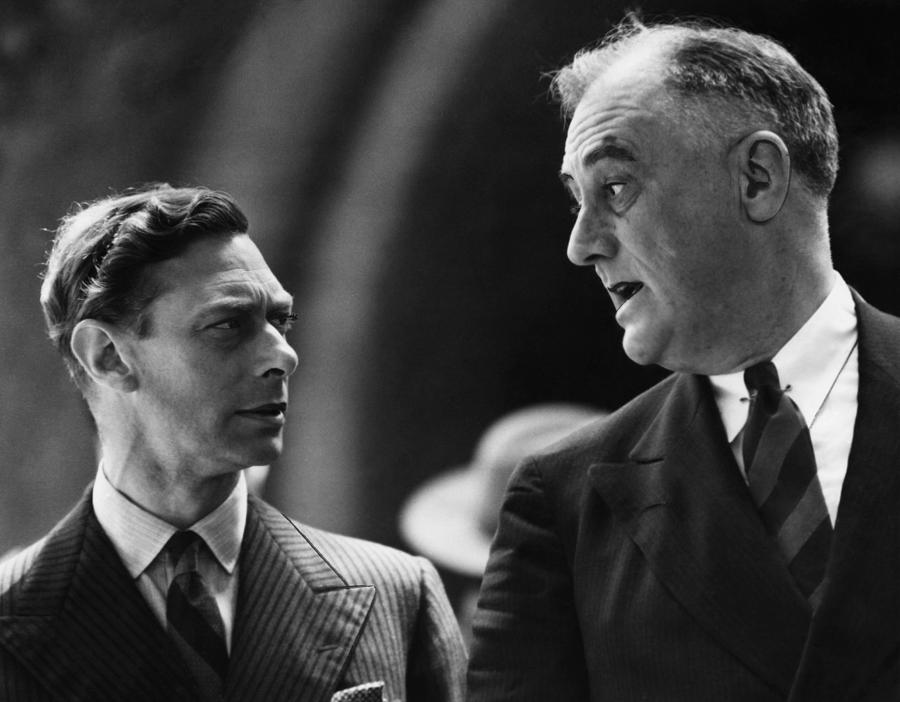
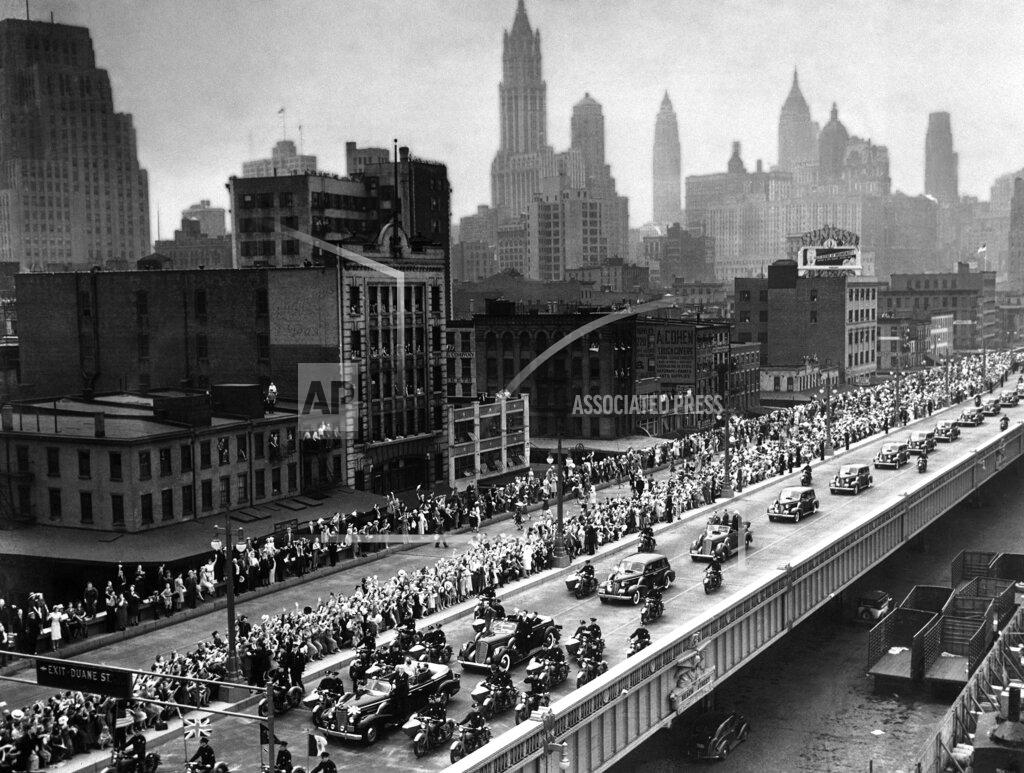
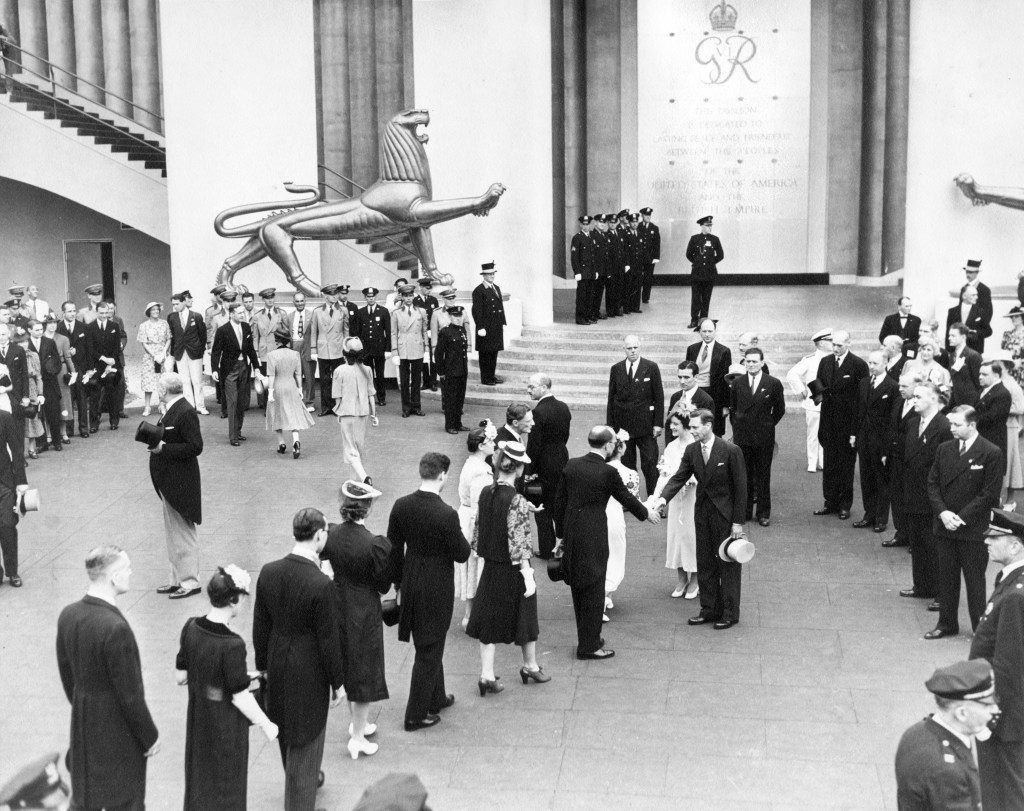
An estimated 2 million people crowded the New York waterfront to watch the King and Queen of the United Kingdom arrive on the destroyer USS Warrington. The royal couple rode up Manhattan’s West Side through Queens and visited the New York World’s Fair. From the deck of an American destroyer flying the royal standard at her masthead for the first time in history, England’s sailor King and Scottish Queen stepped ashore at the Battery yesterday to receive the applause and cheers, if not the homage, of half the people of this, the New World’s greatest city.
When King George VI and Queen Elizabeth left Columbia University yesterday for their seventy-eight-mile drive to Hyde Park, where they were to be the guests of the President and Mrs. Roosevelt through today, they had driven over a fifty-one mile city route packed solidly with cheering crowds. The refusal of Scotland Yard to sanction the King’s following the traditional route of celebrities, through the towering concrete and steel canyon of lower Broadway, for fear some enthusiastic welcomer might throw a telephone book without tearing it up first, prevented the royal visitors from seeing much of the city. It did not, however, prevent the people of New York from seeing them.
After brief and decorous welcomes at the Battery from Governor Lehman and Mayor La Guardia, who rode with them to the World’s Fair, where thousands stood for hours to see them pass in the trackless train, the King and Queen drove in an open car with bulletproof glass up the express highway to Seventy-second Street. Seventy thousand tickets, each good for two, were issued for standing room on the downtown ramp of the elevated highway, which runs up the west side of Manhattan past steamship docks, warehouses and other nondescript buildings. At the last moment the police were ordered to admit all who sought admittance to the highway on foot as long as there was room. There were not many vacant spots along the highway.
The pages of history flicked back yesterday and the moving picture of time projected a scene from the dead past into the unknown World of Tomorrow. On Flushing Meadows, where the redcoats of King George III fought the ragged Continentals a century and a half ago, King George VI reigned for an afternoon, with Queen Elizabeth by his side, over the little principality known as the World’s Fair. As the young, solemn King and his smiling Queen drove through the Fair Grounds to the thunder of guns, the roar of cheering crowds, the crash of band music, the playing of colored fountains, the display of fireworks and the waving of flags, Grover A. Whalen, monarch of the realm of the Trylon and Perisphere, abdicated for the day. He gave them the key to his domain in the form of a gold and crystal Trylon and Perisphere, and the populace accepted the temporary rulers by acclaim.
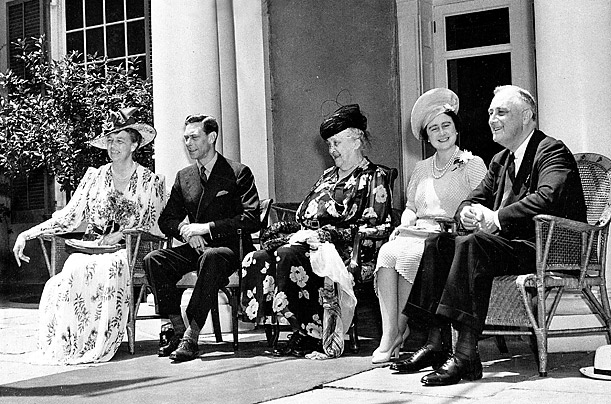
The rulers of the world’s farthest flung empire put aside the formalities of official protocol temporarily today to begin a quiet weekend as George and Elizabeth Windsor at the Hudson River home of the nation’s first family — the Roosevelts. The gates of the Hyde Park house stood wide open when the British sovereigns reached the President’s family home here at 7:41 PM after a triumphal motor trip from New York City and then were shut securely behind them. The tiring effect of their travels was reflected in the late arrival of Their Majesties at Hyde Park House and their appearance in the family dining room for dinner an hour and fifteen minutes behind schedule.
The U.S. welcome of the royalty amazes the British. Joseph Kennedy calls the handshake between the King and President Roosevelt the most important of modern times.
Queen Elizabeth sees the U.S. press, including women, as setting a precedent.
The first attempt to overhaul the Social Security Act by amendments after nearly four years of existence was adopted by the House of Representatives today in the general form recommended by the Social Security Advisory Committee, a body of experts set up under the original statute, with only one minor change. The measure was sent to the Senate, where the Finance Committee will begin hearings Monday, with every prospect that it would fare equally well on that side of the Capitol.
The House registered its approval of the experts’ recommendations by a vote of 361 to 2. Representatives Smith of Ohio and Thill of Wisconsin, both Republicans, were the only members recorded against final passage, although Representative Carlson of Kansas, another Republican, was paired against the bill with Representative Lewis of Ohio, also a Republican, who was for the measure.
The broad intent of the changes was to liberalize slightly the benefits of the act and to lessen slightly the immediate tax burdens under it. The experts found it was possible to accomplish both of these apparently contradictory objectives because of the actuarial experience gained since 1935, which indicated that reserves were pulling up faster than needed.
The debates and divisions in the House showed no partisan trend. A large number of amendments were offered, and defeated, to the end of liberalizing still further the benefits under all categories, especially old-age assistance. The most important of these proposals, which will doubtless be again offered in the Senate, sprang from the desire of the poorer states to obtain larger federal participation in the way of grants for various forms of assistance.
Secretary of State Cordell Hull has approved Poland’s application for 220,000 cubic feet of American helium to inflate a stratosphere balloon for flights later in the Summer. The application is the first of its kind ever fully approved by the United States Government.
Poland’s success in getting helium does not facilitate its purchase by Germany. Last year the Munitions Control Board authorized the export of 17,900,000 cubic feet for Germany’s new dirigible, but Secretary Ickes refused approval.
German-born Marlene Dietrich becomes a U.S. citizen.
In Brownsville, Texas, my father is ten years old on this day.
Issue #40 of DC’s Adventure Comics (cover date July 1939) was published, featuring the first appearance of the Sandman character.
MGM cartoon character Barney Bear debuts.
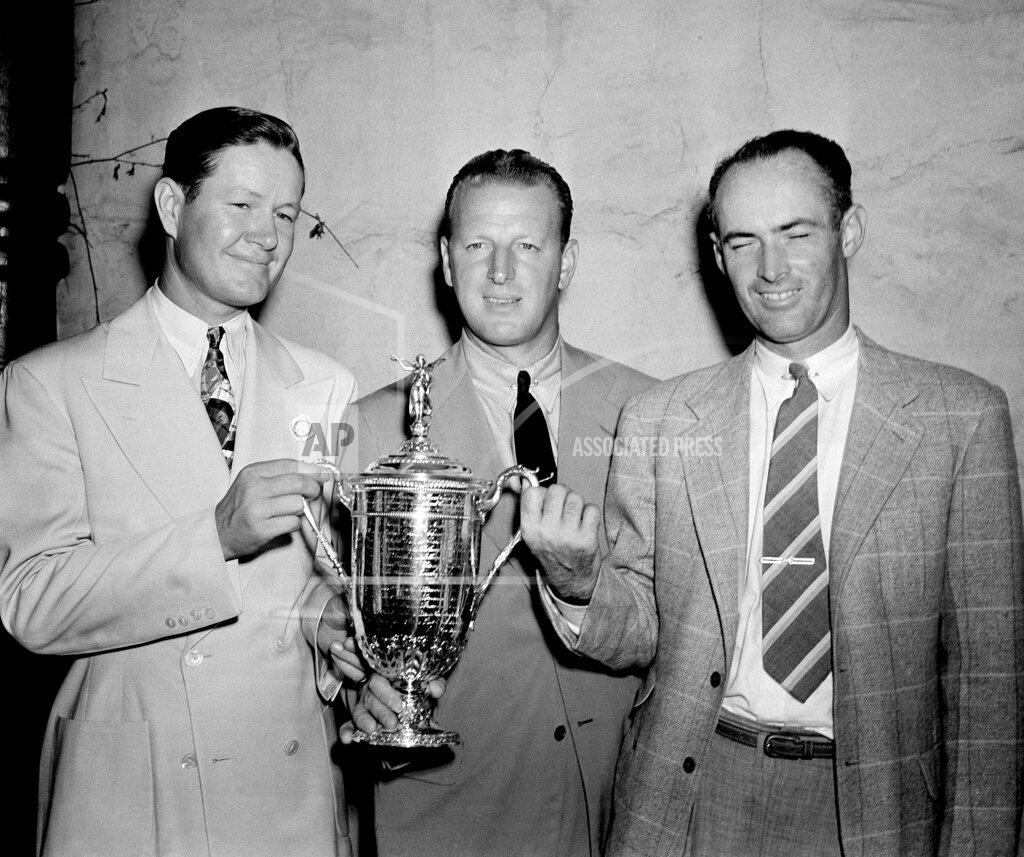
Denny Shute, Craig Wood and Byron Nelson tied for the national open championship with scores of 284 at the Philadelphia Country Club and will meet today in an eighteen-hole play-off for the title. The tie for first place was the first among three players in the tournament since 1913.
With Hal Schumacher pitching seven-hit ball, the New York Giants routed the Pittsburgh Pirates, 6–2, and went within a half-game of fifth place.
The Brooklyn Dodgers defeated the National League leading Cincinnati Reds, 7–6, on a two-run single by Johnny Hudson in the eighth inning.
At Detroit, the Tigers score 3 runs in each of the 8th and 9th innings to trip the Senators, 6–5, in game 1 of a doubleheader. The Tigers then score in each of the first six innings of game 2 en route to a 17–5 victory. Rookie Frank Croucher hits his first Major League homer in game 2, a grand slam off Jimmie DeShong.
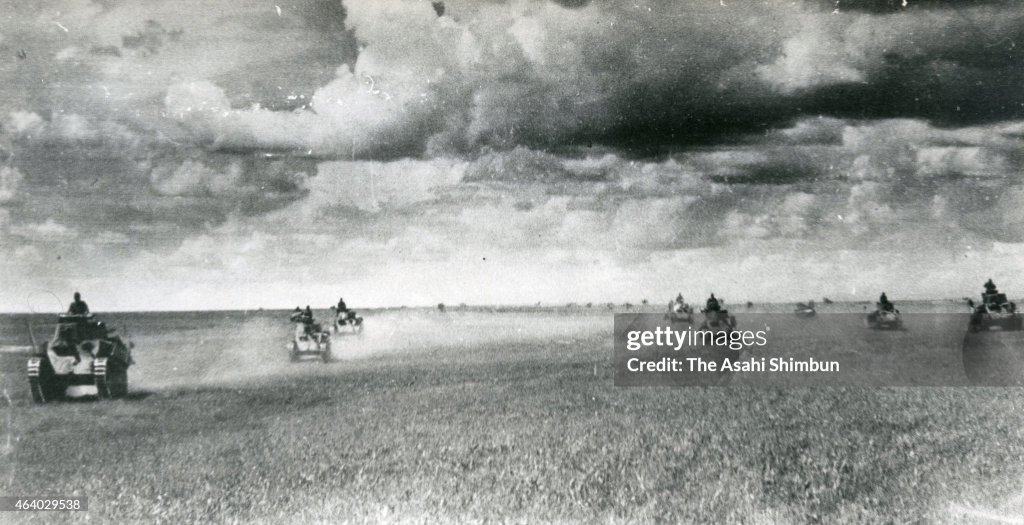
A Japanese Army spokesman announced today the release of Lieutenant John Cooper, British assistant military attaché held by Japanese soldiers at Kalgan, Northwest China, since his arrest on May 26 with Lieutenant Colonel C. R. Spear, British military attaché, who is still held. The spokesman said the Japanese Embassy would lodge a protest regarding Lieutenant Cooper with the British Embassy upon his expected arrival here under military escort. The Japanese official added that Lieutenant Cooper had promised the Japanese that he would not in the future enter the zone of Japanese military operations without an official Japanese military permit, that he would not reveal to any one secret matters favoring the Chinese side that he may have learned from Colonel Spear and that both would assume personal responsibility for their detention.
Japanese keep their mainland armies. The chief forces are to be kept on the continent, in China, not at home.
In an advance marked by heavy fighting and numerous casualties the Japanese have occupied Chuntu, a strategic Yellow River crossing in Western Shansi Province, Chinese reports here admit. The reports say Japanese columns simultaneously are seeking to take Chikow and Sanchiao, two other river crossings, but they were repulsed at Pinglu in their new clean-up drive in Southern Shansi, according to reports here. Pinglu is an important city on the left bank of the Yellow River.
A declaration by the Minister of War that “the volume of Japan’s military strength should be increased and that emphasis should be shifted to the continent” gives voice to a trend that has been apparent for some time in Japanese military policy. If Britain has said her frontier lies on the Rhine, Japan has even more emphatically proved that this empire’s frontier marches with that of Soviet Russia and whatever may be left of China. General Seishiro Itagaki’s declaration just quoted was made to a gathering of prefectural Governors, who are expected to enforce the central government’s policy in their local districts. It is the first definite statement that the bulk of Japan’s Army, even during peacetime, will be garrisoned in China and in Manchukuo instead of in Japan proper as heretofore.
More than one reason exists for the adoption of such a policy. Granting that Japan’s plans work out as she wishes and that, once peace is concluded with China, much of that country will be garrisoned by Japanese soldiers for an indefinite period, it is seen that a great number of men will be required for this purpose.
Other important reasons enter into the formulation of this policy. The General Staff and the War Office in Tokyo realize that most of the hotheads, of the so-called younger element among the obstreperous officers, are now on one or another of the China fronts. This is all to the good so far as those at the controls of Japan’s war machine in office in Tokyo are concerned.
These fanatical younger men are thereby kept so far away from the capital of the empire that it is impossible for them to play politics, to block the formation of a Cabinet or wreck one already in existence, as they have at times done in the past. This policy may well keep these radical nationalists out of mischief in the homeland, but it allows them a very free hand indeed in China, and this is still another reason for the maintenance of a Japanese Army on the continent. It is known throughout the world (with the exception of Japan) that both discipline and morale have sadly broken down among the Japanese troops in China, so that Tokyo is just a little apprehensive of what this army might do, of what power and influence it might wield, if and when it should be brought back to Japan proper.
Dow Jones Industrial Average: 140.14 (+0.05).
Born:
Alexandra Stewart, Canadian actress (“Exodus”, “In Praise of Older Women”), in Montreal, Quebec, Canada.
Naval Construction:
The Royal Australian Navy Grimsby-class sloop HMAS Parramatta (L 44; later U 44) is launched by the Cockatoo Docks and Engineering Co. Ltd. (Sydney, New South Wales, Australia).
The Royal Navy “J”-class destroyer HMS Javelin (F 61; later G 61) is commissioned. Her first commanding officer is Commander Anthony Follett Pugsley, RN.
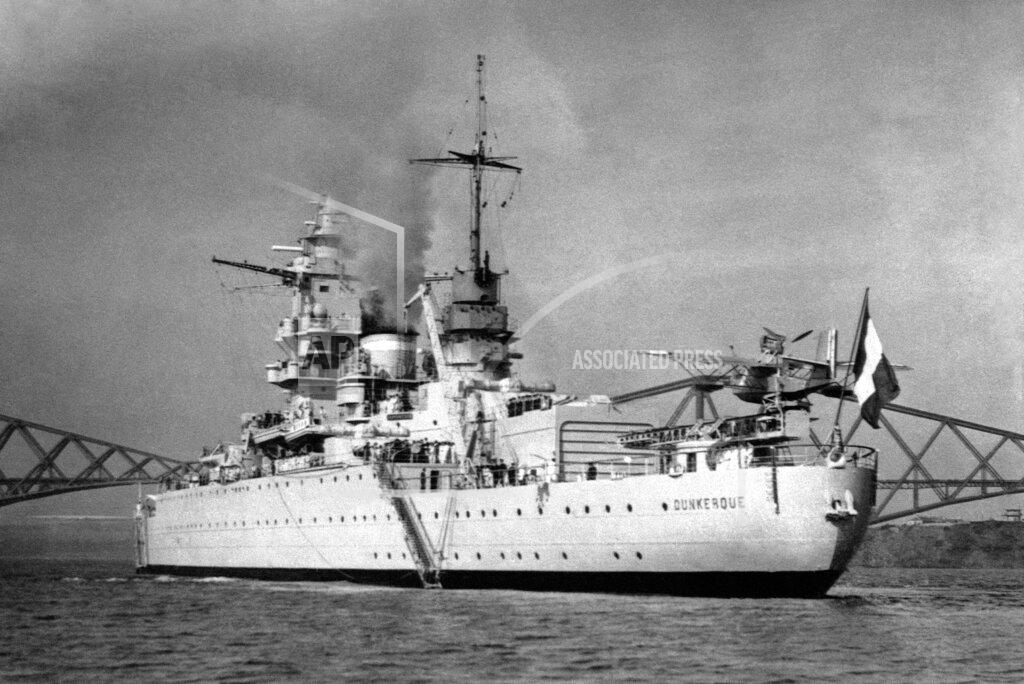
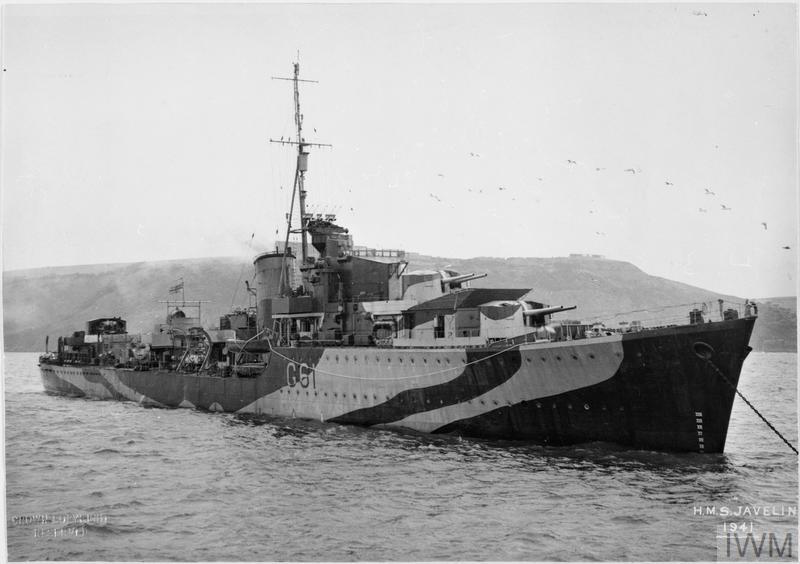
In May 1940, during Operation Dynamo, Javelin and other destroyers rescued survivors from the sinking of SS Abukir.
At the end of November 1940, the 5th Destroyer Flotilla, consisting of HMS Jupiter, Javelin, Jackal, Jersey, and Kashmir, under Captain Lord Louis Mountbatten, was operating off Plymouth, England. The flotilla engaged the German destroyers Hans Lody, Richard Beitzen, and Karl Galster. Javelin was badly damaged by gunfire and torpedoes fired by the German destroyers, losing both her bow and her stern. Only 155 feet (47 m) of Javelin’s original 353 ft (108 m) length remained afloat and she was towed back to harbour. Javelin was out of action for almost a year. Probably arising from this incident, Stoker First Class T Robson was killed and is interred at St Pol de Leon Cemetery, Brittany, France.
Javelin participated in the Operation Ironclad assault on Madagascar in May 1942.
She participated in the failed Operation Vigorous attempt to deliver a supply convoy to Malta, in June 1942. Javelin along with HMS Kelvin destroyed a flotilla of Italian small ships on the night of 19 January 1943.
Javelin’s record was marred on 17 October 1945 whilst off Rhodes by an outbreak of indiscipline (a refusal to work by “Hostilities Only” ratings following resentment over a return to pre-war spit-and-polish): one leading rating was charged with mutiny, and several ratings were subsequently court-martialed, though sentences were reduced as the facts became known.
Javelin was sold to the shipbreakers on 11 June 1949, and she was scrapped at Troon in Scotland.
Battle Honours: NORWAY 1940 – DUNKIRK 1940 – ATLANTIC 1940 – MEDITERRANEAN 1941 – DIEGO SUAREZ 1942 – ARCTIC 1942 – NORMANDY 1944 – ENGLISH CHANNEL 1944
 History Diaries