The United States has suspended its jet reconnaissance flights over Laos for at least 48 hours in deference to objections by Premier Souvanna Phouma. Officials here said that no flights were made today and that it was unlikely there would be any tomorrow, while the Premier was visiting Luang Prabang, the royal capital of Laos. They added that the suspension of flights did not necessarily mean that the United States had abandoned the reconnaissance missions. A State Department spokesman reiterated today that the reconnaissance flights, by Navy RF‐8A jet aircraft accompanied by armed escort planes, would “continue as necessary… subject to consultations” between Premier Souvanna Phouma and, Leonard Unger, United States Ambassador to Laos.
Embarrassed by the disclosure of U.S. participation in air actions in Laos. Souvanna Phouma threatens to resign it the flights don’t stop. The U.S. Ambassador to Laos Leonard Unger persuades Souvanna to change his mind, and after a temporary suspension, the U.S. State Department announces on the 11th that the reconnaissance flights will continue ‘as necessary’ but that ‘operational aspects would not be discussed.’ This translates into describing all U.S. air operations in Laos during the coming years as ‘reconnaissance flights.’ On the 11th, Thai pilots in planes with Laotian Air Force markings bomb the Pathet Lao headquarters at Khang Khay, destroying the Chinese mission and killing one civilian.
The Chinese Communists warned the United States today that any further expansion of the conflict in Laos would meet with a “powerful rebuff.” Peking charged that United States air reconnaissance and fighter‐plane action against positions of the Communist‐led Pathet Lao constituted “direct military attacks on the Laotian people” by the Johnson Administration. The warning was given in Jenmin Jih Pao, the official organ of the Chinese Communist party. It was distributed abroad by Hsinhua, the Government press agency. Peking again avoided a specific commitment to intervene with its armed forces in Laos. The emphasis of the Jenmin Jih Pao article was on seeking a political solution of the Laotian crisis through an early reconvening of the Geneva conference, which in 1962 guaranteed the neutrality and independence of Laos.
However, analysts in Hong Kong thought that the propaganda line taken in the Jenmin Jih Pao commentary reflected a hardening of the Chinese Communist attitude during the last two days. The newspaper devoted an entire page this morning to the Laotian developments, suggesting that the Chinese people were being prepared psychologically for developments in the Southeast Asia kingdom.
The Jenmin Jih Pao commentary was published along with a Hsinhua dispatch asserting that United States jet fighters dropped 12 bombs and fired two rockets yesterday on Phongsavang, a village on the Plaines des Jarres, which is occupied by the Pathet Lao. Yesterday, a Peking statement warned that the situation in Laos had become “most dangerous.” The United States began sending unarmed planes on reconnaissance flights over Laos last month with the consent of Premier Souvanna Phouma. The purpose of the flights was to check on the movements of the Pathet Lao troops, which had undertaken a major offensive. Fighter escorts for the reconnaissance planes were provided after one of the planes was shot down last week by the Pathet Lao forces. United States fighters apparently were active over the Plain des Jarres yesterday following the downing of one of the escort planes Sunday by the Pathet Lao.
Asserting that the United States, by its air attack on Phongsavang, had taken another serious step toward increased armed intervention in Laos, the Jenmin Jih Pao commentary declared: “United States armed intervention in Laos is gradually being extended with a view to intimidating the Laotian people into giving up their resistance.” Jenmin Jih Pao added that the United States was deceiving itself in believing that the Laotians would yield. “By ‘escalating’ armed intervention in Laos, the United States will only sink deeper and deeper into a quagmire and meet with an ever more powerful rebuff,” the newspaper continued. “The signatories to the Geneva agreements, having undertaken international obligations to guarantee the independence, peace and neutrality of Laos, must on no account allow United States imperialism to do as it chooses in Laos.”
For nearly a month the Communist‐led insurgents have not launched a significant large‐scale attack in Vietnam of the type that made headlines early this year. United States field advisers are at a loss to explain the lull in Việt Cộng activity just at the start of the rainy season, when the guerrillas were braced to attack. Government figures disclosed today show that last week produced the largest number of small‐unit operations since the start of war. These are the little day and night patrols, the ambushes and probes that seldom make headlines, but which American experts consider more important than big battles in a war against insurgency. At the same time, pacification efforts in the Mekong Delta are well ahead of schedule in some districts. Government teams are moving into hamlets once abandoned to the Việt Cộng and finding the villagers unexpectedly receptive to their assistance.
Part of the explanation may be the increased demands the Việt Cộng are believed to be making on peasants in the zones which the guerrillas control. In one delta province, Phong Dinh, they are reported to have raised threefold the taxes they collect in the hamlets. Six weeks ago, the hamlets newly regained by the government were numbered in the dozens; the figure now is more than 100.
No one is under any illusions about the long‐term significance of recent progress. The pacification efforts are barely a dent in the huge task still confronting the Saigon authorities. The military lull could be broken at any moment by a resurgence in Việt Cộng initiative. Guerrilla activity has long been noted as cyclical. “It’s just that the cycle has, not fallen as we expected it,” said an American. “In the past we have hoped for the best and been hit by the worst. Now, when we have been gritting our teeth for the crash, nothing has happened.”
George W. Ball, United States Under Secretary of State, flew to Athens today and from there went on to Ankara, to give Greek and Turkish leaders a message from President Johnson. The message said in effect that the United States would not permit war between them over Cyprus. In Athens, Mr. Ball saw Premier George Papandreou. The President’s decision to send Mr. Ball on the mission was a sudden one. The Under Secretary had been scheduled to return to Washington, with a brief stopover for talks in London, after having addressed the United Nations Conference on Trade and Development today. No sudden crisis led to the change of plans, American officials said. But the mission indicates the Johnson Administration’s increasing concern over a problem that has defied solution for nearly six months and threatens to embroil two United States allies in war. A spokesman said Mr. Ball would tell the Greek and Turkish Governments of the “extreme gravity” with which President Johnson views the mounting tension over Cyprus.
Mr. Ball will also tell the two Governments, the spokes‐man added, that the United States “is prepared to take certain measures to prevent any hostilities between the two countries.” “Any idea of such a conflict is unthinkable,” he said. Before leaving Geneva Mr. Ball declared that the Cyprus problem could “only be settled by the two partners directly involved.” He added: “It is a situation that requires a great deal of realism and generosity on both sides in facing the facts.” No elaboration was forthcoming on the “certain measures” mentioned by the spokesman. American officials are appalled by one idea that keeps cropping up — that of interposing the United States Sixth Fleet in the Mediterranean between a Turkish invading force and Cyprus.
These officials are convinced that the Turks were on the brink of invading last week and that they were dissuaded only by a hasty visit to Ankara by General Lyman L. Lemnitzer, commander of United States and Atlantic treaty forces in Europe. The Johnson Administration’s fear, according to United States sources, is that further pressure on the Turkish Cypriote minority by the Greek Cypriote majority could lead at any time to renewed invasion preparations that could not be halted in time. Violence between the two communities broke out last December over Greek Cypriote moves to curtail the Turkish community’s constitutional powers.
Government circles in Rabat believe that expatriate Moroccan extremists have infiltrated Morocco recently from neighboring Algeria, with the ultimate aim of overthrowing King Hassan II. It is charged that the short‐term aim of the infiltrators is to create incidents that would wreck talks being held here by Algerians and Moroccans. The talks seek normal relations between the two countries. The talks were broken off last October when fighting broke out in the desert over the Algeria‐Morocco border.
Premier Levi Eshkol of Israel said today that his country must maintain deterrent military strength to discourage attacks by its enemies. He expressed the hope that all major nations could reach agreement to limit the arms race.
The Convention on the Continental Shelf entered into force after having been ratified by 22 of the 46 nations whose representatives had signed it in Geneva on April 29, 1958.
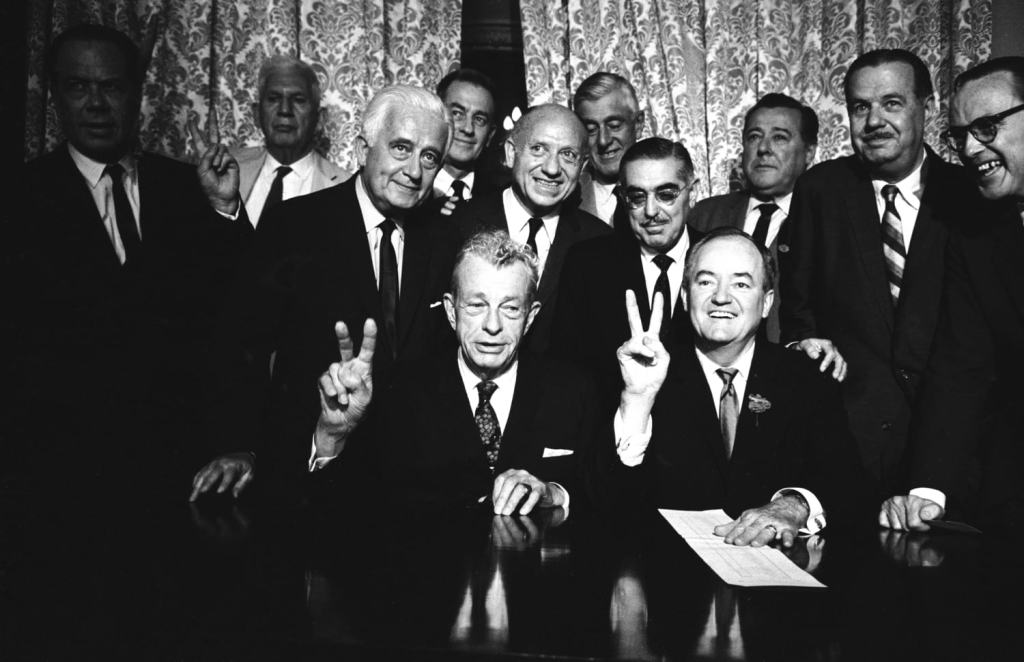
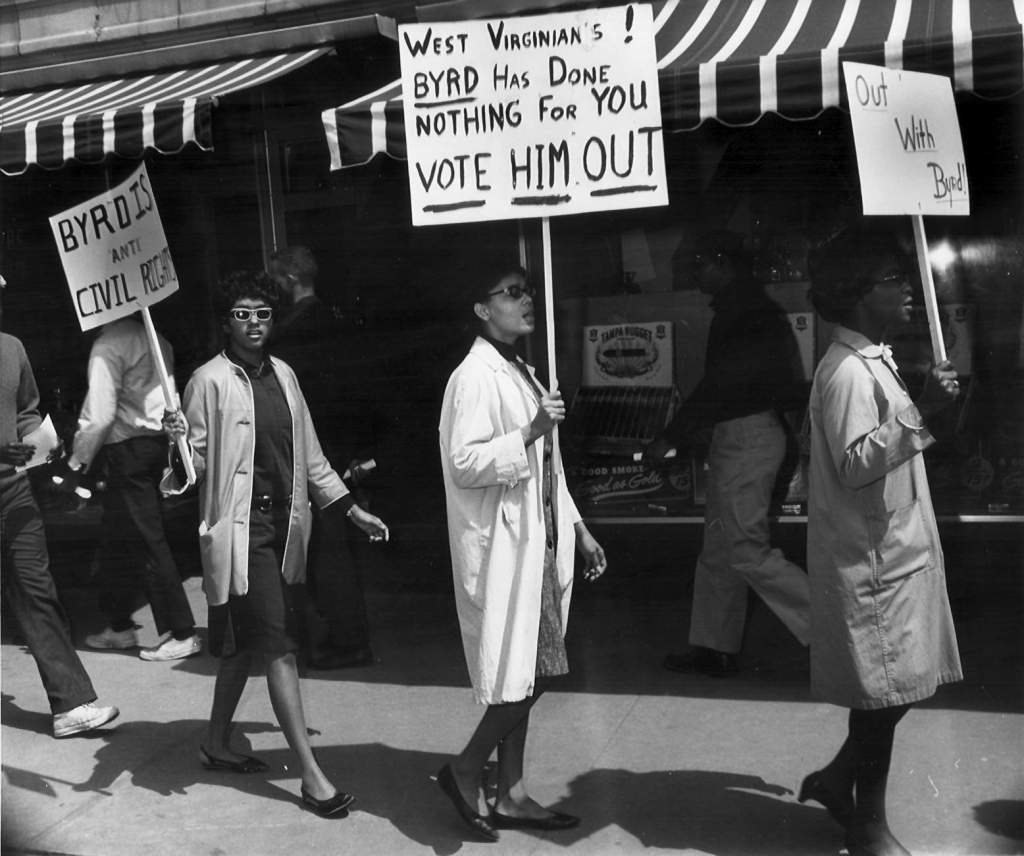
The U.S. Senate voted 71 to 29 for a cloture to end the longest filibuster in Senate history, 75 days after long opposition speeches by opponents of the Civil Rights Act of 1964. A cloture vote required at least 2/3rds of the Senators present, or 67 votes, to pass. U.S. Senator Robert C. Byrd of West Virginia had completed the last of the filibuster speeches at 9:51 in the morning, 14 hours and 13 minutes after he had started at 7:38 the previous evening. The vote marked only the fifth time that cloture had been voted, and cleared the way for approval of the bill. Twenty-three Democrats and six Republicans opposed the cloture vote, with 23 of the 24 southern senators, including Byrd, and one Republican each from Nevada, Utah, New Mexico, Wyoming and South Dakota, and both from Arizona, including Republican presidential candidate Barry Goldwater.
Closure imposed, the Senate immediately began debate on amendments. Under the cloture rule, each Senator is allowed to speak for one hour before the bill is brought to a final vote. The hour includes all amendments and the bill itself. With Mike Mansfield of Montana and Everitt McKinley Dirksen of Illinois, the Democratic and Republican leaders, in firm control of their forces, the Senate proceeded to overwhelm two of the toughest Southern amendments before it recessed just before 6 PM. By a vote of 59 to 40, the Senate defeated an amendment offered by Senator Richard B. Russell of Georgia, leader of the Southern forces, which would have postponed until November 15, 1965, the effective date of the ban on discrimination in public accommodations.
Then, by a vote of 69 to 25, it brushed aside a proposal by Senator Albert Gore, Democrat of Tennessee, to strike from the bill altogether the provision permitting the federal government to cut off funds from programs administered in a discriminatory manner by local governments.
President Johnson broke into his prepared remarks before the Presidential scholars in the East Room of the White House tonight to comment on the closure vote. “Today’s action,” he said, “demonstrates that the national will manifests itself in Congressional action.” The Senate vote, he went on, represents “a major contribution to meet a national responsibility.”
Senator Jacob K. Javits is working toward a joint declaration by the major civil rights leaders of how far they intend to carry their drive for equal opportunity for Blacks. The New York Republican believes that a public agreement by the most powerful and respected of the leaders on “the proper limits of protest” could be extremely helpful in easing racial tensions in New York City and elsewhere in the country. Such a declaration would probably be difficult to draft to the satisfaction of all civil rights leaders. Many of them are under continuous pressure from within their organizations for more militancy and fewer compacts.
Senator Javits acknowledged today that he had discussed the proposal with a number of civil rights leaders and public officials. Although he has received no commitments, he said, he is encouraged by the response and believes such an agreement is both possible and full of promise. The aim of a declaration would be to reassure persons in the white population who have been led to fear that the Black protest movement is expanding inevitably into unlawfulness and violence. The move is one of a series that Mr. Javits is making in an effort to improve racial conditions in New York City now and during the summer. Generally, he is working behind the scenes in an unofficial role as a nonpolitical mediator.
The House of Representatives approved without significant change today President Johnson’s foreign aid authorization request of $3,516,700,000 for the fiscal year beginning July 1. The roll‐call vote of 230 to 175 sent the authorization measure to the Senate. The bill sets the ceiling for foreign aid funds. An appropriation bill must be passed later to allocate the money, and fund reductions can be made in this process. The House action brought to an end two days of debate that was described by Democrats and Republicans alike as one of the most resigned discussions in the 17‐year history of the aid program. When the results were in, it was clear that a majority of members had accepted at face value President Johnson’s statement that he had submitted a “bare‐bones” program that could be reduced only by jeopardizing the security and foreign policy interests of the United States.
Senator Barry Goldwater retained his commanding lead for the Republican Presidential nomination today despite two stop‐Goldwater movements at the National Governors’ Conference, which ended today. In Washington, Representative William E. Miller of upstate New York, national chairman, declared “the battle is over” and said the party now was obligated “to unite behind Goldwater.” Nonetheless, leaders of a last‐ditch effort for a moderate Republican platform and Presidential candidate insisted before departing from Cleveland this afternoon that they had just begun to fight.
Governor George Romney of Michigan and a handful of moderate colleagues said a drive they had started yesterday had received “meaningful encouragement” from Republican officials in several states. Members of the hurriedly formed band of moderates said at least a. dozen Senators and Governors had asked to join their loose and as yet leaderless organization. They said the volunteers included officials who earlier this week had urged fellow moderates to accept the “reality” of Senator Goldwater’s nomination. They conceded that their effort had started late and that most politicians regarded it as futile.
Senator Barry Goldwater gave the back of his political hand today to Richard M. Nixon, saying “he’s sounding more like Harold Stassen every day.” The conservative Arizona Senator, who appears to have the Republican Presidential nomination all but sewed up, also had harsh words for the Republican Governors who, along with Mr. Nixon, mounted an abortive “stop‐Goldwater” movement in Cleveland over the weekend. “It’s pretty hard to understand those fellows,” he said at an impromptu news conference at the Capitol today. “A lot of them sound as if they were more intent on wrecking the Republican Party than in winning an election. But they seem to have run out of ‘stop‐ Goldwater’ votes after all.”
President Johnson said today that a recently achieved “economic breakthrough” meant the “long promised day of economical nuclear power is close at hand.” The resulting new technology, “now being applied in the United States, will be available to the world,” he said. The President, who spoke at commencement exercises at Holy Cross College here, gave no details of the breakthrough. However, it was apparent that he was referring to the $68 million nuclear power plant being built for the Jersey Central Power and Light Company at Oyster Creek, New Jersey. Mr. Johnson said that by September 1 he would report to the Third International Conference on the Peaceful Uses of Atomic Energy “on our new capability to use the power of the atom to meet human needs.”
The breakthrough to which he referred has come in the last six to eight months. More efficient plant design and longer life of nuclear fuels are expected to make nuclear power ultimately competitive with other forms of power in areas with large power plants. The Oyster Creek plant thus symbolically opened the door for greater interest in nuclear power here and abroad. Subsequently the Mohawk Power Company decided to have a similar plant built at Oswego, New York. Mr. Johnson’s remarks were part of an address to about 20,000 persons in the Fitton Field Stadium at Holy Cross. He said that “many of our most urgent problems” would exist even if the cold war were ended today.
The Rolling Stones record their “12×5” album at Chess Studios in Chicago, Illinois.
Jim Fregosi drove in six runs with four hits in the Los Angeles Angels’ 7–4, 11-inning first game victory over Cleveland and the Angels went on to sweep the doubleheader tonight by winning the second game, 5–3, with a four‐run fourth inning rally. Fregosi rapped a three‐run homer off Indians pitcher Pedro Ramos in the fifth of the opener to give the Angels a 4–1 lead. He had driven in the first run with a double in the fourth, scoring Ed Kirkpatrick.
Larry Sherry made his seventh pitching save tonight in preserving a 5‐4 victory for the Detroit Tigers over the Minnesota Twins. Sherry relieved the winner, Mickey Lolich, with two out and a man on first in the eighth inning and got Bernie Allen to fly out. He walked two men in the ninth, but got Harmon Killebrew on a game‐ending ground‐out.
Leo Cardenas singled home the tie‐breaking run in the 11th inning tonight, giving the Cincinnati Reds a 5–4 victory over the Los Angeles Dodgers. Cardenas’s hit scored Johnny Edwards, who had singled with one out and taken second on a wild pitch. Ron Perranoski, last of three Dodger pitchers, took the loss. The victory went to Joey Jay, who pitched the last two innings in relief of Bob Purkey.
Dow Jones Industrial Average: 807.53 (+1.99).
Born:
Ben Daniels, British actor (“The Crown”), in Nuneaton, England, United Kingdom.
Vincent Perez, Swiss actor (“The Crow: City of Angels”), in Lausanne, Switzerland.
Jimmy Chamberlin, American musician (The Smashing Pumpkins), in Joliet, Illinois.
Gary Wallis, British session and touring drummer, percussionist, and musical director (Pink Floyd; 10cc; Il Divo; Mike + The Mechanics; Tom Jones; Jean-Michel Jarre; and Schiller), in Westminster, London, England, United Kingdom.
Died:
Louis Gruenberg, 79, Russian-American composer (Daniel Jazz).



 History Diaries