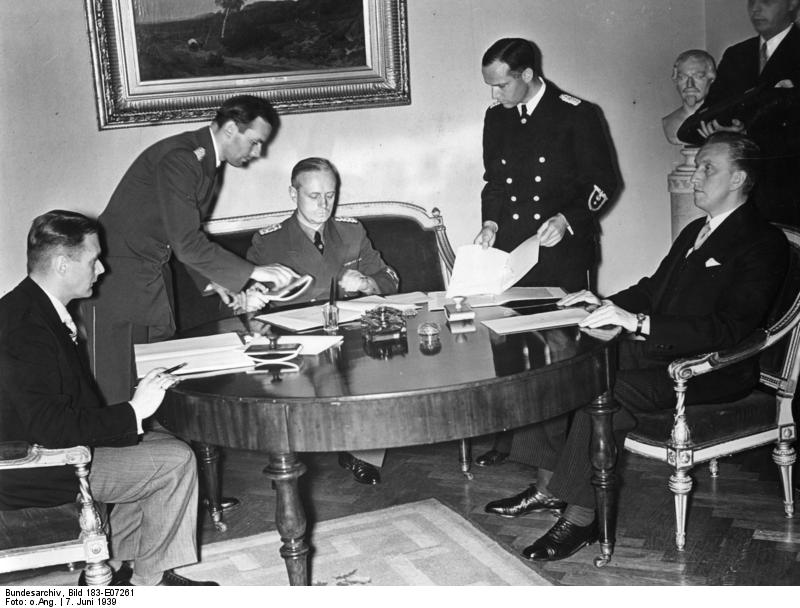
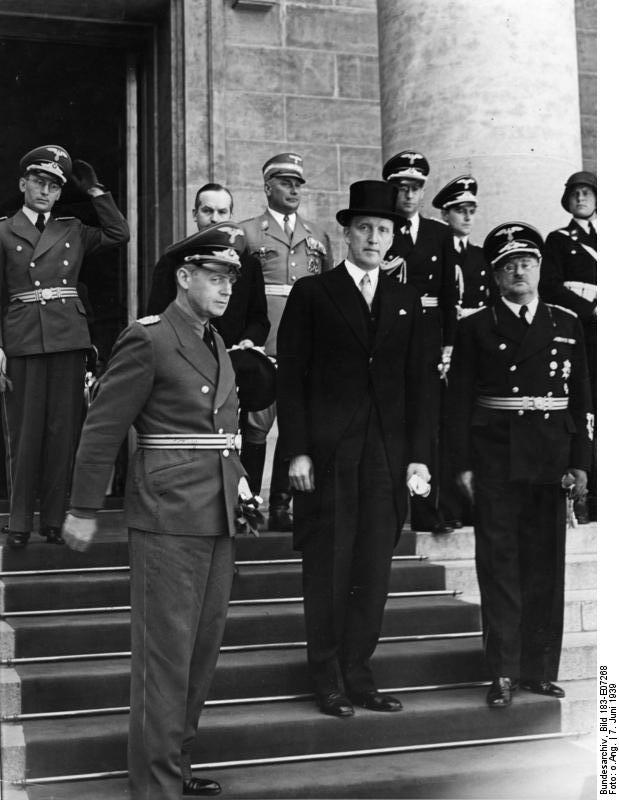
The German–Latvian Non-Aggression Pact and German–Estonian Non-Aggression Pact were signed in Berlin. In light of the German advance in the east, the Soviet government demanded an Anglo-French guarantee of the independence of the Baltic states, especially Latvia, during their negotiations for an alliance with the Western Powers. The Latvian and Estonian governments, ever suspicious of Soviet intentions, decided to accept a mutual non-aggression pact with Germany.
The Polish government was reported to have warned the Germans that retaliation might follow for Germany rounding up Polish Jews being for deportation. In Berlin it was admitted that action was being taken against Polish Jews and Jewish circles said groups were beginning taken to the border daily. If the Polish Jews had lost their Polish passport, under Poland’s new citizen regulations, they were taken to concentration camps.
Several hundred Polish Jews today were driven across the frontier into Poland by the Gestapo (German Secret Police) who have begun a new mass expulsion of Jews. The first group of forty were driven across at Zbaszyn, where 3,700 Jews are still in a concentration camp. Another group of thirty arrived at Zabrze, but Polish authorities refused to admit them, so they are remaining in no man’s land. Reports from various points along the frontier reaching here tonight indicate that hundreds of Jews driven out by the Gestapo are marooned, with their way barred for their return and authorities refusing them admission here.
Polish authorities ordered that they be sent back, but following a dramatic appeal a twenty-four-hour respite was granted pending the outcome of negotiations. Jewish authorities here are doing their utmost to obtain at least permission for women and children to enter the country. Further expulsions are feared; it is understood that 4,000 Polish Jews have been ordered to leave German territory within three weeks, while 20,000 more are reported to have been warned that they will either be driven to Poland or sent to concentration camps.
The first mass expulsion of Jews by Germany occurred last October when 7,000 were driven across the border as the result of the passage of a Polish passport law that was designed mainly to prevent their return. Germany’s argument at the time was that the Polish action would curtail the German Government’s right to expel any Polish citizen as an undesirable alien.
Poland retaliated and sent several hundred Germans to the border, some of whom were sent into Germany, but the Warsaw government soon rescinded its order. Negotiations were started early this year designed to effect a settlement of the troublesome problem. In the concentration camp at the Polish border town of Zbaszyn 5,000 Jews had been living since their expulsion. As a result of the parleys a settlement was reached, but its final fulfillment apparently has never been achieved as there are still 3,700 Jews resident in the camp.
France names General G.M. Gamelin Supreme Commander of defense forces.
The extraordinary honors being paid here to General Marie Gustave Gamelin, newly named Commander in Chief of all French land, sea, and air forces, suggest that Britain and France have completed all their arrangements for unity of command in the event of war. The British and French General Staffs have been busy with these plans for a long time, but there is reason to believe they have now been worked out to the smallest detail.
General Gamelin, as Commander in Chief of the French Army, will also be Commander in Chief of British forces in France, not only in time of war but in the event that a threat of war should compel Britain to send troops to France as a precaution. A British admiral will be Commander in Chief of the French Navy, whose two most powerful battleships, the Dunkerque and the Strasbourg, will meet the British Home Fleet at Rosyth, Scotland, on Friday.
As for aviation, it is believed that there will be an independent Anglo-French air force in time of war apart from the auxiliary air forces attached to the armies and the navies. All in all, although unity of command may be difficult in the case of the Eastern European allies, between Britain and France it appears to have been achieved already.
General Gamelin, who was welcomed to London yesterday by Viscount Gort, the Chief of Staff, and a galaxy of high staff officers, visited the Royal Military College at Sandhurst today to inspect coming officers of Britain’s army. Virtually the entire Army Council stood with him as he took the salute at a review. Later he saw for the first time some of Britain’s latest secrets in mechanized equipment.
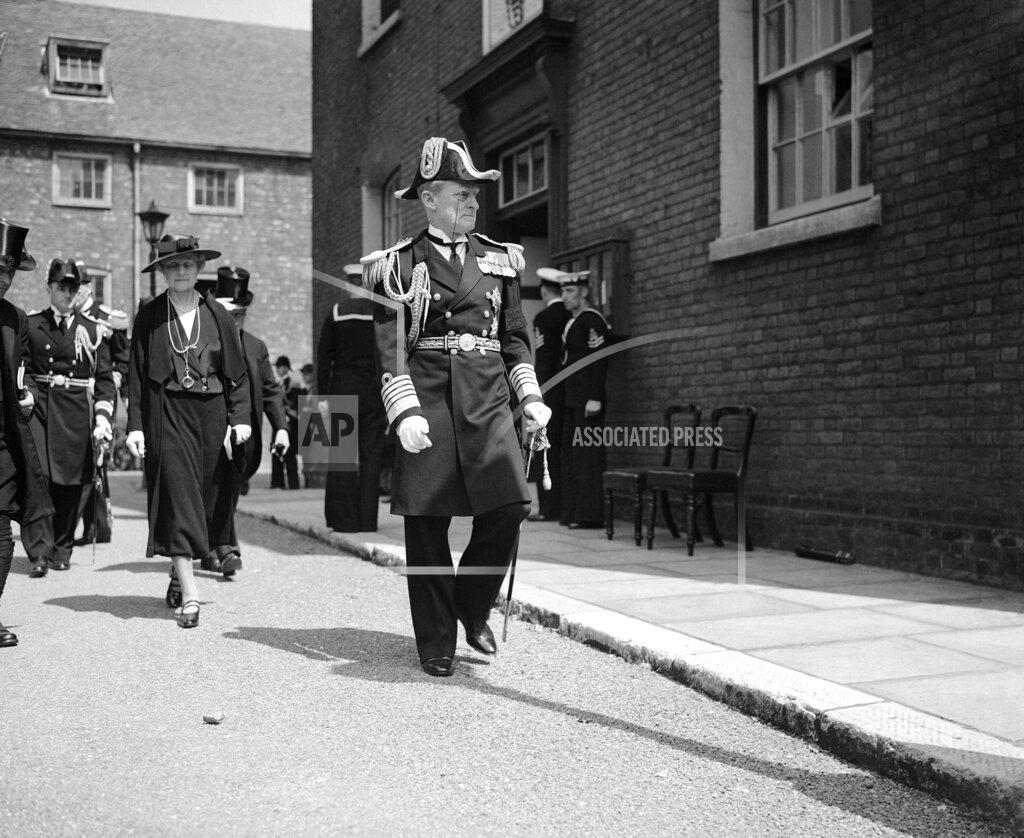
In Friday’s impressive show of Anglo-French naval might at Rosyth the principal ships of the British Home Fleet, under Admiral Sir Charles Forbes, with his flag on the battleship HMS Nelson, will be joined by units of the French Atlantic Squadron, which today was at Scapa Flow, Grand Fleet base in the Orkneys during the World War. Besides the Dunkerque and the Strasbourg, the French units will include the cruisers Georges Leygues, Gloire and Montcalm and a number of smaller vessels.
William Strang, head of the Central European department of the British Foreign Office, will be sent to Moscow within a few days in an effort to speed up completion of a pact with Russia. Technically he will go not as a full-fledged negotiator but as a special envoy to advise Sir William Seeds, the British Ambassador in Moscow, on how to bridge the gap that still remains between the British and the Russian viewpoints. His real job, however, will be to convince the Russians that Britain means business and especially to find some way of covering Russia’s Baltic neighbors without forcing a guarantee upon them.
The Russians may not like Mr. Strang’s mission, for they remember he was in charge of the British Embassy in Moscow during the trial of the Metropolitan-Vickers engineers in 1933, when Anglo-Russian relations reached their lowest point in many years. Nevertheless, Mr. Strang is an alert and competent diplomat; more than anyone else at the Foreign Office he was responsible for the hard spadework that produced the British agreements with Poland and other Eastern European countries.
Only last week Mr. Strang was in Warsaw conferring with officials of the Polish Foreign Office; then he went to Hungary on a “holiday” before starting back toward London. A Minister like Viscount Halifax, the Foreign Secretary, might have been more acceptable to the Russians, but at least Mr. Strang knows the Anglo-Russian problem in all aspects and will do everything he can to solve it quickly. Telling the House of Commons of the new mission today, Prime Minister Neville Chamberlain emphasized that among London, Paris and Moscow “there is general agreement as to the main objects to be attained.” He repeated that Britain was ready to give “full military support” to Russia immediately and unreservedly in the event of direct aggression and he reminded the House that such help would not be confined to an attack upon Russian territory alone.
The Prime Minister suggested that indirect threats were also covered by the British proposals. As for the Baltic States, Mr. Chamberlain said without naming them that it would be impossible to impose an unwanted guarantee, but he seemed confident that some formula could be devised to cover them all the same.
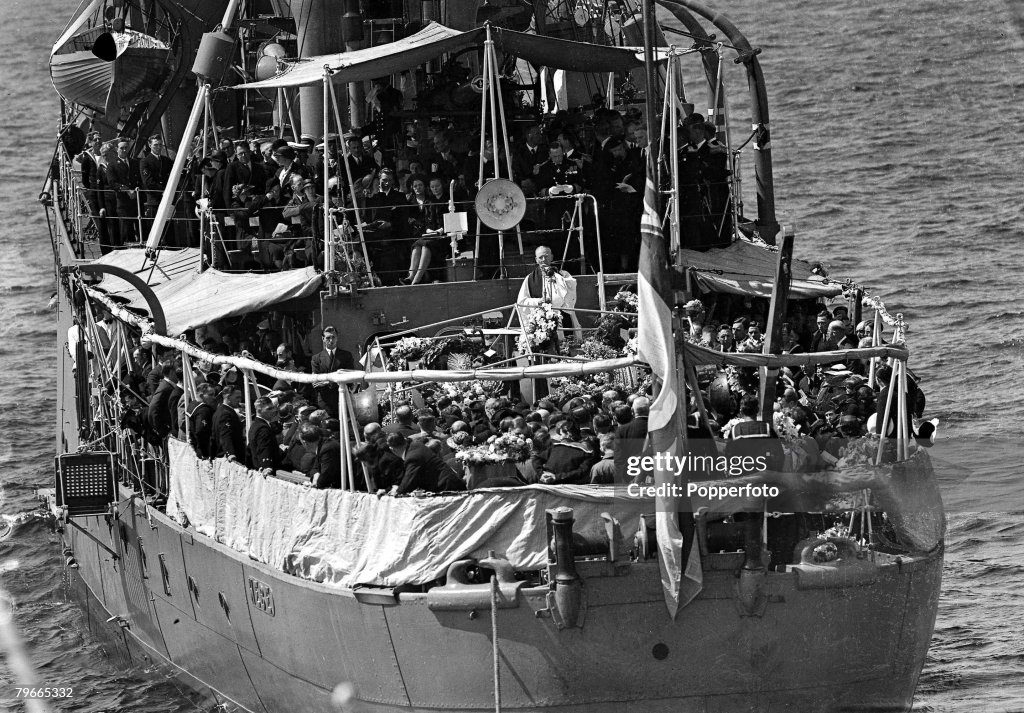
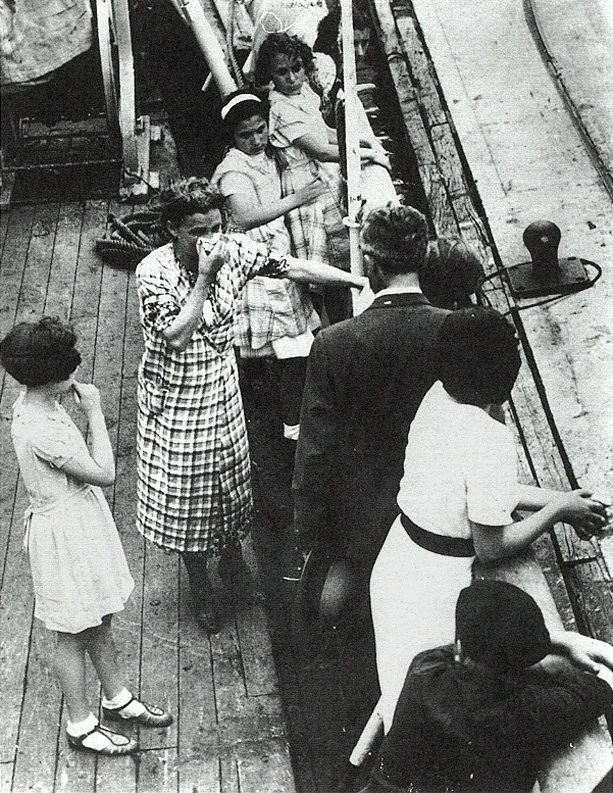
Eight German Jews take poison in a ship off Egypt after three countries reject them.
President Roosevelt discussed with Secretary Wallace plans for the international cotton conference and the political situation with former Senator Bulkley of Ohio. He sent to the Senate the nomination of Archibald MacLeish to be librarian of Congress and of Rear Admiral Chester W. Nimitz to be chief of the Bureau of Navigation.
The Senate considered amendments to the United States Housing Authority Act, confirmed the nominations of Edward J. Noble to be Under-Secretary of. Commerce and Max O’Rell Truitt, to be a member of the Maritime Commission, and recessed at 5:08 PM, until 1 PM tomorrow. One subcommittee of the Education and Labor Committee heard further testimony on the La Follette bill to curb oppressive labor practices and another heard witnesses opposing the National Labor Relations Act. The Temporary National Economic Committee continued its investigation of insurance company practices.
The House considered amendments to the Social Security Act, passed the Coffee bill to regulate shipment of seeds in interstate commerce and adjourned at 5:15 PM, until noon tomorrow. An Appropriations Committee subcommittee heard testimony concerning activities of the Works Progress Administration in Cleveland and the Foreign Affairs Committee approved sections of the Bloom Neutrality Bill.
Secretary Wallace said today he was sure “all members” of the Cabinet would be completely loyal” to President Roosevelt if he should seek a third term. Asked at a press conference whether he favored a third term for Mr. Roosevelt, he said: “I’m sure all members of the Cabinet whom Secretary Ickes has honored are completely loyal to President Roosevelt.”
Mr. Wallace did not explain his reference to Mr. Ickes. In an article in “Look” magazine earlier in the week, Mr. Ickes. urged Democrats to line up in a third term movement for Mr. Roosevelt. The Secretary of Agriculture did not indicate, however, whether he believed Mr. Roosevelt would seek re-election. A reporter asked whether his statement concerning “loyalty”” included Vice President Garner. Mr. Wallace asked in reply: “Is he a member of the Cabinet?”
U.S. Representative Martin L. Sweeney (D-Ohio) read to the House a telegram he sent to King George, who was visiting the White House, that suggested as long as England was spending “a few billion dollars” annually for armaments, she might give “some consideration” to her debts to a country “whose World war assistance made possible continuous of Your Majesty’s government.”
The head of the Irish Republican Army travels to the United States. He denies the visit was timed to match that of the King and Queen of England, but the United States still detains him in a cell.
At a House Appropriations Committee inquiry, former Communists charge that “Reds” are stirring unrest among the jobless.
Mrs. Franklin D. Roosevelt today was the recipient of an honorary membership in the “Right to Work Congress” convened here last Saturday by the Workers Alliance of America. Delegates from all parts of the country stamped and cheered their approval of a twenty-minute talk in which she assured them of her sympathetic interest in their meeting, and with men and women everywhere who are working to achieve in this country “the kind of government that we are willing to live as well as to die for.”
“There may be some things you believe in that I don’t believe in,” Mrs. Roosevelt told the congress, “But I certainly am in sympathy with the meeting of any group of people who come together to consider their own problems and try to work out solutions and to find. better ways of dealing with them.” Undeterred by criticism of the alleged communist tendencies of the Workers Alliance, Mrs. Roosevelt kept her engagement to address them today as, she told her press conference this morning, she would speak to any other type of organization, on the clear understanding of her own position and point of view that government employees have the right to organize, but not to strike against the government.
Attorney General Frank Murphy calls Alcatraz a “place of horror,” and says the prison exercises vicious psychology on inmates.
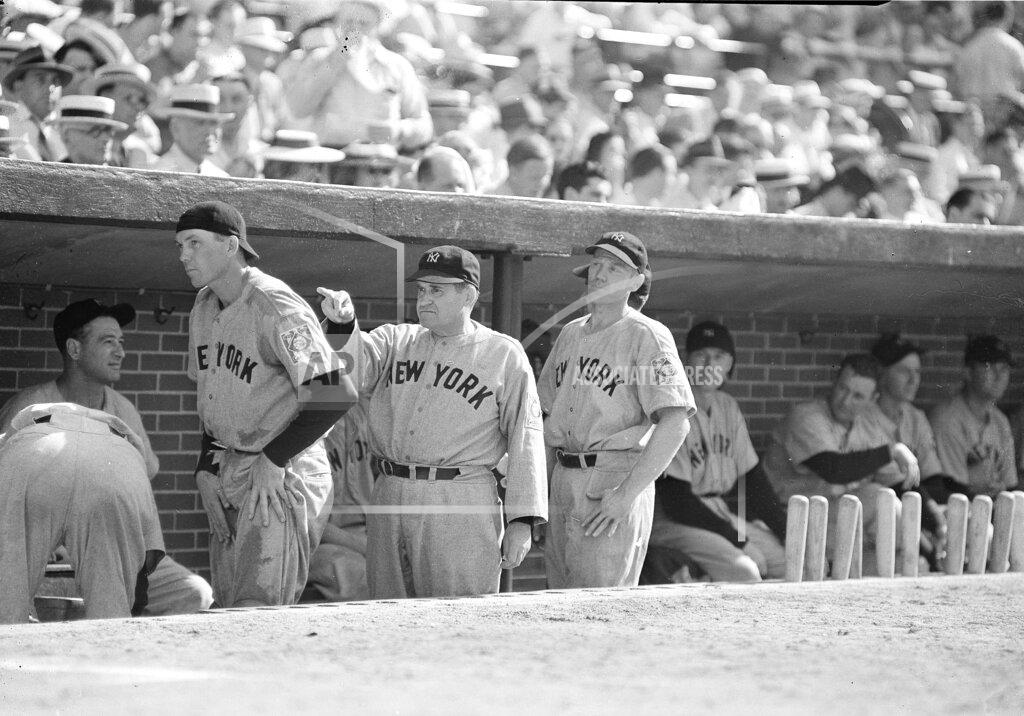
With Joe DiMaggio back in center field after an absence of 35 games because of a foot injury, the Yankees roll to a 5–2 win over the White Sox. DiMaggio knocks in the Yanks’ first run with a triple and scores another in New York’s three-run 5th. Yankee nemesis Thornton Lee leaves the game with a torn muscle in his left shoulder after 5⅓ innings, while New York’s starter Lefty Gomez goes 7 innings before wilting in the heat. New York’s lead over the idle Red Sox is now 9 games.
After the Phils release Chuck Klein, Pittsburgh signs the former triple crown winner, who will hit .300 in 85 games. Klein will return to Philley after the season.
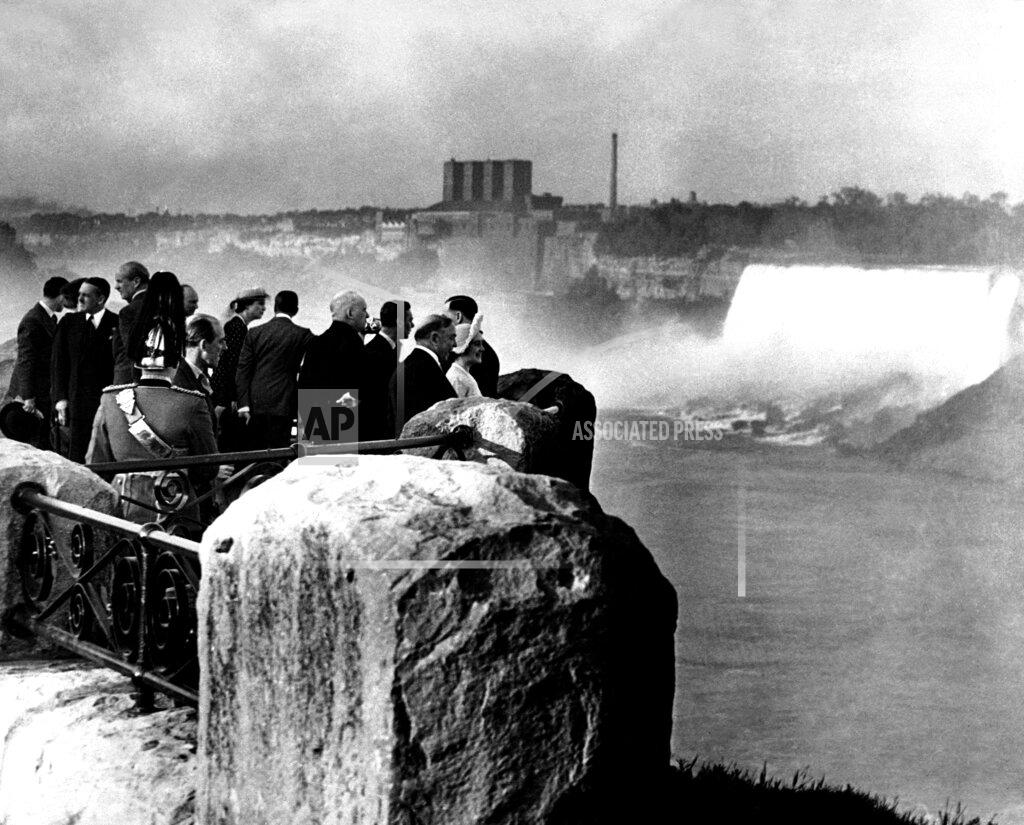
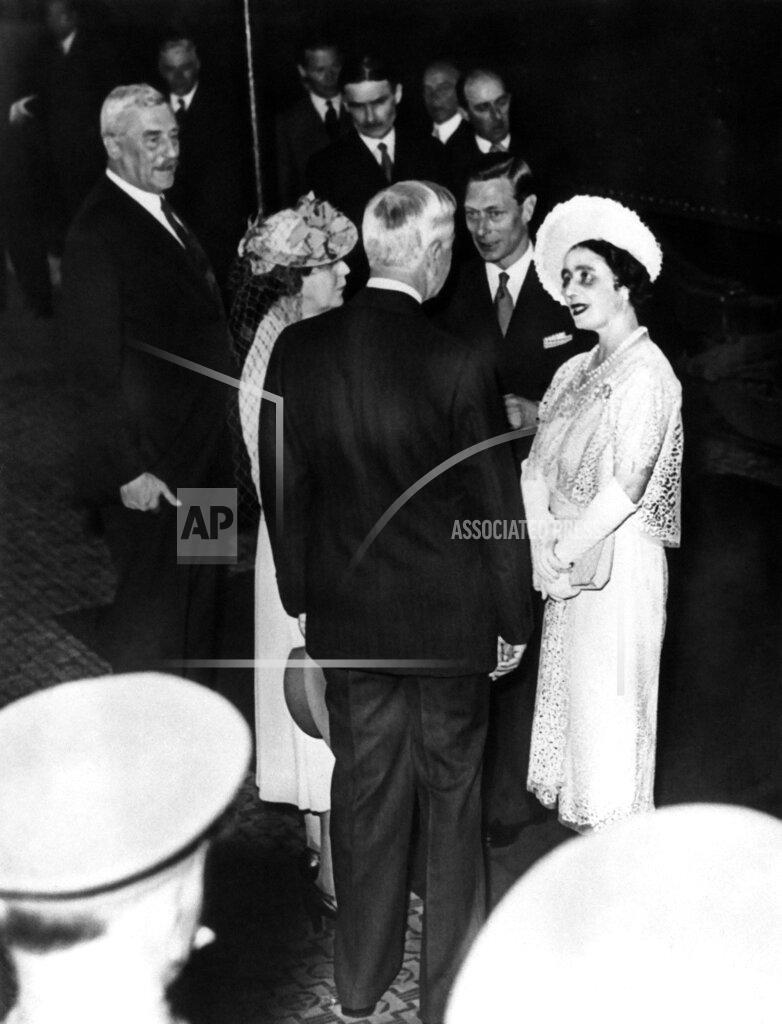
King George VI and Queen Elizabeth crossed the Canada–U.S. border into the United States at Niagara Falls. U.S. Secretary of State Cordell Hull was there to formally welcome them into the country. Britain’s King George VI and Queen Elizabeth arrive at Niagara Falls, New York, from Canada, beginning the first visit of reigning British monarchs on American soil. This goodwill trip is to remind the U.S. of its ‘special relationship’ with Britain, particularly in face of the increasing fascist menace in Europe.
England’s King and Queen, in their blue and silver train, moved tonight to soil which 160 years ago was wrested from the British Crown by George Washington’s ragged Continentals. At 10:37 PM Eastern daylight time they crossed a boundary line which is guarded only by ancient forts whose guns are museum pieces. The royal train departed at 10:58 PM for Washington. The red-coated Mounties, who have guarded the royal visitors on their tour of Canada, left the party at Niagara Falls. For the first time since their arrival in North America the King and Queen were protected by United States troops and police.
The official greeting of the United States took place on a red carpet covering the station platform. Secretary Hull and his party were attired in formal morning clothes. The King was still wearing the dark blue lounge suit in which he arrived at Niagara Falls, Ontario.
After he was presented to the King by Sir Ronald Lindsay, the British Ambassador, Mr. Hull said: “Your Majesties, on behalf of the government and the people of the United States, I have the honor and pleasure of extending to you our warmest welcome. All are delighted with your visit. The people of my country in the most genuine spirit of cordiality, hospitality and friendliness have every desire to make your stay a thoroughly enjoyable one.”
When Mrs. Hull was presented to Queen Elizabeth, she bowed but did not curtsy. All the men in the party bowed low from the waist. As soon as the formalities were over the King and Mr. Hull talked animatedly. As he boarded the train again, King George was laughing heartily. Both he and the Queen seemed to be thoroughly enjoying themselves. So rigid was the police guard when the train stopped on the United States side that several members of the royal party, including the Earl of Airlie, were unable to proceed from where they got off the train to the section of the platform where the reception took place.
British royalty help lay the cornerstone of the new Niagara bridge. An electric beam senses their car and releases balloons.
The British press is agog at the King’s U.S. visit. Staff is kept overtime to handle dispatches about the trip.
With the exact whereabouts of the Hamburg-American liner MS St. Louis, carrying 907 German-Jewish refugees uncertain, the American-Jewish Joint Distribution Committee here yesterday continued its efforts to obtain permission from the Cuban Government for the refugees to land in Havana. The latest information from Havana was that the St. Louis was heading back for Germany and that, so far as the Cuban authorities were concerned, “the matter is definitely closed.”
Mexican aviator Francisco Sarabia is killed when his plane crashes in the Potomac River shortly after taking off in Washington, D.C.
Word of the plight of those aboard the MS St. Louis had reached Canada. In Toronto, 41 prominent citizens, including clergyman and historian George Wrong, petitioned Prime Minister William Lyon Mackenzie King on 7 June to provide sanctuary for the refugees. While away on official business, King asked undersecretary of state for external affairs Oscar Skelton to consult on the matter with Minister of Justice Ernest Lapointe, and Frederick Blair, director of the Government of Canada’s Immigration Branch. Lapointe was “emphatically opposed” to admitting the refugees, and Blair argued that they did not qualify under current immigration laws — laws he had created. “No country,” according to Blair, “could open its doors wide enough to take in the hundreds of thousands of Jewish people who want to leave Europe: the line must be drawn somewhere.”
A Japanese spokesman today threatened “summary action,” including indefinite detention or even execution against foreigners whose acts are considered dangerous to Japanese forces in the occupied areas of China. Reliable quarters interpreted the statement as a new attempt by Japan to assume the rights of a belligerent while avoiding a declaration of war against China, which might stop war supplies from the United States and elsewhere.
The spokesman said an example of the threatened measures was the treatment given R. M. Tinkler, British employee of a British-owned cotton mill in Pootung, Shanghai. He died early today of head, foot and abdominal wounds inflicted by Japanese soldiers, who charged that he had fired upon a Japanese officer and threatened several Japanese marines when they entered the mill to stop a fight among Chinese strikers and non-strikers.
A second employee of the cotton mill, H. McAllister, 35 years old, died tonight under mysterious circumstances, and British authorities said an examination would be made to determine if he had been poisoned. Mill officials said Mr. McAllister was stricken suddenly and died while en route to a hospital in an ambulance. The British privately charged that the Japanese misrepresented the facts in the Tinkler incident, but officials made no statement, pending an investigation. Mr. Tinkler was taken to a hospital in Japanese-dominated Hongkew instead of to one in the International Settlement. Two Japanese and two German surgeons operated while Japanese sentries stood guard.
A Japanese Navy spokesman blamed Mr. Tinkler for the injuries and said Japan was preparing “further demands” on British authorities in connection with the incident. He said Mr. Tinkler walked unaided to Japanese headquarters, where, despite three severe wounds in the abdomen, “he fought against treatment for several hours,” causing complications resulting in death. He denied reports that Mr. Tinkler had been stabbed with bayonets after reaching headquarters.
Japan predicts the quick participation of the United States in war.
Stopping 130 miles from Chungking on a flight up the Yangtze River, Japanese bombers today attacked Wanhsien. Preliminary reports say the casualties were heavy and destruction extensive. A large squadron of Chinese pursuit planes hovered over Chungking, ready for the invaders. Widespread Japanese aerial activity is reported in North China, with Loyang and Chengchow suffering heavy attacks.
Western Shansi lines are said to be checking the Japanese drive toward the Yellow River. The Japanese were reported to have failed to capture three strategic river crossings, Chikow, Chuntu and Sanchiao.
Dow Jones Industrial Average: 138.71 (+0.35).
Born:
Eri Klas, Estonian conductor (Netherlands Radio Symphony; Aarhus Symphony; Estonian National Opera, 1975-95), and educator, in Tallinn, Estonia (d. 2016).
Yuli Turovsky, Russian-Canadian cellist (Borodin Trio, 1976-91), conductor (I Musici de Montreal Chamber Orchestra, 1983-2011), and teacher, in Moscow, USSR (d. 2013).
Naval Construction:
The Royal Navy Bar-class boom defense vessel HMS Barnehurst (Z 84) is laid down by the Blyth Shipbuilding & Drydock Co. Ltd. (Blyth, U.K.).
The Nihon Kaigun (Imperial Japanese Navy) B1 type submarines I-26 and I-30 are laid down by the Kure Naval Arsenal (Kure, Japan),
The Royal Navy Net-class boom defense vessel HMS Bownet (Z 90) is commissioned.

 History Diaries