Danzig will be the match that sets the world alight.
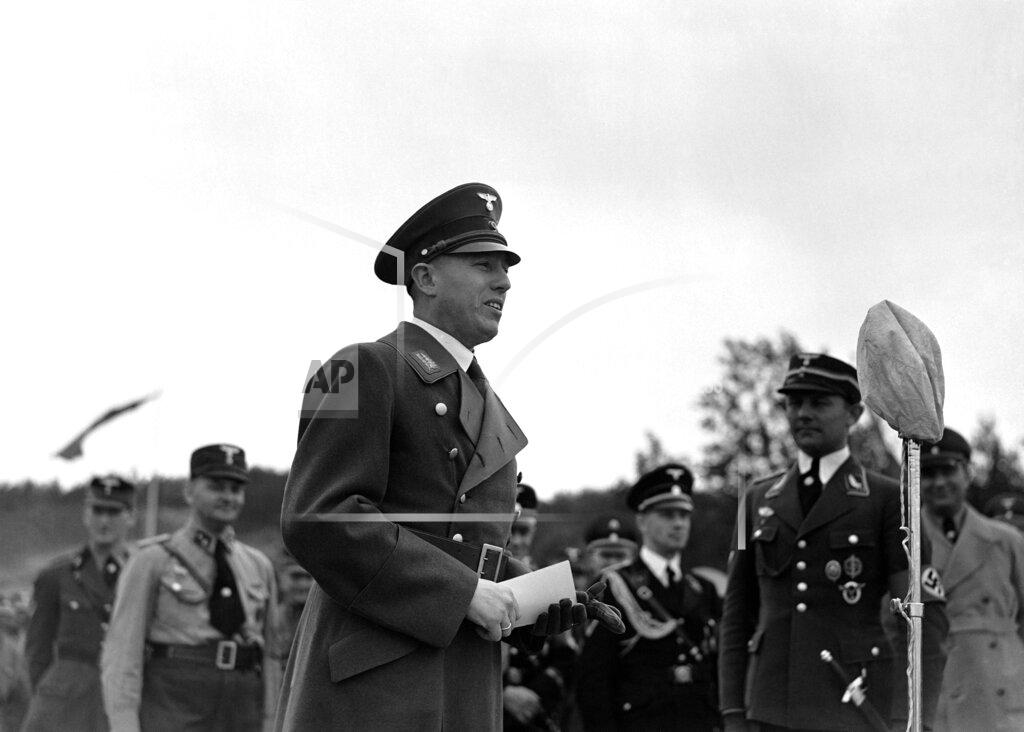
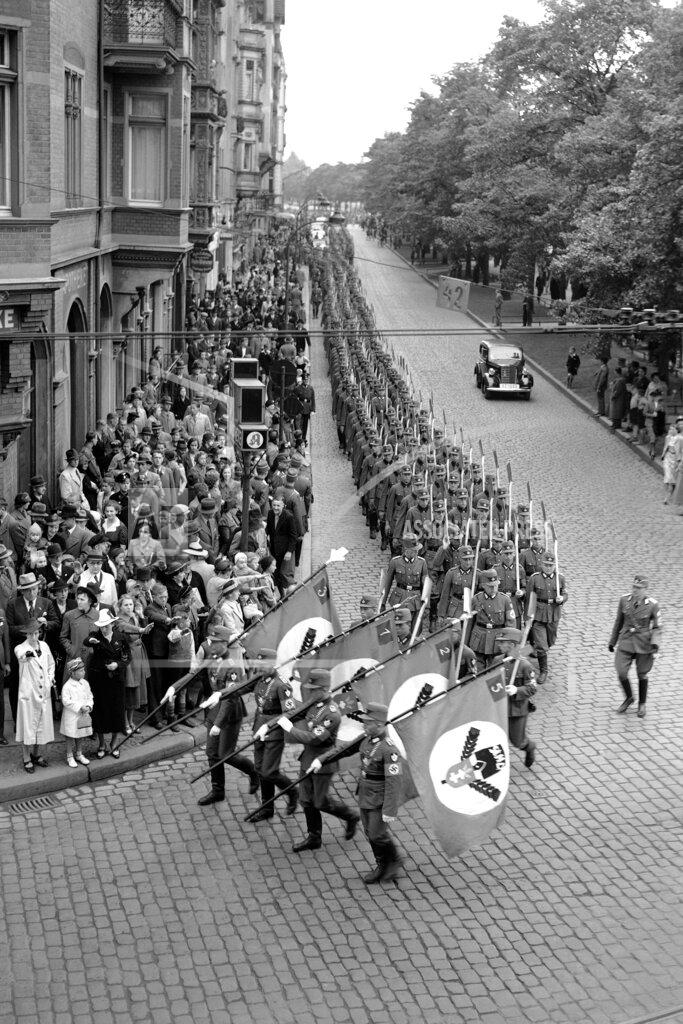
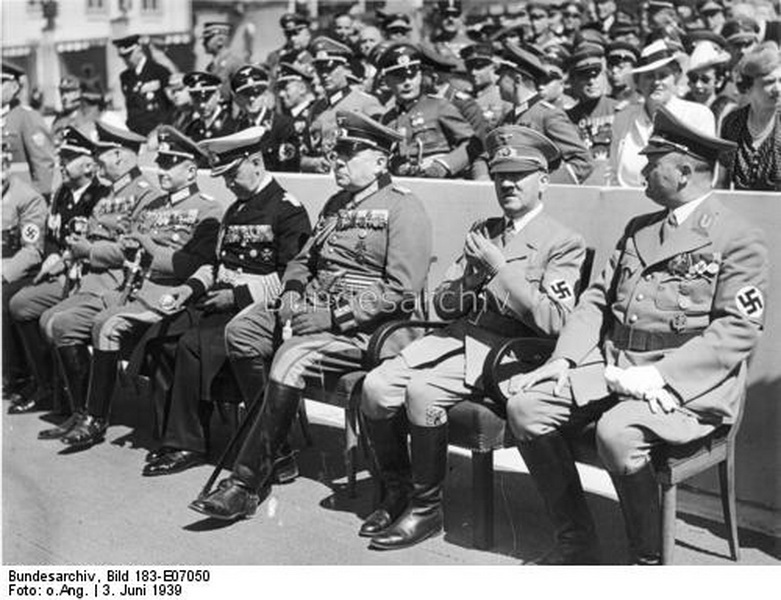
A quarter of a million war veterans assembled in Kassel — the greatest rally of former servicemen staged since the advent of the National Socialist regime — today gave thunderous approval to Chancellor Hitler’s defiance of what he termed British encirclement threats against Germany. The challenge was unequivocal and the response it evoked was no less emphatic.
“If the British encirclement policy remains what it was before the war,” Herr Hitler told his comrades, “German defense measures now have radically changed.” He had made due provision, he added, that anybody identified with the conduct of the State in whatever capacity was “100 percent a man and soldier.”
“Should I, however, discover that the attitude of any person fails b to meet such a critical test,” he went on, “I will immediately remove him from his position irrespective of person or the post he occupies.” This ominous warning was greeted with long applause. Its cryptic nature, incidentally, is bound to provoke curiosity in view of the recent unconfirmed reports abroad of another reshuffle in the army personnel.
Today’s rally was easily the most demonstrative and sympathetic audience that ever faced Herr Hitler. He spoke as a soldier to soldiers and the memory of his four-year service at the front manifestly affected the personal note of comradeship that permeated the speech and inspired the interruptions of approval punctuating it. But it was a renewed profession for peace, despite its patriotic fervor. His four-year war experience, Herr Hitler said, had strengthened his faith in his German people. But personal contact with the horrors of war had also made him ‘peace-loving.’ Threats from any quarter, however, he added, left him unmoved.
Accompanied by his personal staff, Herr Hitler flew to Kassel early this morning. It was his first aerial trip since his return from Austria in March of last year following his first official visit to the annexed territory. He greeted the mammoth gathering of veterans as representatives of millions of Germans who “had committed their fate and the Reich’s destiny into his keeping — not through a constitutional mandate but through the expression of their confidence.”
Nazis seek a Catholic truce. The pressure of foreign affairs is believed to cause a lull in attacks on the Church.
Danzig Nazis boycott Polish officials.
As if in reply to Hitler’s speech, Premier Daladier said at a party meeting that France favored collaboration, “just the opposite of encirclement.” He warned, however, that his country was now fit to resist any attempt to dominate Europe. He also said there was every reason to hope the negotiations with Russia would succeed.
In London the Hitler speech was taken as evidence there was no reason to lessen defense measures. They are, in fact, being speeded, and during the Summer and early Fall Britain will quietly mobilize more than 800,000 men. Britain will have between 800,000 and 900,000 men under arms in the Summer and early Autumn at exactly the time when competent authorities here and abroad believe Europe will be passing through a “danger period.” It will be a quiet mobilization of the nation’s effective man power, made possible by a new act of Parliament enabling the fighting services to call up their reservists and auxiliary forces without public proclamation. The process has begun already. All last week, while a golden sun made the British people forget what kind of world they are living in, notices went out to thousands of civilians to report for duty at varying dates in the early Summer. There was no secret about what was going on; the government did not make it public but one heard of it from individuals in many walks of life.
The artillery reservist who had spent his little capital on buying a village “pub” in Southern England was told to report July 3; thus, one man’s plans for summer business were shattered for the sake of national preparedness. The Guards reservist who had hoped to write a book on his summer holiday discovered he had to spend the summer weeks in camp with his unit, teaching new recruits how to handle a machine gun. A young business man reservist who manages to support a family on a modest salary learned he would have to spend three months in camp with the Guards this year instead of the customary one week.
While farewell ceremonies were being held in Salamanca today for the Portuguese volunteers in Generalissimo Francisco Franco’s Foreign Legion, estimated to number about 6,000 men, General Franco himself was obliged to remain in Burgos for preliminary conferences with members of the Grand National Council of the Falange Española Tradicionalista, who will hold an important meeting tomorrow.
The Portuguese never fought as separate units in the Spanish war but were incorporated in the Legion from the beginning and at one time they are said to have numbered nearly 15,000. They suffered heavy casualties in the early days of the war since they belonged to the Legion’s picked detachments, which frequently were used as shock troops.
This will be the first post-war meeting of the Grand Council of the Falange party, its last session having been held October 1, 1938. Although the Interior Minister, Ramon Serrano Suner, at present is in Rome as a guest of the Italian Government and altogether eleven generals on General Franco’s staff are absent from Spain, evidently it was decided that tomorrow’s meeting, which is expected to deal principally with the new regime’s projected law for a syndical labor organization, should not be delayed any longer.
With the complete withdrawal of all foreigners and the demobilization of Spaniards in General Franco’s army proceeding apace, it is necessary to enact permanent legislation immediately for carrying out the reforms envisaged in the Falange party’s labor program. The decrees recently promulgated by the Ministry of Syndical Organization oblige all employers to give preference to ex-soldiers when hiring new men.
Moscow’s note on the proposed three-power coalition reached London and it was found to follow the lines of Premier Molotov’s speech of last week. The note embodied all the points of agreement and all the points of difference in Mr. Molotov’s speech. It accepted the principle of a three-power pact of mutual defense against aggression. It made plain that the Soviet Government insisted upon Anglo-French guarantees to Finland, Estonia and Latvia before promising to help the Western powers in a war on behalf of Poland, Turkey, Rumania, Greece or Belgium. Finally, it sharpened the proposed reference to the League of Nations so as to show that mutual help would not be delayed by the consultative provisions of the covenant.
All this was done by the businesslike method of going through the Anglo-French proposals clause by clause, point by point. In some cases, clauses were accepted in their entirety; among these were the plan for immediate help in the event that one of the three great powers was directly attacked, the proposal for immediate military consultations, the suggested term of five years and the option of renewal. Other clauses were rewritten in the light of Mr. Molotov’s speech.
In other words, the Russians have written a new draft of the proposed pact. It remains to be seen how many more drafts will be needed. The most troublesome point for the British is a guarantee to the Baltic States, which do not want one. Yet, officials here were more than moderately hopeful tonight as they studied the Russian reply. After all, they argued, Russia has shown she wants a pact, and when three powers have reached an 80 or 90 percent agreement in a matter of such supreme importance it is inconceivable that they should fail to agree on the rest. There is some talk of sending a highly placed British spokesman to Moscow to smooth out the difficulties, but nobody has yet been chosen for such a mission, and the British still believe it will not be necessary to send any one.
Soviet pressure on the Aland Island issue perturbs the Finns.
President Roosevelt, in a message tonight to a National Meeting for Moral Rearmament held in Constitution Hall in Washington, called for worldwide support of the movement. Distinguished persons from many parts of this country and the world, gathered to give their aid to the drive to mobilize world opinion against war, heard the reading of messages also from 206 members of the British House of Commons, among them former Foreign Secretary Anthony Eden; twenty-three senior members of the House of Lords, representatives of eight other Parliaments, other American public officials, including Governor Herbert Lehman of New York, and General John J. Pershing and other individuals. Trade unions and business organizations also signalized their approval of the movement.
Many speakers, including Dr. Frank Buchman, head of the Oxford Group, emphasized what they termed the need for individuals everywhere to join in demanding peace and in building up a moral force against war. President Roosevelt’s message, which was read by Senator Harry S. Truman of Missouri, said: “The underlying strength of the world must consist in the moral fiber of her citizens. A program of moral rearmament cannot fail, therefore, to lessen the danger of armed conflict. Such moral rearmament, to be most highly effective, must receive support on a worldwide basis.”
A spokesman for the U.S. Federal Communications Commission announced a revision of rules governing international broadcasters. Beginning November 1, stations broadcasting to other countries were required to “promote international goodwill, understanding and co-operation” in their programming.
All U.S. Senators and spouses will receive an invitation to the garden party with British royalty.
A foe of married women with jobs issues a debate challenge to First Lady Eleanor Roosevelt, arguing a duplication of jobs within a family creates a poor economy.
The son of President Roosevelt asks the public’s opinion of a third term via radio broadcast.
Fifty Jewish Viennese children, refugees from the Nazi regime, played happily today on the eighty-nine acres of Brith Sholomville, a camp one mile from Collegeville, Pennsylvania on Perkiomen Creek. Slightly bewildered in their new surroundings, the children arrived in New York yesterday on the liner President Harding and were brought to the camp to stay for the Summer until they become acclimated and trained in American ways. All of them ultimately will live in foster homes in Philadelphia. Fifty-seven persons financed their coming to this country.
Ranging in age from 3 to 13, the twenty-five boys and twenty-five girls were brought to America under the sponsorship of Gilbert J.. Kraus, a Philadelphia lawyer, in whose home the plan was formulated. With his wife and Dr. Robert A. Schless, he went to Europe to select the children. Most of the children took at once. to baseball. They were surprised by oatmeal and tomato juice, neither of which they had tasted. They liked oatmeal, but avoided the tomato juice. Those in charge of the camp said that butter was the most popular article on the table at breakfast this morning. The children had not had any, they explained, for four years.
New York school officials find that 50 percent of high school dropouts leave school to get jobs to help support their family.
Twenty cases of smallpox have been reported in New York. The outbreak apparently started in a county penitentiary.
In the first game of a doubleheader with Washington visiting St. Louis, the Browns batted out of turn in the second inning. They had made several lineup changes this day in an effort to end their 11-game losing streak and John Berardino mistakenly batted in Joe Glenn’s spot. The Senators pointed out the error and Glenn was ruled out, making Berardino the next correct batter. Beradino then made an out. The Browns survived this error and ended their losing streak by sweeping the doubleheader.
Routing Carl Hubbell in the first inning, the Reds went on and beat the New York Giants, 4-1.
The Brooklyn Dodgers broke even with the Pirates, winning by 14-1 after dropping the opener, 7-3.
Before 44,190 at Detroit the New York Yankees downed the Tigers, 8-4.
Mayo Clinic doctors examine Lou Gehrig. A diagnosis will not be made until June 19th, Gehrig’s 36th birthday.
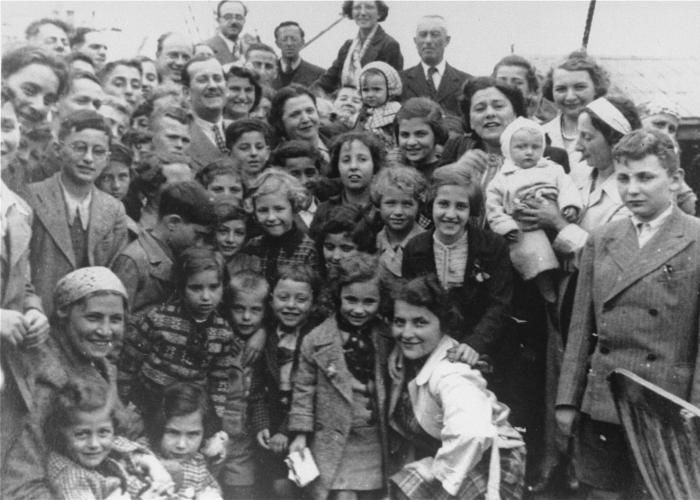
Lawrence Berenson, New York attorney, conferred today with President Federico Laredo Bru and other government officials in an effort to gain entry for 907 German-Jewish refugees forced to leave Cuban waters last Friday aboard the German liner St. Louis. Mr. Berenson secluded himself in his hotel room at the end of the day-long conferences and declined to say whether he had met with any success. His secretary said there was “nothing yet to give out.”
The MS St. Louis anchored four miles off Miami Beach and was sighted by the Coast Guard, which immediately dispatched boats to the ship, as recounted in the Miami Daily News. “Soon after the arrival of the coast guard craft the St. Louis hoisted anchor and put to sea, accompanied by the guard detail,” the story said. “The coast guard patrol boat C-244, out of Fort Lauderdale, stood by the ship as it slanted down the coast, barely making way, to prevent any possibility of attempts of refugees to jump off and swim ashore.” A Coast Guard crewman told of running in close to the ship. “‘It doesn’t seem possible that so many people could crowd aboard one ship,’” he said.
During what became known as the “Voyage of the Damned,” the U.S. government refuses to admit the 930 Jews on the MS St. Louis, even those with valid American quota numbers. All requests go unheeded as the ship sails northward along the Florida coast. The ship eventually returns to Europe. The passengers will be divided among England, France, Belgium and Holland and a number of the refugees later died in Nazi concentration camps. By 2003 efforts to track their fates identified 935 out of the 937 passengers. Some 260 ended up in Nazi killing centers.
Georgy Zhukov, arrives in Khalkin Gol, and he takes control of the Russian troops fighting the Japanese at the battle of Khalkin Gol (Nomonhan).
Beginning this year, the Chinese Government will not tolerate “the growth of a single poppy.” If a poppy crop is discovered the cultivator and “protector” will be shot. Generalissimo Chiang Kai-shek announced yesterday that eradication squads would comb the countryside to destroy poppy fields and that “attempts to resist will be suppressed by force.” He said that Chinese in Japanese-occupied territories who smoked or trafficked in narcotics were traitors and appealed to the populace in these areas not to “fall into the Japanese trap.” The generalissimo gave addicts until the end of the year to rid themselves of the habit, promising users in 1941 punishments “much sterner than hitherto.” A bonfire of confiscated opium and smoking paraphernalia marked yesterday’s celebration of the 100th anniversary of the anti-opium campaign that resulted in the Sino-British “opium war.”
Fighting on a major scale began yesterday in Western Shansi, according to Chinese dispatches, which say the Japanese troops launched a drive toward the Yellow River, indicating a plan to push into Shensi Province across the river. The Japanese were reported to be striking from Chungyang, Lishih, Tawu and Liuling toward Chungtu and Chikou on the Yellow River. Twenty thousand Japanese reinforcements were said to have arrived at Chungyang and Liahih with thirty heavy guns and scores of small boats, presumably for an attempt to cross the river. The dispatches say fighting is general on all Western Shansi fronts, as the Chinese attempt to check the invaders.
Heavy fighting between Japanese troops and Chinese guerrillas on the banks of the Yangtze River within twenty-five miles of Shanghai was reported tonight by passengers of the British-owned river steamer Liwo. The steamer passed the battle scene when Japanese artillery was shelling the guerrillas, who replied with machine gun fire, they said. The Liwo escaped being struck, though a number of bullets fell near her. An unverified wireless report yesterday had asserted the Japanese had fired on the Liwo.
The British Embassy reported today that two British Army officers detained by the Japanese at Kalgan were safe and well but that it was without information as to when they would be released. The embassy statement was made following the return of two colleagues from an unsuccessful trip to see the detained officials, Lieutenant Colonel C. R. Spear, military attaché, and Lieutenant John Cooper. Colonel Spear was said to have been held by the Japanese since May 25, Lieutenant Cooper was detained when he went to Kalgan from Peiping May 28 to investigate Colonel Spear’s detention. Major Delamain of the British forces at Tientsin and L. H, Lamb, who set out last Tuesday in an effort to obtain the release of the two officers, returned today and said they were unable to get permission to see them. They said they were able to learn only that their colleagues were safe and well.
The British Embassy and Japanese officials were silent today on the reasons for the difficulties of Colonel Speer and Lieutenant Cooper. Japanese military authorities, however, had expressed resentment at the colonel’s “unannounced” approach to the Japanese lines while he was en route to Peiping from Chungking, Chinese provisional capital. British officials last week expressed the belief that he was being held while Japanese examined maps in his possession.
Born:
Jeremy Browne, 11th Marquess of Sligo, in London, England, United Kingdom (d. 2014).
Donald Rice, Seventeenth Secretary of the U.S. Air Force, in Frederick, Maryland.
Phil Linz, MLB shortstop, second baseman, and third baseman (New York Yankees, Philadelphia Phillies, New York Mets), in Baltimore, Maryland (d. 2020).
Died:
Tommy Ladnier, 39, American jazz trumpeter (“Lovie Austin”; “King Oliver”), of a heart attack.

 History Diaries