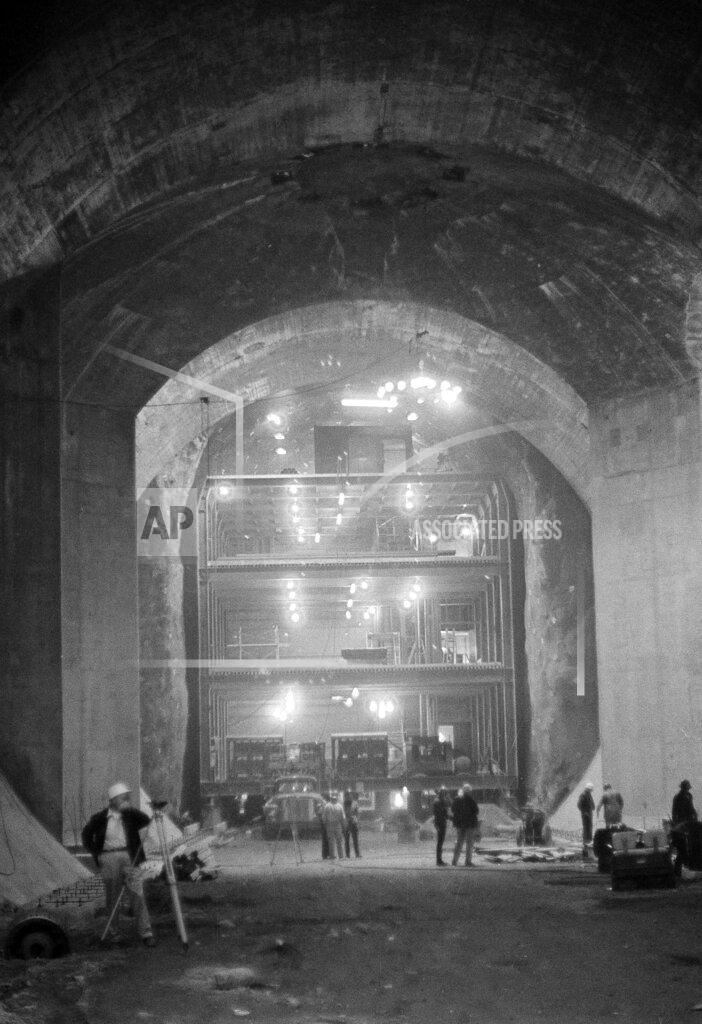
Turkey’s Prime Minister İsmet İnönü outlined his nation’s plan for invading Cyprus in a discussion with U.S. Ambassador Raymond A. Hare, explaining that the mission would simply be to occupy part of the island nation, allowing Greece to occupy the other one-half, and having the United Nations peacekeeping force remain between the two zones. Hare asked İnönü to delay the operation by 24 hours so that he could report back to President Johnson.
The grim tale of violence on Cyprus continues, despite the presence of a United Nations peace force and of mediators and political officers whose mission it is to halt the conflict. Both sides are beginning to shoot at the United Nations troops, and the Greek Cypriotes in particular are trying to oust the British, the mainstay of the peace force. Their departure would wreck it. More ominous still is the passage by the Cypriote Parliament, controlled by the Greek Cypriotes, of bills to conscript 25,000 men for the national guard and to buy heavy arms abroad. The Makarios Government is already reported to be negotiating for the purchase of heavy arms from Soviet Russia in violation of Security Council resolutions, and is generally moving closer to the Soviet bloc.
The conscription and armament bills have been vetoed by Turkish Cypriote Vice President Kutchuk, who has a constitutional veto right in all defense, financial and foreign policy matters. If the measures are carried out, as the Greek Cypriotes insist they will be, they would amount to a virtual coup d’état. Their effect would be to set aside the Constitution and strip the Vice President of any real authority. The question now is whether Archbishop Makarios is still master of his forces or whether he is a prisoner of the extremist “warlords” and their private armies. Certainly, the official arming of Greek Cypriotes would make the disarming of the Turkish Cypriotes impossible and torpedo Secretary General Thant’s peace plan—a plan both sides have accepted.
Noisy student demonstrations continued in Seoul and erupted in 11 other South Korean cities yesterday against the regime of President Chung Hee Park. In three cities, the shouting, chanting students clashed with the police and, in Kwangju, 57 national policemen and 20 students were injured. Seoul has been under martial law since Wednesday, when 600 policemen and demonstrators were injured during a riotous demonstration by students and others demanding the resignation of the President. The police arrested 1,200 persons in Seoul Thursday night and early Friday to prevent violent anti‐government demonstrations from growing, United Press International reported. Seoul was tense but quiet.
Thus far, the emergency martial law has been confined to Seoul, but it was the cause of many of the demonstrations elsewhere. At Inchon, the port city about 25 miles west of Seoul, about 2,000 high school students paraded through the main streets chanting and carrying placards that read, “Lift Martial Law Immediately.” The students overran police barricades, but were soon forced back. In the nation’s second largest city, Pusan, on the southern coast, several thousand students from two universities poured into the streets demanding that martial law be ended. After scuffling with the police, the students reached the city hall plaza, where they burned in effigy five straw figures representing what they called the corruption and misrule of the Park Governmnent.
As a result of the report to President Johnson, Defense Secretary McNamara orders the U.S. Army to take ‘immediate action … to improve the effectiveness and readiness status of its materiel pre-stocked for possible use in Southeast Asia.’ Specifically, he orders the Army to augment stocks at Korat, Thailand, near the Laotian border, to support potential combat operations by an U.S. Army infantry brigade.
South Vietnam’s Foreign Minister, Phan Huy Quát, said again today after a meeting with President Johnson that his country could win its war against Communism without the use of nuclear weapons or entering North Vietnam. The diplomat said after a 15-minute meeting at the White House that, in the present situation, there was no need for an increase in American troops or military advisers.
The United States and Britain will probably accept a Polish proposal for a preliminary, restricted international meeting on Laos, reliable sources reported today. Before committing themselves publicly, the sources said, Washington and London want to give more time to the consultations that began Tuesday in Vientiane, the Laotian administrative capital, among diplomats of the United States, Britain, South Vietnam, Thailand, and Canada. Communist countries invited to these consultations are boycotting the meetings in Vientiane, so no fruitful results are expected. France also refused to attend. At the opening meeting, a subcommittee was set up to survey the military situation in Laos.
The military situation is not good. The current crisis there arose when troops of the Pathet Lao movement, the military arm of the pro‐Communist faction in Laos, overran the neutralist forces of Prince Souvanna Phouma, the Laotian Premier, on the vital Plaine des Jarres. The Pathet Lao movement has not followed up these military successes, though there is general agreement that there is no military force in Laos capable of stopping it from taking over the country if it wants to do so.
The fighting in Laos has died down, according to information reaching the British Government, and there is no indication of the Pathet Lao movement’s renewing it to go beyond the newly won positions. But neither have the Pathet Lao forces given any indication of withdrawing. A withdrawal was one of the conditions set by Prince Souvanna Phouma for the reconvening of the 14‐power Geneva, conference that agreed in 1962 on guarantees for Laotian neutrality and independence. France, Communist China and the Soviet Union, among others, have called for such a conference. However, the Soviet Union has also indicated support for the Polish proposal. The United States and Britain, particularly the United States, have preferred a restricted venue for discussing Laos over a formal, full‐scale conference that might range over the whole Indochinese situation and provide a forum for arguments in favor of the area’s neutralization, as favored by France.
The Security Council decided unanimously today to send a three‐man committee to Cambodia and South Vietnam. Its task will be to study means of preventing a repetition of the frontier incidents that led Cambodia to accuse South Vietnam and the United States of aggression. The committee was instructed to report to the Council within 45 days. Nikolai T. Fedorenko of the Soviet Union voted for the proposal despite his complaint yesterday that the Council should hold the United States as well as South Vietnam guilty of violating Cambodia’s territory.
President de Gaulle was reported today to be planning to send a new Ambassador to Washington this year. The move would reflect his desire to make a fresh start in relations with the Johnson Administration. According to highly reliable sources, the Ambassador will be Charles E. Lucet, a 54‐year‐old career diplomat. He has spent much of his career in Washington and now holds the post of political director in the French Foreign Ministry. Mr. Lucet would replace Hervé Alphand, who has been Ambassador to the United States for nearly eight years. Diplomatic informants said that, while Mr. Alphand was still highly regarded in Paris, President de Gaulle apparently believed a change was needed to establish closer contact with the Johnson Administration. Another effort to improve United States‐French relations will be made Friday. Under Secretary of State George W. Ball will confer in Paris with President de Gaulle, presumably on their countries’ policy differences over Southeast Asia.
Widening policy differences over Southeast Asia, Communist China and the North Atlantic Treaty Organization have caused concern in both Washington and Paris. Mr. Alphand was a friend of President and Mrs. Kennedy and a frequent visitor at the White House, but he is not known to have such a relationship with the Johnsons. Inquiries at the State Department failed to determine whether the French Government had already requested an agreement for Mr. Lucet to become Ambassador. Officials here and at the French Embassy said they were not aware of an impending change. It was understood, however, that President de Gaulle and Foreign Minister Maurice Couve de Murville had selected Mr. Lucet for the post some time ago.
The Security Council approves the compromise plan for a commission to investigate the situation on the Cambodian-Vietnam border, and on the 6th names Brazil, the Ivory Coast and Morocco to form the commission.
The United Nations Security Council passed Resolution 189, condemning military incursions into Cambodia.
The failing Rolls Razor company’s account with Barclays Bank was overdrawn by £485,000. Despite this, John Bloom, managing director persuaded the company’s board of directors to pay out dividends of £209,719.
Israel and the European Economic Community signed a trade agreement in Brussels. Present at the Ravenstein Hall at the Palais des Congres were Israeli Foreign Minister Golda Meir, foreign trade minister Akiva Govrin, Israel’s representative to the EEC Amiel Najar, President of the Commission of the Community Walter Hallstein, and Belgian deputy foreign minister Henri Fayat.
The first Soviet communications satellite, Molniya-1 No.2, was launched at 05:00 UTC, on a Molniya 8K78 carrier rocket, from Site 1/5 at the Baikonur Cosmodrome. A motor circuit in the servo controlling the core stage throttle failed 104 seconds into the flight, resulting in the throttle becoming jammed closed and the fuel supply to the engines being stopped. Prior to the release of information about its mission, NASA had incorrectly identified the launch of Molniya-1 No.2 as a failed attempt to launch a Zond spacecraft on a circumlunar technology demonstration mission, and assigned it the placeholder designation Zond 1964A.
Maldives adopts a constitution.
President Johnson is reported to be concerned about the possibility of violence this summer as civil rights protests spread throughout the country. He is said to have begun to move to head off difficulties. Qualified sources indicated that the President and Attorney General Robert F. Kennedy had discussed the civil rights situation during their meeting at the White House today.
The Administration assumes that the civil rights bill will be passed, more or less in its present form. But officials are worried that it will not go far enough to meet the pent‐up frustrations of some Blacks — especially in the North. The White House is particularly concerned over New York City, where there have been sporadic racial attacks and the police have had increasing difficulty in handling gangs of Black youths. Reports of terrorism in Brooklyn subways last weekend have caused much concern to some high officials here. Several Black leaders of civil rights organizations have explained privately to government officials that they are unable to exert control over younger, more militant Blacks.
Another area that officials will be watching closely is Mississippi, where about 1,000 college, students, mostly from the North, will begin a campaign at the end of the month to register Blacks as voters and teach them basic academic subjects. What concerns officials here is not merely that there may be individual trouble spots, but that this summer will find the whole nation caught up in a rash of civil rights disputes and outbreaks of violence. For several weeks, White House staff members and the Justice Department have been conferring on this problem, considering everything from the possible need for Federal troops to methods of quiet persuasion to prevent trouble from occurring.
Civil rights leaders in the Senate offered Southern opponents of the bill a way around the barricade of a closure resolution today. But the Southerners refused the bait. The offer will be repeated tomorrow, according to Senator Hubert H. Humphrey, Minnesota Democrat, who leads the civil rights forces. But the prospect remains that Southern opponents will again withhold the unanimous consent necessary to make the proposal operable. The proposal was in the form of a request by the majority leader, Mike Mansfield of Montana, at the opening of the session today for unanimous consent to begin voting next Monday on an estimated total of 375 proposed amendments to the civil rights bill under a strict time limitation on debate. If approved, this would have obviated the necessity of seeking to invoke Senate Rule XXII to cut off the 70‐day filibuster to permit voting to begin.
The move was promptly blocked, however, by the leader of the Southern contingent, Senator Richard B. Russell, Democrat of Georgia. He made the single objection necessary to defeat the Mansfield proposal. It was apparent that the bipartisan civil rights leadership had had little expectation that their offer would be accepted. It was advanced, indeed, as a tactic in the parliamentary tug of war that has been going on since March 9.
In an explanation of the leadership’s strategy later in the day, Senator Humphrey pointed out that the proposal had been advanced primarily to checkmate Southern complaints that the pro‐rights forces had now, themselves, turned to a, “counter-filibuster” to ensure the necessary votes to impose closure. Advocates of the rights bill have monopolized the Senate floor for the last few days with lengthy and repetitious expositions of the bill’s merits. Senator Joseph S. Clark, Pennsylvania Democrat, described his contribution to the cause yesterday as an “anti‐filibuster filibuster.”
President Johnson has agreed to appear at a Liberal Party rally at Madison Square Garden on October 15. Liberal party leaders interpreted this agreement yesterday as signaling the President’s approval for the Liberals to open their campaign for his election. However, in Washington, George Reedy, the President’s press secretary, said: “I am confident the President has not signaled the start of the campaign.” Nevertheless the New York appearance and speech, coming less than three weeks before the election, represented President Johnson’s first major campaign commitment anywhere. Announcing the President’s acceptance of an invitation to speak here, Dr. Timothy W. Costello, the Liberal party chairman, said that he and Alex Rose, a party vice chairman, had visited the White House Tuesday to tell Mr. Johnson he would have the Liberal party’s nomination in New York State.
[The Liberal Party was a significant third party in New York politics at one time. It usually aligned with the Democrats, particularly the left wing of that party. It fell into decline in the 1980s and is now all but extinct.]
Senator Barry Goldwater now counts on 600 to 610 first‐ballot votes for the Republican Presidential nomination. A total of 655 is needed to nominate. So close is Mr. Goldwater to his goal that he is dividing his attention and preparing for another battle. This is the struggle over a Republican party platform and the almost certain attempts to force Mr. Goldwater into a more moderate position. A prospective stop‐Goldwater movement remained leaderless today. Governor William W. Scranton of Pennsylvania and former Vice President Richard M. Nixon, in separate news conferences, sounded no call to battle to stop the conservative Senator. Mr. Goldwater himself was in a cabin retreat somewhere within 200 miles of Washington on what aides said was to be a hunting trip that will last until Saturday.
Mr. Goldwater’s headquarters now maintains that he has 455 “publicly committed” delegates already chosen to attend the national convention at San Francisco July 13. The Associated Press has counted 446 and United Press International 448 Goldwater delegates. The Goldwater headquarters’ total rose from a claim yesterday of 454 to 455 when a second Goldwater delegate won a close race in the New York primary. These totals, however, do not include the 56‐vote Texas delegation, which has not been formally chosen. All or most of it will go to Mr. Goldwater. According to his co‐director of field operations, 252 of the state’s 254 counties have already held Republican caucuses, which endorsed Mr. Goldwater. Realistically, therefore, Mr. Goldwater must be said to have 500 to 511 sure delegates. In the 14 other state conventions to be held in the next two- and-one-half weeks, he appears likely to pick up 90 to 100 more votes.
Governor Rockefeller has informed major Republican leaders that he can no longer be responsible for leading the “moderate” campaign against Senator Barry Goldwater. Following his defeat in the California primary, the Governor has sent word to party leaders in the major uncommitted states that someone else must take the initiative now it the Arizona conservative is to be stopped. Mr. Rockefeller’s action does not mean that he is pulling out of the Presidential race. He intends to go to the convention as an active candidate with well over 100 delegates, to be nominated, seconded and demonstrated over. Nor does it mean that the Governor views with any less seriousness the importance of moderate Republicans uniting behind a candidate more representative of party philosophy than he believes Senator Goldwater to be.
Mr. Rockefeller is making it clear to his party colleagues that he stands ready to join forces in a coalition behind a moderate candidate and pledge, to the extent that he can, all of his delegate strength. The Governor reportedly feels, however, that he has carried this fight, at great personal and financial cost, for many months, and it is now time someone else picked up the torch, both for reasons of equity and strategy. This is not intended as a demonstration of political modesty. Mr. Rockefeller simply is facing the fact that he would probably weaken rather than strengthen the anti‐Goldwater cause if he tried to continue to lead it after the California. primary.
Shah Mohammed Reza Pahlavi of Iran arrived in Washington today and was hailed by Secretary of State Dean Rusk as a “symbol of stability” in his country who has “many friends and admirers” in the United States. The Shah and his wife, Empress Farah, are here on a visit described as private and cultural. The Middle Eastern ruler will open an exhibition, “7,000 Years of Iranian Art,” at the National Gallery Friday. He will receive honorary degrees at universities here, in Los Angeles and in New York. He is scheduled to have a conference with President Johnson tomorrow.
The crossing of telephone and television lines in the A. T. & T. coaxial cable system caused a disruption for 18 million television viewers across the United States who heard “what may have been the most widely disseminated telephone conversation since Alexander Graham Bell invented the telephone”. At 8:13 p.m. Eastern time, people who were watching the NBC television network and a rerun of the series “Temple Houston,” were surprised by two “unsuspecting callers” who were “as nearly as anyone could tell, two women carrying on a friendly conversation somewhere in New York state”. Engineers stopped the interference three minutes later, but at 8:45, more of the discussion was heard nationwide by even more viewers tuned into NBC for “Dr. Kildare” and to ABC for “My Three Sons,” along with the sound of both programs.
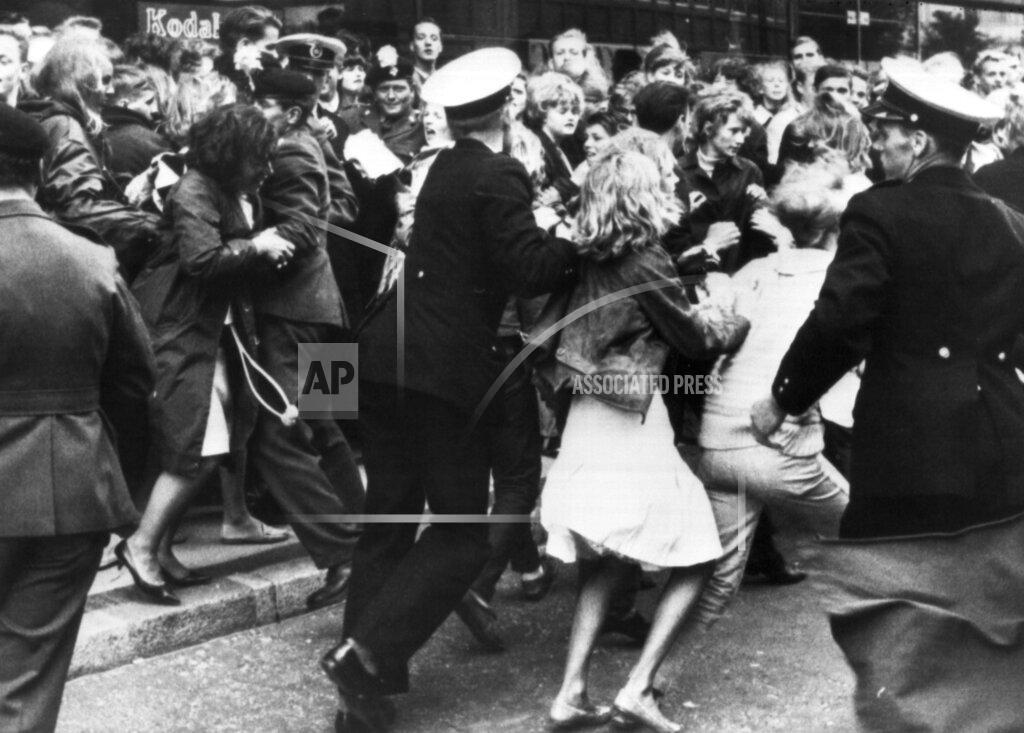
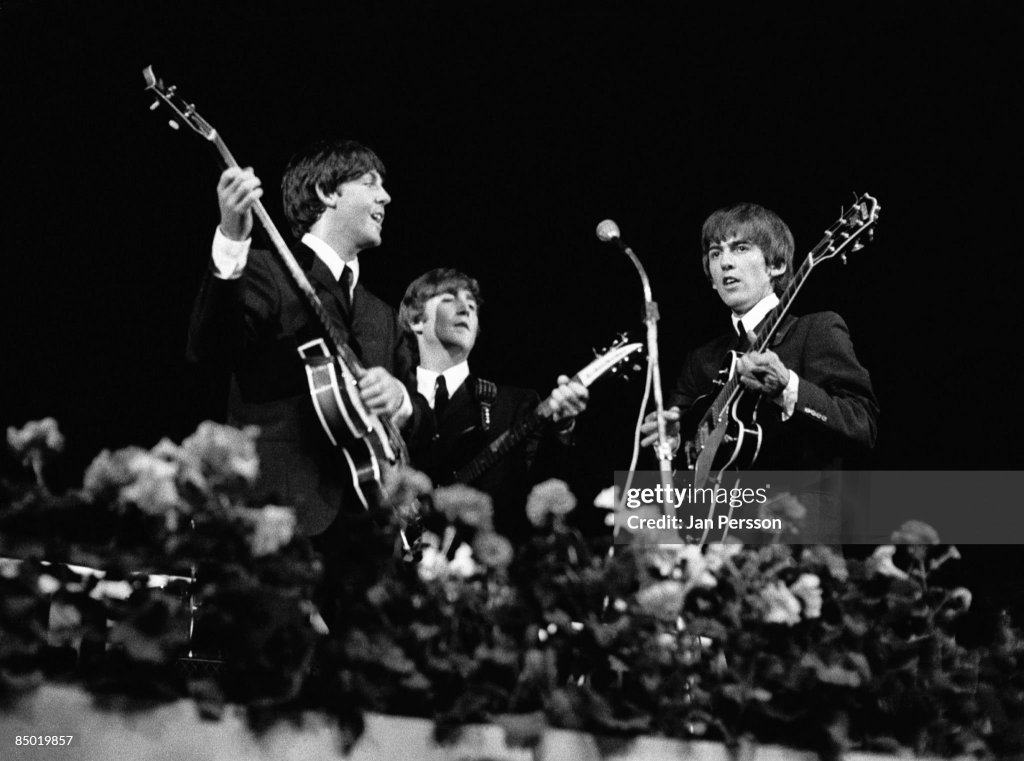
The Beatles began their first, and only, world concert tour starting with a performance at the 4,400 seat KB Halle (Tivoli Gardens) in Copenhagen, and a second concert two days later at a concert hall in the village of Blokker, Netherlands, followed by visits to Hong Kong, Australia and New Zealand. Because drummer Ringo Starr was hospitalized for acute tonsillitis, British drummer Jimmie Nicol took his place for the first eight shows on the tour.
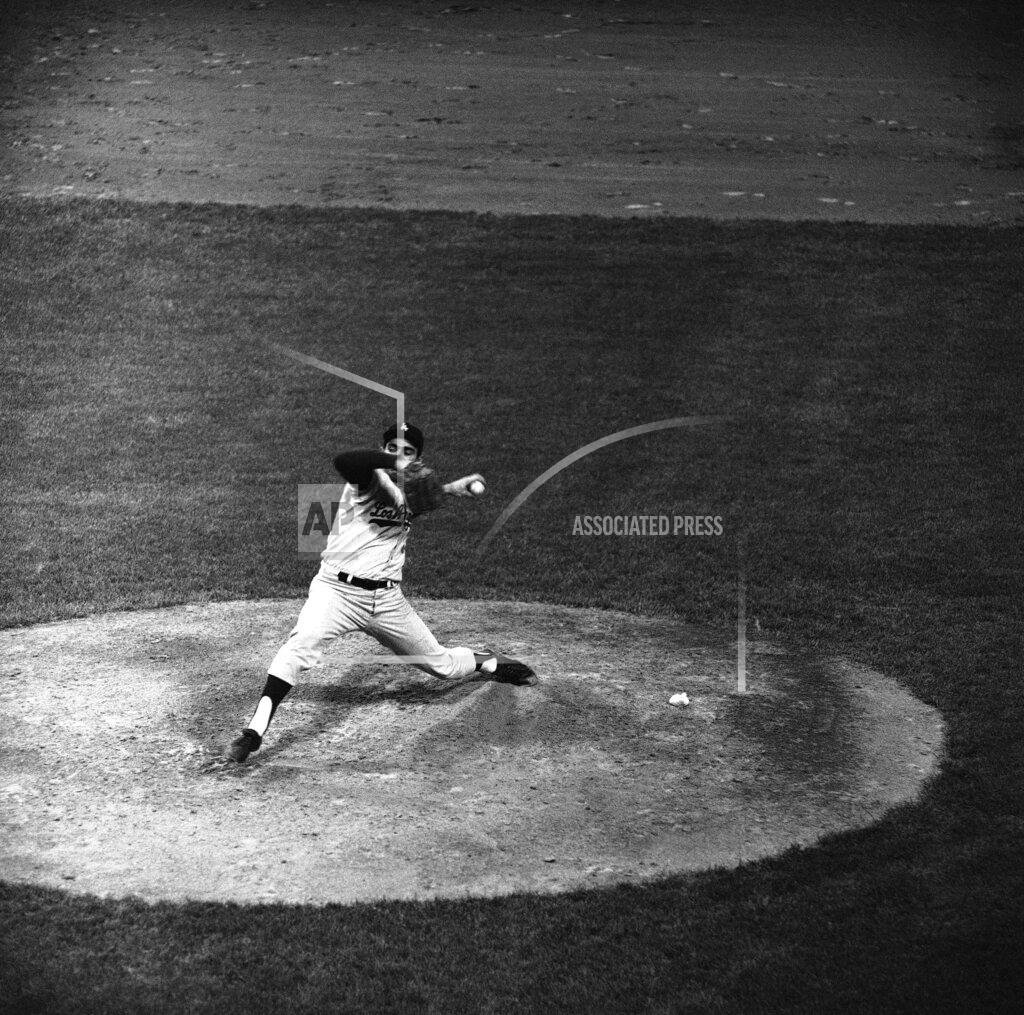
Sandy Koufax becomes the 4th pitcher to hurl three no-hitters by blanking the National League-leading Phillies 3–0 at Connie Mack Stadium. Koufax strikes out 12 and walks one for the Dodgers. Koufax, the 28‐year‐old lefthanded fireball ace, faced the minimum number of 27 batters in the game. Richie Allen became a base runner, however, when he walked with two strikes on him in the fourth inning. He was thrown out trying to steal. Koufax was overpowering with his fast ball and cut the corners with his curves so well that the only thing that came close to a hit was a slow bouncer by Allen with two out in the seventh inning. Only four balls were hit out of the infield by the Phillies. Koufax was just as strong in the ninth as he was at the start. He struck out Tony Taylor, who led off the inning. Then Ruben Amaro lifted an easy pop foul that Ron Fairly caught about 20 feet behind first base. A pinch‐hitter, Boby Wine, was the last man between Koufax and his third no‐hitter, and the tension grew as play was halted when a foul tip hit Umpire Ed Vargo. When play was resumed the count went to a ball and two strikes on Wine. Then Koufax struck him out.
At Milwaukee, Frank Robinson bangs a three-run homer in the 9th as the Cincinnati Reds beat the Braves, 6–3.
Steve Blass, rookie right‐hander, pitched a five‐hitter tonight as the Pittsburgh Pirates made four runs in the fourth inning stand up for a 4–2 victory over San Francisco.
At Minnesota, the Yankees get 3-run homers from Roger Maris and Joe Pepitone to top the Twins, 9–7. Bobby Richardson is 5-for-5 for the second time this season.
Ray Herbert and Frank Kreutzer put together a fivehitter and Floyd Robinson cracked a two‐run homer tonight as the Chicago White Sox tripped the Cleveland Indians, 5–1.
The California Angels trade outfielder Lee Thomas to the Boston Red Sox for outfielder Lu Clinton.
Dow Jones Industrial Average: 802.48 (-9.31).
Born:
Sean Pertwee, English actor (“Dog Soldiers”, “Gotham”), son of Jon Pertwee (Third “Doctor Who”), in London, England, United Kingdom.
Steve Searcy, MLB pitcher (Detroit Tigers, Philadelphia Phillies), in Knoxville, Tennessee.
Shawn Knight, NFL defensive end (New Orleans Saints, Denver Broncos, Phoenix Cardinals), in Provo, Utah.
Teddy Garcia, NFL kicker (New England Patriots, Minnesota Vikings, Houston Oilers), in Caddo Parish, Louisiana.
Willie Fears, NFL defensive end (Cincinnati Bengals, Minnesota Vikings), in Chicago, Illinois.
Jim Hobbins, NFL guard (Green Bay Packers), in Green Bay, Wisconsin.
Chris Kavanagh, British rocker (Sigue Sigue Sputnik – “Love Missile F-111”), in Woolwich, London, England, United Kingdom.
Died:
Samuil Marshak, 76, Russian-Soviet writer, translator and children’s poem poet.
 History Diaries