U.S. President Lyndon Johnson called a White House press conference without advance notice and told reporters that the United States was “bound by solemn commitments” to defend South Vietnam against Communist encroachment, and cited an October 25, 1954 letter from U.S. President Eisenhower to South Vietnam President Ngô Đình Diệm pledging an American promise to protect the Vietnamese government. The future of Southeast Asia “as a whole” is at stake in Laos and Vietnam, he said, adding that the United States intended to stand by its “solemn commitments to help defend this area against Communist encroachments.” In his news conference, President Johnson reasserts U.S. commitment to defend Vietnam but says he knows of no plans to extend the war into North Vietnam.
Although the President talked firmly about Southeast Asia, his comments were apparently designed to temper some of the tough talk that has prevailed here since pro ‐ communist forces in Laos opened new attacks on the neutralists May 16. The current lull in the fighting has somewhat diminished the sense of crisis. Less than two weeks ago Secretary of State Dean Rusk warned that the war in South Vietnam could be expanded if the Communists “persist in their course of aggression.” Mr. Johnson emphasized the point that the United States interest was in helping to preserve peace. He shied away from discussing any specific measures that might be taken to hold back Communist pressures. His principal diplomatic and military advisers are discussing the problem in Honolulu.
Mr. Johnson’s denial of knowledge of plans for attacking North Vietnam brought a charge from Representative Melvin R. Laird, Republican of Wisconsin, that the President had “deliberately mislead the American people.” “This is just simply not the case,” Mr. Laird said in a speech to the House of Representatives. “We have plans and we should not tell the enemy that we have no plans.” He said that as chairman of the 1964 Republican National Convention’s Platform Committee, he had been informed by Mr. Rusk of contingency plans for attacks on North Vietnam. He emphasized the point that the plans had simply been drafted and that no decision had been taken to implement them.
The Administration completed a formal review of its policies in Southeast Asia in Honolulu tonight without planning any dramatic moves to extend the conflict against Communist aggression there. Secretary of State Dean Rusk, who led the discussions here, and Defense Secretary Robert S. McNamara and their party departed for Washington to report to President Johnson. As they left, it was evident from official briefings that the mood of immediate crisis that prompted the meeting had given way once more to the reality of long and frustrating struggle.
The Cabinet officials, meeting with Ambassador Henry Cabot Lodge from Saigon and American diplomats and diplomatic and military leaders from South Vietnam, Thailand, Laos and Washington, developed no plan to take the war against Communist guerrillas into North Vietnam at this time. On the contrary, they will stress in their report that the real problem still lies within the borders of South Vietnam and that the challenge of Communist guerrillas must be met inside those borders by doing better what is already being done and planned. The officials reasserted the belief that Vietnam rather than Laos was the principal problem.
The United States and Cambodia agree on a compromise proposal to form a three-nation commission to visit the Cambodia border within 45 days. The proposal, drafted by Morocco and the Ivory Coast, will be submitted to the Council by Ahmed Taibi Benhima, the Moroccan representative, when the Council resumes debate on the question tomorrow. Today’s meeting was canceled because Huot Sambath, Foreign Minister of Cambodia, had not yet received his instructions. Reliable sources said the committee would be composed of representatives of three elected members of the Council. The committee will be instructed to go to Saigon and Phnom Penh, the capitals of South Vietnam and Cambodia, and also to the site of the recent frontier incidents that produced Cambodia’s complaint to the Council. The Cambodians accused the United States and South Vietnam of aggressive actions.
Prince Norodom Sihanouk, Cambodian head of state, said in Paris today that he had information that the United States Defense Department had “studied the possibility” of extending the war in South Vietnam to Cambodia. On his arrival here for a stay of several weeks in France he accused “armed United States and South Vietnamese elements” of aggression against Cambodia on several occasions. “They murdered our villagers in cold blood under the pretext of hunting the Việt Cộng in our country,” he added. He was referring to recent incursions by South Vietnamese troops, who on at least one occasion were accompanied by United States advisers. Both Washington and Saigon apologized. The Vietnamese have blamed the vagueness of the border for such incursions.
Lal Bahadur Shastri was unanimously selected by the 537 members of India’s ruling Congress Party to become the new Prime Minister of India as the successor of the late Jawaharlal Nehru. Congress party members of the Indian Parliament unanimously elected Shastri as their leader shortly after 9 o’clock this morning. As the new leader of the majority party, he will become Prime Minister and form a new Government. Mr. Shastri, who succeeds Jawaharlal Nehru, received a standing ovation from the 537 Congress party members of Parliament who met in the big Central Committee Hall of Parliament House. Gulzarilal Nanda, acting Prime Minister since Mr. Nehru’s death Wednesday, nominated Mr. Shastri, and Morarji R. Desai, his major antagonist in the behind‐the‐scenes contest for the Prime Ministership, seconded him.
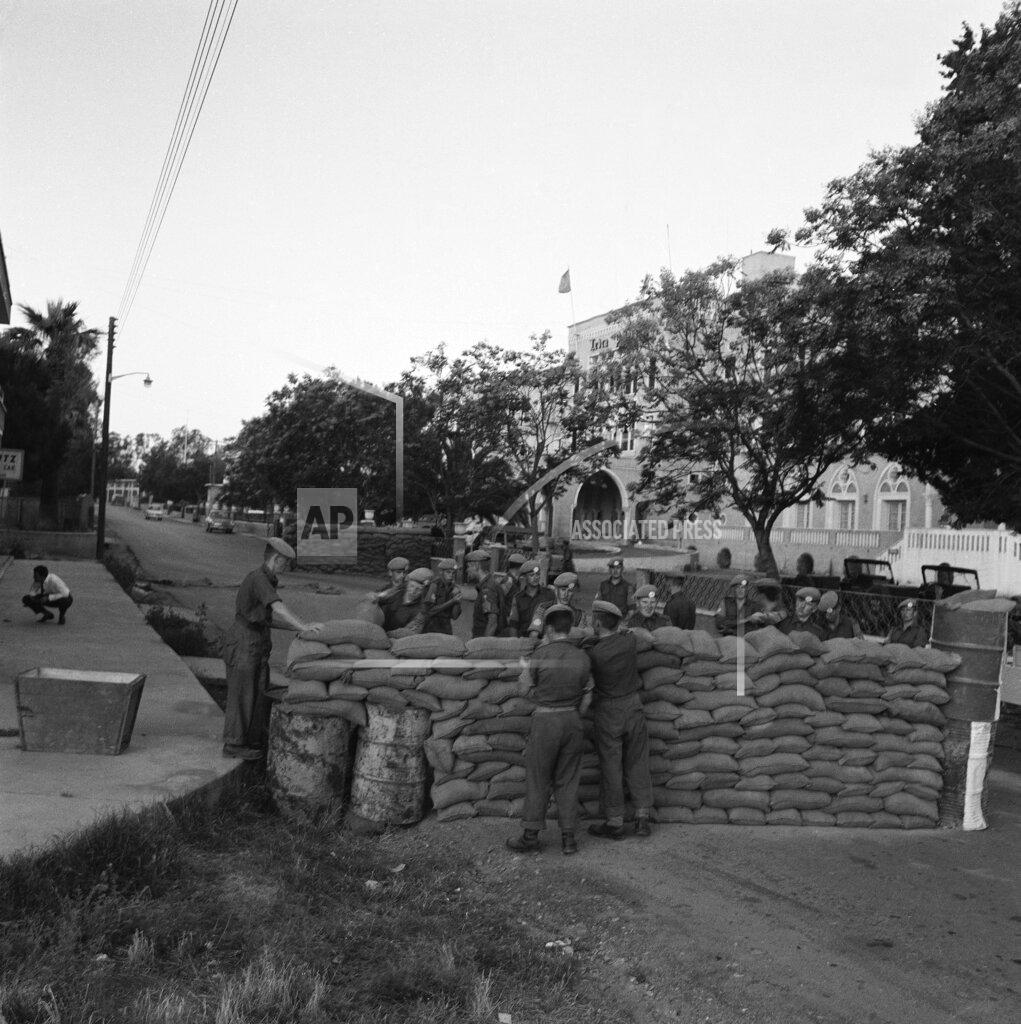
Turkey’s council for national security, led by Prime Minister İsmet İnönü, voted to intervene militarily in the Republic of Cyprus, despite objections by Foreign Minister Feridun Cemal Erkin. U.S. Ambassador to Turkey Raymond Hare was directed by U.S. President Johnson to “meet at once” with İnönü “calling him out of a cabinet if necessary, to express the administration’s gravest concern and to urge restraint.” The meeting would take place two days later.
Premier Khrushchev called today for East‐West agreement to prevent the spread of nuclear weapons as the best hope for future progress on disarmament. In a two‐hour meeting with Harold Wilson, leader of the British Labor party, the Soviet Premier also pressed for acceptance of a Polish proposal for a nuclear arms freeze in Central Europe. Poland made the proposal early in March. Mr. Khrushchev said the Soviet Union remained opposed to President Johnson’s suggestion of a verified freeze on missiles carrying nuclear warheads as well as to his call for a “bonfire” of certain obsolescent bombers.
Premier Khrushchev severely criticized Western plans for a seaborne nuclear force with crews of mixed nationality, to be set up under the North Atlantic Treaty Organization, as an impediment to progress toward an East‐West agreement against further dissemination of nuclear weapons. Mr. Wilson, who arrived here Sunday for a three‐day visit, relayed Mr. Khrushchev’s position on these issues. He was received by the Soviet leader at the Kremlin this morning. Mr. Wilson, in an optimistic mood, said he saw hope for a new “breakthrough on disarmament.” Other Western observers felt, however, that Mr. Khrushchev’s remarks appeared to indicate that the Soviet position had not progressed beyond the stand taken at the virtually deadlocked disarmament conference in Geneva.
The 424 delegates to the Palestinian National Congress ended their meeting in East Jerusalem in Jordan, and approved a National Charter. Among the articles agreed to were that “Palestine… is an indivisible unit” (Article 2); “Palestinians are those Arab citizens who, until 1947, had normally resided in Palestine” and “anyone born after that date of a Palestinian father” (Article 6); “The partition of Palestine in 1947 and the establishment of Israel are entirely illegal” (Article 17); and “For the realization of the goals of this Charter and its principles, the Palestine Liberation Organization shall perform its complete role in the liberation of Palestine…” (Article 23).
Fresh troops flew into rebellious Kivu Province today following a rout of Congolese forces by Communist‐directed rebels. Elements of the 13th Infantry Battalion were rushed from their base at Kamina toward Bukavu, the provincial capital, which has been virtually defenseless since Sunday. Preparing for the worst, the United Nations and the United States Consulate here continued to evacuate women and children from the area. Authorities here fear that Bukavu may be attacked at any time by the rebels, who advanced to within 25 miles of the city over the weekend. The Congolese troops who had been holding positions south of Bukavu have fallen back in utter confusion. Many soldiers are believed to have gone over to the rebels. The troops left here have no will to fight.
Observers fear that if the rebels do attack, they will be joined by most of the remaining garrison here, and will be supported by many of the city’s 150,000 African inhabitants. The wife and three children of an American doctor here were flown out this afternoon on a United States Army plane to Kigali, capital of neighboring Rwanda. The wife and six children of a United States Information Agency official were taken to Kigali yesterday. Sixty wives and children of United Nations personnel in the province, plus several United Nations experts not needed here, were evacuated yesterday to Goma, a town about 100 miles from here on the north shore of Lake Kivu. The United States Consulate burned its classified documents Sunday night.
The United States reprimanded 13 Arab Ambassadors today for a statement criticizing the visit of Premier Levi Eshkol of Israel.
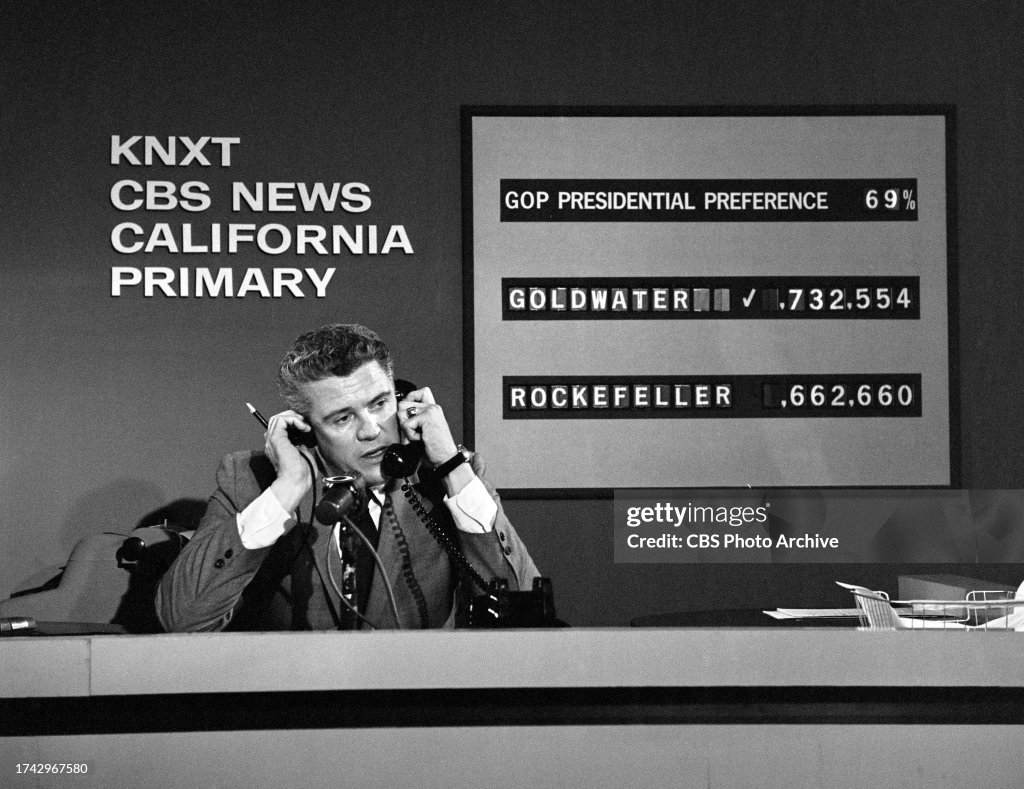
U.S. Senator Barry Goldwater of Arizona narrowly defeated New York Governor Nelson Rockefeller in California’s Republican presidential primary, giving him all 86 of California’s delegates and placing him “on the threshold of the Republican Presidential nomination.” Rockefeller, who had been leading in the early reported returns, conceded defeat the next day. Goldwater’s win was by a margin of less than 59,000 votes out of more than two million cast, with 1,089,133 for Goldwater and 1,030,180 for Rockefeller. With the California win, Goldwater now had 438 of the necessary 655 votes needed for the nomination.
Goldwater was clinging to a narrow lead as this day ended. With 83% of the vote counted, Senator Goldwater leads by about 66,000 votes. CBS and ABC, using computer projections, called Goldwater the winner very quickly. NBC and the Associated Press have no called a winner as of midnight.
Pierre Salinger beat Alan Cranston in the California primary for the Democratic nomination to the U.S. Senate. He swept to victory over his principal opponent, State Controller Alan Cranston, with the appeal to voters to “Let the man who spoke for Presidents speak for you.” This appeal evidently transcended the charge of “carpetbagging” leveled by Cranston forces after the chubby Presidential aide quit his Washington job in March to plunge into the California contest at the last minute. He will be pitted in the November election against California Republicans choice today in a three‐man race: George Murphy, former movie actor who is now a Hollywood executive.
Confronted with a closure test Tuesday, Senator Richard B. Russell of Georgia, leader of the Southern opposition to the civil rights bill, tried to switch tactics today. He said he was ready to start voting on amendments immediately. Senator Mike Mansfield of Montana, the Democratic leader; declined with a grin to be drawn in by this maneuver. He said there would be no voting today, and he indicated there would not be any before the vote next week on shutting off the Southern filibuster. The Russell maneuver was designed to stall the leadership’s drive for closure. Mr. Russell hoped to convince some wavering Senators that it was not necessary to halt debate because the Southerners were now prepared to vote on amendments.
However, Mr. Mansfield would not consider abandoning the closure vote unless the Southerners would give him an ironclad assurance of an early vote on the whole bill. Meanwhile, Senator Everett McKinley Dirksen of Illinois, the Republican leader, said after a luncheon of the Senate Republican Policy Committee that the prospect for getting the two‐thirds vote for closure looked “very encouraging.” Yesterday Mr. Dirksen expressed confidence that he could get 25 Republicans to support closure and indicated he might get more.
Senator Hubert H. Humphrey of Minnesota, the Democratic floor manager of the bill, who was away yesterday, told reporters this morning that he thought the closure count was “a shade on our side.” He said that “more than 40” Democrats were ready to vote for closure, and that “four or five” more were doubtful. He said he had been told 22 Republicans were certain for closure and two were listed as possible. When told what Mr. Dirksen had said the day before, Mr. Humphrey said, “If Dirksen has more than 25, we’re in.” Mr. Humphrey’s “more than 40” is known not to exceed 42, and is more likely 41. If Mr. Dirksen has 25, then the total is 66.
This would mean victory for closure of debate, because the total Senate membership is 100, and Senator Clare Engle, Democrat of California, who has had two brain operations, is not expected to be present. The votes of two‐thirds of those present and voting are needed to halt debate. Senator Strom Thurmond, Democrat of South Carolina, was the first Southerner to concede that the bipartisan civil rights coalition probably had the votes to halt the filibuster. Senator Russell disagreed. The Georgia Democrat doubted that Senators Mansfield and Dirksen had 65 votes, but said, “I wouldn’t swear that they don’t have them.”
President Johnson indicated today that he would not stand in the path of Robert F. Kennedy if the Attorney General should decide to run for the Senate from New York State. The President was asked at his news conference if he would be “willing to let him [Mr. Kennedy] go out of the Cabinet to make that race.” “That is a matter that tne Attorney General and the people in New York will determine,” Mr. Johnson replied. “Neither of them have discussed it with me.”
The President said he was not going to make any announcement about the selection of a Democratic candidate to run against Senator Kenneth B. Keating in New York “until the Attorney General makes up his mind.” Mr. Kennedy has been exploring the idea of running for the Senate as one of several political alternatives. The Attorney General has already made it clear that he plans to resign his Cabinet post after the November election, both to pursue a career of his own and to give President Johnson an opportunity to select successor of his choice.
President Johnson said today that the nation’s record‐long economic expansion was showing “new vitality” and would “roll on through 1964 and we believe well into 1965.” The President told his news conference that it was “much too soon” to assess the full effects of the tax cut enacted in February but he said the economic indicators to date strongly implied “the fresh confidence, the expanded purchasing power and the new incentives created by the Revenue Act of 1964.” As has become a habit with him, the President reeled off a string of the most recent economic indicators, nearly all of them previously published by Government agencies.
Despite the “strong advance” of the economy, the President said, “no inflation is in sight, although some people feared overheating of the economy.” “Wholesale prices,” he continued, “are lower today than in January, lower than three years ago, lower than six years ago.” Consumer prices, although the President did not touch on this point, have continued their slow advance at a rate of slightly more than 1 percent a year. The President today was particularly encouraged by the latest figures on employment and unemployment. “Unemployment,” he said, “was down from 5.7 percent in April, 1963, to 5.4 percent this April.
President Johnson disclosed today that the United States gold stock had lost $35 million in May. The President’s disclosure was indirect. He reported at his news conference that for the first five months of the year the nation had gained $97 million of gold. The Treasury later confirmed that, because the first four months had shown a gain of $132 million, the President’s figure revealed a $35 million loss in May. The May decline was viewed as a normal fluctuation following the big rise of $178 million in April. The April rise reflected essentially a massive distribution of gold by the London gold pool to its members—a distribution that is made only periodically and not every month. Thus the basic gold situation is best reflected in the net figure for the year to date, showing a rise of $97 million as reported by Mr. Johnson today.
The Navy said today that bids had been received for the building of 26 destroyer escorts authorized under the programs for the current fiscal year and the last fiscal year. But because bids arrived in various proposals, ranging from proposals for building one up to several ships, no final determination of low bidders has been made, a spokesman said. Under the 1964 program, bids were invited for a total of 10 ships; and under the fiscal 1965 program, 16 ships. The acceptance of bids for the 1965 program will be contingent on the approval by Congress of the funds that have been authorized.
[Ed: These ships eventually emerge as the Knox-class ocean escorts (later frigates).]
Five million shares of stock in the Communications Satellite Corporation (Comsat) were offered for sale at $20 a share, and the issue was quickly sold out.
“Folies Bergère” opens at Broadway Theater NYC for 191 performances.
Dave McNally blanks the Kansas City A’s as the Orioles take first place with a 4–0 win. His Baltimore teammates helped him along with four double plays.
Dean Chance pitched a two‐hitter and struck out 15 batters tonight as the Los Angeles Angels snapped a five‐game losing streak by beating the Boston Red Sox, 1–0. A walk to Joe Koppe, a single by Billy Moran and a bloop double by Lee Thomas produced the Los Angeles run in the fourth.
The St. Louis Cardinals trade pitcher Lew Burdette to the Cubs for pitcher Glen Hobbie.
San Francisco Giants’ outfielder Matty Alou suffers a fractured wrist, as Pittsburgh’s Bob Veale beats the Giants 3–1. Alou will miss 5 weeks. The Pirates jumped off to a 2‐0 lead in the second inning. Willie Stargell tripled and came home on Gene Freese’s double. Freese scored on Donn Clendenon’s single.
The Cincinnati Reds offset the Milwaukee Braves’ home run power with a 13‐hit attack that included five doubles tonight and scored six runs in the eighth and ninth innings for a 7–5 victory. The Braves, behind Warren Spahn, had taken a 5–1 lead by the fourth on three homers, two by Gene Oliver and one. by Denis Menke. But the Reds scored four runs off Spahn in the eighth to tie the score and then scored two runs off Bob Sadowski to win in the ninth.
Dow Jones Industrial Average: 813.78 (-4.78).
Born:
William Howard, NFL fullback (Tampa Bay Buccaneers), in Lima, Ohio.

 History Diaries