There are three months left until war comes to Europe.
Professor Karl J. Burckhardt, League of Nations Commissioner for Danzig, who has been in the Free City conferring with the Polish Commissioner, Arthur Gresier, President of the Senate, and Albert Förster, Nazi leader for Danzig, will return to Geneva next Tuesday to report regarding the prospects of preventing further clashes between Nazis and Poles. His report will record a lessening of tension during the last week by common consent and will strive to pave the way for at least a temporary modus vivendi pending clarification of the European situation.
In neutral and German circles in both Danzig and Berlin it is believed that the Free City will be permitted a period of tranquility that may last through the Summer. But beyond that none will predict. The Reich does not seem inclined at present to press for the recovery of Danzig, but it is equally generally assumed it will press for it later, some suspect September — a date mentioned with foreboding in Danzig. The decision lies entirely with Chancellor Hitler and in this sense, Danzig is already under his rule. Danzig Nazis await orders and are not at all impatient for his decision. Both they and other Danzigers probably would be pleased if a showdown could be long postponed.
[Ed: Hitler made it crystal clear in “Mein Kampf” that he saw Germany’s destiny in Belarus and the Ukraine. He means to destroy the Soviets, and render the Slavic peoples mere serfs in a new, Nazi order in Europe. He will do whatever is necessary to put Germany at the Soviet border and make that destiny manifest. Hitler intends war, and soon. Nothing can now prevent the cataclysm that faces Europe.]
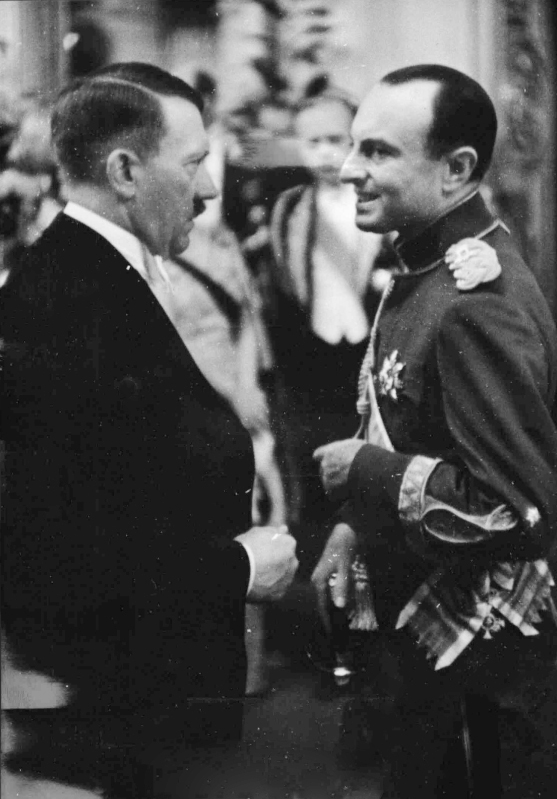
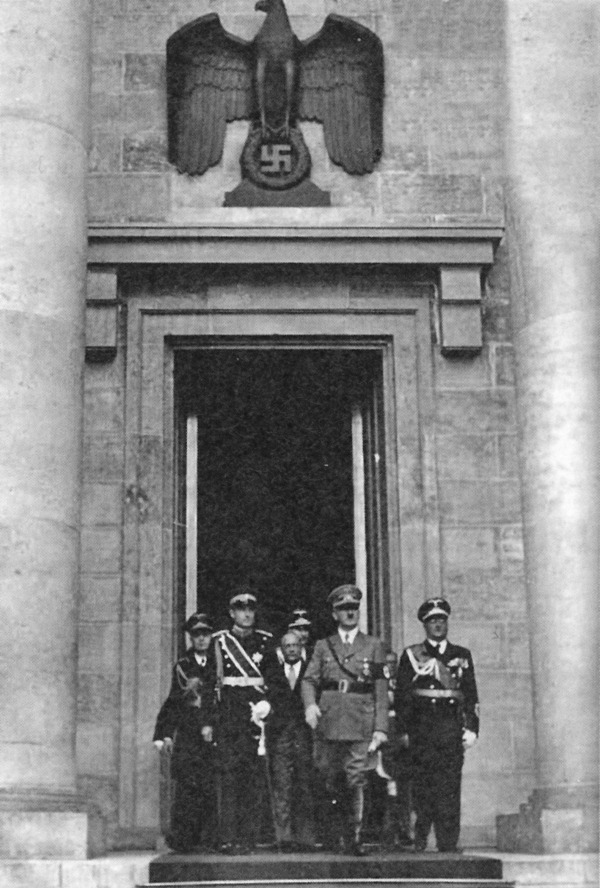
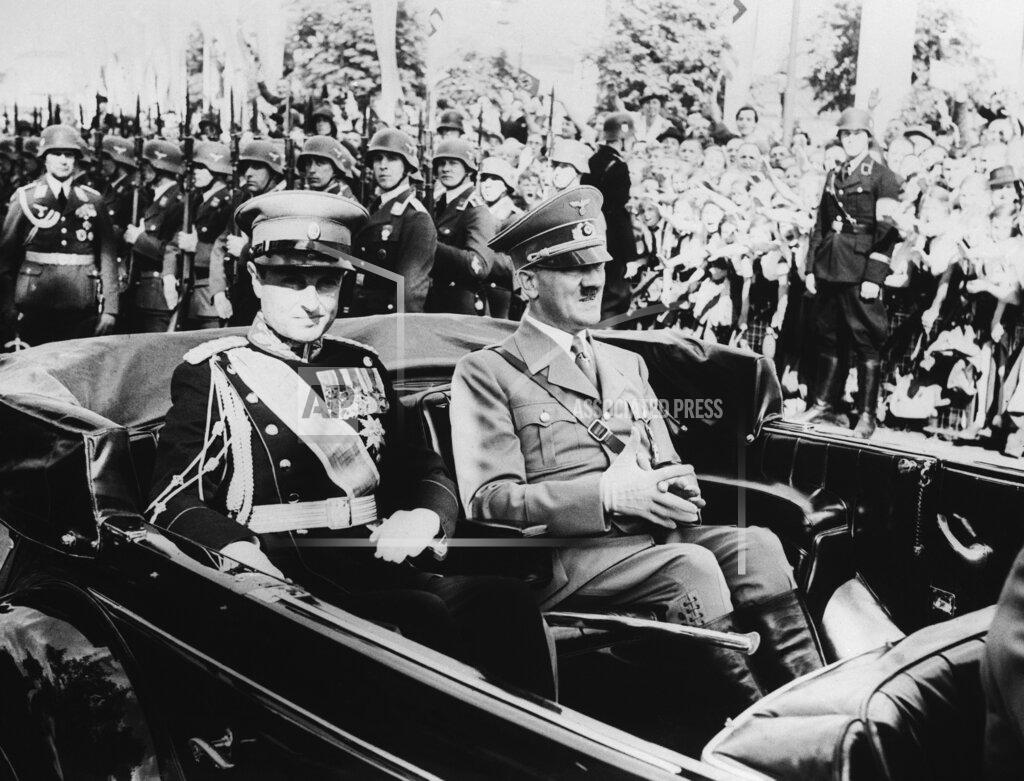
Prince Paul of Yugoslavia and wife Olga began a five-day visit to Berlin. Prince Paul, the Regent of Yugoslavia, pays a state visit to Berlin where Chancellor Adolf Hitler guarantees the inviolability of Yugoslavia’s borders in a state toast. Prince Paul, Regent of Yugoslavia, and Princess Olga, the first royal couple at the head of a State to pay a State visit to Greater Germany, arrived in Berlin this afternoon and were received with all the honors due their rank and all the pomp that has become characteristic of the National Socialist regime. Like the preceding events in the almost continuous series of festivities and parades that began with Chancellor Adolf Hitler’s birthday celebrations and that will come to a temporary close next Tuesday with the parade of the German Condor Legion that served in Spain, this visit is being utilized to demonstrate both Germany’s international friendships and her military might.
Chancellor Adolf Hitler guaranteed Yugoslavia’s borders tonight in an exchange of toasts with Prince Paul during a lavish State dinner. The Chancellor, who is entertaining his guests royally during the five-day stay of the Yugoslav Regent, which began today, said that in Prince Paul’s presence “we see. a happy occasion for a frank and friendly exchange of views that I am convinced can bring only benefits to our peoples and States.” Stressing the friendship of Germany for Yugoslavia, he continued: “I believe in this all the more since a solidly founded and trustful relationship of Germany toward Yugoslavia-now that through historic events we have become neighbors with common borders established for all time-will not only secure a permanent peace between our two peoples and countries but beyond that will provide an element of calm for our jittery continent.”
Prince Paul, in responding, noted Herr Hitler’s expression of respect for the Balkan country’s border with the Reich. “My visit is a demonstration of the determined will of the Yugoslav people to live and work together with the German people in an atmosphere of peace and friendship,” he said. “For that reason, I am very happy that once more in the words of Your Excellency are found solemnly expressed assurances that the great German Reich also desires the establishment and strengthening of friendly cooperation with Yugoslavia in that it intends to recognize her freedom and independence, as well as the same frontiers that have joined us as lasting neighbors since last year.”
Nazis occupy Salzburg palace. The Elite Guard flag is hoisted over church property.
General Oswald Pohl is named chief administrator of the SS.
The Focke-Wulf Fw-190 fighter makes its maiden flight at Bremen, Germany. The aircraft displays excellent handling characteristics and is highly maneuverable but suffered from engine overheating problems which will require the fitting on a redesigned engine cowling to overcome.
Retired German Colonel-general Gerd von Runstedt returns to service.
The SS-Gericht, the SS Legal Head Office, is established on Himmler’s orders.
Britain feels confident about Soviet aid. Russian Premier Molotov’s speech causes concern, but his objections are not thought to be insurmountable.
Envoys in Russia see hope of a pact. They expect an alliance with Britain and France.
The Royal Navy submarine HMS Thetis sank during trials off Liverpool with the loss of 99 lives. The submarine HMS Thetis (N 25) sinks during final diving trials. In addition to her normal complement of 59 men she is carrying technical observers from Cammell Laird and other naval personnel, a total of 103 men of which 99 died. The submarine will be successfully salvaged, repaired, and commissioned in 1940 as the HMS Thunderbolt (N 25). Thunderbolt will in turn be lost with all hands in March 1943, making this boat one of the few military vessels ever to sink twice.
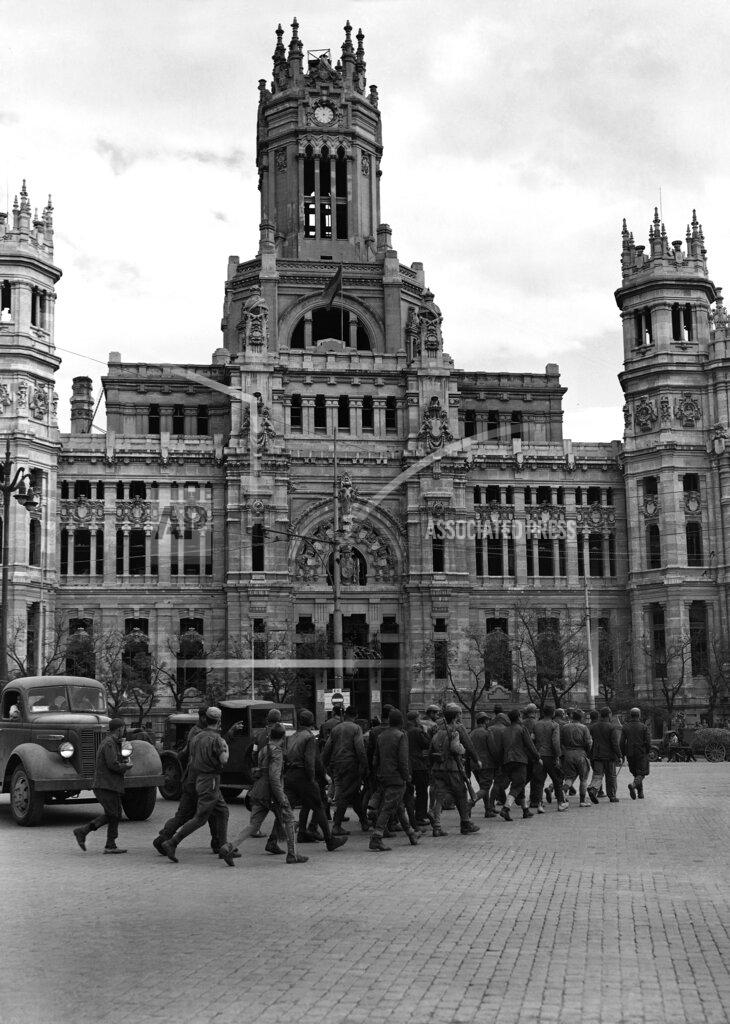
Italians complete their withdrawal from Spain. Nine troop ships that sailed for Naples last night and today carried 20,000 Italian soldiers, virtually completing withdrawal of the foreign legionnaires who helped the Nationalists win the Spanish civil war. Nationalists said that only small units of Italian technicians remained to look after planes and other equipment. With the homeward-bound Italians went more than 3,000 Spanish soldiers who will parade with their comrades-in-arms in Rome before Premier Benito Mussolini and King Victor Emmanuel. Twenty Spanish Army and Navy officers and Ramon Serrano Suñer, Generalissimo Francisco Franco’s Minister of the Interior, boarded the Italian cruiser Duca d’Aosta for the trip to Rome to witness the victory parade. Seven troop transports sailed last night and two today. The hospital ship Gradisca also sailed yesterday, carrying several hundred wounded Italian veterans.
Bidding farewell to the Italians, General Gonzalo Queipo de Llano, who was General Franco’s commander in Southern Spain, proclaimed an “everlasting union and brotherhood of Italy and Spain, linked by anti-communistic faith.” “Italy has conquered Spain by love and that is the form of conquest of the Spanish people that is easiest,” the general told the assembled troops. Henceforth, he said, Spaniards and Italians “will work jointly for universal civilization, fighting together on all battlefields.
The Czech police are patient as Fascists march. A crowd of 1,000 watches 50 marchers.
Italy adopts a bill about Jewish surnames and declares all racist clauses in testaments invalid. Italian Jews are ordered to assume “Jewish” surnames. Collaboration between Jewish and non-Jewish professionals is prohibited.
President Roosevelt remained in his private apartments in Washington today, suffering from sinus trouble, but conferred with business leaders who sought to learn the Administration’s attitude toward private capital.
The Senate passed the War Department Civil Functions Appropriation Bill, adding $50,000,000 for rivers and harbors. projects; approved the bill removing the $30,000,000,000 limitation on outstanding government bonds, after adding a rider authorizing issuance of bonds by the Tennessee Valley Authority to buy certain properties of the Commonwealth and Southern Company; confirmed the nomination of David J. Lewis to the National Mediation Board, and adjourned at 5:05 PM until noon on Monday.
The House rejected the Townsend Old-Age Pension Bill; approved the conference report on the measure authorizing $100,000,000 for the purchase of strategic war materials; approved the bill authorizing expenditure of $6,600,000 to recondition certain battleships; approved the Senate resolution making reorganization plans effective July 1, and adjourned at 1 PM until noon tomorrow. The Committee Investigating Un-American Activities continued questioning of Major General Moseley on anti-Semitic views.
Eight leaders of business and industry who are members of the Business Advisory Council to the Secretary of Commerce went to the White House tonight with Harry L. Hopkins to learn from President Roosevelt himself the Administration’s attitude toward private capital and enterprise, and what steps, if any, he contemplates taking to stimulate lagging economic recovery.
Specifically, the group sought information from the President as to what the Administration proposed to do about the utilities and taxes and the labor problems which they hold to be the chief stumbling blocks in the way of a business revival. They had expected to have dinner with the Chief Executive, but Mr. Roosevelt remained on the second floor of the White House on the advice of his physician and conferred with the group later in his study.
It was during the after-dinner discussion that the business men, led by John D. Biggers, laid their case before the President. It included a long report containing detailed recommendations for amendment of the National Labor Relations Act, which they had perfected earlier in the day during conferences with Secretary Hopkins. Although the group went to the White House with the intention of having a general discussion of problems hindering recovery, their primary purpose was to reach an understanding, if possible, on the Administration’s stand on specific proposals to amend the National Labor Relations Act. Full details of the report were lacking, but it was understood to include the following proposals:
- Reorganization of the NLRB to provide for a board of five instead of three members as at present, two members to be representatives of labor, two of business and industry, and one of the general public.
- Amendment of the law to permit employers “to speak freely” to their employees on matters regarding collective bargaining and related subjects now prohibited as coercive of workers.
- Amendment of the act “to legalize” mediation proceedings as one of the primary functions of the NLRB instead of leaving mediation in its present status of an extra-legal undertaking.
- Provide by legislation for the right of employers to petition for elections to determine the majority will among workers for collective-bargaining purposes so as to eliminate recurring jurisdictional disputes between competitive unions, such right of petition. not to be left to the discretion of the board members.
- Define by clear-cut amendments the rules of evidence by which the board would be guided in deciding cases coming before it.
Major General George Moseley tells the House Committee on Un-American Activities that U.S. Jews who identify with “world Jewry” should be forbidden from public office.
Economy received another hard blow in Congress late today when the Senate, avoiding a record vote, overrode its Appropriations Committee and restored $50,000,000 which the committee had cut from a House bill appropriating $305,188,154 for the civil functions exercised by the War Department. This bill finances primarily river and harbor improvements and flood control work. It long has been noted as the repository for “pork barrel” projects wherein Representatives and Senators have found the most convenient place to lodge individually directed expenditures.
Passage of the bill took place in an extraordinary atmosphere, accompanied by circumstances which placed the President at once in the position of a leading sponsor of technical “economy,” but as the individual who probably actuated the Senate spending stampede by a parallel spending promise. He sent word to the Senate through Senator Barkley, the majority leader, that if the Senate would uphold the cut made by its committee, he proposed to expend an equivalent sum of relief money on projects contained in the bill.
Instead of stopping the excess appropriation, this word only spurred the Senate on to override its committee, apparently in the belief that if the money was to be expended in any event, the Congress might as well control its distribution. When Senator Adams, leader of the current “economy bloc,” sought a roll call on an amendment by Senator Thomas of Oklahoma restoring the cut, he failed to gain enough support to force the individual members on record.
The House of Representatives virtually cleared its calendar of national defense bills today when it adopted a conference report on the $100,000,000 strategic war minerals acquisition bill and passed two other measures. The conference report authorizes the expenditure of $100,000,000 in the next four fiscal years for the acquisition of mineral imports which the United States needs for war purposes. The Senate had voted $40,000,000, but the conferees retained the House increase with the proviso that no part of the customs duties paid on the imports could be added to the amount authorized.
Negotiation between unions and coal companies in Harlan, Kentucky, are suspended. No progress has been made in the negotiations.
Director of the U.S. Naval Research Laboratory, Captain Hollis M. Cooley, proposes research in atomic energy for future use in nuclear powered submarine.
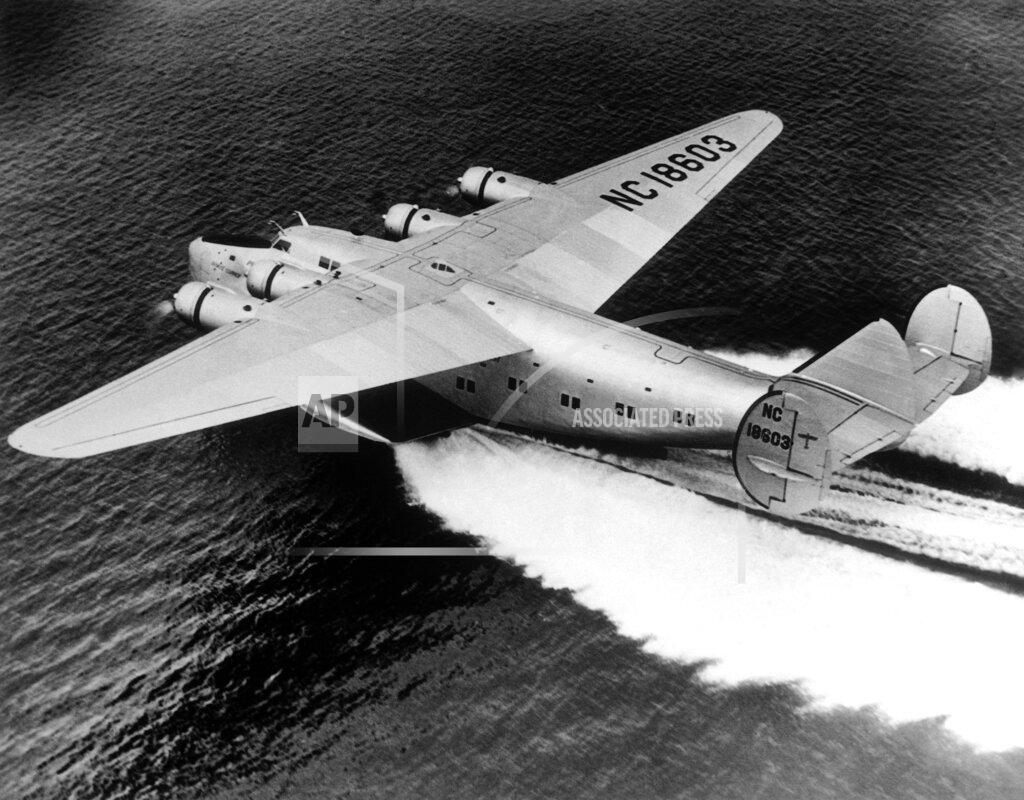
The Douglas DC-4 makes its first passenger flight from Chicago to New York.
First major boxing match on US television is the heavyweight bout from NY’s Yankee Stadium between former world champion Max Baer and Lou Nova; Nova wins by TKO in 11th round.
Speaking to the Knights of Columbus in Cleveland, Yankee coach Johnny Schulte shares a team secret, telling the group of Lou Gehrig’s scheduled examination at the Mayo Clinic. At first, the ailing first baseman denies the statement as a rumor, but a few days later confirms the impending visit to Rochester, Minnesota.
The Phillies plays their first-ever night game at Shibe Park, losing to the Pirates, 5–2. The Phils Gib Brack and the Bucs Bill Brubaker hit homers. Rip Sewell picks up the victory over newly acquired Kirby Higbe.
At Brooklyn, Gene Moore’s steal of home in the bottom of the 14th gives the Dodgers a 3–2 win over the Cubs. Vito Tamulis takes the win over Charlie Root. The Dodgers had squelched a Cub threat in the 12th inning with a triple play. Root was the pitcher in a July 2, 1933 game at Ebbets when Al Lopez stole home in the 9th inning for a walk-off steal.
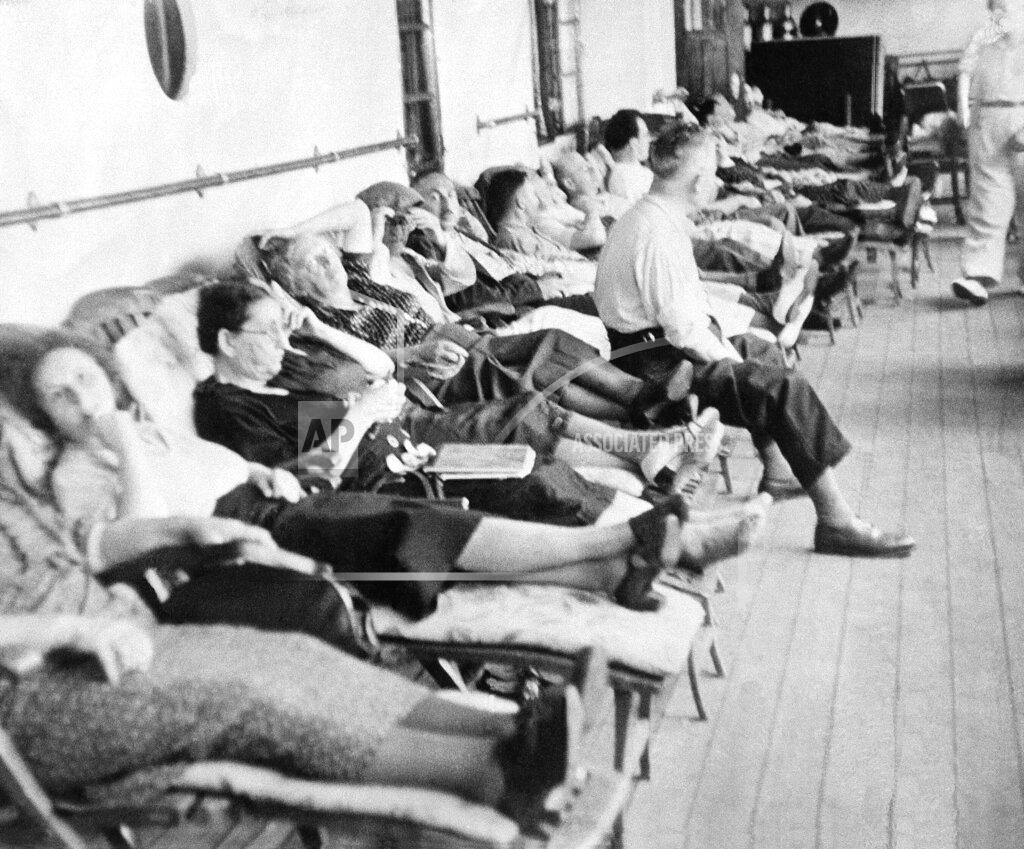
Captain Gustav Shroeder of the liner MS St. Louis fears mass suicide if 917 German Jews are refused entry into Cuba and must sail back toward Germany.
Cuban President Federico Laredo Brú ordered the MS St. Louis to leave Cuban waters and threatened to use gunboats if it did not do so. President Laredo Brú today signed a decree ordering the Hamburg-American liner St. Louis to depart immediately with 917 Jewish refugees from Germany who have been held aboard the ship since Saturday awaiting permission to enter Cuba.
The decree provides, in case of non-compliance, that “the Secretary of the Treasury shall seek the aid of the constitutional navy and shall proceed to conduct the ship St. Louis, with passengers on board, outside the jurisdictional waters of Cuba.” It is stipulated also that any member of the crew who may have debarked illegally shall be seized and conducted to the vessel. The Treasury Department is directed to investigate the entire matter, including responsibility for bringing the refugees to Cuba.
Captain Gustav Shroeder of the St. Louis tonight posted the following notice on the ship’s bulletin boards: “The Cuban Government requires us to leave the harbor but has allowed us to remain until tomorrow morning. So we shall sail definitely at 10 AM. “The shipping company is going to remain in touch with various organizations and official bodies which will endeavor to effect a landing outside Germany. We shall try to stay somewhere in the vicinity of South American countries.”
Various Cuban and American lawyers in Havana are attempting to obtain visas for other islands in the Caribbean in the hope of definitely solving the predicament of their clients on board the St. Louis. Lawrence Berenson of the National Coordinating Committee, who interviewed President Laredo Brú this morning, said that, while the Chief Executive expressed sympathy with the plight of the refugees, he refused to discuss the question of their debarkation. When Luis Clasing, agent of the Hamburg-American Line, learned of the decree, he declared he was prepared to fight the order through the courts. Later he decided to take no action, according to the Director of Customs.
Late this afternoon the St. Louis was surrounded by boats filled with relatives and friends of those on board. Police patrolled the liner’s docks and forbade any except government officials to approach too closely or to step on the floating dock alongside the ship. Huge spotlights attached to the vessel’s sides lighted the surrounding waters tonight.
The St. Louis’s passengers, many sobbing despairingly, lined the rail and talked with those in the surrounding boats, some of whom remained several hours.
The Soviet speech reassures Japan, allaying fears of a Russian-German alliance.
The Japanese Navy deployed a new code, later to be named JN-25 by Allied code breakers.
Dow Jones Industrial Average: 136.20 (-1.98).
Born:
Cleavon Little, actor (“Blazing Saddles”; “Toy Soldiers”), in Chickasha, Oklahoma (d. 1992).
Naval Construction:
The U.S. Navy Gleaves-class destroyers USS Gwin (DD-433) and USS Meredith (DD-434) are laid down by the Boston Navy Yard (Boston, Massachusetts, U.S.A.).
The Kriegsmarine (German Navy) Type IIC U-boat U-60 is launched by Deutsche Werke AG, Kiel (werk 259).
The Royal Navy “K”-class destroyer HMS Kimberley (F 50) is launched by Thornycroft (Southampton, U.K.).
The U.S. Navy Sims-class destroyers USS Morris (DD-417) and USS Wainwright (DD-419) are launched by the Norfolk Navy Yard (Portsmouth, Virginia, U.S.A.).
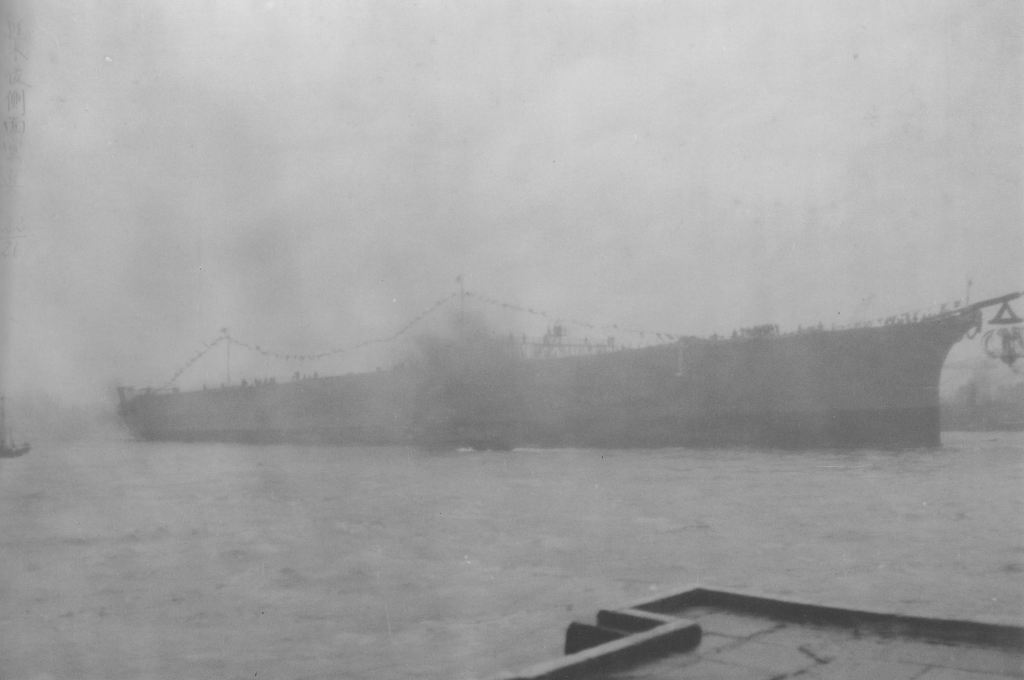
The Nihon Kaigun (Imperial Japanese Navy) aircraft carrier HIJMS Shōkaku (翔鶴, “Soaring Crane”), lead ship of her class of 2, is launched by the Yokosuka Naval Arsenal (Yokosuka, Kanagawa prefecture, Japan).
 History Diaries