The highest diplomatic and military officials of the United States gathered here today for the grim and urgent task of finding a means to deny Southeast Asia to Communism without directly involving the United States in war there. They will be faced, at a two-day conference starting tomorrow, with increasingly discouraging estimates of the position of non‐Communist governments and troops in South Vietnam and Laos. They will also be faced with a series of distasteful diplomatic pressures from all sides for still another round of international negotiations. To deflect these challenges, the Administration leaders will try to develop a new political strategy to shore up non‐Communist governments in former French Indochina and to restore, at the least, a balance of power there. They will also try to devise demonstrations of United States force and of its resolve to hold the area, to give weight to American diplomacy.
The diplomatic and military leaders have been called together by President Johnson. Secretary of State Dean Rusk has brought one team of specialists to the sunny Pacific island of Oahu from threatened Southeast Asia, 8,000 miles away. They will be joined by a group brought from Washington by Defense Secretary Robert S. McNamara. Mr. Rusk has been designated to lead the discussions of a situation hitherto handled primarily by Mr. McNamara. Their joint involvement at this stage reflects the Administration’s belief that military measures alone cannot reverse the alarming trend, and that in any case the problem now has worldwide ramifications. The campaign of psychological warfare to be worked out will combine military and political moves. For the first time in several years, it will also treat the different problems in Vietnam, Laos, Cambodia, Thailand and Malaysia as parts of a single strategic crisis.
In recent days Administration officials have used the sternest possible language to reassert their determination to resist aggression in Southeast Asia. They have reserved some of their grimmest comments for private and unattributable conversation with members of Congress, foreign diplomats and newsmen. The purpose has been to advertise the crisis with which they must deal and to convey unofficial warnings both to belligerent and moderate groups in the Soviet Union, Communist China, North Vietnam and among the pro‐Communist Pathet Laos in Laos. To give weight to these warnings, the conference must schedule a series of moves threatening a greater American involvement.
United States planes are already flying reconnaissance missions over Communist‐held regions of Laos. More menacing air activity against North Vietnamese troops in Laos or in North Vietnam are among the proposals to be considered here. Also under consideration is the sending again of several thousand United States servicemen to Thailand, which borders Laos, and measures hinting at punitive ground and air attacks against North Vietnam by South Vietnam despite Peking’s threats of Chinese involvement in that event. The planning of precise diplomatic moves to accompany any show of force promises to be even more difficult.
Representative Melvin R. Laird, Republican of Wisconsin, said today that the Administration was preparing plans for a strike into Communist North Vietnam, but he stopped short of saying it would use them. Mr. Laird is a member of the defense subcommittee of the House Appropriations Committee. His comment came in response to a question in an interview recorded for Radio Press International’s “From the People.” A newsman, after the answer, said, “The Administration, you say, plans to move into North Vietnam?” and Mr. Laird replied: “The Administration plans to prepare to move into North Vietnam, and that’s the important part of my statement.”
In another comment on Southeast Asia, Senator George D. Aiken, Republican of Vermont, said: “If we went into this area where people are not asking us, where they don’t want war, where they are getting along peacefully today, then it would be a major error.” He added, “I think we’ve made about every mistake in the book in Southeast Asia.”
The Laotian coalition Government, made up of neutralists, rightists and pro‐Communists, appeared today to have finally collapsed. The Vice Premier, Prince Souphanouvong, leader of the pro‐Communist Pathet Lao faction, sent the neutralist Premier, Prince Souvanna Phouma, a telegram asking that all pro-Communist troops and officials be allowed to leave Vientiane, the administrative capital. At the same time the Government Committee of National Defense, made up of right‐wing and neutralist officers of the newly reorganized national army, voted to support Prince Souvanna Phouma’s efforts to solve the crisis peacefully. Pro‐Communist broadcasts reported Prince Souphanouvong’s telegram, which they said was sent yesterday. If the pro‐Communist personnel leave as expected, it would sever the last physical links of the Neo Lao Hak Xat, the political arm of the Pathet Lao, with the Vientiane Government.
Prince Souphanouvong’s telegram again protested the Premier’s action in having named three new Government ministers to replace the one who died and two pro‐Communists who had not been in Vientiane in months because they feared assassination. “Due to your recent act, and the encirclement, intimidation and provocations launched by the Savannakhet [right‐wing] clique, the Neo Lao Hak Xat Secretaries of State and guards no longer can carry out their functions and their lives are at stake,” Prince Souphanouvong said. “I demand that you notify the Geneva conference co‐chairmen [Britain and the Soviet Union] and the International Control Commission in Laos to make joint arrangements for the withdrawal of Tiao Souk Vongsak, Kampheuan Tounalom, Thao Soth Phetrasy and their families, and the Neo Lao Hak Xat guards in Vientiane.” He directed that the pro-Communists be moved to their headquarters city of Khang Khay on the Plaine des Jarres, or the town of Samneua in the north, “to avoid harm that may come to them.”
At one point between South Vietnam and Cambodia, a big rock marks the international border. At night the Cambodian border guards roll it into Vietnam. The next morning the Vietnamese roll it back into Cambodia. This incident, told by a former Vietnamese border control officer, points up the chief problem along the boundary line between South Vietnam and Cambodia. Their border is defined well on maps, but poorly marked on the ground. Finding the border on the ground would be a problem for any border patrols, such as those suggested by the United States as a United Nations undertaking.
Nevertheless, Communist Việt Cộng guerrillas have a pretty good idea where the border lies and take advantage of it. Frequently, Việt Cộng units pursued by South Vietnamese forces pour over the border into Cambodia. On occasion, South Vietnamese follow them. Cambodia has accused the Saigon Government of aggression. At United Nations Security Council sessions last week, the South Vietnamese said there was no thought of aggression against Cambodia and that the problem lay in the fact that the border was poorly delineated. American military experts in South Vietnam suggest that Cambodia and South Vietnam agree to a survey for unmistakable marking of the border.
All the Peking newspapers carried today as their major front‐page story a government statement declaring in sharp language that the Soviet Union had no grounds for seeking representation at a conference of Asian and African countries in Africa next year. The Chinese Communist party organ Jenmin Jih Pao accused the Russians of using “a blatant threat and blackmail” to obtain an invitation to the conference. Analysts here said the statement, made public yesterday, and the Jenmin Jih Pao article constituted perhaps the severest public rebuke of Moscow by Peking since the two began bringing their differences into the open. The analysts believed the Chinese Communists were seeking not only to keep the Soviet Union out of the conference but also to discredit it among the nations of Africa and Asia and eliminate it as a rival to Peking’s bid for leadership.
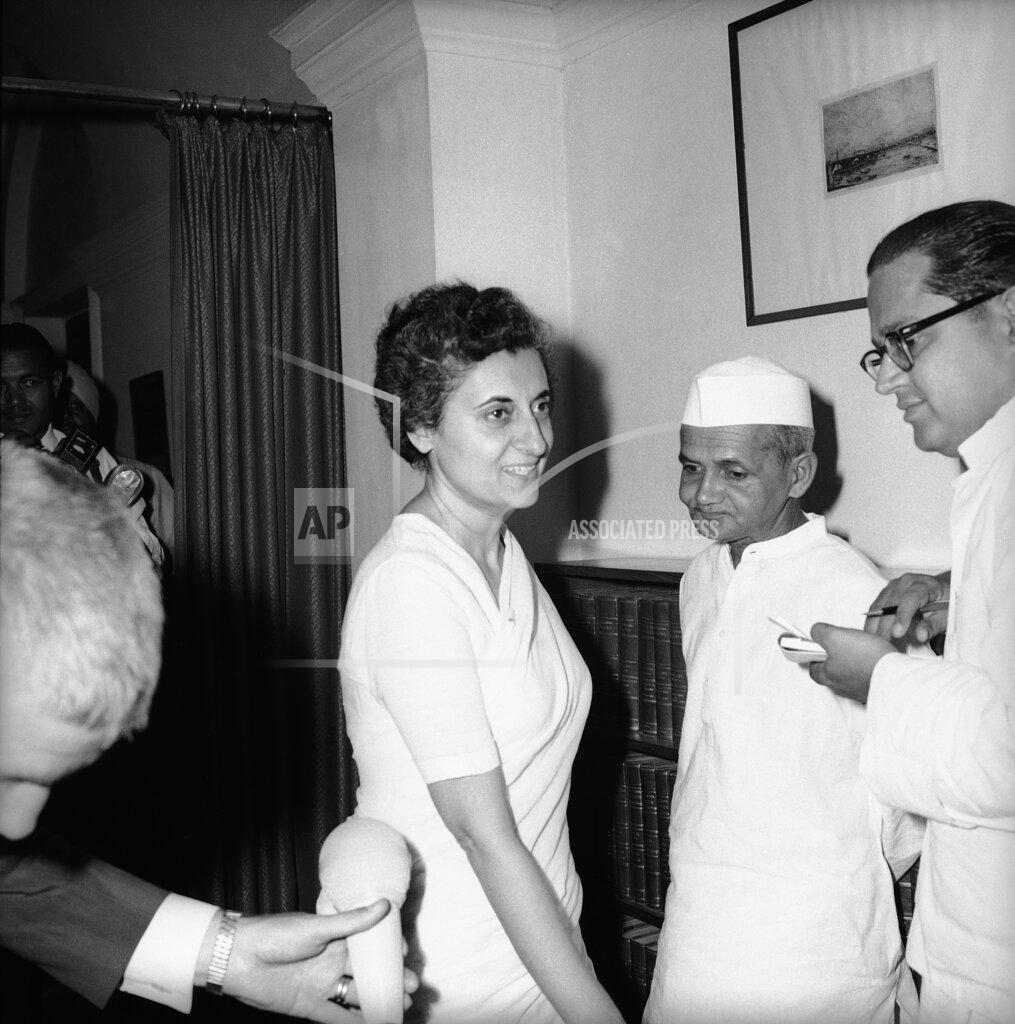
Lal Bahadur Shastri was expected tonight to be named successor to Prime Minister Nehru in an election fixed for Tuesday among the 537 members of the ruling Congress party in the Indian Parliament. In a meeting today, party leaders authorized their president, Kumaraswami Kamaraj Nadar, to make a recommendation to the parliamentary caucus. The key figure in opposition to Mr. Shastri is farmer Finance Minister Morarji R. Desai, a conservative Hindu who has formed an alliance of convenience with some party leftists. A unanimous vote of the party’s members was considered important, since Mr. Nehru’s election was unanimous. Party leaders asked Mr. Kamataj to spend the next 48 hours assessing the position of various candidates to find a “consensus” before the formal vote was taken. Mr. Shastri was taken into the government as Minister Without Portfolio after Mr. Nehru suffered a stroke in January. He carried on most of the duties of the Prime Minister’s office from then until Mr. Nehru died of a heart attack last Wednesday.
The trim streets of Aberdeen, Scotland were nearly deserted tonight and in some places the air was heavy with the odor of disinfectant as the city fought to stamp out a typhoid epidemic. The number of confirmed typhoid cases climbed to 160 and 49 more persons were in hospitals with suspected cases. A second wave of typhoid cases has broken upon Aberdeen since the first four patients were admitted to the City Hospital May 19 and the disease spread quickly. The hospital is full now. New patients are being taken to TorNa‐Dee Hospital, six miles up the River Dee. In Aberdeen’s Children’s Hospital a ward has been cleared to receive typhoid cases.
Víctor Paz Estenssoro, the only candidate on the ballot, was re-elected to a third term as President of Bolivia, and his Movimiento Nacionalista Revolucionario (MNR) party, retained 57 of the 73 seats in the Chamber of Deputies and 22 of the 27 seats in the Bolivian Senate.
A special appendix to the Warren Commission’s report will consider in detail the various theories circulating abroad about the assassination of President Kennedy. Unless it finds new information, the commission will unequivocally reject these theories that the assassination was the work of some kind of conspiracy. It has no credible evidence of any conspiracy. The commission’s report is expected, in short, to support the original belief of law enforcement authorities in this country that the President was killed by one man acting alone, Lee H. Oswald.
The assassination, which occurred last November 22 in Dallas as Mr. Kennedy was riding in a motorcade, was followed that same day with the arrest of Oswald. The accused assassin was killed two days later by Jack L. Ruby, a Dallas night club operator, who was subsequently convicted of murder and is now appealing the verdict. It is the idea that Oswald was the lone assassin that many persons abroad have apparently been unable to accept. Reports from major capitals in Europe indicate that many persons believe this view of the assassination is insufficiently logical, without ideology, senseless.
The Warren Commission is aware of and concerned about the foreign skepticism. It considers that its job is to dispel uncertainty and suspicions about the assassination as far as possible. Staff members have read all the published works on the assassination. These include “Who Killed Kennedy?,” a book by Thomas G. Buchanan, an expatriate former American newspaperman, and articles published in France and Brazil.
In addition to the foreign material, the staff has studied every commentary published in this country. It has followed, for example, the repeated doubts by Mark Lane, a New York lawyer, that Oswald committed the crime. A spokesman for the commission said that none of these critical works, foreign or domestic, had come up with any new factual information. He said the commission had found “just a rehash of the same material, the same questions, with each man’s conclusions.” For example, the spokesman said, many advocates of a conspiracy theory simply state without any supporting evidence that the shots fired at the President’s car could not have come from the Texas School Book Depository Building. But the commission’s evidence and experiments show that they unquestionably did come from there.
A Republican whose vote may be needed to close the Senate’s civil rights debate, Senator Bourke B. Hickenlooper of Iowa, said today that he opposed the bill as it stands. “At this moment I am not ready to vote closure,” Senator Hickenlooper said. He appeared on the television program, “Issues and Answers,” on the American Broadcasting Company network. The attempt to shut off the extended Southern filibuster against the House‐passed bill is expected to be made sometime in mid‐June. If all 100 senators are on the floor, 67 would have to vote for closure to bring the bill to a final vote. The legislative leaders conceded that they do not have 67 votes now. The latest Associated Press tally shows 58 for closure, although there are probably several other Senators who will vote that way but do not yet want to say so.
The long and strange Republican Presidential primary election campaign is now virtually finished, and so, apparently, are the two principal candidates, Governor Nelson Rockefeller of New York and Senator Barry Goldwater of Arizona. The polls say Mr. Rockefeller is going to win the last of the state primaries here in California on Tuesday, but the professional politicians swear that, even if the polls prove to be true, they are not going to nominate him for the Presidency at San Francisco in July.
Accordingly, the bitter Rockefeller‐Goldwater fight that started in New Hampshire last March now looks like a double knockout, and the hunt for a compromise is now centering on Governor William W. Scranton of Pennsylvania and former Vice President Richard M. Nixon. Everybody has been surprised so often in these last four months, of course, including the pollsters, that anything can still happen on Tuesday. The polling was still going on this afternoon and was running 49 per cent for Rockefeller, 40 for Goldwater and 11 uncommitted.
Governor Rockefeller will close his California campaign sometime near nightfall tomorrow at the end of a day of hedgehopping between eight airports across the state. His purpose will be a final showing of the Rockefeller grin and talks with his campaign workers to urge them to get out the vote. As the campaign ends, getting out the vote the most important point emphasized by the Governor and his staff.
The Atomic Energy Commission and the U.S. Air Force are jointly supporting work on a relatively simple nuclear rocket engine that is likely to be flying in five years. That would make it the first United States nuclear engine to be launched. Several such engines, or thrusters, would be used to propel an upper rocket stage. Proponents say the newly designed device could save more than $300 million on space missions that are already planned and for which conventional upper stages have been contemplated. They also see a major side benefit. Production of nuclear material for the rocket engine would absorb much of the slack in work at the Hanford, Washington, atomic facility resulting from President Johnson’s order cutting back the output of plutonium for weapons.
Charles Schmid kills the first “Pied Piper” victim in Tucson, Arizona. Schmid — in the presence of his then-girlfriend and an acquaintance — blurted a statement: “I want to kill a girl tonight!” The trio drove to the home of Alleen Rowe, a high school student living with her divorced mother, whom Schmid knew worked nights. It is believed Schmid selected Rowe to be his victim as the teen had refused to engage in casual sex with Schmid and other local youths. Schmid instructed his girlfriend, Mary French, to persuade Rowe to accompany her, Schmid, and John Saunders to the desert. The teenager agreed, although shortly after arriving at the desert, Schmid bound the teen’s arms behind her back as Rowe pleaded, “Why are you doing this to me?” to which Schmid responded: “It’s Mary French’s idea. She hates you.” Saunders then removed Rowe’s bathing costume before Schmid informed him to “take a walk”.
Upon Saunders’ return, he observed Rowe—having been raped in his absence—meekly attempting to redress herself. Schmid instructed Saunders to likewise rape the teen, but Saunders was unable to sustain an erection. Saunders reportedly then refused Schmid’s instructions to bludgeon Rowe with a large rock—instead returning to Schmid’s car to retrieve French, who had remained in the vehicle listening to the radio. Schmid then bludgeoned Rowe to death in the others’ absence. Schmid then returned to the car, where he kissed French, telling the girl, “Remember, I love you.” The three then buried her.
Admiral Arthur Japy Hepburn, USN, retired, commander in chief of the United States Fleet from 1936 to 1938, died in Washington today at the age of 86. Admiral Hepburn had been chairman of the Navy General Board for three years before his retirement in 1945. He was a delegate to the Dumbarton Oaks Conversations in 1944 that helped lay the foundation for the United Nations, and was senior naval adviser to the United Nations Conference in San Francisco the next year.
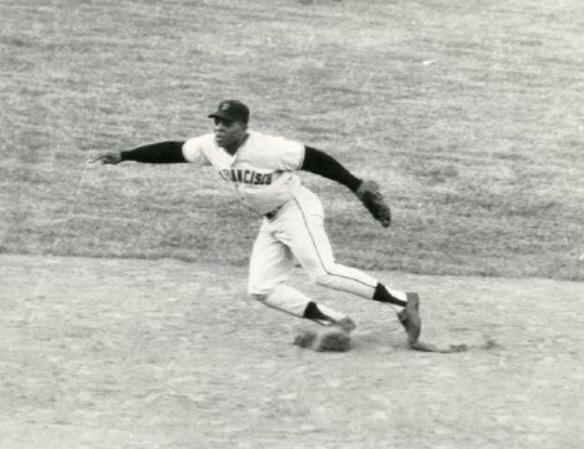
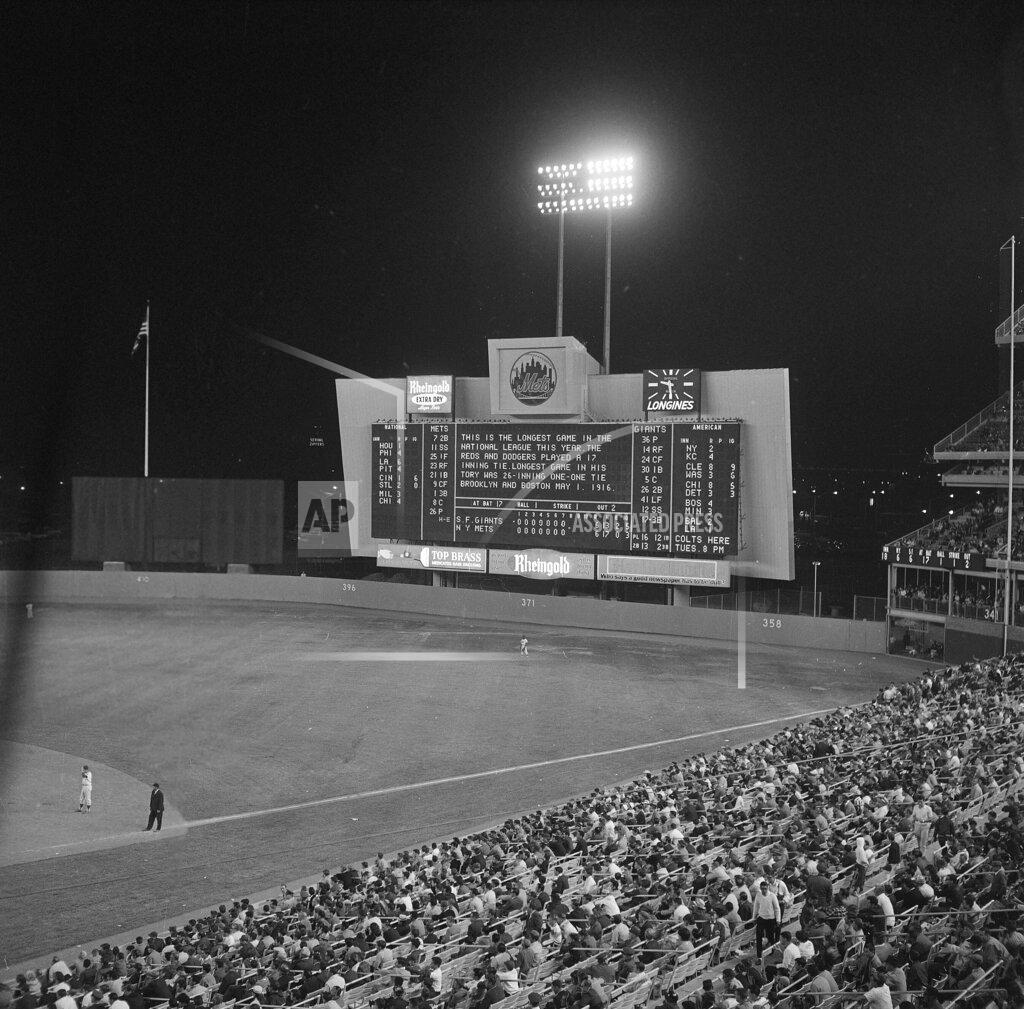
The longest game in Major League Baseball history, up to that time, ended at Shea Stadium in New York at 11:24 pm, seven hour and 23 minutes after it had started, with the San Francisco Giants beating the New York Mets, 8 to 6, in the 23rd inning. The game was the second of a doubleheader between the Mets and Giants that day (the Giants won the first one, 5 to 3), and the personnel and fans who had chosen to stay for both contests were in the park for more than ten hours. Before 57,037 at the Polo Grounds, the Mets and Giants square off in a Memorial Day doubleheader that starts at 1 pm and doesn’t conclude until 11:24 pm. After Juan Marichal’s 5–3, first-game win, San Francisco holds a 6–1 lead in the 2nd until New York rallies for 5 to tie in the 7th. The big blow is Joe Christopher’s 3-run homer that bounces off Mays’ glove over the fence. Mays ends the game at shortstop.
Eventually, with 2 out in the 23rd inning, pinch hitter Del Crandall delivers a run-scoring double off Galen Cisco, and the Giants prevail 8–6 after 7 hours and 22 minutes — a record. Crandall ended the first post-midnight game ever played in the National League, while catching for the Boston Braves in 1949. Gaylord Perry pitches 10 scoreless innings to get credit for the win. In the 14th, the Giants put two runners on and the Mets respond with a triple play, the latest in Major League history. It is the 6th pulled off in the National League and the last Major League triple play this century in extra innings. There have been no extra-inning triple plays in the American League. Thirty-two innings and an elapsed time of 9 hours and 50 minutes are doubleheader records, as are 47 strikeouts. New York’s 22 K’s in the 2nd game are the most by one club in an overtime contest.
At Pittsburgh, the Dodgers score a pair in the 8th to break a tie and beat the Pirates, 6-4. Sandy Koufax goes 7 innings for the win, surrendering a long homer to Roberto Clemente in the 3rd. After retiring, Sandy mentions the hit in his autobiography: “Roberto Clemente hit an outside fastball that was still rising when it hit against the light tower in left center field, 450 feet away from home plate. And on a 1-2 pitch at that.”
Born:
DMC [Darryl McDaniels], American hip-hop musician (Run-DMC – “Walk This Way”; “It’s Like That”), born in New York, New York.
Scotti Hill [Mulvehill], American rock guitarist (Skid Row – “18 And Lie”: “I Remember You”), in Manhasset, New York.
Alex Espinoza, NFL quarterback (Kansas City Chiefs), in Los Angeles, California.
Leonard Asper, Canadian businessman (CanWest), in Winnipeg, Manitoba, Canada.
Died:
Arthur J. Hepburn, 86, U.S. Navy Admiral (Commander-in-Chief, U.S. Fleet, 1936-1938).
 History Diaries