League of Nations High Commissioner for Danzig Karl Burckhardt meets with Nazi district leader for Danzig, Albert Foerster. Foerster conveyed words received from Adolf Hitler last week.
Generalissimo Francisco Franco expressed the desire before thousands of his nationalist followers that Spain “be strong so she will be able to assure her peace”. “I want Spain to become a fortress, but I do not want her to become a fortress to plunge yourself into any adventures,” he asserted after 11,000 women falangists (fascists) in blue and red uniforms conducted a victory parade in Madrid.
Convicted of 800 murders in Madrid, 21-year-old José de Lalamo Galls was condemned today by a military tribunal at Santander to death by the garrote. De Lalamo Galilla, with ten other youths, was accused of establishing an “investigation brigade” allegedly responsible for the arrest of 3,500 Nationalist sympathizers. Most of those arrested, it was charged, were killed. The authorities said de Lalamo Galilia confessed he shot 800 prisoners.
The palace of Archbishop Sigismund Waitz of Salzburg, the Catholic primate of Germany, was seized by an elite squad of Nazi black-shirted guards after an appeal directly to German Chancellor Adolph Hitler went unheeded. The archbishop had asked the Chancellor to rescind the seizure order, which deprived him of the use of his residence. Authorities seized the building yesterday while the archbishop was away. All the removed and furnishings were stored.
The Primate, finding himself dispossessed, took temporary residence in a seminary. What steps he planned next were not disclosed. Archbishop Waitz was notified by authorities a month ago that he would have to leave the palace, which is State property, because the Elite Guard needed the building. At that time the archbishop wrote to Herr Hitler asking him to countermand the order because, he said, Emperor Franz II of Austria had guaranteed to the church the privilege of using the palace and certain other properties in 1805. This action had followed the secularization of 1802, by which all property belonging to the Archbishopric of Salzburg became State property.
Last October Archbishop Waitz was the object of a demonstration in front of the palace in which a crowd chorused, “Away with Waitz!” During the incident some of the windows in the palace building were smashed. The archbishop also was deprived last October of the privilege of supervising religious education in the elementary schools in the Salzburg district.
Furniture vans drew up to the palace yesterday while the archbishop was out of town on a religious mission. A dozen workmen. carried out all the furnishings. Government photographers preceded the movers and took pictures in all rooms, presumably as a catalog of how the palace had been furnished. Archbishop Waitz returned to Salzburg today and found his palace empty and the Elite Guard preparing to move in.
Oranges appeared in plentiful quantities in Berlin after many months of severe shortages. The customary answer given was that Spanish Nationalist Generalissimo Francisco Franco was paying off part of his “war debt” to Germany.
France expresses surprise at the isolationist view in the United States. Opposition to revision of the Neutrality Act causes wondering.
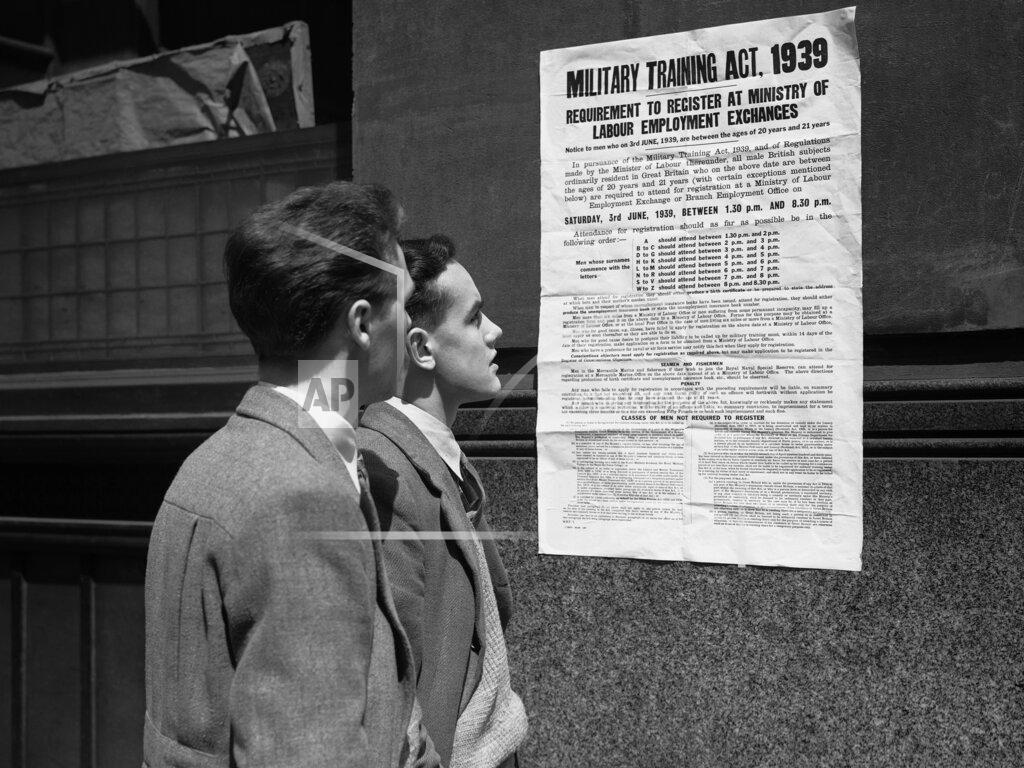
A proposal to resist conscription was overwhelmingly defeated today by the British Labor party congress, which then went on to vote crushingly against the government’s Palestine policy and against the delay in concluding a defensive alliance with Russia. Only 2 delegates of 890 voted in favor of the Palestine White Paper. The card vote on the conscription issue was 1,670,000 to 286,000.
Twenty-four hours after the conference had confirmed Sir Stafford Cripps’s expulsion from the party for attempting to organize a united labor front with the Liberals and the Communists, he applied for reinstatement with four colleagues — George Strauss and Aneurin Bevan, members of Parliament; Commander Edgar Young and Robert Bruce — who had followed him on the same issue. These five sent a joint letter saying they were “prepared to sign the undertakings which are obligatory on every member of the party” and promising to “abide by the decision of the conference on a popular front.”
The Soviet Government maintained silence on report that Soviet troops were involved in fighting along the Manchukuo frontier and on Britain’s latest efforts to bring Russia into an alliance against the Axis Powers.
The British believe that indications are increasing that the Kremlin has reached a decision on the latest Anglo-French proposals for Anglo-French-Soviet mutual assistance pact designed to protect all three powers and lesser States threatened by the Axis powers. Late last night Sir William Seeds, British Ambassador, was called to. the office of Vyacheslav Molotov, Premier and Foreign Commissar, for an unexpected conference. The meeting is understood to have been held for the purpose of ironing out minor points of the proposed agreement.
Officially it was stated today that the Soviet Union had not yet given a reply to the British and French Governments. There was a strong feeling in the foreign diplomatic corps, however, that a reply would probably be handed over to the British and French tomorrow and that the reply would be favorable.
The reasons for this feeling were the unexpected summoning of Sir William at an unusual hour, apparently after Mr. Molotov had given his consent to the appeal voiced by groups of Deputies yesterday that he address the Supreme Soviet (Parliament) and the fact that Mr. Molotov accepted. Experienced foreign observers here do not for a minute imagine that such appeals were completely spontaneous or that Mr. Molotov consented to speak except by authorization of Joseph Stalin, who, it may be safely surmised, has given a great deal of his time and thought to the study of the latest British communication.
So in diplomatic circles it is generally believed that Mr. Molotov will use his opportunity tomorrow night before the Supreme Soviet to make a weighty statement on Soviet foreign policy, on which there has been so much speculation since Maxim Litvinov’s retirement as Commissar. Mr. Molotov’s speech might conceivably be an announcement of Soviet withdrawal from collective security, but the French and British will certainly be surprised if he does that, and the whole present set-up seems to indicate that the Soviet Union will go along with Britain and France if they — as appears almost certain — have acceded fully to the Soviet demand for an Ironclad past, with the Soviet Union treated on a basis of full reciprocity. Full diplomatic representation will be present in the Kremlin Great Palace tomorrow evening for what is expected to be an important international statement.
Attacks on Arabs disturb Palestine. The headsman of a village says visiting Jews fired shots and killed five. Early this morning an Arab-owned bus traveling through the Jerusalem Jewish quarter of Jahne Yehuda was fired on and two Arab passengers were wounded.
Shortly afterward an Arab crowd stoned Jewish-owned buses on the outskirts of Jerusalem, injuring two Jewish drivers and one woman and one man passenger. Arab crowds continued stoning Jewish-owned buses in that vicinity until the drivers fired into the air with licensed revolvers. Police arrived and dispersed the crowds, but four buses were damaged.
U.S. President Roosevelt plans a continental tour to assess sentiment toward his administration. He may go as far as Alaska. Armed with what he termed a very favorable report from Postmaster General Farley on his tour of thirteen Western States to sound sentiment, President Roosevelt had virtually decided today to leave Washington on June 15 for a swing across the continent to observe for himself the sentiment of the country toward his Administration. The President told newspaper men before winding up his week-end visit to the family home here that he would determine the date of his departure for the Pacific Coast before the end of the week.
Mr. Roosevelt left Hyde Park House for his special train just before 11 o’clock and went on board to retire for the night without waiting for the train to pull out at midnight. He is due in Washington about 8 AM tomorrow. Before going to the Executive offices, the President planned to meet with the legislative “big four” for a discussion of the situation confronting Congress. Temporary White House offices said that the President had called for a conference at the White House with Vice President Garner. Speaker Bankhead, Senator Barkley and Representative Rayburn.
Except to say that Mr. Farley’s report was very favorable, the President would not elaborate on his aide’s findings on his trip. The Democratic chairman had told intimates prior to his departure, however, that it was his purpose to sound out sentiment on his own as well as on the President’s behalf. Moreover, while Mr. Farley has yet to make any public statement on the conclusions he brought back, friends who talked with him last week in Chicago received the impression that he had confirmed his belief that President Roosevelt would have no difficulty in getting a renomination on the Democratic ticket if he so desires.
A survey shows Senator Robert Taft of Ohio as equal to Roosevelt in the presidential race. Many oppose a third term for the President.
Vice President John Nance Garner is in for the greatest social spree of his career when the British King and Queen come next week. He has avoided capital society for years, but his rank is pulling him to the front in all the functions planned for the visiting monarchs. Lady Lindsay, wife of the British Ambassador, indicated today that Vice President and Mrs. Garner probably would be the first persons formally presented to the royal visitors at the garden party June 8.
Ranking officials, including some Cabinet members, will be presented to King George and Queen Elizabeth on a portico before the royal couple separate for a walk among the 1,350 guests on the lawn. Mr. and Mrs. Garner head the reception committee which is asked to help the Roosevelts receive their guests at the station. There is a White House dinner that night and an embassy dinner the next night.
Friends are chuckling over the Vice President’s predicament and his alleged attempts to escape from the social hubbub. One story is that Mr. Garner told the President or Mrs. Roosevelt in jest that he heard there was a great demand for invitations to the royal dinner and asked if it would be all right if he and Mrs. Garner sold theirs.
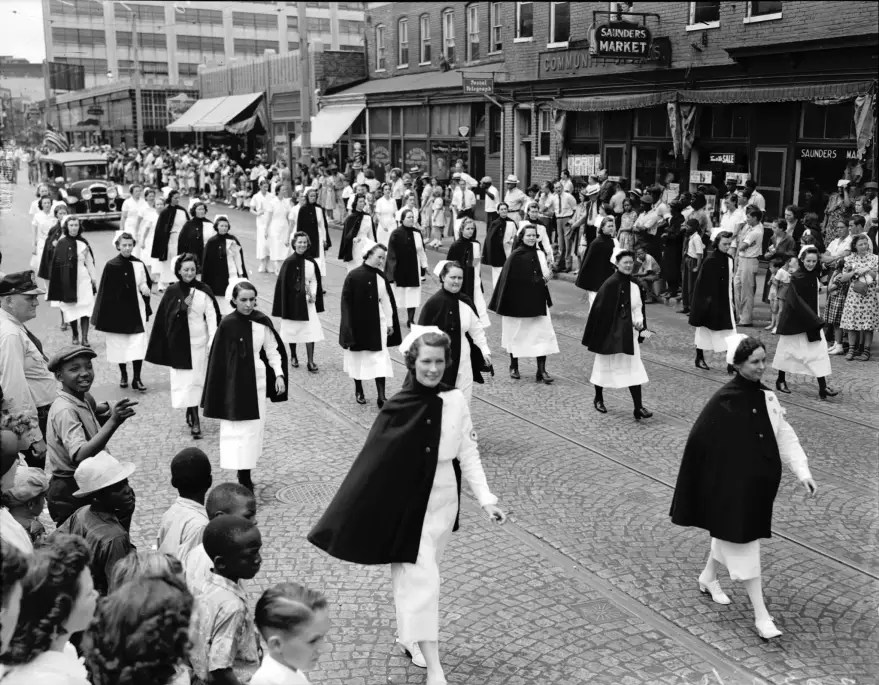
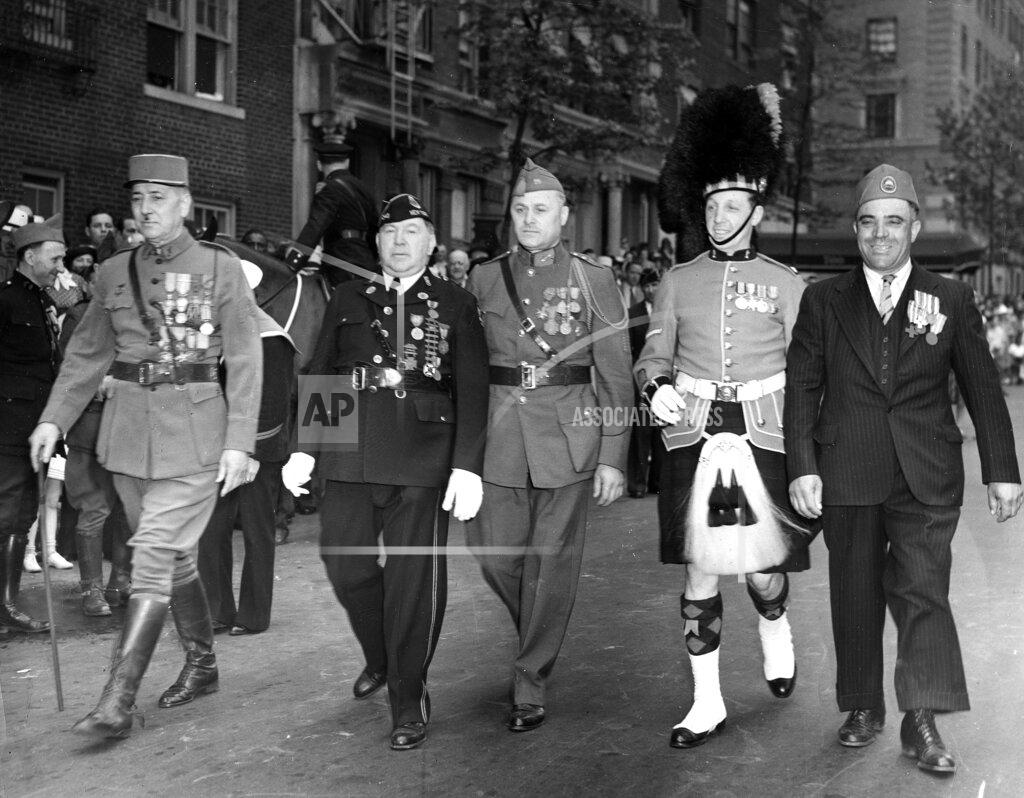
U.S. Veterans of three conflicts join patriotic groups in Memorial Day services in New York, as 75,000 march to honor war dead. Solemn tribute to the nation’s heroic dead was paid yesterday by Americans throughout the United States and even in distant lands as the twentieth Memorial Day since the close of the World War found the nation resolute on maintaining the liberties which they had won. Columns of marching men — a few bent and feeble, the gallant survivors of the men who fought with Grant and Farragut; far greater numbers of veterans of the days of 95 and those of 1917, and a host of stalwart wearers of the uniforms of the nation’s armed services today joined with organizations of patriotic civilians in commemorating the fallen.
From before the Tomb of the Unknown Soldier in Arlington; from the Battlefield of Gettysburg, and from patriotic rallies in countless cities, towns and hamlets throughout America there came fresh pledges by the participants that the sacrifices made by those who gave their lives for their country should not be in vain.
Across the Atlantic Ambassador Joseph P. Kennedy and many Americans attended services in St. Margaret’s Church, Westminster, while war graves were decorated and a service was conducted at Brookwood, where 475 Americans are buried. Similar rites were held in other foreign lands where Americans were present in any considerable numbers.
For the first time a Southerner, Senator Harry F. Byrd of Virginia, delivered the Memorial Day address at Gettysburg. He combined a note of thankfulness for the passing of sectional hatreds with a warning that they were being succeeded by class animosities and an appeal that these should not be allowed to disrupt our national unity.
President Roosevelt spent the day resting at his home at Hyde Park, New York. He inspected plans for improvements to his hilltop cottage where he will entertain King George VI and Queen Elizabeth at a picnic.
Above the sunken submarine USS Squalus, off the New Hampshire coast, a twenty-one-gun salute resounded in honor of its twenty-six dead, as the thirty-three survivors attended a memorial service marked by the dropping of flowers from an airplane on the scene of the recent disaster.
Two more men admit guilt in a counterfeit money scheme. A group of men distributed $200,000 in fake funds.
World War I draft dodger Grover Cleveland Bergdoff repents the follies of his youth and issues a public apology from his prison cell.
In an attempt to spruce up their appearance, National League umpires wear white gabardine trousers with blue jackets.
Large crowds were attracted to holiday double-headers all around the major league circuits. At the Polo Grounds 58,296 jammed their way in and watched the New York Giants subdue the Brooklyn Dodgers, 5–4, and then lose, 3–1.
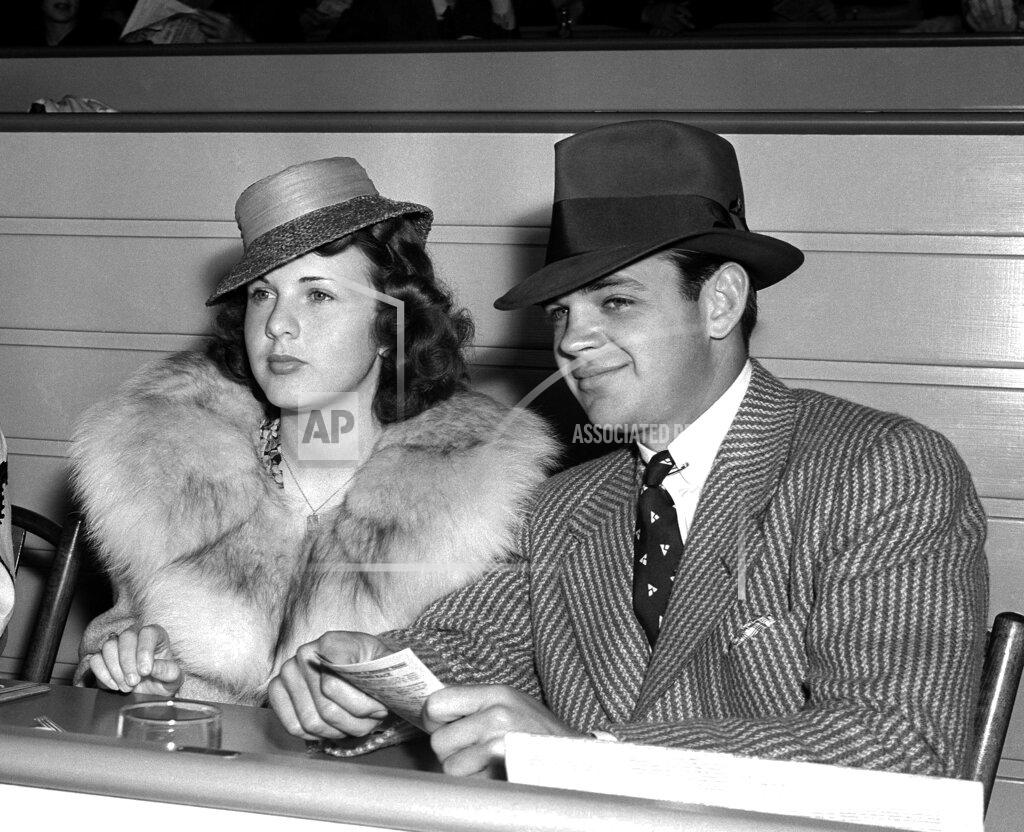
Pittsburgh’s Johnny Rizzo drives in 9 runs, a Pirate record, to give the visiting Pirates a 14–8 victory over St. Louis in game 2. Rizzo includes homers in the 5th, off Clyde Shoun, and the 9th, off Bob Bowman, and a single and a pair of doubles in the barrage. The Cardinals win the opener, 7–2.
At Cincinnati, the Cubs Larry French and Vance Page fire shutouts as the Cubs win, 6–0 and 2–0, before 40,619 fans in Cincinnati. Whitey Moore loses the opener, while Bucky Walters drops the nitecap.
At Boston, the Red Sox and Yankees split a Memorial Day doubleheader. The Sox double the Yanks, 8–4 in the opener, before the New Yorkers roar back to win the nitecap, 17–9. Ted Williams hits a long home run off Red Ruffing in game 1, that after retirement he says it is hardest hit ball he ever had. He also homers in game 2. Joe DiMaggio draws a pinch walk in the 6-run 8th inning of game 2, then is replaced by backup catcher Arndt Jorgens, who scores in his only appearance this year. Next year he’ll be on the active roster all season and not make one appearance.
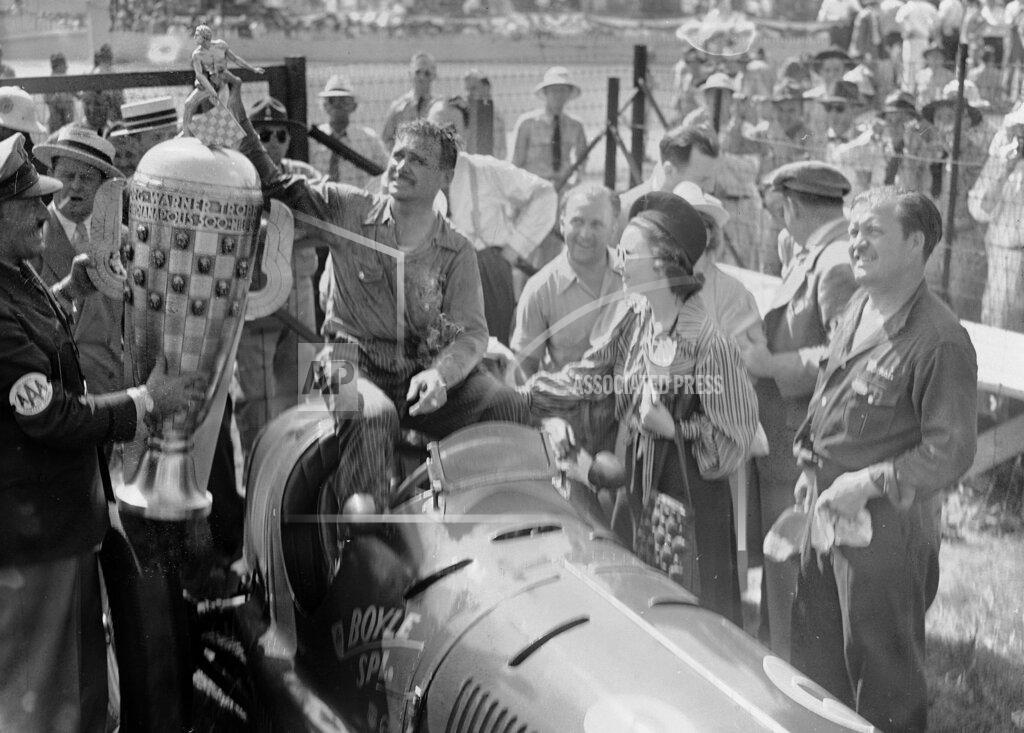
Wilbur Shaw won the Indianapolis 500. Reigning champion Floyd Roberts is killed in a crash on lap 109; Wilbur Shaw wins his second of 3 Indy 500 titles.
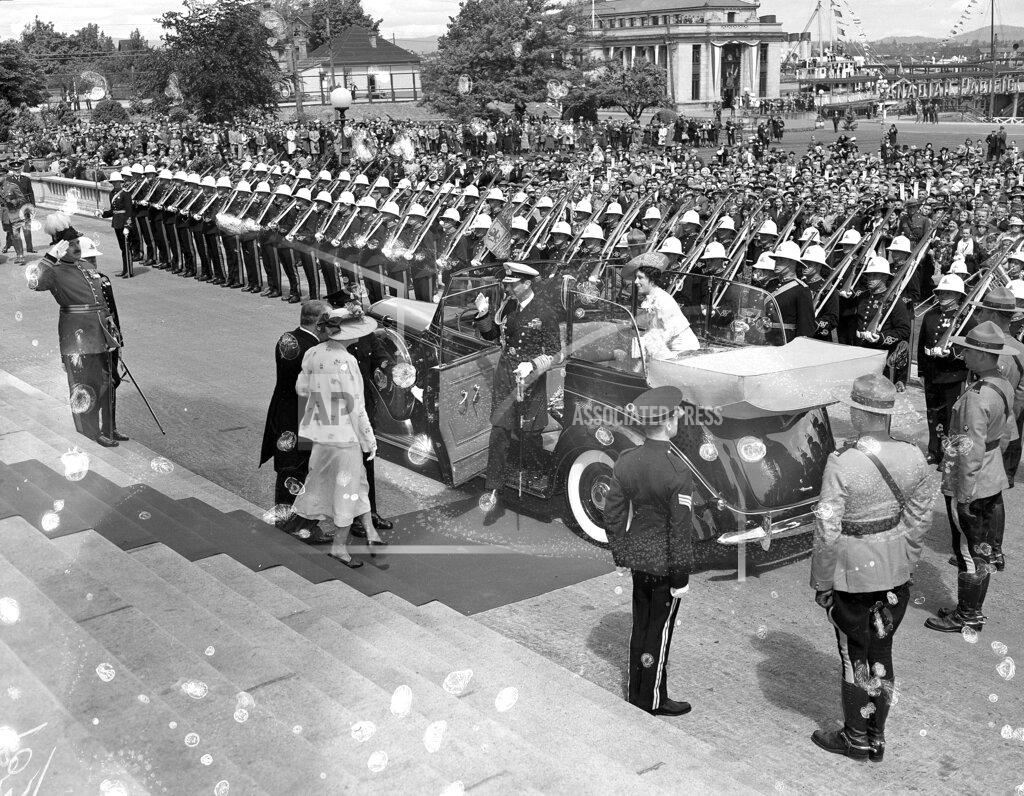
King George and Queen Elizabeth spend this day of their whirlwind Canadian visit in Victoria, British Columbia. The English King speaks of aid in Asia during a speech in British Columbia. He urges a greater Canadian role in Far East issues. Tomorrow, they move on to Vancouver.
Max Loewe, a Jewish refugee about 48 years old, who was a passenger aboard the Hamburg American liner MS St. Louis, on which more than 900 Jews are being held in the harbor of Havana, Cuba pending a government decision on their entry, slashed his wrists and jumped into the bay this afternoon. He was picked up by a launch and was taken to Calixto Garcia Hospital. The authorities assert that so far, he is unable to make a statement. He is a lawyer from Hamburg, it was learned, and he has a wife, Elise, and two children, Ruth, 17, and Fritz, 12, who are aboard the St. Louis.
The steamer, which arrived here Saturday and was scheduled to sail this afternoon, remained in port as Jewish relief associations here made last-minute efforts to obtain entry for the refugees. The Cuban authorities continued their investigation of passports asserting that the recently enacted immigration regulations must be strictly enforced.
The Chinese reported today that they had repulsed another Japanese effort to clean out the Chinese from the Wutai Mountains area, a Chinese Government and military base in Northeastern Shansi Province. A five-way Japanese advance is said to have been checked in a battle at Talung. The Japanese casualties were put at 1,000, and the Chinese said they had captured much equipment.
Japanese warships today attempted to run the gauntlet past forts guarding the Min River approach to Foochow, but were forced back by withering shellfire from the Chinese forts. The war vessels returned to the attack, however, after bringing up reinforcements from among naval craft anchored off the mouth of the river, 380 miles south of Shanghai. At nightfall the Chinese forts and warships still were exchanging heavy fire.
Japanese representations to French and Netherland diplomats today urged steps to prevent the “pirating” of their flags by Chinese vessels along the China coast. The Japanese Embassy said similar cooperation would be asked of Britain and the United States.
General Feng Yu-hsiang, Vice Minister of the Chinese Military Affairs Commission, asserted today that more efficient Chinese resistance between March 1 and May 15 had resulted in the death of 120,138 Japanese soldiers. In a nationally broadcast speech from Chungking, the former war lord also said 2,100 Japanese troops had been taken prisoner and that more than 2,000 Japanese horses, 200 machine guns and 42 artillery pieces had been captured during the ninety-day period. Chinese forces, he continued, captured or damaged 430 Japanese tanks and armored cars, sank 29 invading warships and shot down 26 Japanese airplanes.
Born:
Michael J. Pollard, actor, in Passaic, New Jersey (d. 2019).
Died:
Floyd Roberts, 39, American racing driver (killed in crash at the Indianapolis 500).
Naval Construction:
The Вое́нно-морско́й флот СССР (ВМФ) (Soviet Navy) “S” (Stalinec)-class (2nd group, Type IX-modified) submarine S-33 is launched by the Marti Yard (Nikolayev, U.S.S.R.) / Yard 198.
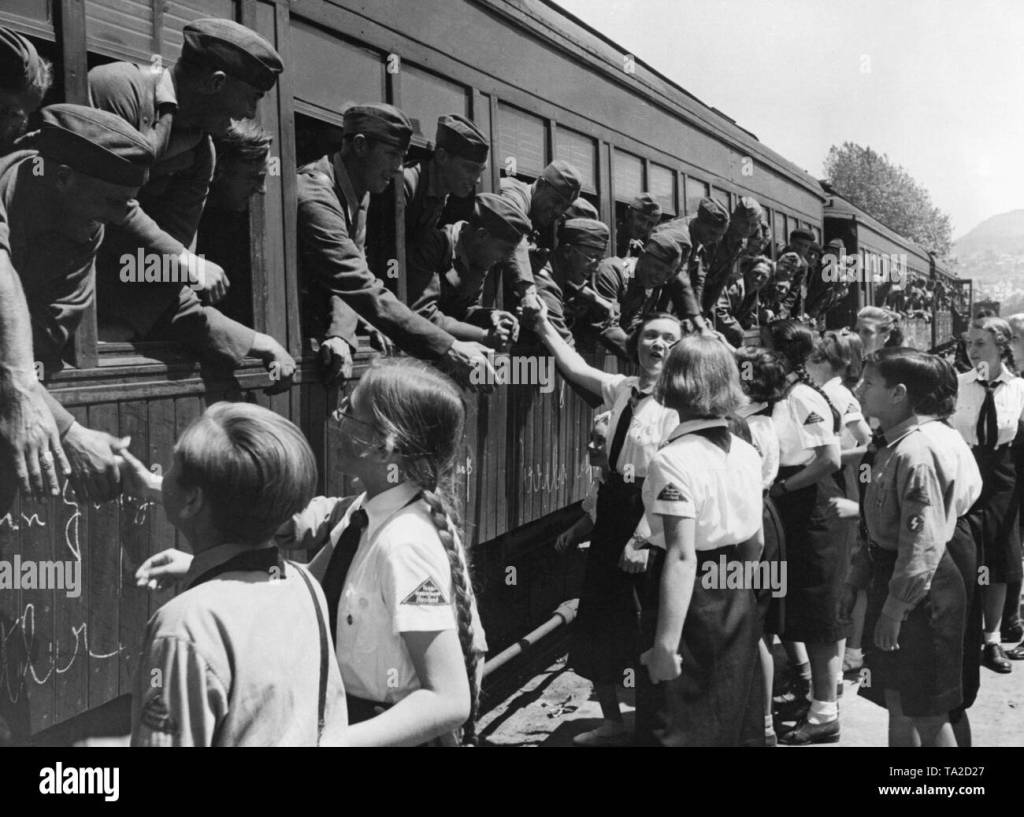
[Ed: Most of these men will die, be maimed, or be taken prisoner in the next 6 years.]
 History Diaries