In South Vietnam today it is the optimists who think the war will be a long one. Pessimists look for some critical decisions much sooner. They fear that political developments in South Vietnam will bring an end to 10 years of pro-Western government. In between are those who look for a deliberate extension of the campaign-a redrawing of the West’s military perimeter in Southeast Asia to present a more tenable line of defense against Chinese Communist expansionism. To all observers, it is clear that the Vietnamese-American war effort against the Việt Cộng is in serious trouble.
Nothing drastic has just happened in South Vietnam; there has been no sudden deterioration. If anything, the last four months under the Government of Premier Khánh have seen scattered and superficial improvements in many important sectors. Nor does the trouble arise from a fear of imminent military defeat. The Communist insurgents have shown increased military capability in recent months, but their own propaganda organs are the first to concede that a purely military decision is well beyond their grasp.
The danger the Vietnamese and Americans alike now fear is a psychological collapse. Internally, there is a clearer manifestation of weariness with a war that seems to lead not to peace but only to more war. Externally, there is turmoil in neighboring Laos and Cambodia and the feeling that if any new international negotiations are undertaken concerning those countries, readjustments in South Vietnam will naturally follow — and not necessarily to the benefit of the West.
External psychological pressure comes also from Paris, where President de Gaulle points the way to just the neutralism that the pro‐American leaders here fear most. It also comes from the United States, where an election campaign indicates that Americans are far from united in support of a long and costly war. Compared with four months ago, or even a year ago, the most cheering fact to American observers is the character of South Vietnam’s Premier, the jaunty young general who took power‐last January 30. “Under General Khánh the country has a better government than at any time in past years,” said a senior American policymaker.
It was a year ago that opposition to President Ngô Đình Diệm flared into the open and started the crisis that led to his downfall last November General Khánh supplanted the junta that had ousted the Ngô family’s regime. General Khánh’s energy and swift footwork have not flagged since the day he seized power in the inauspicious circumstances of a coup d’état that no, one seemed to expect or want. Against many predictions, he has kept several steps ahead of those who wish him ill. The idea of another coup or of a reshuffle under the threat of force seems less and less attractive — except to those who see that as a way to end the war. Assassination is a different matter, but for a man undoubtedly in this danger, General Khánh seems amazingly relaxed and confident. He has two houses in Saigon and lives in one or the other without a fixed pattern. Avoiding the tight security that used to surround Mr. Diệm, General Khánh is easily accessible and frequently mingles with the people.
The Premier quickly found a loyal supporter in the United States Secretary of Defense Robert. S. McNamara who, associates say, has stepped out of character to become personally, even emotionally, committed to the 36-year‐old general. “If anyone can do the job here, Khánh is the man,” said one Washington‐based official. To observers here the “if” clause weighs heavily.
In Đà Lạt, four generals who were members of the former ruling junta were freed, reliable South Vietnamese Government sources reported. They were arrested when Major General Nguyễn Khánh seized power in Saigon January 30. The long‐awaited move by Premier Khánh’s Military Revolutionary Council was aimed at healing wounds left from his coup d’état and thereby strengthening his position in the South Vietnamese Army. The four men were said to have retained their ranks but there was no immediate indication that they would be given new jobs.
The four are Major General Trần Văn Đôn, former Defense Minister and Commander of Army Forces; Major General Lê Văn Kim, former Chief of Staff; Major General Tôn Thất Đính, former Interior Minister, and Major General Mai Hữu Xuân, former chief of the National Police and of security. Their release followed a secret 26-hour military hearing in the mountain resort of Đà Lạt. The overthrown generals faced their military colleagues in the present government to discuss charges of pro‐neutralist activity leveled against them by Premier Khánh. Reliable sources said that no actual plotting had been proved against the generals, but added that evidence was produced to indicate “intentions along neutralist lines.”
Diplomatic initiatives taken by the major powers to resolve the crisis in the Southeast Asian kingdom of Laos were mired today in Laotian factional politics. Responsible diplomatic officials doubted that proposed East‐West talks on Laos could be arranged unless internal political relations were stabilized and military operations ended. The newest crisis originated with the offensive begun May 16 by pro‐Communist forces against neutralist troops on the Plaine des Jarres in north‐central Laos. The Pathet Lao advance raised the danger of foreign intervention that would involve the United States and Asian Communist powers in a general conflict. A senior diplomat here, commenting on the deteriorating situation, remarked wearily: “Trying to restore peace in Laos is as difficult as putting Humpty Dumpty together again.”
The immediate problem confronting both Western and Communist powers is to find a responsible government that could represent Laos in proposed diplomatic consultations or at a conference of the 14 nations that signed the Geneva accords in 1962. The signatory nations agreed then to create a unified, neutral Laos. The coalition Government headed by the neutralist Prefer, Prince Souvanna Phouma — which was recognized at Geneva — has been splintered into confusion. The Pathet Lao is refusing to accept Prince Souvanna Phouma as Premier because of the merger last month of the neutralists and the right‐wing faction. The Premier is also en countering opposition, from right‐wing generals controlling this capital, to his efforts to arrive at a compromise with the Pathet Lao.
It is now apparent that the coup d’état in Vientiane on April 19 ousted General Phoumi Nosavan as leader and spokesman of the right‐wing faction. The right‐wing has become a loose coalition of generals and has no coherent political policy. General Siho Lanphouthacoul, the 29-year‐old extreme right‐wing security chief who led the coup and whose troops now control Vientiane, does not always accept the instructions of Premier Souvanna Phouma. General Siho Lanphouthacoul and General Kouprasith Abhay, nominal leader of the revolutionary committee formed at the time of the coup, have privately expressed the view that diplomatic negotiation with the pro‐Communists is useless. Their views have not been affected by the apparent inability of their own troops to withstand the attacks of the Pathet Lao, said to be supported by North Vietnamese forces. The two generals have spoken in favor of United States military action against North Vietnam and Communist China as a solution to the difficulties of Laos.
Britain has suggested to the Soviet Union that they, as co‐chairmen of the 1962 conference on Laos, condemn the attacks by the Pathet Lao. United Press International quoted a report by a military source that neutralist forces had strengthened their hold on the strategic town of Muong Soui near the Plaine des Jarres.
U.S. Secretary of State Dean Rusk arrived in Saigon today and declared that the United States was determined to force Communist China and Communist North Vietnam to leave their neighbors in Southeast Asia alone. “We are serious about Southeast Asia,” Mr. Rusk said after landing here for a six‐hour stopover en route to a high‐level conference of United States officials on Southeast Asia in Honolulu.
“It is absolutely necessary that Hanoi and Peking decide to leave their neighbors in this part of the world alone,” he said. “So all our efforts will be spent on requiring them to make that decision. If we do so there can be peace in this part of the world. It’s just as simple as that.” Mr. Rusk arrived from Bangkok, Thailand, where he spent the night after having attended funeral services for Prime Minister Nehru in New Delhi. Police and security forces were strung out along the road leading from the airport into Saigon and special guards checked all traffic in and out of the airport. Mr. Rusk indicated that important decisions affecting the fate of Southeast Asia would be made at the Honolulu conference and by President Johnson in Washington after that.
Malaysia formally agreed today to attend a meeting of heads of state in Tokyo in mid‐June with Indonesia and the Philippines. Similar announcements were made in Jakarta and Manila. A Malaysian spokesman said Prince Abdul Rahman, the Prime Minister, was satisfied that Indonesia would withdraw most of the guerrilla bands now operating in Sarawak and Sabah, Malaysia’s component areas on the island of Borneo, before the top‐level talks were to begin. A border check by Thailand has been requested by the three nations, and the spokesman said that unless this check showed most of the guerrillas gone, Prince Abdul Rahman would refuse to meet President Sukarno and President Diosdado Macapagal.
Premier Khrushchev talked day with Walter Ulbricht, the East German Communist party chief. A communiqué said they agreed fully “on all questions under discussion,” including “international problems of mutual interest.” The Communist party newspaper Pravda printed the text of a speech Mr. Ulbricht made at a dinner in the Kremlin last night. Responding to a speech by Mr. Khrushchev, the East Ger man leader said intense effort must be made not only to raise living standards, but also to produce goods that could be sold in western markets.
East German guards fired three machine‐gun bursts as a fugitive escaped into West Berlin during the night, it was reported. The 23-year‐old East Berliner was uninjured.
Premier Levi Eshkol of Israel will arrive in the United States tomorrow for the first official visit ever paid by an Israeli Premier to this country. Mr. Eshkol and other high Israeli officials will arrive in Philadelphia tomorrow to begin a 12-day visit. The Premier will come to Washington Monday for two days of discussions with President Johnson, Acting Secretary of State George W. Ball and other Administration and Congressional leaders. He will go to New York Wednesday. Later he will visit Cape Kennedy, Florida, Houston, Los Angeles and Chicago before returning to New York for his departure June 11 on the new Israeli liner Shalom. The discussions here are expected to touch on a wide range of issues, including Israel’s security and her relations with her Arab neighbors, the Palestinian refugee problem, United States aid to Israel and a proposed joint American‐Israeli project for using nuclear power to desalinate sea water.
President Johnson defined tonight his conception of the Presidency as a force that can evoke a “fundamental unity of interest, purpose and belief” in the nation. In a commencement address before 2,000 members of the graduating class of the University of Texas and an audience of 7,000, Mr. Johnson said he was “going to try and do this.” And on the basis of such a unity, he said, “I intend to try and achieve a broad national consensus, which can end obstruction and paralysis and liberate the energies of the nation for the work of the future.” A part of that work, the President said, should be the building of a better educational system as a part of the “great society” he again urged the nation to develop. “I now call for a goal of a higher education for every young American with the desire and the capacity to learn,” Mr. Johnson said. He repeated his intention, announced at the University of Michigan last week, of calling a conference “to evaluate the needs of education, in America.”
And he said he would “set this goal before them so we can develop policies to meet it — policies which will call for the cooperative action of state and nation, private citizens and public institutions.” He will continue, he said, to pursue this goal “until all our people have the satisfactions which flow from knowledge, and America has the strength which follows from a people who have achieved understanding.” But for “understanding to prosper,” he insisted, “we need unity of purpose.” That led him to his definition of the Presidency as a unifying force. It was based, he said, on his travels to every part of the country, during which he came to believe that “the farmer in Iowa, the fisherman in Massachusetts, the worker in Seattle, the rancher in Texas, have the same hopes and harbor the same fears.”
He declared: “They want education for their children and an improving life for their families. They want to protect liberty and pursue peace. They expect justices for themselves and they are willing to grant it to others. This is the real voice of America. It is one of the great tasks of political leadership to make our people aware of this voice, aware that they share a fundamental unity of interest, purpose and belief.”
A telegram from President Johnson stressing the urgency for passage of civil rights and antipoverty legislation was read in Philadelphia tonight before the Labor Zionist Organization of America. The organization is holding its 34th national convention at the Sheraton Hotel. The telegram, addressed to Hyman R. Paine, chairman of the organization’s central committee, cited the organization for its fight to promote social justice and the welfare of its members during the last 30 years.
Then Mr. Johnson said: “Most Americans are enjoying, this country’s longest period of prosperity, but too many others are walking paths darkened by prejudice and poverty.” He said: “I therefore welcome the sturdy support of your organization in our efforts to gain passage of the economic opportunity and civil rights act of 1964.”
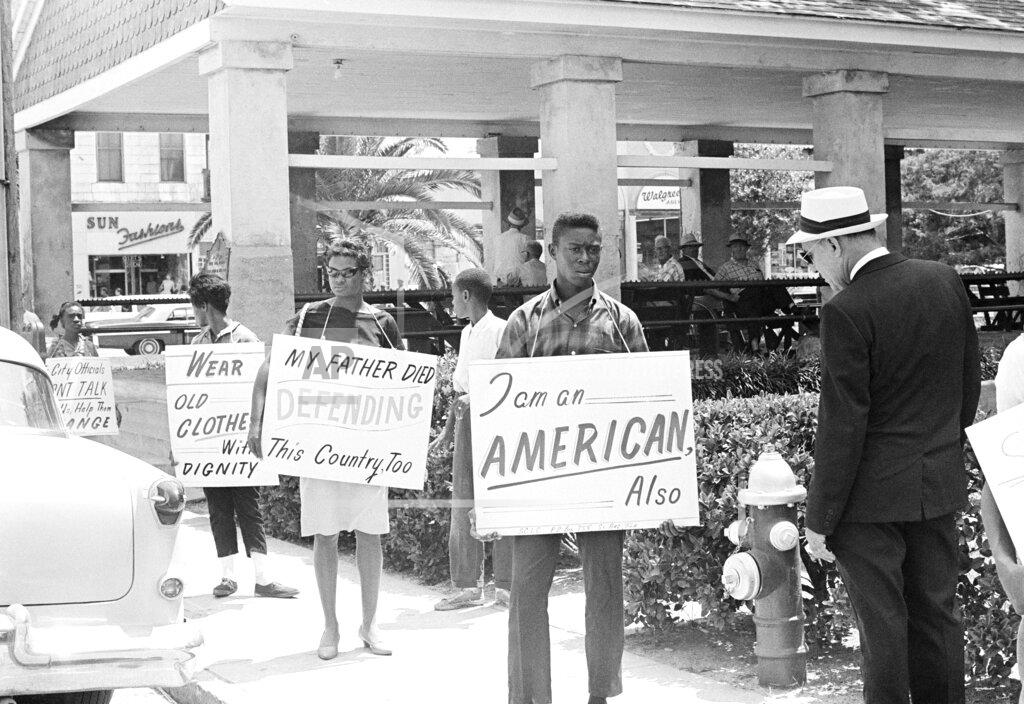
The first week of the summer civil rights drive of the Southern Christian Leadership Conference ended here today with results satisfactory to neither side. Eleven Black sit‐in demonstrators were arrested this afternoon outside two motel restaurants, bringing the week’s arrests to 25. Despite picketing in the downtown area, there was no repetition by nightfall of the sporadic violence that had marked earlier demonstrations. However, the presence of known Ku Klux Klansmen raised tension considerably. The activities of newsmen, who have been among the chief targets of the violence, seemed to interest them more than those of the Blacks.
About 100 Blacks held a civil rights rally tonight at the Zion Baptist Church on the city’s western edge. Ninety of them then marched around, a Black neighborhood singing, while state troopers, sheriff’s deputies, policemen and carloads of whites cruised through the area. Some 150 white toughs lounged along a two‐block stretch in the downtown business district in anticipation of a Black demonstration that never came.
An audience at Mississippi College in Clinton today was told that Mississippi must eliminate racial barriers if it is to progress economically. Murray W. Lattimer, a 1919 graduate of the college, a Baptist institution, said Mississippi’s “salvation” depended on an effort to “bring all its citizens that equality of opportunity to participate in every aspect of life from birth to death, which is and always must be the inalienable right of every American.” Mr. Lattimer is a Washington industrial relations consultant. He spoke at the dedication of the Self Building, for which his family donated the land. His views, given at the conclusion of his dedication speech, drew only polite applause.
He was challenged in responsive remarks by William K. Self, for whose father the building was named. Mr. Self, a cotton planter and banker, defended Mississippi’s treatment of Blacks and expressed the hope that Blacks who wanted to leave the state go to New York and get on the welfare rolls, thereby becoming a financial burden for that state.
There is a sobering realization among Republicans that the national convention at San Francisco in mid‐July is likely to be the most important for the party in modern times. And its significance goes beyond the choosing of a Presidential ticket. “Our struggle this time is over both a candidate and a program,” a key figure in the Republican leadership observed to friend the other day. “Nothing is sure.” His views reflected the consensus of most Republicans of influence and power within their party just before the California Presidential primary, to be held Tuesday.
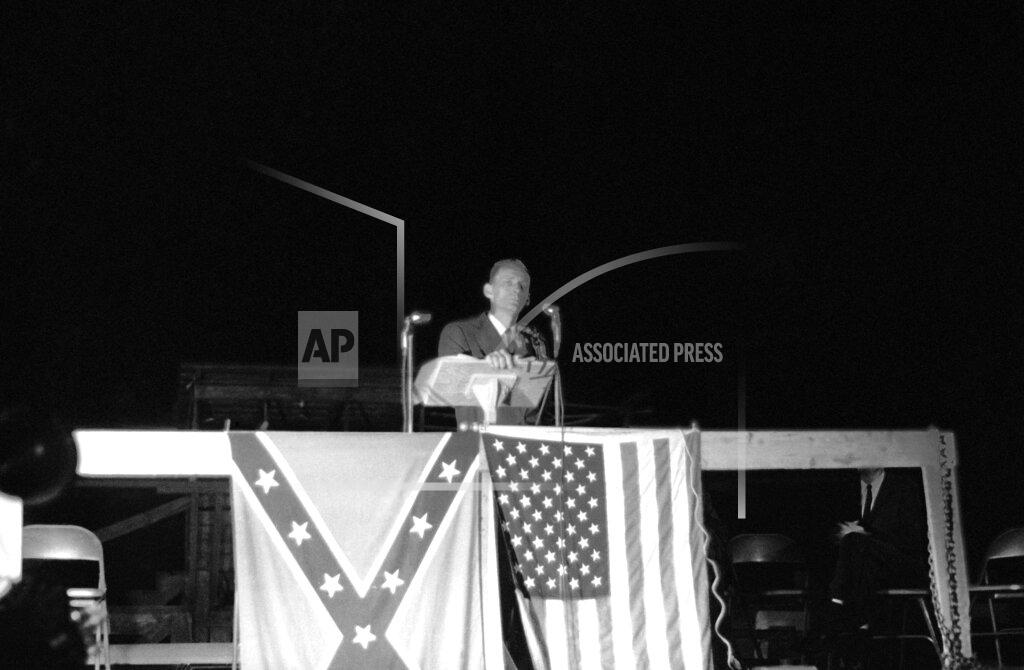
The California test represents a showdown between “moderates” and “ultraconservatives” for the party’s soul and national identity. Former President Dwight D. Eisenhower’s obviously anyone-but-Goldwater statement of principles has highlighted that struggle. It was timed to persuade Republican voters in California to bear in mind issues and ideology as well as the contestants — Senator Barry Goldwater, symbol of the conservative cause; and Governor Rockefeller, who carries the “moderate” and “progressive Republican” banner.” The primary on Tuesday is generally regarded by Republican leaders, now, as a critical skirmish in the developing battle for their party’s future.
Dr. Leo Szilard, one of the great physicists of the century, died early this morning at his home in La Jolla, California, apparently of a heart attack. He was 66 years old. Dr. Szilard was among the handful of scientists who developed the atomic bomb. In 1942, he and the late Dr. Enrico Fermi created the first nuclear chain reaction. The researcher, who was born in Hungary, was one of the men who, with Albert Einstein, convinced President Franklin D. Roosevelt in 1939 of the military potential of atomic energy. Later, when the full terror of the bomb could be realized, Dr. Szilard became a tireless and mercurial campaigner for peace. He also did early and important work in the theory of automation, molecular energy, and the development of the electron microscope.
Alan Bennett, Peter Cook, Dudley Moore and Jonathan Miller comedy revue “Beyond the Fringe” closes at John Golden Theater, NYC, after 667 performances.
The Beatles’ “Love Me Do” single goes #1 in the United States.
Beatles 1961 record of “Cry for a Shadow” is #1 in Australia.
Manuel Santana defeated Nicola Pietrangeli 6–3, 6–1, 4–6, 7–5, to win the men’s singles at the French Open (at the time, referred to simply as the French tennis championship.
French Championships Women’s Tennis: Margaret Court of Australia wins her second French singles crown; beats Maria Bueno of Brazil 5–7, 6–1, 6–2.
The Chicago White Sox scored six runs in the fourth inning on four singles, two walks and an error today to defeat the Detroit Tigers, 10–4.
Philadelphia broke a 1–1 tie on Ruben Amaro’s sacrifice bunt in the seventh inning and went on to gain a 5–1 triumph over Houston tonight. Chris Short pitched a six hitter for the victory.
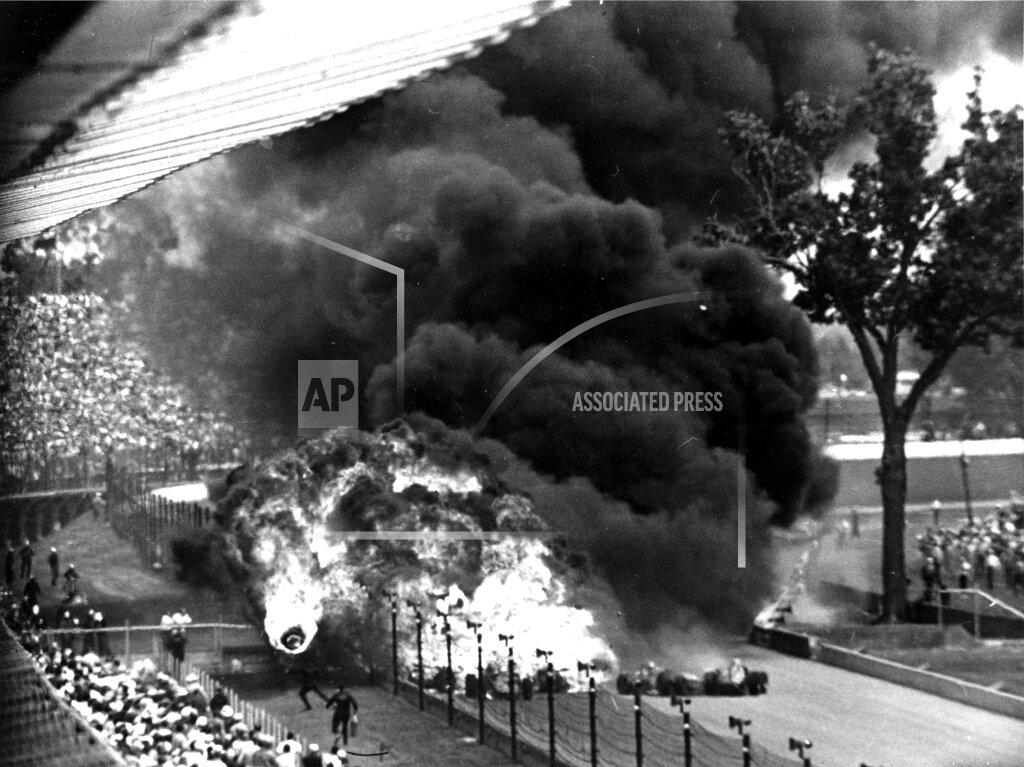
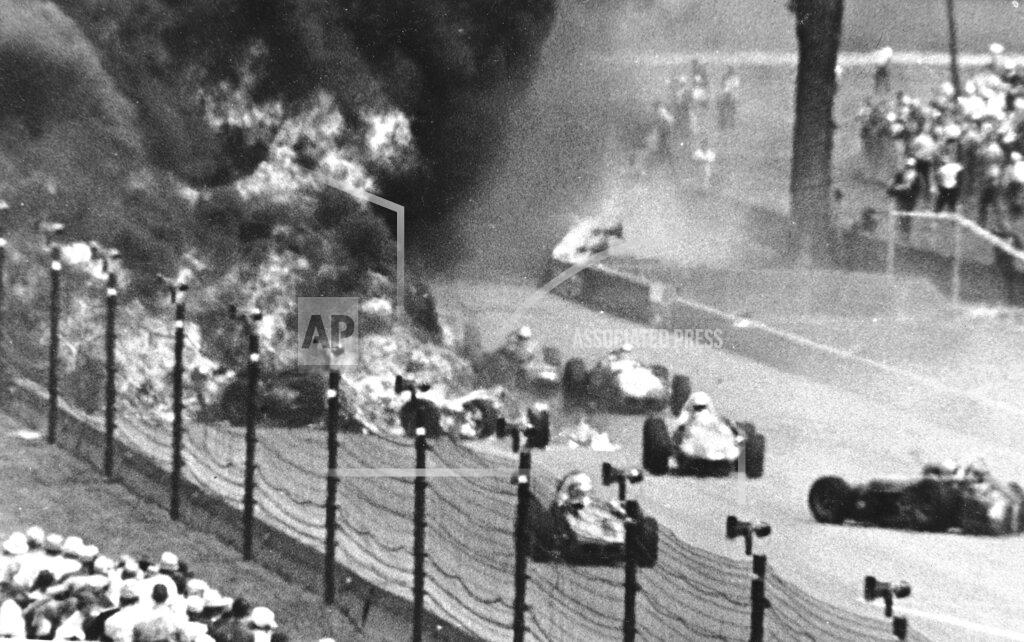
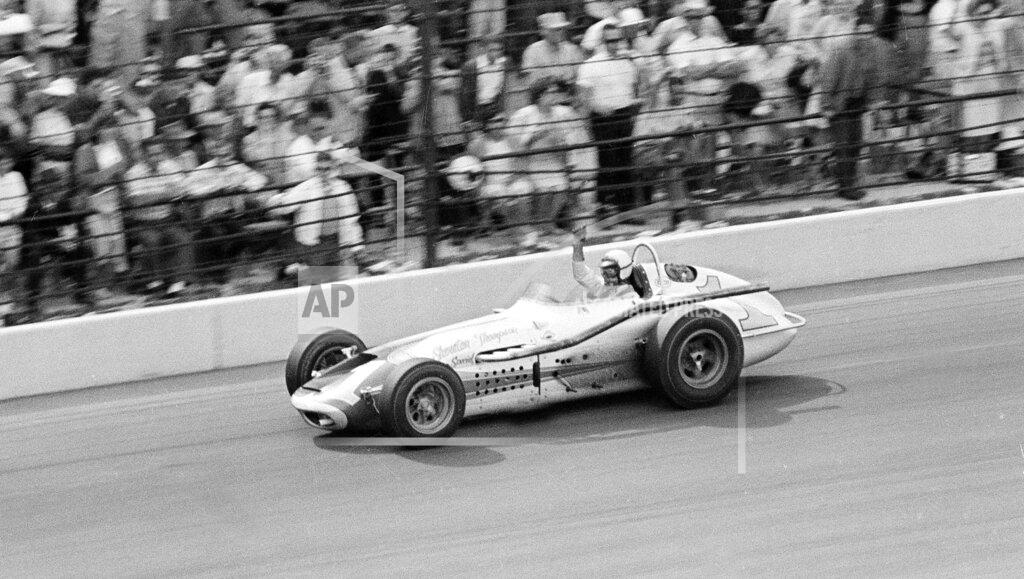
A. J. Foyt won the Indianapolis 500, but the annual motor race was marred by a seven-car accident that killed drivers Eddie Sachs and Dave MacDonald. Only two minutes after the start of the race, MacDonald, a 26-year-old rookie driver, went into a spin on the second lap after coming out of turn. Sachs’s car then collided with MacDonald’s, and both vehicles exploded. For the first time in the race’s history, driving was halted, and would not resume for nearly two hours. Besides Sachs and MacDonald, five other drivers and three spectators suffered burns. Foyt’s victory was the last 500 won by a front-engined “roadster”. All races since then have been won by rear-engined cars.
Born:
Wynonna Judd [born Christina Claire Ciminella], American country-music singer, in Ashland, Kentucky.
Tom Morello, American guitarist (Audioslave; Rage Against the Machine), in New York, New York.
Jeff Lucas, NFL tackle (Pittsburgh Steelers), in Hackensack, New Jersey.
Wayne Coffey, NFL wide receiver (New England Patriots), in Rantoul, Illinois.
Sid Lewis, NFL defensive back (New York Jets), in Canton, Ohio.
Vince Villanucci, NFL nose tackle (Green Bay Packers), in Lorain, Ohio.
Vern Smith, Canadian NHL defenseman (New York Islanders), in Winnipeg, Manitoba, Canada.
Died:
Leo Szilard, 66, Hungarian-born nuclear physicist who, along with Enrico Fermi, patented the nuclear reactor; later a peace activist.
Dave MacDonald, 27, American auto racer (killed in crash at the Indianapolis 500).
Eddie Sachs, 37, American auto racer (killed in crash at the Indianapolis 500).
 History Diaries