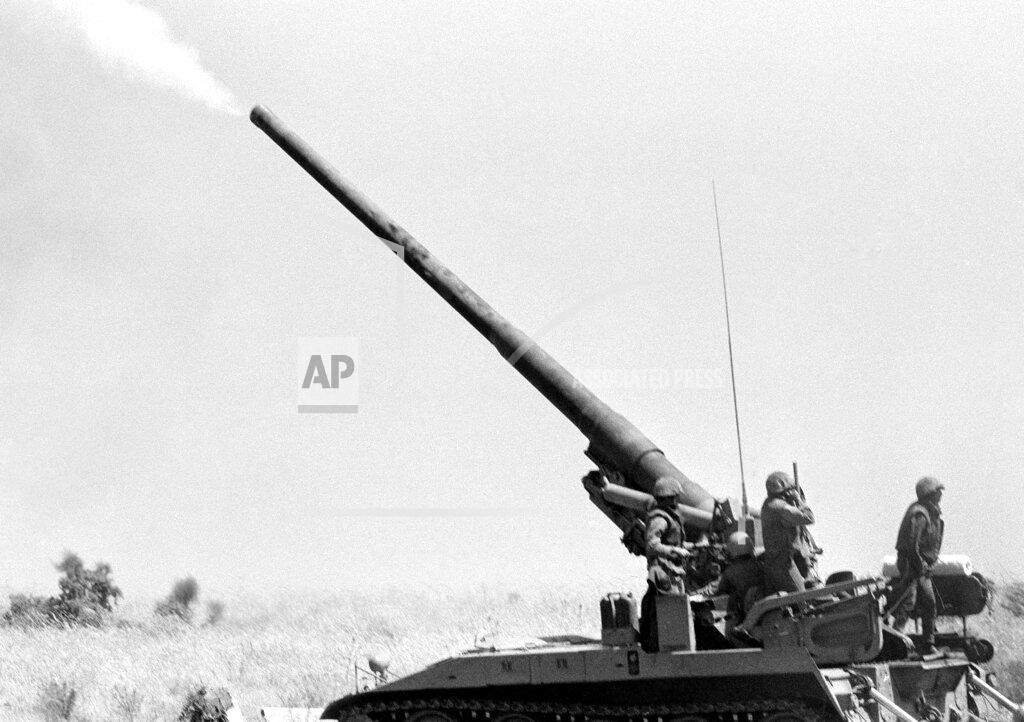
Secretary of State Kissinger ended his month-long Middle East mission and headed home after a stop in Cairo, where he was praised by President Anwar Sadat. The Egyptian leader hailed the Nixon administration’s “effective role” as a great power and expressed an advance welcome to President Nixon, who is expected to visit Egypt during a Middle Eastern trip in June. At a brief joint news conference in Mr. Sadat’s home beside the Nile, the Egyptian leader hailed the Nixon Administration’s “effective role” as a great power and said that “in recognition we welcome the forthcoming visit of President Nixon, and we trust it will be a further step [toward] consolidating the friendship between the American and Arab peoples.” Mr. Nixon is expected to visit the Middle East next month.
Secretary of State Kissinger was reportedly on the verge of breaking off his Middle East negotiations in Damascus Monday morning when Syria’s President, Hafez al-Assad, made a last-minute decision for an all-out effort that led to the Israeli-Syrian agreement on troop disengagement. American officials, who reconstructed Mr. Kissinger’s month of intensive diplomacy, said that it was the third time he had been close to giving up.
In Jerusalem, Israeli officials said that they interpreted a private American assurance as a pledge that the United States would block, with its veto, if necessary, any sanctions the United Nations Security Council might attempt to impose on Israel as a result of military operations against guerrillas.
North Vietnam and the Việt Cộng halted the search for 1,100 Americans missing in Indochina by walking out of a Joint Military Team meeting with the United States and South Vietnam. Communist negotiators said they would return to the talks only when South Vietnam restores privileges for Communist delegates in Saigon. The walkout ended all formal contacts among the four parties since Saigon canceled political talks in Paris last month and the Việt Cộng walked out of Saigon armistice talks a month ago.
Thailand’s new government will exclude the military for the first time in the republic’s 42-year history, Premier Sanya Thammasak said, adding that it was his idea and not government policy. Army commander Kris Srivara extended his support to the government, expected to be announced shortly.
The Brookings Institution predicted that barring a radical change in U.S. foreign policy, defense spending will rise to record levels each year through 1980. By the end of the decade, Brookings’ analysts concluded, peacetime defense outlays will go from the current annual total of $79.1 billion to $110 billion.
President Valery Giscard d’Estaing of France proposed a series of basic political reforms in his first message to the National Assembly. These included a proposal for an appeal system for citizens complaining of civil rights violations and a British-style weekly Parliamentary question time giving deputies an opportunity to question the President and cabinet members. Giscard d’Estaing said in a message to Secretary of State Henry A. Kissinger he wants better relations with the United States. In his first major foreign policy statement to parliament, he also said he would have periodic talks with Soviet leaders, seek good ties with all nations, including China, and build rapidly toward a united Europe. He also announced he will ban the sale of weapons to countries which might use them against the self-determination rights of their people.
Improved relations between East and West Germany were pledged despite the change in West German leadership and a spy scandal which forced Chancellor Willy Brandt’s resignation. His successor, Helmut Schmidt, used his first trip to Berlin as chancellor to assure East Germany Brandt’s eastern policy would not be a casualty of the spy scandal. East Germany’s Erich Honecker said in an interview that the attitude of Schmidt’s government “allows us to expect progress.”
Portuguese trade unions, heeding pleas and warnings from the government and the Socialist and Communist parties, advised workers to strike only if all other efforts to negotiate pay raises failed. The call for restraint was a victory for the new regime of President Antonio de Spinola, which had asked that the people help in establishing a mood of peace and confidence necessary to rebuild the economy or face a return to totalitarian rule.
Italian police fought a gun battle with three young terrorists in the heart of the mountains northeast of Rome, killing one of them and seizing stores of arms and explosives. Two policemen were wounded seriously. Two terrorists surrendered. Police said they described themselves as members of “Mussolini Action Squad,” an organization named after the late Italian Fascist dictator.
The British Government set out today to seek new answer to the problem of how Northern Ireland can be governed with the consent of both the Protestant and Roman Catholic communities. It is universally agreed here that the effort will be long, hard and possibly futile. A day of talks between Merlyn Rees, British Secretary of State for Northern Ireland, and moderate and hardline political leaders did little to dispel that view. Belfast, choked for two weeks by the strike that ended yesterday, returned to work this morning with unexpected vigor. Electricity, gas and public transport were virtually normal, the shops and streets were jammed and factory workers, not expected to report before Monday, streamed in at a steadily rising pace. “It is an ugly city,” commented a passenger caught in a knot of traffic, “but it looks better alive.”
Yugoslav Communists ended their tenth party congress today with the election of President Tito as head of the party for life and with resolutions to strengthen party influence at every level of national life. No major changes in party policy resulted from the meeting; at which all votes were unanimous, even one for a list of Central Committee members that had inadvertently omitted an entire page of names. Trusted wartime comrades of President Tito were returned to party office, and many of them embraced the 82‐year‐old President following his 10‐minute. speech ending the congress. He expressed overall satisfaction with the congress but said that not enough “self‐criticism” had been offered and too few speeches took note of Yugoslavia’s achievements.
A Canadian National Railways passenger train struck a derailed freight car and jumped the track, injuring 60 persons. A railroad spokesman said the freight car derailed across a track in front of the Toronto-Windsor train, which was passing through Ingersoll, Ont. The impact knocked all six passenger cars off the track and derailed six more of the 25 cars of the eastbound freight.
The Aboriginal Tent Embassy, erected on the grounds of Australia’s Parliament House in Canberra on January 26, 1972, was destroyed in a storm, but would be re-established on October 30, 1974.
Two hospitals operated by British missionary groups have been closed in the Ethiopian province of Eritrea to protest the abduction of a 24‐year‐old New Jersey nurse by guerrillas, it was reported here yesterday. The Rev. John P. Galbraith of Philadelphia, head of the Foreign Missions Board of the Orthodox Presbyterian Church, which supports the mission in Ghinda, said the group closed the mission where Mrs. Deborah Dortzbach was abducted by four men who invaded the American Evangelical Church and killed a middle‐aged Dutch nurse. Mr. Galbraith said that more than 2,000 persons had attended the funeral services for the Dutch nurse.
Elections were held for white voters in South Africa for 44 of the 54 seats in the South African senate. The elections for the 171-seats House of Assembly had taken place on April 24. The National Party of Prime Minister B. J. Vorster won 32 of the elected seats, and the United Party of De Villiers Graaff won 12 seats. The National Party had nine of the 10 non-elected seats, for 41 of 54 overall, and the United Party just one, for 13 of 54.
The House Judiciary Committee formally notified President Nixon that his defiance of committee subpoenas “might constitute a ground far impeachment.” As if to underscore the warning, the committee voted overwhelmingly to subpoena 45 more White House tapes. And, in a further rebuff to the White House, which has sought open hearings, the committee, led by Republican members, voted to continue its impeachment inquiry behind closed doors.
President Nixon’s lawyers urged the Supreme Court not to “rush to judgment” by accepting an accelerated review of a lower court ruling that the President must surrender 64 more tapes to the special Watergate prosecutor. In urging the high court not to accept a direct appeal that would bypass the Court of Appeals, the lawyers argued that the importance of the issue required “a thorough and carefully considered review,” including full deliberations before the Court of Appeals.
President Nixon agreed to give two defendants in the “plumbers” case and their lawyers access to the defendants’ personal White House files and to allow the Watergate prosecutor to use any of the material that does not jeopardize national security. However, he said he would retain the right to withhold national security documents even if his decision led to dismissal of charges against the defendants.
Leon Jaworski, the special Watergate prosecutor, said his office had failed to find that executives of the International Telephone and Telegraph Corporation had committed criminal offenses in connection with the settlement of antitrust suits against the company in 1971. In a letter to the head of a House committee, Mr. Jaworski said no such offenses were expected to be found as the staff investigation continued under vigorous new leadership.
President Nixon filed a formal claim today supporting the refusal of his chief fund raiser in 1972 to release evidence subpoenaed by a grand jury in its investigations of bribery and conspiracy in Mr. Nixon’s re‐election campaign. In the face of a judge’s order that most of the subpoenaed materials be turned over to Watergate prosecutors, Mr. Nixon contended that the release of the material from the files of Maurice H. Stans would be “inconsistent with the public interest.” The claim was filed today in Federal District Court for the District of Columbia, according to a spokesman for District Judge George L. Hart.
President Nixon reportedly told a group of conservative Congressmen last night that “if I was guilty, I’d get the hell out fast, but I’m not guilty.” Mr. Nixon’s words were reported today by Representative G. V. Montgomery, Democrat of Mississippi, one of 11 lawmakers who accompanied Mr. Nixon on a three-hour dinner cruise on the Presidential yacht Sequoia on the Potomac River.
The American Telephone and Telegraph Company agreed to pay more than $30 million to 25,000 managers who had charged that the company’s policies had led to salary discrimination. The majority of those to receive back pay and future salary adjustments are women.
Three members of the Sunni Orthodox Muslims, a sect that vows to use vigilante-like attacks to eliminate all drug pushers in Cleveland, shot it out with police in an hour-long siege. Seven persons, five policemen and two hostages, were wounded. The three Muslims, whose group conducted funeral services in Cleveland last week for Donald DeFreeze, Symbionese Liberation Army leader, were arrested. About 100 policemen took part and an estimated 500 rounds of ammunition were fired. Police said five men, including the three arrested, were foiled in an apparent attempt to kidnap a man whom they considered to be a drug dealer. The man escaped and three of the Muslims then invaded a home and held the family hostage during the shootout.
A friend and literary editor of George Jackson, the California prison inmate who became a cause celebré after writing “Soledad Brother,” says Jackson admitted to him that he killed a prison guard in January, 1970. The statement was made by Gregory Armstrong in a book of reminiscence about his relationship with Jackson titled “The Dragon Has Come.” The book relates that the confession came inadvertently in a taped interview with Jackson in Soledad prison on June 19, 1970. Jackson was shot to death in August, 1971, in what authorities described as a breakout attempt at San Quentin prison.
Voters in Massena, New York, approved a referendum permitting the town to take over the Niagara Mohawk Power Corp. facility and run it as a public agency. The town board supported the takeover, contending a municipal power facility could provide electrical service at half the present rate. The utility, which waged a heavy advertising campaign against the takeover, claimed that it provided modern, quality service and that the projected savings were optimistic.
The director of the Justice Department’s Freedom of Information unit, Jerry N. Clark, resigned, contending that Attorney General William B. Saxbe had reneged on a promise of independence for the operation. In a letter to Saxbe, who appointed him in February to head a study of government information practices, Clark said, “It has become clear that the department wishes to exercise greater control over the study and its products.” In an interview, Clark said officials, whom he would not identify, “did not feel they could allow us to go forward without some control.” Saxbe accepted the resignation “with deep regret.”
The Senate Commerce Committee approved major reforms of the food safety laws, including annual mandatory inspection and registration of every food plant in the country. The measure, approved unanimously and sent to the floor, would also require for the first time that food manufacturers include open dating on all labels and list color additives and other flavor and spice ingredients not now required to be disclosed.
A nine-month mail fraud trial for Florida businessman Glenn W. Turner, seven former associates and three Turner-controlled companies ended today when a federal judge declared a mistrial. Turner, an Orlando businessman, had been charged with defrauding “persons too numerous to mention” by selling distributorships without supplying necessary merchandise.
Pan American World Airways said it had paid thousands of dollars to an organized crime ring to buy back blank flight tickets stolen from the airline. Company officials defended the action on the ground that the stolen tickets could have otherwise been used to make trips around the world that could have cost the airline $2 million.
NASA launched India’s ATS-6, sixth of the Applications Technology Satellites, the world’s first direct broadcast satellite, and the most powerful communications satellite launched up to that time.
Sadaharu Oh becomes the first player in Japanese baseball to hit 600 home runs. Only Babe Ruth, Hank Aaron, and Willie Mays are ahead of Oh — and he will surpass them all.
Dow Jones Industrial Average: 803.58 (+8.21, +1.03%).
Born:
Andry Rajoelina, President of Madagascar (2009–2014 and 2019–2023), in Antsirabe, Malagasy Republic.
Big L [Lamont Coleman], American rapper (“Lifestylez Ov Da Poor & Dangerous”), in Harlem, New York, New York (d. 1999).
Marcus Spriggs, NFL tackle (Buffalo Bills, Miami Dolphins, Green Bay Packers), in Hattiesburg, Mississippi.
LeShun Daniels, NFL guard (Minnesota Vikings), in Warren, Ohio.
David Wilkie, NHL defenseman (Montreal Canadiens, Tampa Bay Lightning, New York Rangers), in Ellensburg, Washington.
Vigor Bovolenta, Italian volleyball player for the national team which won five gold medals; in Contarina, Province of Rovigo (d. 2012, heart attack)
Shin Ha-kyun, South Korean TV actor (“Less Than Evil”, “Brain”), in Seoul, South Korea.
Died:
Edward K. Gaylord, 101, American newspaper publisher of The Daily Oklahoman.

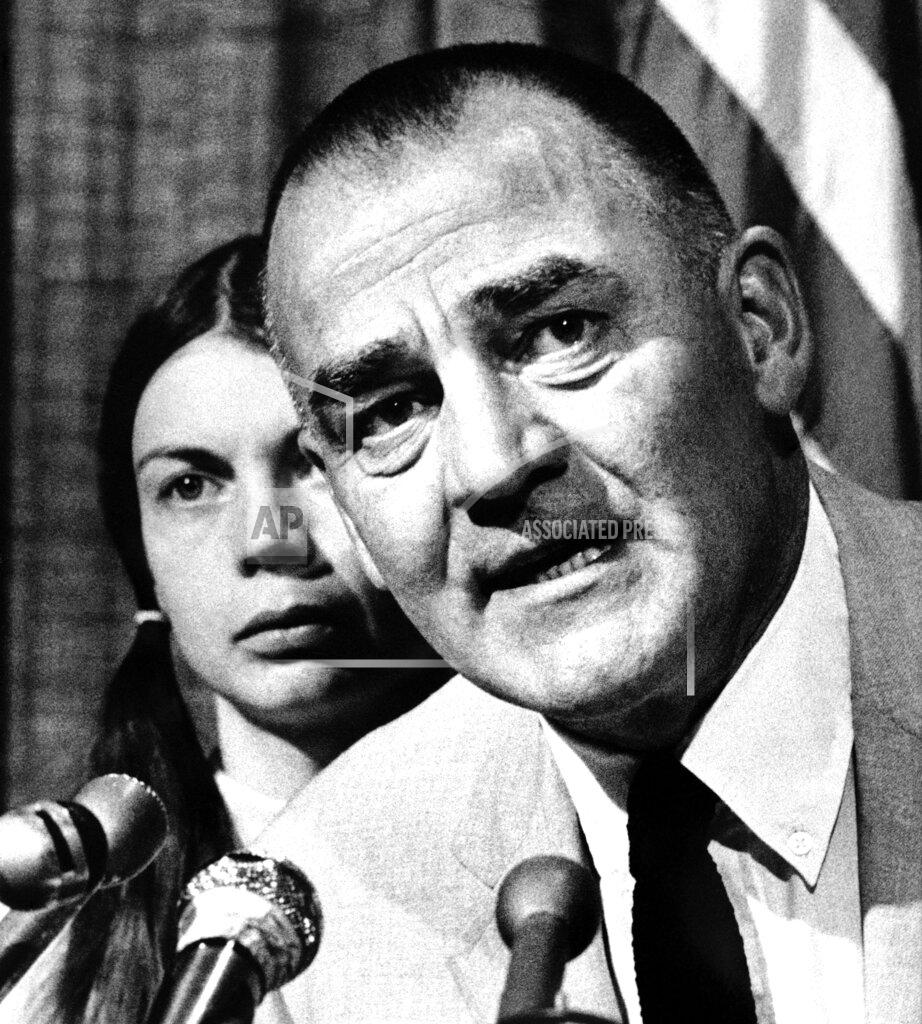
[Ed: Better yet, Don’t let your babies grow up to be violent Maoist assholes….]

 History Diaries