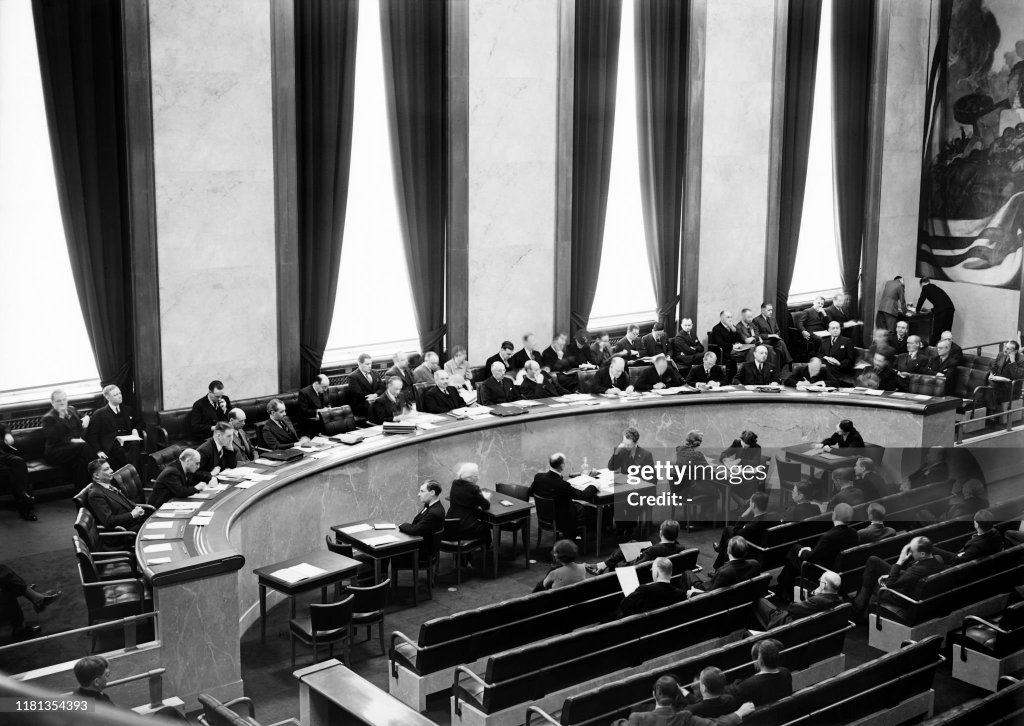
Diplomatic activities of Great Britain and France, notably on the project of a mutual assistance pact with the Soviet Union, are forcing the Polish government out of its breath-holding attitude. Since the hubbub which has filled Europe since Germany’s seizure of Czecho-Slovakia, the Poles have clung steadily to the line of diplomacy they fixed years ago and which is practically imposed on them by their geographical position. Although taking a strong defensive line against Germany they have tried to hold the balance even. They especially have tried to avoid swinging toward Russia and conscientiously have been attempting to keep from giving Germany any offense.
Since the news from the League of Nations on Friday that the British-French-Soviet pact is practically an accomplished fact, concerted pressure is being put on Warsaw to make it adopt a definite pro-Soviet attitude. It has been represented to high officialdom here that in view of the loans which Warsaw is expecting for armaments from London and Paris, the Poles will have to pretend to like Moscow whatever may be their real sentiments. This pressure is proving a problem to Polish diplomacy. The Polish semi-official attitude is that the pact is not a matter which concerns Warsaw. Polish relations with Moscow are covered by a nonaggression treaty dating from 1932 and a commercial agreement signed last November. The Poles believe these are sufficient to cover all points. The commercial agreement, for instance, if used to the full extent, would cover the case of Poland buying airplanes, munitions and other war supplies from Russia in case of need.
In the Hungarian election the government secured 180 out of a total of 260 seats. The Nazi-sympathizing Arrow Cross Party elects 45 representatives to the Hungarian parliament, increasing their power within the Hungarian Parliament from six seats to 53.
Neville Chamberlain completed his second year as British Prime Minister today. He fished in a trout stream in Hampshire, where he is staying with Sir Francis Lindley, millionaire brewer and former diplomat. The anniversary passed almost unnoticed in the London newspapers, but several displayed pictures of the Prime Minister casting in an old sports suit and rubber boots — with no umbrella — as a symbol that the period of crisis was over. Like millions of his countrymen, the Prime Minister seemed to be enjoying the brilliant sunshine prevailing over the Whitsun holidays. Doubtless Mr. Chamberlain was pleased that there was nothing to indicate another emergency like the Italian invasion of Albania, which interrupted his rest at Easter, although, as usual, he kept in touch with Whitehall.
Declaring that the world would be in a much worse state than it is today if Germany had won the world war, William C. Bullitt, American ambassador to France, in a Memorial Day speech at the American Legion cemetery at Neuilly, strongly upheld the stand of the western powers against the dictatorships. “Let us not forget that there are times when men must take up arms to save all that is worthy in human life and that if arms break peace, they also defend it,” the ambassador said.
Mentioning “shallow critics” who said that the sacrifice of American soldiers was useless and that another world war is inevitable, he exclaimed: “I believe that both these statements are profoundly untrue.”
“Since the armistice of 1918 the history of the world has been blackened by wars of conquest,” Bullitt said. “But it requires nothing more than an examination of the treaties of Brest-Litovsk and Bucharest to convince any man that, if these soldiers had not fought as they fought and if the war had not been won by the side which won it, the condition of mankind would be far worse than it is today. They prevented the creation of a world far fouler than the world in which we live.”
Confessional Church pastors read from their pulpits today a proclamation from the Confessional Synod declaring it no longer considered orders of Dr. Friedrich Werner, head of the supreme council of the German Evangelical Church, as “legally binding.” It was asserted that Dr. Werner had placed himself “beyond the pale of the church of Christ” by his action in “declaring himself in agreement with the principles of the [Nazi] German Christian Movement.” The proclamation referred to a statement, issued April 6 in the German Evangelical Church Gazette and signed by Dr. Werner and ten Evangelical Bishops and ministers, in which Dr. Werner stated “the determination of the Evangelical Council to coordinate its work with the principles of the German Christian Movement.”
These principles include a belief that “an international or independent church is a political deprivation of Christianity”; “Christian faith stands in immovable opposition to Jewry”; “National Socialism’s battle against the church’s claim to political power is a continuation and fulfillment of the work of Martin Luther and will recreate a true understanding of Christian faith,” and “order and tolerance within existing church institutions are prerequisites for honest religious faith and the growth and development of a true Christian religion within Germany.”
The Confessional Synod’s proclamation further accused Dr. Werner of “attempting to found a national church that would consider the Bible only a picture book that could be made to serve any given need.” “In openly declaring himself in agreement with the German Christian Movement,” it added, “Dr. Werner has disowned all allegiance to the church’s written and spoken word.” The synod’s declaration was read in almost all the Confessional pulpits. In a few cases it was not read because the pastors had been warned beforehand by the police.
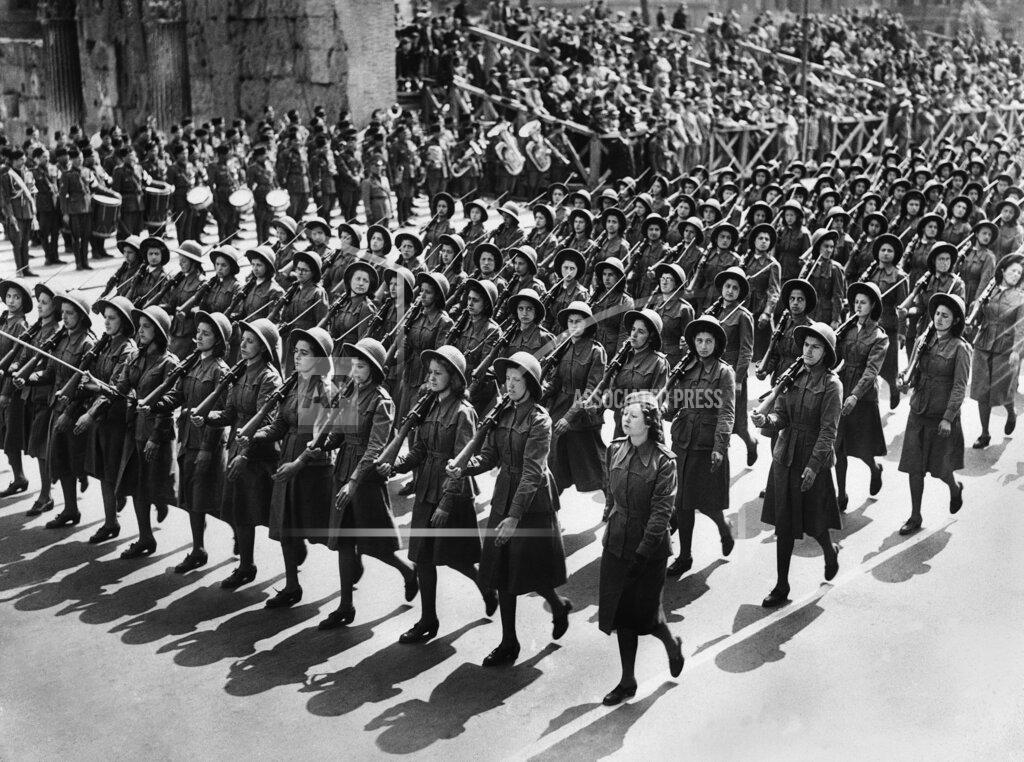
The Eternal City of Rome was charmed by 70,000 young women today in the greatest demonstration of its kind ever held. From the parade before Premier Mussolini this morning to the gymnastic exhibition this afternoon, everything went smoothly under a beautiful Spring sky. The meeting fundamentally had the stern purpose, to be sure, of demonstrating fascism’s mass appeal and at the same time fostering that spirit of responsibility to the State that fascism demands from all citizens-women included. Signor Mussolini was called to his balcony eighteen times after the parade by the enthusiastic women, and he characterized it an “unforgettable manifestation.”
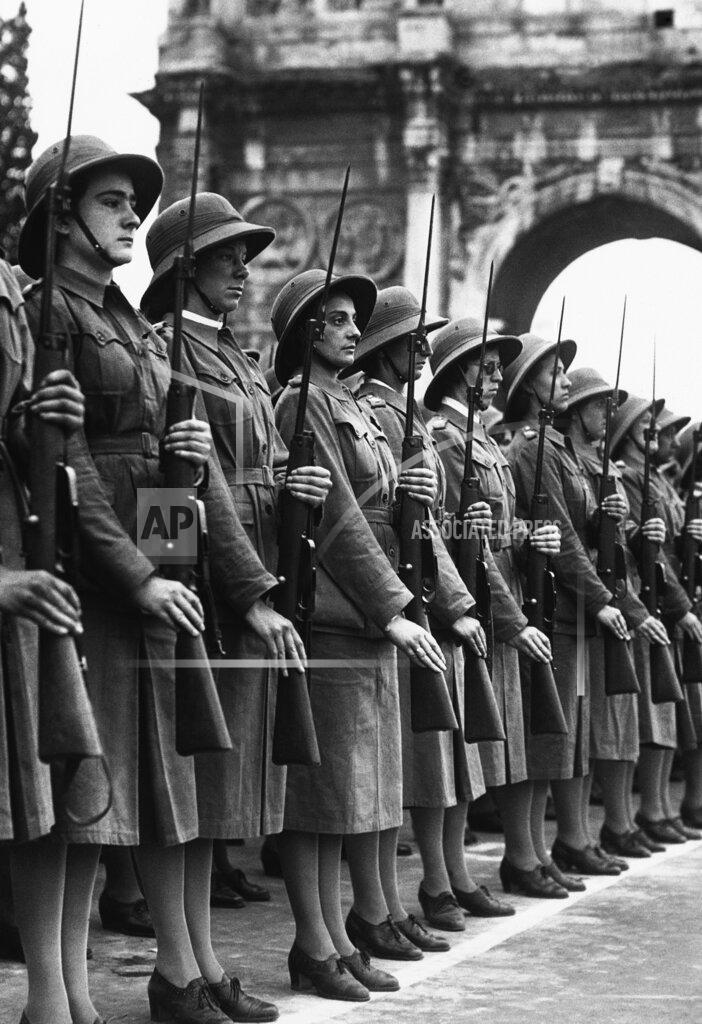
“You have shown yourselves to be a sure force at the service of your country and the regime,” he said. As with all such demonstrations one can only register the fact of its success and the evident enthusiasm with which it occurred. It showed that a large mass of Italian women, representative of many classes of society but unusual in their youth and being brought up in a fascist era, are enthusiastic supporters of the regime. The “gentle but formidable army,” as the Voce d’Italia calls it, presented a picture that would have turned a Hollywood magnate green with envy, particularly as there were a surprising number of platinum blondes. By unofficial consent the fencing teams and Venetian rowing crews were due for the beauty prizes. The only really “formidable contingent” was two battalions of “pre-colonials” — young women who are preparing to live in the colonies, who marched smartly by, in khaki uniforms with bayoneted rifles.
In all, 15,000 women marched past the reviewing stand, most of them afoot. But there were motorized units, cavalry and bicyclists. The sports section got the most applause, doubtless because the girls seemed prettiest in those costumes. They came by with skis, tennis rackets, oars, basketballs, bows and arrows, javelins and Indian clubs, section after section.
The Yugoslav adventure comic strip Zigomar first appeared.
The British and Portuguese governments reaffirmed their long time alliance. This agreement secured Britain’s strategic sea lanes to Africa and the Mediterranean. The Portuguese also demonstrated their desire to work with both the Western and Fascist powers.
Britain shapes its policy with an eye on Arabs. Cultivating the friendship of independent states would be a potential asset in case of war.
Three controversial issues which have threatened to prolong the Congress session will be advanced toward settlement this week and the impetus behind the drive to clear them from the legislative calendar was regarded as having come from Administration sources.
A strong Administration desire to get Congress out of Washington by July 15 or earlier, if possible, was viewed as one of the reasons President Roosevelt tacitly acquiesced in proposals for tax revision which he did not specifically approve. The same desire was considered a factor in leading Secretary Hull to put forward yesterday a program for revisions of the Neutrality Act. Stemming also from the wish of Administration leaders for an early adjournment, it is said, are the maneuvers now going on to bring about the quick defeat of the Townsend plan in Congress and clear the decks for adoption of what represents Administration conceptions of what the government can afford to do at this time to broaden the scope of the Social Security Act.
The Administration wants to get Congress out of the capital, according to one version of the situation, to end conditions which are not regarded as conducive to harmony in the Democratic party or to its prospects of success in the 1940 national elections. The various interparty disputes which have marked the session have provided the resurgent Republicans, in the opinion of some party leaders. with too much ammunition for use in the next campaign. There is little question that if President Roosevelt had determinedly held out for a program of no changes in the tax structure, a struggle would have been precipitated which would have kept Congress in session far beyond the adjournment date desired by the leaders.
While not yielding to the extent of giving his personal consent to tax revision, he has permitted suggestions to come from Administration sources which are expected to form the basis for changes which will satisfy demands in Congress for removal or modification of taxes regarded as business irritants. The impasse which had been reached in the matter of changes of the neutrality laws was another obstacle to adjournment. Secretary Hull’s statement of what he regarded as desirable changes in the laws was believed to have made that obstacle considerably less formidable.
Secretary Hull declared in Chicago tonight in a strong denunciation of proposals for national isolation that if such a policy were carried out, “regimentation in practically every phase of national life would be the inevitable consequence.”
Addressing the Chicago Sunday Evening Club, the Secretary of State asserted that “one needs only to look at the experience of the few countries which have attempted to reorganize themselves on a basis of even partial self-sufficiency to realize what the results of such regimentation would probably be.” “There is no more disastrous illusion,” he stated, “than the thought that Isolation would make it easier for us to solve our great domestic problems. The exact reverse is true.” Carrying isolation to its ultimate conclusion, he said, would make necessary a readjustment “of such magnitude that it could not possibly be accomplished without far-reaching Intervention on the part of the government, with dangerous social effects.”
“Far from facilitating the solution of our domestic problems,” he added, a policy of isolation, “or even a move toward such a policy, would aggravate the very difficulties with which we are now confronted.” Loss of foreign markets would drastically curtail industries and throw millions out of work, resulting in a lower standard of living for the nation, he asserted. This situation would compel the “far-reaching Intervention” by the government and “regimentation.” Mr. Hull in the course of his address presented his concept of our government as “free men” banded together for the common good, giving his views at some length. This appeared to some observers to be a definition of his political creed with Important bearing on Mr. Hull’s possible candidacy for the Presidency in 1940.
Presenting his ideas of those things “which Americans prize as the bases of our way of life.” he declared that there were two which were fundamental and vital. “The first,” he said, “is that every citizen is entitled to a fair chance to earn a decent living for himself and his family; to give his children a good start in life, and to face his declining years free from the specter of poverty and want. In view of the resources with which this country is endowed and of the great forward strides that have already been made, it is within our power to build a nation in which every citizen, willing to work, will be able to enjoy a rising standard of living and an adequate measure of economic security.”
“Second, the true ends of social justice can be achieved only in conditions of individual freedom under law, through the operation of institutions of popular government. It is true that a measure of economic security is possible without freedom of the individual. But that is the security of serfdom.”
New York City schools start an honors program that will segregate the brightest students.
The Martin Dies-led House Un-American Activities Committee investigates claims of Communist and fascist activities.
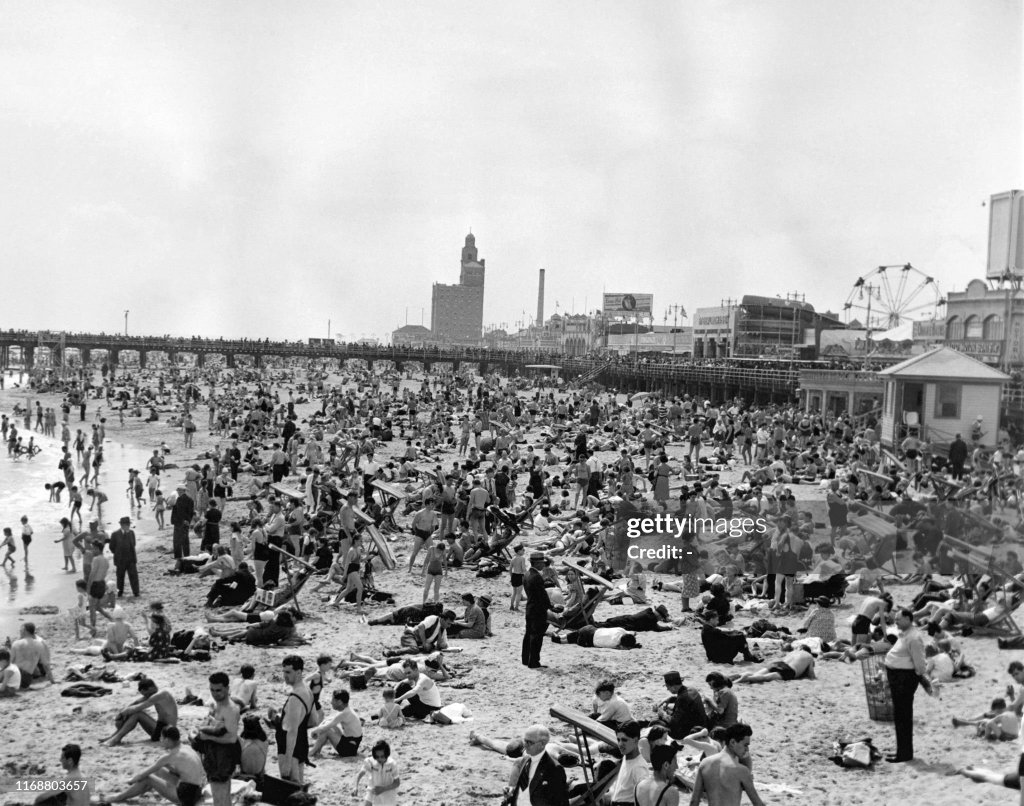
A record-breaking temperature of 87.2° for the date and bright sunny skies brought mid-summer weather to New York City today, with the World’s Fair and the beaches the principal attractions for large crowds spending the day out-of-doors.
The New York World’s Fair attracts its largest crowd since Opening Day.
A Pennsylvania coal miner trapped underground for 2½ days is rescued. After he is dug out, he asks for a cigarette.
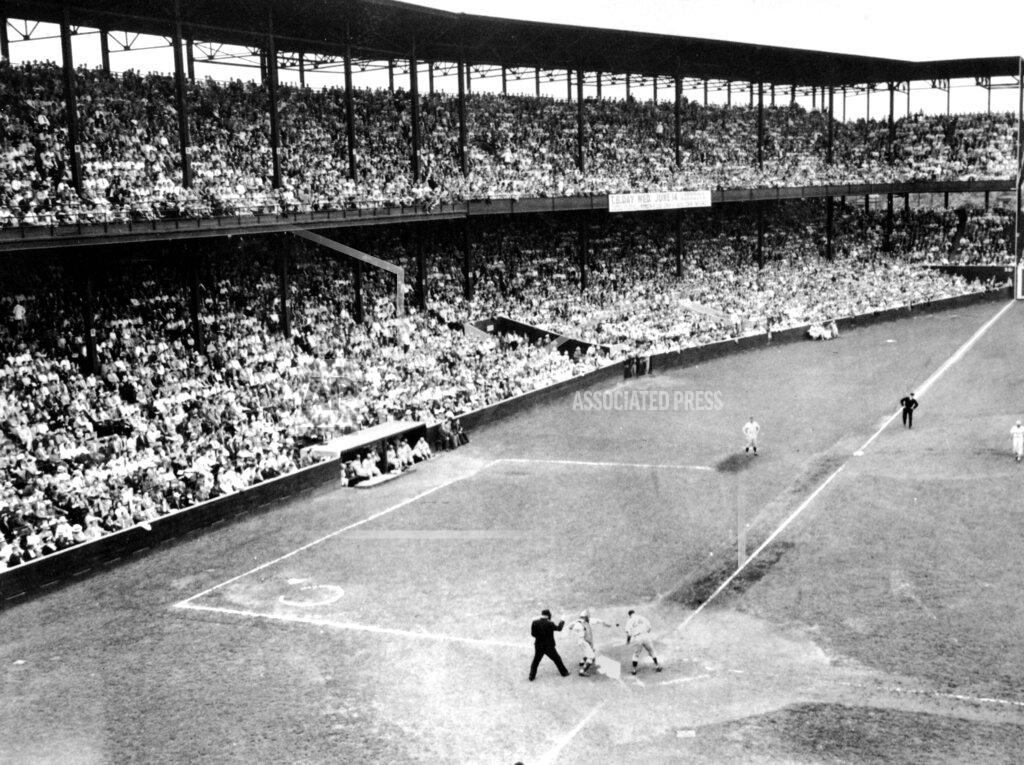
Robert Joyce, who gave up two home runs to New York’s George Selkirk yesterday, relieves for the A’s. Selkirk hits two more home runs off Joyce, giving him 4 home runs in 4 at bats against the same pitcher in two successive games. The Yankees win, 9–5. The Yankees release vet Wes Ferrell, who never came back after arm surgery over the winter. Ferrell will appear with the Dodgers in ‘40 and the Braves in 1941.
In a barnburner at Ebbets Field, the Brooklyn Dodgers outslug the Boston Bees to win, 16–12. Cookie Lavagetto has a grand slam for Brooklyn, connecting off Fred Frankhouse in the 7th.
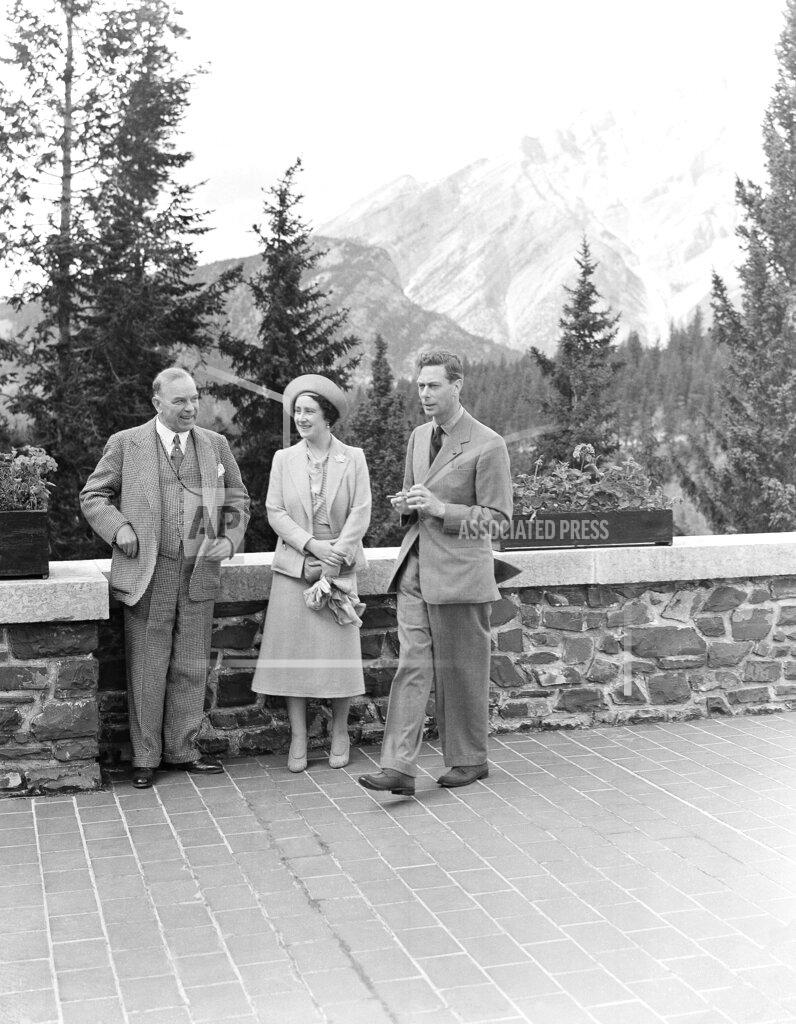
In their private car at the rear of the speeding royal train, King George VI and Queen Elizabeth took a holiday today from being stared at and stared themselves instead at the majestic beauty of British Columbia, this far western part of a Dominion which for nearly two centuries has been under the British crown but which no ruling sovereign had ever before seen. The only formal pause in today’s journey was for fifteen minutes of greeting and cheering tonight at Kamloops, a city which grew out of a trading post of the Hudson Bay Company.
The train is due tomorrow at Vancouver and tomorrow night the King and Queen will board the steamship Princess Kathleen for the four-hour crossing of the Gulf of Georgia to Victoria, the capital of British Columbia and the halfway mark in their journey through Canada. Before leaving Banff this morning the royal guests attended private services conducted at St. George’s Church by Canon H. T. Montgomery. Then they motored to Lake Louise to stand in admiration of the rainbow waters under the gleaming glacier high above the lake.
The Dionne quintuplets celebrate their fifth birthday today.
Cuban immigration authorities refused entry today to 104 Jewish refugees who arrived from Le Havre, France, aboard the French liner Flandre. The ship sailed for Vera Cruz, Mexico, but since the refugees have visas for Cuba, it was expected they would return next week and make another attempt to land.
On May 28, the day after the MS St. Louis docked in Havana, Lawrence Berenson, an attorney representing the U.S.-based Jewish Joint Distribution Committee (JDC), arrived in Cuba to negotiate on behalf of the St. Louis passengers. A former president of the Cuban-American Chamber of Commerce, Berenson had had extensive business experience in Cuba. He met with President Bru, but failed to persuade him to admit the passengers into Cuba.
The Director-General of the Cuban immigration office, Manuel Benitez Gonzalez, had come under a great deal of public scrutiny for the illegal sale of landing certificates. He routinely sold such documents for $150 or more and, according to US estimates, had amassed a personal fortune of $500,000 to $1,000,000. Though he was a protégé of Cuban army chief of staff (and future president) Fulgencio Batista, Benitez’s self-enrichment through corruption had fueled sufficient resentment in the Cuban government to bring about his resignation. More than money, corruption, and internal power struggles were at work in Cuba. Like the United States and the Americas in general, Cuba struggled with the Great Depression. Many Cubans resented the relatively large number of refugees (including 2,500 Jews), whom the government had already admitted into the country, because they appeared to be competitors for scarce jobs.
When the St. Louis arrived in Havana harbor on May 27, the Cuban government admitted 28 passengers: 22 of them were Jewish and had valid US visas; the remaining six — four Spanish citizens and two Cuban nationals — had valid entry documents. One further passenger, after attempting to commit suicide, was evacuated to a hospital in Havana. The remaining 908 passengers (one passenger had died of natural causes en route) — including one non-refugee, a Hungarian Jewish businessman — had been awaiting entry visas and carried only Cuban transit visas issued by Gonzalez. 743 had been waiting to receive US visas. The Cuban government refused to admit them or to allow them to disembark from the ship.
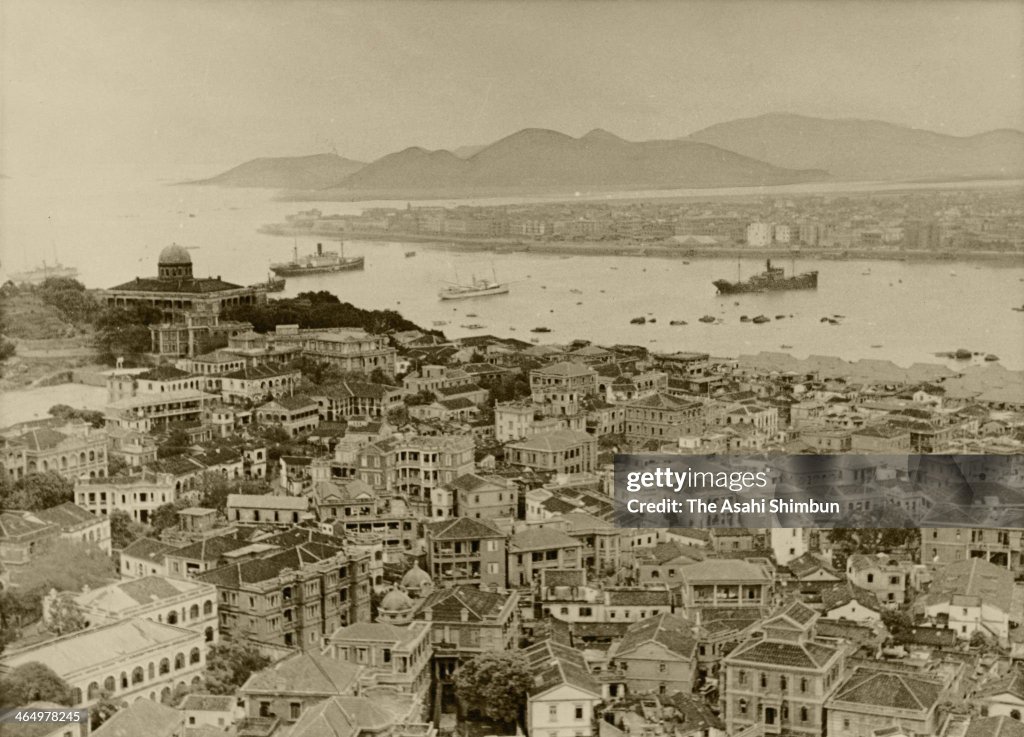
Japanese warplanes bombed Foochow twice today, killing and injuring an undetermined number of inhabitants and adding to the considerable property damage caused by five air raids last Friday. Reports from Putien, southwest of Foochow, said the American Methodist mission was the principal sufferer from Thursday’s raids on that city by Japanese naval aircraft. The mission’s church, girls’ school, girls’ dormitory, and foreign teachers’ residence were destroyed, but all persons attached to the mission fled to safety before the raid. The primary school of the British Church Missionary society also was struck and badly damaged. Several Chinese teachers and children were injured, but there were no deaths.
Eyewitnesses along the coast at the mouth of the Min River east of Foochow reported the boarding by Japanese seamen of a coastal steamer flying the British flag. The ship, the name of which was not learned, was detained for five hours. Reports from that vicinity said the Japanese navy had inaugurated a campaign against Chinese fishermen venturing from the mouth of the river to seek their livelihood. Eyewitnesses said that in recent days Japanese had turned machine guns upon many small fishing craft, crowded not only with fishermen but also with their wives and children.
Born:
Tom Thabane, Mosotho politician, fifth prime minister of Lesotho (2012-2015, 2017-2020), implicated in his ex-wife’s murder, but charges were dropped, in Maseru, Basutoland.
 History Diaries