Canada’s Prime Minister Lester Pearson meets President Johnson in New York and they discuss the forthcoming trip to Hanoi by Canada’s delegate to the International Control Commission, James Seaborn, who is to convey a message from the United States that is essentially a threat to bomb North Vietnam unless the North Vietnam leaders concur with certain U.S. demands.
Việt Cộng storm Nhỏ Dung and kidnap the hamlet chief; and at Quảng Ngãi, snipers kill two ARVN soldiers. About two platoons of Communist guerrillas stormed a South Vietnamese Government‐protected hamlet yesterday and kidnapped the hamlet chief and six government defenders, a Vietnamese military spokesman said today. The spokesman said the guerrillas also captured 16 weapons in the attack on the hamlet. In the central province of Quảng Ngãi, snipers killed two government soldiers riding in a four‐truck convoy. Two soldiers in the convoy were slightly wounded and a truck was damaged, the spokesman said.
Premier Nguyễn Khánh opened a propaganda offensive against North Vietnam last night, urging reunification with South Vietnam under a free, non‐Communist government. He spoke at the inauguration of a Vietnamese radio station scheduling daily broadcasts to North Vietnam from 6 P.M. to midnight. “We think that the time has now come for you to take a straight look at your own living conditions and to take your own stand,” premier Khánh said in a direct appeal to the North Vietnamese people.
Psychological warfare experts have long been urging the Saigon Government to capitalize on the food shortages and economic difficulties of the North Vietnamese Communist regime, set up in 1954 when the French Vietnamese holdings were partitioned into two states at the 17th Parallel. “The partition of our country by colonialist and Communist maneuvers will be 10 years old next month,” Premier Khánh said. “We are striving to fight and constantly think of you people in the North.”
The radio station, called the Voice of Freedom, is a 50-kilowatt transmitter broadcasting on medium wavelengths, frequencies receivable on ordinary radios. Under normal atmospheric conditions, the broadcasts could reach almost all of North Vietnam. The station’s directional beams cannot be picked up in Saigon, but Premier Khánh’s speech was published today by the official news agency. The station is operated exclusively by the South Vietnamese Government, officials said, and has no connection with the Voice of America transmitter now under construction in South Vietnam, which will also beam anti‐Communist broadcasts to the North. The American transmitter is scheduled to begin broadcasting on July 18, relaying programs originated in the United States. Construction of the transmitter was negotiated early this month by United States officials and the South Vietnamese Ministry of Information.
The Premier has been widely criticized recently by South Vietnamese political figures and newspapers as showing too much enthusiasm for making military moves, against the North, a policy also advocated by some American critics of the Johnson Administration. Premier Khánh set the goal of “liberation of the North” in a speech yesterday.
The controversy over the adequacy of the military equipment being used by United States forces in South Vietnam flared up again today. The Secretary of the Army, Stephen Ailes, disclosed that eight Americans in South Vietnam had been killed in Army helicopters because of structural failures. The Army Secretary discussed the helicopter problem in answering questions from Representative Oliver P. Bolton, Republican of Ohio, who is a member of the House Armed Services Committee. The helicopter issue added heat to the argument over whether the- Air Force B-26 fighter‐bombers, which were used until recently, had been structurally adequate. The Pentagon, however, refused to comment on letters made public by the widow of an Air Force major and the wife of a sergeant that contained charges of deficient and insufficient arms.
President Johnson asked the nation’s diplomatic and military officials today to meet in Honolulu next week for an urgent review of the crisis in Southeast Asia. Specialists from Washington and from United States missions in Southeast Asia will converge on Hawaii Monday and Tuesday. Officials said the President expected them to recommend ways of coping with the increasing Communist pressures in Laos and South Vietnam. The immediate cause of Washington’s concern is the recent offensive by pro‐Communist forces in Laos, but the Administration is even more deeply disturbed by the continued deterioration of the situation in South Vietnam.
As the pace of diplomatic activity quickened, officials received reports that the fighting in Laos was tapering off. A State Department spokesman said that, although some fighting continued in north-central Laos, it did not appear to be on the same scale as in the last 10 days. The White House said Secretary of State Dean Rusk, who went to India to attend the funeral of Prime Minister Nehru, will fly to Honolulu to act as chairman of the meetings there. Secretary of Defense Robert S. McNamara, John McCone, Director of Central Intelligence; General Maxwell D. Taylor, Chairman of the Joint Chiefs of Staff, and other key officials will fly to Honolulu from Washington Sunday. They will be joined there by Ambassador Henry Cabot Lodge, Graham Martin, United States Ambassador to Thailand, and Philip H. Chadbourn Jr., deputy chief of the United States Embassy in Laos.
North Vietnam has demanded that the United States stop reconnaissance flights over areas in Laos held by the pro‐Communist Pathet Lao. A statement issued by the North Vietnam Foreign Ministry and quoted by Hsinhua, the Chinese Communist press agency said the flights were a “brazen violation of the 1962 Geneva agreements on Laos,” setting up a neutral coalition Government. The North Vietnamese Foreign Minister, Xuan Thuy, sent a note to Britain and the Soviet Union, co‐chairmen of the Geneva conference, requesting them to “take timely measures to check United States acts to step up aggressive war in South Vietnam.” Stating that the United States was “making all‐out effort to secure active participation of its allies” in South Vietnam, the note said participation of any of those countries in war “under any form what would constitute an overt aggression.”
Poland called today for six‐nation consultations on the deteriorating situation in Laos. The talks would look toward a reconvening of the 1962 Geneva conference, a step previously urged by France and supported by the Soviet Union. The United States has already declared its opposition to a new meeting of the Geneva conference unless it is preceded by an effective cease-fire and withdrawal of Communist forces from recently captured territory in Laos. Washington would not be a party to the talks proposed by the Poles, however.
Huot Sambath, Foreign Minister of Cambodia, confirmed today that Cambodia was willing to accept a United Nations commission along the Cambodian‐South Vietnamese frontier. However, the Foreign Minister reiterated to the Security Council his government’s original position that the task of checking on any violations of the Cambodian frontier “must” be left to the International Control Commission set up under the Geneva agreements of 1954 and that Cambodia would not pay any of the cost of a United Nations body. In addition, he said after the Council adjourned, the United Nations commission should be limited to helping demarcate the Cambodia‐South Vietnamese frontier. Nevertheless, the confirmation of Cambodia’s willingness to accept a United Nations commission was interpreted by some Council members as a break in the deadlock.
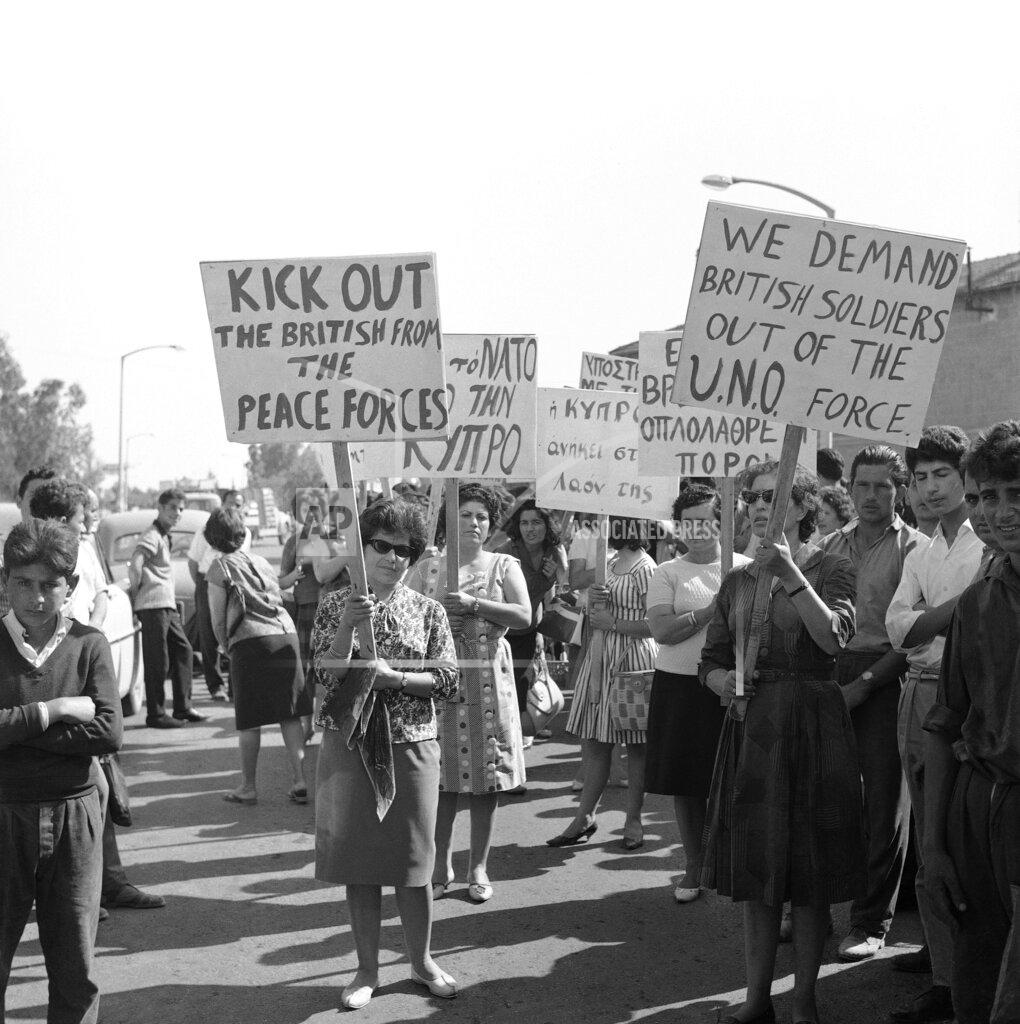
Lieutenant General Prem Singh Gyani said today that there were too many guns in the wrong hands on Cyprus and called this is a major obstacle to restoring peace. The Indian general, commander of the United Nations peace‐keeping force, said in a statement that the force had achieved some limited aims in its two months of existence, but added: “One of the major obstacles in the way of the United Nations force, is irresponsible and senseless conduct by armed men in both communities [Greek and Turkish] who do not appear to have any discipline or to be responsible to any established authority but have been acting on their own reckless initiative.”
The Palestinian National Council, with 422 representatives, convened in Jerusalem, which was still part of Jordan at the time. At the conclusion of the meeting on June 2, the Council would proclaim the establishment of the Palestine Liberation Organization (PLO), and adopted the Palestinian National Covenant, calling for the right of Palestinian Arabs to return to the area occupied by the nation of Israel and for their right of self-determination within the area. Ahmad Shukeiri was elected as the first Chairman of the Executive Committee of the PLO, whose 14 members he was authorized to select.
New clashes were reported tonight between reinforced Algerian Government troops and guerrillas in the restive Kabylia Mountain area east of Algiers. Usually-reliable sources said 30 men had been killed on both sides in the last 48 hours, notably near Michelet, formerly a stronghold of the rebel “Social Forces Front.” The clandestine group is led by Hocine Ait‐Ahmed, a Kabyle Deputy and former associate of President Ahmed Ben Bella.
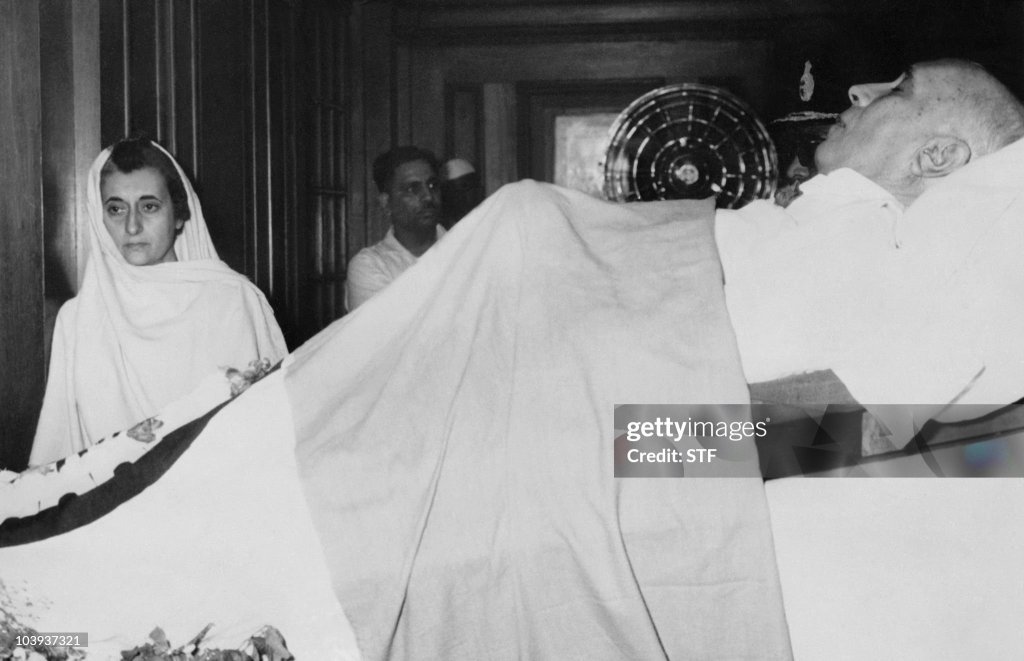
An estimated one and a half million people attended the funeral of Indian Prime Minister, Jawaharlal Nehru, whose body was publicly cremated on a funeral pyre at the Shantivana on the banks of the Yamuna River. At 4:36 PM in New Delhi, Nehru’s 17-year-old grandson, Sanjay Gandhi, applied a torch to the cremation platform. The next day, Nehru’s ashes would be taken to his birthplace at Allahabad to be scattered at the confluence of the Yamuna and the Ganges rivers.
The Cuban Government announced today the execution by firing squad of four exiles described as United States spies. The men were said to have been executed before dawn after their conviction by war crimes board and the rejection of appeals for a retrial. The Government said the men had been captured off the north coast of Las Villas Province, while seeking to infiltrate Cuba. The date of their capture was not disclosed.
President Johnson carried his political offensive into New York last night. He attended three fund-raising events — two dinners and a lavish show at Madison Square Garden. The combined receipts, roughly $1.5 Million; will help finance the Democrat’s 1964 Presidential and Congressional campaigns. It was a frankly partisan visit, aimed at securing the 43 electoral votes of New York State. The President urged his audiences to join a crusade for a “great victory in November.” At the Garden rally he pledged that his Administration would make the emancipation of Blacks “not just a proclamation but a fact.” The President’s visit was so crowded that he had no time to change clothes. He was wearing a tuxedo and Mrs. Johnson a white evening gown and white coat when their plane landed at Kennedy Airport at 5:15 PM. With them was their daughter Lynda, who wore a green evening gown.
A Marine Corps helicopter shuttled them to the Wall Street Downtown Heliport, where they landed at 5:38 PM. They created traffic havoc as their 25-car motorcade closed off the entire northbound East River Drive toward the close of the rush hour. On the way to the New York Hilton Hotel, where the President attended a $1,000‐a‐plate dinner given by more than 750 business and professional men and leading Democrats, the Johnson were cheered by hundreds of persons strung along 57th Street. Traffic on many East Side arteries had been halted in advance of the President’s arrival, and a huge jam developed.
Declaring that the Democratic party “must and will continue” to strive for equal rights and an end to poverty and unemployment, Mr. Johnson added: “I ask you to march with me along the road to the future — the road that leads to the Great Society, where no child will go unfed and no youngster will go unschooled; where every child has a good teacher and every teacher has good pay, and both have good classrooms; where every human being has dignity and every worker has a job; where education is blind to color and unemployment is unaware of race; where decency prevails and courage abounds.”
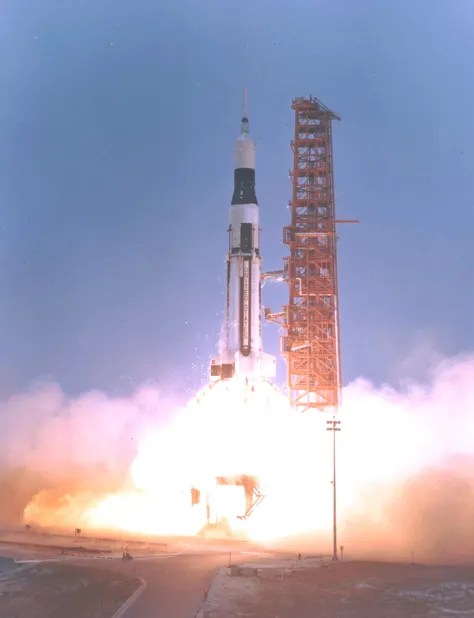
AS-101 (also designated SA-6), the sixth Saturn I rocket launch, made the first successful placement of the boilerplate prototype of the Apollo Command/Service Module into Earth orbit, and confirmed the structural integrity of the design for the vehicle that would take astronauts to the Moon. Following the launch at 12:01 p.m. from Cape Kennedy, Florida, the spacecraft and its upper stage completed a total of 54 orbits before the stage and payload would re-enter Earth’s atmosphere over the Pacific Ocean on June 1.
Governor Rockefeller charged today that Senator Barry Goldwater was advocating a “highly dangerous” policy toward the Soviet Union. He said the Senator’s proposal to break off relations “would increase the danger of miscalculation” between the two nuclear powers because they would not be in contact with each other. As the Governor moved by plane and bus into northern California, echoes were heard of the cancellation of last night’s speech at Loyola University in Los Angeles. The Governor refused to place the blame on extremists in Senator Goldwater’s campaign organization. A growing concern in the campaign has been the increasing number of bomb threats directed against various Rockefeller headquarters. One of the campaign mailings seemed to have touched these off. The pamphlet asks whether the voter would rather have Senator Goldwater or Governor Rockefeller as the man with authority to order use of the H‐bomb. The calls began immediately after the mailings were delivered.
Senator Clifford P. Case refused today to commit himself to the support of Senator Barry Goldwater if the Arizona conservative should win the Republican Presidential nomination. “I am not going to make up my mind as of this time,” the New Jersey Republican said when asked at a news conference whether he was prepared to line up behind Mr. Goldwater should his Senate colleague head the party ticket this fall. “As of the time I have to make my decision,” Mr. Case continued, “I want to be satisfied about anyone that he believes in enough of the things I think are important for our party, such as civil rights and the conduct of foreign policy.” Senator Case said he would make this decision with respect to Mr. Goldwater — if he should be nominated — shortly after the Republican National Convention. He did not indicate such qualms about any of the other potential candidates. Mr. Case thus appeared to join Senator Jacob K. Javits in the ranks of Republican leaders who are not now prepared to guarantee their support of Senator Goldwater as the party’s Presidential standard‐bearer.
Almost 200 young men of draft age have joined an ad hoc committee against the war in South Vietnam and have announced their refusal to fight there if called, the founder of the group said yesterday. Phillip A. Luce, who is listed as treasurer of the group, said he began the movement in March. An advertisement with a “partial” list of members containing 149 names appeared in The New York Herald Tribune yesterday. The advertisement said the signers understood their obligation to defend their country. But, they added, United States participation in the war in South Vietnam was for the “suppression of the Vietnamese struggle for national independence” and they could see “no justification” for their involvement. Mr. Luce, who is under Federal indictment for a trip to Cuba last summer in defiance of a State Department ban, said he had obtained the signatures by writing to friends.
[Ed: Luce was a hardline Communist Maoist asshole — for a while. He eventually wised up, realizing that his fellow extreme leftists wanted power, and really did not care about “the people” at all. He became a conservative and libertarian in later years.]
Average consumer prices edged up slightly last month, the Labor Department reported today. Despite the gain, the rate of increase in consumer prices so far this year has been lower than in the last two years. More than a million workers will receive pay increases of 1 cent an hour because of the rise over the quarter in the consumer prices. About 800,000 of these are in the automobile industry, 100,000 in farm‐equipment and construction‐equipment manufacturing, 65,000 in aerospace and 45,000 in miscellaneous metalworking. Higher prices for most consumer services, used cars and apparel were responsible for the rise of 0.1 percent in the Bureau of Labor Statistics Consumer Price Index in April.
The gold stock of the United States climbed by $178 million in April in sharp contrast to the heavy gold losses that had persisted from 1958 until late last year. The Federal Reserve Board disclosed the rise in the gold stock today. Its report also showed a smaller increase in the gold stock of $32 million in March. The Federal Reserve placed the gold stock of the United States at $15,728,000,000 at the end of April. The rise in the gold stock, which could well continue, reflected chiefly two factors.
The first was the great improvement in the United States international payments. The payments deficit, representing a net outflow of dollars in all international transactions, has been sharply reduced since the middle of last year. The second factor was the unpublicized working of the London gold pool operated secretly by a group of the leading nations in Europe and North America. The pool channels the new supply of gold including sales by the Soviet Union, to its members, with the United States reportedly getting half of the supply.
Dmitri Shostakovich completes his 9th String quartet.
Dow Jones Industrial Average: 820.56 (+2.62).
Born:
Armen Gilliam, American NBA power forward and small forward (Phoenix Suns, Charlotte Hornets, Philadelphia 76ers, NJ Nets, Milwaukee Bucks, Utah Jazz), and college coach (Penn State Altoona), in Bethel Park, Pennsylvania (d. 2011 of a heart attack during a basketball game).
Duane Ward, MLB pitcher (World Series Champions-Blue Jays, 1992, 1993; All-Star, 1993; Atlanta Braves, Toronto Blue Jays), in Park View, New Mexico.
Ed Rubbert, NFL quarterback (Washington Redskins), in Suffern, New York.
Beth Herr, American women’s tennis pro (Virginia Slims of Arizona, 1986), in Middletown, Ohio.
Jeff Fenech, Australian professional boxer, former IBF bantamweight champion (1985-1987), WBC super-bantamweight champion (1987-1988) and WBC featherweight champion (1988-1989); in St Peters, New South Wales, Australia.
Christa Miller, American actress (“The Drew Carey Show”), in New York, New York.
Died:
John Finley Williamson, 76, American choral conductor (Westminster Choir College, 1920-58).

 History Diaries