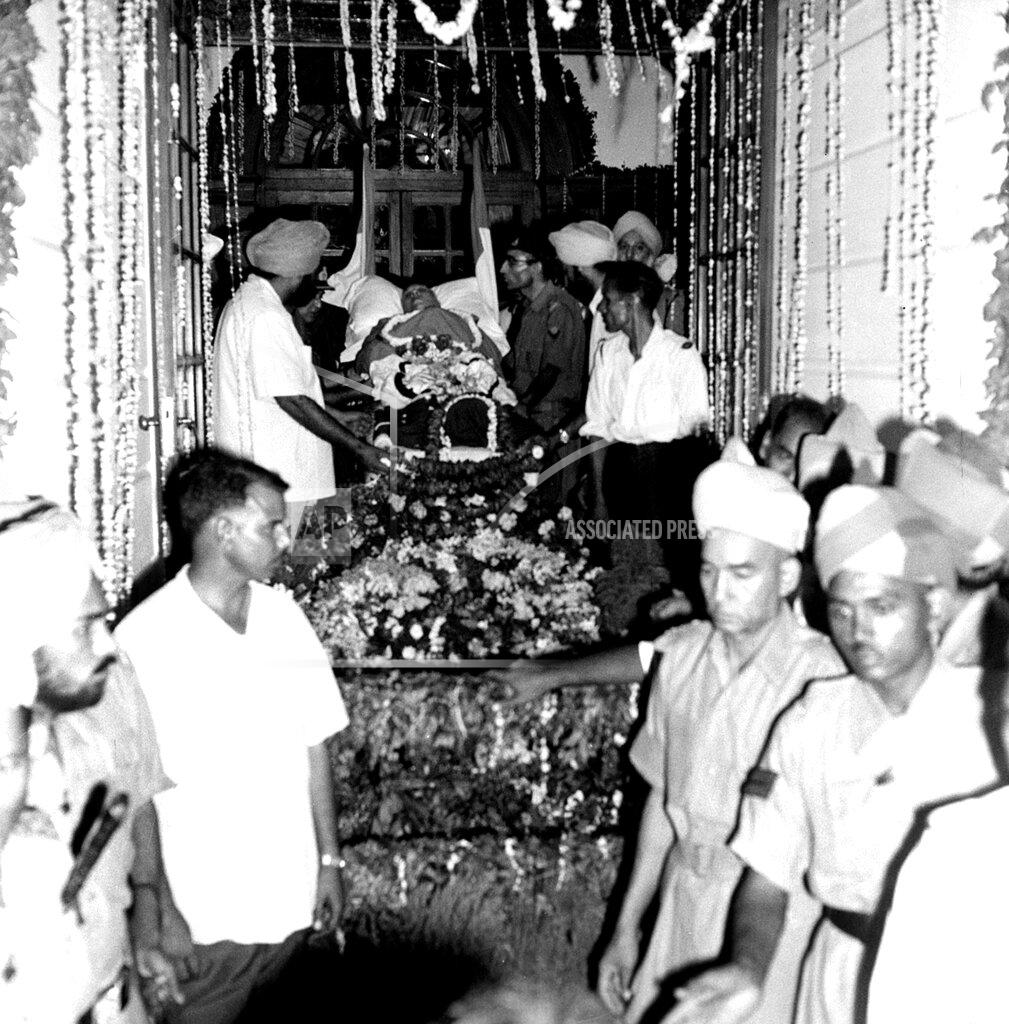
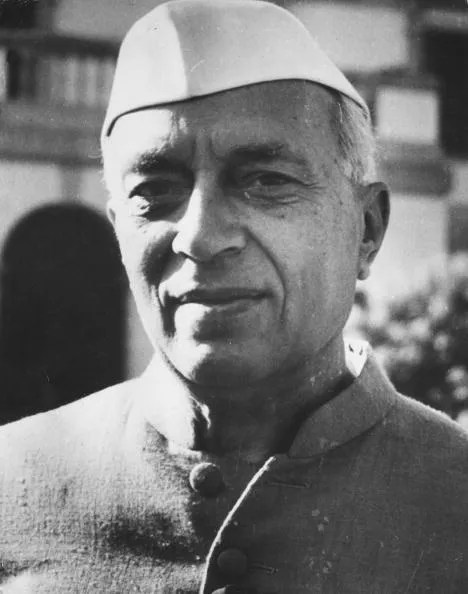
Jawaharlal Nehru, the Prime Minister of India since the nation’s independence in 1947, died from a ruptured aorta. The evening before, he and his daughter, future Prime Minister Indira Gandhi, had returned to New Delhi from a vacation in Dehradun, worked at his desk until 11:00 that night, and prepared for the next day’s work. At 6:25 in the morning at his residence, shortly after he awoke, he was stricken with chest pains and collapsed. At 2:00 that afternoon, Minister of Steel Chidambaram Subramaniam announced to his fellow members of parliament in the Lok Sabha, “The prime minister is no more. The light is out.” Gulzarilal Nanda, the Minister of Home Affairs, was sworn in as the Acting Prime Minister at midnight, and became the acting Prime Minister until he was replaced by Lal Bahadur Shastri on June 9.
Secretary of State Dean Rusk hurriedly departed for India by air this morning to pay a final American tribute to Prime Minister Nehru. The delegation will reach New Delhi after the start of funeral services, but it undertook the journey to demonstrate support for Mr. Nehru’s policies and to indicate confidence in his successors. Mr. Nehru’s death had been expected here since he suffered a stroke in January, but everywhere in government, officials remarked that India’s nationhood and democracy now faced their greatest test. The almost unanimous feeling in Washington, strengthened by India’s performance in recent weeks, was that the younger leaders were prepared to carry on even without the charismatic personality who led them for 17 years. President Johnson sounded this theme in his message to Dr. Sarvepalli Radhakrishnan, the President of India. Mr. Nehru’s spirit lives on, the President wrote, adding: “The rich heritage he left us, his faith in his people and in humanity, will, I know, serve to sustain you and yours as we strive together to translate his ideals into reality.”
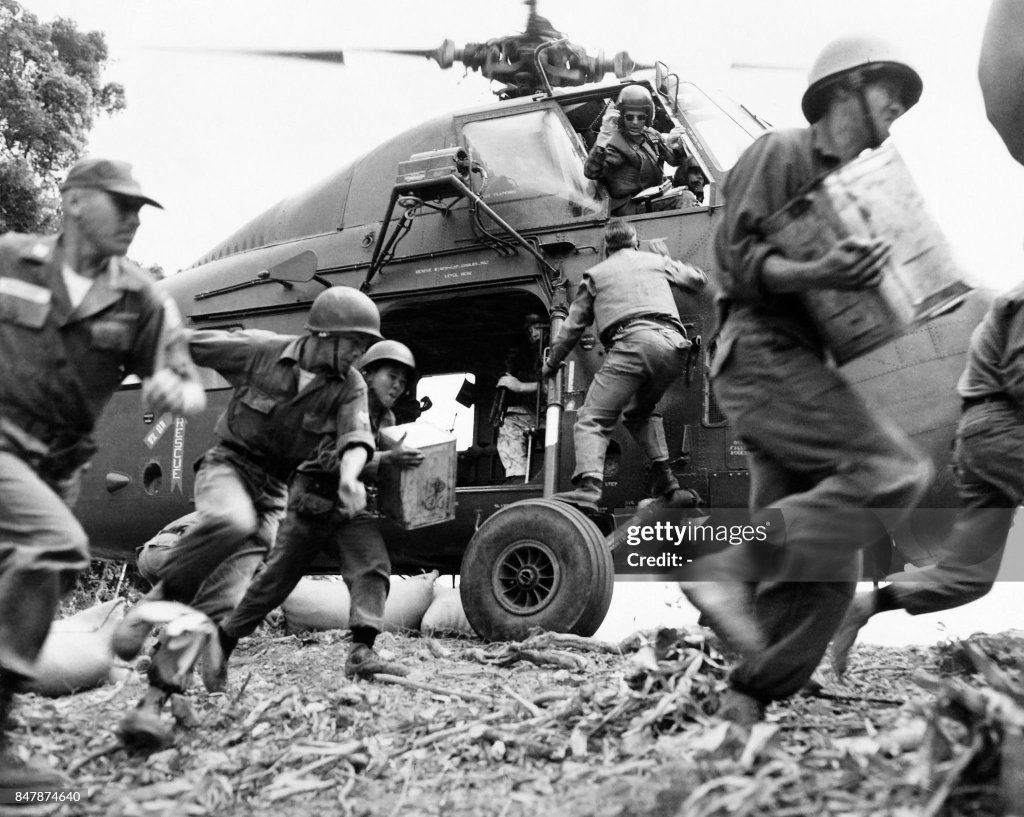
South Vietnamese Premier Khánh announces that South Vietnam forces will ‘liberate’ North Vietnam after defeating the Communists in the south. He told 800 graduating military officers at the Thủ Đức Military Academy that “the men of our generation are determined to carry out fully their historic mission — push back the Communist invasion, of South Vietnam, liberate the North, unify the country and bring freedom and happiness to the entire people.”
The South Vietnamese Government published today a memorandum listing 95 border incidents alleged to have been provoked by Cambodian forces since January, 1963, and nine alleged Cambodian violations of South Vietnamese airspace. The memorandum acknowledged that the Vietnamese also had committed some violations. This showed, it said, “that the responsibility is shared and the errors are unavoidable. These errors will not end until confidence and friendship reign between the two countries.” The memorandum was in reply to Cambodian charges in the United Nations Security, Council of South Vietnamese aggression.
South Vietnam has released 23,686 political prisoners throughout the country since the regime of the late President Ngô Đình Diệm was overthrown last November, the official Vietnamese press announced today. A group of 45 was freed from harsh confinement on the island of Poulo Condore (Côn Sơn Island) yesterday by Premier Nguyễn Khánh, who flew to the prison settlement. General Khánh said the Government was examining the records of other political prisoners and would release more soon. “Opening prison doors will get more hands working for the salvation and the rebuilding of the country,” General Khánh told the freed prisoners.
Aerial photographs taken by United States reconnaissance planes have substantiated charges made by Premier Souvanna Phouma that North Vietnam is supporting pro‐Communist Pathet Lao operations in Laos, an informed source said today. In initial photos truck convoys have been identified and the direction of movement and type of vehicles established. The source said that the flights, which originate outside of Laos, are continuing. The State Department announced last week that the flights were undertaken at the request of Premier Souvanna Phouma. The inability of the International Control Commission to investigate complaints of Pathet Lao aggression also was cited is a reason for the flights. The commission, representing India, Canada, and Poland, was set up by the 1954 Geneva conference. Some information relating to the current fighting in Laos has‐been turned over to Prince Souvanna Phouma’s Government. Machinery is being organized to provide information on a regular basis to the commission.
The prince has charged that North Vietnamese battalions have been backing the Pathet Lao in their attacks, the leftist phase of which began on May 16 on neutralist positions on the Plaines des Jarres in North Central Laos. Military observers have been convinced that Pathet Lao units operate with North Vietnamese cadres. North Vietnamese units appear to have been employed. but not always in the large numbers asserted by the right‐wing and neutralist factions. Britain, which served with the Soviet Union as a co‐chairman of the 1962 Geneva conference on Laos, delivered invitations here to the embassies of countries that signed the Geneva accords. The invitations were for ambassadorial consultations in Vientiane on the crisis. Such consultations are stipulated in the event of violation of the accords.
The United States disclosed today that it had sent several light military aircraft to the Laotian Government for use against pro‐Communist forces. The State Department said the planes — two‐seater, propeller‐driven T-28’s that can be fitted with machine guns and carry bombs — were sent in response to a request from Premier Souvanna Phouma. The request was made after pro‐Communist Pathet Lao forces renewed their attacks against neutralist forces in north‐central Laos on May 16. William P. Bundy, Assistant Secretary of State for Far Eastern Affairs, is on his way to London to confer with the British Foreign Office, the State Department said.
In another aspect of Southeast Asia problems, the Soviet Ambassador, Anatoly F. Dobrynin, called on Acting Secretary of State George W. Ball. After the 15-minute session the Soviet envoy spoke of Moscow’s support for an international conference to guarantee Cambodian neutrality. Mr. Dobrynin was said to have made no attempt to link the Cambodian issue with current proposals for an international conference on Laos. United States officials indicated that Cambodia would probably be discussed by Mr. Bundy during his visit to London, but they said the primary purpose of his mission was to work out Western tactics on the steadily deteriorating situation in Laos.
The crisis there arises out of the disintegration of the Geneva agreements of 1962 on Laos. Those agreements approved by 14 countries, provided for a neutral, unified regime of pro‐Communists, rightists and neutralists. The accords were designed to end the Laotian civil strife that had existed since Laos, along with Cambodia and Vietnam, was given independence from France in 1954. The 1962 agreement broke down in April, 1963, when the pro‐Communists opened attacks on neutralist troops in the Plaine des Jarres.
Civil war in the Southeast Asian Kingdom is conducted with classic Laotian delicacy. Great battles are reported, but few men die. The pro‐Communist Pathet Lao forces could capture the capital of Vientiane at will, but make no move to do so. One could lampoon the military character of this struggle, in which 50,000 right‐wing troops, allied with about 6,000 neutralists, are pushed about with ease by about 18,000 of the Pathet Lao. Yet on the scene there is little to smile about. Thousands of refugees streaming out of the fighting areas provide evidence of mass suffering. A Communist conquest of Laos, which borders on six countries, would be a strategic disaster for the Western‐aligned nations of the region.
During the last 10 days the Pathet Lao have brushed the neutralist troops of General Kong Le off the Plaine des Jarres in north‐central Laos. His retreating force of about 6,000 soldiers is said to have lost about 200 wounded and 50 dead in several days of battle. When Western military observers who have been permitted to visit the fighting zone are asked if there was much hard combat, they answer: “Yes, by Laotian standards.”
Now, southwest of the Plaine des Jarres at his, command post, in the hills near Ban Na, General Kong Le, dressed in a white T‐shirt and blue jeans, his wife at his side, walks among his soldiers. Chartered planes of American commercial companies drop rice bags. The general is reforming his battalions, asking for United States arms to replace those abandoned on the plain, and preparing for another withdrawal.
North of the Plaine des Jarres the neutralist base at Muong Kheung was evacuated Sunday. A neutralist communiqué said the neutralists had been pushed out by one Pathet Lao and two North Vietnamese battalions. The neutralists reported next day that a counterattack had retaken the cluster of huts that is Muong Kheung. Reliable military sources, reconstructing the battle, said the Muong Kheung garrison departed without being attacked, and that an armored reconnaissance column was sent back to screen the withdrawal. To his surprise the column’s commander found that he had moved unopposed back into Muong Kheung. After savoring this unaccustomed victory briefly, the column retreated once more. Apart from the unopposed occupation by the Pathet Lao of a few hills north of the Plaine des Jarres this morning, the fighting fronts were reported to be more placid than usual today.
General Kong Le asserts that North Vietnamese battalions took part in strength in the drive that swept his forces from the plain. Independent observers say that some North Vietnamese units may have been involved. In the minds of most Laotian soldiers, according to military observers here, the north Vietnamese soldiers, hardened veterans of the war against France, stand, 10 feet tall. Right‐wing and neutralist soldiers have been known to retreat in panic when it was rumored that a North Vietnamese unit was moving toward them. The easygoing Laotian feels he is no match for the professional, hard‐fighting North Vietnamese.
U.S. President Johnson revealed that the United States and the Soviet Union had completed negotiations on a treaty to establish consulates in each other’s nations, in a treaty whose contents would be kept secret until June. The occasion marked “the first bilateral treaty between the two nations since the United States recognized the Russian communist regime” in 1933.
Queen Elizabeth II and her husband, the Duke of Edinburgh, will pay a state visit to West Germany in May, 1965, it was announced from Buckingham Palace today. The visit will be the climax of a political reconciliation that has been pushed hard by the British and German Governments since Harold Macmillan and Dr. Konrad Adenauer retired from the leadership of their respective governments last year. A Government decision favoring the visit had been rumored periodically over the last two years. Mr. Macmillan was reported to have advised against it when he was in office, presumably in the belief that the visit would be highly controversial in this country. Anti‐German feelings caused by two world wars have lingered in Britain. But they are less harsh and less prevalent now than at any time since the end of World War II.
The UK pirate radio station Radio Sutch began broadcasting from Shivering Sands Army Fort in the Thames Estuary.
Nearly one third of the National Army of Colombia began “Operation Marquetalia”, the destruction of the “Marquetalia Republic”, a leftist guerrilla stronghold in the rural Colombian departamento of Huila. By June 14, the Colombian soldiers would be able to declare a victory, driving out the guerrillas and their allies, and destroying anything left behind.
President Johnson’s request for a $3,516,700,000 foreign aid authorization was formally approved today by the House Foreign Affairs Committee. It was the first time in the 17-year history of the legislation that the group refused to cut the amount. The vote was 22 to 7. As ordered reported to the House, the measure empowered the Federal Government for the first time to guarantee private credit sales of military equipment and services to any country as long as the President found such assistance would strengthen American security and promote world peace. Such sales of military equipment would be entirely outside the military aid program, for which the committee approved a total of $1,055,000,000.
The Administration estimated that these sales would reach $262 million in the current fiscal year, and could reach $400 million through the Federal guarantee provision in the fiscal year beginning July 1. In a report on the bill scheduled to be submitted to the House tomorrow, the committee said: “There are a number of countries able and willing to purchase military equipment in this manner where the political situation is such that commercial lenders are reluctant to extend credit at going rates. The purpose of the new authority is to provide a sales guarantee similar to the investment guarantee program.”
The authorization figure approved by the committee included $2,461,700,000 in various forms of economic loans and giants and $1,055,000,000 for military aid, such as planes, tanks and guns and maintenance of present equipment. It included the full $125 million asked by the President as additional aid to South Vietnam. This embraced $55 million in military hardware and $70 million in so‐called supporting assistance, a form of budgetary support to shore up the economy of countries with larger defense establishments than they can finance without outside help.
Senator Mike Mansfield of Montana, the Democratic leader, said today that he hoped a vote to shut off the Southern filibuster against the civil rights bill could be taken by June 10. This would mean that a petition for closure would have to be filed on Monday, June 8. Under the rules, a petition for closure must be signed by 16 members and filed two days before the motion is voted on. “I see nothing to be gained by prolonging it too many days,” Mr. Mansfield said. “I think, by and large, the Senators have just about had enough. They’re tired of all this. You have to hit bedrock some time and have a showdown.” Today was the 65th day of debate on the bill, which passed the house February 10.
Senator Everett McKinley Dirksen of Illinois, the Republican leader, was doubtful whether a closure vote could be reached before the week beginning June 15. The problem, Mr. Dirksen said, was principally that many Senators would be absent the week of June 8, giving college and high school commencement addresses. Two‐thirds of the members present and voting are required to shut off debate — 67 if all 100 are recorded. The bipartisan leadership is going to need every vote it can get. Mr. Mansfield acknowledged today that the chance of getting closure on the first attempt would be a “50–50 proposition.” However, Mr. Dirksen and the bipartisan floor managers of the bill, Hubert H. Humphrey, Democrat of Minnesota, and Thomas H. Kuchel of California, tend to be more optimistic. If the closure petition is filed June 8, this would mean the Senate would have a full week for general debate on the Substitute bill submitted yesterday by the two leaders and the two floor managers.
This substitute incorporates the amendments agreed upon in lengthy discussions of the bipartisan leaders with Attorney General Robert F. Kennedy. Although modified somewhat during these discussions and in later conferences of the Republicans, they are basically the same as originally proposed by Mr. Dirksen. Mr. Dirksen’s principal modification of the House bill was to give primary jurisdiction for a limited time to states having laws banning discrimination in jobs and public accommodations. Although he believed this was desirable in itself, he also had in view the attraction of Republican votes for closure, as did Mr. Kennedy in agreeing with the amendments. Mr. Mansfield said today he would get together with Mr. Dirksen early next week on strategy. One of the things to be decided is how to deal with three amendments on the right of jury trial in cases of criminal contempt. The Southerners have been debating this issue for six weeks.
Some of the nation’s foremost civil rights leaders gathered here yesterday to discuss the future of their struggle. In general, they spoke in optimistic terms of the movement, with reference to the combined use of the resources of law, the power of the federal government and the strength of mass demonstrations. They tended to belittle widespread reports of a “white backlash” and the outlook for a “long, hot summer” of racial violence. The two‐day meeting at the Americana Hotel is sponsored by the N.A.A.C.P. Legal Defense and Educational Fund, Inc., a cooperative, but legally separate, arm of the National Association for the Advancement of Colored People. The fund is observing its 25th anniversary. Judge Thurgood Marshall of the Court of Appeals, who once was the fund’s counsel, received the group’s 25th anniversary award.
Herbert Brownell, who served as Attorney General under President Eisenhower, told 450 persons at a luncheon meeting that defiance of federal court orders by Southern politicians was “a shocking commentary on our willingness to live under the rule of law.” He attributed part of the responsibility for the defiance on “the doorstep of my own profession.” Mr. Brownell said that the doctrine of the 1954 United States Supreme Court decision that held separate educational facilities to be unconstitutional might be implemented, once the federal government was empowered to “enforce civilly the civil rights guaranteed by the Constitution,” and once federal procedural laws were modernized.
Jack Greenberg, the N.A.A.C.P. fund’s director‐counsel, told the luncheon audience that the 1954 decision had “gone beyond the issue of race or equality.” He said that “the decision has become a dynamo that may help pull society out of a mire in which we have been trapped, immobile, for generations.” James Farmer, the national director of the Congress or Racial Equality, said he had found that the civil rights movement would not have gone as far as it had without the exercise of civil disobedience tactics.
A proposed constitutional amendment to deal with the disability of a President or a vacancy in the office of Vice President was approved today by the Senate Judiciary Subcommittee on Constitutional Amendments. The Judiciary Committee chairman, James O. Eastland Democrat of Mississippi, said he expected the full committee to take up the measure “in the very near future.” It is expected that the resolution will pass the full committee. However, the prospect of action by the Senate this year is clouded by the legislative pileup caused by the civil rights filibuster and by pressures for early adjournment because of the ejection.
The Republican Critical Issues Council called upon the Administration today to drop the 1970 deadline for putting a man on the moon. The group, a unit of the Republican Citizens Committee, said it saw no defense purpose in the present accelerated program, and insufficient psychological advantage even if the effort proved successful. It expressed fear of failure. “Indeed,” the policy statement said, “if this race is not won, or if a premature attempt involves loss of life, its prestige value largely vanishes.” “Crash programs,” the Republican group warned, “are notoriously expensive, wasteful and prone to premature execution.”
A spectacular fire destroyed five piers and a number of shore structures early today along a five‐block section of the Hudson River waterfront of Jersey City. During the height of the blaze, a towering cloud of smoke and burning embers was carried to the Manhattan side of the river by winds that hit gusts up to 30 miles an hour. One fire on a New York pier was caused by flying sparks. At least 15 firemen were overcome by smoke and exhaustion; two were rescued from a pier by a Coast Guard cutter. One Jersey City fire truck was destroyed.
European Cup Final, Praterstadion, Vienna: Internazionale beats Real Madrid, 3-1 for their first title.
The first two leadoff batters for the Giants — Chuck Hiller and Duke Snider — belt homers off Cardinal pitcher Bob Gibson. That’s all the scoring the Giants get, but it’s enough as they win, 2–1.
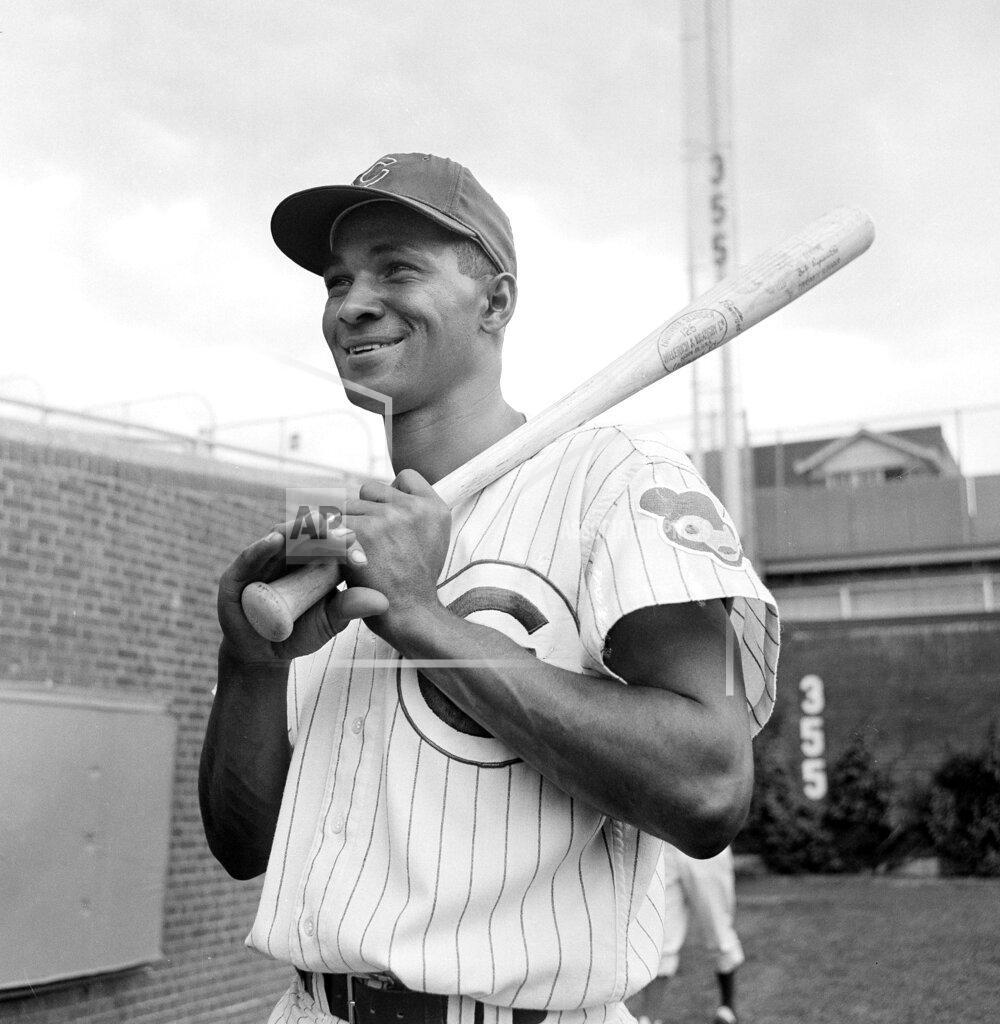
Bunting practice tomorrow, Skip? In a Cubs win over the visiting Mets, two Cubs batters are called out for running into their own bunts in fair territory (as noted by Tom Ruane). Frank Thomas in the 1st, and Ron Santo in the 7th are called out for the running errors. The Cubs win, 7-1, behind Dick Ellsworth’s complete game.
Roberto Clemente’s longest clout? Not nearly. His longest out? Could be. In the 8th inning, with a runner on second and two men out, with the Pirates down by two, Clemente tees off and delivers what is quite possibly the longest out of his career, a missile headed for the deepest reaches of Forbes Field. Collared by the Phillies’ Tony Gonzalez near the flag pole, this 450-foot blast is called by Clemente, in a conversation with Les Biederman of The Sporting News, one of the hardest balls he’s ever hit.
Dow Jones Industrial Average: 817.94 (-0.98).
Born:
Adam Carolla, American comedian, in Los Angeles, California.
Izel Jenkins, NFL cornerback (Philadelphia Eagles, Minnesota Vikings, New York Giants), in Wilson, North Carolina.
Chris Felix, Canadian NHL defenseman (Washington Capitals), in Bramalea, Ontario, Canada.
Died:
Jawaharlal Nehru, 74, first Prime Minister of India (1947-1964).
 History Diaries