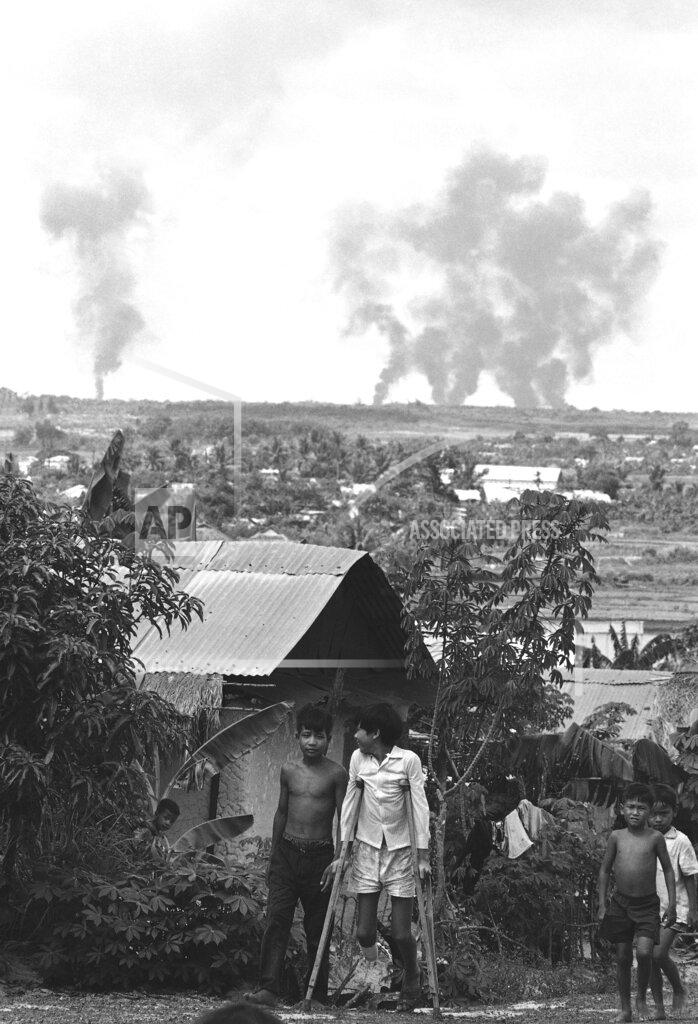
American officials in Damascus said that Secretary of State Kissinger virtually resolved all the major issues holding up the Syrian-Israeli troop separation accord, but some other last-minute snags developed, threatening further delay on a final agreement. American officials, Syrian leaders and the newsmen who have followed the Secretary on his peace mission were all expressing uncertainty over whether he would complete the accord he has sought so diligently. Mr. Kissinger made his 12th and possibly final trip to Damascus.
Four Syrian MIG‐17’s this afternoon bombed positions in the Israeli-held salient of Syrian territory, but Israel said there were no casualties. Shelling was heavy between the two sides on the nonfunctioning cease‐fire line, as it has been for the last few days. An Israeli soldier who was wounded yesterday died today. In military terms, even the bombing carried out by both sides was of little importance. Its main importance was that if carried out indefinitely, it would become intolerable to Israel and perhaps to Syria as well. This is what lends great importance to the efforts of Secretary of State Kissinger to promote a military disengagement, which now seems near.
A widespread security alert was still in effect in northern Israel, to prevent a recurrence of the massacre of students at Ma’alot on May 15 by Palestinian guerrillas. Seven terrorists had been reported killed and two captured in the last few days. A fire at a government ammunition factory near Haifa brought on many explosions there, and about 7,000 civilians living nearby were evacuated from their homes today. Officials said there was no reason to attribute the fire to infiltrators.
In Damascus, Syria, Palestinian guerrillas were quoted by the Palestinian press agency as saying that they had destroyed a military plant and Israel’s biggest plastics factory in two raids, the Reuters news agency reported. Reuters quoted the Palestinian agency as saying that a number of Israeli workers were killed.
Efforts of Yitzhak Rabin, Israel’s Premier-designate, to put together a new coalition government are being jeopardized by bitter factional rivalries within the ruling Labor party over the distribution of cabinet posts. The rivalries are prolonging the country’s political stalemate. There is a possibility that Mr. Rabin will fail and new elections will be necessary, but most Israeli politicians regard this as remote. Mr. Rabin has until Tuesday to establish a new government, but the deadline can be extended.
The collapse of an apartment building, under construction in Kuwait City, took place while 150 workers were inside as concrete was being poured on the sixth floor. Ten injured people were rescued, and four bodies were recovered, but police said that “scores of others were feared missing.”
The Greek military officers who six months ago toppled the regime of President George Papadopoulos today have hardly any visible public support. A former politician said, “Papadopoulos at least had maybe 5 or 10 percent of the people. This government has nobody.” But experts see little prospect for change. Mr. Papadopoulos always referred to his government as a “parenthesis” and promised an eventual return to democracy. For years no progress was made, but last summer he did install a civilian Premier, oust many of his military comrades from the government, and allow a renewal of press freedom, and political activity. That liberalization, however meager, helped bring on the Coup in November. Now there is no talk of elections. As one well‐informed European diplomat said: “The current regime is a regression. Last year, at least, there was some hope for development. Whether he was sincere or not, Papadopoulos promised something. Now there is absolutely nothing about the future. There is no hope.”
Northern Ireland’s coalition government of Roman Catholics and moderate Protestants, established five months ago, showed increasing signs of tension under the strike with which extremist Protestants hope to bring down the government. Prime Minister Wilson interrupted a long weekend to discuss the worsening situation with Merlyn Rees, the British Secretary of State for Northern Ireland.
Gerry Fitt, moderate Roman Catholic leader of the Social Democratic and Labor Party, threatened to break up Northern Ireland’s power-sharing government unless British troops are used to move supplies and restore service blocked by a 12-day-old general strike by Protestants. Ulster’s Secretary Merlyn Rees flew to Britain to meet with Prime Minister Harold Wilson as the strike bit deeper into Ulster’s everyday life, especially in connection with food supplies.
In the 1974 Luxembourg general election, the representation of the Christian Social People’s Party (CSV) in the Chamber of Deputies decreased from 21 out of 56 seats to 18 out of 59. Prime Minister Pierre Werner, a member of the CSV, and his coalition cabinet resigned the following day.
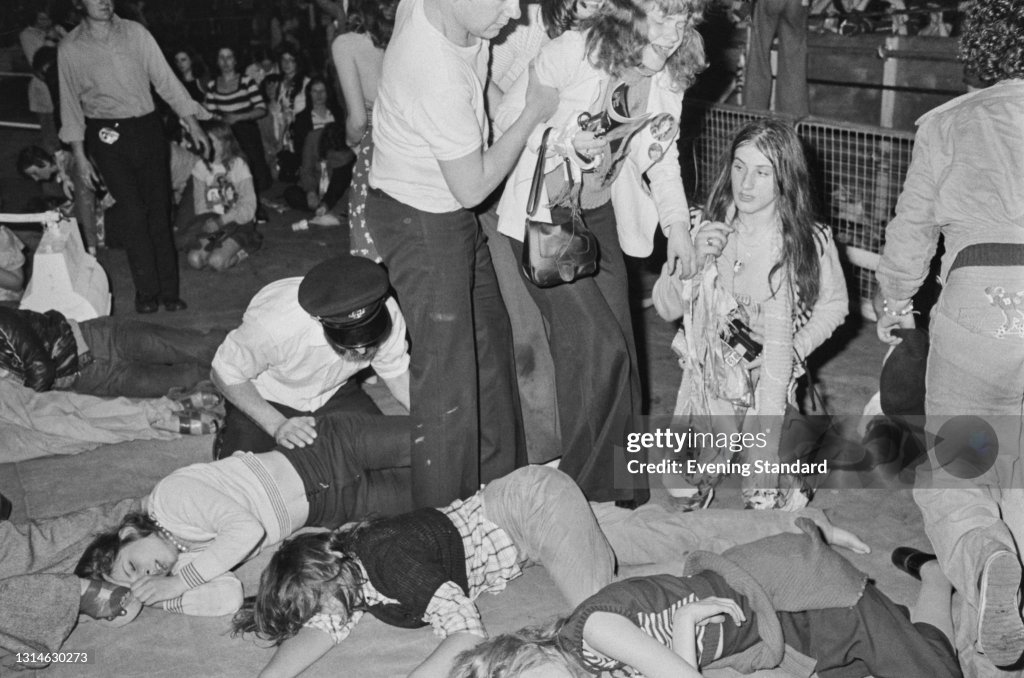
Almost 800 girls were injured, 14 seriously, in a human crush at a David Cassidy concert at London’s White City Stadium. One Cassidy fan, 14-year-old Bernadette Whelan, became comatose from traumatic asphyxiation, and died of her injuries four days later.
About 10,000 striking Portuguese textile workers accepted pay raises, but other unions continued scattered walkouts. Textile union officials said the workers would earn $40 more per month, bringing the wage up to the new $132 minimum set by the government. Meanwhile, troops used tear gas to break up a left-wing demonstration in Lisbon that demanded the release of Cuban Capt. Pedro Rodrigues Peralta, captured in Guinea in 1969.
A West German business magazine, Capital, withdrew its claim that the U.S. Central Intelligence Agency suspected West German counterespionage chief Guenter Nollau of working for East Germany. Nollau asked for an injunction against the magazine after it announced in a press release that the story would be published in a later issue. Capital announced it would not publish the story after all because of “statements of the affected person and the clear denials by the federal (West German) government and the American government.”
An Australian Liberal Party leader, Malcolm Fraser, said it appeared the Labor government had won reelection in the May 18 voting and would have a majority of three or five seats in the House of Representatives despite the fact that the Liberal-Country Party candidate, Bill Sneddon, has refused to concede. Some ballots have yet to be counted in Australia’s complicated voting system.
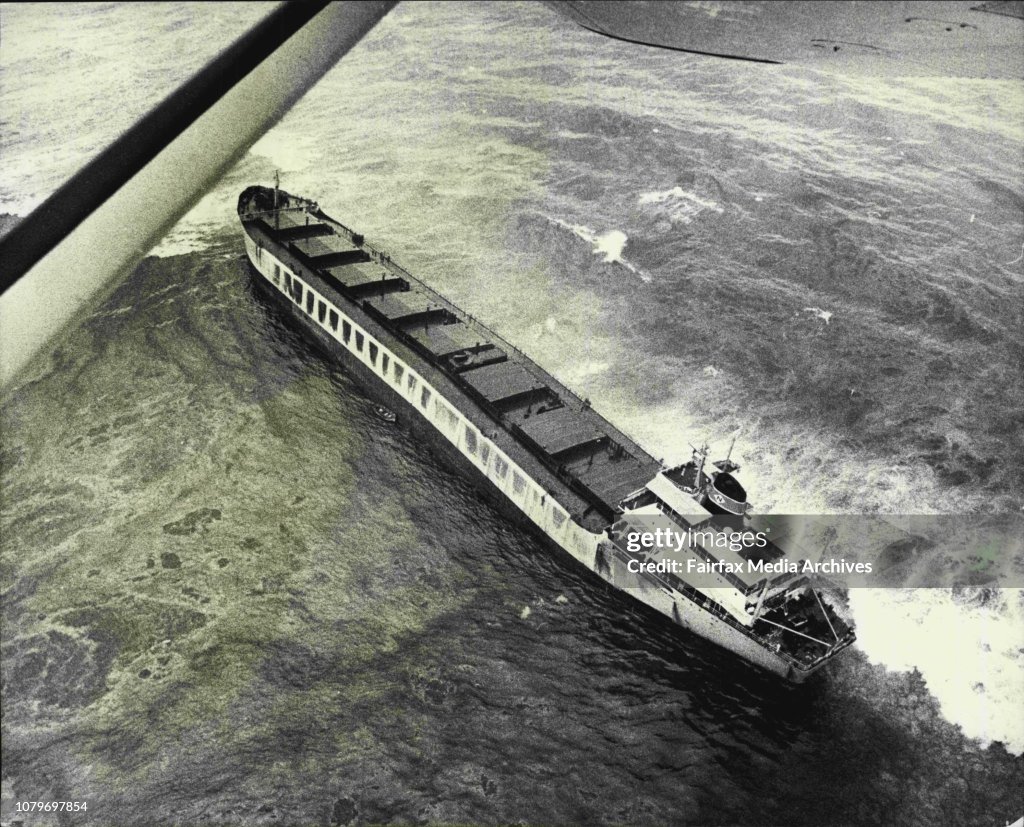
Australian air force helicopters braved gale-force winds to rescue 33 crewmen from a Norwegian freighter that ran aground in heavy seas, the marine operations center in Canberra reported. The 52,950-ton Sygna broke in two shortly after it went aground about 500 feet offshore of Newcastle, New South Wales.
President V. V. Giri of India urged striking railway men to call off a 19-day-old walkout. No immediate response to the president was available from strike leaders, most of whom are in prison. Giri has tried to mediate between strikers and Prime Minister Indira Gandhi who is reportedly determined to crush the work stoppage.
Chinese Vice Premier Deng Xiao-ping predicted that the United States and the Soviet Union will eventually go to war against each other or their people will rise in revolution, a Peking broadcast reported. The remark was at a banquet in Peking in honor of former British Prime Minister Edward Heath,
The Jorkanden mountain peak, 21,237 feet (6,473 m) high, was climbed for the first time. A team from the Indo-Tibetan Border Police scaled the highest of the peaks in the Kinner Kailash mountain range of the Greater Himalayas, located in India’s Himachal Pradesh state.
Dr. Arthur F. Burns, chairman of the Federal Reserve Board, said today that “the future of our country is in jeopardy” if the recent rate of inflation, now running about 11.5% annually, is not moderated. Using unusually grim language about the inflation problem, but disclosing no changes in policy, Dr. Burns said that although the recent rise in interest rates was “troublesome,” it must “for a time be tolerated.” He pledged “continued, resistance to swift growth in money and credit,” even though, one result of that policy has been temporarily higher interest rates. “If long continued,” he said in a commencement address at Illinois College in Jacksonville, Illinois, “inflation at anything like the present rate would threaten the very foundation of our society… I do not believe exaggerate in saying that the ultimate consequence of inflation could well be a significant decline of economic and political freedom for the American people.”
“All men in this nation are subject to the rule of law,” said Chesterfield Smith, head of the American Bar Association, who had joined the growing number of political and public figures of both parties in urging President Nixon to comply with the decision of the courts on whether he must surrender several dozen subpoenaed tape recordings to the special Watergate prosecutor.
In Arkansas, the central figure in the Democratic primary on Tuesday is the Governor, Dale Bumpers, who is challenging William Fulbright for his seat in the Senate. Governor Bumpers’ popularity will be pitted against the record of Senator Fulbright, who is facing the danger of defeat and the end of his 30-year career in the Senate. Mr. Bumpers’ attraction appears to be his fresh image of the common man in politics.
Stewart Alsop, a columnist for Newsweek magazine, died at the National Institutes of Health in Bethesda, Maryland, where he was being treated for cancer of the bone marrow. A book he had written about his fight against cancer, “Stay of Execution,” was recently published. He was 60 years old.
Vice President Ford, who was in New York to dedicate a new building at Mount Sinai Medical Center, expressed the “hope and belief” that a national health insurance plan would be enacted this year, and he said that the government was increasing efforts to hold down “skyrocketing” health care costs. He dedicated Mount Sinai’s $117 million Annenberg Building, named for the late Mrs. Moses Annenberg of Philadelphia, whose son, Walter Annenberg, Ambassador to Britain, and seven daughters gave $12 million toward the building’s cost, to which the state and federal government also contributed.
The Navy and the Air Force are well into a sweeping, costly and, in some areas, controversial program for the modernization and improvement of their general‐purpose forces. Weapons systems now under development or production range from the Navy’s 91,000-ton nuclear carriers to the Air Force’s lightweight fighters. Some items, such as defense suppression weapons to protect planes against Soviet SA‐7 missiles, have been developed as a result of the lessons of the Vietnam war and the Arab‐Israeli conflict in October, 1973.
Many of the new weapons systems will have a dual capability — nuclear and conventional. The trend of the modernization is toward qualitatively superior conventional forces, a reflection of the belief of Defense Secretary James R. Schlesinger and his service chiefs that, as nuclear parity with the Soviet Union continues, the importance of such forces will grow. “We have a minimum of these forces, considering the extent of our interests and responsibilities and the capabilities of potential opponents,” Mr. Schlesinger told Congress in his annual report. Even this “minimum” will be expensive. The 21 major items in the Navy’s program, excluding aircraft but including new surface and undersea craft and such esoteric items as underwater surveillance systems, will cost a proposed $3.64‐billion in the budget for fiscal year 1975. The bill in 1975 for 16 major items in the modernization and improvement of the tactical air forces of the two services will come to $3.88‐billion. An additional $320‐million has been asked for the strategic and tactical airlift forces.
Costs are a major point of criticism in current discussions of the Nixon Administration’s $91.3‐billion defense budget, not only in Congress but also in the scientific community and in the services themselves. Beyond the money issue, however, there is a continuing and divisive debate over the military usefulness of some key items in the program. This debate begins with the biggest and most expensive weapons system in the surface fleet’s inventory, the three projected Nimitz class carriers. These will cost, with their aircraft, just under $1billion each. The first, the Nimitz, is expected to be delivered to the Navy in the fiscal year 1975; the second, the Eisenhower, will arrive late in the fiscal year 1976, and the third, the Carl Vinson, will be deployed in the fiscal year 1981.
Just 24 hours after the NAACP and two labor unions lifted round-the-clock volunteer watches at the Detroit home of a black family, the harassment that has terrorized the family for nearly a year started again. Mrs. Maytroit Richards said she returned home to find that someone had pushed in the glass on a side door in a possible break-in attempt. Ever since the family moved into the all-white neighborhood last summer, it has been the object of threatening letters, windows have been broken and garbage has been strewn on the lawn.
A postal clerk said he kidnapped a Waverly, Minnesota, bank officer because he was in debt from investing in silver bullion. “In April, the silver market took a quite steep drop and I had to come up with additional funds and, of course, I was unable to do that,” Charles Ward, 27, said. He has pleaded guilty to the kidnapping of Ardis Graham, vice president of the Citizens State Bank of Waverly, and is serving a sentence of up to 20 years for the crime. Mrs. Graham was set free when her husband, Daniel, president of the bank, paid a ransom of $50,000. The money was recovered.
American Airlines and the Transport Workers Union, representing 20,000 employees, reached tentative agreement on a new contract only 90 minutes before a strike deadline. TWU President Matthew Guinan said the new pact offered the “best benefits, working conditions and wages in the industry.” Details of the settlement, however, were withheld pending a ratification vote.
A 10-day strike against the American bureaus of the Reuters news agency was settled when members of the Newspaper Guild of New York accepted a three-year contract containing a cost-of-living clause. The strike began May 16, when talks broke down and 149 employees in New York, Washington, Chicago and Los Angeles walked off their jobs over the company’s refusal to offer such a provision. The clause will be triggered when the cost of living rises above 8%. The basic wage increase calls for hikes of 4.6% this year, 4.1% next year and 4% the final year. The top scale will go immediately to $422.79.
White House counselor Anne L. Armstrong accused organized labor of undertaking a vendetta against President Nixon and joining with civil rights groups in an “orchestrated effort” for impeachment. Before the Watergate hearings began, she said, labor set a goal of “impeachment of the President and they were joined in this… by other organizations.”
A lawyer and author, Karen DeCrow of Syracuse, New York, was elected president of the National Organization of Women. In balloting in Houston, Ms. DeCrow received 512 votes to defeat runner-up Mary Jean Collins-Robson of Chicago, who got 448 votes.
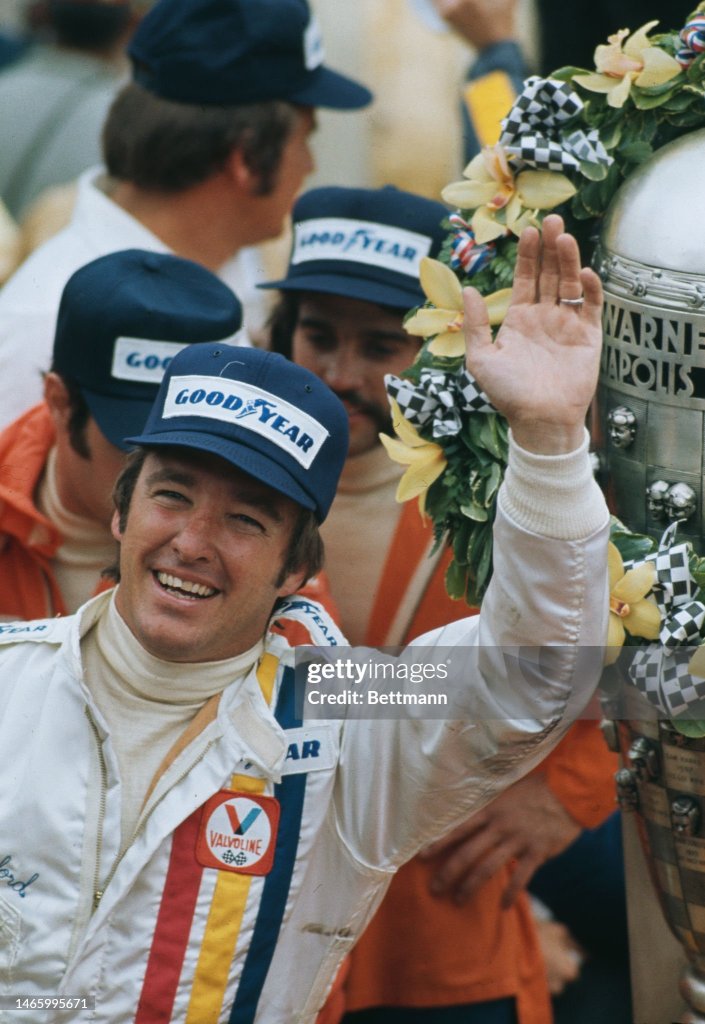
Johnny Rutherford won the 1974 Indianapolis 500 at the Indianapolis Motor Speedway.
Swedish driver Ronnie Peterson won the 1974 Monaco Grand Prix on the Circuit de Monaco.
Born:
Lars Frölander, Swedish swimmer and 2000 Olympic gold medalist in the 100m butterfly; in Boden, Norrbotten County, Sweden.
Died:
Stewart Alsop, 60, American newspaper columnist, of acute myeloblastic leukemia.
Kitty Gordon (stage name for Constance Minnie Blades), 96, English silent film star in the 1910s.




 History Diaries