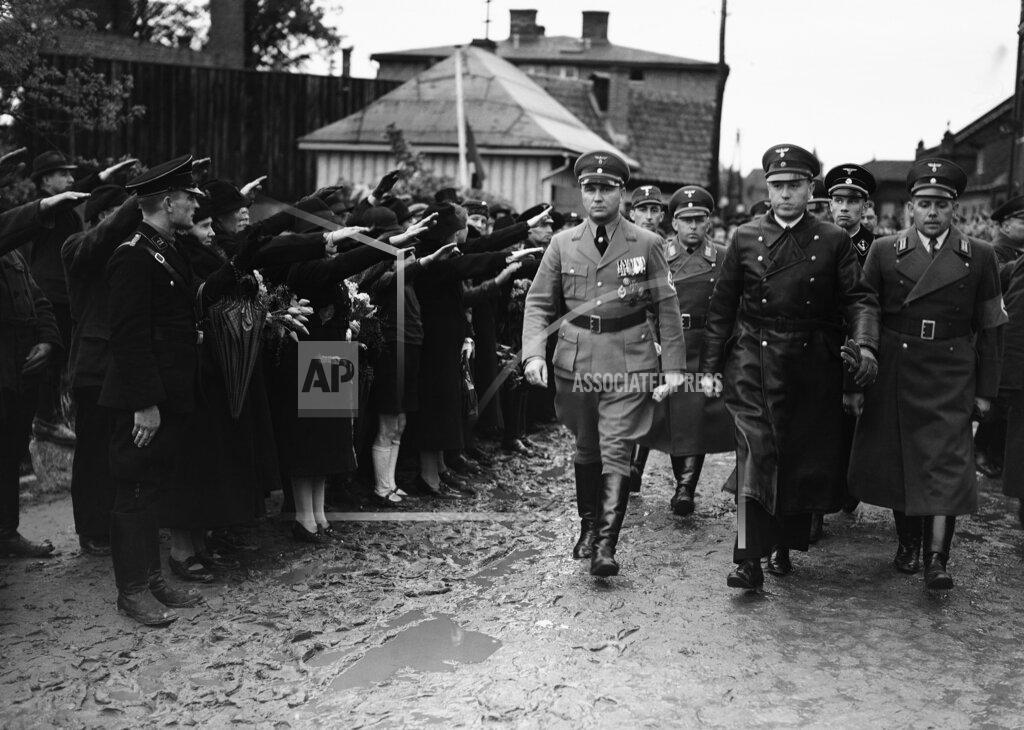
Germany warns Jews that a law barring them from Aryan housing will begin soon. Jews in Berlin were warned today that the “ghetto law” forbidding them to live in Aryan-owned houses would soon be enforced and they had “better seek lodging in Jewish-owned houses now to avoid having quarters assigned to them by the city government.” The law, proclaimed May 4, stipulates that Jewish householders must take in Jews at present living in “Aryan-owned” houses.
At the same time certain sections of Berlin — some of which were formerly regarded as “Jewish districts” because of a predominance of Jewish inhabitants — were declared “Aryan districts where Jews are not permitted to live.” These districts include the fashionable Tiergarten district, the near-by Luetzowplatz, the Potsdammerstrasse — one of the more important business streets — the Tauentzienstrasse, the Kurfürstendamm, the Bayerisches Viertel and the Hansa Viertel. Both of the last-named formerly were largely populated by Jews.
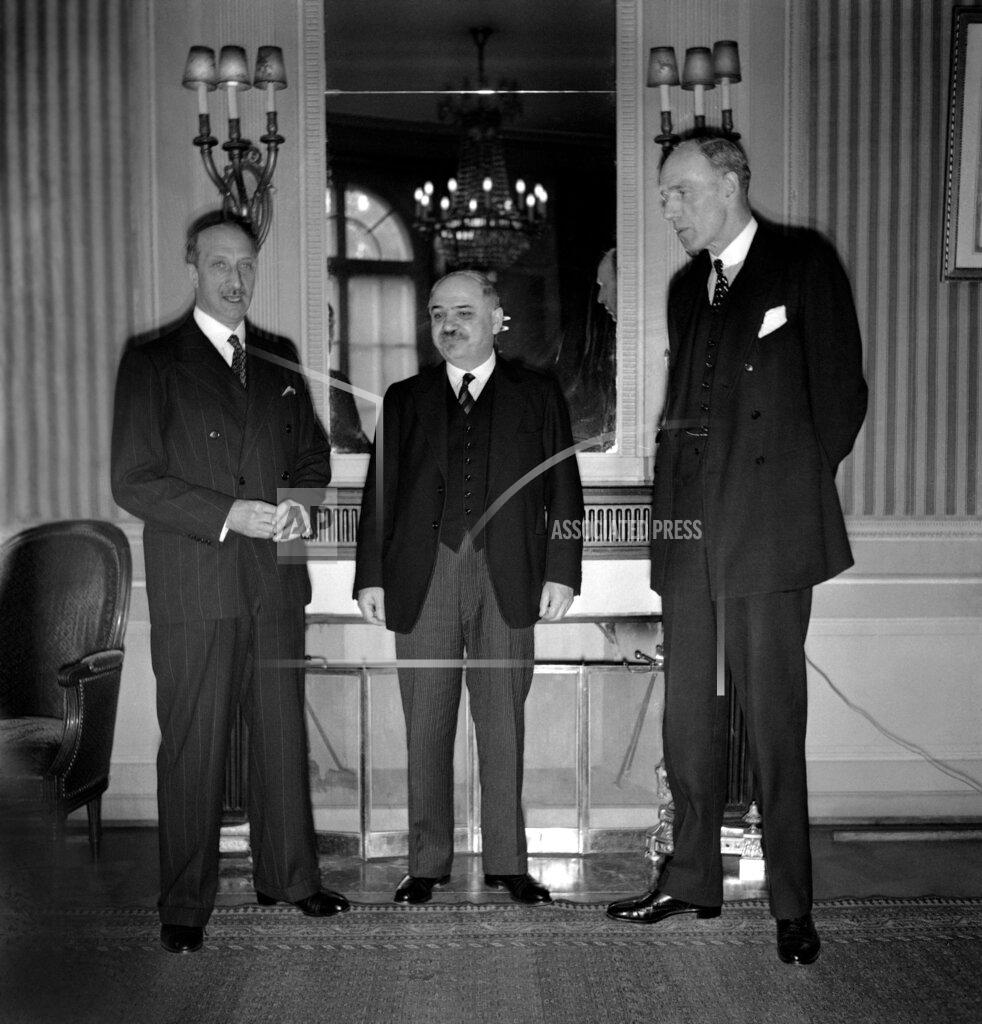
Conservative Britain heaved a sigh of relief today over the Cabinet’s decision to enter a virtual alliance with Communist Russia. If there were any misgivings over this spectacular shift in British foreign policy, they did not show themselves. Every important newspaper approved it — even the London Daily Mail, which until a few weeks ago had never ceased to warn its readers of the dangers of the Soviet regime.
No matter what doubts there might be about Russia’s military efficiency, Britain seemed to have made up her mind that a pact with Russia was logical and essential if further German conquests were to be prevented. Proof of the changed attitude in Conservative strongholds came today from the Stock Exchange, where prices rose and business broadened in almost all departments on the prospect of an alliance with Russia. It was a far cry indeed from the days not many months ago when the British Conservatives talked gleefully of “letting Germany go East.”
[Ed: That relief is premature, and sadly, destined to be short-lived.]
An indication that the Germans are considering still another method of weakening Czech morale is seen in the recent arrest of a number of high officials in the Agriculture Ministry, all of whom were formerly employed in the land reform office.
It is known that the Gestapo [secret police] has been making a close study of the workings of Czech-Slovak land reform legislation, which since the republic’s foundation has placed some 300,000 families on small holdings carved out of feudal estates. One of Konrad Henlein’s eight Karlsbad demands was the “reparation to Sudeten Germans of all the damage they had suffered since 1918” and the revision of the Czech land reform bill always has been foremost in the Sudeten German program.
Last week the protector’s office asked the Czech Government to arrange for the reparation of 125,000,000 crowns to be paid to the Coburg family whose estates, incidentally, were made subject to the land reform process. The Gestapo has been helped in its inquiries by information collected formerly by Czech left-wing parties, one of whose chief complaints against the powerful agrarian party was that land reform had been carried out to the special benefit of some of the party’s leaders.
Vienna police fine American Express for overcharging Jewish ticket users.
The Soviet Union announced a huge defense budget of nearly 7,000,000,000 U.S. dollars. The new budget represented an increase of more than 50% over the previous year. The Soviet budget was presented to the Supreme Soviet by Finance Commissar Arseny G. Zverev, who, in explaining the necessity of further Soviet arming in a world now under terrific tension as a result of aggression and threats, won a tremendous ovation when he declared the army and navy were reliable and able to repel any invader who dared invade Soviet soil and to give three blows for one by any enemy.
“Last year German military expenditures were as large as in 1915,” Mr. Zverev pointed out, “and Italy is not lagging behind her Axis partner. The armament race is on in Japan. The democratic countries — Britain, the United States and France — have now been forced to increase their expenditures for armaments.”
The Soviet Government has asked Finland what guarantees she is prepared to make that the Aland Islands, if fortified, would not be used by some nation against the Soviet Union, the Communist party newspaper Pravda disclosed today.
The request was made through the Finnish Minister to Moscow, Pravda said in an editorial discussing Russian opposition to fortification by Finland and Sweden of the islands at the Baltic Sea gateway to the Gulf of Bothnia. The Finnish Minister, Pravda said, was asked for “data regarding the nature and extent of proposed armament of the Aland archipelago.”
“Before the Council of the League of Nations adopts any decision on this problem,” the paper adds, “the Soviet Union naturally desires to know the purpose of the proposed arming of the Aland Islands, what will be the substances of these military measures and, finally, what will be the guarantees preventing the possibility of use of the fortified Aland Islands by some State against the Soviet Union.”
Dissatisfied with the policy of non-cooperation and non-recognition decided on by the Jewish leaders in Palestine, the Jewish youth is still pressing for an active fight against the White Paper containing the new British policy on the Holy Land. While the Hebrew Technical School in Haifa today sent a delegation to the Jewish Agency in Jerusalem demanding that the Agency take active steps, the rest of the student body proclaimed a sit-down strike in the school until its demands have been fulfilled.
The regular nightly Hebrew broadcast by the government broadcasting station was interrupted tonight by a mysterious voice exclaiming thrice in Hebrew, “We are proclaiming war against the White Paper.” In Tiberias two members of the Jewish Labor party, speaking at a public meeting denouncing White Paper, were arrested today, while in Haifa a public protest meeting called by the orthodox labor group, Hapoel Hamizrahi, was prohibited.
Two Arabs were killed and three others wounded today by shots fired into an Arab crowd at the Port Easter railway station in Haifa. Arabs blamed Jewish assailants.
In Washington, President Roosevelt discussed politics with Nelson G. Kraschel, former Governor of Iowa and a bill to liberalize restrictions on loans to small businessmen with Representative Sabath, its author.
The Senate passed the Omnibus Railroad Bill, confirmed the nomination of Armistead M. Dobie as judge of the United States District Court for the Western District of Virginia, received the La Follette bill to impose fines for coercion of Congressional witnesses and recessed at 5:57 PM, until noon tomorrow.
The House completed Congressional action on the $54,000,000 Naval Public Works Authorization Bill, approved the conference report on the bill increasing the mortgage insurance authority of the Federal Housing Administration to $4,000,000,000 and extending the authority to July 1, 1941, received a resolution by Representative Flaherty for an investigation of the sinking of the submarine Squalus and adjourned at 4:50 PM until noon on Monday. The Rules Committee postponed action on a rule for the old-age pension plan.
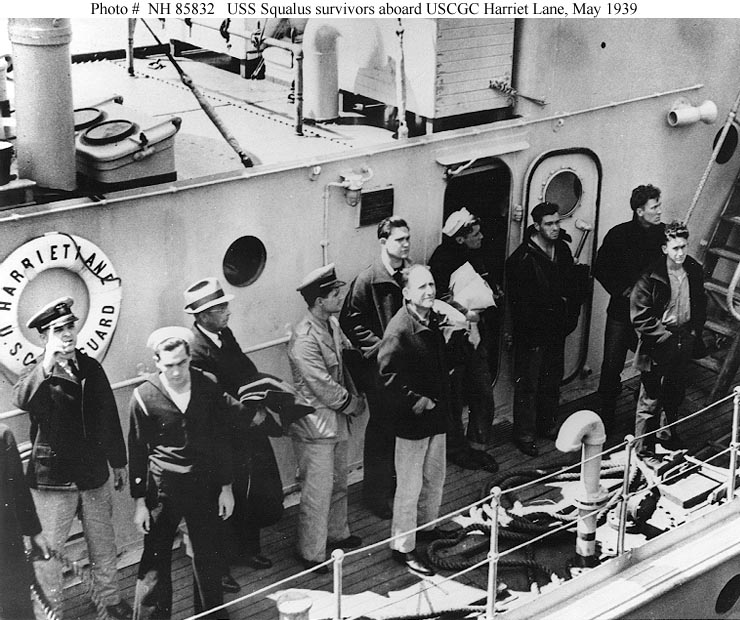
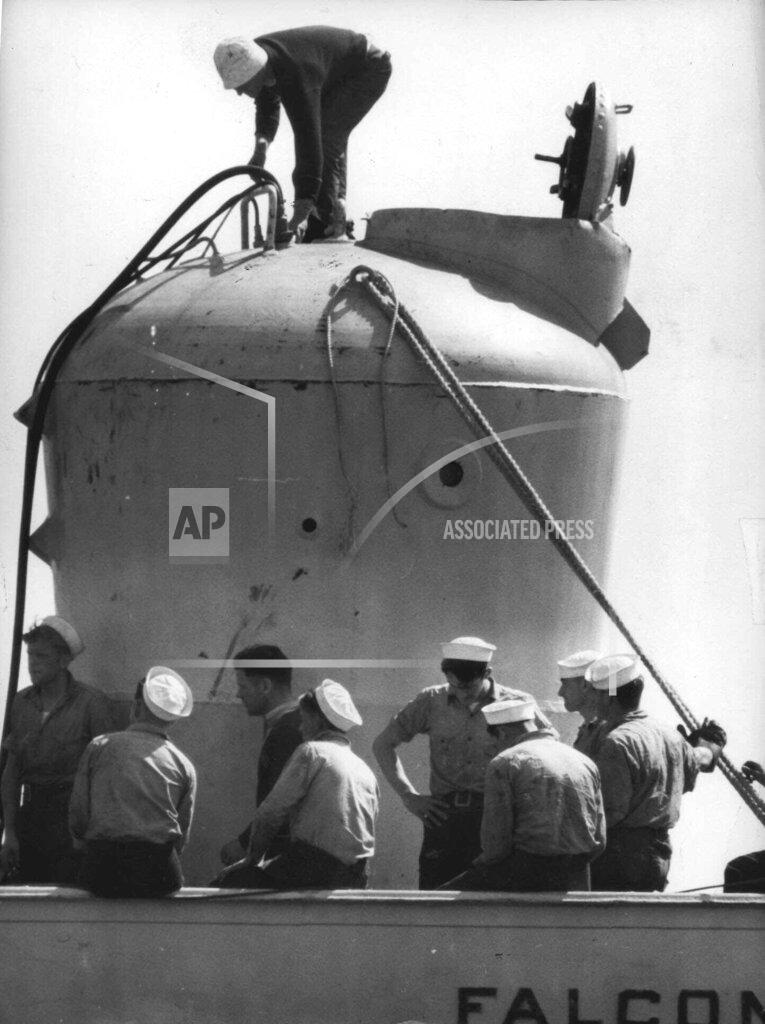
Rescue efforts in the Squalus disaster were called off. All 33 surviving crew members were rescued but 26 others in the after part of the ship had already drowned. Divers from the USS Falcon confirmed today that all 26 men trapped in the aft torpedo room of the submarine USS Squalus when it sank are dead. The rescue diving bell was lowered one last time and positioned over the hatch to that section. But when the hatch was opened, the interior of that section of the submarine was completely flooded. The Navy plans to raise the Squalus before conduction an official inquiry into the accident.
A tax-revision program, which, according to Secretary Morgenthau, will “definitely contribute to recovery” has been agreed upon by the Treasury and Congressional leaders. While Mr. Morgenthau refused to say whether the program would maintain the present revenue yield, it could be inferred from his satisfaction that it met President Roosevelt’s view that revision should not reduce revenue.
Representative Doughton, chairman of the House Ways and Means Committee, announced tonight that public hearings on the program would be opened Saturday, with Secretary Morgenthau as the first witness. He added that he expected the hearings to last only a few days. Mr. Morgenthau will make a preliminary statement on behalf of the Treasury and will be followed by Under-Secretary Hanes, who will present and discuss the details of the program.
The undistributed profits tax appeared doomed today as word was passed that a compromise plan for revising the revenue laws to encourage business recovery had been approved by President Roosevelt, the Treasury and Congressional leaders. The President made no announcement on the subject and Secretary of the Treasury Morgenthau made only brief announcement of the agreement. However, high Congressional sources said the program called for elimination of the undistributed profits tax. Leaders in the House and Senate predicted that the entire program would be approved by Congress without much delay.
The first point of the compromise plan called for the elimination of the undistributed profits tax on December 31, when it is scheduled to die automatically unless renewed. In its place, a flat rate of 18 percent would be imposed on corporate income in excess of $25,000. The compromise, according to prominent members of Congress, has a provision to meet President Roosevelt’s insistence that if the undistributed profits tax is killed other safeguards against legal tax evasion be provided.
Part of the compromise arrangement, these members said, was their promise to try to strengthen the penalty section of the bill. Their proposal is that, if corporate profits are retained by the corporation for tax avoidance purposes, the Secretary of the Treasury may levy a tax of 25 percent for the first $100,000 so retained and $35,000 per $100,000 on sums above $100,000 with the burden of proof on the taxpayer to show he was not seeking to escape taxes.
U.S. Senators say that the New Deal causes poverty by barring economic revival, adding that the Roosevelt administration is leading the U.S. to economic slavery. Attacks on the New Deal as making for mass poverty and dictatorship similar to that to which leading European countries have succumbed marked the forty-eighth general meeting of the American Iron and Steel Institute at the Hotel Waldorf-Astoria in New York.
Leading in the assaults on the Administration, combined with demands for the liberation of private enterprise as the chief means for stimulation of recovery, and amendment of the Wagner act, were Senator Millard E. Tydings of Maryland and Tom M. Girdler, retiring president of the institute and chairman of the Republic Steel Corporation. The institute membership’s approval of the anti-New Deal sentiments found affirmation in the election of E. T. Weir, chairman of the National Steel Corporation, one of the most aggressive opponents of President Roosevelt’s policies, to succeed Mr. Girdler.
Senator Tydings, who was high on the list of those whom President Roosevelt tried unsuccessfully to “purge” from the Democratic party last November, spoke at the institute’s dinner last night. Mr. Girdler addressed the morning session. Their addresses were applauded by more than 2,000 representatives of the steel industry and other leaders of economic life. Both speakers concentrated their fire upon what they denounced as reckless government spending bureaucracy, excessive taxation and efforts to destroy business.
Senator Tydings closed his address by proposing an eight-point program for government economy, business revival and general stabilization. Mr. Girdler urged restoring confidence through cessation of attacks on business, tax revision and amendment of the Wagner act. “The steel industry does not seek the repeal of the Wagner Act nor any weakening of the rights of workers declared therein,” Mr. Girdler said. “Sound national policy unquestionably requires a labor law, but it must be equitable in its provisions and in its administration to all classes and all groups.”
U.S. President Franklin D. Roosevelt signed a $773,049,151 naval appropriations bill. This was the largest such bill signed in peace time and cleared the way for the U.S. Navy to speed up its expansion program. Included in the appropriation are funds for starting work on two 45,000-ton battleships — 10,000 tons larger than the fleet’s present dreadnaughts. In addition, the measure provides money to start construction on a score of other vessels, to continue work on more than 100 already building, to buy 500 airplanes and to run the navy during the 1939-40 fiscal year. Just before the President signed the measure, Congress completed action on a bill authorizing a $54,000,000 construction program at naval shore stations. It was sent to the President when the House accepted Senate amendments.
The U.S. will push a trade pact in Latin America according to Commerce Secretary Hopkins. Secretary of Commerce Harry L. Hopkins last night told 1,500 business men, industrialists and financiers at the ninth annual world trade dinner, held at the World’s Fair, that his department was preparing to assign a group of specialists to study the possibility of increasing American import trade, particularly from Latin America.
Fritz Kuhn, the year of the pro-Nazi German American Bund, was arrested after being indicted for forgery and grand larceny. He is accused of stealing $14,000 from the Bund.
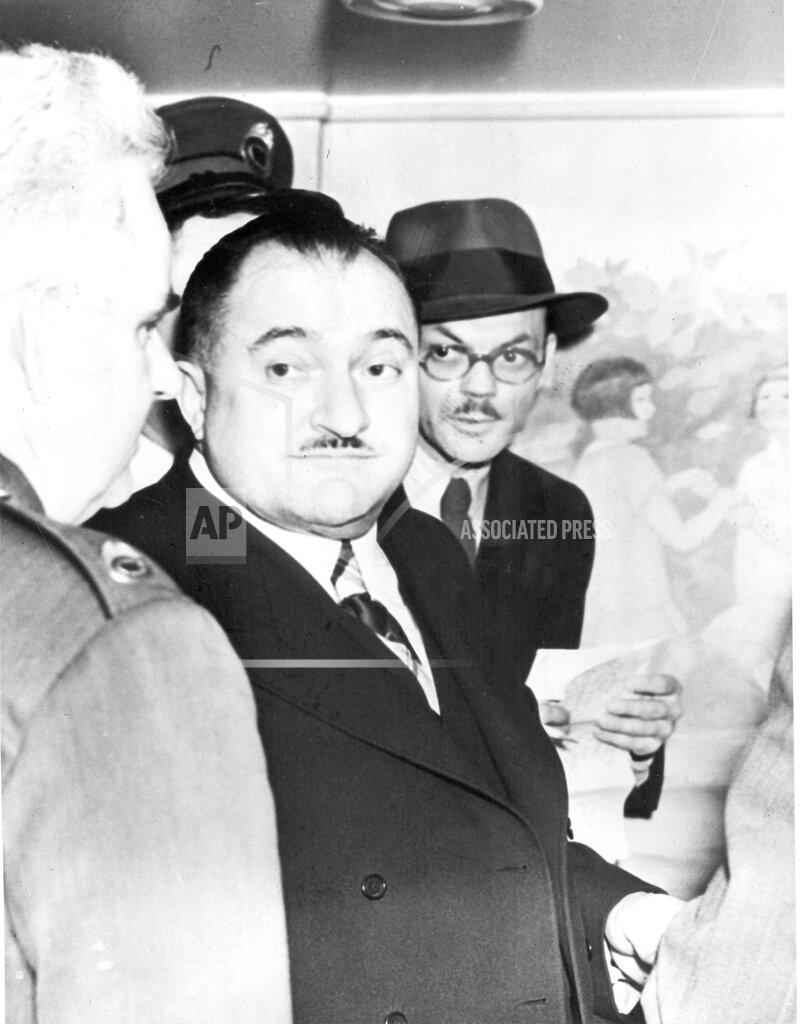
Grover Cleveland Bergdoll, America’s most notorious wartime draft dodger, arrived in the U.S. today. He was placed under arrest on a charge of desertion by officers of the United States Army. Bergdoll was seized in the lounge room of the North German Lloyd liner Bremen at about 4 PM when the ship stopped off Quarantine. A half hour later he was unceremoniously escorted off the liner en route to a solitary cell in Castle William, grim army prison in Fort Jay on Governors Island in New York.
Alcatraz Prison adds 100 cells.
Engineers picture the car of tomorrow: teardrop shaped with a rounded front and pointed tail.
The submarine USS Skipjack transited the Panama Canal.
Carl Storck becomes the second NFL president.
In his last three at bats against the Red Sox Emerson Dickson, Cleveland’s Ken Keltner belts 3 homers in an 11–0 romp at Fenway. It’s the 11th time that an American League batter has hit 3 successive homers. Feller makes it easy, pitching a one-hitter for the win. Bobby Doerr’s 2nd inning single for Boston is the only hit against Rapid Robert: it’ll be one of two one-hitters of Feller’s in which Doerr has the only hit.
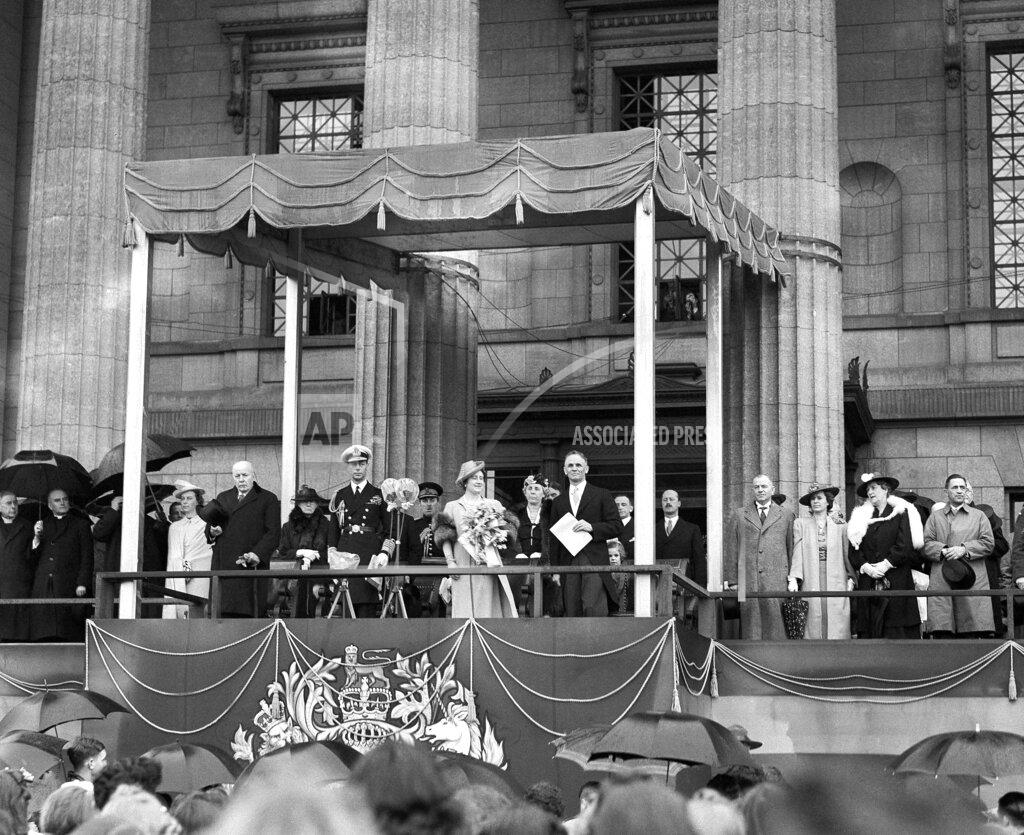
King George and Queen Elizabeth continue on their train tour of western Canada. Today the royals spend brief times in Winnipeg, Regina, and Moose Jaw.
Brigadier General George C. Marshall, soon to become Chief of Staff of the United States Army, received a most cordial welcome on his arrival in Rio de Janeiro, Brazil, this morning aboard the light cruiser USS Nashville to invite and take along with him to the United States General Pedro Aurelio del Goes Monteiro, Chief of Staff of the Brazilian Army.
The Soviets subsidize Far East settlers. The motive is held to be creating a self-sustaining area in case of war with Japan.
The Japanese bomb Chungking again. Heavy casualties and panic take a toll. 26 Japanese bombers attacked Chungking (today Chongqing), China in the evening; six Chinese fighters intercepted them over the junction of Jialing River and Yangtze River and claimed two bombers shot down. Damage to the city was heavy. Visiting Chungking again after an interval of twelve days, Japanese planes dropped bombs once more on the heart of the city yesterday, adding new blocks of smoldering ruins to the burned-out acres already created in the downtown area and exacting further human toll. There were hundreds of casualties, perhaps 1,000. Twenty-six planes carried out the raid at dusk under a new moon when the skies had cleared after a murky day that had created a false sense of security and had caused tens of thousands to return to the city from their emergency countryside homes. The bombing was concentrated near the tip of the Chungking peninsula.
Half a dozen bombs fell along Shensi Street, wrecking a number of this capital’s most imposing business and banking buildings. One bomb hit the street between the Meifeng and Salt banks — an area occupied by foreign offices, such as those of the Texas Company, Socony-Vacuum and China National Aviation Corporation. The buildings were only slightly damaged but a score of persons were killed on the premises.
Taking shelter in the basement of the Meifeng Bank building, which also houses the Central Bank, a number of high government officials were saved when the structure withstood a bomb blast. Eight bombs hit all around the Foreign Office, which, however, was only slightly damaged. In the adjoining Central Park more than 100 were killed. The street fronting the rambling Y. M. C. A. premises, near which many bombs fell, was made into a temporary dressing station an hour after the bombing and was filled with moaning injured persons. Across from the Y. M. C. A. the headquarters of the service for wounded soldiers in transit was demolished by a direct hit.
T. C. Fan, dean of the missionary Central China College, and Dr. William Chang, president of the missionary Chefoo University, miraculously escaped with minor wounds by lying under a table. Safe also was Miss Pao, Peking Union Medical College nurse, who had just arrived in Chungking from the United States, where for two years she had been attending Fred B. Snite Jr., American paralysis victim who is in an “iron lung.”
A Japanese spokesperson warns that foreign vessels will be searched up to 100 miles from shore.
Dow Jones Industrial Average: 135.53 (+0.49).
Born:
Ian McKellen, actor (Gandalf-“Lord of the Rings” trilogy, “X-Men”), in Burnley, Lancashire, England, United Kingdom.
Dixie Carter, actress (“Designing Women”, “Edge of Night”), in McLemoresville, Tennessee (d. 2010).
Gene A. Budig, American baseball executive (American League [AL] president 1994-1999), in McCook, Nebraska (d. 2020).
Died:
Joseph Duveen, 69, British art connoisseur (Elgin marbles).
Naval Construction:
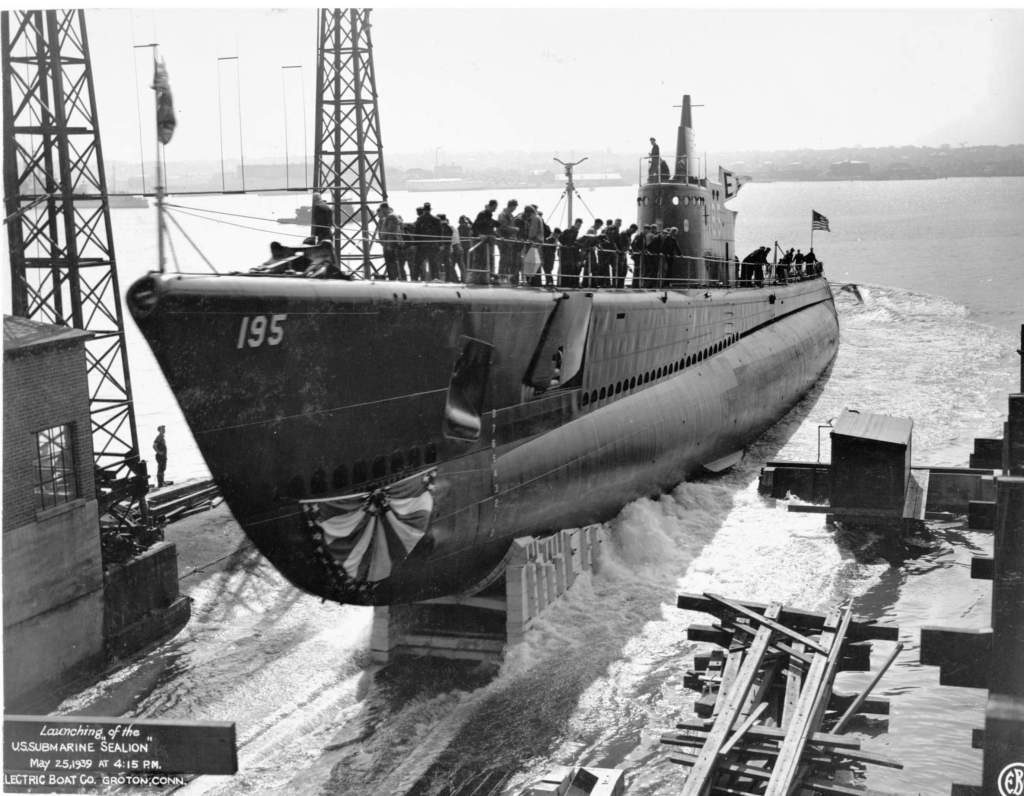
The U.S. Navy Sargo-class submarine USS Sealion (SS-195) is launched by the Electric Boat Co. (Groton, Connecticut, U.S.A.).
The Royal Fleet Auxiliary Dale-class fleet tanker RFA Cedardale (A 380) is commissioned. Her first commanding officer was Captain William Frost, RFA.
[Ed: Filed under “Don’t count your chickens before they are hatched…”]


 History Diaries