Republican presidential candidate and U.S. Senator Barry Goldwater suggested the use of nuclear weapons in the Vietnam War during an interview with reporter Howard K. Smith on the ABC program “Issues and Answers.” Goldwater didn’t advocate using the weapons against enemy troops, but did say that enemy supply lines could be made unusable if the cover offered by rain forests and jungles was removed. “[D]efoliation of the forests by low yield atomic weapons could well be done”, he said on a pre-recorded interview with Smith. “When you remove the foliage, your remove the cover. The major supply lines too, I think, would have to be interdicted where they leave Red China… according to my studies of the geography, it would not be difficult to destroy these routes.”
During the storm of criticism that follows, Goldwater tries to back away from these drastic actions claiming that he did not mean to advocate the use of atomic bombs, only that he was ‘repeating a suggestion made by competent military people.’ But Goldwater will never be able to shake the image of an extremist in his Vietnam policies and it will count heavily against him when he runs against Johnson. An author would later describe Goldwater’s idea as “a gift to Democratic Party campaign managers who wanted to position Johnson as a responsible man of peace” and UN Secretary General U Thant said that anyone advocating the use of atomic weapons in Vietnam was “out of his mind”. Goldwater would go on to lose to President Johnson in a landslide defeat in November.
Muong Kheung, headquarters of General Kong Le’s armored regiment and last neutralist outpost on the Plaine des Jarres, fell to an overwhelming force of Pathet Lao and North Vietnamese Communists today, the Defense Ministry reported. A Defense Ministry communiqué said General Kong Le’s neutralists were pushed westward along Route 7 toward Muong Suoi in a fierce 12-hour battle. Fighting was continuing around Muong Suoi. The communiqué identified units of Hanoi’s command. Apparently, the neutralists managed to take their Soviet-built tanks with them. Route 7, or Highway 7, runs east and west across Laos. Muong Suoi is off the western edge of the Plaine des Jarres, about 100 miles north of Vientiane.
On the political front Premier Souvanna Phouna said Yesterday. that he was willing to take part, in another 14-nation conference on Laos “in Geneva or in any other city.” But he made two conditions: A cease‐fire, and a withdrawal by the pro‐Communists from the territory they have captured in the last 10 days. Prince Souvanna Phouma said a new conference of the Geneva type should give him power to order investigations anywhere in Laos by the three‐nation, International Control Commission for Laos (India, Canada and Poland). It seemed almost certain that the Communists would not stand for this. On Saturday, General Kong Le came to Vientiane and conferred with Prince Souvanna Phouma. Their position with reference to a new conference was presumably worked out together.
It appeared doubtful that the Pathet Lao and the Communists would give up their battle gains, which have been relatively minor in acreage but large in strategic and psychological significance, to meet the Premier’s views — at least for the present. The Polish member of the International Control Commission, has consistently vetoed inspections of Communist‐held territory. The Pathet Lao has charged that inspections by the other two members amount to espionage. Prince Souvanna Phouma said the Communist powers had been cold to his earlier suggestion for an ambassador‐level meeting in Vientiane of the 14 signatories of the 1962 agreement on Laos. But some sort of conference is necessary, Prince Souvanna Phouma said, “to put an end to the explosive situation which prevails in this country.”
The Defense Ministry’s communiqué said Muong Kheung was attacked from the north by three battalions — one Pathet Lao and one Vietminh (North Vietnamese) — supported by two tank squadrons and two artillery units. The Communist and pro‐Communists attacked after an artillery bombardment. A second thrust from the south in an attempt to close the escape route was made by four battalions —two each of Pathet Lao and Vietminh — according to the communiqué. The superior numbers and equipment forced General Kong Le’s force to withdraw, the communiqué said.
The neutralists had counterattacked Saturday in the region of Muong Kheung and succeeded in opening an escape route along Route 7. They were moving out today where the highway leaves the plateau of the Plaines des Jarres and enters the northwestern hills.
In broadcasts, meanwhile, the Neo Lao Hak Xat — political arm of the Pathet Lao — continued to make clear the outlines of its propaganda position. It said that the fighting on the plain and other locations in central Laos since May 16 was a struggle inside the neutralist party and that outsiders had no right to intervene.
Communist China assailed today the American proposal to involve the United Nations in securing the disputed South Vietnam‐Cambodian border. In its first public reaction to United States Ambassador Adlai E. Stevenson’s proposal to the Security Council last Thursday, Peking said the plan was an American trick to internationalize the South Vietnamese war. “The Chinese people will never tolerate United States imperialism dragging the United Nations into Indochina,” it said.
The contrast between the American and French approaches to problems in Southeast Asia arises, most “neutral” diplomats believe, from a fundamental difference over what Communist China’s intentions are in Asia. President De Gaulle has proposed an international conference, attended by China, to restore peace and neutrality in Laos. This reflects the French President’s conviction that neutralization of four countries on the Indochinese peninsula — Laos, Cambodia, North and South Vietnam — in accord with China, is the only practical goal. The United States appears to be moving toward a more militant attitude toward North Vietnam, which the Johnson Administration increasingly regards as China’s ally and as a base for aggression in South Vietnam and Laos.
The French Government believes China’s cooperation must be won if there is to be a long-term settlement. Such a settlement, the French believe, must be based on a clear Western desire to neutralize the area by withdrawal of all foreign forces and a desire to guarantee the neutrality. This, it is argued, would reassure the Chinese about American intentions. These convictions, rather than any wish to annoy the United States, lie behind French policy as it has developed since the recognition of the Peking regime in January. But the convictions are based on an assessment of Chinese intentions and military strength that the United States and some other French allies do not agree with. American policy‐makers appear to believe that the main impact of Chinese imperialism in Asia. will be to the south and southwest for many years to come. They do not think the Chinese are prepared to push north and west toward Siberia and Soviet Central Asia. Nor do Americans appear to think China can be induced to abandon her drive to the south and southwest by agreements on neutrality. On the contrary, the Americans believe, such agreements might make it easier for the Chinese to cloak their tactics.
Mrs. Marcel Dassault, socially prominent wife of a French aircraft manufacturer, was rescued this morning in an abandoned farmhouse less than two days after she had been kidnapped in a fashionable avenue in Paris. Forty‐one hours after she was seized by masked men as she followed her husband out of their Cadillac, Mrs. Dassault, a grandmother in her 60’s, stepped out of the same Cadillac in the fashionable Avenue du Maréchal Maunoury in western Paris. Across town at police headquarters, three men were undergoing intensive questioning. One of them, Mathieu Costa, a 28-year‐old Corsican with a police record, was guarding Mrs. Dassault when two gendarmes broke to the house early this morning at Villers sous‐Saint-Leu. All three prisoners were described as petty gangsters.
President Gamal Abdel. Nasser announced tonight that the Soviet Union had agreed to extend a new loan equivalent to $277 million to the United Arab Republic for the second five‐year plan, which will‐begin in 1965. The agreement was announced at a farewell dinner given by Premier Khrushchev and his wife for the Nassers in Kubbeh Palace on the eve of the Russians’ departure for Moscow. They are completing a 16-day visit to the United Arab Republic. President Nasser signed a joint communiqué that followed the lines of Soviet foreign policy in fields ranging from Laos to Africa, The Associated Press reported.
The United States has obtained information indicating that the Soviet Union is developing a larger rocket booster, perhaps intended for a manned expedition to the moon. Although the information is not conclusive, the indications are that the Soviet Union is developing a rocket booster comparable to the 1.5-million-pound-thrust Saturn. 1 booster, being developed by the National Aeronautics and Space Administration. Such a Soviet development would introduce an important element into the space competition between the two nations, for thus far the relative standings have been dictated largely by rocket booster power. The new evidence, therefore, has strengthened the belief of some United States officials that, despite the contradictory statements from the Kremlin, the Soviet Union is intent on a manned expedition to the moon.
The Senate will do less talking about civil rights this week in the hope of getting other business done. After months of coming in at 10 AM to carry on the civil rights debate, the Senate will go back to its normal meeting time of noon. The morning will thus be available for committee work. One reason for the return to the noon meeting time is to permit action on appropriations. The regular money bills have been piling up in the Senate Appropriations Committee, which has been unable to meet during Senate sessions. This week, Appropriations subcommittees will hold hearings on budgetary requests of the State, Defense, Treasury and Agricultural Departments.
Another reason for not holding Senators to the subject of civil rights is that there is no chance for any action on the House‐passed bill in any case. Southerners have shown that they will not voluntarily stop their filibuster and permit a vote on any amendments. And leaders do not plan an attempt to close debate until somewhere near the middle of June. Leading backers of the bill continue to say that they expect to have the needed two‐thirds vote for closure after the California primary on June 2. But they concede that they cannot list the votes now.
An Associated Press survey over the weekend showed only 56 Senators pledged to vote for closure early in June. There were 27 definitely opposed and 17 who would not now state a position. If all 100 Senators voted, it would take 67 to end debate. The most important civil rights development of the week is likely to be a meeting of Republican Senators tomorrow, the fourth held in the last week to discuss bipartisan amendments to the House bill. The purpose of the amendments is to attract conservative Republican votes for the bill — and for closure. Whether this aim has been achieved is not clear, but tomorrow’s meeting may give further indications.
On Thursday, Congress will meet in joint session to hear President Eamon de Valera of Ireland. Then it will go into a long Memorial Day weekend. In effect, the struggle, over civil rights will be suspended until after the California primary.
President Eisenhower will be in town tomorrow to talk about the problem of Presidential disability and succession. He will address a forum on the subject being held by the American Bar Association. Officers of 200 national organizations have been invited to attend the conference. The Bar Association is supporting a proposal to choose a new Vice President when the office becomes vacant.
The Black American must be ready to accept the sincere and increasing support of white men, a woman civil rights leader declared yesterday. “This is not the time for cynicism,” Dr. Anna Arnold Hedgeman told the congregation of Willis Avenue Methodist Church, at 141st Street, the Bronx. “Faith is the one and only thing the Negro people have had all these years. Now at long-last is the time to retain it.” Dr. Hedgeman, special projects coordinator for the Commission on Religion and Race of the National Council of Churches, described the daily prayer meetings in Washington, D.C., where Protestants from all over the nation are briefed on the progress of the civil rights bill. “We should have busloads of Negroes participating in this constant effort to end the “stall‐in” in the Senate,” Dr. Hedgeman declared.
She said that 60 white ministers had lost their jobs this year because of their support for civil rights, adding that this was only one reason to believe that “white men are finally beginning to fight thier own bigotry and prejudice.” Dr. Hedgeman, a long‐time resident of New York. City and former assistant to Mayor Wag ner, said that the American Negro has not been accustomed to believing that any other force in the community was on his side. “He never felt the policeman nor the legislator nor the school nor the church was with him,” she said. “Granted, it will not be easy for him now to stretch out his hands in these new directions,” Dr. Hedgeman stated. “But we should not be difficult — you can’t pay them back — this is not Jesus’ way.”
This Black church should become more a part of the mainstream of America’s culture, Mrs. Hedgeman said. “The church has really been our life blood for a long time, but it’s time it came alive. It’s time we stopped thinking the messages we hear on Sunday must be ‘spiritual.’ ” Looking at the congregation of about 50 persons, she added, “That’s why our pews are as empty as they are. The church has become irrelevant, and in the old days it wasn’t.”
Former President Dwight D. Eisenhower calls for the GOP to nominate a “forward looking man” for president. Eisenhower has silhouetted the type of man he would want the Republican party to nominate for President. The outline, drawn in terms of issues and ideology, would fit all the potential candidates except Senator Barry Goldwater of Arizona. In an article written for today’s New York Herald Tribune, General Eisenhower pointedly refrained from naming any names. He stated flatly, at the outset, that he would not accede to the wishes of “many concerned people” who urged that he “try to dictate” the party’s choice. However, it was obvious from the points he emphasized — notably in the areas of civil rights and the United Nations — that General Eisenhower did not consider the conservative Mr. Goldwater to be among the advocates of “responsible, forward‐looking Republicanism” he preferred as party standard‐bearer.
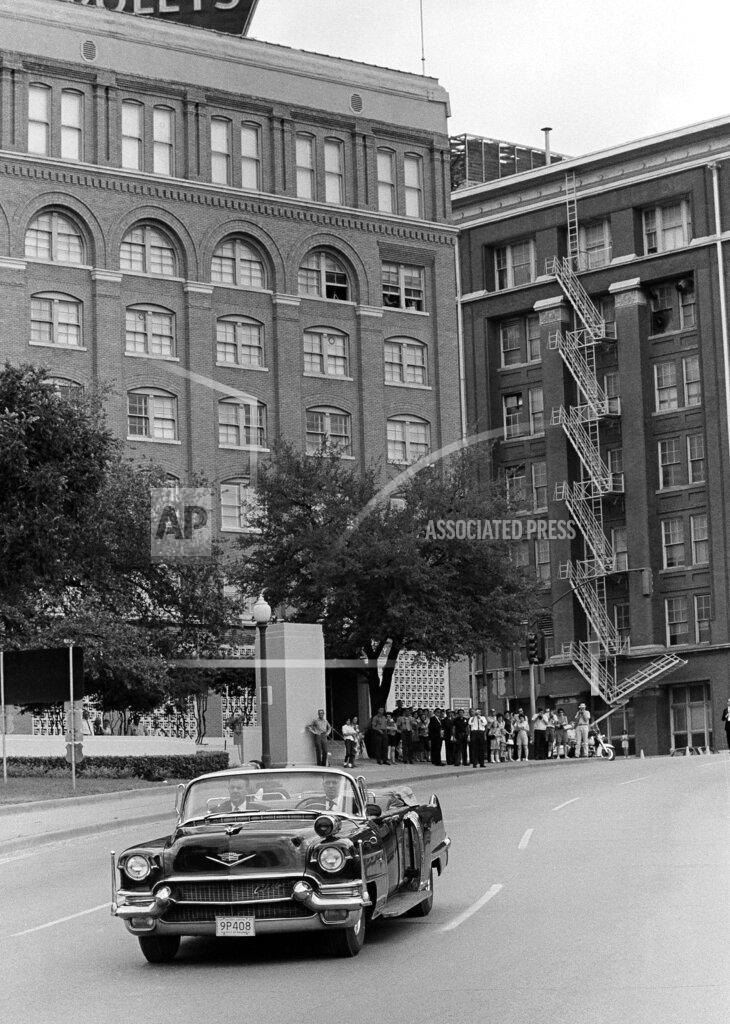
Federal Bureau of Investigation agents spent seven hours today reconstructing the Dallas motorcade scene in which President Kennedy was assassinated on November 22. Cameras recorded the re‐enactment for the Warren Commission, which is investigating the assassination. J. Lee Rankin, the commission’s chief counsel, said the actual murder weapon was used in the reconstruction. An agent repeatedly poked the rifle through the sixth‐floor window of the Texas School Book Depository Building, from which police say the late Lee Harvey Oswald fired the fatal shots. An agent sitting in the simulated death seat of the limousine bore a chalk mark on the back of his coat where the first bullet entered the President’s body. A patch was placed at a spot on the back of his head to indicate where the fatal bullet struck. A second agent, posing as Governor John B. Connally Jr., wore the same suit Mr. Connally was wearing when he was seriously wounded. The bullet hole in the coat was circled in chalk.
The Soviet space probe Zond 1, set for a July 18 flyby of the planet Venus, began to have its first problems, with the failure of one of the transmitters. Telemetry received back on Earth indicated that the orbital module had depressurized during the flight, because “the glass of the solar orientation sensor dome was not airtight”, followed by a short circuit. The descent capsule would continue to transmit data and receive command until June, allowing for two trajectory corrections to be made, before failing. With corrections no longer possible, the probe would pass no closer than 100,000 kilometers (62,000 mi) of that planet.
General Electric company brought out the first “solid state” portable television set that used transistors rather than vacuum tubes, allowing a much lower weight to carry.
18th Tony Awards: “Luther” (play) & “Hello, Dolly!” (musical) win.
The Beatles’ 4th appearance on “The Ed Sullivan Show”, features an interview and pre-recorded performance of “You Can’t Do That”.
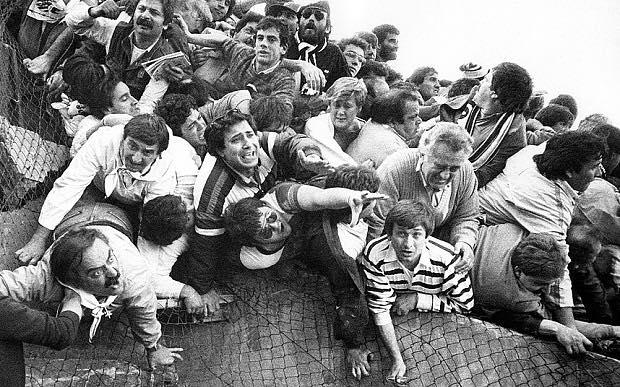
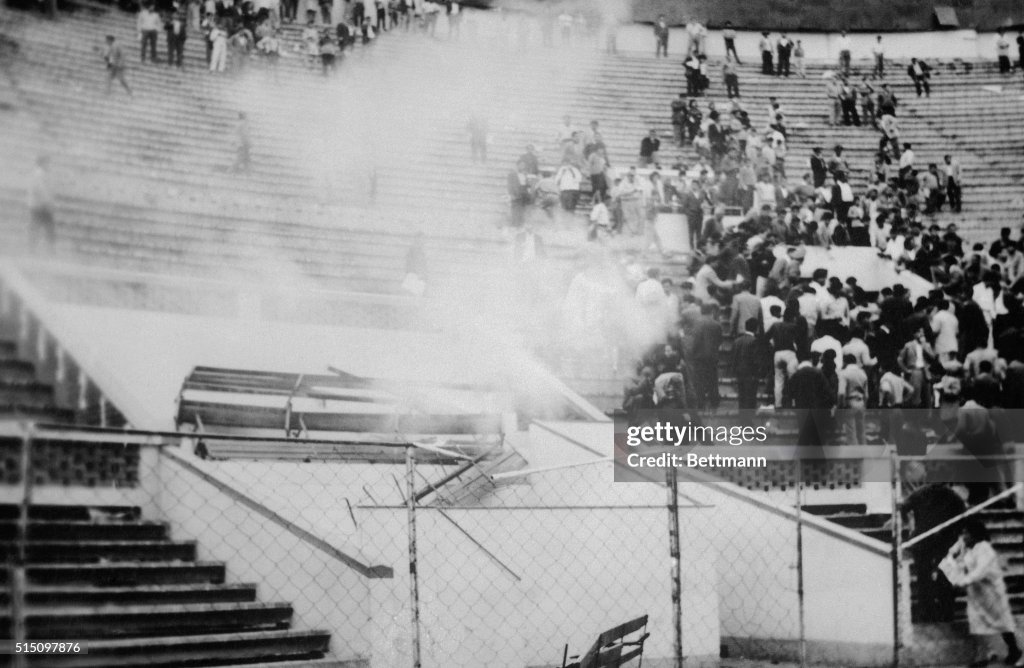
In the second-deadliest riot ever at a sporting event, 328 people were killed and more than 500 injured at an international soccer football match at Lima between Peru and the visiting team representing Argentina. The game was part of the qualifier of the seven-nation CONMEBOL South American competition for two of the 16 spots in the 1964 Summer Olympics. Argentina had already clinched a spot, but Peru and Brazil were tied for second place. With six minutes left, and Argentina leading, 1–0, Peru’s Kilo Lobaton had apparently scored a tying goal, but referee Angel Pazos from Uruguay called a foul and disallowed the score. Two angry spectators ran onto the field and were severely beaten by police, and the crowd was enraged. As fans on the south side of the Estadio Nacional tried to get out of the exits, the police began firing tear gas into the stands. People who remained in their seats were uninjured, and most of the deaths were from people who were trampled or pinned against the closed doors at the exits.
Seven shutouts in both leagues tie the Major League record for blankings in one day.
Chicago Cubs speedster Lou Brock steals home for the first time, combining with Billy Williams on a double steal in the 1st inning of game one at Cincinnati. But the Reds win, 6–5 and 12–4.
Dick Stuart is the difference today as the Red Sox sweep a pair from Kansas City. In game 1, Stuart clubs a grand slam off the A’s Moe Drabowsky in the 8th inning to break a tie and give the Sox a 6–2 victory. In game 2, his 4th inning 2-run homer breaks a tie as Boston wins, 3–1. Rookie Ed Connally notches his first Major League victory.
Mickey Mantle hits his second homer, off Fred Newman, in two days to start the scoring for New York. The Yanks top the California Angels, 8–5.
The longest home run (471′) in Baltimore Memorial Stadium history is hit by Harmon Killebrew, of the Minnesota Twins, off Baltimore’s Milt Pappas. It is not enough; the Orioles score three in the bottom of the ninth to win, 7–6. They then beat the Twins again, 2–0, in the nitecap of the doubleheader.
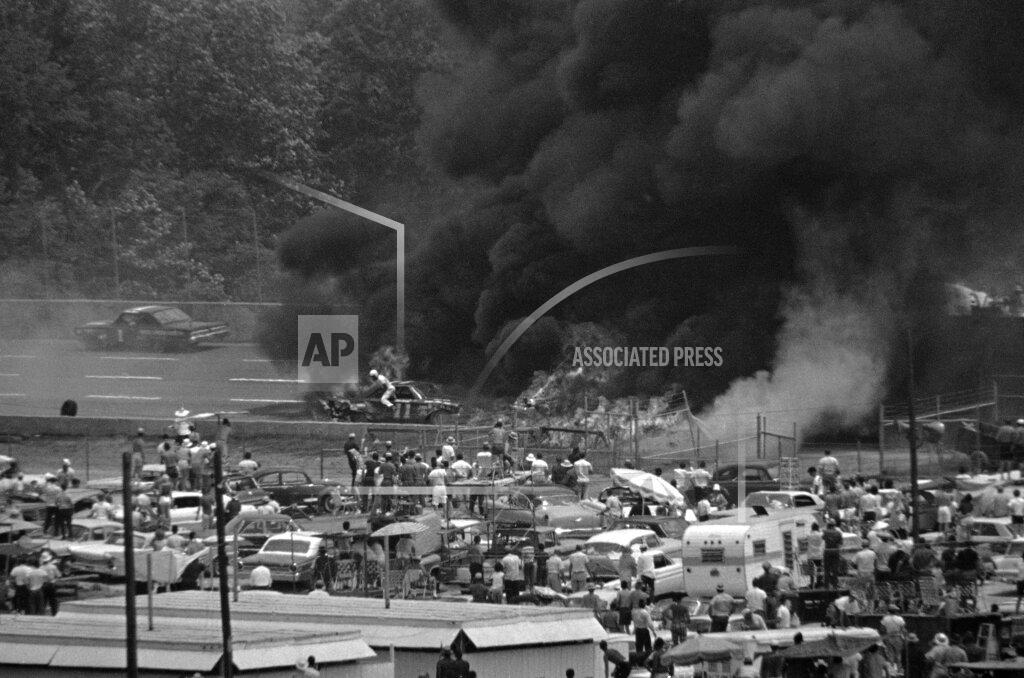
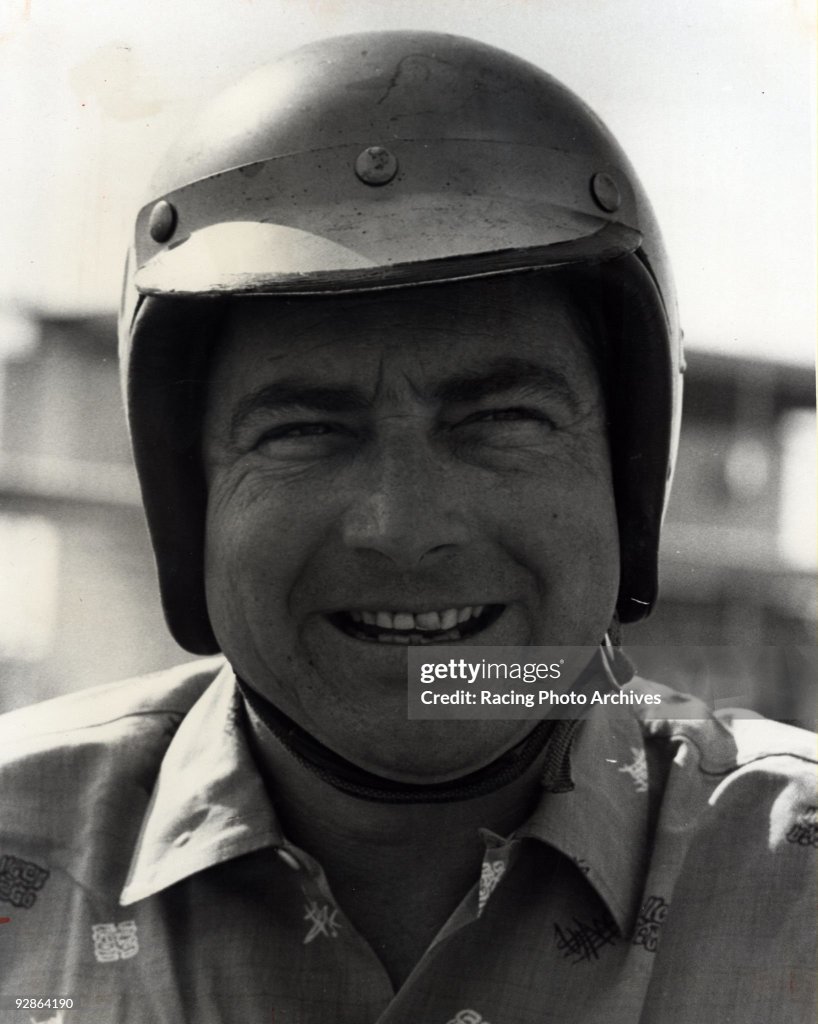
NASCAR driver Glenn “Fireball” Roberts was fatally injured in the World 600 race at the Charlotte Motor Speedway, after he spun out during the seventh lap and drivers Junior Johnson and Ned Jarrett crashed into the back of his car. Jim Paschal would ultimately win the race. Roberts, with burns over more than 60 percent of his body, would survive for 39 days in a burn unit before dying of pneumonia. His death would lead to “the development of fire-retardant racing suits”.
Born:
Adrian Moorhouse, English breast stroke swimmer, 1991 world champion and 1988 Olympic gold medalist; in Bradford, England, United Kingdom.
Elizabeth McColgan, Scottish running star (world record 5 km indoor), born in Dundee, Scotland, United Kingdom.
Pat Verbeek, Canadian NHL forward, 1982-2002 (NHL Champions, Stanley Cup-Dallas, 1999; NHL All-Star, 1991, 1996; New Jersey Devils, Hartford Whalers, New York Rangers, Dallas Stars, Detroit Red Wings), and executive (Detroit Red Wings), born in Sarnia, Ontario, Canada.
Rolando Ferreira, Brazilian NBA center (Portland Trailblazers), in Curitiba, Brazil.
Died:
Louis Alan Hazeltine, 77, American inventor (neutrodyne circuit, making radio possible).
Erich Möller, 59, German road and motor-paced cycling champion.

 History Diaries