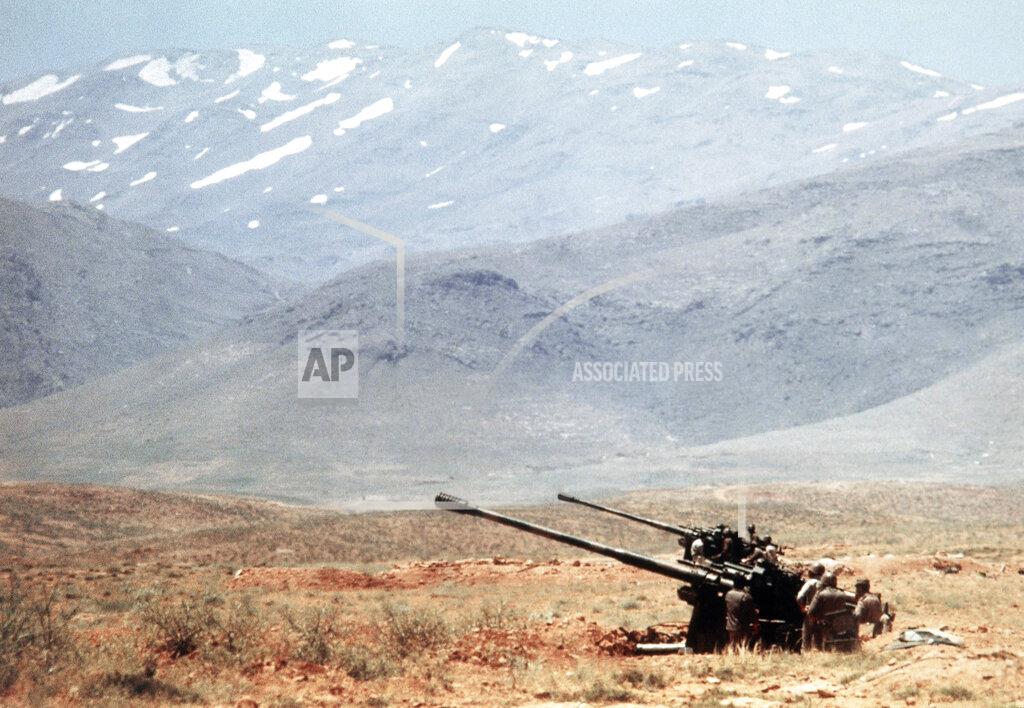
Foreign diplomats in Cairo said that the Soviet Union had resumed limited shipments of arms and spare parts to Egypt as part of an effort by both countries to improve their recently strained relations. The shipments reportedly were the first in about six months. The Soviet gesture coincided with the arrival of the new Soviet Ambassador, Vladimir Polyakov, who brought with him last week a message from Chairman Leonid I. Brezhnev to President Anwar el‐Sadat. Mr. Sadat told his Cabinet Sunday that the Soviet message was ‘’friendly” in tone and reflected a positive new phase in Soviet‐Egyptian relations. He added that Egypt wanted to pursue a policy of nonalignment between the two superpowers.
Foreign diplomats regard the reported Soviet decision to resume arms shipments as a sign that Moscow has not written off Egypt in spite of Mr. Sadat’s new friendship with the United States, rather that the Russians want to preserve correct and if possible warm relations with Cairo. It was noted that the Soviet gesture also coincided with week‐long visit to Moscow by Maj. Abdul Salam Jalloud, the Libyan Premier. The lengthy and apparently warm talks between the Soviet leaders and Mr. Jalloud, the representative of a fiercely anti‐Communist regime, had been interpreted as a Soviet effort to find new friends in the Arab world to compensate for the Moscow‐Cairo estrangement. That split followed Mr. Sadat’s decision to resume relations with the United States and to rely exclusively on the mediation of Secretary of State Kissinger to help bring about settlement with Israel.
The Soviet Union, it is said here, is moving on many fronts to shore up its declining influence in the Middle East. Diplomats here believe that the deepening rift between Egypt and Libya has caused the Libyan regime to mitigate her anti‐Communism and seek closer relations with the Soviet Union. Mr. Jalloud’s visit to Moscow led to a trade agreement involving deliveries of Libyan oil produced by nationalized companies previously owned by American concerns. The Soviet Union is believed to have agreed to supply Libya with certain types of Soviet arms.
General endorsement was given by the Israeli cabinet to Secretary of State Kissinger’s compromise plan, which he hopes will win Syria’s approval tomorrow and lead to a rapid completion of the Syrian-Israeli troop separation agreement on the Golan Heights. A senior Israeli official said tonight that the Cabinet, which heard a report on Mr. Kissinger’s proposals, had some reservations, but generally approved the Secretary’s last-minute effort of achieve the disengagement accord before returning to Washington. This meant that if Syria accepted the compromise, the Israeli Government would also formally accept it Sunday morning. The Syrians would initial it that afternoon, allowing Mr. Kissinger to head for Washington with a dramatic diplomatic achievement.
Israeli planes today bombed Syria, a day after the Syrians allegedly permitted eight terrorists to infiltrate into Israel. An Israeli announcement said the bombing was aimed at military targets close to the front line. One Israeli source said it was purely military in nature. The Syrians said that three Israeli planes were shot down, but Israel said she lost no planes. As usual, Israel made no public announcement of damage inflicted in the raid. The daily artillery exchange continued along the former cease‐fire line between the two nations, and Israel said that one of her men had been killed and two wounded. A security alert continued in parts of northern Israel, where it was thought possible that there might be other Palestinian guerrilla incursions.
The controversy between Egypt and Libya took a new turn today with publication in Cairo this morning of a hitherto secret letter in which President Anwar al-Sadat charged that Colonel Muammar el‐Qaddafi’s attitude during the October war amounted “almost to sabotage.” The letter, addressed to the Libyan leadership and printed in excerpt form by the daily Al Ahram, confirmed by implication that a squadron of French‐built Mirage fighter-bombers had been put at Egypt’s disposal before the war. Mr. Sadat wrote that since the start of 1973 he had been pressing to buy spare parts and ground equipment for the squadron but that the Libyans delayed payment and that he finally had to turn to Saudi Arabia, which bought the necessary equipment. As for the near sabotage, the President wrote that he informed the Libyan leaders of the approaching war and told them that “the countdown has already started.” Colonel Qaddafi not only failed to take this information seriously but broadcast it to the world, Mr. Sadat charged.
Foreign Minister Abdel Aziz Bouteflika has declared that Algeria is in favor of lifting the eight‐month‐old oil embargo against the Netherlands and Denmark. “If we want to have a serious dialogue with Europe, Holland and Denmark must benefit from the decision to lift the oil embargo that we applied to the United States,” Mr. Bouteflike said Thursday.
The British government will make no concessions to the Protestant extremist groups that are crippling Northern Ireland with a strike that they hope will topple the provincial government and bring on new elections. After a meeting of nearly five hours with Ulster leaders in London, Prime Minister Wilson said there would be no negotiations with the Ulster Workers’ Council, which has led the strike.
In Poland, the collapse of an underground coal mine in Piekary killed five miners. Three others were rescued.
Portuguese Foreign Minister Mario Soares, leaving for London to start cease‐fire talks tomorrow, with the rebel movement of Portuguese Guinea, told the nation today that Portugal “will respect self-determination with all its consequences” in its African’ possessions. The Foreign Minister said that the impending negotiations with the representatives of the African Party for the Independence of Guinea‐Bissau and the Cape Verde Islands marked the beginning of a “process of decolonization.” Guinea‐Bissau is the name given by insurgents to that part of Portuguese Guinea under their control. Mr. Soares, leader of the Portuguese Socialist party, made his statement at Lisbon international airport. His remarks were relayed live by the national broadcasting network. The Foreign Minister’s message contributed to a growing realization in Lisbon — a month after the military coup — that the African possessions will inevitably become independent, sooner rather than later.
The Greek and Turkish communities on Cyprus are scheduled to resume talks on June 4 to negotiate their longstanding differences, Secretary General Waldheim reported today. Mr. Waldheim, in a report to the Security Council, said the situation on the island at present was quiet but still’ “tense and potentially dangerous.” He recommended continuation of the United Nations peace‐keeping force for six months. The Council will meet Wednesday and is expected to approve his recommendation. The force, which totals 2,341, has been stationed on Cyprus since 1964 and has managed to prevent violence between the two communities.
The occasional levity and boisterousness of the six members of the United States Marine Corps guarding the United States liaison office in Peking was apparently more than the puritanical capital could stand and so the marines will be leaving for home at the request of Chinese authorities.
Britain’s former Conservative Prime Minister, Edward Heath, arrived in Peking tonight and was greeted by ceremonies almost equal to those for a government head or the leader of a “friendly” political party. Mr. Heath, now leader of the Opposition in Britain’s House of Commons, arrived in China for a 10‐day stay, which is being treated as an official visit by his Chinese hosts. He was met at the airport by Deputy Premier Deng Xiao‐ping. About 2,000 children danced to the revolutionary song describing Chairman Mao Tse-tung as the “great helmsman” as part of the airport ceremony for Mr. Heath.
In the Philippines, the coronation of Mohammed Mahakuttah Abdullah Kiram as the Sultan of Sulu took place with approval by the government of President Ferdinand Marcos, who issued Memorandum Order No. 427. The Sultan’s 7-year-old son, Muedzul Lail Tan Kiram, was recognized as Crown Prince during the ceremony. Official recognition of the Sultanate of Sulu as a limited self-governing territory would end with Mahakuttah’s death in 1986.
Rev. Francois Jentel, the French priest condemned to 19 years in prison for encouraging Brazilian peasants to revolt against large landholders, was freed last night, his lawyer declared today. The Brazilian Supreme Military Tribunal ordered his release after voting unanimously in favor of his appeal, according to a statement by the Brazilian National Bishops’ Conference. The priest has been held for the last year in a military prison at Campo Grande, in the central state of Mato Grosso, about 600 miles west of Sao Paulo. His departure from Brazil was the condition for his release, according to church sources.
Leon Jaworski, the Watergate special prosecutor, appealed directly to the Supreme Court in an effort to subpoena 64 presidential office conversations. He asked the Court to decide whether the claim of executive privilege can block the prosecution’s access to evidence. The President participated in all but one of the conversations, which, Mr. Jaworski said in his petition to the Court, occurred in the course of “the criminal conspiracy” charged against the seven defendants in the Watergate cover‐up case. In the petition, Mr. Jaworski asked the Court to decide the following question: “Whether a claim of executive privilege based on the generalized interest in the confidentiality of Government deliberations can block the prosecution’s access to evidence material and important to the trial of charges of criminal misconduct by high Government officials who participated in those deliberations, particularly where there is a prima facie showing that the deliberations occurred in the course of the criminal conspiracy charged in the indictment.”
The conspiracy charged in the indictment includes the obstruction of justice. The Jaworski petition does not mention President Nixon as one of the alleged co‐conspirators. What it says is that the prosecution has evidence indicating that conversations in which Mr. Nixon participated were “deliberations” that were carried out in the course of the conspiracy. Mr. Jaworski has already made it clear that he feels a sitting President should not be indicted. The law is so unclear, he has indicated, that an indictment of a President would be challenged in the courts as improper, and the resulting litigation on the issue could cause delay and confusion. Today’s action marked the first time in the almost two‐year‐old Watergate affair that a case was taken to the Supreme Court. Mr. Jaworski’s action jumps over the United States Court of Appeals and asks the Supreme Court to consider the matter in its current term, using typewritten briefs if necessary.
Gerhard Gesell, the federal judge in the White House “plumbers” case, ruled that the President has no constitutional right to authorize a warrantless break-in and search even when national security and foreign intelligence are involved. He said that the Fourth Amendment — which protects against unreasonable searches — “is not theoretical, it lies at the heart of our free society.” Judge Gesell’s 10-page decision sharply conflicted with President Nixon’s interpretation of the law as it affects such national security matters.
Representative Peter Rodino, chairman of the House Judiciary Committee, will propose next week that the committee make public most, and perhaps all, of the Watergate evidence it has been examining in closed impeachment hearings, congressional officials said. Before he does so, they said, Mr. Rodino will first seek permission from the special Watergate prosecutor and officials of other congressional committees that provided confidential materials to the impeachment inquiry.
Vice President Ford said today that the nation “is going through some very traumatic experiences,” citing Watergate and economic problems in particular. The Vice President, who was in Lansing, Michigan to receive a Michigan State University award and to address the Michigan Legislature, avoided any mention of President Nixon or his Administration. It was one of the few times in his recent travels that Mr. Ford has neither defended nor criticized the President’s role in the Watergate affair. And it was one of the few times that Mr. Ford has not praised Mr. Nixon’s foreign policy leadership. Just yesterday Mr. Nixon called the Vice President to the White House for a private talk. Neither Mr. Ford nor a spokesman for the White House disclosed the nature of that conversation or whether the issue over the President’s Watergate-related tapes had been discussed. The Vice President’s apparent reluctance to answer questions about his meeting with Mr. Nixon was viewed by some people close to Mr. Ford as an indication that the two men did discuss the tapes issue and did not see eye to eye on the White House stand in refusing to furnish further material to the House Judiciary Committee, which is considering impeachment proceedings against the President.
Ronald Ziegler, White House press secretary, said today that the chairman and chief counsel for the House Judiciary Committee used “diversionary tactics” in calling the edited Watergate transcripts unsatisfactory. Flying to Key Biscayne aboard Air Force One, Mr. Ziegler told reporters that President Nixon met for 35 minutes this morning with his Watergate lawyers, James D. St. Clair and J. Fred Buzhardt. They discussed the questions raised by the committee’s chief counsel, John M. Doer, and its chairman, Representative Peter W. Rodino Jr., Democrat of New Jersey. “Our view, and St. Clair’s view, is that it is not a reasonable position that is being taken by the counsel and the chairman,” Mr. Ziegler said. “Basic fact is the tapes are of varying quality and any member who has listened to them will agree.” Mr. Nixon flew to Florida for the long Memorial Day weekend, accompanied by a small contingent of staff members and no members of his family.
G. Gordon Liddy was sentenced today for a third time for refusing to testify or be sworn before a House subcommittee. The reason was that the judge had been wrong the first time and wrong again the second. The sentencing trouble began when United States District Judge John H. Pratt on May 10 imposed two six-month suspended terms, to be served concurrently with Mr. Liddy’s two other prison sentences. He also placed the convicted Watergate conspirator on probation. But Mr. Liddy, a lawyer, complained that he could not sign the probation contract because, among other things, it required him not to associate with known criminals. He wrote the judge that that was impossible since he was in the District of Columbia jail.
Kenneth Rush, Deputy Secretary of State, will be named by President Nixon as his chief economic coordinator, high administration officials said. Mr. Rush will deal with deepening inflation problems and squabbling between other economic aides. The President has reportedly been concerned about friction between Secretary of the Treasury William Simon and Roy Ash, director of the Office of Management and Budget.
Louis Harris, the pollster, says President Nixon received a positive job rating from 32 percent of the respondents in a nationwide survey. “This is significant,” Mr. Harris said Thursday according to The Associated Press, “because, by coincidence, all he needs is the support of 34 out of 100 United States Senators to avoid being removed from office.”
Tight surveillance is being maintained along both sides of the Mexican border against the possibility that Patricia Hearst and two fugitive companions of the self‐styled Symbionese Liberation Army may try to reach a hideout in the mountains of Baja California. Mexican and American authorities speculated that the hunted persons may try to join up with Mexican revolutionaries of the 23d of September League, who are reported to have fled to the rugged Baja Peninsula recently after a series of terrorist acts on the Mexican mainland. Miss Hearst, William Harris and his wife, Emily, are known to have acquired backpacks and heavy mountain type clothing during a shooting spree last Thursday at an Inglewood sporting goods store, the day before the blazing Los Angeles Shootout, in which six S.L.A. members died.
A special committee at New York’s Memorial Sloan-Kettering Cancer Center decided that a colleague, Dr. William Summerlin, had deliberately falsified and misrepresented research findings and recommended that his affiliation with the center be ended. The center’s head said that Dr. Summerlin would be given a medical leave of absence while he underwent psychiatric care. According to the committee’s long report, which was released at the news conference, Dr.’ Summerlin admitted to the committee that he had darkened the skin of two white mice with a pen to make it appear that the mice had accepted skin grafts from genetically different animals, and that on four occasions he had misrepresented the results of experimental transplants of human corneas into rabbit eyes.
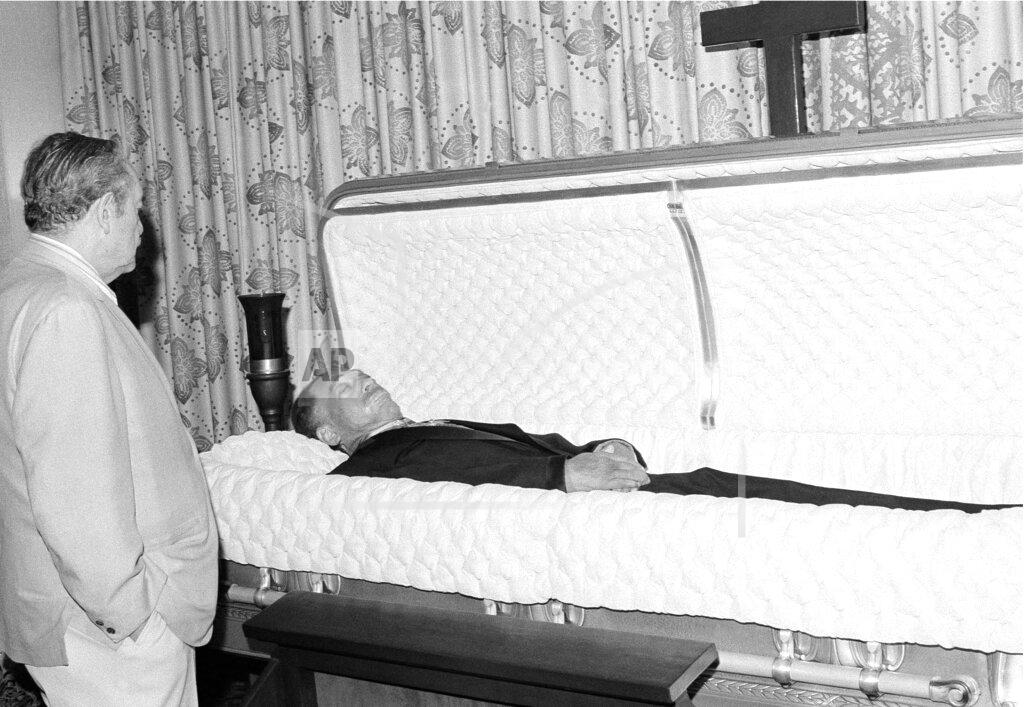
Duke Ellington died at the age of 75. He had cancer of both lungs and in the last few days had developed pneumonia. When he wanted to express his highest praise for others he would say “beyond category.” Those words apply to Mr. Ellington too, said a critic about his career, which spanned two generations.
“The Dean Martin Show” last airs on NBC-TV.
27th Cannes Film Festival: “The Conversation” directed by Francis Ford Coppola wins the Grand Prix du Festival International du Film.
RCA releases “Diamond Dogs”, David Bowie’s 8th studio album, recorded in London and the Netherlands, with cover design by artist Guy Peellaert, it peaks in the U.S. charts at No. 5, and goes to No. 1 in the U.K. and Canada.
With the game scoreless in the 9th, the Cards put runners on first and third with one out. Tim McCarver grounds to Cubs first baseman Billy Williams who fires home to catcher Lundstedt to snag Ted Simmons in a rundown. But as soon as Lundstedt throws to third baseman Matt Alexander, Simmons races home to an uncovered plate. Cards win, 1–0.
Dow Jones Industrial Average: 816.65 (+11.42, +1.42%).
Born:
Magnus Manske (born Heinrich Magnus Manske), German biochemist and software developer who created MediaWiki for the Wikimedia Foundation; in Cologne, North Rhine-Westphalia, West Germany.
Florence Baverel-Robert (born Florence Baverel), French biathlete and 2006 Olympic gold medalist; in Pontarlier, Doubs département, France.
Marcus Coleman, NFL cornerback and safety (New York Jets, Houston Texans, Dallas Cowboys), in Dallas, Texas.
Masahide Kobayashi, Japanese MLB pitcher (Cleveland Indians), in Otsuki, Japan.
Dash Mihok, American TV actor (“Ray Donovan”), in Greenwich Village, New York, New York.
Died:
Duke Ellington, 75, American bandleader, composer and pianist (“Take the A Train”; “It Don’t Mean a Thing (If It Ain’t Got That Swing)”), of cancer.
Clyde Cowan, 54, American physicist, co-discoverer of the neutrino, died of a heart attack.
Max Ritter, 87, German Olympic swimmer, who was co-founder in 1908 of the Fédération internationale de natation (FINA).



 History Diaries