Hitler orders the Military High Command to prepare for war with Poland. Hitler tells commanders regarding Poland “We cannot expect a repetition of the Czech affair. There will be war.” He stated that Germany’s economic problems could only be solved by Lebensraum, the expansion of German living space. Hitler also hinted that non-German territories would also be a great source of cheap labor. Poland was to be first military target, and then Germany would meet all else that followed from this action. Goebbels propaganda machine begins accusing the Poles of committing atrocities against their German-speaking minority.
Hitler tells a gathering of his highest-level military officers, “The Britisher himself is proud, brave, tough, dogged and a gifted organizer. He knows how to exploit every new development. He has the love of adventure and the courage of the Nordic race… England is a world power in herself. Constant for three hundred years. Increased by alliances. This power is not only something concrete, but must also be considered as a psychological force, embracing the entire world. Add to this immeasurable wealth and the solvency that goes with it and geopolitical security and protection by a strong sea power and courageous air force.”
Because of a sudden rise in the River Rhine, the Germans have had to hastily evacuate the first-line defenses of their West Wall, which are visible from across the French border in Strasbourg. The swelling river swamped machine-gun nests and concrete pillboxes and inundated subterranean defense constructions, the latter-day pride of German engineering, which were inspected by Chancellor Adolf Hitler last week-end. The encroaching waters forced those manning the fortifications to beat a hasty retreat.
Corresponding constructions on the French side, being built at a higher level, so far have not been affected by the rising waters. Late tonight the river was still rising, making navigation between Strasbourg and Basle, Switzerland, impossible, as there is no longer clearance for boats under the bridges.
The German forts, skirting the river every hundred yards, built during and since the crisis last September, are now completely inundated right down to the Swiss and Palatinate borders. German troops moving to the rear had just enough time to save their arms and baggage.
Poland and Rumania agree on a mutual defense pact.
A constitutional referendum was held in Denmark. 91.9% of voters approved of a new constitution, but only 48.9% of eligible voters turned up to vote, meaning the percentage of voters who approved of the new constitution fell below the 45% required.
Dmitri Shostakovich appointed professor at conservatory of Leningrad.
The British parliament approves the so-called “White Paper” Palestinian plan, announced on May 17th, by a vote of 268 to 179. This document proposes slowing the growth of the Jewish community in Palestine by limiting Jewish immigration and cutting back Jewish purchases of land. The House of Commons approves a plan for an independent Palestinian state by 1949. Jews around the world denounced the plan since it made Palestine a “territorial ghetto.” The Palestinian Arabs also rejected the scheme and clashes broke out across the mandate.
The House of Lords also approved the government policy today without a record vote. Both chambers listened to bitter attacks on the government quite independently of party lines. In the House of Lords the young Marquess of Reading, who was one of the representatives of British Jewry at the Palestine conference, and Viscount Samuel, former High Commissioner in Palestine, attacked the government severely, and even the Archbishop of Canterbury expressed grave misgivings. “This time of all times is not one in which the people in this country can afford even the appearance of treating lightly promises which we have led others to trust,” the archbishop said.
But the harshest of all the speeches against the government was Mr. Churchill’s, Reminding the House that as Colonial Secretary and as a member of war and early post-war Cabinets he had had much to do with Palestine, Mr. Churchill said he “could not stand by and see solemn engagements entered into before the world set aside for reasons of administrative convenience or — and it will be a vain hope for the sake of a quiet life. I would feel embarrassed if I lent myself by silence or inaction to what I must regard as an act of repudiation,” Mr. Churchill said in announcing his intention of voting against the policy.
And tonight, David Lloyd George, who was head of the Cabinet that produced the Balfour Declaration, made a broadcast in which he said that the British were seeking to “crawl out of their share of a definite bargain entered into in return for Jewish support during the war — a bargain their side of which Jews kept honorably.”
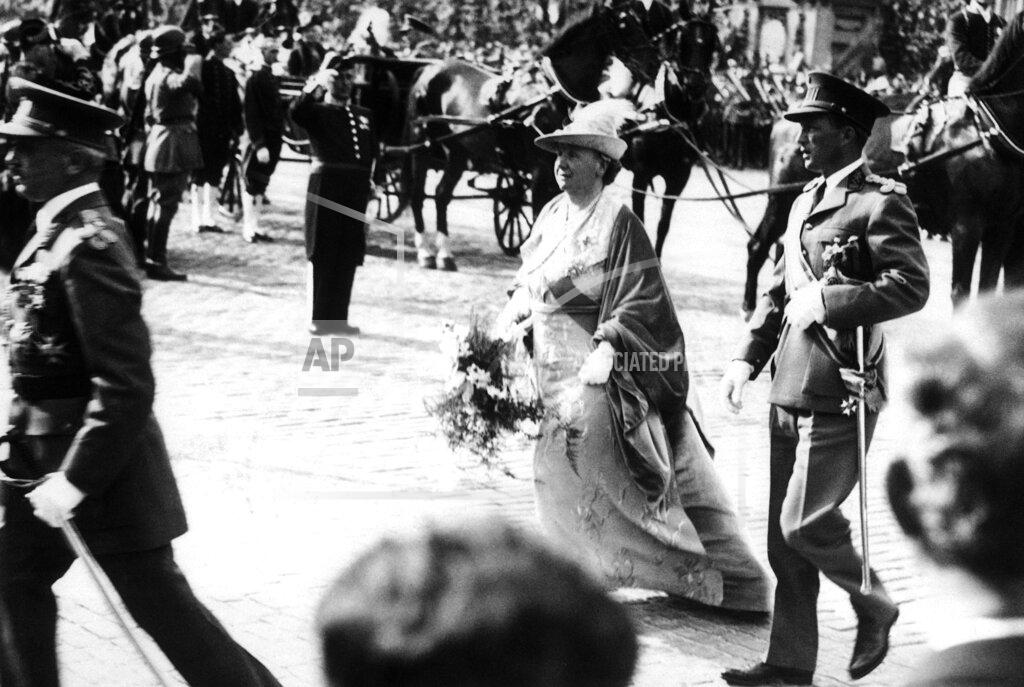
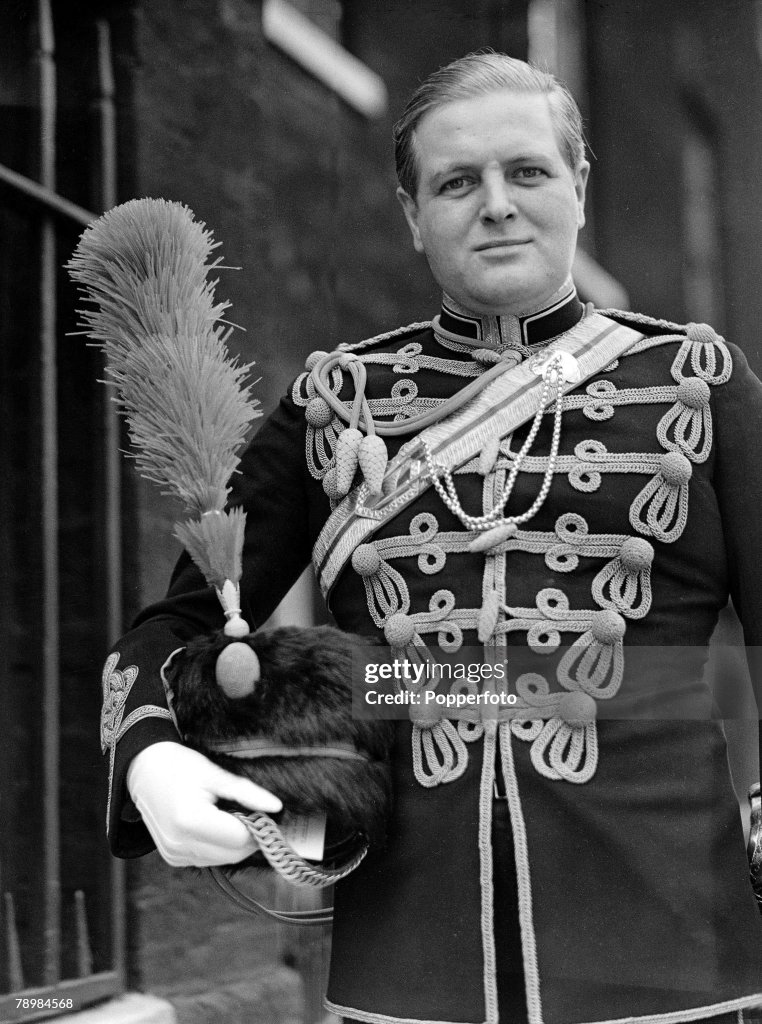
Queen Mary was ordered to take a complete rest tonight after having narrowly escaped serious injury when her limousine was struck by a heavy truck and turned over in Southwest London this afternoon. The Queen Mother, who will be 72 Friday, had to be rescued from the badly smashed car with a stepladder and plainly showed signs of her ordeal when, after a half hour’s rest, she was driven home to Marlborough House.
The royal physicians, Sir Stanley Hewett and Lord Dawson of Penn, tonight issued a bulletin saying that Queen Mary was suffering from bruising and shock. “Though the bruising is considerable and will need some days’ complete rest,” it stated, “Her Majesty’s general condition is this evening satisfactory.”
As a challenge to Great Britain’s new policy in Palestine, six new Jewish colonies have been established in the past few days in the lower Galilee and Samaria districts. Two hundred and fifty families from other settlements have taken possession of more than 2,500 acres privately owned by Jews and have secretly erected stockades, watchtowers and dwelling huts.
Four Jews were wounded today near Sarafend in Southern Palestine by Arabs sniping at Jewish traffic on the main Jerusalem-Jaffa highway. One British Army officer was killed, one officer and two soldiers were wounded and seven Arabs were killed when troops searching the vicinity of Tulkarm in northern Palestine engaged a band of Arabs.
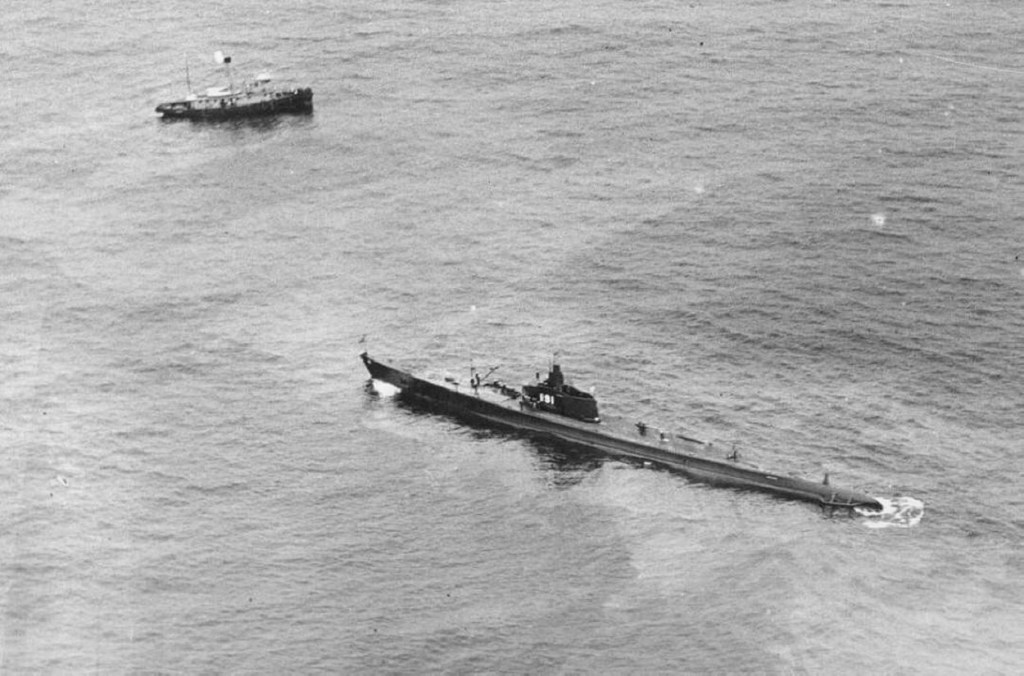
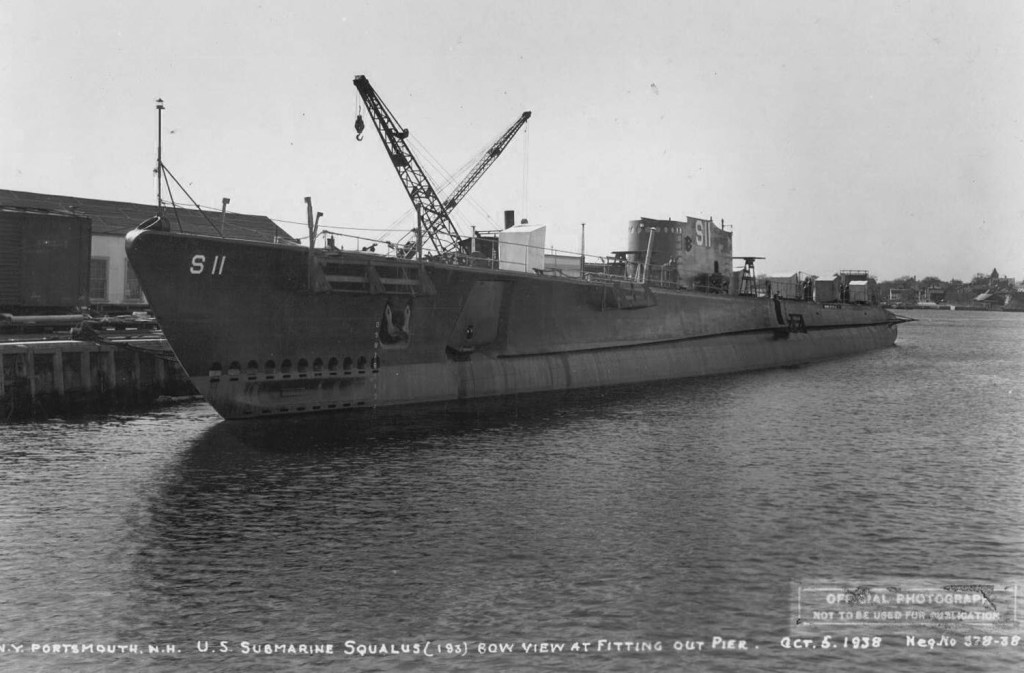
The U.S. Navy Sargo-class submarine USS Squalus (SS-192) sank off the Isles of Shoals, Portsmouth New Hampshire with 59 men aboard in an accident off the coast of New Hampshire, after a failure of her main induction valves flooded part of the boat. The USS Squalus had just been commissioned at Portsmouth Naval Shipyard and was performing a “crash” test, which required the rapid submersion of a vessel in order to avoid enemy detection. Upon submerging at 8:40 AM, a valve that supplied air to the diesel engine was apparently stuck open and the aft torpedo room, both engine rooms and the crew’s quarters were immediately flooded and the submarine sank to the bottom of the ocean. 33 of the crew managed to reach the forward torpedo compartment during the flooding but were trapped in the sunken submarine. The other 26 members of the crew were killed immediately. Squalus was initially located by her sister boat, USS Sculpin. The two submarines were able to communicate for a moment using a telephone marker buoy until the cable parted. As desperate hours pass, the men trapped below 243 feet of icy water bang on the hull, sending out Morse code, praying for rescue as the air grows progressively fouler.
From the U.S. Naval Institute:
On the morning of 23 May, the boat left her mooring at the mouth of the Piscataqua River, which divides Maine from New Hampshire. She swiftly parted Atlantic white- caps to a point 13 miles southeast of Portsmouth, near the Isles of Shoals. Two Navy yard engineers and a General Motors representative were on board to oversee the boat’s ability to submerge within 60 seconds while running at high speed—something she would have to do to avoid enemy planes during wartime. Naquin, on the bridge, passed the word to “stand by to dive” shortly before 0900. The location of the submarine was radioed to Portsmouth as the loud “ah-ooogah” of the Klaxon diving alarm sounded throughout the boat.
The captain descended to the control room beneath the conning tower as the Squalus dipped beneath the waves while plowing ahead at 16 knots. The “Christmas tree”—a large board of red and green lights in the control room- turned green, signaling that all hull openings were closed, including main induction pipes behind the conning tower. These fed air to the huge diesel engines and ventilated the boat. The dive required in quick succession that the diesels shut down, the inductions close, and battery-powered electric motors take over for underwater propulsion. As a backup safety test, a blast of high-pressure air into the submarine caused the on-board barometer to rise, assuring that inductions and all other openings to the ocean were shut. It looked like a perfect dive.
Suddenly, Naquin noticed a fluttering of air pressure in his ears. Simultaneously, the yeoman monitoring reports over the Squalus’s intercom blanched as he heard a frantic plea from the engine room. “Take her up! The induction’s open!”
The yeoman turned to Naquin. “Engine rooms are flooding, sir!”
“Impossible,” the captain thought, staring at the green lights of the Christmas tree. Yet a Niagara of salt water poured into the boat through the induction pipes, one nearly three feet across. As men tumbled about, grasping for footing in the engine rooms, Naquin tried to surface by blowing ballast tanks. The boat hung momentarily, struggling to shake free, but then the stem plunged backwards at a 45° angle. The captain, hanging onto the periscope- ordered his crew to close watertight doors between the ship’s seven compartments.
Electrician’s Mate Third Class Lloyd Maness, standing watch between the control room and the rear compartments, tried to close the 200-pound door; the steep descent required a superhuman effort. As water swirled up toward the bulkhead coaming, Maness heard panicked voices, “Keep it open! Keep it open!” Five men staggered uphill, half swimming to safety. Maness then pulled the steel door shut. Behind it, no one would survive.
Seventeen tried vainly to seal themselves in the torpedo room in the tail of the Squalus. Nine others drowned in the engine and after battery rooms just behind the control room. One climbed a ladder to a hatch, which he undogged. The force of sea pressure kept it from opening; but water quickly rushed in to fill four of the submarine’s seven compartments.
For the survivors, a new peril arose. Seawater began short-circuiting the boat’s two batteries, arranged in 252 six-foot-high cells lining the keel. Chief Electrician’s Mate Lawrence Gainer noted a rapid voltage drain in the forward battery room. A hull-splitting explosion was imminent. Lights flickered and went out, leaving the crew in darkness. Taking a flashlight, Gainer lowered himself below deck into the narrow crawl space between the smoldering cells. As he disengaged one of two large disconnect switches, a miniature lightning storm erupted, sizzling blue-white and melting insulation on the hull. Half blinded, he reached for the other switch and broke the circuit. “He was the real hero who saved the ship,” Jud Bland said (years later) in Baltimore. “He went beyond the call of duty. To this day, he has bad vision, which probably had something to do with that.”
As the submarine plunged deeper, there was fear of an implosion. “The only frightening thing was I didn’t know how much water was under us,” recalled Leonard de Medeiros. “I thought we might go down to 300 or 400 feet and crush in.” Fortunately, the boat settled upright in the mud of the Atlantic floor, 240 feet down.
The trapped men wondered if others were alive in the stem of the ship. “Everyone was thinking about it,” mused Danny Persico. “Thoughts were going through our minds. We tapped on air lines leading back through the hull. We all took turns. If they had heard it, they would have acknowledged. We knew then that aft of the control room, all the compartments were flooded.”
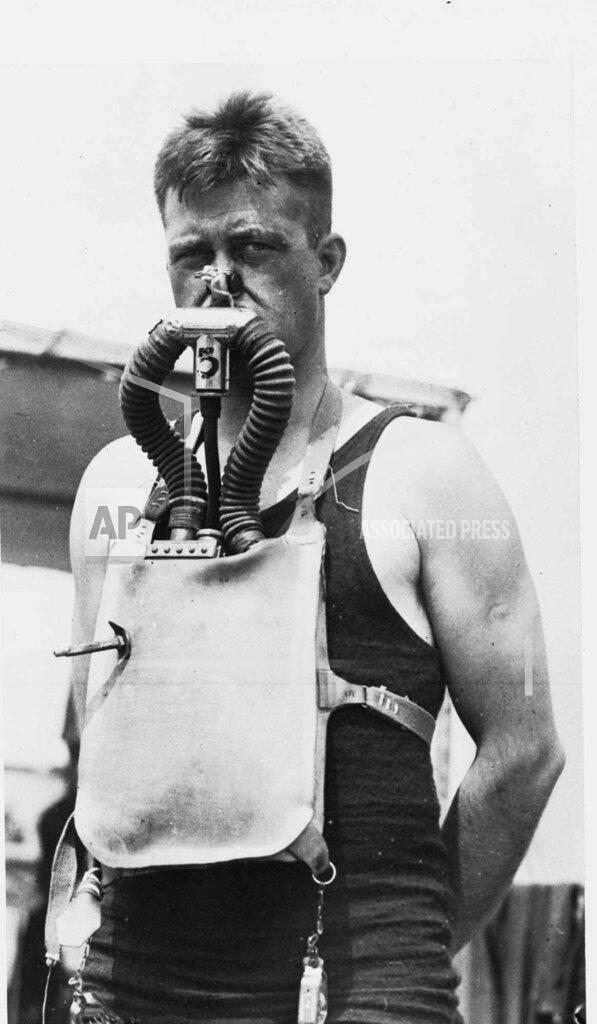
Flashlights and emergency stores of food, oxygen, CO2 absorbent, blankets, and coats were retrieved as Naquin divided the men into two groups, 23 in the warmer control room and ten in the forward torpedo room. The forward battery room between the two was restricted because of chlorine fumes. Momsen lungs—breathing devices designed to allow the crew to float to the surface—were distributed. Naquin chose de Medeiros, the muscular torpedoman, to lead the way. But the captain planned to swim out only as a last resort. An ascent from such a depth was risky; the lungs had been tested only to 200 feet. Still, the men drew comfort from their training. “Nobody had given much thought to dying,” recalled Allen Bryson. “We had Momsen lungs. We knew we had a chance. The escape was planned by lung. We had decided to grease down to protect from the cold of the water.”
A buoy trailing a telephone line was deployed to the surface. Red smoke rockets were fired periodically to attract attention. Naquin was confident a search would begin soon. He ordered the men to stay calm, to nap to conserve the air he estimated would last 48 hours. But it wasn’t easy in the darkness as temperatures dropped to 35° and an icy sheen collected on the hull. Some whistled softly to keep up their courage. “What kept flashing through my mind,” reminisced Persico, “was the fact my mother had taken out an insurance policy on me. And there was a clause that it would be null and void if I died in a submarine or diving accident.”
In Portsmouth, the Squalus soon was reported overdue. The Sculpin, about to depart for Panama, headed for the Squalus’s last known position, erroneously transcribed at the Navy yard. An alert lookout, however, spotted the smudge of an exploding rocket on the horizon. Spirits soared on board the Squalus as the Sculpin’s propellers drew near overhead and stopped. The Squalus’s buoy was fished aboard and the Sculpin’s skipper. Lieutenant Commander Warren Wilkin got on the phone. “Hello Wilkie!” said Naquin.
“Hello Oliver!” replied Wilkin. At that moment, an ocean swell lifted the Sculpin, snapping the cable. The phone went dead.
Helplessly, the Sculpin stood by.
(To be continued…)
President Roosevelt received a complaint from Sidney Hillman, president of the Amalgamated Clothing Workers of America, against the administration of the Wages and Hours Act by Elmer F. Andrews; nominated James W. Morris, assistant Attorney General, to be an associate judge of the District of Columbia Supreme Court, and kept a number of routine appointments.
The Senate continued its consideration of the Wheeler Omnibus Transportation Bill and recessed at 4:46 PM until noon tomorrow.
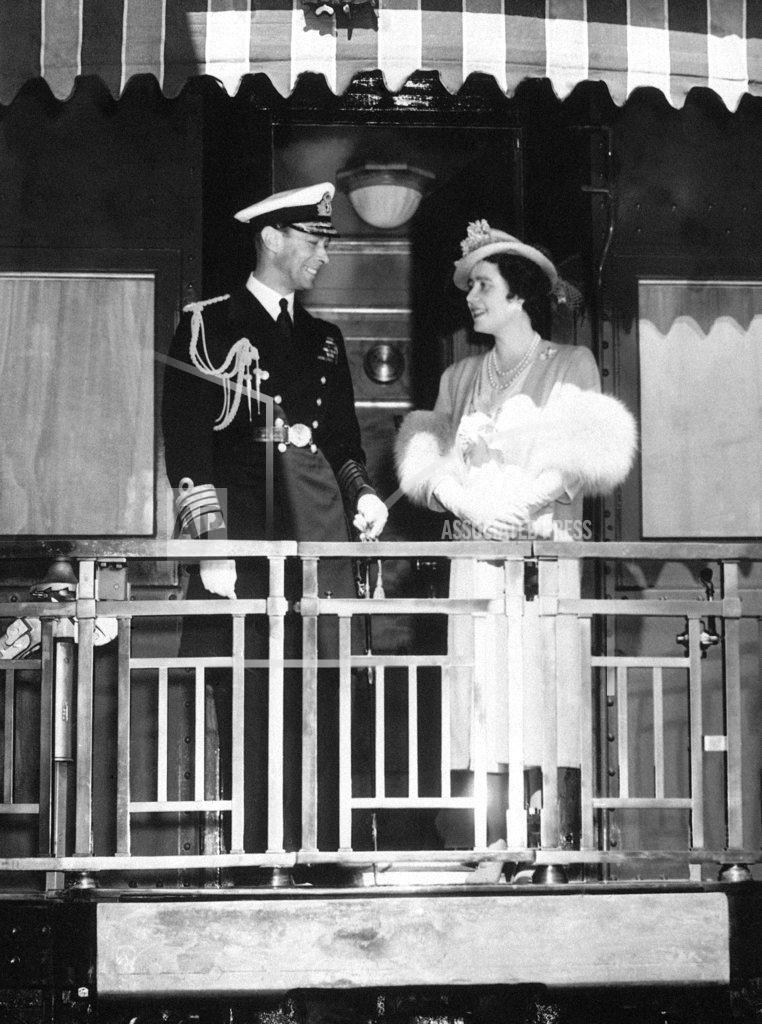
The House passed a bill removing the $30,000,000,000 limitation on the amount of government bonds outstanding; approved a Senate resolution calling for a Congressional recess to welcome the British King and Queen; sent to conference the $1,218,666,514 Agriculture Department Appropriation Bill and the $30,748,000 Labor Department Appropriation Bill; received a Presidential request for a supplemental appropriation of $98,000, including $60,000 for six executive assistants to the President, and adjourned at 5:10 PM until noon tomorrow.
Interest in New Deal recovery steps was quickened today by the assertion of another Administration spokesman, Secretary Wallace, that capital investment must be increased either by private business “or by government” before lasting prosperity can be restored to the United States. “As long as there are idle dollars, we are going to have idle men,” the Secretary said in a luncheon address before the Retailers’ National Forum, the same body to which President Roosevelt declared last night that the principles and purposes of the New Deal must be carried forward at all odds.
“The real problem before the country,” Mr. Wallace continued, “and it is a problem that is basic to producers as well as to distributors, is to get a much larger investment of capital in desirable productive uses and for desirable social purposes. If we are to have the measure of recovery we seek, capital investment must be made either by private business or by government, or by private business with the aid of government. That is the heart of the problem of recovery.”
The Secretary’s remarks added zest to a search already going on among observers for the Administration’s next recovery move. With his reasoning following so closely that of President Roosevelt himself, as stated in recent speeches and written communications, Washington wondered if another government lending-spending drive, labeled this time an “investment” program, was not in progress. It is known that such a plan is under! discussion in the inner circle advisory group around the President.
It is not clear, however, whether the President has given the “go ahead” signal to any such proposal. Earlier in the retailers’ session today Senator O’Mahoney of Wyoming disputed the thesis that the essential job in recovery, that of putting men back to work, could be done through work made by government spending.
One week after the Congress of Industrial Organizations filed a claim for $7,500,000 with the National Labor Relations Board against the Republic Steel Corporation, the company retaliated by filing suit in the Federal District Court here today against the CIO for an identical amount. Charging that John L. Lewis, president of the CIO; Philip Murray, chairman of the Steel Workers Organizing Committee, and others had conspired to close its plants in Ohio, Pennsylvania, Maryland, Illinois, New York, Alabama and other States during the “Little Steel” strike in 1937, Republic Steel asked treble damages in an action under the Clayton act.
The suit, apparently stimulated by the recent decision awarding to the Apex Hosiery Company triple damages of $711,932 against the American Federation of Full Fashioned Hosiery Workers, named as defendants a group of CIO officials, officers of the Amalgamated Association of Steel and Tin Workers and about 700 residents of Ohio who were described as “individual strikers and union officers.”
Amid the solemn rejoicings of a host of clergy, religious and faithful who filled St. Patrick’s Cathedral to the very limit of its capacity, the Most Rev. Francis Joseph Spellman assumed the spiritual stewardship of the Archdiocese of New York yesterday morning, while a crowd of 50,000 stood devoutly outside the edifice. In a stately rite rich with all the pageantry and ceremonial that has been handed down by the church through the centuries, Archbishop Spellman was formally installed in office by the Most Rev. Amleto Giovanni Cicognani, Apostolic Delegate to the United States.
Fifty-one members of the hierarchy of the Roman Catholic Church from the United States, Canada, Mexico and China attended in their splendid ecclesiastical vestments, while nearly 2,000 monsignori, secular and religious clergy, brothers and nuns and nearly 5,000 of the laity witnessed the installation of the sixth Archbishop of the Metropolitan Church of New York.
Federal scrutiny pacifies Harlan, Kentucky. Both troops and picketers are quiet.
Pitcher Boots Poffenberger is suspended by the Dodgers and fined $400 for breaking training rules. Brooklyn acquired Boots over the winter.
Regions in Asia where, till yesterday, only nomad horsemen roamed have been taught fighting in the air by their more advanced protectors, Japan and the Soviet Union. Air fighting on the Manchukuoan-Outer Mongolian border, one of the loneliest places on earth, started over the week-end and continued until yesterday. According to Manchukuoan reports, seven Outer Mongolian planes were shot down by a smaller force of Manchukuoan aircraft. Outer Mongolia is under Soviet protection, as Manchukuo is under the Japanese.
The following account of the fighting has reached Tokyo: The affray occurred east of Lake Bor on the western borders of Manchukuo. Considerable concentrations of both Outer Mongolian and Manchukuoan land forces have assembled there, and large numbers of Outer Mongolian cavalry “tried” to “attack” Japanese positions within the Manchukuoan boundary Saturday. The same evening seven light bombers and fighters appeared from Outer Mongolia over the Manchukuoan lines. One Manchukuoan plane, rising from an undisclosed base, attacked the seven Mongolian planes, brought down two and forced the other five to retreat. On Sunday five Mongolian planes attacked the Manchukuoan camp with machine-gun fire. Two Manchukuoan planes brought down two Mongolian craft in a three-minute duel.
The Mongols made a third air raid yesterday, a dozen machines participating. Three Manchukuoan planes ascended and shot down three, including a combat plane piloted by the Mongol commanding officer. Certain signs of a recrudescence of tension in various parts of this restless frontier have been reported recently. They attract comparatively little notice from the Japanese press, which knows that such incidents will not be allowed to develop until either the Japanese or Russian Government wants them to develop.
The present scrap is treated lightly as originating in a challenge from Mongol airmen, to which Japanese-Manchukuoan fliers responded and won the customary easy victory, as viewed here. The newspaper Yomiuri’s Hsinking correspondent, evidently reflecting the views of military authorities there, states that there is little danger that the trouble will become serious. He declares the border unrest is instigated by Soviet leaders alarmed at the appearance of anti-revolutionary movements in Outer Mongolia.
The Soviet Air Force transferred 35 I-15bis fighters from the 22nd Fighter Aviation Regiment (IAP) to the Russian-Mongolian border area.
Chinese troops captured Suixian, Hubei Province, China.
Dow Jones Industrial Average: 131.77 (-0.68).
Born:
Marvin Stamm, American jazz and session trumpeter, and flugelhorn player (Stan Kenton; Woody Herman; Thad Jones/Mel Lewis; Paul McCartney – “Uncle Albert”), in Memphis, Tennessee.
Michel Colombier, French composer of film and concert music (Against All Odds), in Lyon, France (d. 2004).
Reinhard Hauff, film director, in Marburg, Germany.
Naval Construction:
The Kriegsmarine (German Navy) Type IX U-boat U-43 is launched by AG Weser, Bremen (werk 948).
https://nuremberg.law.harvard.edu/documents/450601-minutes-of-a-conference?mode=image
Minutes of a conference of Hitler, Goering, Raeder, Keitel, and other commanders, with Hitler’s review of Germany’s military progress, the need for more living space, the plan to attack Poland, the prospect of war with England and planning to be done for it. (Harvard Law School Library Nuremberg Trials Project)

 History Diaries