Britain works out a new Soviet plan after Prime Minister Neville Chamberlain is assailed for not pushing through an agreement. Chamberlain says concessions cannot lead to new demands. The outlook for an Anglo-French-Soviet accord was understood tonight to have become distinctly brighter as a result of a conference in Paris between Viscount Halifax, British Foreign Secretary, and Premier Edouard Daladier and Foreign Minister Georges Bonnet. French officials believe that an agreement might be reached at Geneva by Tuesday. After their talk with Lord Halifax, who had stopped off for a few hours on his way to the League of Nations Council meeting at Geneva, the French Ministers conferred with Jacob Suritz, the Soviet Ambassador. He communicated with Moscow to permit the Soviet Government to send new instructions to Ivan Maisky, its Ambassador in London, who will represent Russia at the League meeting.
The British, however, have refused to go the whole way and accept either a straight alliance or a guarantee of the Baltic States. What the French will endeavor to get Moscow to accept is a general declaration whereby Britain, France and Russia will agree on mutual assistance in the event that any one of them should be obliged to give aid to any State bordering on Germany. This would include Lithuania with Poland and Rumania under the French plan, but not the other Baltic States.
The conversations cannot be said to have been completed, but French hopes are higher. These hopes are founded on a belief that there has been found a formula of association that will, on one side, satisfy the Russian demand for a full military alliance with a kind of protective power over the Baltic States, and, on the other side, the British reluctance to enter into too close association with Russia, of whose military value, if of no more, there is still a lingering suspicion in the British Government.
That suspicion has been increased, it is said, by the reluctance of the Soviet to make a single step toward meeting the British views. More than once the British have revised their proposals, it is argued in British quarters, but Moscow has stood firm, even to the extent of dismissing Foreign Commissar Maxim Litvinov on the ground that the negotiations were not going forward fast enough.
[Ed: Britain and France continue to be delusional, while the Soviets play footsie with Hitler. The ship of a pact with the Russians has sailed.]
Sixty Royal Air Force Stations and eighteen other airfields took part in the last Empire Air Day, which received approximately one million visitors.
A group of German SA stormtroopers attacked and ransacked a Polish customs house in Kalthof. One of the SA men, Gustav Gruebner, was shot and killed by a Polish chauffeur during the incident.
The Germans had 10,000 men in Spain, serving primarily with the National air force and in their armor units. With the Italian “volunteers,” the Germans played a significant role in General Francisco Franco’s final victory, from ferrying Nationalist troops from Spanish Morocco in the early days of the war to playing a major role in later engagements with the Republicans.
Soviet Foreign Minister Molotov invites German Ambassador von der Schulenburg to meet with his staff in the Kremlin. This is the beginning of Soviet plans for setting up a Soviet-German nonaggression pact.
According to preliminary figures published in a semi-official trade periodical today, Germany’s foreign trade suffered a drastic shrinkage last month that reduced both exports and imports considerably below the corresponding figures of last year. These figures must still be confirmed officially, but considering the close official connections of the periodical in question the published figures may be accepted as substantially correct, irrespective of later editing. According to them, the exports of Greater Germany, excluding the protectorate, amounted to only 435,000,000 marks during April, compared with 480,500,000 marks in March and 453,600,000 marks in April last year.
The Berlin press today emphasized the speech of Propaganda Minister Joseph Goebbels at Cologne last night in which he declared that Germany, “a new competitor among international powers,” wanted her colonies returned and her demands on Poland fulfilled. He added that the Reich was not willing to wait much longer. He said that Germany was determined to assert her rights as a world power. Encirclement and the armaments race could not change this, he said, “and Germany in any case is able to participate successfully in any arms race if anyone wants to start one.”
“It is childish to believe that 80,000,000 Germans living in the heart of Europe can remain satisfied for the next century without colonies,” he said. “We are forced by our vital necessities to demand colonies and we do not propose to wait twenty. or thirty years to get them. We want our own possessions returned to us and we will never relinquish this demand.”
However, Dr. Goebbels continued, the question to be debated now is Danzig and the Polish Corridor. “There can be no doubt in any one’s mind that Danzig is a German city, that it belongs to us and wishes to return. It is strange logic for the Poles to claim Danzig because it lies at the mouth of the Vistula — we are not claiming Rotterdam because it lies at the mouth of the Rhine. It is just as unreasonable for anyone to think that Germany as a great power can do without an extraterritorial connection with her eastern province. This is a truly moderate and justified demand.”
Bulgarian anger at Rumania rises; reports of reprisals against families of fugitives add to indignation. Rumors of a second border incident in the Dobrujan region of Rumania set off a new outburst of anti-Rumanian demonstrations today in Bulgaria. Scores of arrests were made here when unruly crowds surged through the streets upon receiving a report that seven persons had been killed in Dobruja, territory that Bulgaria lost to Rumania after the World War. The slaying of twenty-two persons in Dobruja by Rumanian gendarmes May 10 precipitated a series of anti-Rumanian demonstrations in the past week in which the participants demanded return of the territory. The Rumanians said victims of this incident had been members of a bandit gang.
The tension that has prevailed among the Jews in Palestine since the British statement of policy was published has been eased somewhat throughout the country, with the overwhelming majority of the inhabitants condemning the unwarranted attacks on the British police that resulted in the death of one Briton. Great pressure is being exerted to check the influence of Revisionist provocation, in the hope thus to cause the failure of responsible Revisionist leaders.
The danger of clashes between the Revisionists [Zionists of the extreme Right] and the Histadruth [Jewish Labor Federation] now appears to be greater than between the Jews and the British. All the Histadruth institutions are guarded heavily while a planned attack at midnight by fifteen Revisionists on the home at Tel Aviv of David Ben Gurion, labor leader and chairman of the Executive of the Jewish Agency for Palestine, was frustrated by civil guards.
At Tel Aviv this evening a Revisionist youth parade was dispersed by the police, but not before a clash in which four youths were wounded and twenty were beaten with clubs. Six were arrested. Otherwise today the normal Sabbath quiet prevailed throughout the country. This evening the usual crowds of Jews paraded in customary fashion on the main streets of Jerusalem, although all key posts were guarded and cars were searched by the police. A British Army lieutenant and a sergeant were wounded seriously in an engagement between troops and an armed Arab band in the Samaria district. A Jew was shot by an unidentified Arab assailant at Haifa today.
The Hebrew press tomorrow will complain of the provocative behavior of some Britons in Jerusalem, who in groups last night assaulted Jews on the streets. According to the Hebrew press, seven wounded Jews, two of whom were hurt severely, reported that they had been assaulted by civilian Britons who cruised in a small car through dark and unpopulated streets, beating up many Jews. The Hebrew Daily Haaretz, representing the moderate center Zionists, condemns editorially the murder of a British constable by Jews. in Jerusalem, stressing the fact that Jews have no war with Britons, but with the British policy.
After a long period of near-silence maintained because of its belief that the New Deal would harm itself politically if left alone, the Republican party massed some of its principal speakers for a concentrated attack next week on one of the principal New Deal policies-public spending. Senators Vandenberg of Michigan and Taft of Ohio are among the speakers mobilized for the Republican “National Debt Week,” the plans for which coincide with a drive by the inner circle of New Dealers to persuade the President to start a new “pump-priming” program.
In the coming week, the Republican National Committee declared today, “Republicans in Congress and throughout the country propose to attempt to arouse the American. people to the dangers involved in the mounting national debt.”
“The keynote for the week,” the statement continued, “will be the fact that the national debt has passed the $40,000,000,000 mark, with another $5,000,000,000 guaranteed on the side. The debt has been doubled since the inauguration of the New Deal as the result of Federal spending that averages almost $15,000 every minute of every day and night, 365 days in the year, since 1933, offset by revenue of only about $8,000 a minute.
“As Mr. Roosevelt so well said in 1932 ‘any government like any family can for a year spend a little more than it earns; but you and I know that a continuation of that habit means the poorhouse.’ In every year since Mr. Roosevelt uttered that statement the Federal Treasury has closed its books with deficits totaling several billion dollars annually. If, as Mr. Roosevelt asserted in 1933, the Federal Government was ‘on the road toward bankruptcy,’ what now may be said six years later, when the national debt is approximately $20,000,000,000 greater than on the day he uttered these words?”
A transcript was made public today of the testimony before the House Committee on Un-American Activities Thursday on the fantastic, though vague, plan to establish a Fascist regime to run the country from Atlanta under the leadership of Major General George Van Horn Moseley, retired.
Representative Dies of Texas, chairman of the committee, read the plan into the record in the course of examining James E. Campbell of Owensboro, Kentucky, one of the two witnesses examined thus far in relation to this and other rumored schemes. The project was set forth in a letter to Mr. Campbell from George Deatherage, head of the Knights of the White Camelia, dated December 14, 1938.
“You will note from the general’s speech, a copy of which was sent you,” Mr. Deatherage’s letter said, “that the plan is to do this job peacefully, and by force only if it becomes necessary. He (General Moseley) will go through if it takes everything that he has.” Mr. Campbell was promised in this letter a high place in the “inner circle” of the new government as a reward for the sacrifices he had made for the cause.
[Ed: In June 1939, Moseley testified for five hours before the House Un-American Activities Committee. He said that a Jewish Communist conspiracy was about to seize control of the U.S. government. He believed the President had the authority to counteract the planned coup and could do so “in five minutes” by issuing an order “to discharge every Communist in the government and everyone giving aid and comfort to the Communists.” He said the President could use the Army against “the enemy within our gates” but did not seem willing to do so. He said he held no anti-Semitic views and that “the Jew is an internationalist first … and a patriot second.” He praised the “impressively patriotic” German-American Bund and said its purpose was to “see that Communists don’t take over the country.” Among Moseley’s supporters who attended the hearing were Donald Shea, head of the American Gentile League and James True of America First Inc. The Committee found a prepared statement he read into the record so objectionable it was deleted from the public record. A few days later, Thomas E. Stone, head of the Council of United States Veterans, accused Moseley of treason and wrote that his praise of the Bund “abets a foreign government in the preparation of disruption against the eventuality of possible future hostilities, and that this he is acting in treason to our national safety.”]
The first “union shop” contract won by the Congress of Industrial Organizations in the present Harlan County coal mining dispute was signed today. Until today no company in the county would sign a contract, which is said by the operators to force miners to join the United Mine Workers of America even before they go to work. This afternoon William Turnblazer, president of District No. 19 of the U.M.W., announced that the “union shop” contract had been signed with the Black Star Coal Company, which operates a mine at Alva.
As this company is not a member of the Harlan County Coal Operators Association, signing of the contract is not expected drastically to alter the deadlock which has resulted in the operation since last Monday of twenty-five out of the county’s forty-two mines under the guns of the National Guard. John M. Lewis’s mine union signed its first “union shop” contract on the eve of threatening legal complications which may preclude the signing of any more such contracts for the present. Four nonunion miners are threatening to file an application for an injunction preventing any of the Harlan County mine companies from signing such a contract. Papers applying for the injunction were drawn up and the miners’ attorney sought unsuccessfully to file them in the Harlan Circuit Court today. He said that he would file them Monday.
The grip of the National Guard was tightened on this embattled county today after five days during which the Kentucky mountains echoed with wholesale rifle and machine-gun fire. No one has been killed and only one man has been wounded. The militiamen are taking possession of the roads, which they cover with heavy machine guns and patrol with speeding combat trucks armed with light weapons.
Vice President John N. Garner is still out in front among popular Democratic candidates for the Presidency in 1940, and he has increased his lead somewhat in the last two months, according to a survey just completed by the American Institute of Public Opinion, of which Dr. George Gallup is director. This time last March Mr. Garner was the choice of 42 percent of those Democrats with definite convictions about the 1940 race. The present survey shows Mr. Garner with 50 percent of the Democratic preference vote. Even though the nomination will be decided in the Democratic National Convention thirteen months from now — and not by popular vote — the Vice President’s place in the race today makes him a powerful factor in all nomination speculation, the institute asserts.
New York takes elaborate precautions to protect the British royal guests at the World Fair.
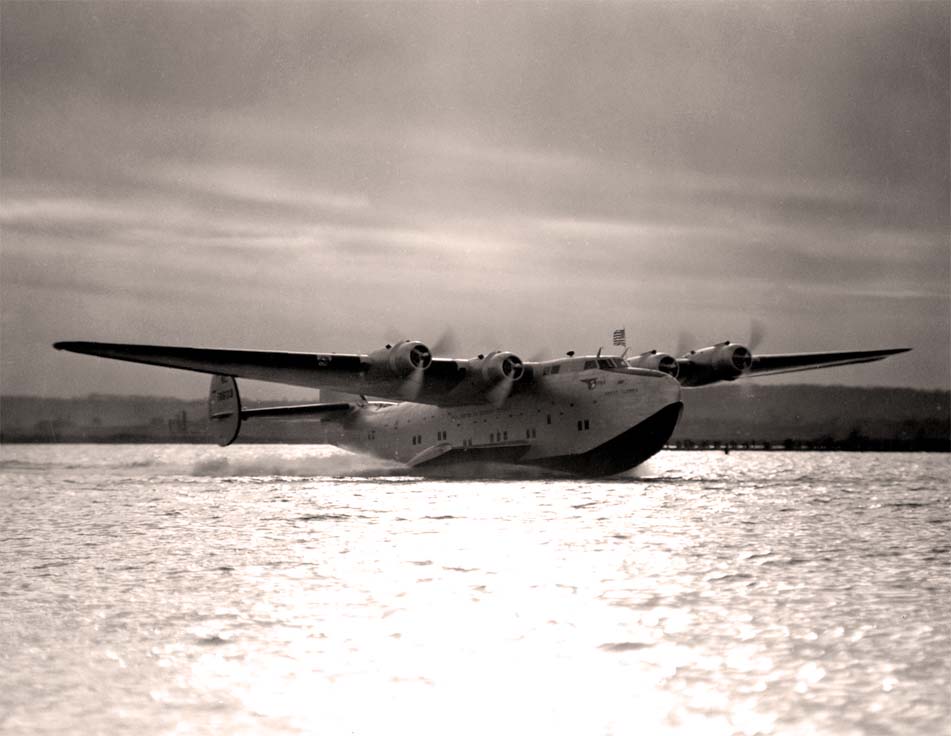
Pan American Airlines inaugurated the first transatlantic mail service. Under the command of Captain A. E. LaPorte, almost a ton of mail was carried from Port Washington, New York to Marseilles, France via the Azores and Lisbon in 29 hours. Scheduled Atlantic service opened, with Captain La Porte in the Yankee Clipper departing from Port Washington for Marseilles, carrying mail only. La Portes’s flight went smoothly, and all stations and facilities performed well. Because there were large numbers of first day air mail covers on these early flights, an unusual task became necessary. At some stops, members of the crew helped postal agents to hand-cancel the letters. Another task fell to the stewards: because weight limitations precluded the carriage of sufficient water for washing dishes, these were taken ashore and washed by the stewards in the Customs building. Considerable negotiation was required to obtain Customs approval for this, as it had never been done before. The weight problem also limited the carriage of supplies such as drinking water and ice, but delicious meals were served on the B-314s, mostly cooked on board.”
A dream and hope of many years became a reality early this morning when the sleek, four-engined 41-ton Pan American Airways flying boat, the Yankee Clipper, reached Horta in the Azores, first outpost of Europe, the first stop on the first regularly scheduled airplane flight over the North Atlantic between this country and the Old World.
Arriving before dawn — at about 2 AM, Eastern daylight time — after a flight from Manhasset Bay that prosaically followed schedule, the flying boat hovered over the island port waiting for the sun to peep over the horizon, then landed at 2:29 AM, 13 hours 22 minutes after her take-off. The flight from Long Island on the first leg of the route was a smooth one at speeds that varied between 180 and more than 200 miles an hour and at altitudes that varied between 7,500 and 8,500 feet. Some cloudy weather was encountered but most of the way a favoring tail wind helped move the craft along.
The American Newspaper Publishers counsel disputes Roosevelt’s view on freedom of the press. He denies that government protects that freedom.
“3 Little Fishies” by Kay Kyser swam to #1.
The New York Yankees defeated the White Sox, 5–2, for their tenth successive victory, this winning streak matching the longest previous one in the eight-year regime of Manager Joe McCarthy. Red Ruffing’s pinch hit in the seventh, scoring two runs, provided the winning runs.
The St. Louis Cardinals, leaders in the National League, beat the Brooklyn Dodgers, 9–1, behind the six-hit pitching of Lon Warneke.
The New York Giants fell back to seventh place when they lost to the Chicago Cubs, 8–4.
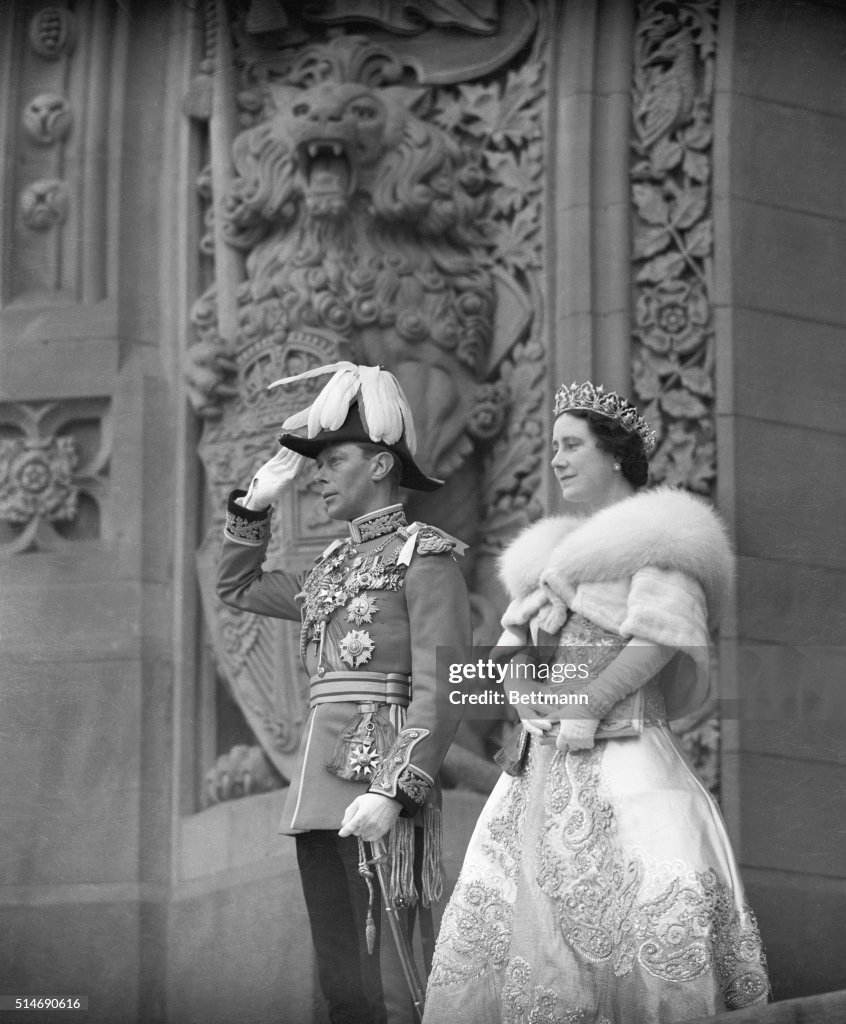
Queen Elizabeth laid the cornerstone for the new Canadian Supreme Court building. While Queen Elizabeth perpetuated one fiction in stone today, King George VI, in scarlet tunic, skin tight braided black trousers and high busby of a colonel of the Coldstream Guards, indulged in another sort of make-believe, pretending that it was his forty-fourth birthday anniversary, although he actually was born on December 14, 1895.
London’s weather being what it is, the King decided upon his accession to the throne, two years ago, to celebrate his birthday in a month of fairer days than December and in 1938 the anniversary was observed on June 9. This year, in view of the King’s visit to the Canadian capital, the date was set for May 20.
Although it was his “birthday,” it was in every sense Queen Elizabeth’s day. At the laying of the cornerstone for the new Supreme Court building she made her first and only scheduled speech in Canada. She spoke in a soft, low-pitched voice, first in English and then in French, and afterward shook hands with the three workmen who lowered the great ten-foot cube of stone into place for her to tap it with her golden trowel.
The three-to-one contest of the powers over Kulangsu, tiny foreign settlement at Amoy, continued tonight and both sides denied reports that face-saving compromises were imminent. The Japanese naval force, whose landing on May 12 brought on the test with the United States, Britain and France, showed no signs of withdrawing although outnumbered three to one by the 126 men landed by the other three nations.
United States naval authorities in Shanghai declared that they had reserved complete independence of action without making any proposal to Japan. They said that the United States forces were landed to protect American interests and only that consideration would govern their actions. Admiral Harry E. Yarnell, Commander in Chief of the United States Asiatic Fleet, said that thus far no proposals for withdrawal of landing parties there had been made by French, British or American naval commanders. The island settlement in Amoy Harbor was quiet tonight, although Japanese planes were reported to have raided several communities inland, apparently in an attempt to crack Chinese control along the South China coast.
Charging that the Japanese deliberately are encouraging the opium habit in the regions of China under their control, Victor Hoo Chi-tsai, Chinese representative on the League of Nations Advisory Opium Committee, told the committee today that Japanese warships and military trucks were being used to transport the narcotic under the guise of war supplies. Mr. Hoo asserted that the objects of the Japanese policy were first to profit by the sale of opium and use the funds so derived to help defray the cost of invasion; second, to provide employment for undesirable Japanese and Korean elements who thus can be kept out of their own countries, and, third, to try to break down Chinese resistance and spread the opium habit since addicts will betray their country to obtain the narcotic.
Dow Jones Industrial Average: 131.22 (+0.84).
Born:
María Luisa Ozaita, Spanish pianist, harpsichordist, musicologist, conductor, and composer (“Pelleas y Melisanda”), in Baracaldo, Spain (d. 2017).
Died:
Joseph Carr, 58, President of the National Football League (1921-1939), inaugural member of the Pro Football Hall of Fame (1963), of a heart attack.
Naval Construction:
The U.S. Navy general stores issue ship USS Castor (AKS-1), first of her class of 2, is launched as the C2 cargo ship SS Challenger by the Federal Shipbuilding and Dry Dock Co. (Kearny, New Jersey, U.S.A.).
The Nihon Kaigun (Imperial Japanese Navy) Type A1 submarine HIJMS I-9 is launched by the Kure Naval Arsenal, Kure, Hiroshima Prefecture, Japan.
The Royal Navy “T”-class submarine (First Group) HMS Taku (N 38) is launched by the Cammell Laird Shipyard (Birkenhead, U.K.).
The Marine Nationale (French Navy) Le Hardi-class torpilleur d’escadre (squadron destroyer) Lansequenet is launched by F.&Ch de la Gironde (Bordeaux, France).
The Nihon Kaigun (Imperial Japanese Navy) Taiyō-class escort carrier HIJMS Chūyō (冲鷹, “hawk which soars”) as the Nippon Yusen Kaisha (NYK) passenger-cargo liner Nitta Maru by the Mitsubishi Shipbuilding & Engineering Co., Nagasaki, Japan.
The Nihon Kaigun (Imperial Japanese Navy) Tone-class heavy cruiser HIJMS Chikuma (筑摩) is commissioned. Her first commanding officer is Captain Nishio Hidehiko.


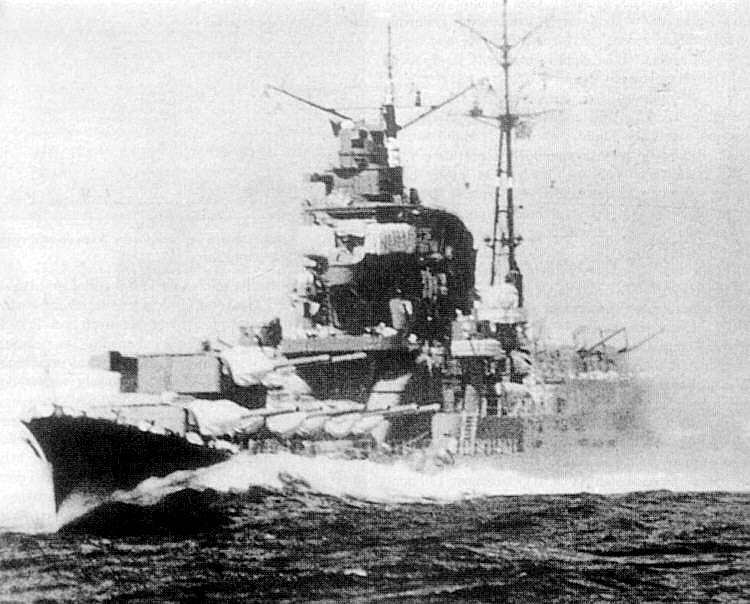
Participated as a carrier escort and platform for scouting aircraft during the raid on Pearl Harbor, the Battle of the Java Sea, the Indian Ocean raid, the Battle of Midway, the Eastern Solomons, the Battle of Santa Cruz, and the Battle of the Philippine Sea. Her last action came in Kurita’s Center Force at Leyte Gulf during the Battle off Samar.
https://en.wikipedia.org/wiki/Japanese_cruiser_Chikuma_(1938)#Service_career
Sank 25 October 1944 by gunfire from USS Samuel B. Roberts and torpedoes from U.S. Navy Avengers, after Battle off Samar.
The Japanese destroyer HIJMS Nowaki took off survivors from Chikuma. However, Nowaki was sunk by gunfire from the cruisers USS Vincennes, USS Biloxi and USS Miami and DesDiv 103’s USS Miller, USS Owen and USS Lewis Hancock. The ship sank 65 miles (105 km) south-southeast of Legaspi, Philippines with about 1,400 men, including all but one of Chikuma’s surviving crewmen. The sole survivor from Chikuma was a crew member who was not picked up by Nowaki and drifted ashore on his own.
 History Diaries