Pro‐Communist Pathet Lao troops, sweeping before them the shattered battalions of General Kong Le, a neutralist leader, advanced today toward a new line that in effect would partition Laos. Remnants of the neutralist forces, followed by about 4,000 members of soldiers’ families and 3,000 refugees, were retreating southwest from the Plain des Jarres. The strategic grasslands plateau in north‐central Laos is now entirely under Pathet Lao control. A communiqué issued last night by Prince Souvanna Phouma, the neutralist Premier, said that the last positions of the neutralists on the plain had fallen to Pathet Lao forces backed by North Vietnamese troops. Independent military sources here were inclined to believe that North Vietnamese participation in the operation was limited to the provision of cadres to Pathet Lao units rather that the deployment of full units.
The neutralists, who had held the area of Muong Phanh to the western edge of the plain, were pulling back into the wooded hills of the country of friendly Meo tribesmen, whose fierce fighters could screen withdrawal. Neutralist columns commanded by Kong Le that were in radio contact with Vientiane, the administrative capital, were isolated on the ground from their other main base area in the region at Muong Kheung about 15 miles to the north. About 1,700 neutralist troops, supported by about 25 light tanks, were at Muong Kheung, which has the only good air strip left in neutralist hands in the region. The Pathet Lao were expected to attempt to retake Vang Vieng, which their troops have been menacing for several days. The town lies to the southwest of the retreating Muong Phang garrison on the road between Luang Prabang and Vientiane. The neutralists captured Vang Vieng last November.
It was hoped in Vientiane that Kong Le, assisted by Meo tribesmen, would be able to establish a good defensive position in the hills west of the Plain des Jarres. However, the neutralist force has been sharply reduced by the Pathet Lao attack and lost considerable equipment. Of the 5,000 to 6,000 troops Which Kong Le had assembled in the Muong Phanh area, only three paratrooper battalions, one infantry battalion and miscellaneous service troops were said to be withdrawing in good order. Western observers in the Muong Phanh area on Monday reported that Kong Le had lost in fighting up to that time about 200 wounded and fifty dead. A fourth paratrooper battalion crumbled quickly under the Pathet Lao advance and was completely overrun. Dissension in this battalion contributed to its collapse.
France proposes reconvening a 14-nation conference on Laos in Geneva; it is rejected by the United States and Great Britain but accepted by the Soviet Union, Poland, Cambodia. India and Communist China. Official sources reported that the French Government had sent notes to the British and Soviet Governments proposing that the countries that signed a declaration in 1962 on Laos reassemble to deal with the military and political crisis.
The French initiative was regarded as an emphatic reminder of France’s continuing interest in the establishment of neutral states in the Indochinese peninsula. It was viewed as part of President de Gaulle’s general program embracing unification and neutralization of North and South Vietnam. The general will interrupt his convalescence from prostate surgery to preside over a Cabinet meeting tomorrow. Foreign Minister Maurice Couve de Murville will report to the Cabinet on the situation in Laos. After the meeting, officials said, France will issue a statement of her position.
General de Gaulle’s initiative was apparently taken without consultation with Washington or London. The two allied governments, it was said here, were informed but not consulted. American and British diplomats said it would have been better for allied solidarity in such a critical period if France had consulted her two chief Western allies before advancing the proposal. The French answer is that since the United States and Britain often prefer to act without consulting France, neither should be surprised if this government occasionally takes the initiative. No reaction could be obtained tonight from the Soviet Embassy. Britain and the Soviet Union were co‐chairmen of the conference at Geneva in 1962 that agreed on the basis for the neutralization of Laos.
United States policy in South Vietnam now calls for a long, difficult campaign to win the support of the rural population away from well‐entrenched Communist insurgents. From inside and outside South Vietnam, both political and military pressures are mounting so rapidly that some observers believe time may be running out. Diplomats in Saigon foresee serious upheavals in the coming months to alter the entire power structure in Southeast Asia. Far from any lessening of tension, they fear a closer confrontation between Communist China and the United States, and this before the American elections.
A rightist coup d’état and Communist military advances in Laos in the last month have put sharply into question the tortuous and subtle international understandings that form the fragile underpinning of the status quo. Cambodian demands for a new international conference on charges of violation of her borders are being put in ever stronger terms, notably this week in the United Nations Security Council. Few diplomats believe that any international meeting could be confined to Cambodia alone. Leaders of North Vietnam are confident of a political victory in the south and expect to be headed for negotiations on their own terms by the end of this year, according to officials in touch with the regime at Hanoi.
Threats to the Western position in Southeast Asia come not only from the Communists, but also from the West itself. Ambassador Henry Cabot Lodge put it clearly in a recent interview: “The biggest danger now facing the Vietnamese war effort is impatience in the United States.” Officials in Saigon are wondering if Americans, particularly when caught up in an election campaign, will continue to support a war not now being won — one in which success apparently lies only in slow, unspectacular steps to win men’s minds rather than the land on which they stand.
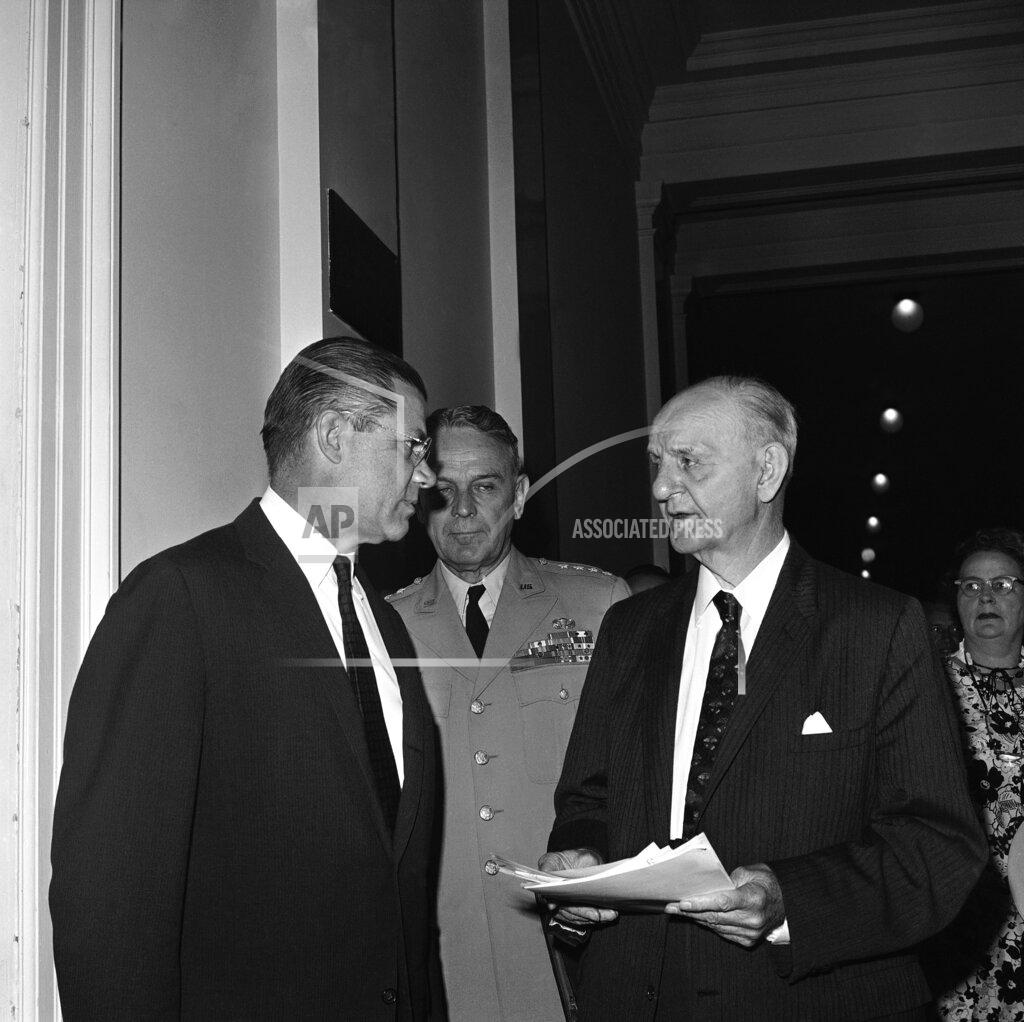
The Administration received important support in Congress today for its conduct of the war against Communist insurgency in South Vietnam. The House Foreign Affairs Committee, as expected, approved President Johnson’s request for additional economic and military assistance for the Government of South Vietnam to total $125 million. The House Armed Services Committee questioned Secretary of Defense Robert S. McNamara and General Maxwell D. Taylor, Chairman of the Joint Chiefs of Staff, in closed session. Afterward, Representative Carl Vinson of Georgia, chairman of the committee, said: “I am satisfied with what the [Defense] Department is doing, with what this government is doing. I am behind the position of the Secretary in the prosecution of the war.”
The Armed Services Committee session ranged over many aspects of the United States policy in South Vietnam, although it was called primarily to discuss charges that deficient United States aircraft had been responsible for the deaths of American pilots. Secretary McNamara, in a brief statement that was released later for publication, testified that the equipment sent to South Vietnam was “the best equipment available for the unique task at hand.” After the meeting the Defense Secretary was asked by newsmen whether he felt that he had reassured the members of the committee of the adequacy of the planes. “Yes, indeed,” Mr. McNamara replied.
An American military policeman jumped from his vehicle today and shot a Communist terrorist who a few seconds earlier had tried to kill him with a grenade. Pvt. Jesse L. Fontenot was sitting in his empty pickup truck with a flat tire in busy Hồng Thập Tự street when a Vietnamese rode past in a bicycle and lobbed a grenade into the back of the truck. It exploded, causing considerable damage to the vehicle. Private Fontenot leaped from the cab, drew his service pistol and fired several shots at the fleeing Việt Cộng terrorist, one hitting the man in the jaw. The terrorist, identified as a 19-year-old mechanic named Trần Văn Bê, was taken to Saigon police hospital where his condition was reported serious but not critical. The incident was the first against Americans in Saigon in several days.
Communist machine gunners killed one American and wounded another yesterday in an ambush northwest of Saigon, a United States military spokesman reported today. The enlisted man was the 129th American to die in action in South Vietnam since the United States stepped up its aid to the government. The wounded man, an officer, was reported in good condition. The two men were not identified.
U.N. Ambassador Adlai E. Stevenson was summoned home urgently by Secretary of State Dean Rusk because of the critical situation in Southeast Asia involving Laos.
A Finnish soldier of the United Nations Cyprus peace force was shot and killed tonight. He was the first member of the force to die by gunfire. The shooting occurred near the Turkish Cypriote village of Kara Tepe, a mile and a quarter west of Guenyeli on the Nicosia-Kyrenia Road northwest of the capital. According to officers in the Finnish headquarters here, the dead soldier had been on a patrol near the village, which is in a region inhabited by both Greek and Turkish Cypriotes. Senior officers of the peace force, as well as Canadian troops, whose control sector adjoins that of the Finns, rushed to the scene shortly after the shooting. There have been many times when members of the British truce force and later of the United Nations force have been fired on, but none had been killed before tonight. The British truce force and United Nations troops have returned Greek and Turkish Cypriote fire several times but, so far as is known, have killed no Greek or Turkish fighters.
Earlier today, Dr. Fazil Kutchuk, leader of the Turkish community, expressed shock over the failure of Archbishop Makarios, the Greek Cypriote President, to account for more than 17 of the 91 Turkish Cypriote hostages taken since March 27. The President said yesterday that he had been unable to trace the whereabouts of 74 of 91 Turkish Cypriotes believed to have been seized. He also said that not all of the missing persons were, or ever had been, held by the government. Referring to a reported total of 253 Turkish Cypriotes missing during the five‐month‐old Cyprus crisis, Dr. Kutchuk said: “I shudder to think that these innocent Turks among whom there are women and elderly men have been murdered in cold blood.” “This brutal act of taking hostages and murdering them,” Dr. Kutchuk said, “is more than sufficient to prove that Turks on this island cannot have security of life if they find themselves obliged to live in areas dominated by Greeks.”
A “new war of independence” in Cuba was proclaimed today by anti‐Castro exile organizations here and two key rebel leaders may already have secretly entered Cuban territory. Tonight, incomplete and garbled reports monitored here from the Cuban Government’s radio network used for communication between provinces suggested that sonic kind of military action involving aircraft occurred late in the day off the southern coast of Oriente Province. It was impossible to determine immediately the precise nature of the action. It was near Cabo Cruz that a rebel raiding party attacked a sugar mill at Piton last Wednesday. The proclamation declaring that a “new war of independence begins on the Cuban soil” was issued here and broadcast to Cuba late in the day by the Cuban Revolutionary Junta, which called upon the military and civilian officials of Premier Fidel Castro’s regime to rise in a new revolution.
Soviet Premier Nikita S. Khrushchev said in Cairo that he would like to see all Arab nations united but that “imperialism divides them to rob them.” President Gamal Abdel Nasser had some success today in taking the chill off relations between his two guests and “good friends,” Premier Khrushchev and Abdel Salam Arif, President of Iraq. Premier Khrushchev received President Arif for 90 minutes in the Kubbeh Palace in Cairo, where the Soviet leader and his aides are staying. The conversation went so well, from all accounts, that Premier Khrushchev joined President Nasser as a dinner guest of President Arif in the Iraqi Embassy tonight. The tension is a result of rough treatment accorded Iraqi Communists since the coup of February, 1963, which overthrew the regime of Major General Abdul Karim Kassim and brought President Arif, a ‘moderate nationalist’, to power.
Many Senators, Northern and Southern, agreed today that the strong showing of Governor George C. Wallace in the Maryland Presidential primary yesterday would not affect the Senate’s action on the rights bill. But they also tended to agree that the vote for the Alabamian probably portended a long and bitter struggle, in the North and the South, before Blacks fully enjoyed the rights the bill seeks to secure for them. Senator Mike Mansfield of Montana, the Democratic leader, and Senators Hubert H. Humphrey of Minnesota and Thomas H. Kuchel of California, the Democratic and Republican floor managers of the bill, gave similar views. All said the heavy vote for Mr. Wallace would have no impact on the substance of the measure or on the vote to cut off the Southern filibuster.
Mr. Wallace polled 42.8 percent of the vote in the Democratic primary in Maryland but lost to Senator Daniel B. Brewster, a stand‐in for President Johnson. The governor’s primary races have been widely viewed as being designed to demonstrate widespread opposition to the civil rights bill. Senator Richard B. Russell, Democrat of Georgia, leader of the Southern opposition to the bill, said that he wished the primary would strengthen his hand against the bill, but doubted that it would. “The Senate is usually the last place in the Government to get the drift of American public opinion,” Mr. Russell said.
Nevertheless, there was a recognition that the Wallace vote was very largely a protest against the civil rights movement, if not against the bill itself. The Southerners attributed the protest to a public awakening to what the bill contained. Thus, Mr. Russell said “a groundswell” was building up as the people learned what this “misnamed” bill would “do to their government and to their heritage.” Mr. Russell said he had told President Johnson that “he may pass this bill but he will have more new faces in Congress in the next four to six years than any President ever had — without regard to party.”
Many white voters who supported Governor George C. Wallace of Alabama in the Maryland primary yesterday apparently were voting more against “Black militancy” than against the civil rights bill, an analysis of the returns indicated today. This was the view of most political observers here after a detailed study of the Presidential preference and other primary voting. The conclusion was based on results in a number of secondary primary contests that gave liberals and moderates clear majorities while Governor Wallace was making his most impressive showing of his three‐state Presidential‐primary campaign. A major factor in Mr. Wallace’s bigger vote in Maryland was the rebuke given the administration of Governor J. Millard Tawes and candidates associated with it, including Senator Daniel B. Brewster, the favorite son who opposed Governor Wallace as a stand‐in for President Johnson. Senator Brewster polled 53.6 percent of the vote yesterday, far less than he had counted on. In his election to the Senate in 1962, he received 62 percent of the vote and led the Democratic ticket.
The House approved today, by a vote of 311 to 64, a $5.18 billion agriculture appropriations bill. Before passage it defeated by a single vote a Republican proposal to bar subsidies on farm products sold to Communist countries. The unexpectedly narrow margin on the export subsidies reflected the running fight over trade with the Soviet Union and Communist bloc countries. It came at a time when the Administration has plans for expanding this trade. These plans are expected to be a prime Republican issue in the Presidential and Congressional elections this Year.
The House Democratic leadership mustered 182 votes. These, with five Republican votes, were just enough to defeat the subsidy ban on a roll‐call vote of 187 to 186. Thirty Democrats joined 156 Republicans in favor of the restriction. The vote was the climax of another day of wrangling over the money bill to finance farm price supports and other activities for the fiscal year beginning July 1. The measure now goes to the Senate, where some House cuts are expected to be restored, particularly funds for the Food for Peace program.
Two high‐priority Administration bills won favorable action by the House Rules Committee today. One would authorize $500 million in Federal grants for the development of mass transit systems. The other calls for Federal pay increases. Both measures were cleared for House consideration without substantial opposition. On the transit bill, the vote was 8 to 4. On the pay bill, it was 9 to 3. Three members were absent.
There was still some doubt, however, over the prospect of House passage of either bill. Democratic leaders, seeking to line up safe majorities, said floor action would not be sought before next month. President Johnson called in Democratic members of the committee a week ago and asked for their help in steering his program through Congress. The bills cleared today were among several that he listed at the conference as particularly important to him.
President Johnson endorsed yesterday the choice of two aircraft and two engine companies to proceed with technical designs for a supersonic airliner. But economics emerged as the key to these studies and to other steps he ordered taken. The companies are the Boeing Company and the Lockheed Aircraft Corporation for the plane, and the General Electric Company and the Pratt & Whitney Aircraft Division of the United Aircraft Corporation for the engine. Their studies will require six to eight months, but the step beyond that is uncertain. The President called the program to develop a 2,000-mile-an‐hour jetliner “a vast national undertaking.” He expressed confidence that cooperation of government, industry “and the American people” would produce a plane “that will continue to maintain American world leadership in the air.”
The Federal Aviation Agency selected the four companies from six contestants at the end of a preliminary design contest on April 1. North American Aviation, Inc., was eliminated from plane design and the Curtiss‐Wright Corporation from engine design. But no design was judged to be economical enough for the airlines to operate profitably, and no company agreed to a government requirement that industry supply 25 percent of the estimated $1 billion development cost. Largely as a consequence of these economic problems, the President named a special advisory committee, headed by Secretary of Defense Robert S. McNamara, to review the program. It was the aviation agency’s choice of companies, and a “program of action” recommended by the agency and the McNamara committee, that the President approved yesterday.
U.S. President Johnson signed into law the Bartlett Act of 1964, subtitled “Prohibition of Foreign Fishing Vessels in the Territorial Waters of the United States”, making it unlawful for vessels of any other nation to conduct fishing operations within three nautical miles (3.4524 miles or 5.5561 kilometers) of the U.S. coast, as well as areas further out designated under the Convention on the Continental Shelf as “continental shelf fishery resources of the United States.” Regarding the United States continental shelf, designated resources under the exclusive jurisdiction claimed by the U.S. ranged as far as 200 miles off of the coasts of New England and Alaska.
Buster Mathis beats future world heavyweight champion Joe Frazer on points at trials in Flushing, New York to qualify for US Olympic boxing team; Mathis injures his thumb, and is replaced by Frazier, who wins the gold medal.
Led by Johnny Callison’s 5-for-5, the Phillies snap Juan Marichal’s 12-game win streak and beat the Giants in San Francisco, 7–2.
At Crosley Field, Joe Torre belts a 9th inning grand slam as the Braves top the Reds, 7–3. Torre has 3 hits and 5 RBIs for the game.
Three straight singles in the 8th score a run for the Cardinals as the Birds edge the Cubs, 1–0, behind Bob Gibson. Gibson strikes out 12 and retires the last 17 batters. Larry Jackson takes the loss.
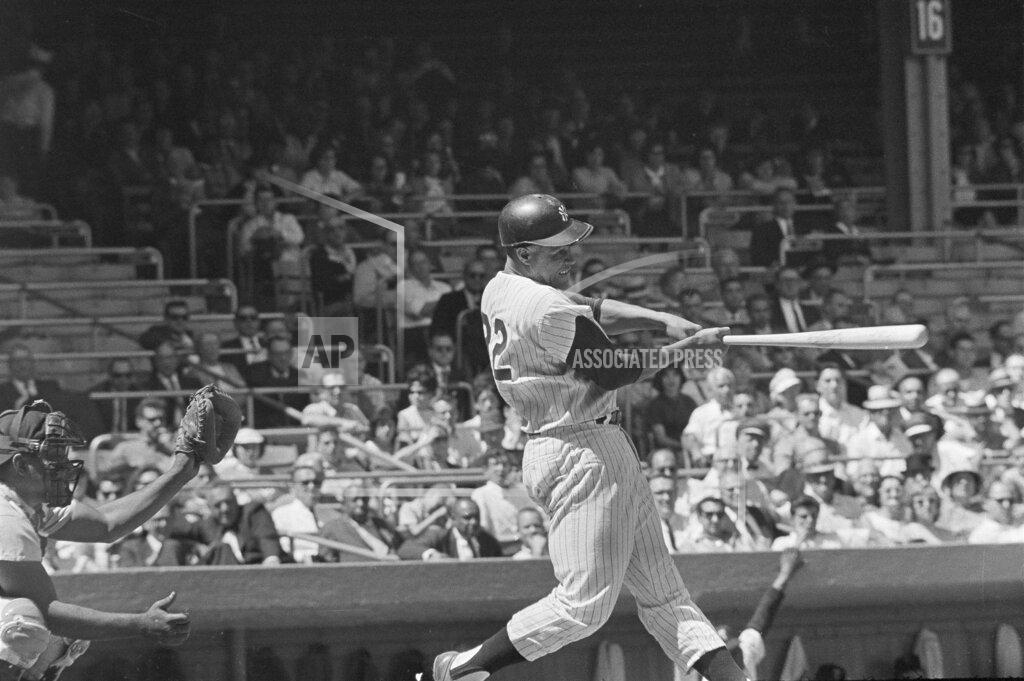
John Kennedy, a shortstop, hit two homers and drove in another run with a single as he led the Washington Senators to a 10–3 victory over the Detroit Tigers tonight. The loss snapped the Tigers’ four‐game winning streak.
Harmon Killebrew and the Minnesota Twins were in town for a two-game series with the New York Yankees when he heard about how 8-year-old John Guiney was badly burned when his altar robe caught fire while lighting candles at his parish in Brooklyn. The visit, arranged by the New York Daily News and little John’s father, included Harmon signing a baseball and a glove for Guiney and culminated in the following exchange (via the Star Tribune): After a little baseball chatter — “I’m a shortstop,” the bandaged boy said — Killebrew made a deal with the lad: “If you hurry up and get well, the next time I’m in town, I’ll take you out to the ball park and you can meet all the fellows.”
With the afternoon game near, Killebrew said it was time he headed to the stadium. “I’ll watch you on television,” the blue-eyed, freckle-faced youngster said from his Manhattan hospital bed. “Maybe I’ll hit you a couple,” Killebrew responded. Guess what? Killer hit two homers, a two-run round tripper in the first inning and a solo shot in the eighth inning of Minnesota’s 7–4 win. Even better, Harmon made good on his promise: on September 12, 1964, Killebrew hosted Guiney at Yankee Stadium, they posed for some pictures, and he gave him one of his bats.
Dow Jones Industrial Average: 820.11 (+2.83).
Born:
Paul W. Richards, engineer and astronaut [NASA Group 16 (1996), STS-102 (Discovery, 2001)], in Scranton, Pennsylvania.
[Richards is the inventor of the Pistol Grip Tool (PGT). The PGT is a self-contained, computer- controlled, battery-powered 3/8-inch drive power tool with a pistol-style handle. Numerous torque, speed and turn limits can be programmed into the tool for mission-specific applications. A light emitting diode display on the tool tells the astronaut what torque he or she is applying, at what speed, and how many turns the motor has made. It also displays error messages. The motorized torque ranges from 2 to 25 foot-pounds, the speed from 5 to 60 rotations per minute, and the number of turns from 0 to 999. In manual mode, the Pistol Grip Tool can apply 38 foot-pounds of torque. The specifications for every fastener are preprogrammed into the PGT before each mission and the PGT then logs the actual data during EVA. The PGT has been used on every NASA spacewalk (EVA), since 1996.]
Earl Charles Spencer, English peer, brother of Diana, Princess of Wales, in London, England, United Kingdom.
Todd Peat, NFL guard (St. Louis-Phoenix Cardinals, Los Angeles Raiders), in Champaign, Illinois.
Jeff Schwarz, MLB pitcher (Chicago White Sox, California Angels), in Fort Pierce, Florida.
Gordon Dillard, MLB pitcher (Baltimore Orioles, Philadelphia Phillies), in Salinas, California.
Patti Russo, American singer and songwriter (Meat Loaf’s former female lead vocalist), in New Jersey.
Joseph Sinnott Edwards, fugitive and indicted murderer of his parents in 1983 (FBI Most Wanted List), in Chicago, Illinois.
[Police are still searching for Edwards.]
Died:
Rudy Lewis, 27, lead vocalist for The Drifters, died of a heroin overdose the day before he was scheduled to record one of the group’s most famous songs, “Under the Boardwalk”. The next day, backup singer Johnny Moore took Lewis’s place, singing “in a lower register than his norm” because the key and the music had been written for Lewis.
 History Diaries